Archaeology Exam #2
 Call Kai
 Learn
Learn Practice Test
 Spaced Repetition
 Match
Match Flashcards
 Knowt Play
1/106

There's no tags or description
Looks like no tags are added yet.
Name | Mastery | Learn | Test | Matching | Spaced | Call with Kai |
|---|
No analytics yet
Send a link to your students to track their progress
107 Terms
Geoarchaeology
archaeological field of research concerned with geology and earth science that studies and interprets the geology and sediments of a site/region
Why is geoarchaeology important?
many archaeological materials are buried in the Earth's surface
provides an understanding and appreciation of the geological context of remains
concerned with regional or local analysis
geology makes up the landscape of human settlement and activity
What does particle size analysis help identify?
1. natural vs cultural processes
2. transport agents
3. natural origins of sediments
Site formation processes
fluvial (water)
alluvial (along water)
colluvial (gravity)
eolian (air/wind)
Sediment analysis
can provide info on the natural origins of sediments and the difference between cultural and natural processes
Disconformity/noncomformity
something (a layer) starts but doesn't conform all the way through because something is missing or interrupted
terminus ante quem
"occurring before which"; refers to the concept that all the soil below a solid, undisturbed layer dates before that layer
terminus post quem
"occurring after which"; term used to indicate the date after which an artifact must have been deposited
The relationship between coins and dating
Coins are unreliable for dating since people tend to save them and they are used for long periods of time
anthropogenic
(of sediments) produced or affected by human activity
Sediment particle sizes
clay --> silt --> sand --> gravel
matrix
the bulk material of sediments and other contents that enclose archaeological remains
micromorphology
area of geoarchaeology that involves the study of anthropogenic sediments at a microscopic level
texture
the size and sorting of sediments
intrusive features
features found in the layers of sediment that interrupt the strata/chronological standing of the strata
Harris Matrix
a flow-like chart used as a simpler method for describing the layers of strata and archaeological layers. (represents individual layers, deposits, features, and interfaces in a profile)
Which stones are better for tool-making?
The best materials are brittle but hard and smooth; prehistoric peoples sought hard, fine-grained crystalline rocks (cryptocrystalline quartz, chert/flint) with predictable fracture
Why are stones used to make tools?
Stones are
one of the hardest natural materials
will retain an edge
have a predictable fracture
preserve virtually forever
Why are clays at the basis of ceramic technology?
clay has properties essential for pottery and is the primary material to make ceramics because
clay becomes plastic when mixed with water
it holds a shape
becomes hard when heated
4 key factors that affect the final product of a ceramic vessel
raw materials
forming methods
surface treatment
firing
4 key factors which affect the FIRING of a ceramic vessel
fuel
temperature
atmosphere
duration
Why is lithic analysis important?
1. process by which archaeologists describe and define stone artifacts
2. stones are the earliest human artifacts that archaeologists study
3. evolved over time and became more specialized in use and smaller in size
4. provide info on development of cognitive and motor skills of early ancestors
5. evidence of foreign stone at a site provides info on movement, exchange, and interaction
Why is ceramic analysis important?
1. key part of many archaeological investigations
2. ceramics are made in a regular way according to cultural choices
3. help archaeologists understand technology, activities, and interaction between different groups of people
4. changes in size, shape, color, and design provide important chronological characteristics
How to interpret the function of a stone?
shape, manufacture, microscopic wear patterns, and archaeological context to determine how they were used.
Why do we refer to clays as being made of clay minerals?
clay is a sheet silicate
In what ways does the chemical structure of clay explain the physical structure?
With water, each sheet layer slides past each other (plasticity) and when fired, chemical bonding of the layers occurs (producing ceramics)
Chain of Production
refers to steps in the process of an entire production and reconstruction of the operation; sequence reveals choices made at each step
Flintknapping
technique/subtractive process for making stone tools by intentionally removing a series of flakes that produces a lot of waste material
Experimental practice of chipping stone to learn about fracture mechanics
What are the key measurements taken on ceramic vessels to help us interpret their function?
1. rim diameter
2. aperture diameter
3. vessel height
4. wall thickness --> all help us determine vessel form type and function
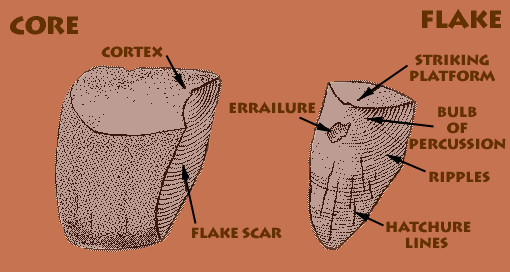
Identify Ripples, Bulb of Percussion, and Striking Platform
Lithics
Worked stone objects made by people from raw stone material
Fracture Mechanics
When a percussive force is applied to isotropic stone (stone that fractures in the same, predictable way in all directions) the knapper is able to control the direction and size of the force to produce an intended flake.
flakes
any piece intentionally removed in the process by either a blow or pressure
Blades
long, narrow flakes that can be removed sequentially from a core
Debitage
unusued material that results from the process of flintknapping or fracturing
Refitting
the reassembling of parent cores and tools that were used and broken on a site or working backwards from debitage to production sequence
Chert and Flint
type of cryptocrystalline quartz with slightly larger crystal size and certain impurities that give it color and cloudiness
Cryptocrystalline stone
most common material used in archaeological lithic remains; type of stone that has microscopic crystals and is created from silica under pressure in marine deposits
Sherds
broken pieces of pottery (American)
Temper
non-plastic substance intentionally added to reduce breakage caused by shrinking or firing
Temper vs. Natural Inclusions
Tempered inclusions were added in intentionally, while natural inclusions are pieces of dirt, pebbles, or any other material that get caught in a ceramic unintentionally.
Petrographic Microscope
a specialized microscope used to study thin sections with transmitted polarized light under high magnification for rapid identification and tabulation of components of materials
Archaeobotany
the study of archaeological plant remains
What is the importance of archaeobotany?
1. concerns the origins of agriculture
2. the identification of early domesticated plants
3. can tell us about the natural environment at a site
4. info on the human choices made in the selection of resources
Macrobotanical remains
remains visible to the naked eye (seeds, nutshells, pieces of wood, leaves)
Microbotanical remains
remains visible only with microscopic magnification (pollen, phytoliths, starch grains)
Importance of pollen profiles
provides a picture of past vegetation, climate, and environmental conditions
What did humans figure out about manipulating plants?
Humans selectively bred plants to increase productivity, make them bigger, and cause them to reproduce only with human intervention
Teosinte Vs. Maize
Maize and Teosinte appear very different. The stems vary greatly, and the kernals on teosinte are completely incased which differs from the exposed kernals on Maize. Teosinte and Maize, however only differ by about 5 genes, meaning that Teosinte was likely the ancestor to Maize.
Pollen
microscopic particles produced by many seed-bearing plants and released as part of the fertilization process
Phytoliths
silicate mineral bodies which form inside many plants which preserve as microfossils of the plant structures and provide info on plant use by people and the natural vegetation of an area
Starch grains
microscopic grains of a complex carbohydrate found in certain plant species (seeds, tubers, and bulbs of plants)
Teosinte
wild Mexican grass and possible maize ancestor
Flotation
recovery method in which carbonized (burnt) plant remains are light and will float when sediment is dissolved in water
Scanning Electron Microscope (SEM)
electronic instrument that uses electrons to form high-resolution images of plant remains and conduct high magnification of microscopic structures
Wild vs. Domesticated Wheat
wild wheat: brittle rachis and tough glume
domesticated wheat: tough rachis and brittle glume
Rachis
stem that connects the grain seed to the main plant stalk in cereals
Glume
the husk that covers and protects cereal grains
Coprolite
preserved human feces; gives insight into the diets of past human; what they ate, and how it affected their health.
Fort Ancient at Sunwatch Village
prairie restoration site in Ohio based on archaeobotanical analysis of remains since the preservation of many pits gave info on plant and animal utilization, seasonality and diet, and plant storage during shortages
Hinds Cave
site in Texas with incredible preservation of archaeobotanical remains in a dry cave from 7000 BP
How are faunal remains quantified?
MNI, NISP, meat weight
Archaeozoology
the study of animal remains from archaeological sites
What is the importance of archaeozoology?
1. can show which animals were hunted and eaten and in what proportion
2. can provide info on butchering techniques
What types of artifacts or evidence might be found to help interpret human-animal interactions?
bones, teeth, hair, antlers, scales
What did humans figure out about manipulating animals?
Humans selectively bred animals in order to rid wild animals of aggressive tendencies
NISP
Number of Identified Specimens: an estimate that records the total number of bones from an identified species
MNI
Minimum Number of Individuals: estimate based on counts of the number of unique skeletal parts
Meat Weight/Biomass
translation to the amount of biomass or meat for consumption
Vertebrates
animals with a bony endoskeleton and backbone i.e. mammals
Invertebrates
animals without a backbone i.e. mollusks and shellfish
Faunal remains
animal bones or remains
Domestication of plants and animals
alteration by humans of natural cycles and behavior of plants and animals
striking platform
place where force is applied to remove a flake
dorsal surface
the outer surface of the flake which shows previous flake scarring
core
prepared raw material that serves as first stage in tool making
ventral surface
fresh inner surface of a flake
conchoidal fractures
wave like ripples which appear in the stone from fracture mechanics
bulb of percussion
bulbar mass left from the cone of percussion
cortex
weathered exterior surface on stone raw materials
Law of Superposition
superimposed, layers or strata, the lower (deeper) being older unless layers are disturbed
stratigraphy
sequence of layers (strata) in the ground
strata
accumulation of layers of soil, sediments, refuse, building debris, etc. in the ground
handmade ceramic forming methods
pinch, coil, slab, paddle-and-anvil
coil method
ceramic forming method in which long ropes of clay are rolled out and used to build up the walls of the vessel
paddle-and-anvil method
ceramic forming method in which a hard object (the anvil) is held on the inside of a pot while the paddle (wood, stone, etc.) presses against the anvil on the outside to flatten and spread the clay material
slab method
ceramic forming method that involves the rolling of a slab of clay and further shaping it into a cylinder or the fitting of two slabs to make a cube
pinch method
ceramic forming method in which the clay is pinched together to form a vessel
molded ceramics
produced by pressing clay into prepared molds
wheel-thrown ceramics
pottery produced on a wheel
applique
decorative technique that involves adding clay to the outside of the vessel
impressions
decorative technique made with many different tools onto soft clay of an unfired pot
incision
decorative technique in which designs are cut into soft clay
punctuate
decorative technique in which small round sticks are pressed into clay to leave a series of circular depressions
painting
decorative technique in which there is an application of pigments
resist
decorative technique that involves the use of wax or another material to prevent the slip/glaze from covering the vessel
faunal analysis
1. subsistence strategies and adaptations
2. diet and dietary contributions
3. hunting practices
4. climate, resources, and climate change
5. value and preferences
6. seasonality and scheduling
7. butchering practices
8. ritual practices
9. domestication/extinction
microwear analysis
using microscopes to study the edge damage of stone tools in order to assign a function
ceramic petrography
useful microscopic technique that can help identify the physical composition of sherds
provenience studies
looking at ceramics and mineral composition to find evidence of social interaction, trade and exchange, and economy

