Test 3 horticulture
 Call Kai
 Learn
Learn Practice Test
 Spaced Repetition
 Match
Match Flashcards
 Knowt Play
1/97

There's no tags or description
Looks like no tags are added yet.
Name | Mastery | Learn | Test | Matching | Spaced | Call with Kai |
|---|
No analytics yet
Send a link to your students to track their progress
98 Terms
What is water potential?
A measure of the potential energy of water
Water moves from ___ to ___ potential
High; low
Water movement via mass flow is
Movement in response to a pressure or tension gradient
Give an example of positive pressure in the cell
Turgor pressure
The movement of fluid in phloem is driven by _____ (±) pressure. This is an example of _______
Positive; mass flow
The movement of fluid in xylem is driven by ____ pressure (____)
Negative; tension
Which roots are most permeable to water?
What increases absorptive surface area?
Forming symbiotic relationships with ____ fungi increases it even more
Fine roots; root hairs; mycorrhizal
The apoplastic pathway is the area ____ the plasma membrane, including the ____ and _____ (_____ parts).
Outside; cell walls; intercellular spaces; nonliving
The symplastic pathway is the area ____ the plasma membrane (_____ parts). Connected by _____
Inside; living; plasmodesmata
The apoplastic pathway is blocked at the _____ because of a band of _____. This band is _____ and is called the _________
Endodermis; Suberin; hydrophobic; Casparian strip
The endodermis is important because it is ____. This means it does not _____
selective; allow harmful materials to be taken up by the roots
Forces that are moving water in plants
Root pressure, capillary action (cohesion and adhesion), transpiration pull
What is root pressure?
Ions move into the xylem and because of the higher concentration of ions, water flows in
Capillary action is made up of
Cohesion and adhesion
What is transpiration?
The loss of water from the aerial parts of the plant, especially the stomates
What is the main factor that causes water to move up the xylem?
Transpiration pull
Why is transpiration important? (Name 2)
Main factor moving water and minerals throughout the plant, cools down the plant
What factors affect transpiration?
Be able to list one factor and DESCRIBE how it affects transpiration
Light intensity, air humidity, air temperature, and wind
Air temperatures: As temperature increases, rate of transpiration will increase, until it becomes “too hot” and stomates close in response.
What allows xylem vessels and tracheids to withstand negative pressure force?
Strong secondary cell wall
Mass flow EXAMPLE
Xylem flow (negative pressure) and phloem flow (positive pressure)
What is diffusion?
Water movement due to differences in concentration of water molecules
What is the difference between mass flow, diffusion, and osmosis?
Mass flow: Water movement due to differences in pressure or tension
Diffusion: Solute and solvent movement due to differences in concentration of water molecules
Osmosis: Movement of solvent across a semi-permeable membrane
Example of diffusion
Transpiration
What moves in diffusion vs osmosis?
In diffusion, solute and solvent move from high to low concentration. In osmosis, ONLY THE SOLVENT moves across a semipermeable membrane from high to low concentration
Osmotic potential is also known as
Solute potential
Two forces are most important to water potential inside the plant. They are:
Solute (osmotic) potential and pressure potential
Difference in ____ potential determines the ______ water moves across the membrane
Δ ψw ≠ ψw
water; direction
Δ ψw ≠ ψw
Remember
ok
You have two adjacent living cells with the following water potential values:
Cell A: = -0.5 Mpa
Cell B: = -0.7 Mpa
Which way will the water move?
A to B
More solutes inside cell vs. outside:
Which way will water move?
Into the cell
Number solutes inside cell = number outside:
Which way will water move?
No net movement of water
Less solutes inside cell vs. outside:
Which way will water move?
Out of the cell
How are guard cells unique? What does this allow for?
They are not connected by plasmodesmata; water potential gradient
What is the atom?
Smallest unit of an element that retains its chemical properties
What is a molecule? What is a compound?
At least two atoms bonded together; At least two atoms of DIFFERENT elements bonded together
What is an ion?
charged atom or molecule
Plant roots _____ nutrients in their ___ form
absorb; ionic
What three criteria make an element “essential”?
A shortage stops a plant from completing growth or reproduction
Element is directly involved in nutrition
Shortage can be corrected only by supplying the element
Where does a plant get carbon, hydrogen, and oxygen?
Air and water
Where/how does a plant primarily get mineral nutrients? How else?
soil; foliar spray
What are the primary macronutrients?
Nitrogen, phosphorus, and potassium
To reach the xylem, how many membranes must nutrients pass?
Where are they?
Does the nutrient need to pass an additional membrane if it is going to be used?
Two
one at or before the endodermis, one when they get into the xylem
Yes
How do nutrients cross the plasma membrane?
Transport proteins
What are the two main types of transport proteins?
What kind of transport do they use?
Channel; passive; Carrier; USUALLY active
In passive transport, ____ is required. Movement happens in response to a ______________.
There are two types: ______ and _____
No energy; concentration gradient; simple diffusion; facilitated diffusion
Simple diffusion is a type of ____ transport where ___________________________.
Passive;
small, non-charged solutes pass through a membrane in response to a gradient;
is not
Facilitated diffusion is a type of ____ transport where ____________________________.
Passive;
Things move in response to a gradient, but a transport protein is involved.
All of our channel proteins move things via ______ transport, specifically ______. Carrier proteins may do both _____ transport and _______
passive; facilitated diffusion; active; facilitated diffusion.
When you have a charged solute, you need to consider the ______ and _______.
chemical gradient; electrical gradient
The movement of ____ions are usually favored because of the ____ charge on ____________. As long as the ______ and ______ gradients are favorable, they will proceed.
cat; negative; on the inside of the membrane; electrical; chemical
In active transport, we are moving ______, so it requires ______. It is always mediated by ______ proteins. There are three different kinds: _____, _____, and _____
something across a membrane against the electrochemical gradient; energy; carrier; Primary active transport, secondary active symport, and secondary active antiport
Primary active transport is a type of _____ transport that ______
active; uses energy directly to move something across a membrane against its electrochemical gradient
Give an example of primary active transport
H+-ATPase, cleaving a phosphate from ATP and using the energy to drive H+ ions against their electrochemical gradient
Secondary active transport is a type of _____ transport that ______
active; pairs the movement of a solute against its gradient with the movement of a solute (usually H+) with its gradient
Secondary active symport is a type of _____ transport that ______
secondary active transport; couples the movement of a solute across a membrane against its electrochemical gradient with the movement of something else (usually a hydrogen ion) in the same direction
Secondary active antiport is a type of _____ transport that ______
secondary active;
pairs the movement of solutes against their electrochemical gradient with the movement of something like hydrogen ions in the opposite direction
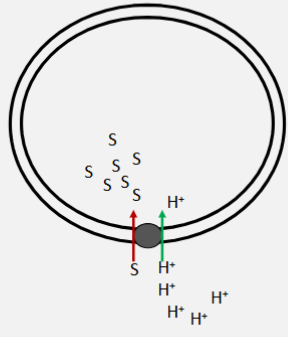
This is showing
Secondary active symport
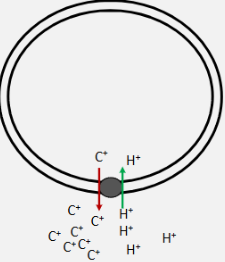
This is showing
Secondary active antiport
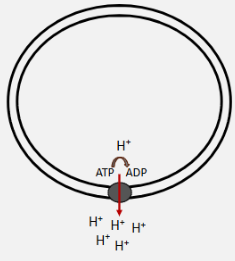
This is showing
Primary active transport
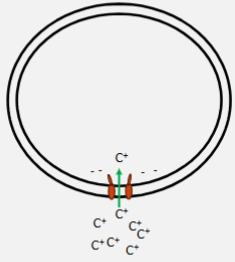
This is showing
Facilitated diffusion of cations (passive transport)
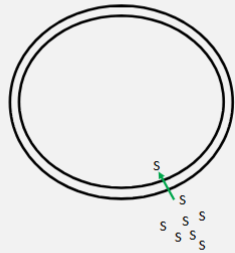
This is showing
Simple diffusion (passive transport)
Plants use the ____ forms of elements.
Name the two main forms of nitrogen: _____ and _____
charged/ionic; nitrate; ammonium
What are soil colloids?
Small clay and humus particles with a slight electrical charge
What is cation exchange capacity (CEC)?
The degree to which a soil can adsorb and exchange ions
What is pH?
Hydrogen ion concentration
What type of charge is on the surface of inorganic and organic soil particles?
What are these spots called?
What gets exchanged at these spots?
Negative; Cation exchange sites; Cations
Cation adsorption: why is it important?
Ability prevents leaching and holds nutrients for plants to access
A higher CEC means the soil can hold more _____. Sandy soils have a ____ CEC
cations; low
Nitrate has a _____ charge, meaning ________________________. This means that it _______ easily
Negative; it does not attach to the cation exchange sites; leaches
How does CEC influence fertilizer practices?
Small amounts of fertilizer are applied frequently to low-CEC soils and high amounts are applied less often to high-CEC soils. Adjust fertilizer practices to reduce runoff and maximize nutrient absorption
What is the main thing that gets exchanged with nutrients at CE sites?
Hydrogen ions
When acids dissolve in water, they release ________
Hydrogen ions
When ____ dissolve in water, they release hydrogen ions
acids
A strongly acidic solution contains a lot of
Hydrogen ions
Base – what do they combine with?
What does a base do to an acid?
Hydrogen ions; neutralize it
Salt
What is it?
When does it have a charge?
When you react an acid with a base; individual components have a charge if dissolved in water
Balance between _____ ions and ____ ions dictates pH
H+; OH-
Describe TWO ways that nitrogen is good for a plant
Better, faster growth and improved water utilization by providing a limiting nutrient
Describe TWO ways that too much nitrogen is bad for a plant
Plants that are more lush are more prone to pests and disease; Encourages new growth that cannot harden off in time for the winter
Which forms of nitrogen can the plant absorb?
Ammonium and nitrate
Which element is the most commonly deficient in plant growing systems?
Nitrogen
What is immobilization?
What is mineralization?
Removal of nutrients from the soil by organisms;
When you put nitrogen back into its usable inorganic form
What is nitrogen fixation, as root bacteria do it?
What also converts nitrogen to a usable form (2)?
Conversion of atmospheric nitrogen to ammonia, then ammonium
Lightning and Haber-Bosch
What is required in the Haber-Bosch process?
What is done in the Haber-Bosch process?
High temperatures, high pressure, lots of energy; atmospheric nitrogen is converted to ammonia
What converts atmospheric nitrogen to ammonia using high temperatures and pressures?
Haber-Bosch process
Nitrate is a(n) ______, so it requires ______ transport, specifically __________.
Unlike _____, nitrate can be ______ and _______ without major ______ to the plant.
However, it is more _________ for the plant.
Anion; active; secondary active symport;
ammonium; translocated; stored; harm;
energetically costly
Ammonium is a ____, so it is _____ taken up via ______ protein. At first glance, it is the better option because it is less ___________.
But this means there is ________ ammonium is taken up, which can be _____ for the plant because it has the potential to __________.
Cation; passively; channel; energetically costly
Less control over how much; dangerous; mess up hydrogen ion gradients
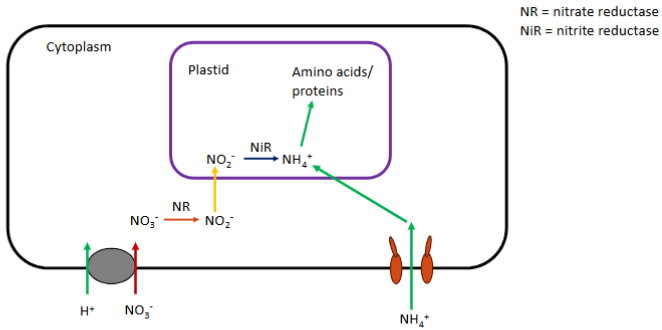
Briefly explain the uptake and assimilation of nitrate.
THEN Briefly explain the uptake and assimilation of ammonium
Nitrate:
Taken up via secondary active symport, moved in with hydrogen ions
Reduction to nitrite by NR
Moved to the plastid (if in roots) or chloroplast (if in leaves)
Reduction to ammonium by NiR
Conversion to amino acids
Ammonium:
Taken up into the cytoplasm via passive transport and channel proteins
Moved to plastid (if in roots) or chloroplast (if in leaves)
Conversion to amino acids
What are crop residues? Give an example
Waste materials generated by agriculture; plant parts left after harvest
What is green manure?
Crop cultivated specifically to be incorporated into the soil while still green
What is complete fertilizer?
Fertilizer with NPK
What are quick-release fertilizers?
Fertilizers that release all available nutrients in a short time after application
What are controlled-release fertilizer
Fertilizers that provide nutrients in a form that cannot all immediately be absorbed.
What is one impact the development of synthetic fertilizers has had?
Improved yields, reduced world hunger
Immediate release aka quick release fertilizers: provide one downside
Adding too much can cause leaching and/or runoff
Split applications: how are they helpful with quick release ferts?
Avoids the fertilizer burning the plant and runoff, improves nutrient uptake
Controlled-release fertilizer
One advantage:
One disadvantage:
Able to do more infrequent fertilization; Microplastics
Principles of proper fertilization: be able to list ONE of the 5 “R’s”, and describe what effect it has and why it is important
Right placement: spread fertilizer in the drip line, around the edges of the tree leaves; Fertilizer will reach the smaller roots and be absorbed more effectively

