AP Psych Unit 5 | Perspectives on Mental Disorders
 AP Practice
 Call Kai
1/18

Earn XP
Description and Tags
Name | Mastery | Learn | Test | Matching | Spaced | Call with Kai | Chat |
|---|
No analytics yet
Send a link to your students to track their progress
19 Terms
abnormal psychology
the study of unusual patterns of behavior, emotion, and thought
explores the causes, symptoms, and treatments of psychological disorders to understand and improve mental health
clinical psychology
the branch of psychology that assesses, diagnoses, treats, and prevents mental, emotional, and behavioral disorders
utilizes various therapeutic methods and interventions to improve individuals’ mental health and well-being
psychology student syndrome
psychology students studying abnormal behavior can also become convinced that they have some mental disorder
avoid:
diagnosing w/o comprehensive assessment and professional certificiation
overgeneralization
oversimplification
disclosing personal information
Diagnostic and Statistical Manual of Mental Disorders (DSM-5-TR)
comprehensive classification system used by mental health professionals to diagnose and categorize mental disorders in the U.S.
provides standardized criteria and descriptions for consistent use across clinical settings
international classification of mental disorders (ICD)
global standard for reporting and categorizing diseases, including mental and behavioral disorders
used by healthcare professionals to diagnose conditions and track health trends worldwide
deviation
significant departure from accepted social behaviors and cultural expectations
used as a criterion to identify and diagnose abnormal behaviors and psychological disorders in clinical settings
distress
intense and prolonged emotional suffering that impairs and individual’s ability to function in daily life
often used as a key criterion for diagnosis
dysfunction
the disruption in cognitive emotional, or behavioral functioning that significantly impairs an individual’s ability to perform normal daily activities
stigma
the negative stereotypes and social disapproval directed at individuals with mental disorders
often leads to discrimination and barriers to seeking or receiving mental healthcare
may lead to:
discrimination
social isolation
employment challenges
worsening mental health
reluctance to seek help
reduce self-esteem
limited access to resources
harassment and violence
biological perspective
mental disorders are caused by physiological and genetic factors
focuses on how brain function, neurochemistry, and genetics contribute to psychological conditions
key focus:
brain function
neurochemistry
genetics
neurotransmitters
treatment approach: pharmacological interventions (medication)
behavioral perspective
suggests that mental disorders arise from maladaptive learned behaviors and associations
focuses on how inappropriate conditioning and reinforcement of behaviors contribute to psychological issues
key focus:
conditioning
reinforcement
learned associations
avoidance
treatment approach: behavioral therapy
psychodynamic perspective
mental disorders stem from unresolved unconscious conflicts and impulses, often originating in childhood, that influence current behavior and emotional states
key focus:
unconscious mind
childhood experiences
defense mechanisms
id/ego/superego
treatment approach: psychodynamic therapy
humanistic perspective
emphasizes that mental disorders arise when individuals’ innate potential for self-fulfillment and personal growth in blocked, often due to failures in achieving self-acceptance and meaningful personal goals
key focus:
self-actualization
authentic self
unconditional positive regard
intrinsic goals
treatment approach: humanistic therapy
cognitive perspective
proposes that mental disorders are caused by maladaptive thought patterns, including dysfunctional beliefs, attitudes, and emotional responses, which negatively affect behavior and emotional well-being
key focus:
dysfunctional beliefs
cognitive distortions
negative self-talk
treatment approach: CBT
evolutionary perspective
suggests that mental disorders can arise from behaviors and mental processes that are maladaptive, reducing an individual’s chances of survival and reproduction in a given environment
key focus:
natural selection
adaptive traits
exaggerated responses
ancestral environment
treatment approach: exposure therapy
sociocultural perspective
mental disorders stem from maladaptive social and cultural relationships and dynamics
emphasizes the influence of societal norms and interactions on mental health
key focus:
social norms
cultural context
discrimination
social support networks
treatment approach: culturally-tailored therapy
eclectic approach
combining techniques and theories from multiple therapeutic orientations to tailor treatment to the unique needs of individual clients
enhances flexibility and effectiveness in therapy
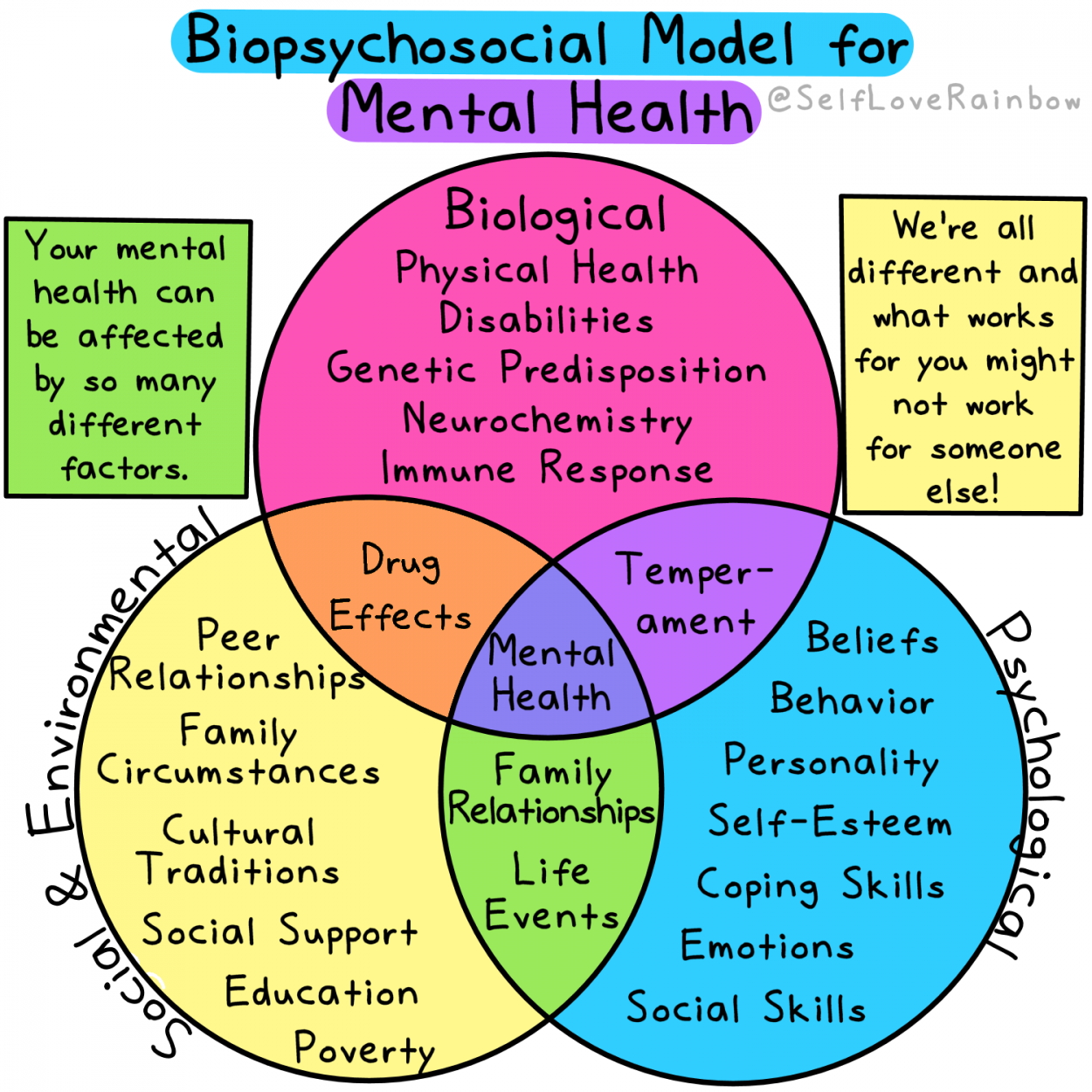
biopsychosocial model
psychological disorders result from a complex interaction of biological, psychological, and sociocultural factors
emphasizes the comprehensive and interconnected nature of influences on mental health
diathesis-stress model
psychological disorders arise from a predisposing genetic vulnerability (diathesis) combined with stressful environmental factors (stress), triggering the onset of mental health issues