Poster - Too young to lead
 Call Kai
 Learn
Learn Practice Test
 Spaced Repetition
 Match
Match Flashcards
 Knowt Play
1/4

Earn XP
Description and Tags
Too young to lead? Role incongruity explains age bias against young leaders
Name | Mastery | Learn | Test | Matching | Spaced | Call with Kai |
|---|
No analytics yet
Send a link to your students to track their progress
5 Terms
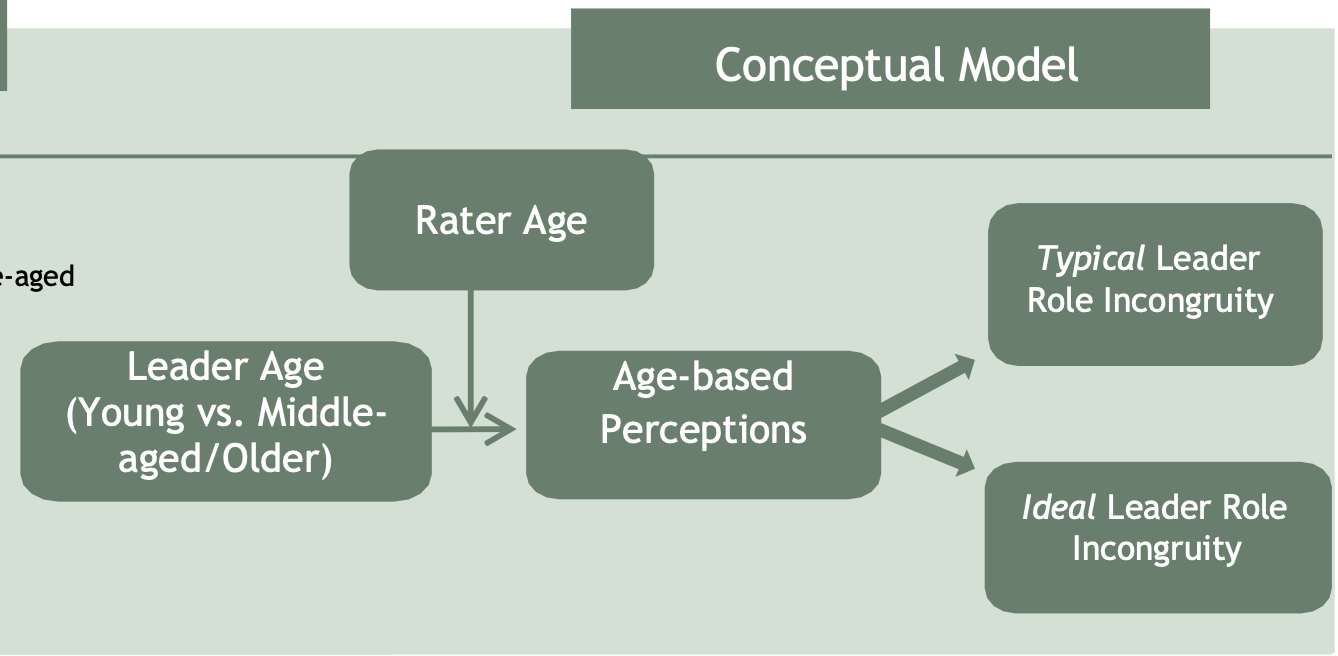
List the hypotheses presented in the paper.
H1a
Age stereotypes of young adults are more incongruent with typical leader roles than those of middle-aged or older adults.
H1b
Age stereotypes of young adults are more incongruent with ideal leader roles than those of middle-aged or older adults.
H2a
The role incongruity between young adults and typical leader roles is stronger among older observers than younger observers.
H2b
The role incongruity between young adults and ideal leader roles is stronger among older observers than younger observers.
Draw the conceptual model
What are the implications of this paper?
Organizations should avoid age bias and evaluate leaders based on performance rather than age. Young professionals should demonstrate competence and build credibility.
What are the results of this paper?
Young leaders are perceived as less suitable for leadership roles, especially by older observers, although they are not actually less effective.
What stands out in the methodology of this paper?
The study uses two studies with different approaches and a large sample to examine age-based leadership perceptions.

