ENST2500 TEST
 Studied by 0 people
 Call with Kai
 Learn
Learn Practice Test
 Spaced Repetition
 Match
Match Flashcards
 Knowt Play
1/32

There's no tags or description
Looks like no tags are added yet.
Name | Mastery | Learn | Test | Matching | Spaced | Call with Kai |
|---|
No analytics yet
Send a link to your students to track their progress
33 Terms
5 key themes of geography
location, place, region, movement, nature-environment interaction
Location
Location = where. Relative vs. Absolute Location (closeness to impact areas)
Place
What is where or there: characteristics. how will climate change affect the places in which we live…
Regions
geographical tools: boundaries and stating criteria
Social Interaction/Mobility
human nature relationships within places. + Climate migration
Scale
concept of various scales of analysis (local, regional, global): they are linked and have effect on eachother
Global Warming
long-term warming of the planet as a result of atmospheric changes caused by greenhouse gases
Climate Change
broader range of changes that are happening to the planet: sea levels, shrinking glaciers, accelerating ice melt…
Weather
SHORT-TERM atmospheric conditions.
Climate
weather of a specfic region over a long-period of time, usually 30+ years
Tropical, Dry, Temperate, Continental, Polar
MYTH: climate change is natural
since the last ice age, climate has been relatively stable; not faltering. earth’s temp heating up at fastest rate in at least 2,000 years
Problems when solving climate change
global problem, local problem, long-term problem, time disconnect: economic costs, cumulative costs, different values and time horizons, lack of trust in gov, political will, human psych, complex system
Wicked Problems
complex and messy, multiple causes, cant be entirely solved
Tame Problems
causes are known, processes are known, time for management
critical problems
short term, decisive action needed, no time for analysis
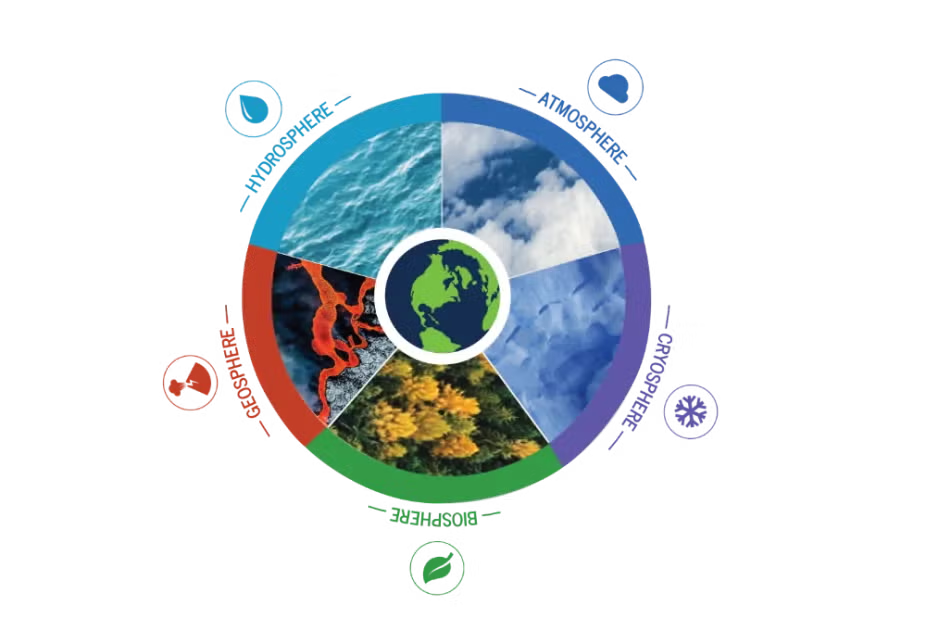
Earth System Spheres
Geo (interior and surface made of rocks), Hydro, Atmo (envelope of gas), Cryo (ice), Bio (living supportive)
Environment
space or field where networks of relationships occur
Nature
essence of being, unaltered by humans
Culture-Nature Relationship
contrast; enlightenment placed humans above nature. civilizing scale
Ecocentricism
nature-centered, deep ecoloy (nature more value than humans)
Anthropocentricism
human-centered, intrinsic value posession
Natural Tipping Points
concept that CC can drive elements of earth’s environment past a threshold; abrupt shifts with dangerous consequences
Social Tipping Points
major societal stresses that cause shift to a new dynamic
Anthropocene
encompasses: population growth, increased energy use, greenhouse gas emissions, technological advancements, cultural interconnection, digital revolution. either colombian exchange (1492), industrial rev (late 18th)
System Interaction Examples
1) the food–energy–water nexus and associated carbon–energy–
water cycles that underpin this nexus;
• (2) interactions between the cryosphere and oceans accounting
for rising sea level convolved with subsiding and/or eroding
coastlines and deltas; and
• (3) freshwater, nutrient, and sediment exchanges between land
seas and their mediation by atmospheric, hydrologic, and geologic
processes; among numerous others
Shared Socio-economic pathways SSPs
how societall choices will affect emissions and how agreements can be met. im not too confident
Carbon Cycle
natural, continous movement of carbon between earth’s atmosphere, oceans, and living organisms
Carbon Sinks
carbon storage areas
Carbon Budget
maximum amount of cumulative CO2 emissions allowed to limit gllobal warming
Technosphere
encompasses system of all tech manufacutred by humans. included in anthroposphere
Crawford Lake- ONTARIO
global marker site to define start of anthropocene epoch: meomictic lake (warm and cold dont mix), sediment layers
Kinetic Energy-motion
power mills, animals ploughing, human muscle power (slaves)
Thermal Energy
plant based fuels for heating, pet, semi-carbonized coal,
 Note
Note  Flashcards (53)