Signal Transduction Pathways
 Studied by 0 people
 Call Kai
 Learn
Learn Practice Test
 Spaced Repetition
 Match
Match Flashcards
 Knowt Play
1/10

There's no tags or description
Looks like no tags are added yet.
Name | Mastery | Learn | Test | Matching | Spaced | Call with Kai |
|---|
No analytics yet
Send a link to your students to track their progress
11 Terms
How do cells communicate (with each other and other aspects of their environment)?
Signal Transduction
receptor proteins interact w/ ligands (signal molecules) or detect physical changes (light, temp)
interaction of a receptor w/ a signal results in a series of cellular events
activation of signal transduction generally leads to differential gene expression (response)
Signal Transduction involving Steroid Hormones: Components
Signal (steroid hormone): can pass through CM; once bound, anchor is cleaved and receptor + signal enter nucleus
Receptor (transcription factor): transmembrane or cytoplasmic (for signals that can independently cross CM), held in cytosol by cytoplasmic anchor protein
Hormone Response Element (cis-acting element)
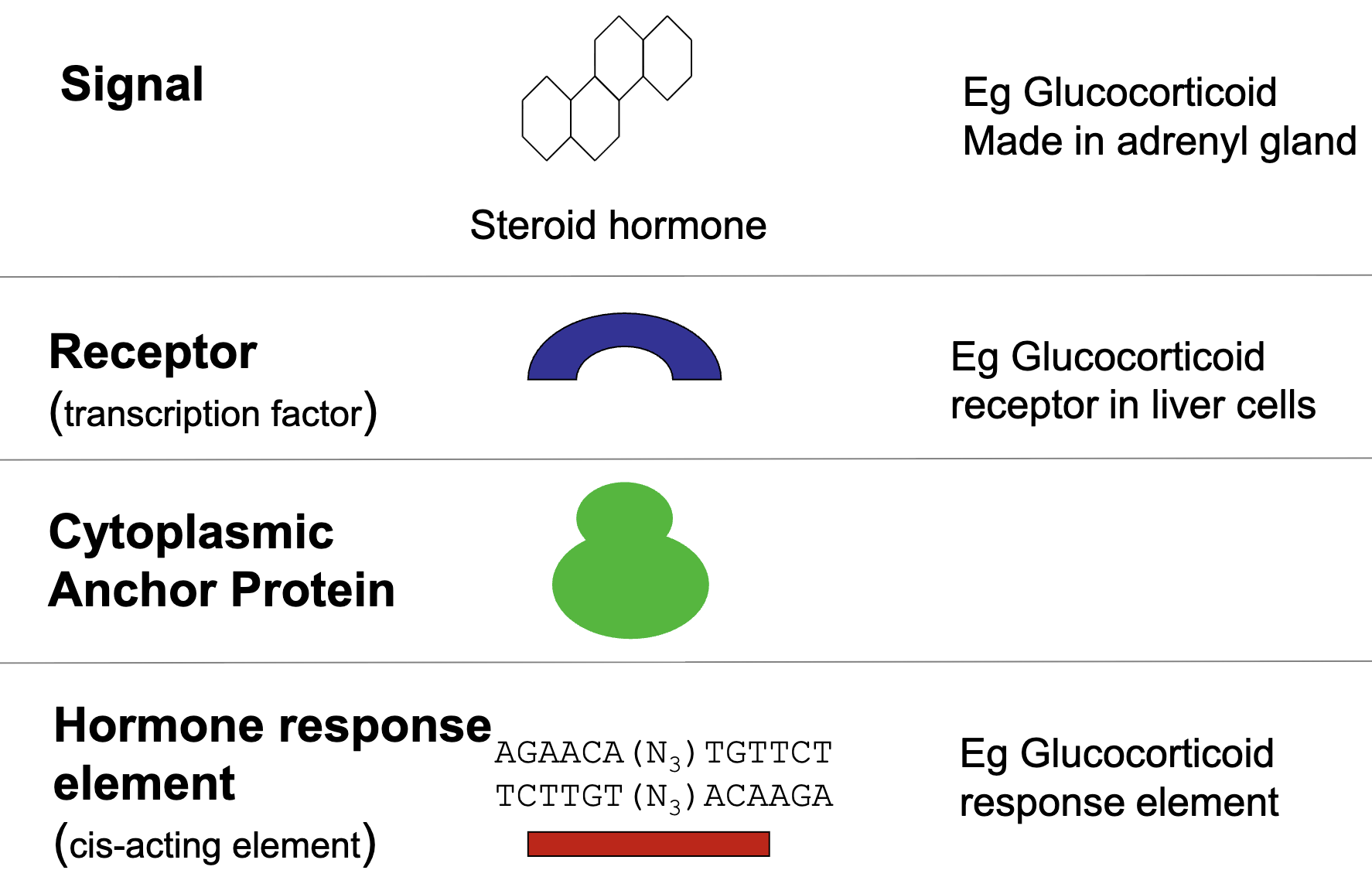
Steroid Hormones Summary
Steroid hormone is produced
steroid hormone crosses CM and binds receptor in the cytosol, releasing the receptor from its cytoplasmic anchor
hormone/receptor complex acts as a transcription factor; it enters the nucleus and regulates transcription of target genes
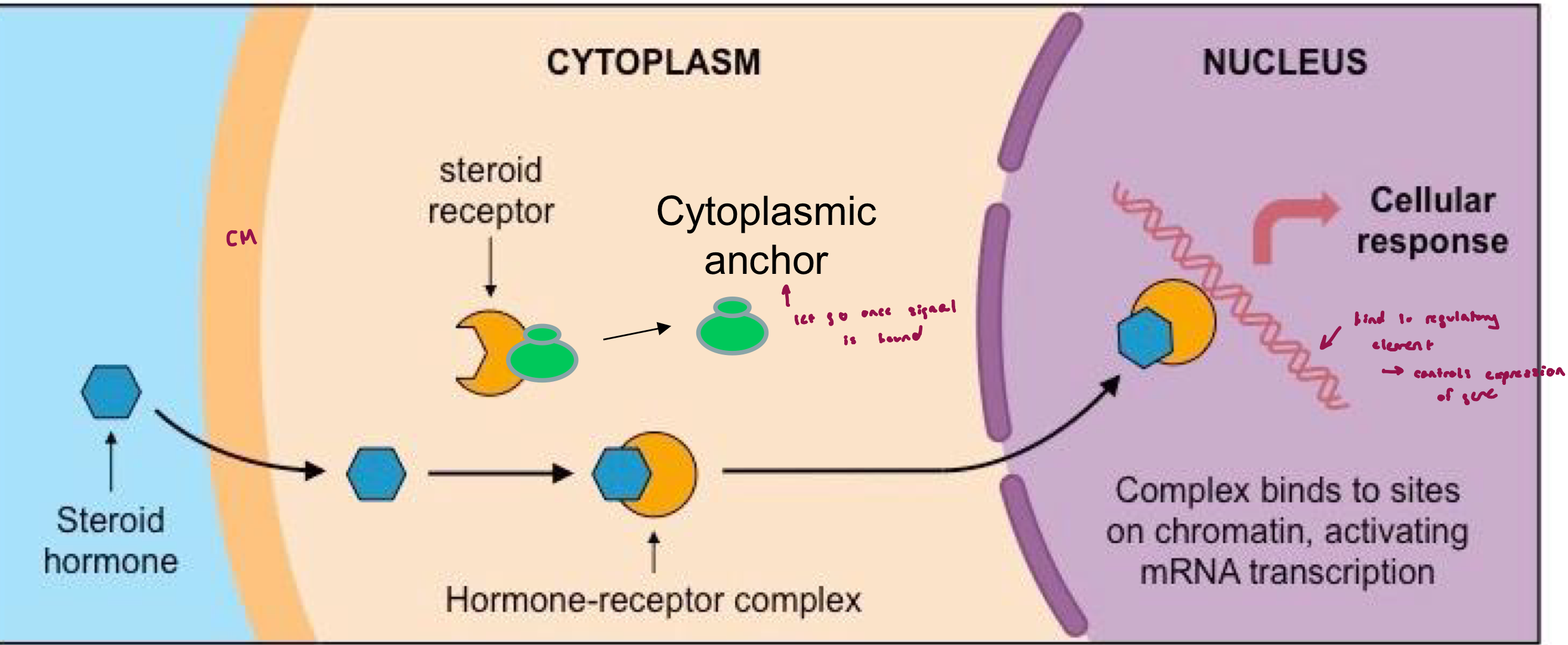
Steroid Hormones Example: Glucocorticoids
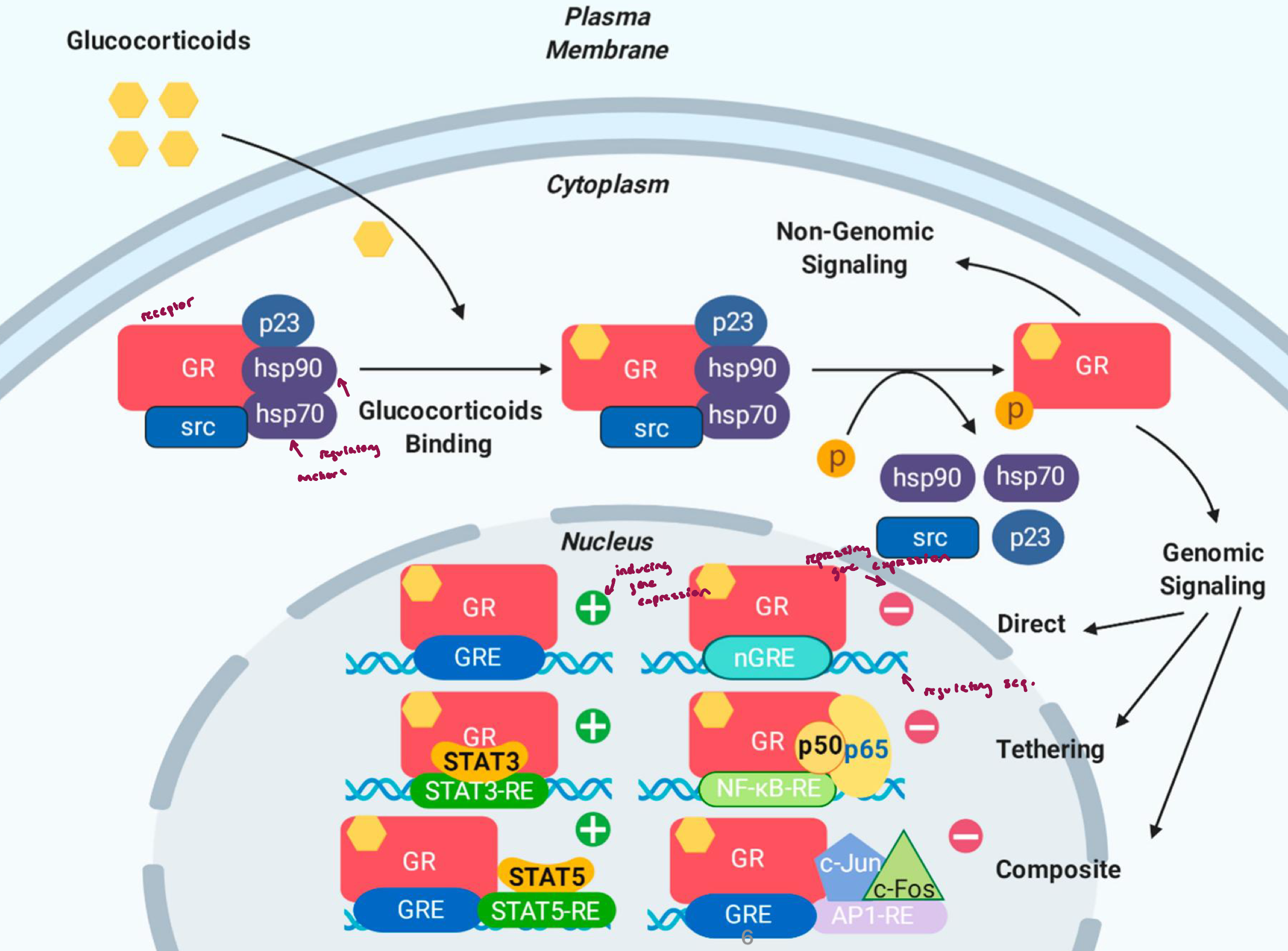
GR (glucocorticoid receptor) bound in cytosol by a number of chaperones
binding of glucocorticoid to its receptor allows it to migrate to the nucleus
the glucocorticoid/receptor complex binds to its response element (GRE) to regulate transcription (i.e acts as a transcription factor)
this complex also interacts w/ other transcription factors for complex regulation of gene expression
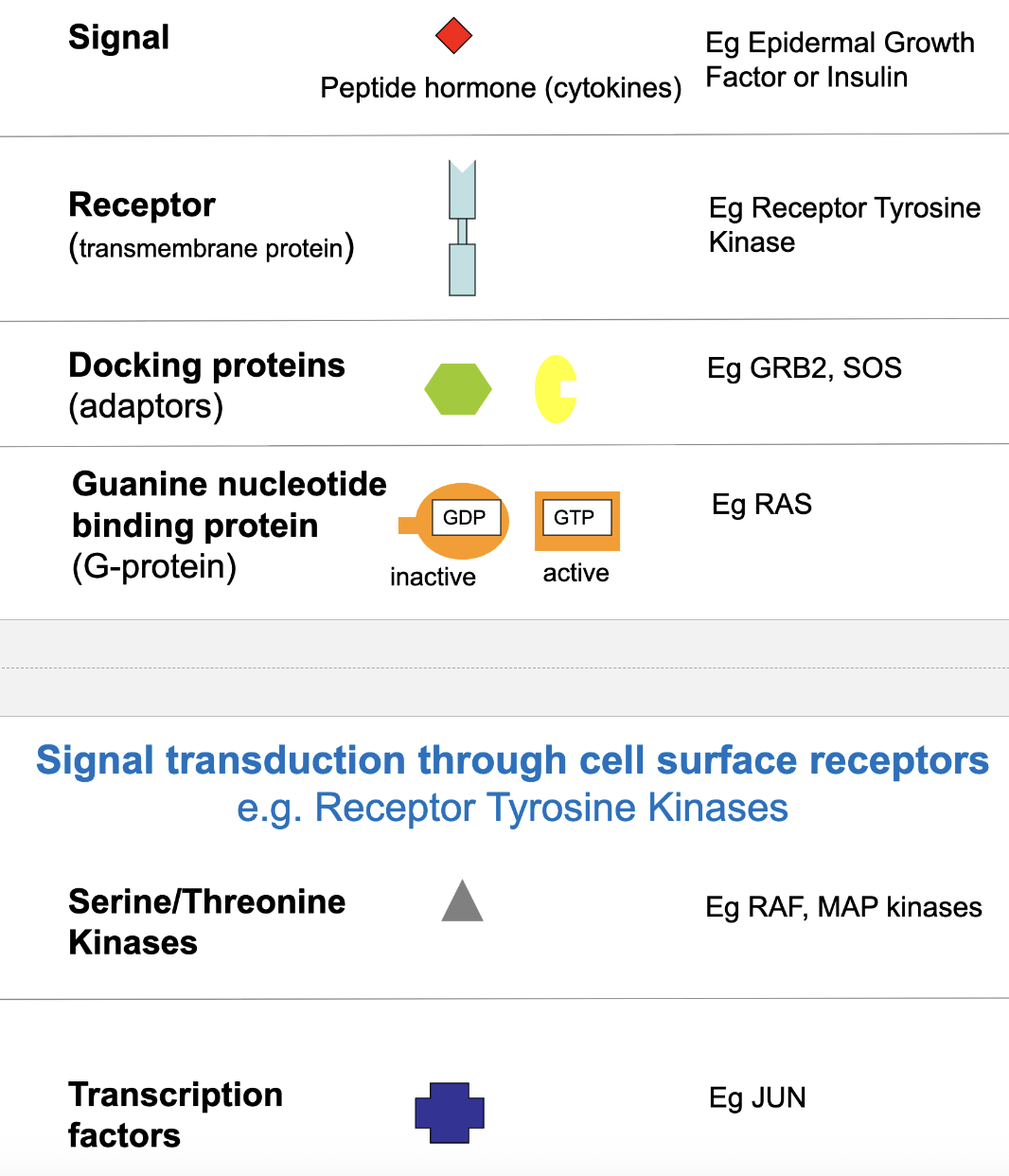
SIgnal Transduction thru Cell Surface Receptors (e.g. Receptor Tyrosine Kinases)
signal: can’t pass thru CM
receptor (transmembrane protein): can bind to signal; exist as monomers on surface, and after binding signal, form dimer
dimerization allows for cross-phosphorylation on Tyr residues (cytosol side)
docking proteins (adaptors): transmit signal from receptor, helps recruit other protein to receptor
e.g. GTP binding protein/exchange factors (GTP switch to GDP)
Guanine nucleotide binding protein (G-protein): GDP inactive, GTP active
e.g RAS
serine/threonine kinases
transcription factors
Receptor Tyrosine Kinase Signaling Summary
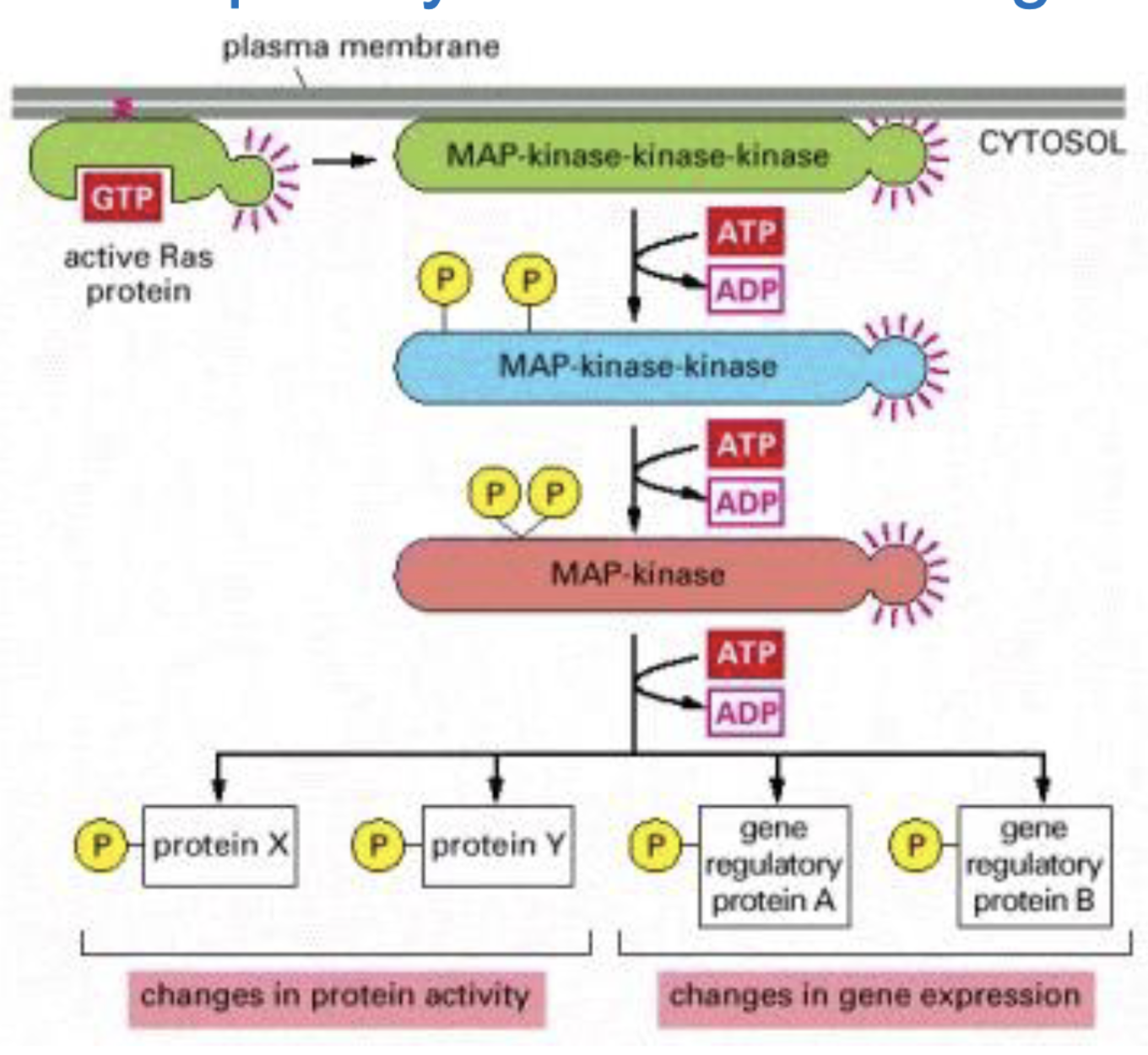
signal molecule binds to receptor proteins at cell surface, causing receptor to form dimers
receptor is activated dimerization, and recruits/binds docking/adaptor proteins
docking protein activate G-protein (by recruiting a protein that helps the G protein exchange GDP for GTP)
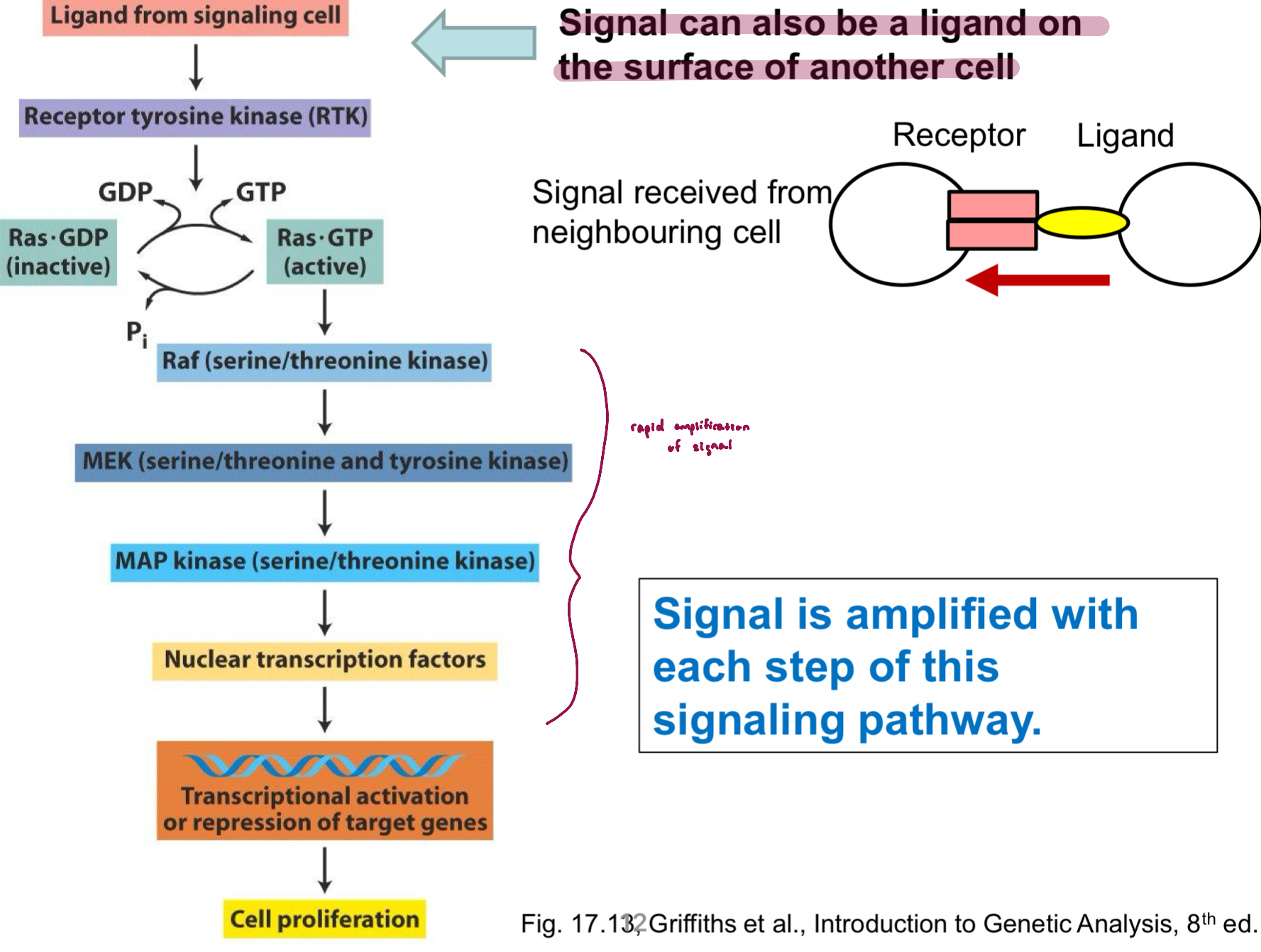
active G protein (e.g. Ras) activates cascade of serine/threonine kinases (e.g. MAP kinases)
Ser/thr kinases activate transcription factors to regulate changes in gene expression
When signal isn’t its own molecule
signal can be a ligand on the surface of another cell (signal received from neighboring cell)
Signaling Pathway Example: Erythryopoietin Signaling Pathway
can signal thru Ras and the MAP kinases
also signals thru other proteins (e.g. JAK/STAT pathway); more than one pathway occuring
common element: they regulate transcription factors that control expression of genes involved in cell, function, proliferation, and survival
they respond to environmental signals
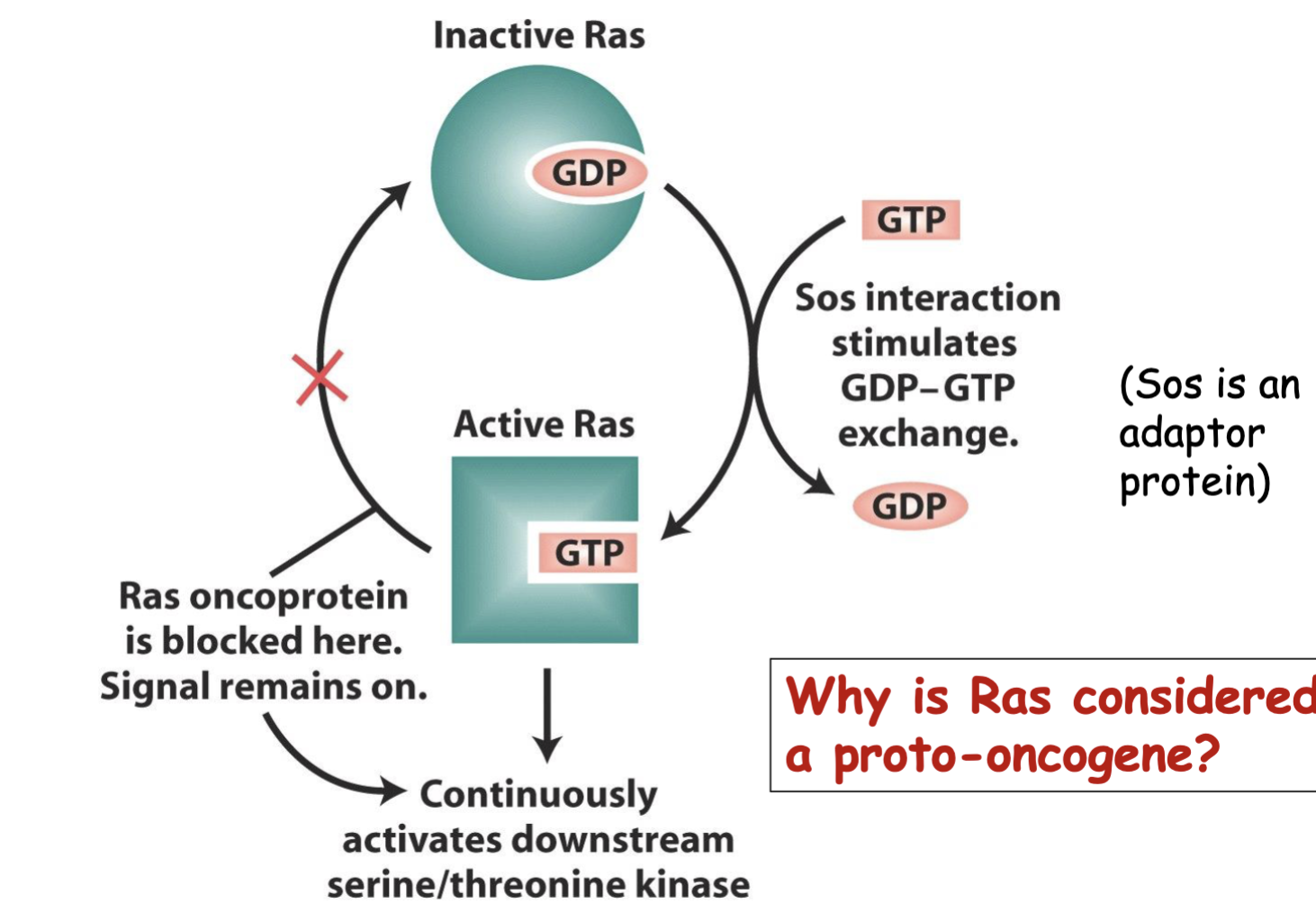
Why is Ras considered a proto-oncogene?
the WT form of Ras promotes cell proliferation. If a mutation causes it to be active more than usual, it will become an oncogene and promote excessive cell proliferation (ie. Cancer)
constantly on → leads to cancer (potential to turn cancerous)
Proto-Oncogene
A gene that promotes cell survival or cell division. It can promote cancer if its expression is dysregulated (ie. Through mutation)
Tumor Suppressor
A gene that prevents cell division, induces cell death, and/or induces DNA repair. A loss of function mutation would promote cancer.
 Note
Note  Flashcards (26)