Maximum Oxygen Uptake - VO2max
 Call Kai
 Learn
Learn Practice Test
 Spaced Repetition
 Match
Match Flashcards
 Knowt Play
1/17

Earn XP
Description and Tags
Semester 1, week 4
Name | Mastery | Learn | Test | Matching | Spaced | Call with Kai |
|---|
No analytics yet
Send a link to your students to track their progress
18 Terms
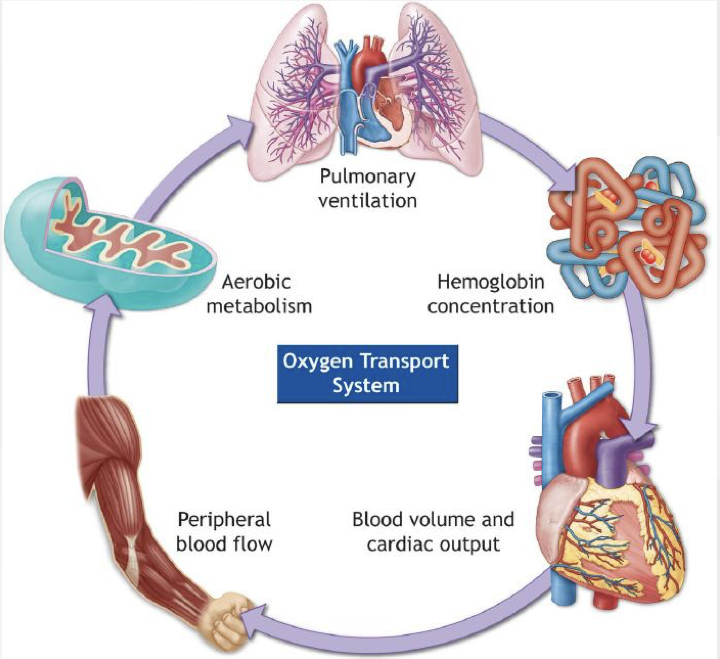
What need to work properly to have the best VO2max?
Pulmonary ventilation
Hemoglobin concentration
Blood volume and cardiac output
Peripheral blood flow
Aerobic metabolism
All this is known as the oxygen transport system and is why VO2max is used as a measure for aerobic capacity
Which systems are involved depending on what event/duration of exercise?
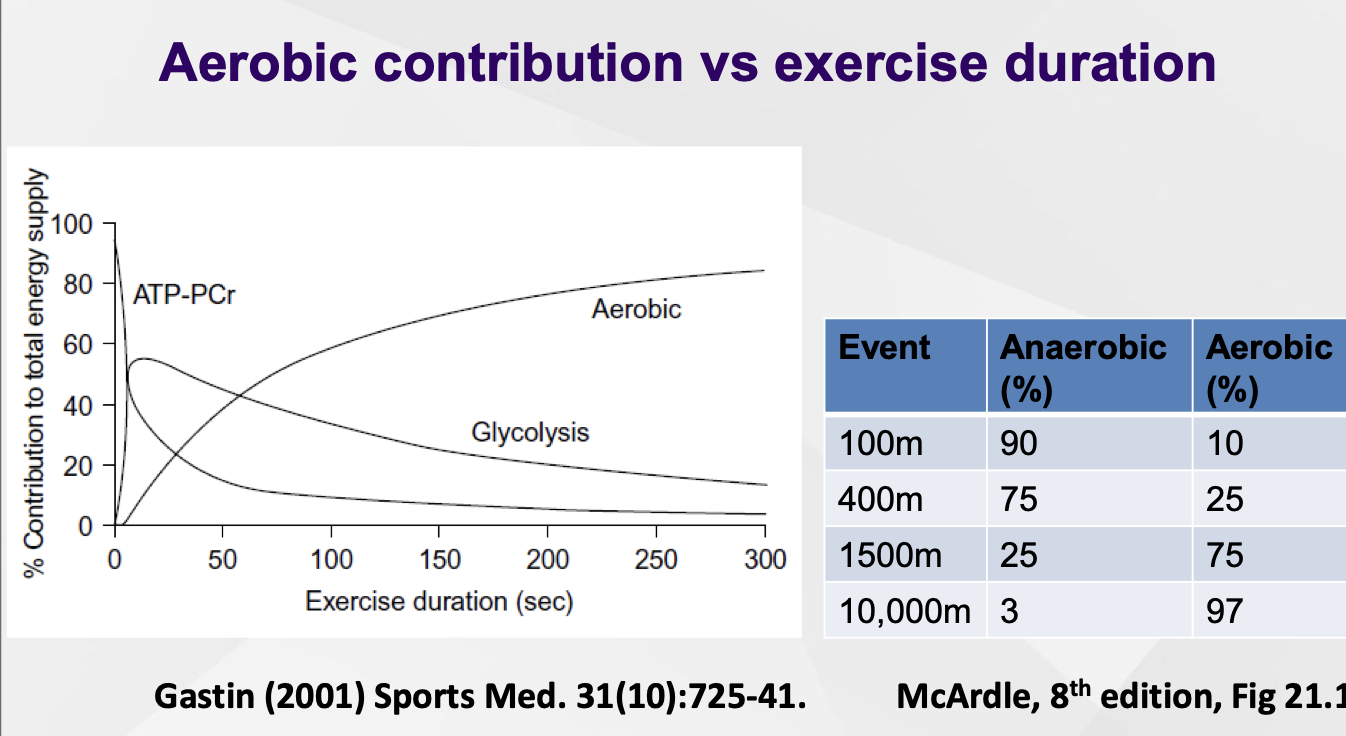
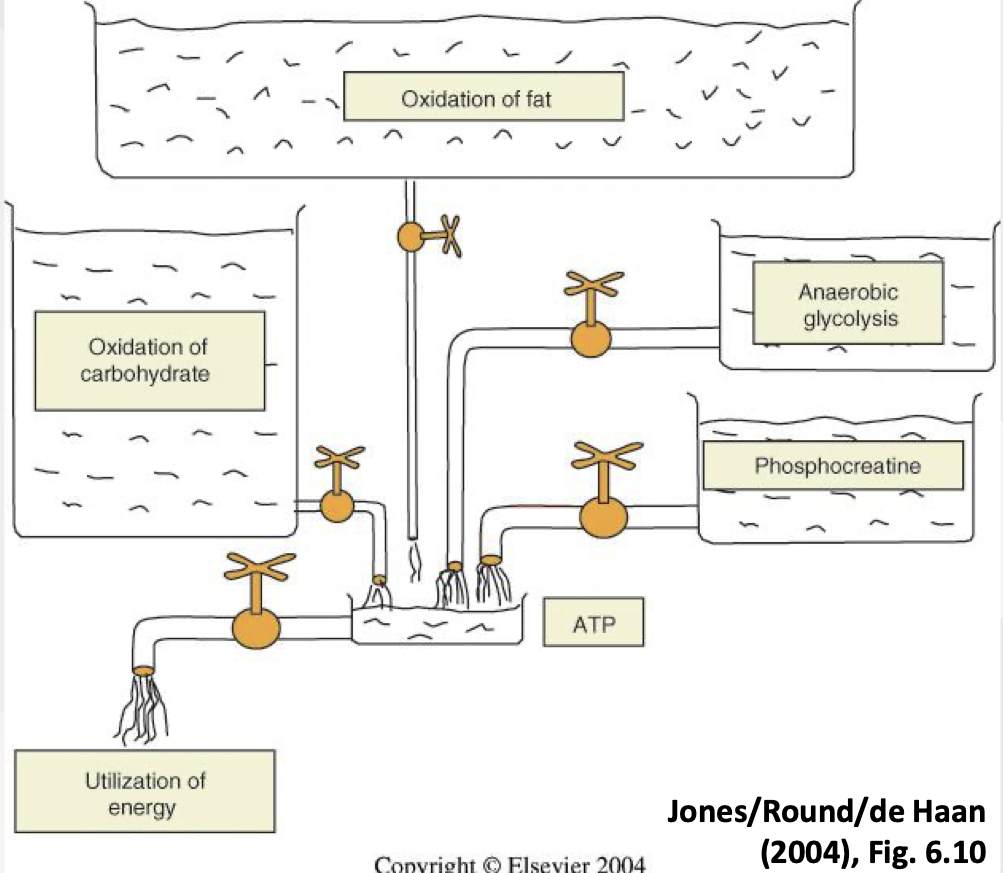
Do the systems work together?
Yes, it’s never exclusively one system
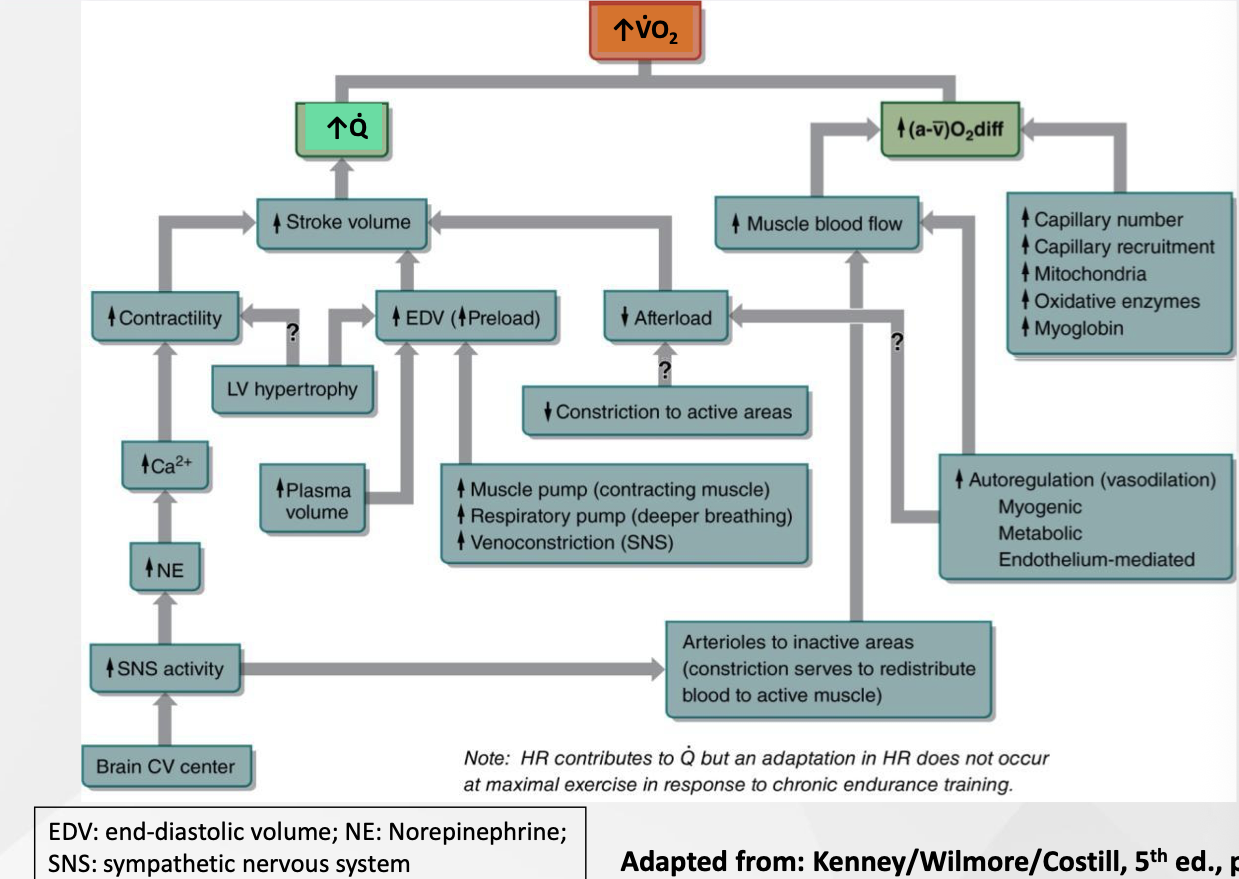
What does VO2max depend on?
A good cardiovascular system and high cardiac output
Well-developed oxidative capacity in skeletal muscle (eg. mitochondria, oxidative enzymes, etc.)
Is oxygen delivery or oxygen utilisation the limiting factor of VO2max?
Acute exercise study: isolated muscle can use more oxygen than the heart can deliver (eg. Maximal one- vs two-legged exercise: maximum O2 extraction by quadriceps during one-legged exercise is 2-3 times higher than that measured in the same muscle group during two-legged exercise)
Longitudinal training studies: 2.2-fold increase in mitochondrial enzymes, but only ~20-40% increase in VO2max. Individuals with a similar VO2max exhibit two-fold range of mitochondrial enzymes
Training study with manipulation of blood volume: reducing blood volume through phlebotomy after training (to pre-training levels) reduces both cardiac output and VO2max to pre-training levels
= oxygen delivery, and thus VO2max is primarily limited by stroke volume
What factors are involved in having a higher VO2max?
What are absolute and relative VO2max scores?
Absolute VO2 max (L/min): Measures the total volume of oxygen consumed per minute, regardless of weight.
Relative VO2 max (mL/kg/min): Measures oxygen consumption divided by body weight, allowing for fair comparisons between individuals of different size
How do you complete the calculations to compare the VO2max of men and women?
Absolute score = 2.5L/min
Female, 50kg, 25 years old, endurance trained = 2.5L/min ÷ 50kg = 50mL/kg/min
Male, 85kg, 35 years old, sedentary = 2.5L/min ÷ 85kg = 29.4mL/kg/min
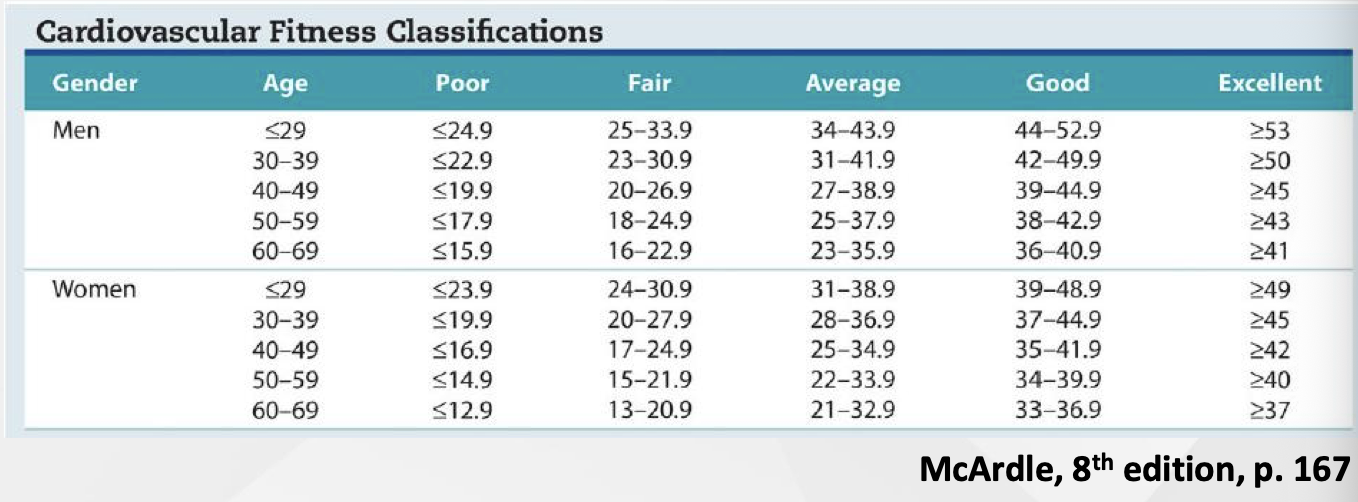
What are the cardiovascular fitness classifications?
Why do men have higher VO2max values?
Men have higher values than women due to different body composition (women have higher body fat that is not metabolically active)
What can VO2max be used for?
To assess whether to perform surgery (eg. lung surgery: <10mL/kg/min = no, >20mL/kg/min or >75% predicted = yes)
For professional athletes to assess fitness and training zones
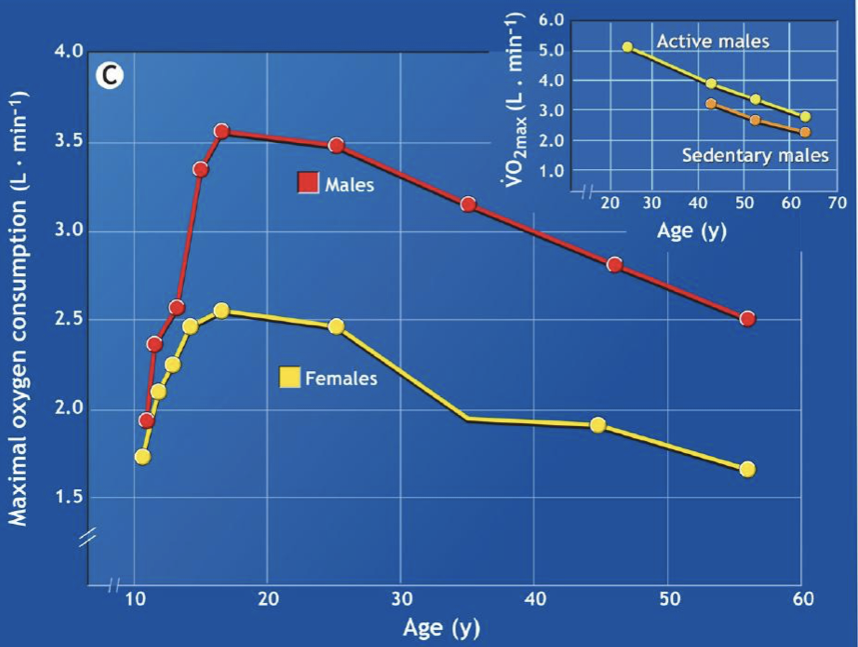
What happens to VO2max as you age?
After the age of 25, ~1% decrease/year
During ageing, more rapid decline (may be confounded by disease)
However, if active you can prevent the decline
Does heredity play a role in VO2max?
Yes, genetics accounts for 25-50% of the variance in VO2max between different people. For example, a typical world-class distance runner has a VO2max of 85ml/kg/min but would have a deconditioned value of 65ml/kg/min
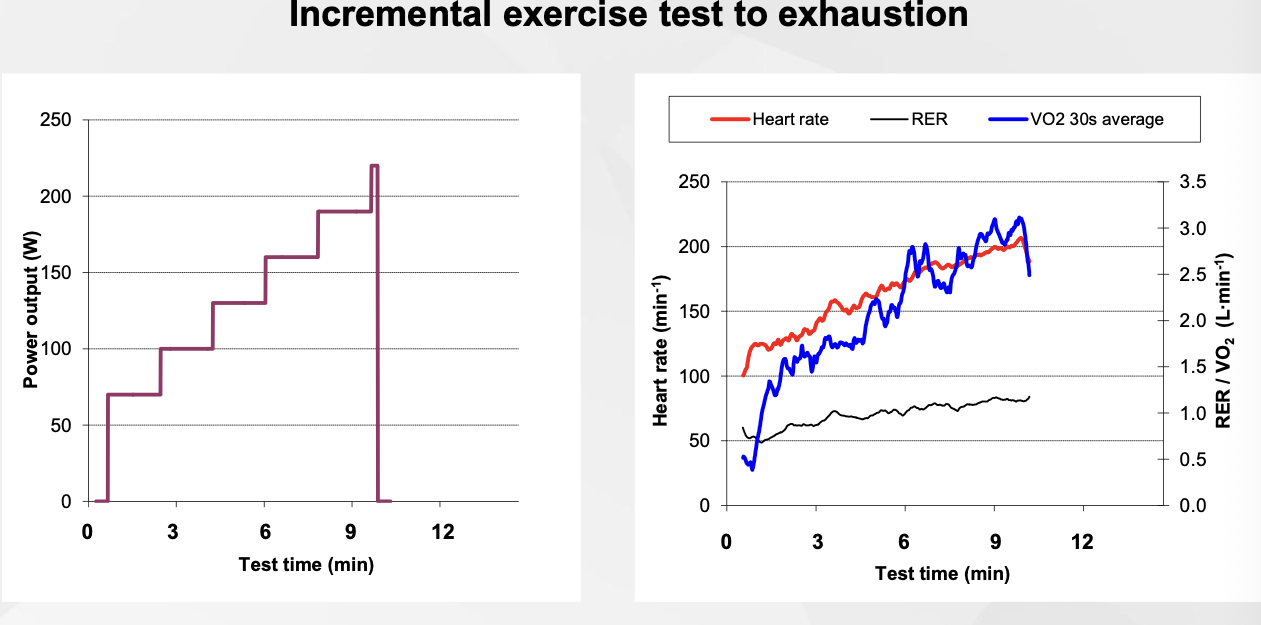
What would the protocol design of VO2max determination be?
Incremental exercise test to exhaustion
VO2max: aim for protocols where exhaustion is achieved within ~8-12mins
Too short protocols: exhaustion due to peripheral limitations
Too long protocols: exhaustion due to duration
Large muscle group (cycling, running, rowing): stresses maximum cardiac output, avoid premature local muscle failure
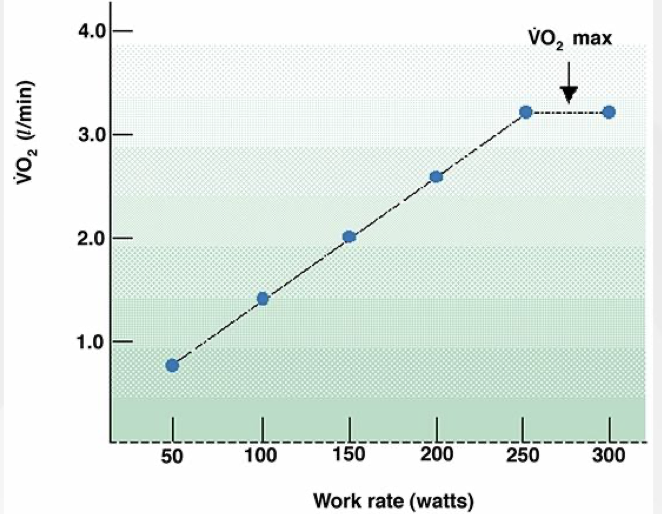
What is the primary criterion for maximal oxygen uptake definition based on ACSM/BASES guidelines?
Plateau in VO2 despite load/speed increase to next stage (less than 2ml/kg/min). However, this is only found in about ~40-50% of people
What is the secondary citerion for maximal oxygen uptake definition based on ACSM/BASES guidelines?
Heart rate within 90% of age-predicted maximum (220-age)
Blood lactate concentration over 8mmol/L (indication of large contribution of anaerobic metabolism)
Respiratory exchange ratio (RER) (VCO2/VO2) of 1.15 or above (indication of large contribution of anaerobic metabolism)
Rating of perceived exertion (RPE) > (on 6-20 scale)
Not all individuals show all criteria
= VO2peak (indicated the peak oxygen uptake reached in the specific test = also used for smaller-muscle group exercise
What are other determinants of endurance performance?
Ability to use oxygen is the main physiological determinant of endurance performance
VO2max: maximal capacity (upper limit)
BUT also very important:
Ability to sustain a high percentage of VO2max over the time of the race (→eg. High lactate threshold, high lactate steady state)
Ability to produce high power/speed at a given oxygen uptake (economy, technique)
What is a summary of maximal oyxgen uptake (VO2max)?
Oxygen delivery is mainly determined by cardiac output
Oxygen uptake in peripheral tissues: (a-v)O2 difference = capillarisation, mitochondria number, oxidative enzymes
VO2max = peripheral limitation < central limitation
VO2max criteria = no increase in VO2 despite increases in work (plateau), secondary criteria = blood lactate, heart rate RER, RPE

