Chronic Wasting Disease (CWD)
 Call Kai
 Learn
Learn Practice Test
 Spaced Repetition
 Match
Match Flashcards
 Knowt Play
1/15

There's no tags or description
Looks like no tags are added yet.
Name | Mastery | Learn | Test | Matching | Spaced | Call with Kai |
|---|
No analytics yet
Send a link to your students to track their progress
16 Terms
What are Prion Diseases?
Transmissible spongiform encephalopathy (TSE)
Transmissible- can be spread
Spongiform- looks like a sponge
Encephalopathy- conditions that affects bran function
Caused by a misfolded normal cellular prion protein- PrP^c -> PrP^Sc (infectious form)
Increased beta sheets
Common Prion Diseases
Humans- Creutzfeldt-Jakob Disease (CJD)
Ovines- Scrapie (sheep)
Bovines- Bovine Spongiform Encephalopathy (BSE) “Mad Cow Disease”
Felines- Feline Spongiform Encephalopathy
Cervids- Chronic Wasting Disease (CWD)
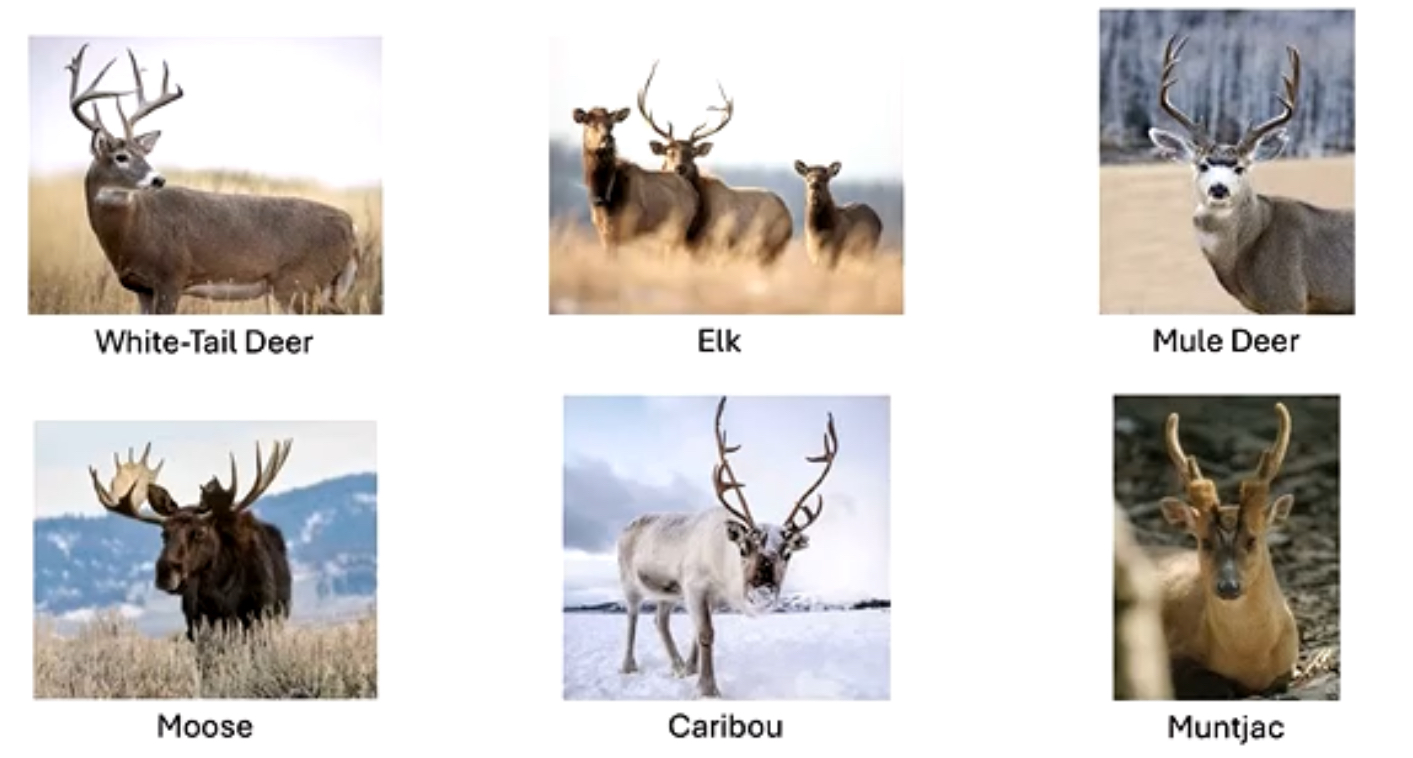
Species Affected by CWD
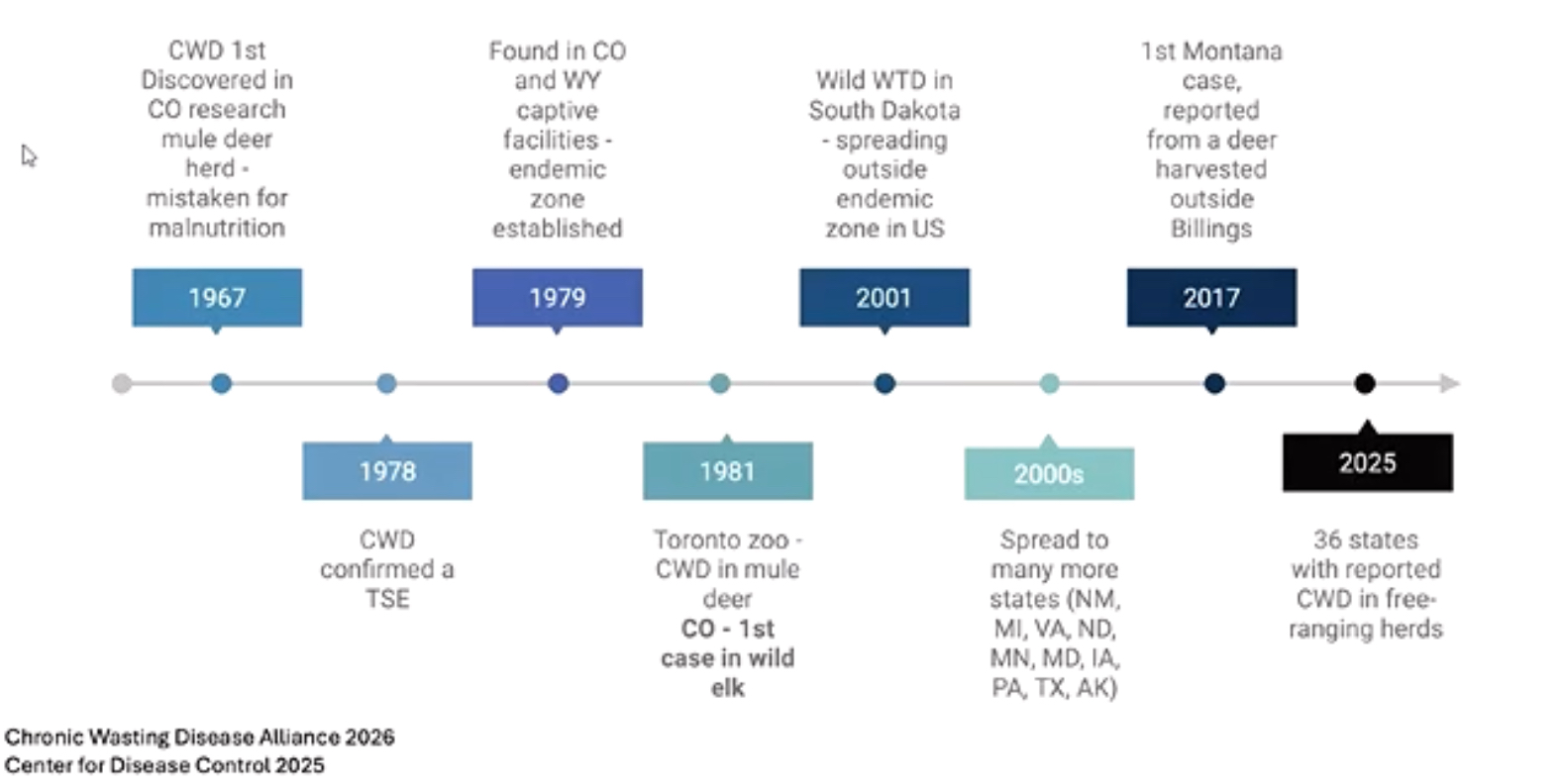
History of CWD
1979: U.S. established endemic zone
1981: first case outside of the U.S.& first case in a wild herd population
CWD Signs
Incubation time: 3 months - 4 years
Varies depending on route of exposure or infectious dose
Observations based off captive animals
Easier to detect signs in deer compared to elk because of their natural behavioral patterns
Elk tend to not show how much they’re sick compared to deer
Early signs: Dullness in eyes and diminished alertness
Progressive neurodegeneration- build-up of prions form sponge-like holes in brain tissue
Late-stage Clinical Signs:
Weight loss
Behavioral changes
Lowered head
Variable Signs: (may not be seen in every case)
Sialorrhea- excessive drooling
Ataxia- loss of coordination, stumbling
Polydipsia- excessive, persistent fluid intake
More common in deer than elk
Signs last weeks to months before becoming fatal
Slow progressing disease
Transmission
Horizontal transfer between cervids
Direct and indirect contact
Protein sheds in secretions/excretions and decaying carcasses
Prions may persist in environment up to 15 years
Because of extra beta sheet folding, they are much harder to destroy
Vertical transmission also possible
Most-commonly reported in animals 3-7 years old
Because signs take so long to show up
CWD Transmission
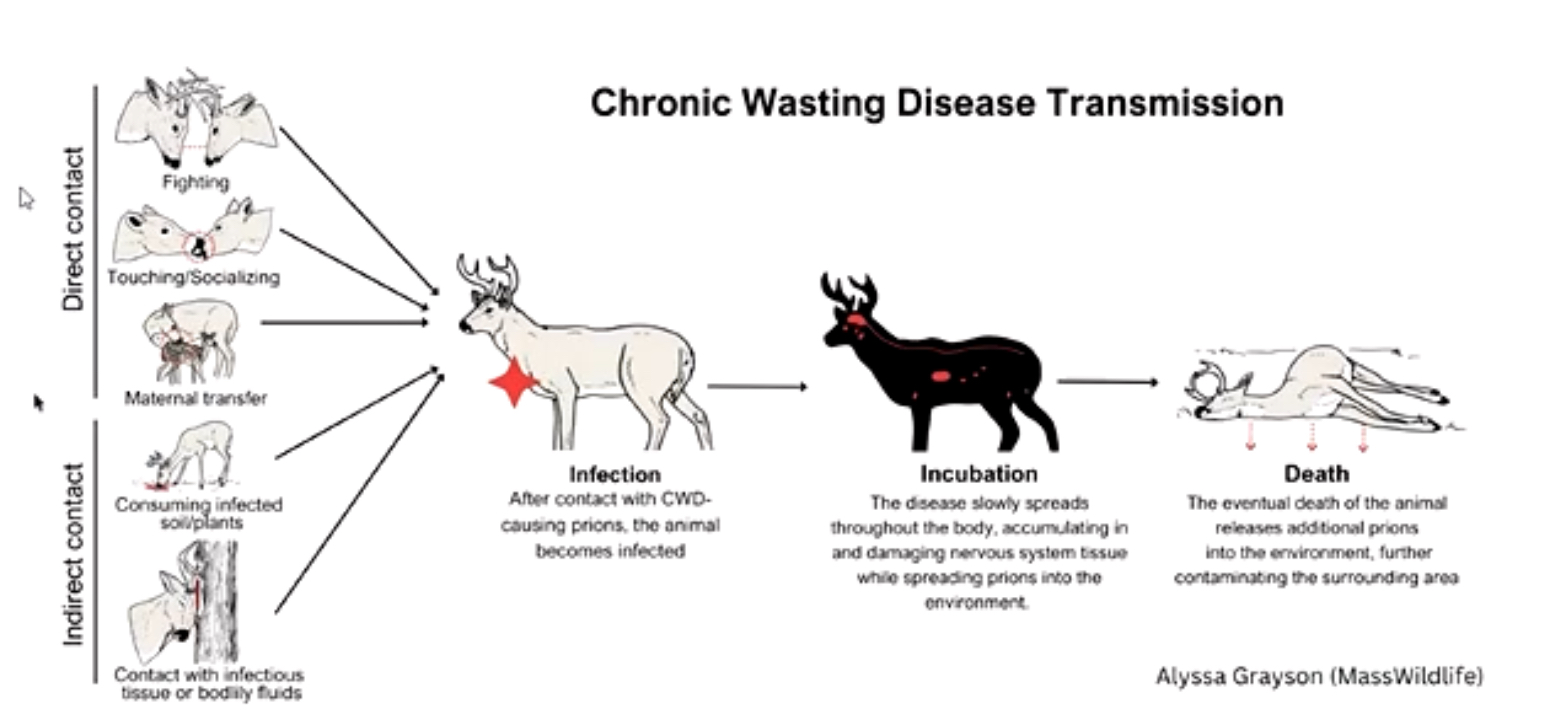
Transmission 2
Risk for Livestock?
Cattle only developed disease after intracerebral inoculation (directly into brain)
Not after oral or contact exposure to CWD infected deer
Not a risk for livestock, have their own version of the disease
NOT zoonotic
Humans exposed through consumption of infected meat products- no major outbreaks
Prevalence
Dense free-ranging populations: up to 30%
Captive: up to 100%
Diagnosis
31 approved labs
Immunohistochemistry (IHC)
Gold-standard
ELISA
Faster and cheaper
Typically used for surveillance
Western Blot
Lymph nodes or brainstem collected for testing
Many guides online for how hunters should collect samples
Currently no widespread testing for live animals
Treatment and Prevention
No treatment or vaccines available
Extremely robust prions
Resistant to heat, bleach, enzymes, etc.
*bleach works as a surface decontaminant
100% fatal
Prevention strategies: Federal + State Level
Regulating movement of captive cervids
Proper disposal of carcasses
Monitoring movement of free-ranging herds
Regulatory testing
Depopulation
Management: USDA-APHIS CWD Voluntary Herd Certification Program (HCP)
Cooperative effort between APHIS, state agencies, and cervid owners
Goal: prevent spread of CWD between states
National interstate movement requirements for cervids
Herd Certification Program (HCP):
Fencing regulations
Individual animal IDs
Inventory and testing of animals that die (>12 months) for any reason
28 participating states
State Agency Management:
History
How to test
Where?
Sample collection guides
CWD test results
Hunting Regulations and Carcass Disposal Requirements
Management zones with special restrictions/regulations
Monitoring Programs
Initial Detection of CWD:
Majority from hunter-harvested samples
Secondary-testing suspected CWD animals
Initial responses to CWD:
Communication: public service announcements, education, stakeholder meetings
Mandatory testing of deer harvested in designated zones
Increased regulations of deer movement, baiting/feeding, and deer hunting
Management
~50% of agencies began localized culling in affected area
May have increased harvest opportunities for culling of free-ranging herds
Privately owned herds may be provided compensation
State Agencies Managing without CWD:
Nevada has NEVER had a reported case of CWD
Extensive resources online to ensure prevention of CWD in their state
Implementing stricter regulations when CWD cases appear close to their state border
Texas Impacts
1st discovered in Texas in 2012 in free-ranging mule-deer
Severe Economic Impacts on:
Ranching
Hunting
Wildlife management
Monitoring and Prevention
Education programs
Free CWD Sample Kits
Why is this Important?
Inconsistent management strategies across states
Hard to work together for nationwide prevention
Every state has their own ideas on how to monitor CWD
Population Level Impacts
100% fatal, no treatment, no vaccines
Economic Impacts:
Decreased hunting demand where CWD spikes
Decreased tourism revenue from nonresident deer hunters
Less money for conservation and management
Captive cervid Herds
Animal loss
Private hunting operations

