2.1 Osmosis and Plant Transport 💦
 Call Kai
 Learn
Learn Practice Test
 Spaced Repetition
 Match
Match Flashcards
 Knowt Play
1/23

Earn XP
Description and Tags
Name | Mastery | Learn | Test | Matching | Spaced | Call with Kai | Chat |
|---|
No analytics yet
Send a link to your students to track their progress
24 Terms
Osmosis
diffusion of water molecules from a dilute solution to a more concentrated solution across a selectively permeable membrane
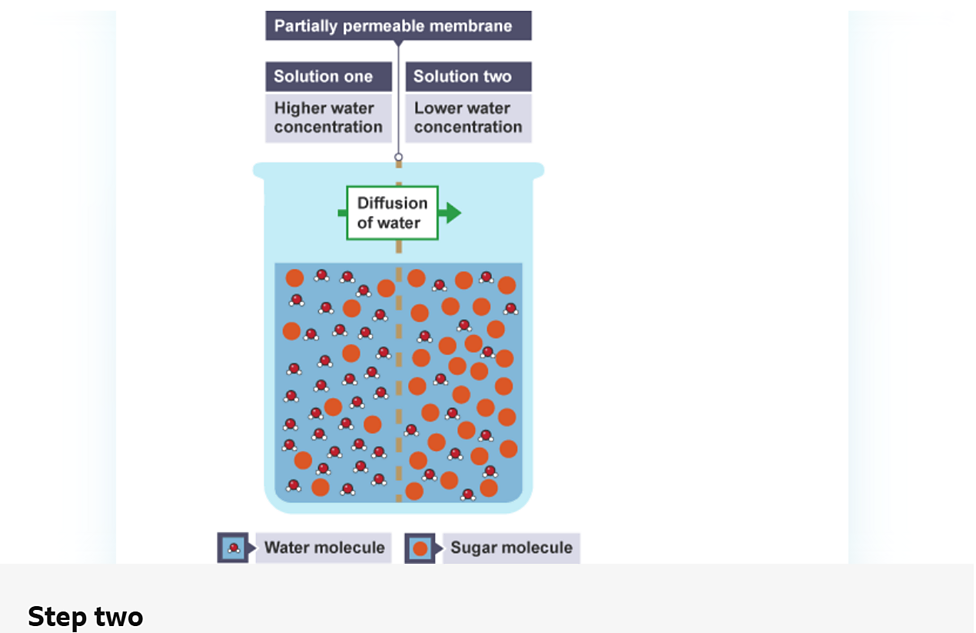
Is energy required for osmosis
No as water moves down concentration gradient
Role of cell wall
Supports cell and limits entry of water
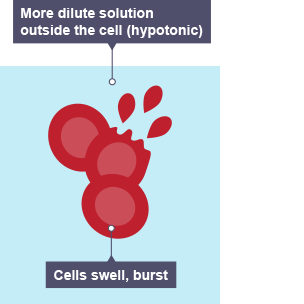
Animal cells in high concentration of water
Gets bigger and eventually bursts (lysis)
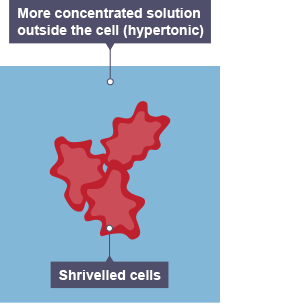
Animal cells in low concentration of water
Shrink and become shrivelled
Plant cells in high concentration of water
Turgid as vacuole gets bigger and pushes membrane against cell wall
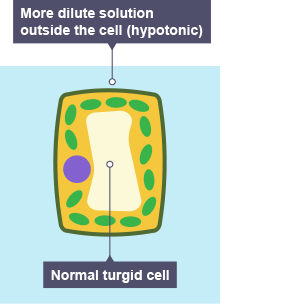
Plant cells in low concentration of water
Wilts and becomes flaccid or vacuole shrinks and membrane pulls away from cell wall (Plasmolysis)
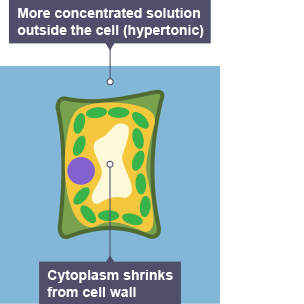
Describing osmosis
Water moves in/out of the cell by osmosis, down concentration gradient, and cell becomes ____
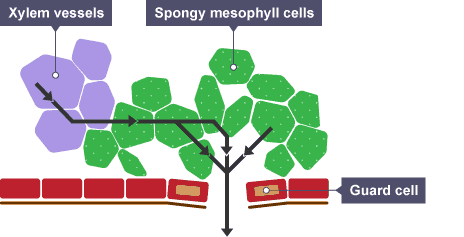
Transpiration
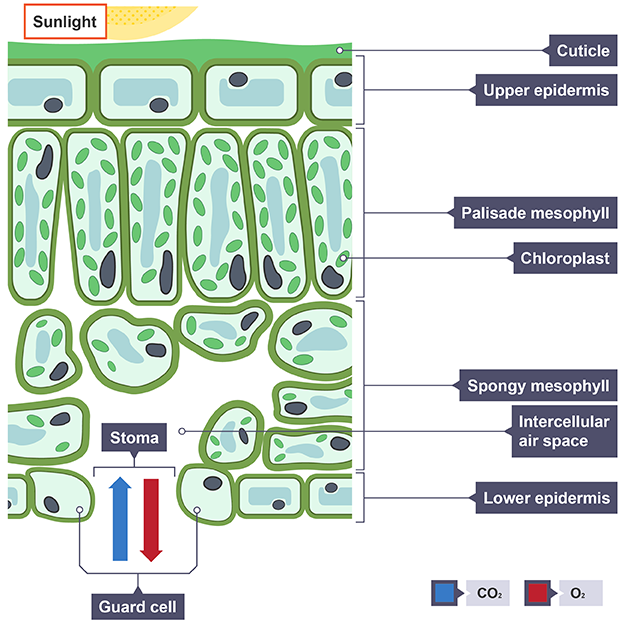
Evaporation of water from the spongy mesophyll, followed by diffusion through air spaces and out of the stomata
Uses of water for plants
photosynthesis
transpiration
transport
support
Surface area effect on transpiration (biotic)
smaller leaves contain less stomata causing decrease e.g remove leaves
Wind speed effect on transpiration (abiotic)
higher wind speed increases rate of evaporation e.g use a fan
Temperature effect on transpiration (abiotic)
higher temperature increases rate of evaporation e.g use a heater
Humidity effect on transpiration (abiotic)
higher humidity reduces rate of evaporation e.g plastic bag over shoot
Light intensity effect on transpiration (abiotic)
darkness causes stomata to close causing decrease e.g use a lamp
When water availability is limited
Plants reduce transpiration by closing stomata
Transpiration stream
water loss at the leaves and water absorption at the roots are directly proportional
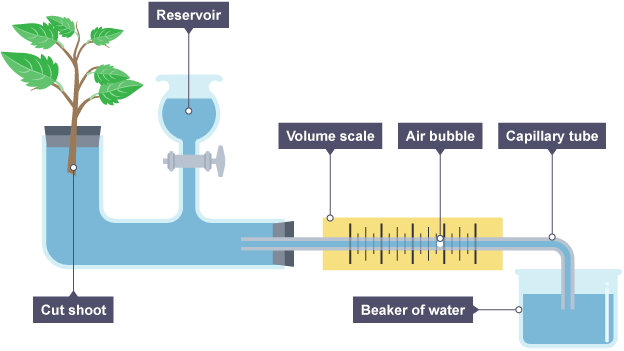
Potometer
measures rate of water uptake in plants
Bubble potometer
measures by finding distance air bubbles move over time
Weight potometer
measures by weighing the plant before and after and subtracting
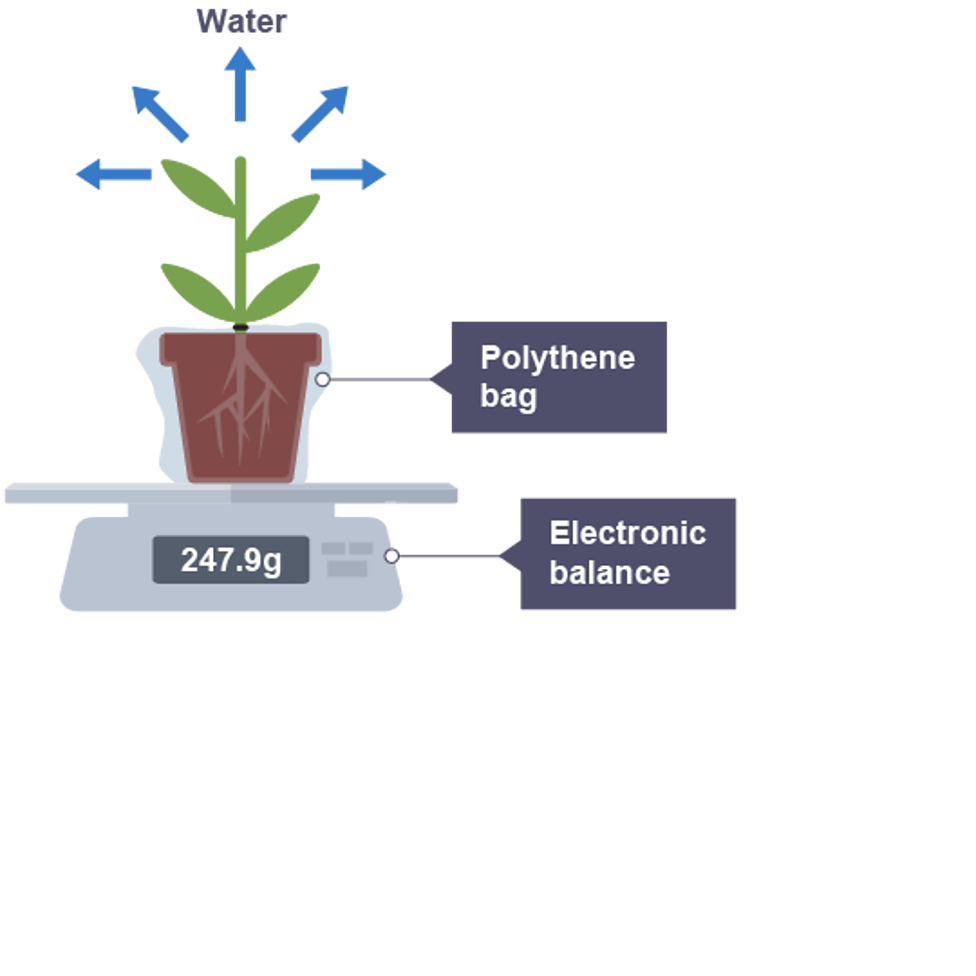
Why can a potometer not measure transpiration rate
some water is used by plant, only measures rate of water uptake
Distribution of stomata in plants
more on lower epidermis to reduce water loss
Stomata in floating plants
only on upper to allow gas exchange with air rather than water
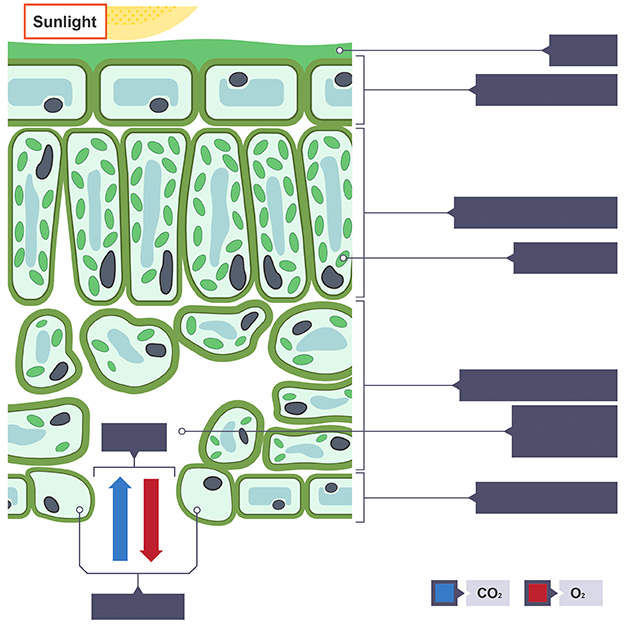
Label section through a leaf
waxy cuticle
upper epidermis
palisade mesophyll
spongy mesophyll
air space
lower epidermis
stomata
guard cells