Entomology - Ch. 7: Tsetse-flies, Filth flies. Myiasis, Coachroaches
 Call Kai
 Learn
Learn Practice Test
 Spaced Repetition
 Match
Match Flashcards
 Knowt Play
1/151

There's no tags or description
Looks like no tags are added yet.
Name | Mastery | Learn | Test | Matching | Spaced | Call with Kai |
|---|
No analytics yet
Send a link to your students to track their progress
152 Terms
What is Class for Tsetse flies?
Insecta
What is the Order for Tsetse flies?
Diptera
Tse-tse is the vector for…
African trypanosomiasis

What are the 4 distinct morphologies for Tsetse?
Large
Forward projecting proboscis
Hatchet cell
Blood meals for both sexes
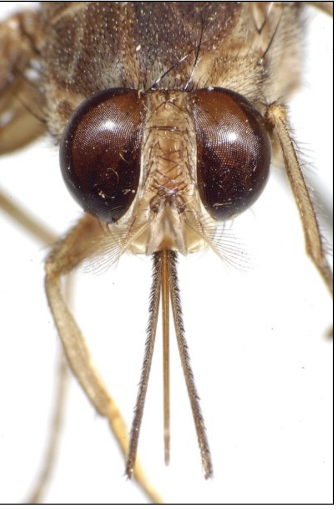
Where is the ‘hatchet cell’ located?
middle of the wing
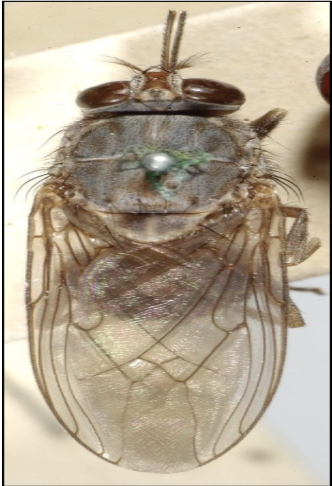
Tse-tseHow are the wings presented on the body?
wings
are folded over each other
What is the Tsetse plumose antennae (feather-like) called?
Arista
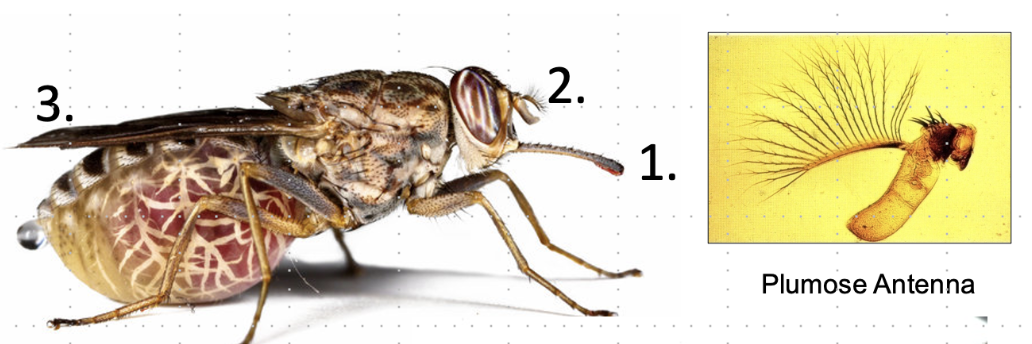
What is the unique feature of the reproduction of the Tsetse?
Lays one larva at a time
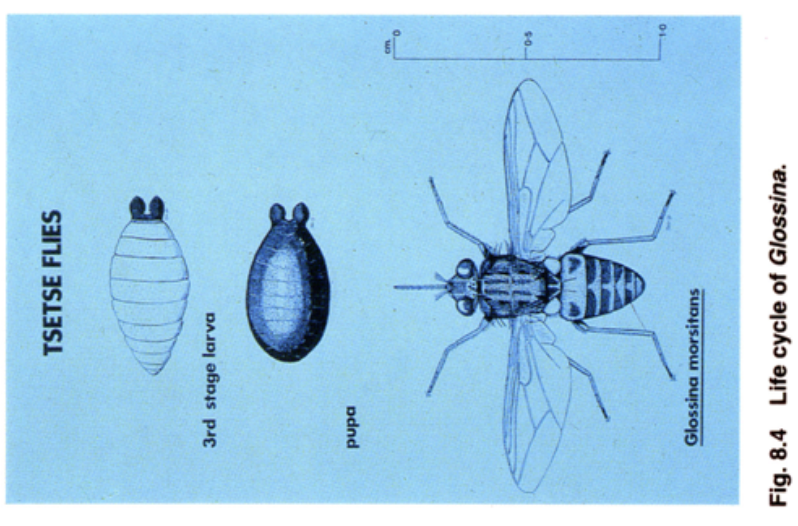
What is unique gland that a female Tsetse have referred to as and what does it provide?
Milk glands and it provides nutrients to larva
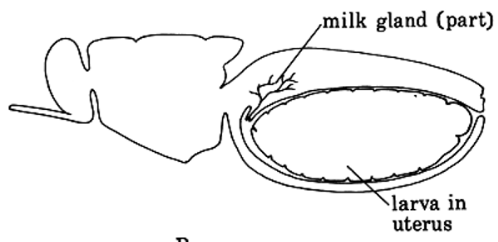
What are the black extensions on the ends of the pupa called?
Polyneustic lobes
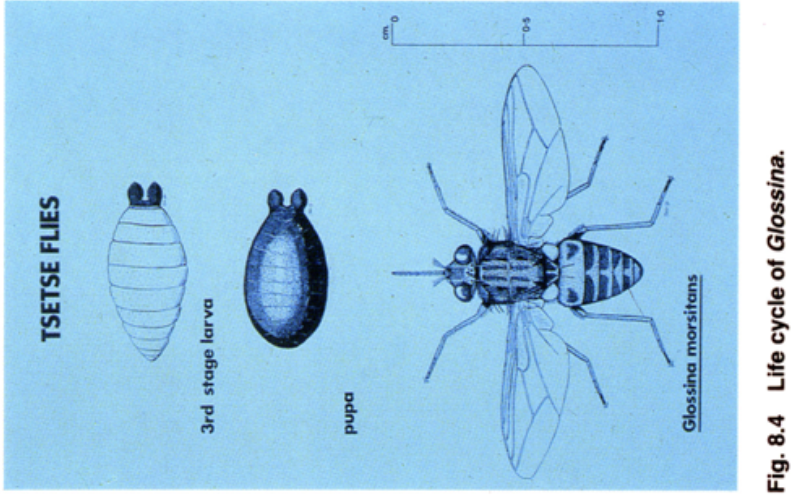
What is the role of Polyneustic lobes?
breathing
Tsetse flies-Immature: What are the larval stages referred to as?
Three larval instars
Tsetse flies-Immature: Where does the female Tsetse lay the larval after it reaches the 3rd instar larva stage?
In loose soil where it can burrow down into the soil
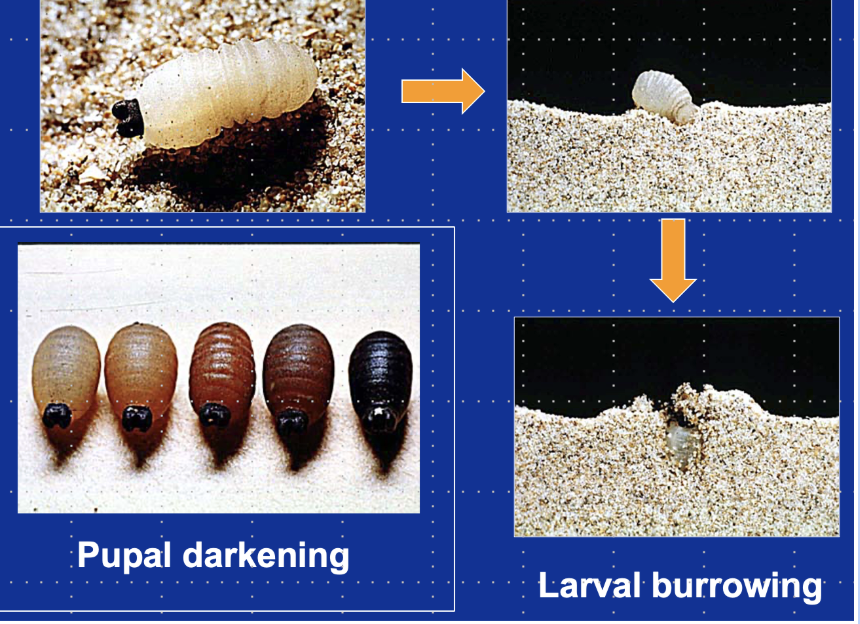
Tsetse flies-Immature: What are the color changes that occur from larval to pupa stage?
White to dark
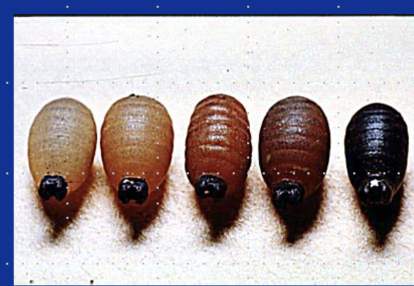
What are the characteristics of the pupa?
dark and hard
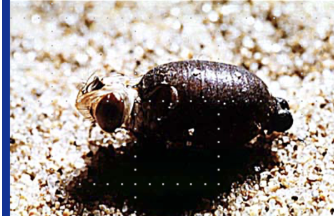
Tsetse flies-Medical Importance: How is the global distribution?
Mainly in Africa
Tsetse flies-Medical Importance: When does transmission occur?
At low level transmission with occasional epidemics
Tsetse flies-Medical Importance: What are the two main strains called from the Tsetse flies transmission of African Trypanosomiasis (sleeping sickness)?
Gambia
Rhodesian
Tsetse flies-Medical Importance: Acute or chronic sleeping sickness for Trypanosomiasis brucei rhodesiense?
Acute sleeping sickness
Tsetse flies-Medical Importance: Acute or chronic sleeping sickness for Trypanosomiasis brucei gambiense?
Chronic sleeping sickness
Tsetse flies-Medical Importance: What does the Trypanosomiasis brucei rhodesiense effect?
Wild and domestic animals
humans
Tsetse flies-Medical Importance: What does the Trypanosomiasis brucei rhodesiense effect?
Domestic pigs
humans
TB gambiense correlates with…
Chronic sleeping sickness
Effects domestic pigs and humans
Tsetse flies-Medical Importance: Is the parasitemia high or low in the Rhodesiense?
high
TB rhodesiense correlates with…
Acute sleeping sickness
Effects wild/domestic animals and humans
Trypanosomiasis cruzi is a vector for what disease?
Chagas disease
What does T. cruzi effect?
humans
armadillos
opossums
dogs
guinea pigs
What does Trypanosomiasis rangeli transmit?
Nothing; non-pathogenic
What does T. rangeli effect?
wild animals
humans
Gambian sleeping sickness: Where is the disease strain primarily found in?
West and Central Africa
Gambian sleeping sickness: What type of transmission occur from areas for gathering water?
human-fly contact
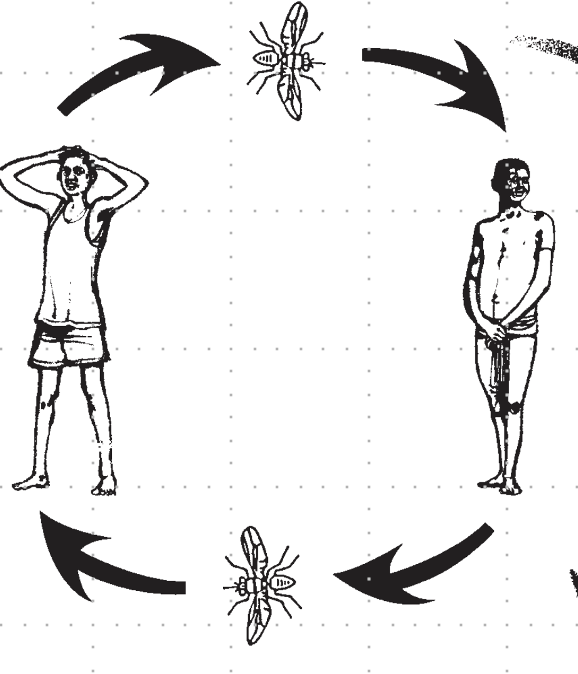
Gambian sleeping sickness: What are the reservoirs for this strain?
domestic pigs
humans
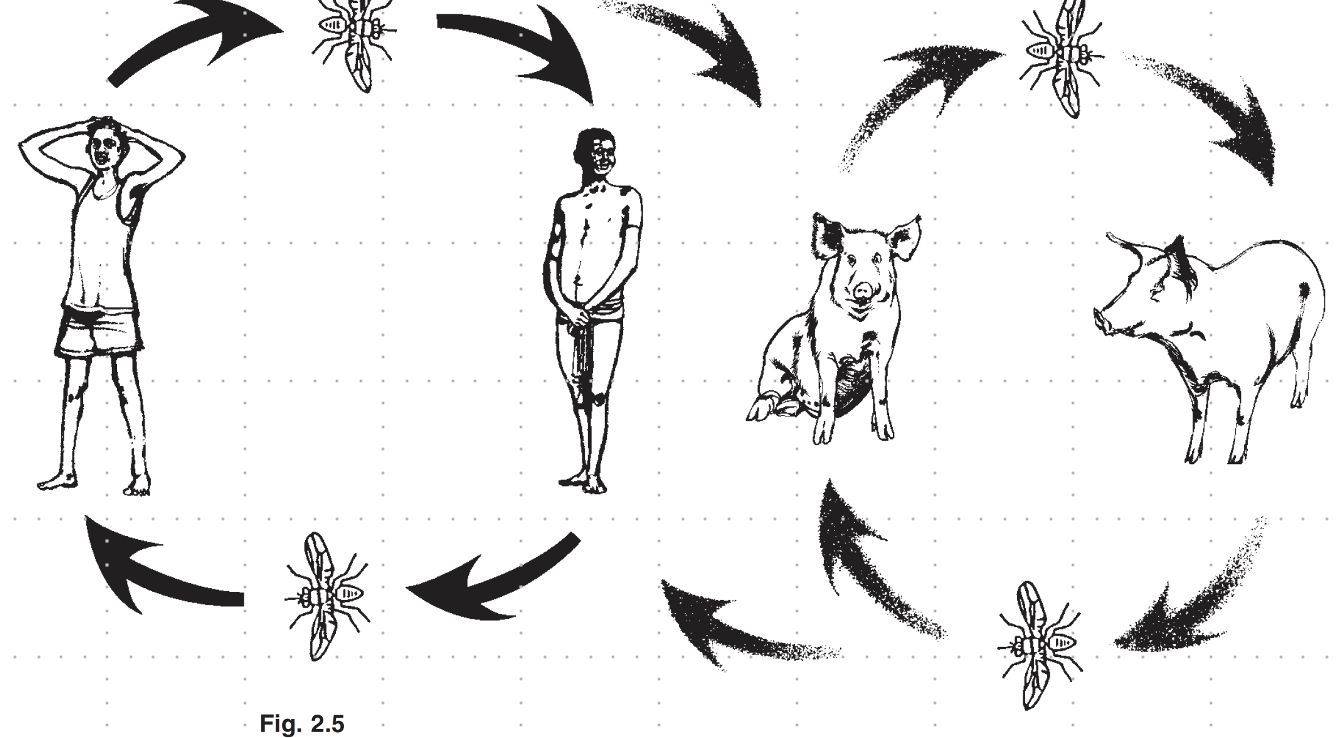
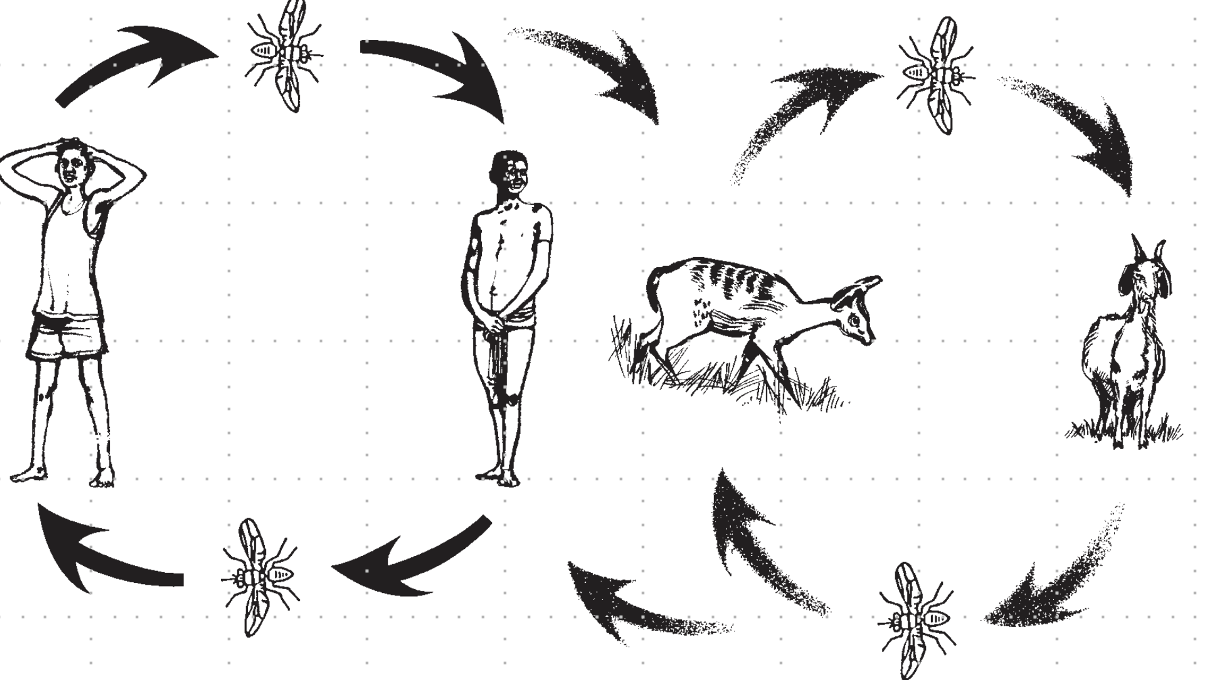
Rhodesian Sleeping Sickness: Where is the disease strain primarily found in?
East Africa
Rhodesian Sleeping Sickness: What type of transmission occurs?
Animals-fly contact (less dependent on moisture)
Rhodesian Sleeping Sickness: Is this strain less or more widespread then the Gambian form?
Less widespread only in zoonotic areas
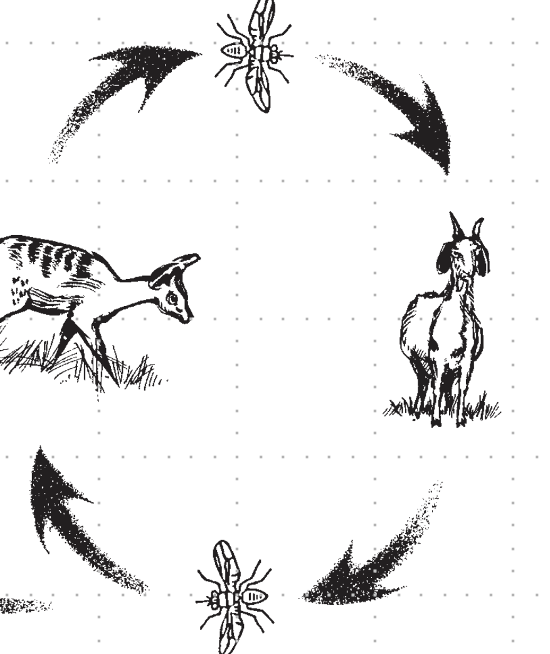
Rhodesian Sleeping Sickness: What are the resevoirs?
game animals, domestic cattle
Sleeping Sickness Symptoms: What happens to the area with the infected bite & IP?
localized rxn with a chancre (a painless boil)
parasite continues dividing
5-20 days
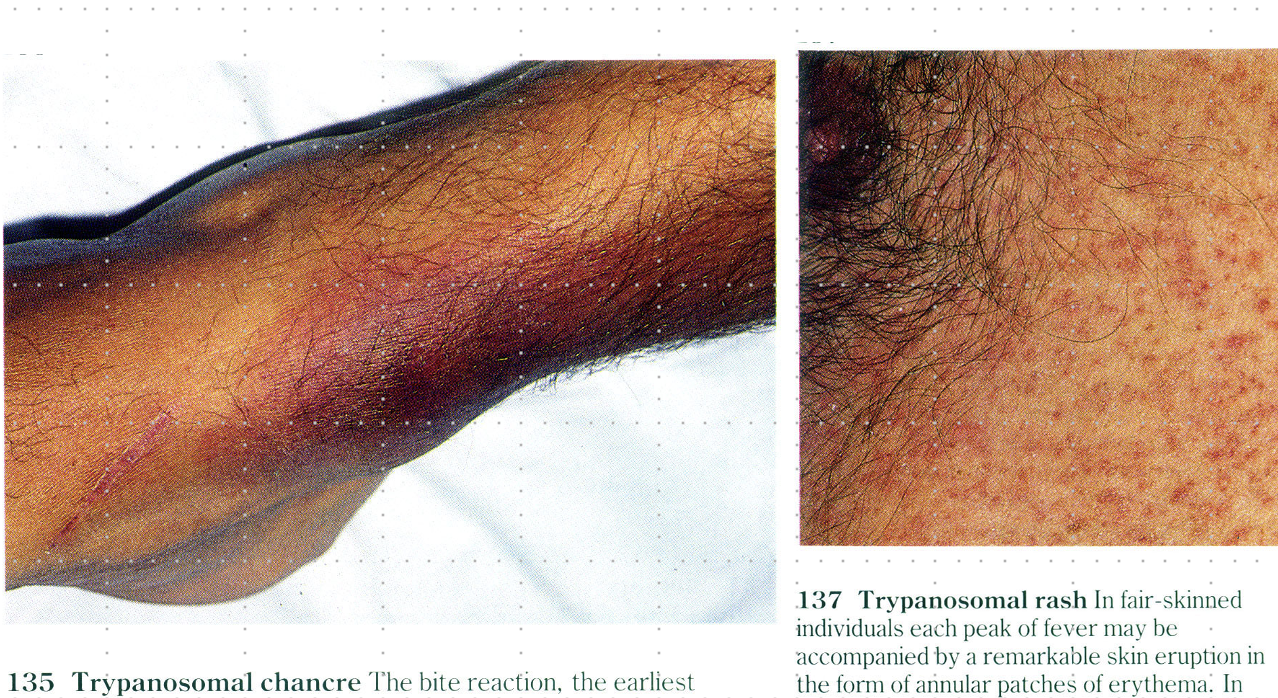
Sleeping Sickness Symptoms: What is involved in the first phase?
headaches
fever (rash)
gland enlargement from parasite divisions in blood
Sleeping Sickness Symptoms: What is involved in the second phase?
Sleeping sickness begins
causing tremors, speech impairment, drowsiness
Parasite in CSF
Sleeping Sickness Symptoms: What happens in the Natural History (death) for the Gambian form?
coma
starvation
occurs in 2-3 yr span
Sleeping Sickness Symptoms: What happens in the Natural History (death) for the Rhodesian form?
shock
3-9 month span
Tsetse flies- Important species: What are the two species of Tsetse flies?
Glossina morsitans
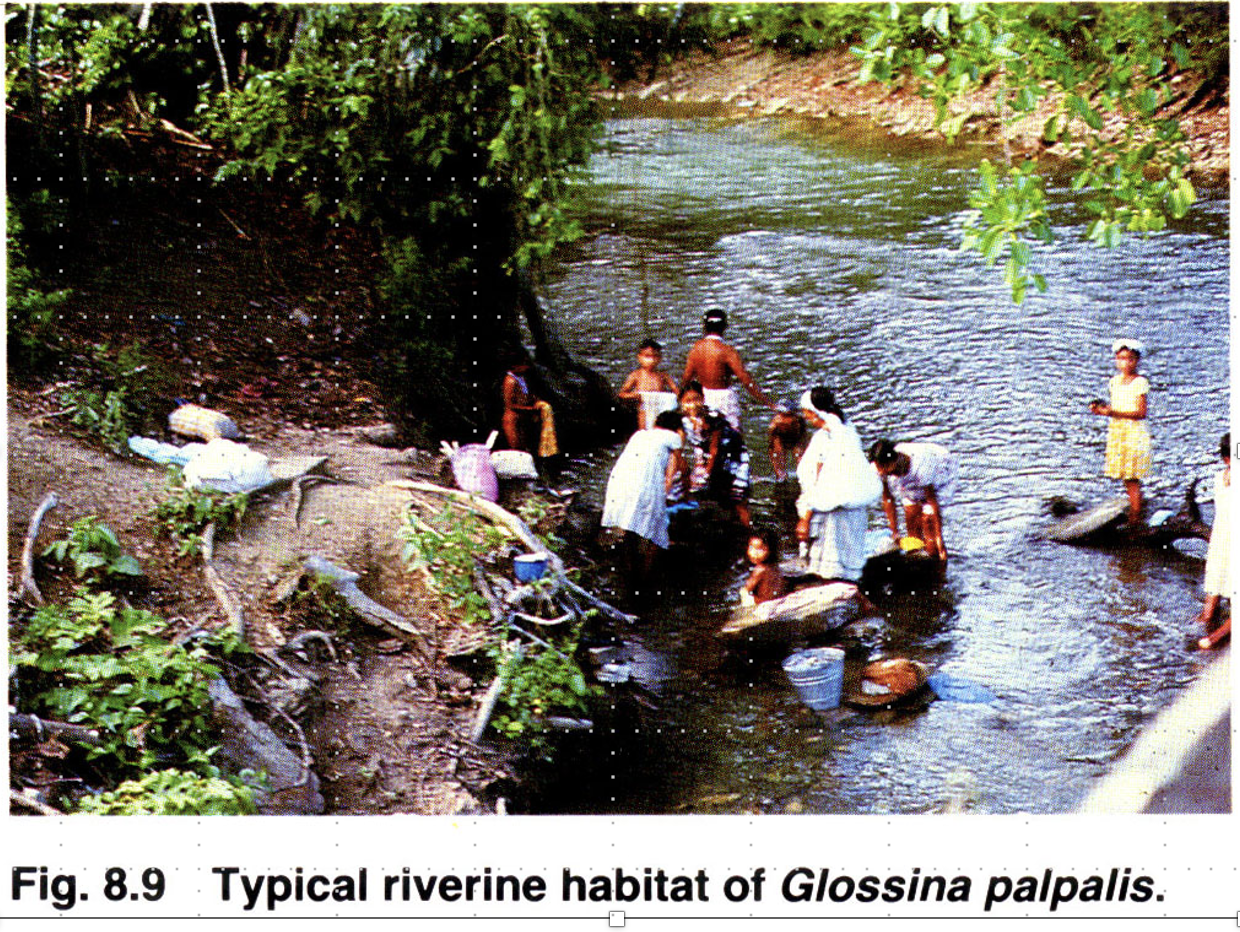
Glossina palpalis
Tsetse flies- Important species: What are the Glossina morsitans known as and where do they reside?
Savannah flies
Savannah areas with low human population
Glossina morsitans =
dry area
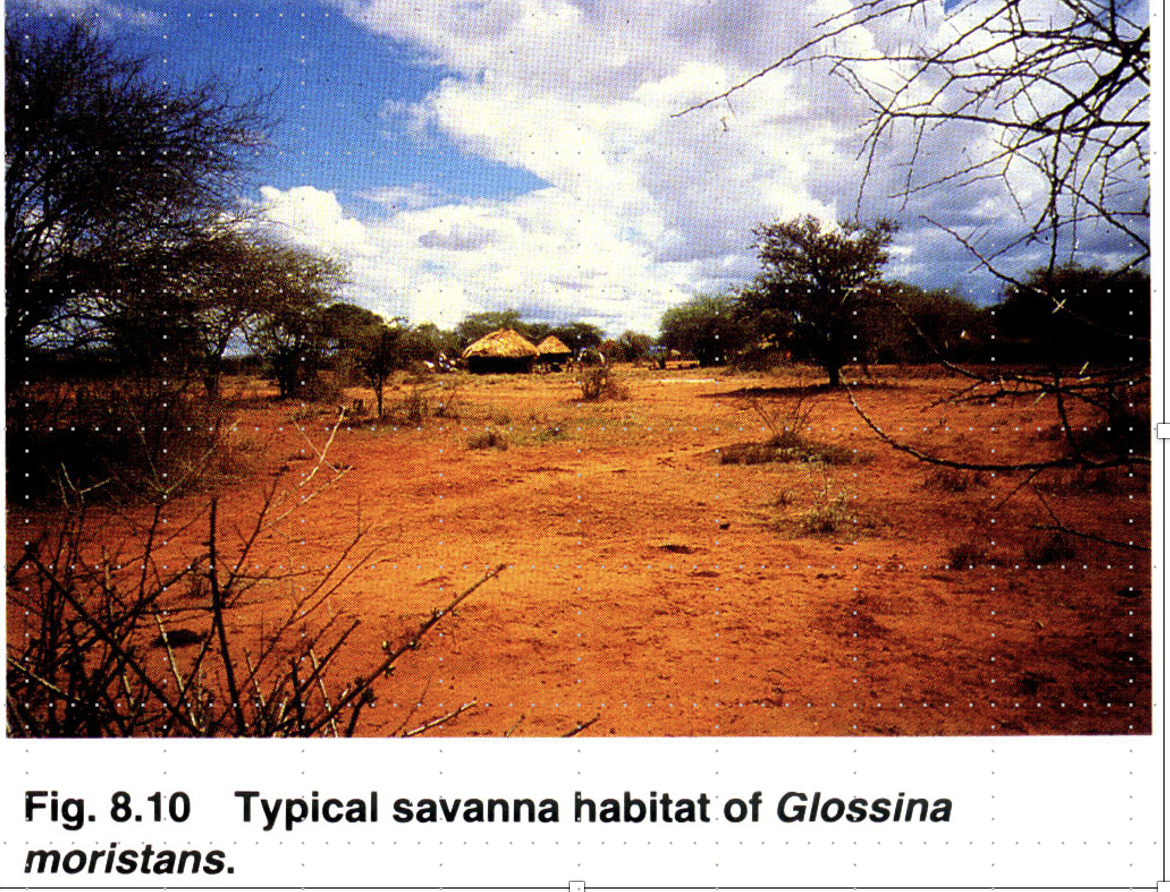
Tsetse flies- Important species: What are the Glossina palpalis known as and where do they reside?
riverine/forest
shores and banks of rivers and lakes
Glossina palpalis =
river areas
Tsetse flies- Adult behavior: Where do the adult flies get their blood meal from?
domestic/ wild mammals, reptiles, birds
host preference
Tsetse flies- Adult behavior: What time of day do they feed & what are they attracted to?
day time
dark moving objects (sight and olfaction important)
Tsetse flies- Adult behavior: Where do flies rest at most of the time?
shaded areas and on surfaces of leaves
species specific
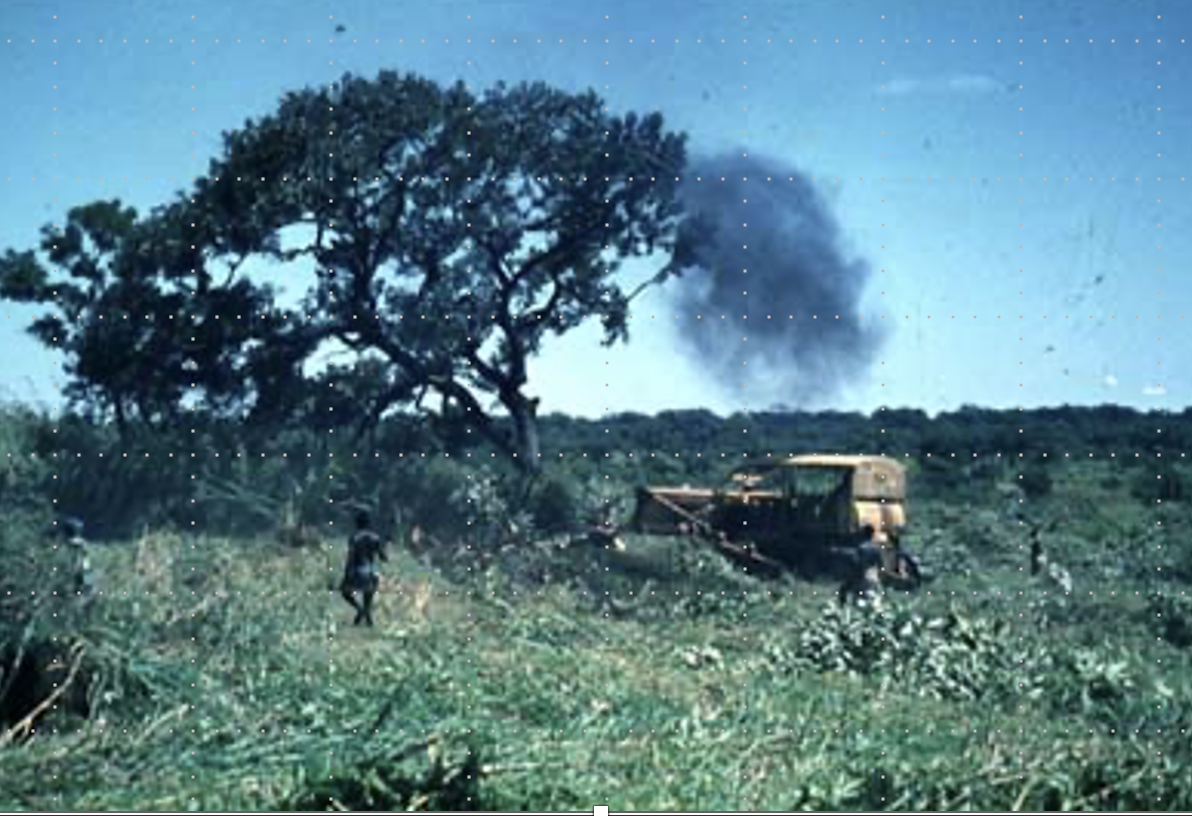
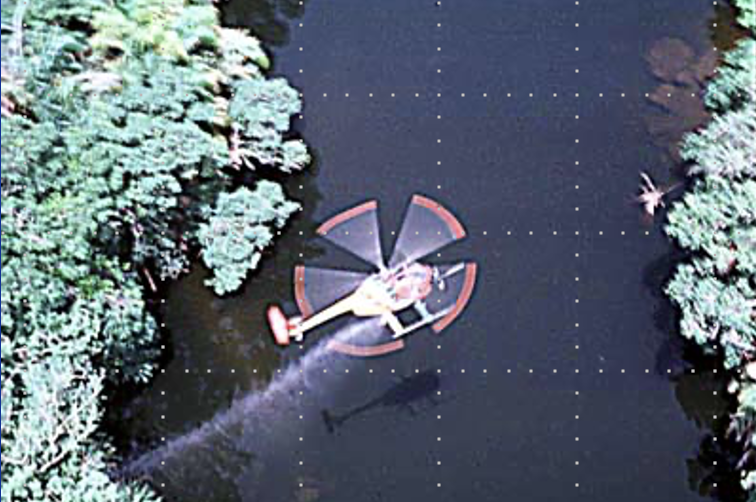
Control of African Sleeping Sickness: What are 5 control measures of African Trypanosomiasis?
destroy vectors
clearing vegetation around living areas
Insecticide spraying along paths
use of non-residual space sprays
Give synthetic pyrethroid to domestic animals for treatment
Traps and Targets: What is the goal of control besides reducing the population of Tsetse?
having a method without causing environmental danger
Traps and Targets: What do traps usually not have in them?
insecticide
Traps and Targets: What may draw the flies to the traps?
odor-baited
such as acetone, octenol, phenols, & cow urine
depending on Glossina species
Traps and Targets: Targets with insecticide dark (blue or black) synthetic cloth are treated with what?
Pyrethroid
Traps and Targets: What are the name of the 4 traps used to catch Tsetse?
Bicone trap
Screen traps
Cloth cone traps (treated with deltamethrin)
Target traps
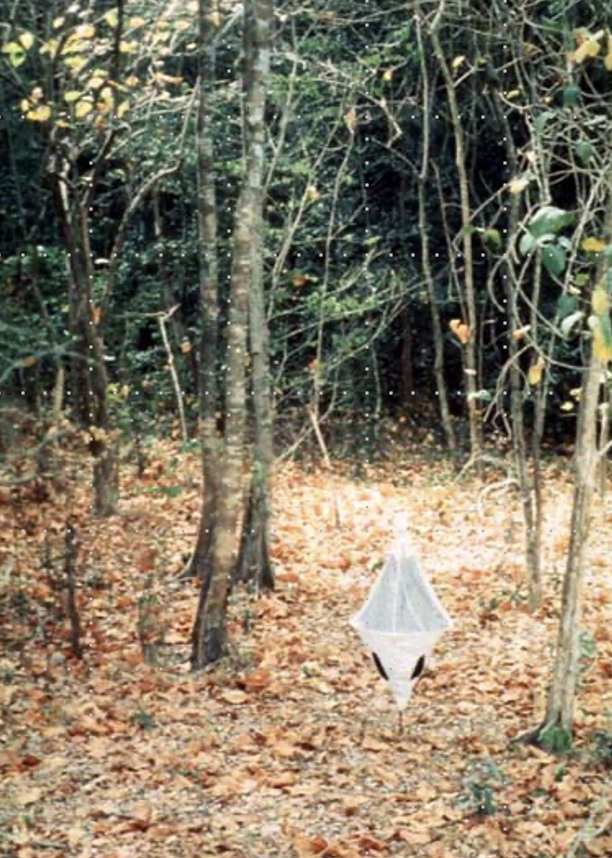
Traps and Targets: What trap is this called?
Bicone trap
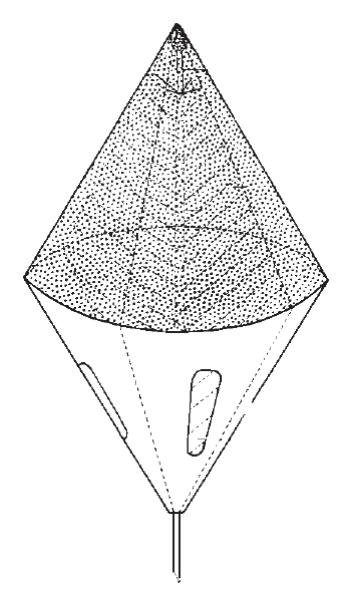
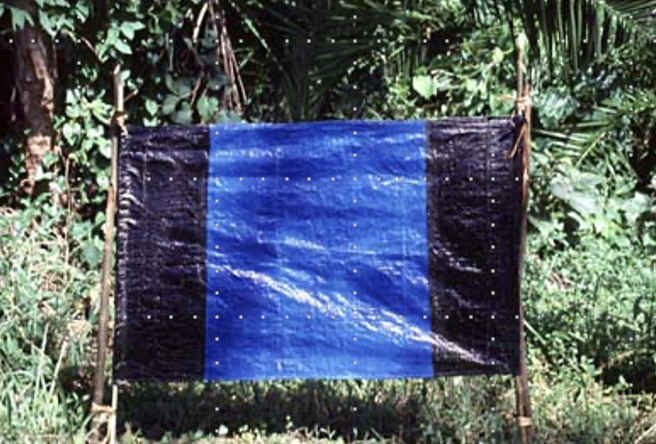
Traps and Targets: What trap is this called?
Sreen traps
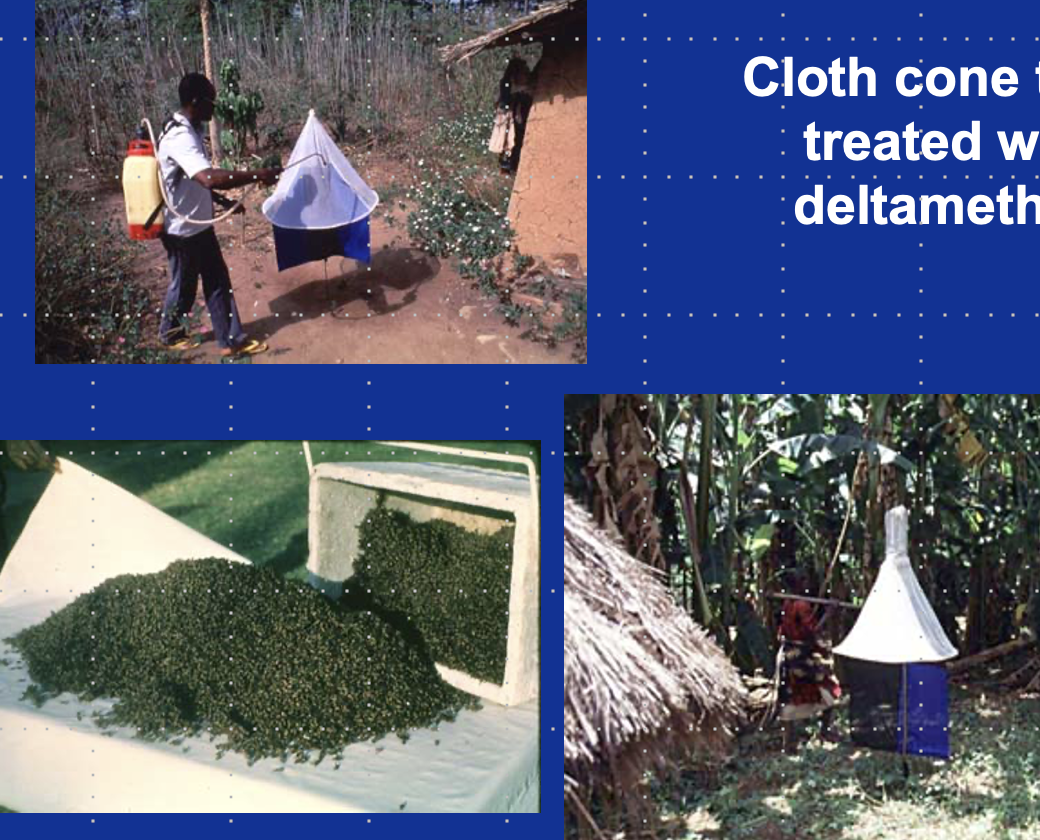
Traps and Targets: What trap is this called and what is it treated with?
Cloth cone trap and treated with deltamethrin
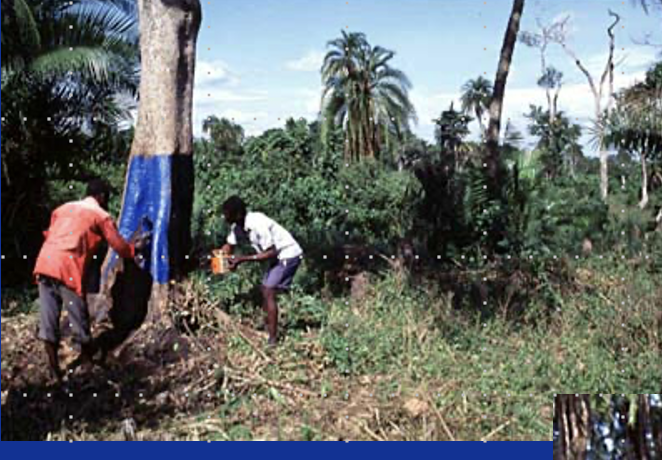
Traps and Targets: What trap is this called?
Target traps
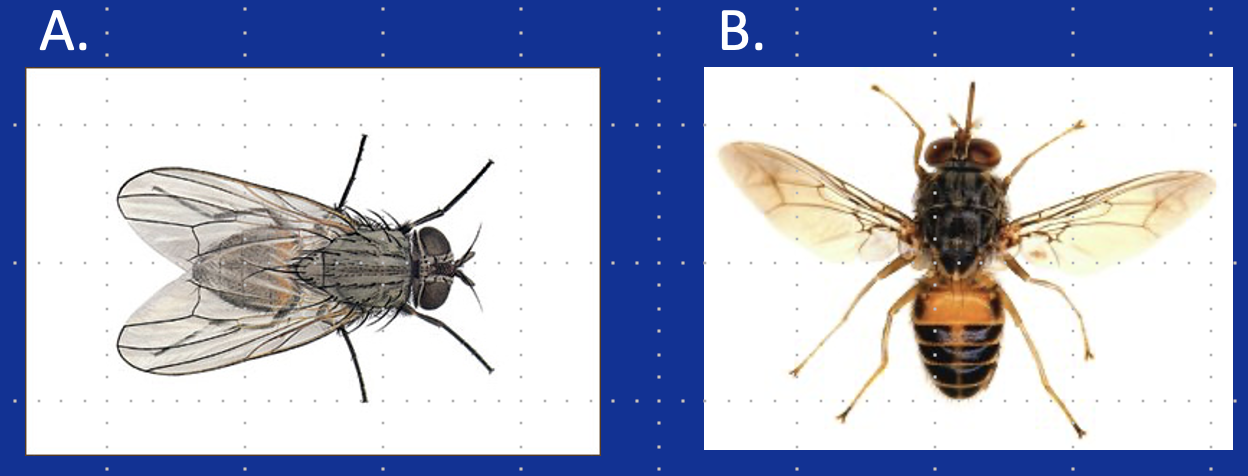
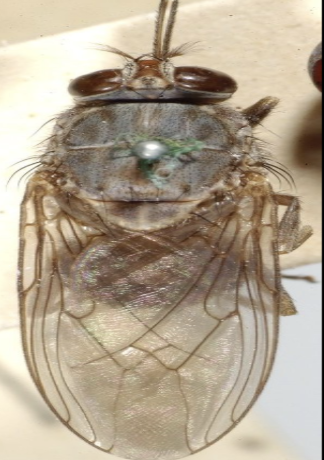
Which fly is a Tsetse fly?
A
Treatment: What was the first all-oral treatment for sleeping sickness for the Gambian strain?
Fexinidazole
Treament: What is the most recent drug of use available to cure both stages with a single dose?
Acoziborole
Treatment: What is innovative about the new drug Acoziborole?
cures both stages with a single dose
demonstrates efficiency in a pivotal phase 2/3 trial
safety profile better than fexinidazole
Filth Flies & Myiasis: Out of these two and cockroaches, what species have Mechanical Transmission?
filth flies
cockroaches
Filth Flies & Myiasis: What is Myiasis?
Infestation with fly larvae
Mechanical Transmission of Pathogens: What is the definition of Mechanical transmission?
Transfer of pathogens from an infected host or a contaminated substrate to a susceptible host
Mechanical Transmission of Pathogens: Is biological association necessary for the pathogen and vector?
not necessary
Mechanical Transmission of Pathogens: What can the vector be?
arthropod
bird
rat
mouse
animal
human
Mechanical Transmission of Pathogens: 4 General characteristics of mechanical infection of a pathogen
no development or multiplication of vector
multiple routes of infection (blood or water borne)
food & water contamination
Multiplication of pathogen in original host and in the environment (not host-specific)
Important parameters - Mechanical Transmission: what are 9 parameters for mechanical transmission?
Setae present on arthropod
Feeding behavior (pool or vessel feeding)
Regurgitation
associated with human food/ dwellings preparation areas
Defecation patterns
Stability of pathogen in environment
Infectioness of the pathogen
Number and tpyr of arthropods
Host immunity (associated with Bioterrorism agents)
Myiasis: How does Myiasis work?
fly larve infesting the organs/tissues of humans or animals
feed on dead or living tissues
or feed on ingested food of the host
Myiasis: What is ‘accidental myiasis’ called and where does it include?
Facultative Myiasis
includes enteric, recto/urogenital and cutaneous
Myasis: What are the Facultative myiasis (accidental myiasis) important in?
Forensic Entomology
Myiasis: What is Obligatory Myiasis?
When the infestation is a necessary part of the fly life cycle
Facultative Myiasis 1: What does the term ‘ Enteric Myiasis’ mean?
accidental ingestion
Facultative Myiasis 1: Number of species reported and the two main species name?
50 species
Muscidae
Sarcophagidae
Facultative Myiasis 1: what does it mean if there is there passive transport of larvae?
there is no development in the host digestive tract
Facultative Myiasis 1: What are 3 bases severity is based on?
fly specie
number
location
Facultative Myiasis 1: What are the 3 Genera commonly involved?
Musca
Fannia
Muscina
Facultative Myiasis 2: Rectal/ Urogenital Myiasis: What does the larvae do when they have access to the intestine through the Anus?
feed on excrement
Facultative Myiasis 2:Rectal/ Urogenital Myiasis: Where can the immature stages be completed at?
rectum or terminal part of intestine
Facultative Myiasis 2:Rectal/ Urogenital Myiasis: How can this transmission take place?
Unsanitary conditions
Facultative Myiasis 2:Rectal/ Urogenital Myiasis: What are the 3 primary genera?
Fannia
Musca
Sarcophaga
Facultative Myiasis 3: Cutaneous myiasis: Where does this accidental infection usually occur around?
around wounds
Facultative Myiasis 3: Where can the larvae be found at ?
meat or carrion
Facultative Myiasis 3- Cutanneoud myiasis:What are the health complications to the body?
No health tissues being invaded
Facultative Myiasis 3: Cutaneous : What are the typical species involved?
blow fish (bottle flies) —> Calliphora
Sarcophaga
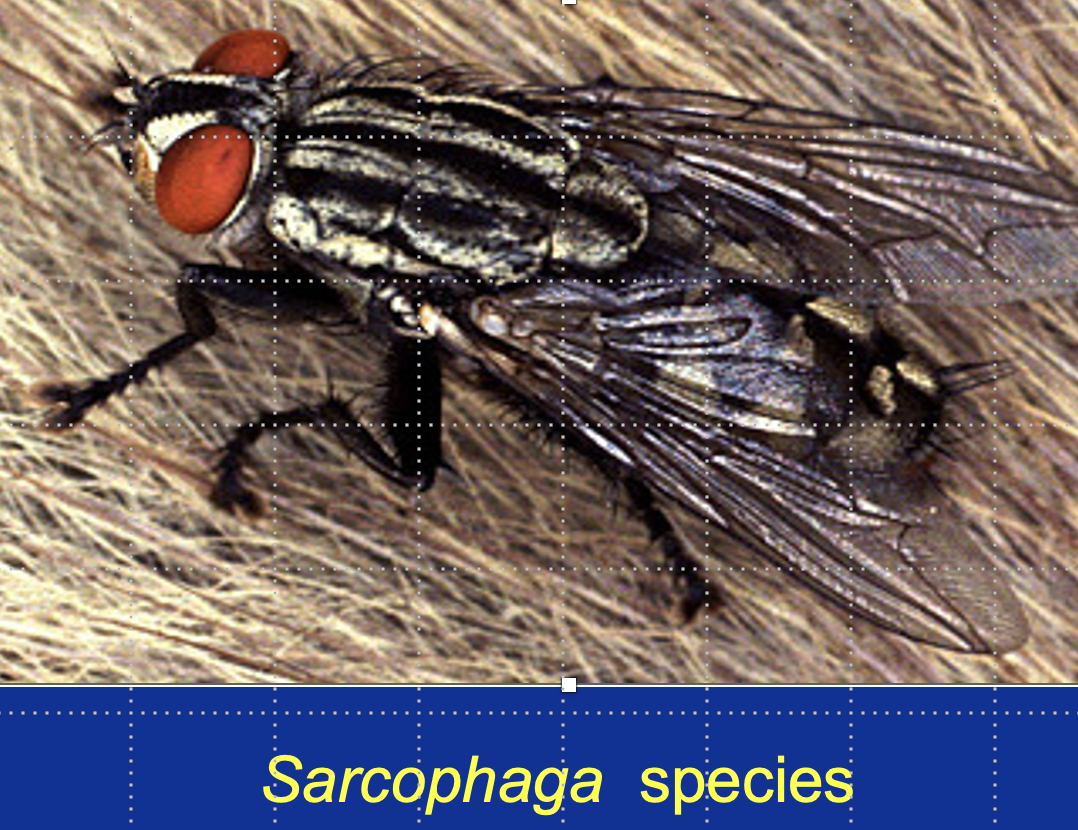
Obligatory Myiasis: What is Obligatory Myiasis?
a parasitic condition that caused by fly larvae that require a living host to complete their life cycle
Obligatory Myiasis: Calliphorids (non-metallic): What are Cordylobia anthropophaga and what do they do?
tumbu or mango fly (Africa)
larvae attach and burrow into skin leaving spiracle exposed, appear as boils
Obligatory Myiasis: What is Auchmeromyia sengalensis and what is the difference in this compared to Cordylobua anthropophaga?
Congo floor-maggot (Africa)
Larvae does not remain attached
feed on people at night sleeping on the floor
Obligatory Myiasis: What is the a similar thing about the Cordylobia anthropophaga and the Auchmeromyia senegalensis?
adult stage look the same
Obligatory Myiasis: What are the two Calliphorids (metallic) species called?
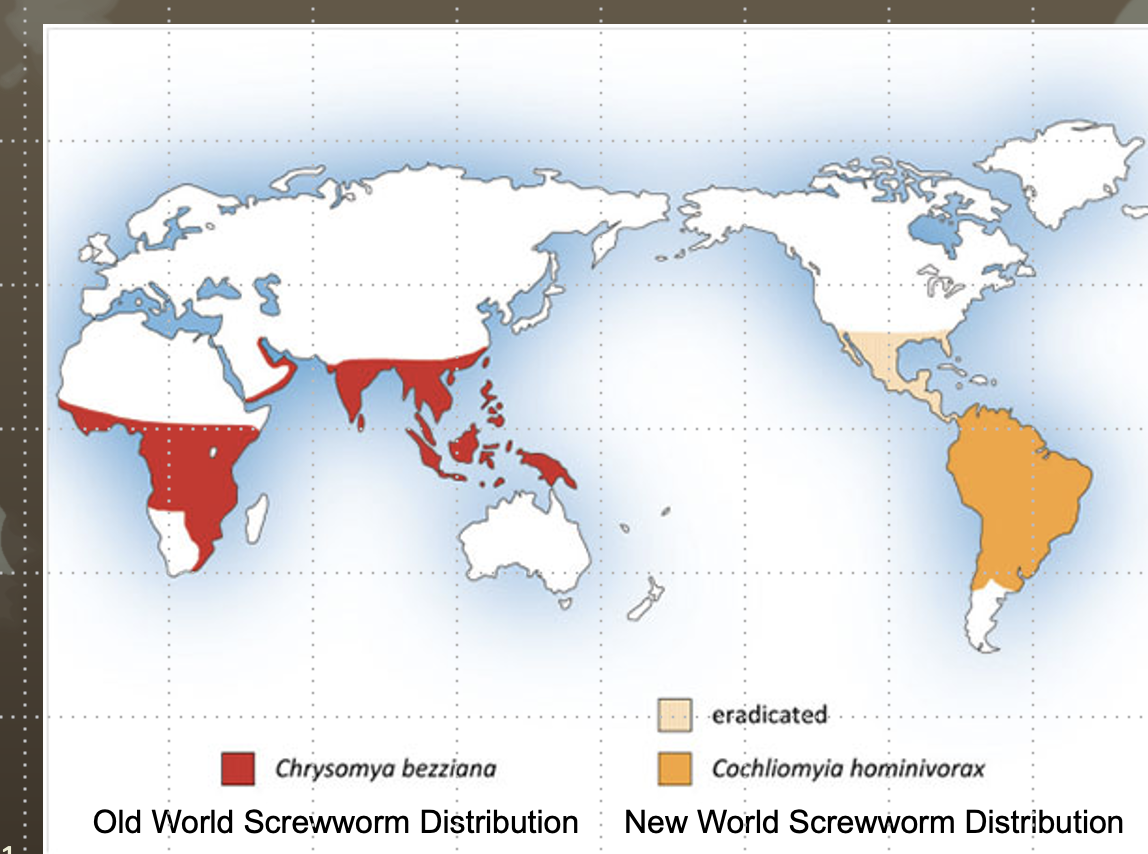
Cochliomyia hominivorax (new world screw worm)
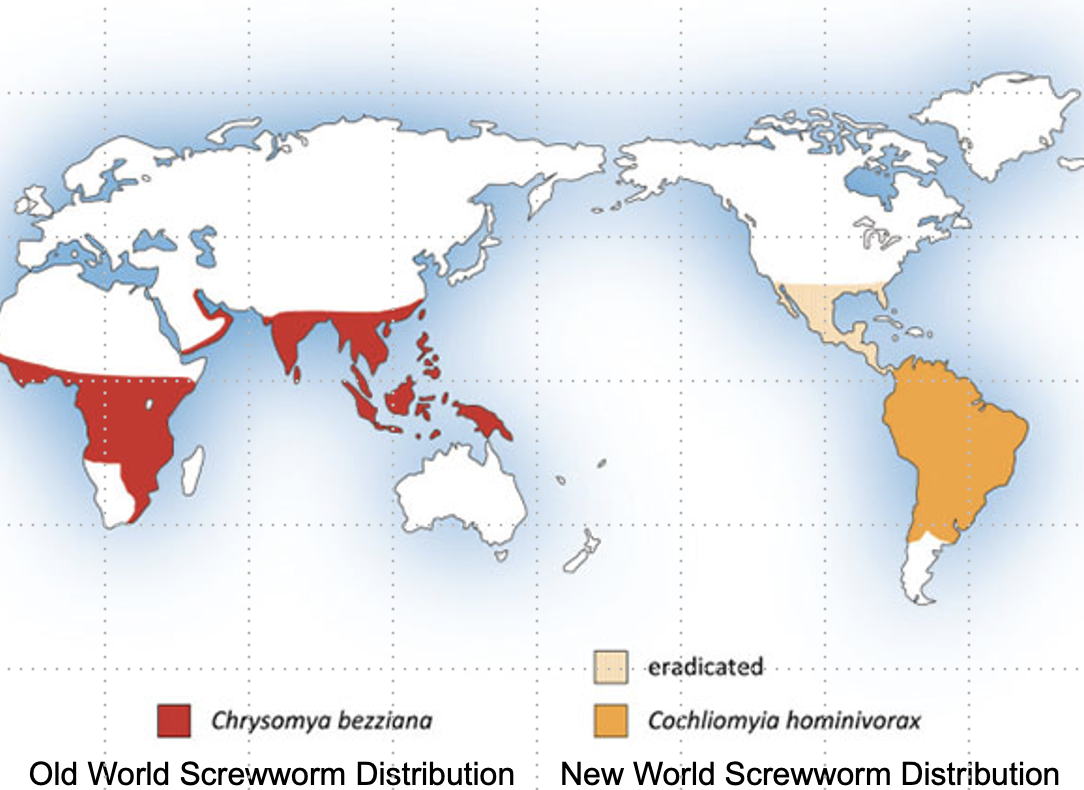
Chrysomya bezziana (old world screw-worm)
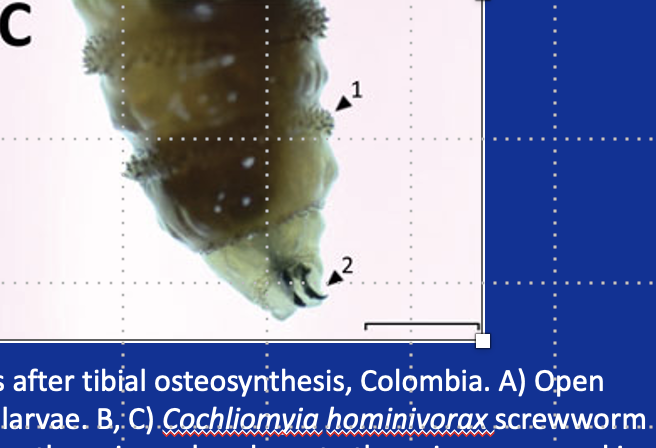
Obligatory Myiasis: Is Chochliomyia hominivorax from the old or new world?
New World
Obligatory Myiasis: Is Chrysomya bezziana from the old or new world?
Old world
Obligatory Myiasis: What is the specie called in the Sarcophagids (flesh flies)?
Wohlfahrtia magnifica - ear, eye, nose
Obligatory Myiasis: What is the specie name in the Oestrids (bot flies) catergory?
Gasterophilus
Hypoderma
Dermatobia hominis (human bot fly)
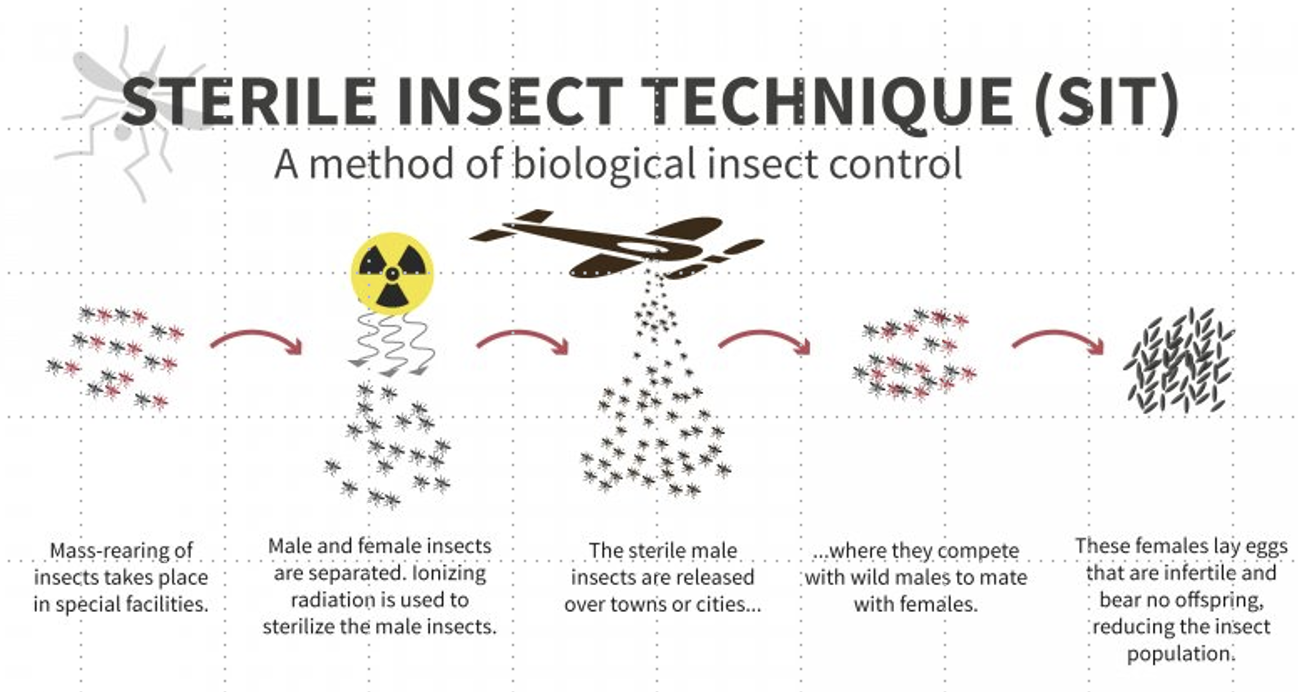
Obligatory Myiasis: What does SIT mean?
Sterile insect technology
Obligatory Myiasis: What was the goal of Sterile Insect technology in the United States?
to control the primary Screwworm fly in the Southern US
Obligatory Myiasis: How did controlling the primary Screwworm become effective in the SW US in 1966?
used X-rays to sterilize
Obligatory Myiasis: What are the three unintended consequences in using the Sterile Insect technology?
increase in white-tailed deer population
increase in feral hog population
Reduced the amount of labor needed on ranches