The nature of Economics (1.1)
 Call Kai
 Learn
Learn Practice Test
 Spaced Repetition
 Match
Match Flashcards
 Knowt Play
1/45

There's no tags or description
Looks like no tags are added yet.
Name | Mastery | Learn | Test | Matching | Spaced | Call with Kai |
|---|
No analytics yet
Send a link to your students to track their progress
46 Terms
The economic problem
Scarcity - The fact that there are limited resources but unlimited wants
What the economic problem forces consumers to do
Make choices and decisions based on what is available
The Factors Of Production (F.O.P)
Capital
Enterprise
Land
Labour
Capital
Resources used to make consumer goods
Enterprise
The entrepreneurs and risk takers who utilise the F.O.P to gain profit
Land
Natural resources
Labour
Workers and the skills provided by them
The 3 economic agents
Consumers
Producers
Government
What consumers do
Maximise utility
What producers do
Maximise profit
What government does
Maximise welfare
The 3 economic questions
What do we produce?
How do we produce?
Whom do we produce for?
Opportunity cost
The value of the next best alternative foregone
Decisions made using opportunity cost
Allocating F.O.P to alternative when opportunity cost is higher than the profit made in current decision
Staying with current decision when opportunity cost is lower than profit made in current decision
Needs
Things that are essential for survival. e.g. food, water, shelter and clothing
Wants
Desires that are not essential for survival but can enhance quality of life
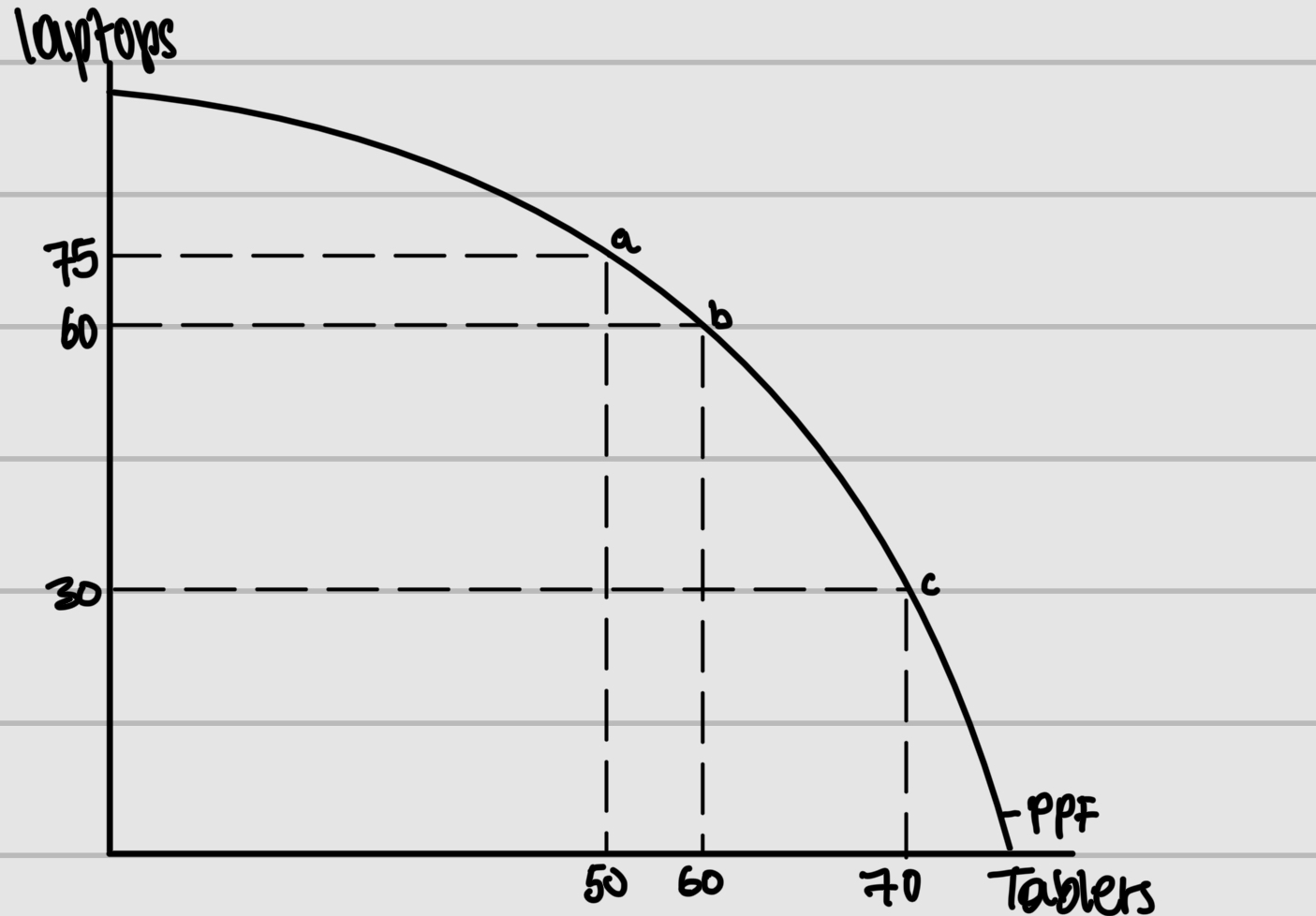
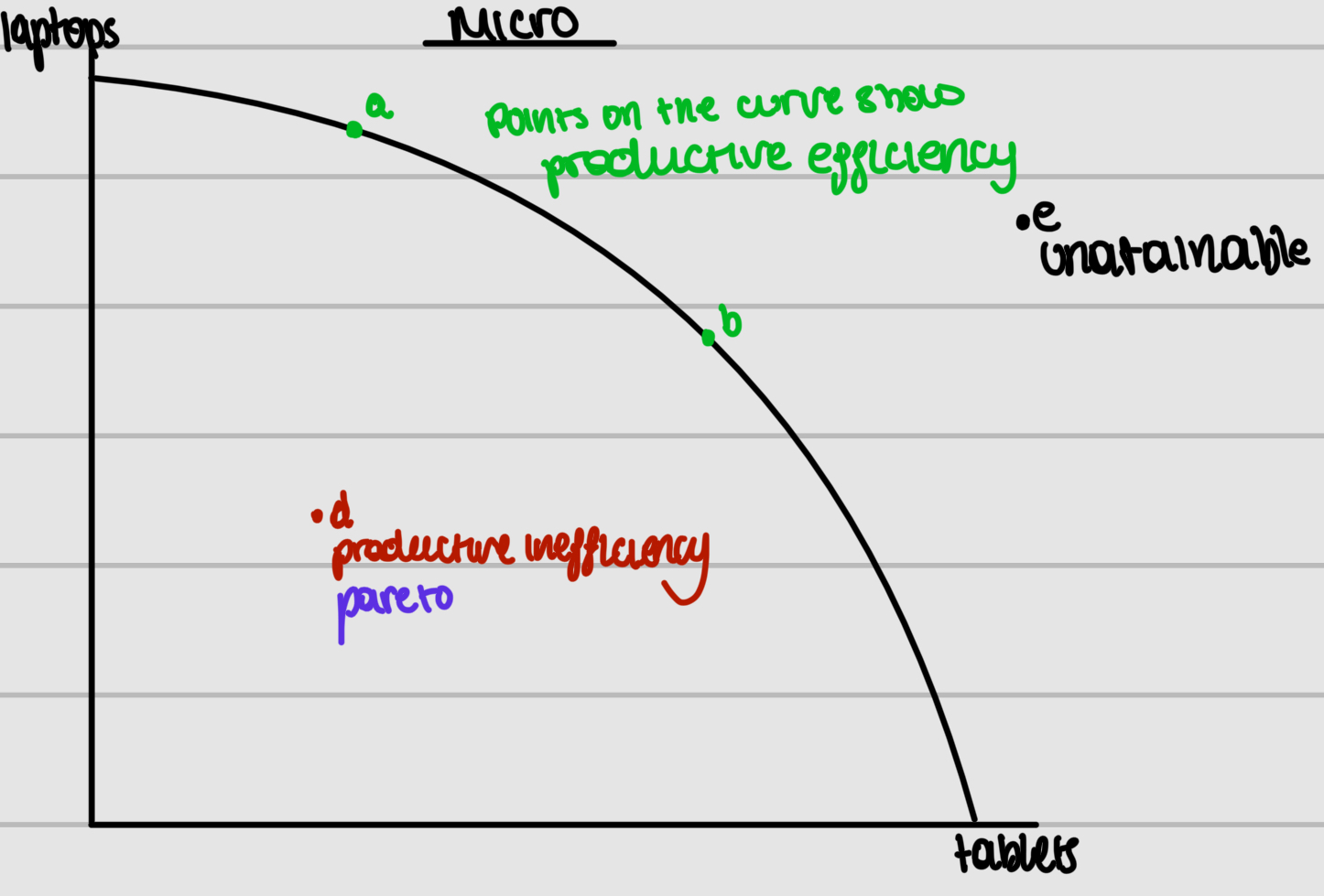
What is shown on a micro economic PPF graph
The maximum possible production of 2 goods/services with given F.O.P
The various combinations of 2 goods/ services that can be produced with given F.O.P
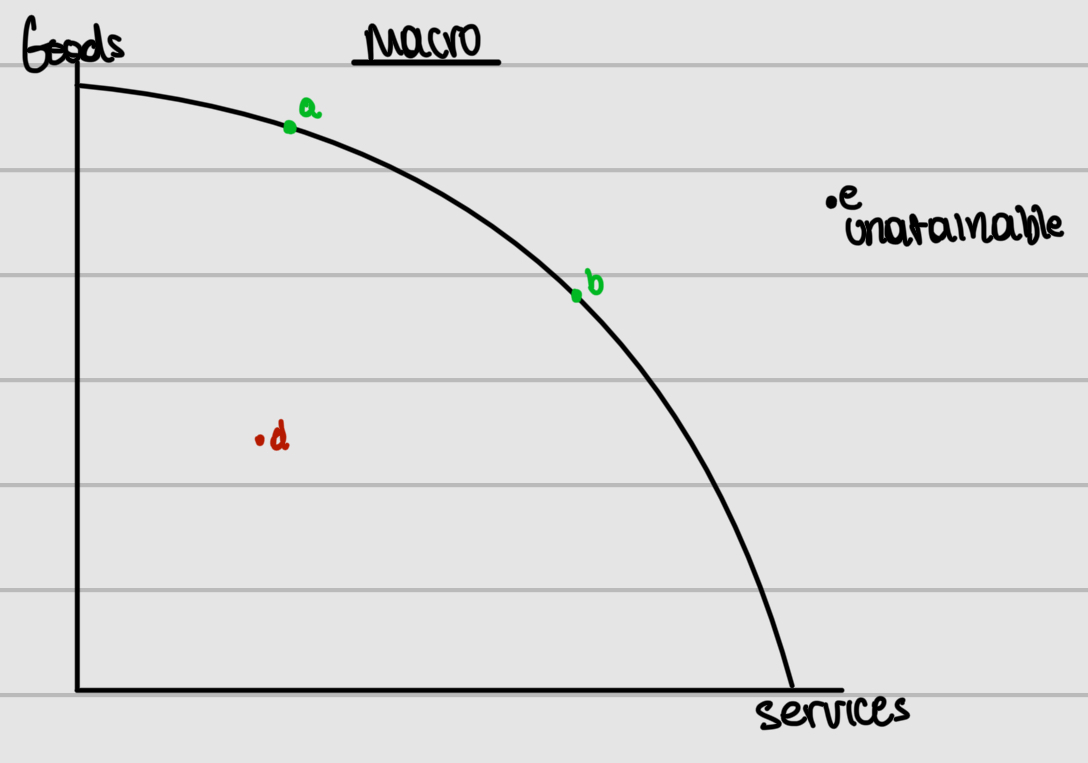
What is shown on a macro economics PPF graph
The maximum possible production of all goods and services with given F.O.P
The various combinations of all goods and services that can be produced with given F.O.P
A concave shaped PPF curve
Represents the law of increasing opportunity cost
Micro PPF graph
Macro PPF graph
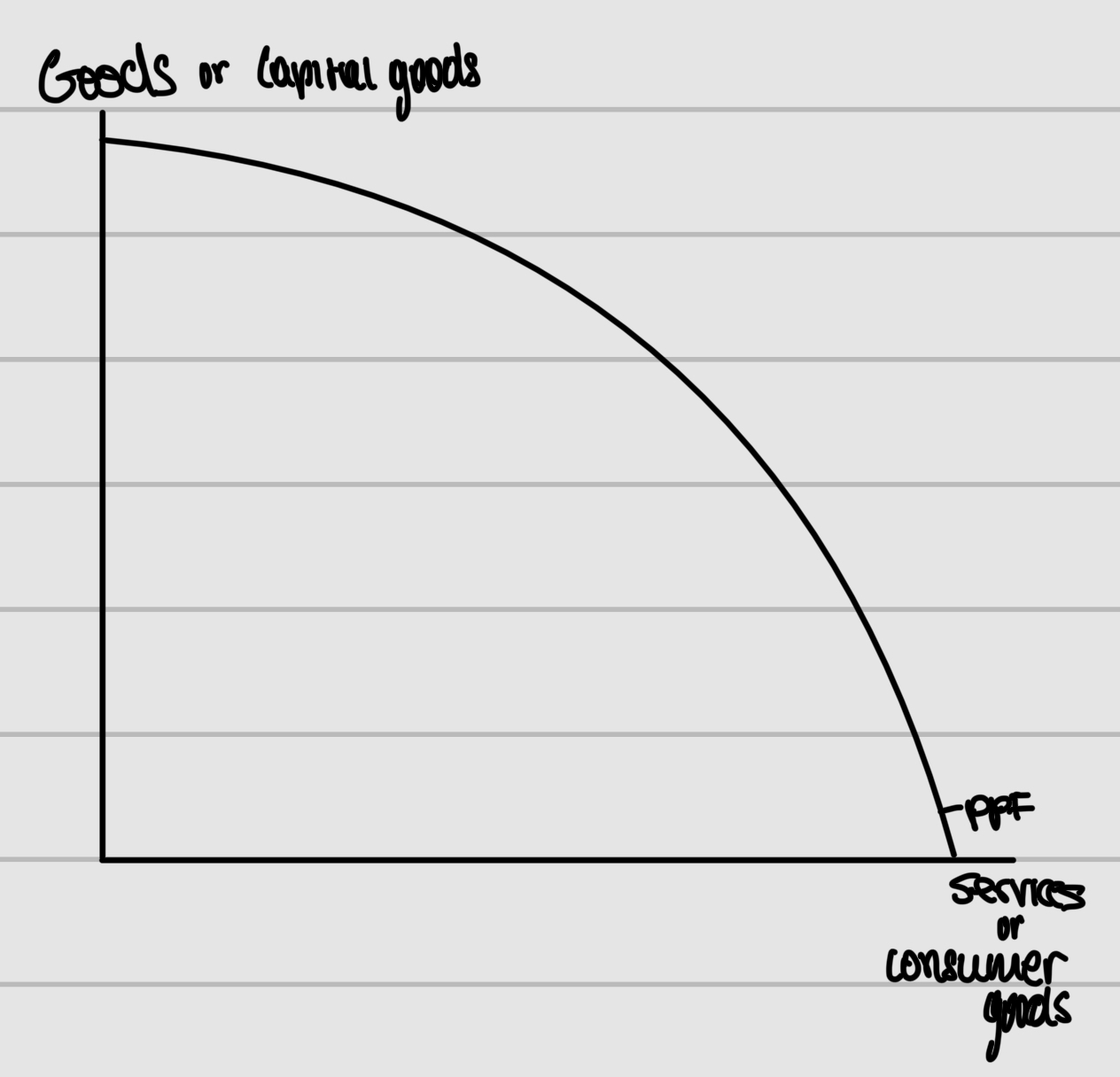
Moving along the concave PPF curve
F.O.P become more suitable for the production of one thing than they are e for another thing, hence increasing opportunity cost
Linear PPF graph showing constant opportunity cost on a macro level
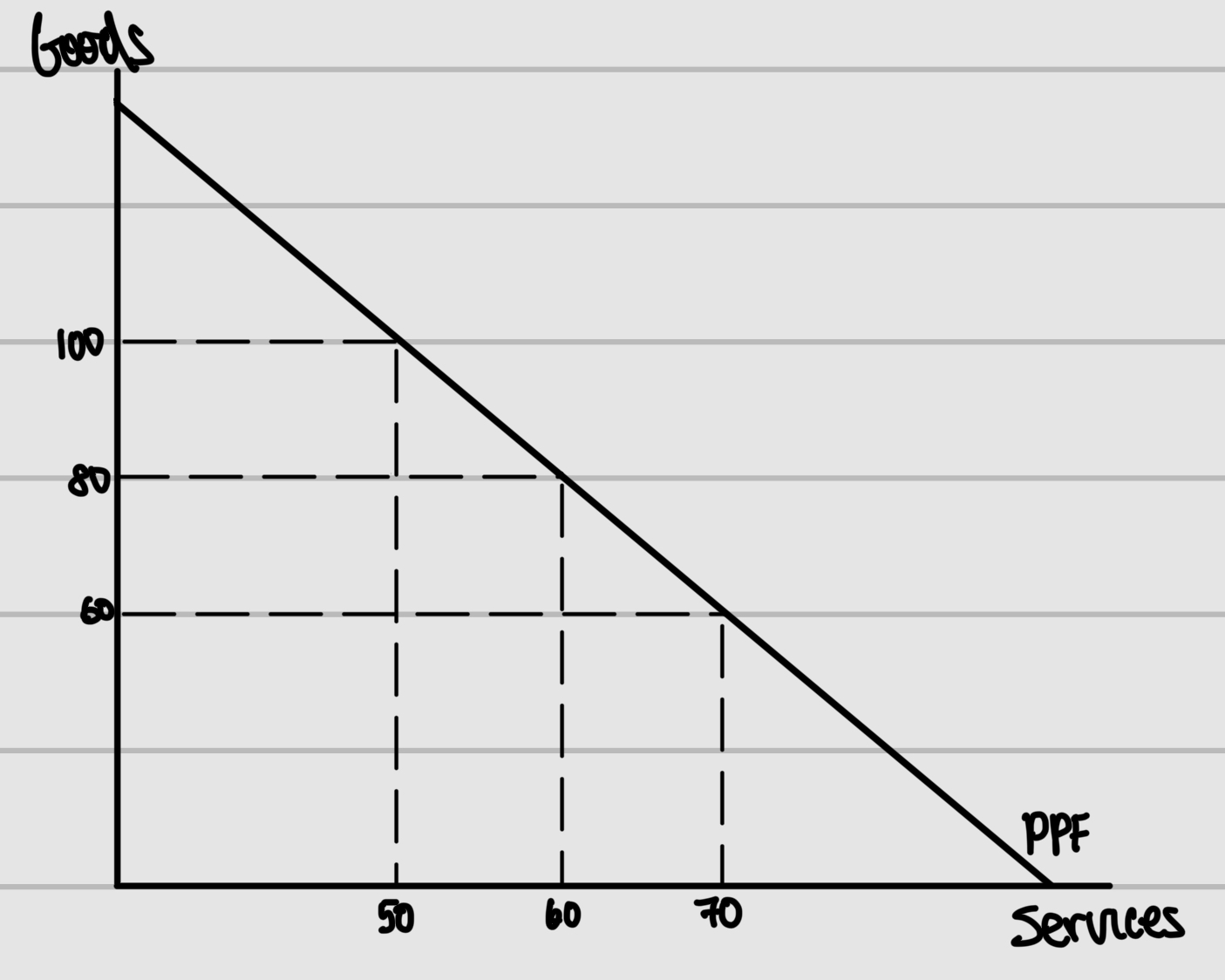
What is illustrated by a linear PPF curve
Constant opportunity cost
The 3 types of efficiency
Productive efficiency
Allocative efficiency
Pareto efficiency
Productive efficiency
When goods and services are produced at the lowest possible cost, meaning that no resources are wasted and a firm is producing the maximum possible output with the least amount of input
Allocative efficiency
Resources being distributed to produce the goods and services that society most desires, leading to maximum social welfare
Pareto efficiency
A state in which resources are allocated so that it is impossible to make a one person better off without making someone else worse off
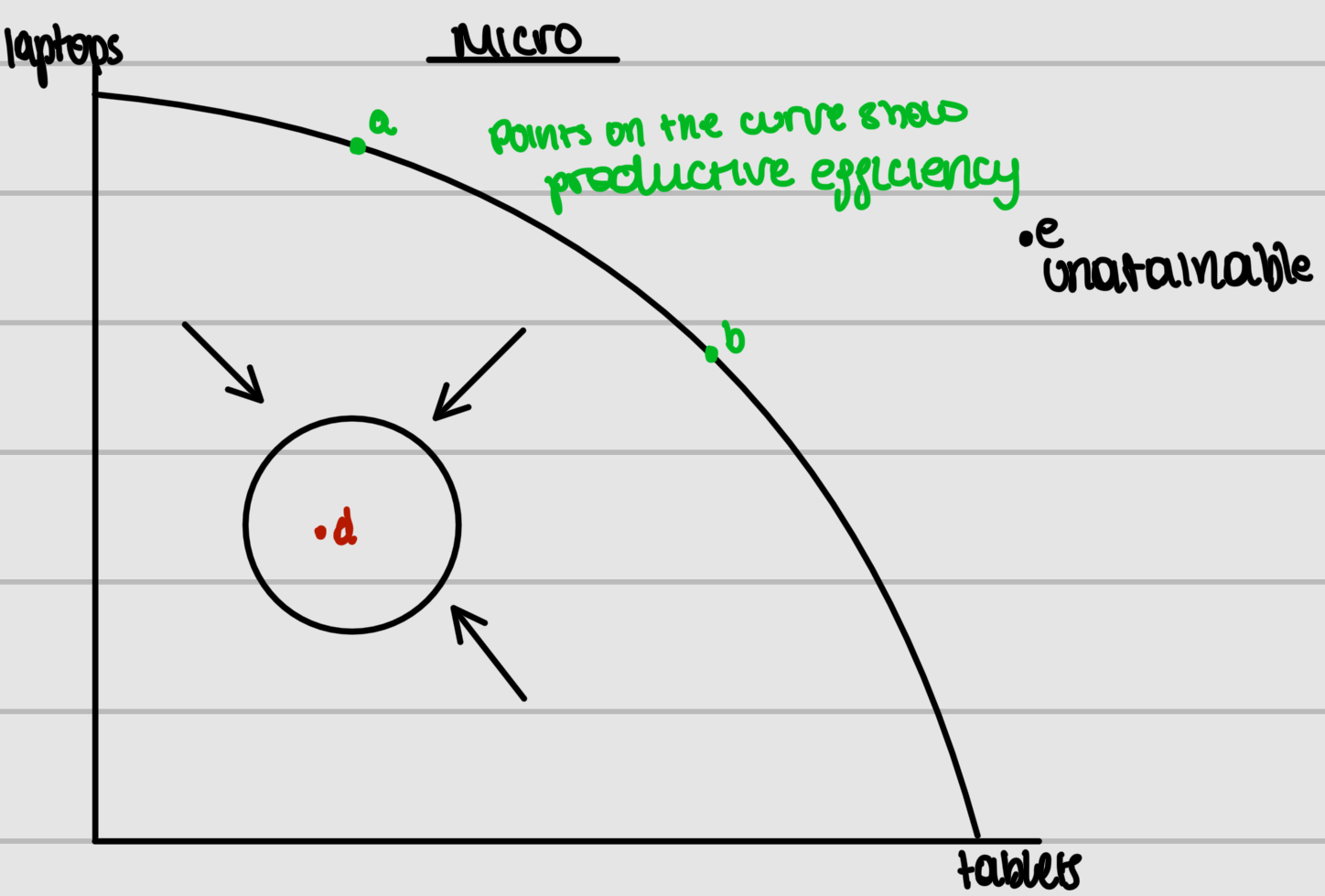
Point d
Productive inefficiency and pareto
Point d
Unemployment of labour or capital
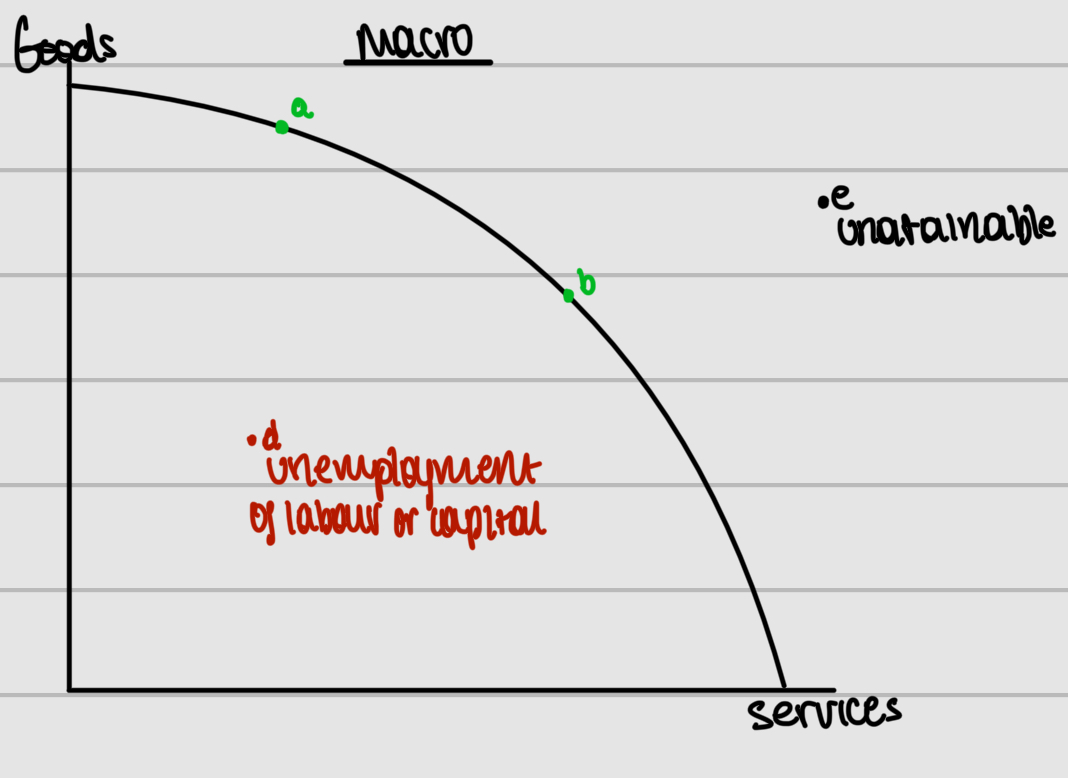
What can be done to move from producing inside the PPF curve to on the curve
A business can employ all labour and idle capital
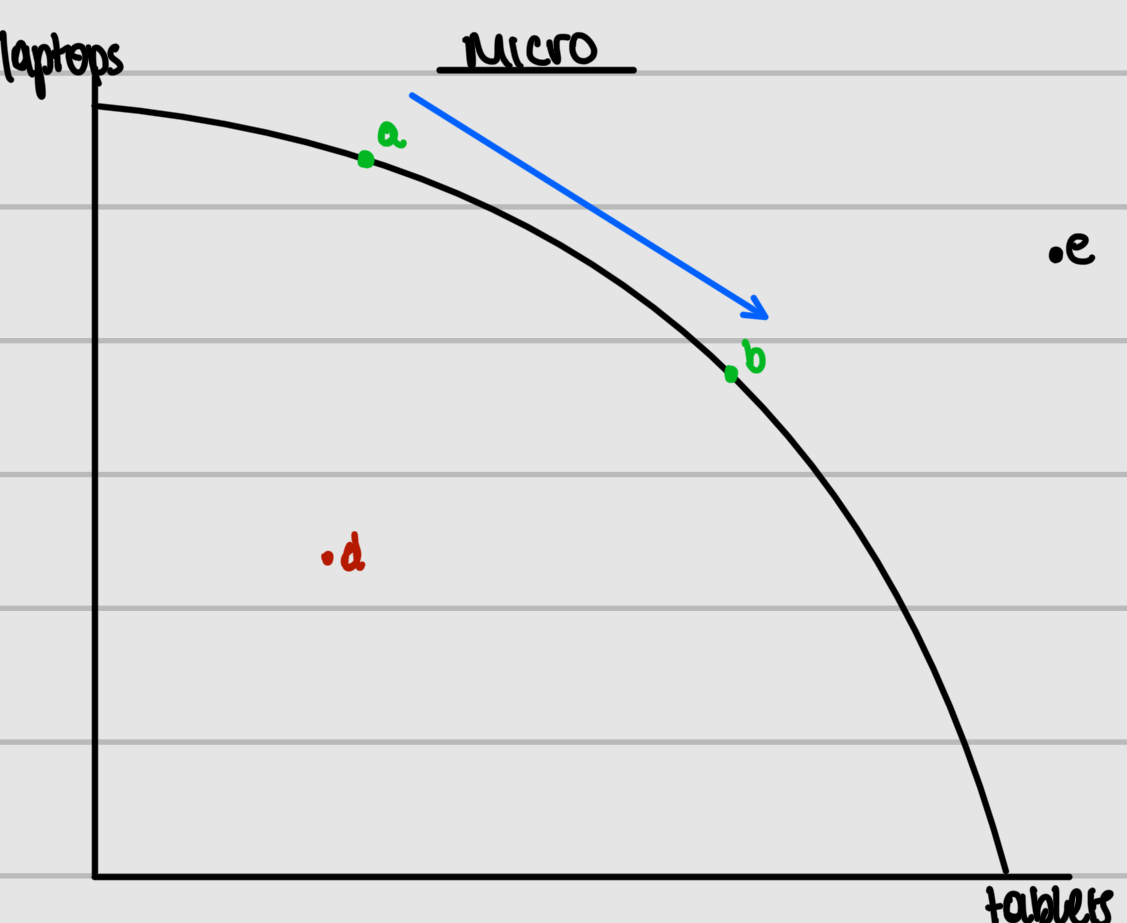
What can be done to move along the PPF curve
A business can reallocate F.O.P to specialise in one good by moving F.O.P away from producing the other good
In which direction would a business try and shift the PPF curve in order to increase production
Outward to the right
Shifting PPF curve to the right
One good/service does not need to be sacrificed for the production of the other. Instead more of both goods/services can be produced
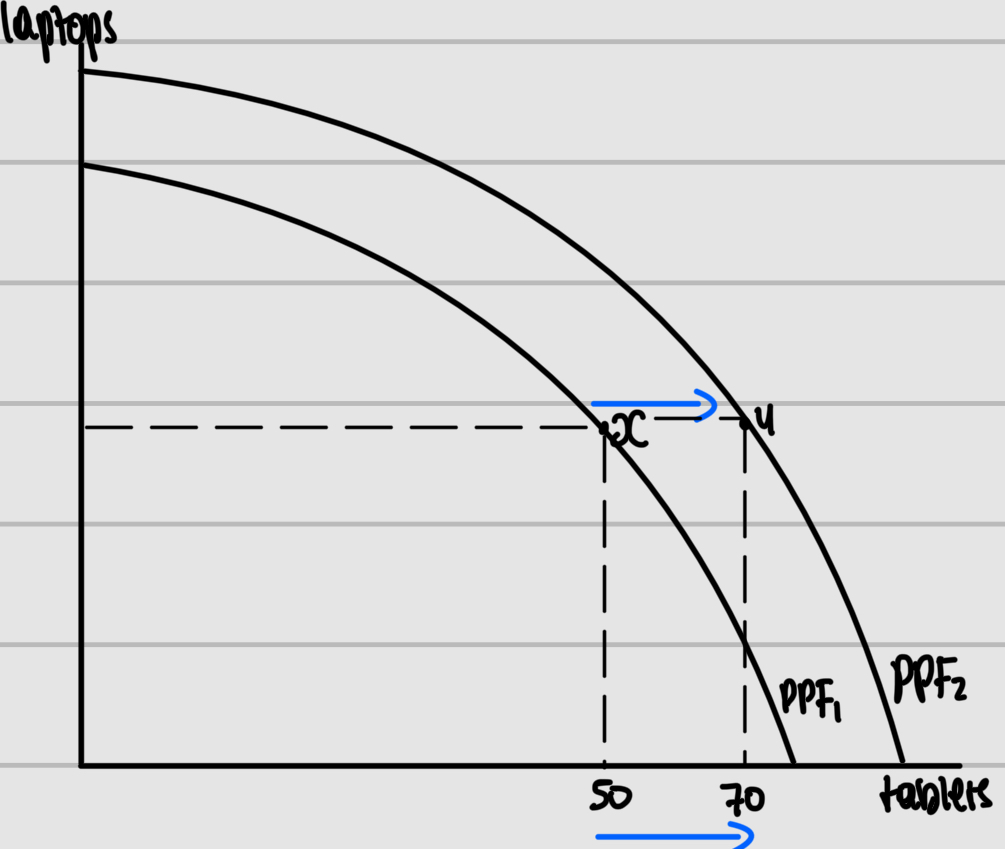
How to shift the PPF curve to the right
A business can increase the quantity and/or quality of F.O.P
Graph showing increase in production favouring only one good
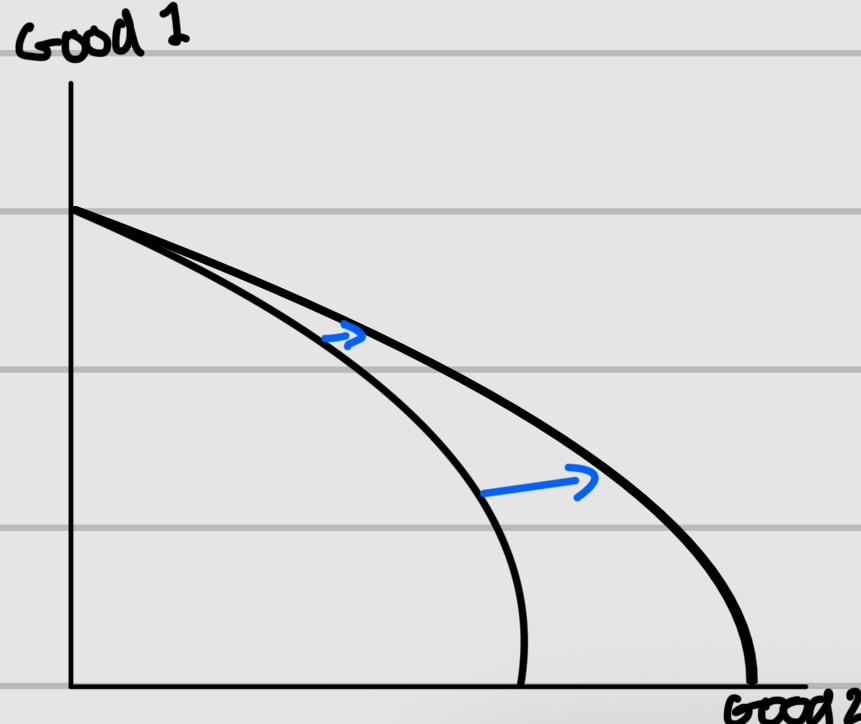
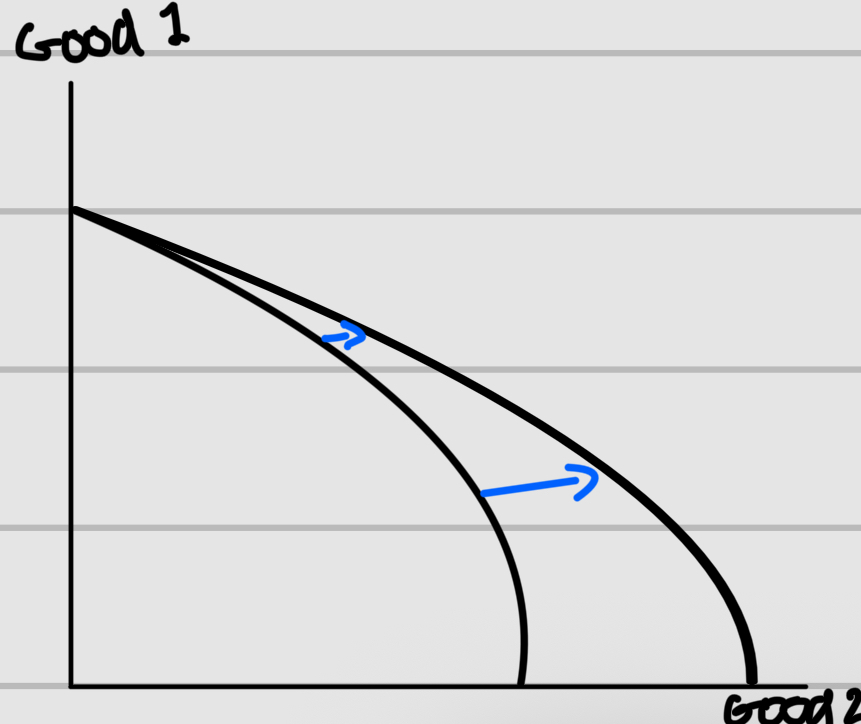
The change in quantity/quality of F.O.P suits the production of only one good
The economist who came up with the idea of specialisation and division of labour
Adam Smith
Advantages of specialisation
Higher output leading to increased trade and growth
Wider range of goods/services
Greater allocative efficiency
Higher productivity through better use of workers
Quality improvements
Disadvantages of specialisation
Finite resources
Changes in fashion/trends
De-industrialisation
National interdependence
Division of labour
Breaking down a production process into separate tasks upon specialisation
Advantages of division of labour
Workers are highly productive meaning that wages increase, time is saved, and a decrease in production costs and prices for consumers
Specialist capital for workers
Lower prices, higher quantity/choice and higher quality for consumers
Disadvantages of division of labour
Demotivation of workers
Higher worker turnover
Risk of long term unemployment - workers become specialised in one thing causing them to find it hard to find other lines of work where they can transfer their skills
Highly standardised goods/services
The functions of money
Medium of exchange
Store of value
Measure of value
Method of deferred payment
Medium of exchange
Money is accepted as a means of payment for goods and services, allowing transactions to take place without need for barter
Store of value
Money can be saved and used in the future because it maintains its value overtime, enabling