Biology Development ( ch 1)
 Call Kai
 Learn
Learn Practice Test
 Spaced Repetition
 Match
Match Flashcards
 Knowt Play
1/18

Name | Mastery | Learn | Test | Matching | Spaced | Call with Kai | Chat |
|---|
No analytics yet
Send a link to your students to track their progress
19 Terms
What is a model organism…
To understand cells and thus biological organisms, we must study something that resembles/ has charactertriats were trying to understand.
Our understanding of cell biology comes from experimental models
Properties of a model organism
Easy to cultuvate/bred in lab
Short life cycle
Few(er) cells
Able for genetic analyses
Being meaningful evolutionarily
Having the experimental tools
Biomendicine: similarity in structure, function, genetics, physiology to humans
Fewer ethical dilemmas
HeLa cells
Cells created from Henrietta Lacks
The first successful cultures of immortal human cell lines (cancerous cells)

In adult cells…
Most are terminally differentiated and post-miotic division, thus they can’t be kept in culture
Inherently Immortal Cells
Embryonic cells (still in mitotic division)
Cancerous cells that have re-entered the cell cycle
Generated Immortality
Addition of foreign genes that inhibit senescence
Engineered deletion of endogenous “pro-senescence” genes
How are human cells studied…
Primary cell lines: (straight from tissue)
Immortalized cell lines ( at least one generation in culture)
Common model organism…
Mus musculus: mouse
Why : common mammalian physiology +
Drosophila melanogaster: fruit fly
Why : great for development and adult studies / short generation time
Gallus gallus domesticus: Chicken
Why : fewer genetic tools (microinjectables): great for live imaging development, long generation time
E. coli
Key model org. for DNA replication, decoding the DNA to make proteins, etc.
The order of components and biochemical processes that best correlates with the tenets of the central dogma.
DNA [transcription] RNA [translation] protein
![<p>DNA [transcription] RNA [translation] protein</p>](https://assets.knowt.com/user-attachments/e36fe44c-0b8a-4866-a159-fa96f6197b20.png)
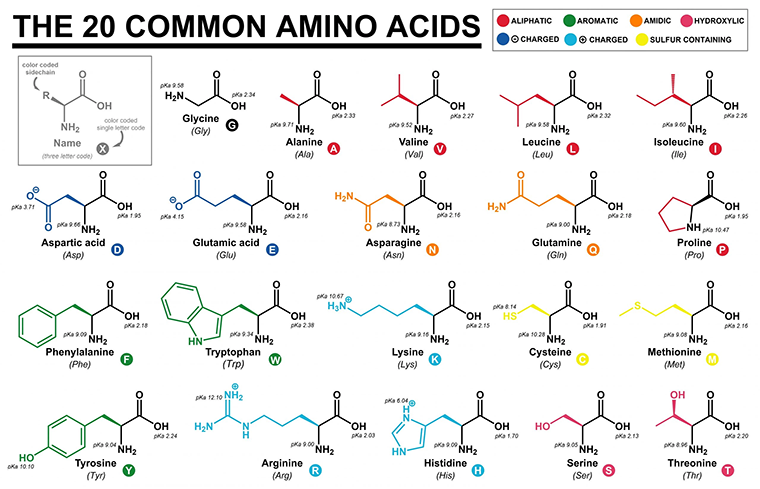
All different protiens in a cell are made from the same…
20 amino acids
Lenght used generally to measure a typical plant or animal cell…
micrometers

Conventional light microscope
Used typically for pathology photos
Think typical microbiology microscope
LED

Transmission electron microsope
Used for molecular resolution or seeing ribosomal proteins along cells
Passes electrons through a thin sample to show internal details 2D
Seeing things based on difference of densities (dyeing dense objects dark)
Has the ability to resolve cellular components as small as 2 nm
Laser (excitation of electrons)
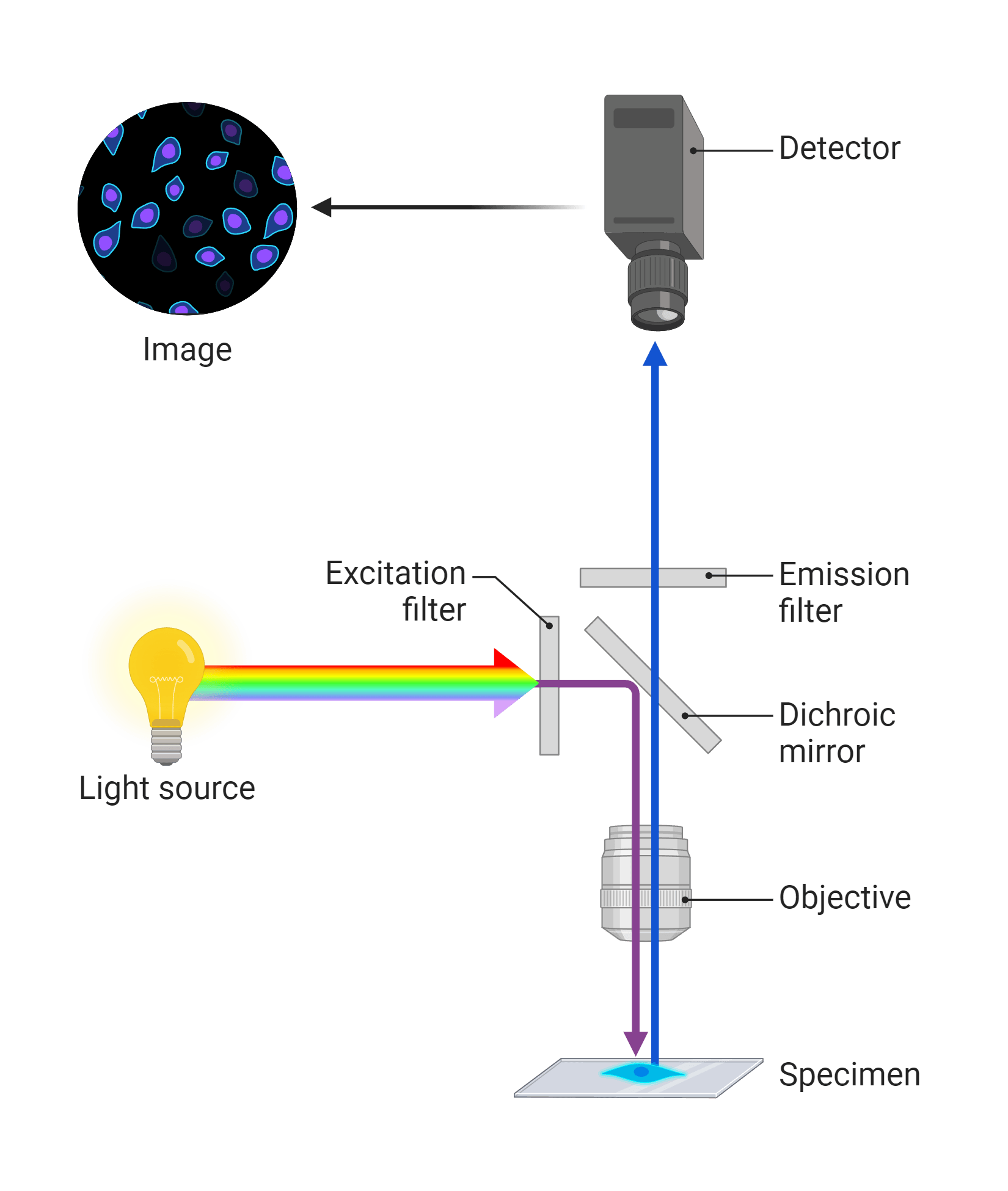
Fluroescence Microscope
Used for viewing specific cells using (very specific fluroesence) dyes


Scanning electron mircoscope
Bounces electrons off a sample’s surface, creating a 3D image.
Laser (exated electrons)

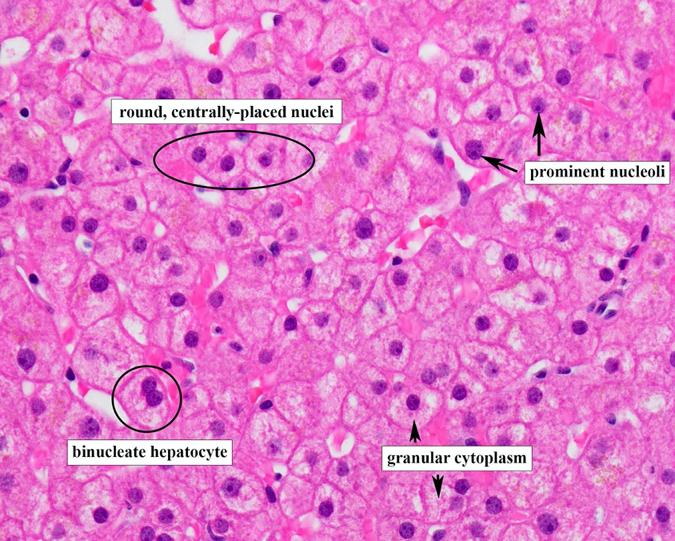
Hepatocytes
Liver cells
Mus musculus
mouse
Drosophila melanogaster
fruit fly

Gallus gallus domesticus
Chicken