BIOLOGY CLEP NOTES
 Note
Note Call Kai
 Learn
Learn Practice Test
 Spaced Repetition
 Match
Match Flashcards
 Knowt Play
1/188

There's no tags or description
Looks like no tags are added yet.
189 Terms
Matter
Anything that takes up space and has mass, made of elements.
Elements
Substances that cannot be broken down into other substances.
Atoms
The smallest unit of matter, composed of neutrons, electrons (-), and protons (+).
Compound
Two or more different elements combined in a fixed ratio.
Molecule
Two or more same or different elements combined in a fixed ratio.
Electrons
Negatively charged particles found orbiting in shells around the nucleus of an atom.
Valence shell
The outermost shell of an atom that contains valence electrons.
Chemical Bonds
Attractions that keep atoms close together.
Covalent Bonds
Bonds formed by the sharing of a pair of electrons between atoms.
Polar Covalent Bonds
non equal sharing
Non-polar Covalent Bonds
equal sharing
Ionic Bonds
Bonds formed when an anion steals an electron from a cation.
Hydrogen bonds
Weak bonds formed between the poles of hydrogen and oxygen in water molecules.
Chemical Reactions
Processes that make and break chemical bonds.
Reactants
Substances that start a chemical reaction.
Products
Substances produced at the end of a chemical reaction.
Endothermic
Reactions that absorb energy.
Exothermic
Reactions that release energy (ex bombs)
Properties of water
- Only molecule that exists in all three states
- Solid is less dense than liquid (ice floats)
- Adhesion – sticks to other molecules well
- Cohesion – sticks to itself well
- Surface tension – difficult to break the surface
- Universal solvent – just about everything dissolves in it
- High specific heat – longer to increase temperature
- Evaporative cooling
Acids
Substances that dissolve in water and increase the hydrogen ion concentration in the solution.
Bases
Substances that dissolve in water and decrease the hydrogen ion concentration in the solution.
pH scale
A scale used to measure the acidity or basicity of a solution.
Organic Molecules
Molecules containing carbon.
Carbohydrates
Organic molecules made up of carbon, oxygen, and hydrogen.
Monosaccharide – monomer (ex glucose)
Polysaccharide – polymer (ex starch)
Lipids
Hydrophobic organic molecules
Waxes – form water barriers
Fats – energy storage
Phospholipids – cell membranes
Steroids - hormones
Proteins
Organic molecules made up of amino acids.
enzymes
defense (antibodies)
muscle
Nucleic Acids
Organic molecules used for information storage made of nucleotides
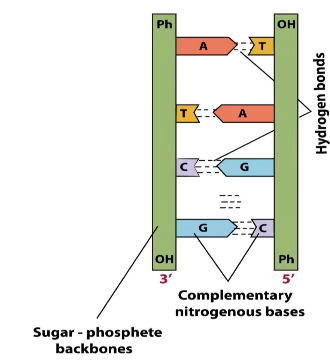
Nucleotide makeup
o 1 Nitrogen base – (joint by hydrogen bonds)
Adenine (A)
Thymine (T) – DNA only
Uracil (U) – RNA only
Cytosine (C)
Guanine (G)
o Pairs - A & T/U and C&G
o 1 Sugar
Deoxyribose – DNA
Ribose - RNA
o 1 Phosphate group (backbone squiggle)
Cells
The smallest units of living things.
Cell Organelles
Structures within a cell that perform specific functions.
Cytoplasm
the goo
jelly like substance where organelles are suspended
Cell Membrane
The lipid layer surrounding a cell.
Nucleus
The command center of a cell that stores and protects most of the DNA. Makes RNA and ribosomes
Ribosomes
Protein factories that use DNA instructions to create proteins.
Endoplasmic Reticulum
An organelle involved in lipid synthesis, detoxification, and protein production.
Golgi Apparatus
An organelle involved in receiving, sorting, and modifying proteins.
This is the shipping center for the ER
Mitochondria
Organelles involved in cell respiration and energy production.
Converts FOOD to energy
Chloroplasts
Organelles involved in photosynthesis.
converts LIGHT to energy
Cytoskeleton
A network of protein fibers that provide structure and support to cells.
Cell Wall
A rigid structural support found in plants, bacteria, prokaryotes, and fungi.
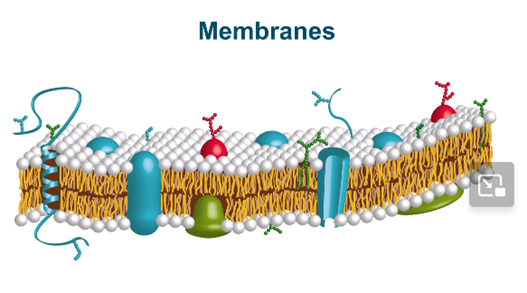
Membranes
Boundaries between the inside of a cell and its surroundings.
Hypo-tonic
cell loses water
Phospholipid bilayer
o White outside part is the hydrophilic part that likes to interact with water
o Yellow inner is hydrophobic which doesn’t like water
Passive Transport
Diffusion across the membrane without the use of energy.
Sometimes needs a doorway protein to get through
Diffusion
each molecule moves random from higher to lower concentration (no energy) (think perfume)
Osmosis
diffusion of water (higher to lower concentration)
Facilitated Diffusion
diffusion with a doorway (protein that only allows certain proteins)
Active Transport
Transport that requires energy and a doorway protein.
Moved molecules against or with the concentration gradient
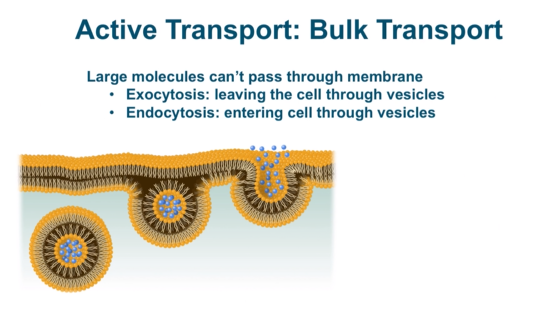
Bulk Transport
large molecules cant pass through membrane
Prokaryotic Cells
Cells that do not have a nucleus or organelles.
Unicellular
Bacteria or archaea
Eukaryotic Cells
Cells that have a nucleus, mitochondria and DNA
Unicellular or multicellular
Animals, plants, fungi
Size is limited by the ratio of cell surface to cell volume
Activation Energy
energy barrier that breaks existing bonds before creating new bonds. Rate of reaction depends on activation energy (higher = slower reaction)
Enzymes
Proteins that act as catalysts to lower the activation energy of a reaction.
Substrate
the molecule an enzyme interacts with
Active site
the location where an enzyme and substrate interact
Enzyme-Substrate Complex
The temporary complex formed when an enzyme binds to its substrate.
Cofactor
Non-protein helper molecules necessary for some enzymes to function.
o Inorganic – inorganic cofactors (usually metal irons)
Iron
Magnese
Zinc
o Organic – coenzymes (commonly vitamins)
Bond to the active site and help form the enzyme substrate complex
Cosubstrates are detachable
Prosthetic groups are permanent
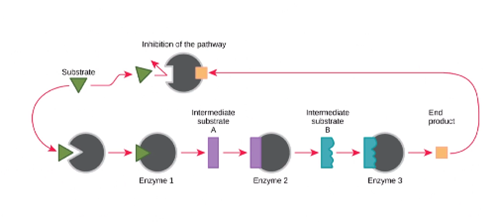
Inhibitors
Molecules blocking or changing the shape of an enzyme's active site.
Denaturation
change in enzyme shape that makes it stop working
can be caused by high temperatures
Regulation
The control of enzyme activity by the cell.
o Regulaor molecule controls shape of enzyme active site
Causes enzyme to fit/not fit depending on what the cell needs
EX – oxygen for hemoglobin
Cellular Respiration
The process by which cells convert food into ATP.
Aerobic Respiration (steps)
(with Oxygen)
o Glycolysis
o Pyruvate Oxidation
o Citric Acid Cycle
o Electron Transport Chain
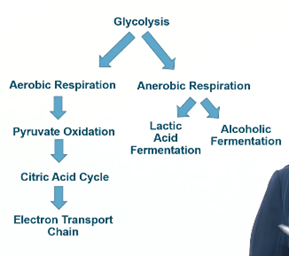
Glycolysis
(in the cytosol)
glucose is split to make 2 molecules of pyruvate and 2 net ATP (pyruvate goes on)
glucose+2ATP = 2 NADH + 4 ATP +2 PYRUVATE
Pyruvate Oxidation
(in the mitochondria)
pyruvate converted into Acetyl CoA
2 PYRUVATE oxidize = 2 acetyl CoA + 2 NADH
Citric Acid Cycle (Krebs Cycle)
(in the mitochondria)
Acetyl CoA is converted into different molecules (a little ATP and other molecules that are used in the electron transport chain)
2 Acetyl CoA = 6 NADH + 2 FADH2 + 2 ATP
Electron Transport Chain
creates about 32 molecules ATP
1 NADH = 2.5 ATP
1 FASH = 1.5 ATP
Anaerobic Respiration
(without oxygen)
o Produces very little ATP compared to aerobic
o Lactic Acid Fermentation
Lactic acid is a byproduct
o Alcoholic Fermentation
Ethanol is a byproduct
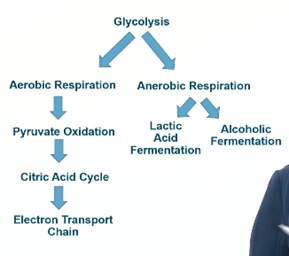
Photosynthesis
The process by which cells convert sunlight into glucose.
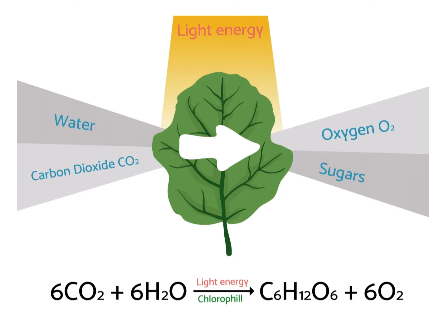
2 processes of Photosynthesis
o Light reactions – harvest sunlight
o Dark reactions
Light Reactions (photosynthesis)
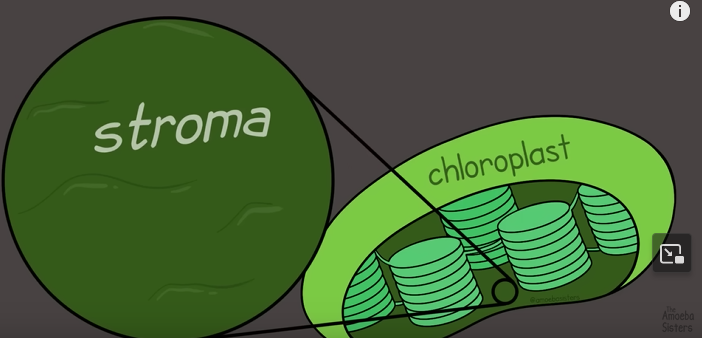
Take place in the thylakoid (inside chloroplast)
Capture light and use it as an energy source
Produce ATP and other molecules for dark reactions
Produce O2 as a byproduct
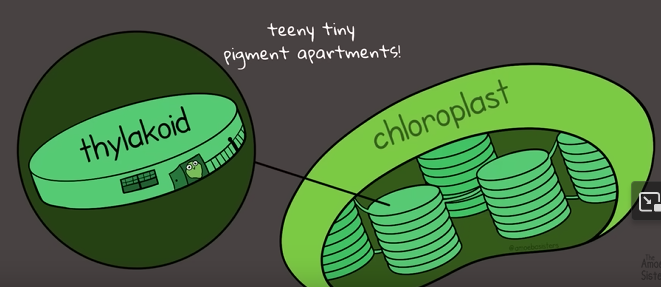
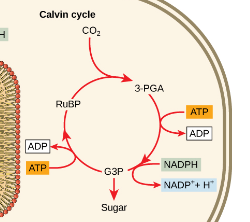
Light Independent Reactions - Calvin Cycle (photosynthesis)
Take place in the stroma (like the cytoplasm)
Use ATP from light and CO2 from air to make molecules used in light reactions
Produce glucose used in cellular respirations
Chromatin
DNA before replication
Chromosome
DNA wound up (only right before mitosis)
wound around histones (proteins)
a group of histones = nucleosomes
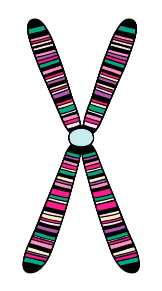
Sister chromatids – copies of chromosomes made before mitosis
Centromere – visible construction that holds the sisters together
Homologous chromosomes
have identical copies of the same gene in the same place. About the same size and shape and pair up before mitosis.
Ploidy (n)
o denotes the number of copies of a gene/chromosome
Haploid – 1n
Diploid – 2n
Mitosis
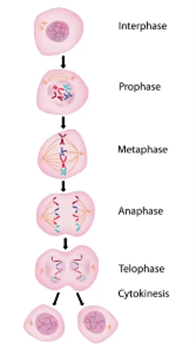
The process of cell division that results in two identical daughter cells.
Prophase – chromosomes condense (messy chromatin into tightly condensed chromosomes)
Metaphase – chromosomes line up along the metaphase plate
Anaphase – chromosomes are pulled at their poles
Telophase – chromosomes de-condense back into chromatin
Cytokinesis – parent cell splits into 2 identical daughter cells and both are 2n
Prophase
– chromosomes condense (messy chromatin into tightly condensed chromosomes)
Metaphase
– chromosomes line up along the metaphase plate
Anaphase
– chromosomes are pulled at their poles
Telophase
– chromosomes de-condense back into chromatin
Cytokinesis
– parent cell splits into 2 identical daughter cells and both are 2n
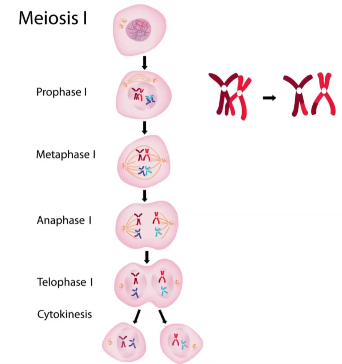
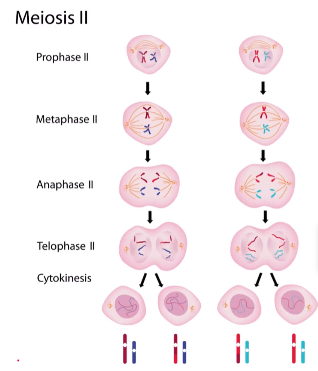
Meiosis
The process of cell division that results in four unique haploid cells.
Same order and jobs as Mitosis, but there is one difference. Crossing over occurs during prophase I. This forms new combinations of genes that were not present in the parent cell.
Before Watson and Crick
o 1860s Fredrick Miescher – discovered phosphate rich chemicals in white blood cell nuclei. He was detecting phosphate groups in DNA
o 1920s Frederick Griffith – discovered that some kind of molecule transformed pneumonia bacteria from harmless to lethal
o 1940s Avery, MacLeod, McCarthy – DNA was what transformed from harmless to lethal
o 1950s Chase and Hersey – DNA, not proteins, were the genetic material
o 1950s Erwin Chargaff – A=T and C=G
o 1950s Roslind Franklin – X ray showed that DNA had helical structure
Watson-Crick Model of Nucleic Acids
Proposed by James Watson and Francis Crick in 1953, it describes the double helix structure of DNA and the base pairing rules (A-T and C-G).
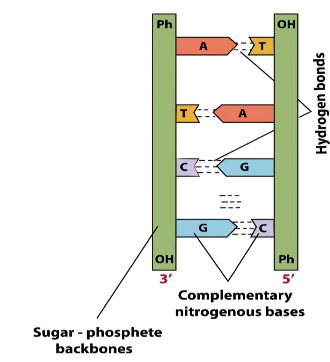
DNA Replication
The process of copying DNA before cell division. It involves the unwinding of the double helix, reading of the template strand by DNA polymerase, and the synthesis of a new complementary strand. The end product is 2 identical helicies.
Mutations
Changes in the DNA sequence that can result from accidents during replication or exposure to carcinogens. They can be substitutions (wrong nucleotide used) or frameshifts (extra or missing nucleotide).
Control of Protein Synthesis
Genes are segments of DNA that serve as blueprints for specific proteins. Protein synthesis involves transcription (copying the gene from DNA to RNA) and translation (formation of proteins from the mRNA code).
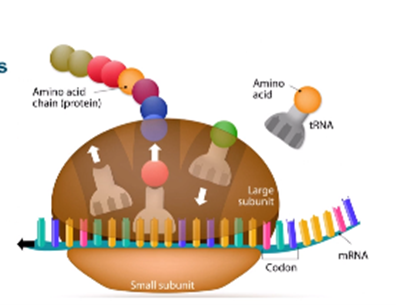
Structural Genes
code for proteins that create organs, cell walls, and the cytoskeleton.
Regulatory Genes
Regulatory genes code for proteins that regulate growth, control development, and start or stop transcription of certain genes.
Bacterial Genes
o Prokaryotes – no nucleus
o DNA can be changed more easily which is why we can become resistant to medicine
Transduction
A virus can put genes from one bacterium into another
Transformation
Bacteria can incorporate DNA from the environment into their own genes, allowing for the acquisition of new genes. This can lead to resistance to medicine.
Viruses
particles that have their own DNA or RNA and can only reproduce in host cells. They invade host cells, take control of DNA replication, and replicate themselves. They can reprogram the immune system and cause diseases.
Plant Organs
Shoots are usually above ground and gather light and CO2 for photosynthesis.
Leaves gather light
Flowers attract pollinators and release pollen
Fruits are mature reproductive organs containing seeds
Roots absorb water and nutrients from the soil.
Water and Mineral Acquisition
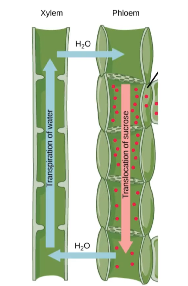
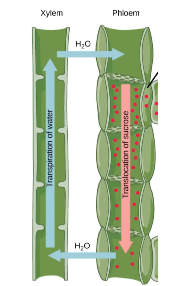
Non-vascular plants lack transport tissues, while vascular plants have xylem and phloem for water, sugar, and mineral transport. Water and minerals diffuse into root cells and are pulled up through the plant via cohesion-tension.
Food Translocation and Storage
Sugar builds up in the phloem, and water helps move the sugar throughout the plant, forming sap. Some plants store carbohydrates as starch in stems or roots for later use.
Phloem
responsible for transporting sugars from leaves to the rest of the plant
Alternation of Generations
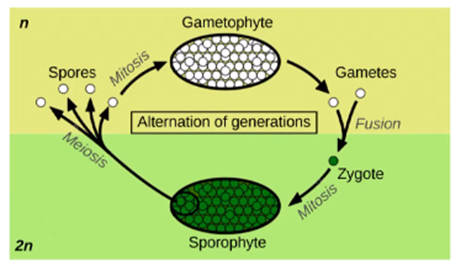
Plants have a life cycle that alternates between haploid and diploid phases. The sporophyte (diploid) produces spores via meiosis, which grow into gametophytes (haploid) via mitosis. Gametophytes produce gametes, which fuse to form new diploid individuals.
Gamete Formation and Fertilization
Plants have male (sperm) and female (egg) gametes. Sperm is produced in large numbers and can swim or be transmitted as pollen grains. Eggs are produced in small numbers and remain where they are. Fertilization occurs when the sperm and egg fuse.
Auxins (plant hormone)
o Promote shoot elongation
o Produced in the shoot tips
o Transported from tip to base of shoot