BIOLOGY CLEP NOTES
ABOUT
115 multiple choice questions
90 mins
No penalty for guessing
Scores are available immediately – need a 50 to pass
MOLECULAR & CELLULAR
(1.1) Chemical Composition of Organisms
(1.1.1) Reactions and Bonds
Matter and Elements
Matter – anything that takes up space and has mass, made of elements (rocks, gasses, kittens)
Elements – cannot be broken down into other substances (carbon, oxygen, hydrogen)
Atoms – smallest unit of matter (neutrons, electrons (-), and protons (+))
Elements
Compound – 2+ different elements combined in a fixed ratio
Salt (NaCl)
Molecule – 2+ same or different elements combined in a fixed ratio
Oxygen Gas
Atoms
Electrons
Found orbiting in shells
Valence shell – outermost shell contains valence electrons
Only valence electrons interact with other atoms
Chemical Bonds – attractions that keep atoms close together
Covalent Bonds
Sharing of a pair of electrons
Strong bonds
Nonpolar – equal sharing
Polar – non equal sharing
Ionic Bonds
Anion steals an electron from the cation
Strong bonds
Hydrogen Bonds
Form poles of H and O in water molecules
Weak bond
Chemical Reactions
Make and break chemical bonds
Reactants – start reaction
Products – produced end of reactions
Energy
1st law thermos – energy cannot be created or destroyed
2nd law thermodynamics – reactions tend to increase disorder
Endothermic – take energy
Exothermic – release energy (bombs)
(1.1.2) Properties of Water
- Only molecule that exists in all three states
- Solid is less dense than liquid (ice floats)
- Adhesion – sticks to other molecules well
- Cohesion – sticks to itself well
- Surface tension – difficult to break the surface
- Universal solvent – just about everything dissolves in it
- High specific heat – longer to increase temperature
- Evaporative cooling
Acids and Bases
Acids – dissolve in water and increase hydrogen ion concentration in the solution (H+) (ex Hydrochloric acid)
Bases – dissolve in water and decrease the H+ (ex Ammonia)
pH scale – smaller # acidic and larger is more basic
7 is neutral
Buffers can bring anything towards neutral. You can combine a strong of each to make a neutral.
(1.1.3) Organic Molecules
Organic Molecule – any molecule containing carbon
Monomer – the smallest block to form organic molecules
Polymer – many monomers make up a polymer (ex whole molecule)
Molecules
Carbohydrates
Made up of carbon, oxygen, and hydrogen
Monosaccharide – monomer (ex glucose)
Polysaccharide – polymer (ex starch)
Lipids
Hydrophobic in nature
Waxes – form water barriers
Fats – energy storage
Phospholipids – cell membranes
Steroids - hormones
Proteins
Amino acids – monomer
Polypeptide (protein) – polymer
Enzymes, defense (antibodies), muscle
Nucleic Acids
Nucleotide - monomer
Deoxyribonucleic acid (DNA)
Ribonucleic Acid (RNA)
Used for information storage
Nucleotide Makeup
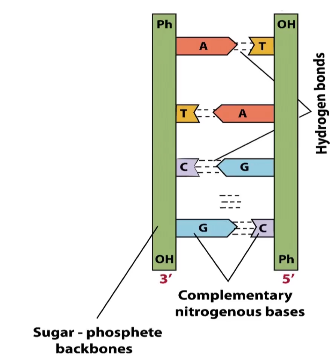
1 Nitrogen base – (joint by hydrogen bonds)
Adenine (A)
Thymine (T) – DNA only
Uracil (U) – RNA only
Cytosine (C)
Guanine (G)
Pairs - A & T/U and C&G
1 Sugar
Deoxyribose – DNA
Ribose - RNA
1 Phosphate group (backbone squiggle)
(1.1.4) Origin of Life
When - 3.5 million years ago life started
What – bacteria and similar organisms
Where – deep sea vents, hot springs, tide pools
Steps
(1) simple organic molecules
(2) some able to replicate
(3) cell division
(4) self metabolism – convert food into chemical energy
Common ancestry among all living things
Same basic cell membranes
Same glycolysis (metabolism)
DNA is the same (base pairs)
Fossils
(1.2) Cells – smallest units of living things
(1.2.1) Structure and Function of Cell Organelles
Cytoplasm (the goo)
Jelly like substance where organelles are suspended
Cell membrane (wall)
Lipid layer surrounding the cell
Nucleus (command center/brain)
Stores and protects most of DNA
Nucleous - Makes RNA and ribosomes
Ribosomes (protein factory)
Use DNA instructions to create proteins
Made up of RNA and proteins
Endoplasmic Reticulum (coral reef)
Makes lipids
Detox
Makes secretory proteins
Golgi Apparatus (Shipping center for ER products)
Receiving
Sorting
Modifying
Mitochondria & Chloroplasts
Mitochondria – site of cell respiration (converts food to energy)
Converts sugar to ATP
Chloroplasts – site of photosynthesis (converts sunlight to energy)
Found in plants
Both
Own DNA & Ribosomes
Double membrane
Somewhat independent
Cytoskeleton (scaffolding for cells)
Cell shape
Muscle movement
Highways
Organization
Centrosomes – organizes some of cytoskeleton & cell division
Microtubules are the largest of the 3 types of fibers
Intermediate filaments are stable and durable
Microfilaments support cellular projections like villi
Cell wall (plants, bacteria, prokaryotes, and fungi)
Rigid structural support
Components – cellulose, pectin, chitin
(1.2.2) Properties of Cell Membranes
Membranes
Boundary between inside of cell and surroundings
Selectively permeable
Phospholipid bilayer with proteins, other lipids, hybrid molecules
Lipid and proteins can move from side to side
Hypotonic – this cell loses water
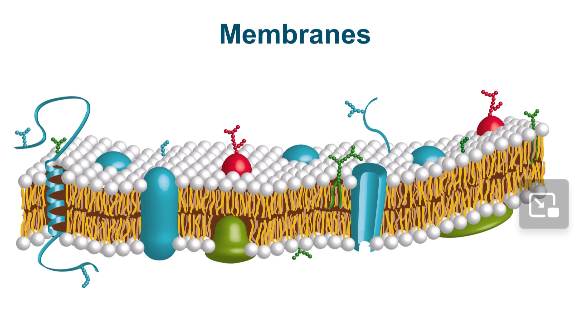
Phospholipid bilayer – two layers
White outside part is the hydrophilic part that likes to interact with water
Yellow inner is hydrophobic which doesn’t like water
Selective permeability
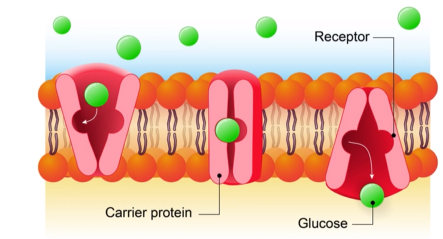
Passive transport – diffusion across the membrane with no energy. Sometimes needs a “doorway” protein to get through.
Diffusion – each molecule moves random from higher to lower concentration (no energy) (think perfume)
Osmosis – diffusion of water (higher to lower)
Facilitated Diffusion – diffusion with a doorway (protein that only allows certain proteins)
Active transport – requires energy and a doorway protein
Energy is required. Moves molecules against or with concentration gradient.
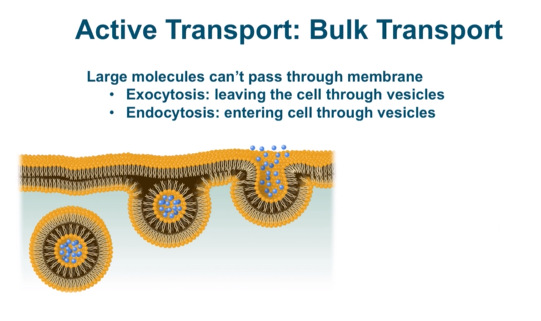
Bulk transport – large molecules cant pass through membrane
(1.2.3) Comparison of Prokaryotic and Eukaryotic Cells
All living things are prokaryotic or eukaryotic
Prokaryotic
Bacteria or archaea
Most ancestral living things
They have a cell membrane and cytoplasm
Contrast - Do not have a nucleus or organelles
Unicellular
Some have a cell wall and/or locomotor structures
Most abundant on planet
Helpful and harmful (gut vs infections)
Eukaryotic
Animals, plants, fungi
Evolved from prokaryotes
They have a cell membrane and cytoplasm
Contrast – internal organelles like nucleus, mitochondria and DNA in the nucleus. Can be unicellular or multicellular
Some have cell walls and/or locomotor structures
Size is limited by the ratio of cell surface to cell volume
(1.3) Enzymes
(1.3.1) Enzyme-Substrate Complex
Activation Energy – energy barrier that breaks existing bonds before creating new bonds. Rate of reaction depends on activation energy (higher = slower reaction)
Enzymes – proteins that are the catalysts that lower the activation energy (EX lactase is the catalysts for the milk sugar lactose)
Some enzymes break substrates into smaller pieces while others join two substrates together into one molecule
Substrate – the molecule an enzyme interacts with
Active site – the location where the enzyme and substrate interact
(1.3.2) Roles of Coenzymes & (1.3.3) Inorganic Cofactors
Some enzymes need help from other molecules (cofactor)
Cofactors – non-protein helper molecules that are necessary to help some enzymes function
Inorganic – inorganic cofactors (usually metal irons)
Iron
Magnese
Zinc
Organic – coenzymes (commonly vitamins)
Bond to the active site and help form the enzyme substrate complex
Cosubstrates are detachable
Prosthetic groups are permanent
(1.3.4) Inhibition and Regulation
Inhibitors – molecules that compete with substrates for the active site (A2 – antiplasmin)
Sit in the active site and block
Attache to enzyme outside of the active site and change shape of active site so it does not work
Inhibition can also be due to the shape change of the enzyme or active site. This is caused by temperature, ph, etc.
Denaturation – change in enzyme shape that makes it stop working
Regulation – cell controls the action of its own enzymes
Product of the reaction inhibits the enzyme
Reaction slows as product increases
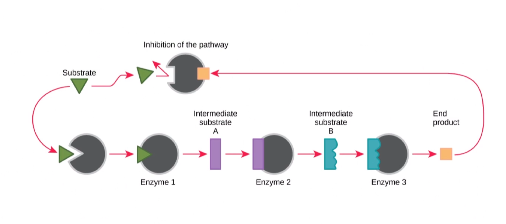
Regulaor molecule controls shape of enzyme active site
Causes enzyme to fit/not fit depending on what the cell needs
EX – oxygen for hemoglobin
QUIZ
Neurotransmitters contained in the vesicles enter the synapse through – exocytosis
An enzyme-substrate complex is composed of just an enzyme and a substrate
Enzymes don’t function only within living cells.
Enzymes can be used over and over again.
Enzymes are highly specific with regard to the reactions they catalyze
Some enzymes contain an essential nonprotein component (cofactors)
Most enzymes are denatured by high temperatures
Limited amount of enzyme present
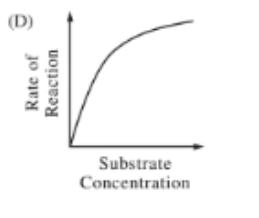
When a protein is heated the tertiary structure is most likely to be disrupted
(1.4) Energy Transformations
(1.4.1) Cellular Respiration
Cells convert food (glucose) into the energy molecule ATP
ATP is used any time energy is needed in an organism
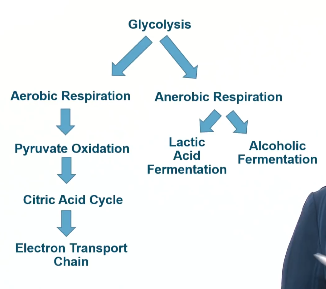
Aerobic (with Oxygen)
Glycolysis – glucose is split to make 2 molecules of pyruvate and 2 net ATP (pyruvate goes on)
Pyruvate Oxidation – pyruvate converted into Acetyl CoA
Citric Acid Cycle – Acetyl CoA is converted into different molecules (a little ATP and other molecules that are used in the electron transport chain)
Electron Transport Chain – creates about 32 molecules ATP
Anaerobic (without Oxygen) – convert pyruvate to ATP
Produces very little ATP compared to aerobic
Lactic Acid Fermentation
Lactic acid is a byproduct
Alcoholic Fermentation
Ethanol is a byproduct
(1.4.2) Photosynthesis
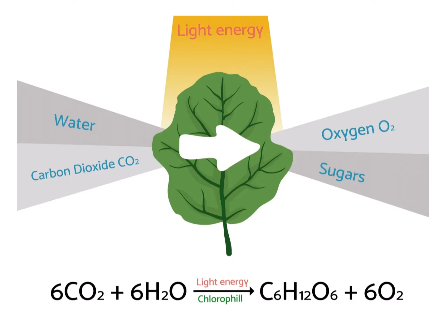
Converts energy from the sun into glucose that is used in cellular respiration to form ATP
2 processes
Light reactions – harvest sunlight
Take place in the thylakoid (inside chloroplast)
Capture light and use it as an energy source
Produce ATP and other molecules for dark reactions
Produce O2 as a byproduct
Dark reactions
Take place in the stroma (like the cytoplasm)
Use ATP from light and CO2 from air to make molecules used in light reactions
Produce glucose used in cellular respirations
(1.5) Cell Division
(1.5.1) Structure of Chromosomes
Chromatin – DNA form before replication
Chromosome – DNA wound up (only right before mitosis)
DNA is wound around proteins called histones
Each group of histones is called a nucleosome
Sister chromatids – copies of chromosomes made before mitosis
Centromere – visible construction that holds the sisters together
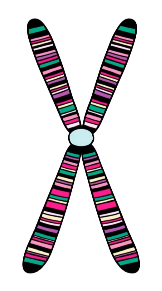
Homologous chromosomes – have identical copies of the same gene in the same place. About the same size and shape and pair up before mitosis.
Alleles – variation of the same gene found on homologous chromosomes (one allele is dark hair and another is blonde hair)
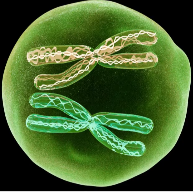
Ploidy (n) – denotes the number of copies of a gene/chromosome
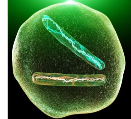
Haploid – 1n
Diploid – 2n
Karyotype – picture of chromosomes (for humans 2n=46)
READING – karyotypes, chromosome folding, and ploidy
(1.5.2) Mitosis, Miosis, and Cytokinesis
Cell cycle
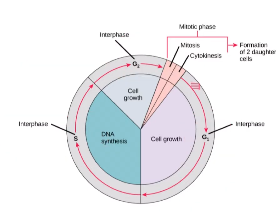
Interphase – 90% of a cells life (DNA is copied)
G1
S
G2
Mitotic Phase
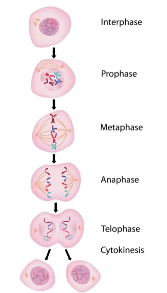
Mitosis– parent cell splits into 2 identical daughter cells
Prophase – chromosomes condense (messy chromatin into tightly condensed chromosomes)
Metaphase – chromosomes line up along the metaphase plate
Anaphase – chromosomes are pulled at their poles
Telophase – chromosomes decondense back into chromatin
Cytokinesis – parent cell splits into 2 identical daughter cells and both are 2n
Meiosis – forms 4 unique 1n cells (sperm and egg)
Meiosis 1
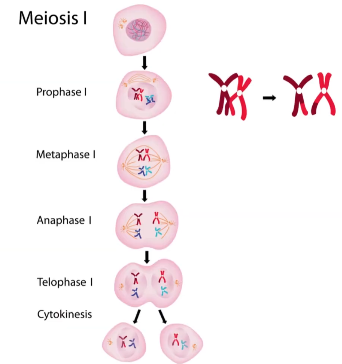
Same order and jobs as Mitosis, but there is one difference. Crossing over occurs during prophase I. Theis forms new combinations of genes that were not present in the parent cell.
Prophase
Metaphase
Anaphase
Telophase
Meiosis 2
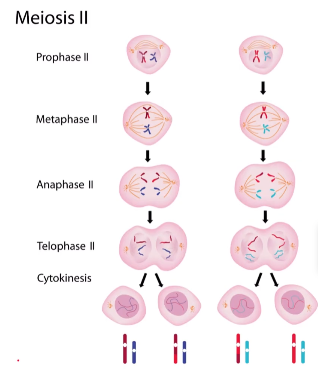
Same as Meiosis I but chromosomes have been through crossing over
End product is four haploid cells instead of 2 that result from mitosis and meiosis.
(1.6) Chemical Nature of the Gene
(1.6.1) Watson-Crick Model of Nucleic Acids
Before Watson and Crick
1860s Fredrick Miescher – discovered phosphate rich chemicals in white blood cell nuclei. He was detecting phosphate groups in DNA
1920s Frederick Griffith – discovered that some kind of molecule transformed pneumonia bacteria from harmless to lethal
1940s Avery, MacLeod, McCarthy – DNA was what transformed from harmless to lethal
1950s Chase and Hersey – DNA, not proteins, were the genetic material
1950s Erwin Chargaff – A=T and C=G
1950s Roslind Franklin – X ray showed that DNA had helical structure
Watson and Crick
James Watson and Francis Crick (1950)s – Published research in 1953
Found that the A-T bond was the same length as the C-G bond which was the reason for the double helix
(1.6.2) DNA Replication
The Blueprint
DNA = blueprint for everything cells make and do
Before mitosis a cell must copy the daughter cells and DNA replication is making this copy
Each Strand a Template
Each DNA strand is a template for a new strand because of the pairs
Process
(1) The enzyme helicase breaks bond between nucleotides on the DNA strand. This unwinds the double helix. (Think that the helicase unzips)
(2) DNA polymerase reads the nucleotide pattern on the template strand
(3) Polymerase builds a new strand by matching the nucleotides to the template strand
(4) End product – two identical double helices are formed
(1.6.3) Mutations
Mutations
Source of new genes (can be bad or good)
Genetic disorder if bad (EX sickle cell disease)
Causes
Accidents during replication
Carcinogens (EX radiation)
Types
Substitutions – wrong nucleotide is used
Frameshifts – extra or missing nucleotide
(1.6.4) Control of Protein Synthesis
Gene
Segment of DNA that is the blueprint for specific protein
Control protein synthesis
Stages of Protein Synthesis
Transcription
Gene is copied from DNA to RNA (U instead of T)
mRNA (messenger RNA) takes message to cytoplasm for translation
Translation
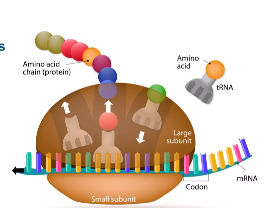
Sets of 3 nucleotides on the mRNA form codons
Codons are complimentary to anticodons that are found on the tRNA (transfer RNA)
tRNA carries amino acids (building blocks of proteins) from cytoplasm to ribosomes
Ribosomes match the anticodons to the codons and the amino acids are joined to form proteins
(1.6.5) Structural and Regulatory Genes
Types of Proteins
Structural – genes code for proteins to create
Organs
Cell walls
Cytoskeleton
Regulatory – genes code for proteins to
Regulate growth
Control development
Start or stop transcription of certain genes
(1.6.6) Transformation
Bacterial Genes
Prokaryotes – no nucleus
DNA can be changed more easily which is why we can become resistant to medicine
Transduction
A virus can put genes from one bacterium into another
Transformation
Bacteria can incorporate bite of DNA from the environment into their own genes
(1.6.7) Viruses
Are they alive?
We don’t know
They have their own DNA/RNA, can only reproduce in host cells, and have no metabolism.
Instead of calling a virus a cell, we call it a particle or virion
Structure
Smaller than the smallest bacteria
All have
Capsule
DNA or RNA
Some have
Enzymes
Attachment structures
How do they work
(1) Virus invades a living host cell
(2) takes control of DNA replication (sometimes translation/transcription) and replicates itself.
Some viruses reprogram the immune system to stop working or attack itself
ORGANISMAL BIOLOGY
(2.1) Structure and Function of Plants
(2.1.1) Plant organs
Shoots
Usually above ground
Sometimes has leaves flowers and fruits
Gather light and CO2 for phorosynthesis
Leaves
Gather light
Modified or absent
Flowers
Only present in angiosperms
Attract pollinators and release pollen
Fruits
Mature reproductive organs
Contains seeds and sometimes flesh
Roots
Absorb water and nutrients from soil
Below ground
Sometimes store energy and water
(2.1.2) Water and Mineral Acquisition
Non-Vascular Plants
No transport tissues and small
Vascular Plants
Transport vessels (for water, sugar and minerals)
Grasses, trees, cacti, herbs
Vascular tissues
Specifically for transport
Xylem – transports water and minerals
Transport
Water and minerals diffuse into the root cells
Cohesion – tension pulls water and minerals up through plant as water vapor is lost
(2.1.3) Food Translocation and Storage
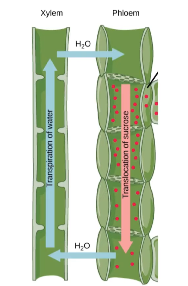
Phloem
Food = sugars from photosynthesis
Phloem – food transport tissues that move sugars from leaves to rest of plant
Sugar movement
Sugar builds up in the phloem
Water diffuses in from the Xylem – through osmosis
Water helps move the sugar turning it into sap. This moves throughout the plant
Food storage
Some plants store carbohydrates as starch in stems or roots to use later when the plant has a hard time getting what it needs from the environment
Potatoes beets turnips
(2.2) Plan Reproduction and Development
(2.2.1) Alternation of Generations
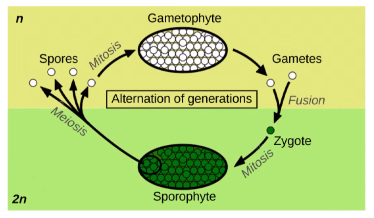
Alternation of phases
Plants life cycle alternated from haploid to diploid phases
This is dependent on age, time of the year, etc
Both phases undergo mitosis
Sporophyte is dominant in most plants
Diploid and Haploid phases
Sporophyte – diploid phase (pine tree)
Produced spores via meiosis
Spores grow into gametophytes via mitosis
Gametophyte - haploid phase (pine cone)
Produces gametes via mitosis
These fuse together to form new diploid individuals (sporophytes)
(2.2.2) Gamete Formation and Fertilization
Plant Gametes
Male - sperm
Female - egg
Zygote – fused
Embryo – growing zygote (more than a few cells)
Plant Sperm
From the male gametophyte
Produced in large numbers
Leave the plant to join the egg
Transmittal
Swimming – wet areas
Non Swimming – pollen grains
Plant Eggs
From female gametophyte
Produced in small numbers but larger in size
Transmittal
Stay where they are
Fertilization
Male and female fuse
Seed Plants
Sperm must grow through female plant tissue to reach the ovaries
Seedless Plants
Same as seed
(2.2.3) Growth and Development
Plant Hormones
Transported in vascular system
Control growth and development
Several that interact with each other
Auxins
Promote shoot elongation
Produced in the shoot tips
Transported from tip to base of shoot
Cytokinin
Stimulate cytokinesis
Produced in growing tissues (roots, embryos, fruits)
Gibberellins
Cell division and elongation
Fruit growth
Seed germination
Produced in young roots and leaves
Abscisic Acid (ABA)
Slows growth
Acting in opposition to growth hormones
Ratio of ABA to growth hormones determines whether growth occurs
Ethylene
Response to stress (drought, flood, injury)
Response to life cycle (ripening, and cell death)
(2.2.4) Tropisms and Photoperiodicity
Tropism
Growth response in plants towards or away from stimulus
Phototropism
Response to light
Positive - Plants grow towards light (shoots)
Negative - Plants grow away from light (roots)
Gravitropism
Response to gravity
Thigmotropism
Response to touch
Windy – grow short and thick in response to wind
Climbing – grow around (vines)
Photoperiodicity
Response to relative lengths of night and day
Why plants grow at different times of the year
(2.3) Structure and Function in Animals
(2.3.1) Major Systems
The Animal Body
Complex machine
Controlled by hormones
Affected by environment
Digestive System
Processes ingested food and drink
Respiratory System
Responsible for intake of essential gasses
Circulatory System
Moves gasses, nutrients, and hormones
Musculoskeletal System
Support
Stability
Movement
Nervous System
Passes messages between brain and body
Excretory system
Filters waste and excess water
Immune/Lymphatic Systems
Defense against invaders
(2.3.2) Homeostasis
Steady state – internal balance
Temperature
Ion concentration
Blood glucose/oxygen
Homeostasis
Set point - maintains a variable (98.6)
Stimulus – fluctuation in variable (working out)
Sensor – detects stimuli and send signal to control center (nervous system) -> (brain)
Control center – generated output that riggers a physiological response (sweat)
Hormones – chemicals used as signals
Relies on negative feedback cycles
Thermoregulation
Endothermy – internal temperature regulation through heat generation (mammals and birds)
Ectothermy – internal temperature regulated by external environment (reptiles and fish)
(2.3.3) Hormones in Homeostasis and Reproduction
Endocrine System
Regulated body’s set points
Triggers important events (puberty and reproduction)
Facilitates cell to cell communication (glucose uptake or antihistamine release)
Reaction to dust mites or pollen
Hormone
Affects growth, metabolism, development, and homeostasis.
Chemical secreted by an endocrine gland/ organ into the blood
Endocrine Glad
A ductless gland or single cell that secretes a hormone
Hormone target the cells or organs that have receptors for it
EX. Eat, digest, glucose rises, pancreas secretes insulin into the blood, glucose is transported into cells and liver to store as glycogen, glucose levels drop, and the pancreas stops secreting insulin.
Hormones as Signals
Released by brain
Work as signals in two ways
Diffuse into cell cytoplasm and join receptor protein (causes a response)
Join receptor protein in cell membranes (causes a response)
Hormones in Reproduction
Develop gonads – release hormones
Develop sperm and eggs
Release eggs
Develop embryos
Contractions during labor
Lactation and Maternal behavior
(2.4) Animal Reproduction and Development
(2.4.1) Gamete Formation and Fertilization
Reproduction (2 processes)
Gametogenesis
Making gametes
Sperm
Eggs
Fertilization
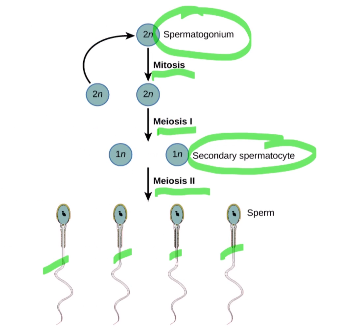
Spermatogenesis – formation of sperm
Primary spermatocytes (2n) formed
Secondary spermatocytes from primary (via Meiosis 1)
Sperm cells (1n -haploid) formed from secondary spermatocytes (via Meiosis 2)
Oogenesis – formation of eggs
Occurs in oogonia – cells in ovaries
Primary oocyte (2n) present in ovaries from birth
Secondary oocytes (1n) formed from primary (via Meiosis 1)
Egg cells and polar bodies (1n) formed from secondary oocytes (via Meiosis 2)
Polar bodies recycled
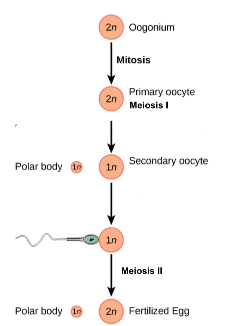
Fertilization – sperm and egg join to form zygote
(2.4.2) Cleavage, Gastrulation, Germ Layer Formation, Differentiation of Organ Systems
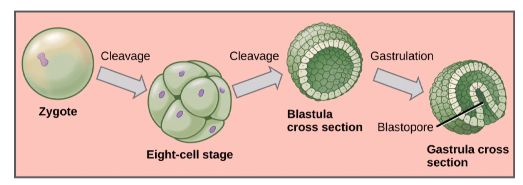
The Zygote
Fertilized egg
All sexually reproducing multicellular organism starts here
Cleavage
Zygotes divides many times without changing size
End up with many cells
Development Stages
Morula – solid ball of cells
Blastula – hollow sphere of cells
Gastrula – hollow sphere of cells with tube that forms into the digestive canal
Germ Layers – layers of tissue in developing organism
Endoderm – inside, forms alimentary canal
Mesoderm – in middle, form muscles, bones, circulatory and reproductive systems
Ectoderm – outside, forms skin
(2.4.3) Analysis of Vertebrate Development
Model Organisms
Used to learn about generalities in vertebrate development
Zebra Fish
Embryos have been used to explore
Effects of inhibitors
Effects of alcohol
Stages of Development
Frogs
Used to learn about
Blastula formation
Causes of two – headedness
Control of spinal formation
Chicks
Used to learn
Formation of limbs
Signaling molecules during embryonic development
Mice
Used to learn
Toe formation and separation
Cell fate determinants
Fish in space
The medaka and Asian relative of the zebrafish is being used to study the effects of low gravity embryo development
(2.4.4) Extraembryonic Membranes of Vertebrates
Membranes outside the embryo during development
Chorion
Regulates water, gasses, nutrients, and waste
Directly in contact with the uterine lining
Amnion
Fluid-filled sac around embryo
Cushioning and temperature regulation
Allantois
Comes from developing digestive track, gas, nutrient exchange
Becomes umbilical chord (non egg layers) / waste storage (egg layers)
Yolk Sac Membrane
Comes from developing digestive track and encloses yolk sac that stores nutrients
Becomes umbilical chord (non egg layers) / larger (egg layers)
(2.4.5) Formation and Function of the Mammalian Placenta
Placenta Formation
Formed from outer cells of embryo and inner cells of uterus
Connection between mother and embryo
Placenta
Function – transfer nutrients, water, wastes between mother and embryo
(2.4.6) Blood Circulation in the Human Embryo
Human embryos develop own blood vessels
Embryo blood vessels are next to mothers and exchange via diffusion
From mother – nutrients, water, oxygen
To mother – carbon dioxide and waste
(2.5) Principles of Heredity
(2.5.1) Mendelian Inheritance
Gregor Mendel
Inheritance – characteristics passed from one generation to another in the genes
Austian monk who studied the pea plant
First to quantify genetic tests
Mendel terms
Allele – alternate form of a gene (2 allele for each gene R or r)
Homozygous – 2 copied of the same (RR or rr)
Heterozygous – 1 copy of each allele (Rr or rR)
Dominant Allele – always expressed when present (R,G,N)
Recessive Allele – masked when dominant allele is present (r,g,n)
Genotype – allele carried by an individual
Phenotype – appearance of an individual
Cross – sexual reproduction between different individuals
Character – feature like hair color or plant height
Trait – the genotype or phenotype of an individual for a given character (red hair)
(2.5.2) Chromosomal Basis of Inheritance
Mendel’s Laws
Law of Independent Assortment – each possible combination of alleles is equally likely for each gamete
Law of Segregation – paired genes separate and randomly recombine in gamete so offspring have equally likelihood of inheriting either
Probability
If independent assortment occurs, laws of probability predict genotypes
Parental Generation (P) – the parents of a cross between the two individuals
First Filial Generation (F1) – offspring of P
Second Filial Generation (F2) – offspring from cross between two F1
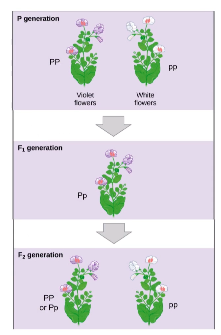
Punnett Square
Method of predicting offspring using probability
(2.5.3) Linkage
Non-Mendelian Genetics
Since Mendel we have discovered that his law of independent assortment isn’t always true.
Some genes only on sex chromosomes
Some genes always inherited together
Sex Linkage
Sex Linkage Genes – those located on either sex chromosome
Y genes are usually harmless because they are so small
X linked genes are responsible for several human genetic conditions
Color blindness in men
Duchenne muscular dystrophy in men
Hemophilia
Cat Coat Color
Tortoiseshell coat coloration is the result of X-linked genes
Orange and black are both on the X chromosome
Males (Xy) express on their one X chromosome
Only males with XXy can be tortoiseshell or calico
Female (XX) express both colors causing both colors
Other Linkage
Linkage – autosomal genes (not part of the sex chromosome) can be inherited together during meiosis if they are close together (because they were never fully split)
The farther genes are on a chromosome from one another the less likely they are to he inherited together
(2.5.4) Polygenic Inheritance
Polygenic Inheritance – two or more genes affect the same phenotypic character (human height and eye and skin color)
Disease – commonly caused by PI
Diabetes
Heart disease
Hypertension
POPULATION BIOLOGY
(3.1) Principles of Ecology
(3.1.1) Energy Flow and Productivity in Ecosystems
Energy Cycle – food chain
Flow of energy in an ecosystem
Trophic level
Producers – make energy accessible to eco systems via photosynthesis
Consumers – eat producers or other consumers
Trophic categories
Autotrophs – self feeders. Make food from sun
Heterotrophs – consumers, get food from eating other organisms
Ecological roles
Herbivores – eat plants
Carnivores – eat animals
Omnivores – eat both
Transfer of energy
Inefficient due to heat loss
Each level gets 10% of previous energy
(3.1.2) Biogeochemical Cycles
Biogeochemical cycles
Bio – living things
Geo – sediments/rocks
Chemical – molecules
Cycles – circular movements
Circular movements of molecules through an ecosystem’s living and nonliving things
The Water Cycle
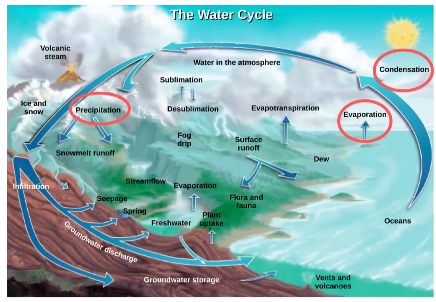
Ocean – source of water
Freshwater system – source of water
Precipitation – falls
Evaporation – return
Condensation – gas to liquid form
The Carbon Cycles
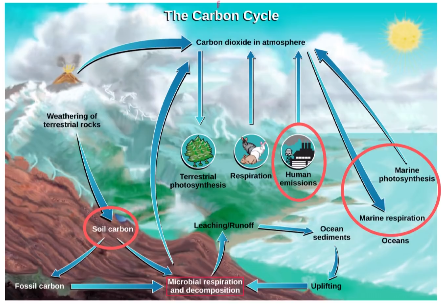
Major storage of carbon – atmosphere, soil (fossil carbon), ocean (takes carbona and returns it to atm)
Return to atm – water and human emissions (fossil fuels)
Travels – evaporation and diffusion, terrestrial photosynthesis, and respiration
Nitrogen Cycle – 80% of gas in atmosphere
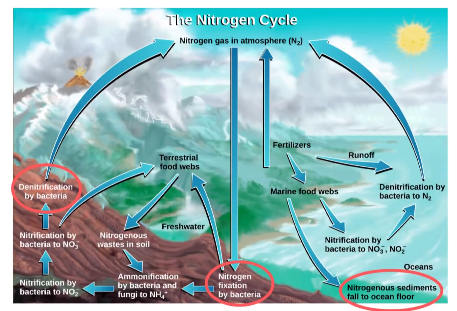
Removed from atmosphere – sediment falls to ocean floor, fixation (by bacteria), fertilizers, terrestrial organisms, and marine food webs
Back to atmosphere – denitrification (by bacteria in the water)
Sources – atmosphere and ocean floor
Phosphorus Cycle
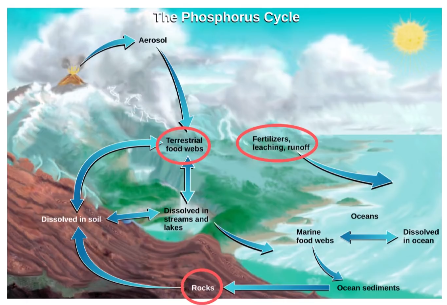
Majority of phosphorus is in rocks
(3.1.3) Population Growth and Regulation
Population – one organism or species living together
Limiting Biotic Factors
Dispersal
Competition
Predators
Lack of food
Parasites
Limiting Abiotic Factors – not living
Climate
Landscape
Soil
Water salinity
Sunlight
Density – individual per unit area
Density – dependent regulators
Competition
Predation
Disease
Density-independent regulators
Climate
Disturbance
Pollution
Demography and Growth
Demography – set of vital statistics (birth and death rate)
Growth Rate – how fast a population gets smaller or larger (r=births-deaths)
(3.1.4) Community Structure, Growth, Regulation
Competition
More than one species in a community attempt to use the same limited resource
Competitive Exclusion Principle – not two species can occupy the same niche indefinitely (one will die off )
Niche partitioning allows coexistence – cactus vs rooted plants
Symbiosis – close interaction between two species
Mutualism – both benefits
Commensalism – one benefits and one is neutral
Parasitism – one benefits and the other is harmed
Succession – process through which a community recovers from a disturbance
Primary – no soil (lava, glacial moraine)
Secondary – soil present (abandoned fields)
(3.1.5) Habitat
Species physical location including all biotic and abiotic factors it needs to survice
Pond
Forest
River
Grassland
(3.1.6) Concept of Niche
A species role in a community
Time of day/year the species is active
Parts of the habitat is uses
How large are the prey it eats
What temperature it can tolerate
Trophic level
(3.1.7) Island Biogeography
Biogeography – study of the distribution of organisms in space, historically and currently
Island biogeography
Dispersal – how do species reach an island
Flying
Blown by wind
Floating by water
Species diversity – number of species on an island
Immigration and extinction – as diversity increases, immigration rate decreases, and extinction rate increases
Area affects – diversity is highest on large islands
Distance effects – Diversity is highest on islands near a mainland
Age effects – Diversity is higher on a older island
(3.1.8) Evolutionary Ecology
Interactions
Physical Environment
Other species
One way – one species affect the other but not vise versa
Reciprocal – when two species affect each other
Predators and prey
Parasite and hos
Competitors
(3.2) Principles of Evolution
(3.2.1) History of Evolutionary Concepts
Evolution – genetic change in a population over time
Lamarck – proposed that organism acquired traits throughout their lifetime and pass these on (proven false)
(3.2.2) Concepts of Natural Selection
Darwinian Concept - Natural selection drives evolution
More offspring are produced than can survive
Variation in characteristics (siblings and diff hair)
Better competitors have more offspring
Frequency of characteristic increases if it is good
Population is the smallest unit that can evolve
Modern Synthesis – Darwin theory is supported but we know more
Characteristics result from genes
Variation in characteristics are from alleles
Evolution can take thousands of years
(3.2.3) Adaptive Radiation
Adaptation – inherited characteristics that provide survival / reproductive advantages
Speed
Camouflage
Armor
Hearing
Species – population of interbreeding individuals who don’t interbreed with other populations.
Resource partitioning – decreases competition with species by using more specialized niches
Adaptive radiation – result of resource partitioning
Alleles that allow resources to be used differently
Over time many new species evolve as a result of new niches (niche partitioning – birds with different beaks)
(3.2.4) Major Features of Plant and Animal Evolution
Plant Evolution
Endosymbiont Theory – plants evolved from heterotrophs to autotrophs
Early plants were asexual
Movement to land created water storage and gravitation (root systems for water storage and stronger cell walls)
Separate sexes allowed for greater genetic diversity
First land plants did not have seeds
Evolution of flowers allowed for animals for pollination and seed dispersal
Animal Evolution
First animals were aquatic, unicellular, and soft bodied
Next multicellular and hard structures
Invertebrates were the first on the land (spiders and scorpions)
Fish were the first with backbones
Adaptations for conserving water and gravity (amphibians)
Explosions – rapid increase in the diversity of living things
Cambrian explosion – increase in multicellular organisms
Aquatic plants
Major animal phyla evolved
New niches (active hunting)
(3.2.5) Concepts of Homology and Analogy
Homology – similar structures resulting from common ancestry, could have different functions (ex arms – person, bird, cat)
Analogy – similar structures from a common function but different ancestry (ex wings)
(3.2.6) Convergence, Extinction, Balances Polymorphisms, Genetic Drift
Convergence – unrelated species evolve similar characteristics due to similar environments
Extinction – when a species disappears from the planet forever
Permian extinction – (250 mya) 96% of species lost
Balanced Polymorphism – natural selection tends to keep number of forms stable when one is scare its fitness increases (if less females they are in higher demand their fitness goes up) (when one morph increases, the other decreases)
Polymorphism – genetic diversity within a species for a particular trait
Genetic Drift – random change in allele frequency for particular trait in a single population (ex storm kills majority of squirrels in a population with a light coat color)
(3.2.7) Classification of Living Organisms
Taxonomy – organizes living things into groups based on appearance, genetics, and evolutionary history
Carolus Linnaeus invented binomial nomenclature using genus and species “Scientific name” Borrelia burgdorferi
Taxa – level of classification for living things (Cats)
The Domain – Eularya (eukaryotes)
Archea / Eubacteria (Prokaryotic)
Eukaryota (Eukaryotic)
Kingdom – Animalia (heterotrophs)
Phylum – Chordata (backbones)
Class – Mammalia (milk)
Order – carnivora (meat)
Family – Felidae (hypercarnivore, claws)
Genus – Felis (small)
Species – Catus (domesticated)
Scientific name – Felis Catus
Eukaryote Kingdoms
Animalia – animals
Plantae – plants
Monera – fungi
Protista – unicellular
Animal Phyla
Porifera – sponges
Cnidaria – jellies
Platyhelminthes – flatworms
Nematoda – roundworms
Mollusca – clams, snails, squid
Annelida – earthworms
Arthropoda – crabs, insects, spiders
Echinodermata – starfish, sea urchins
Chordata – fish, mammals, birds, reptiles, amphibians
(3.2.8) Evolutionary History of Humans
Order Primates
Prosimians – lemurs lorises
Recent – tarsiers, new world monkeys, old world monkeys, apes-gorilla, chimpanzee, orangutan, human
Great Apes
Humans, gorilla, chimpanzee, bonobos, and orangutangs
Hominids 4.5 million years ago, larger brains and bipedal locomotion
Hominid Fossils
(Lucy) Australopithecus afarensis – 4.5 mya, head smaller, long arms
Homo erectus – first from genus – 1.8 mya, head larger and similar facial features
First homo sapiens (Cro-Magnon Man) – 100,000 looked like us
Location of oldest human fossils from Africa. Suggest we evolved in Africa 100,000 years ago migrated throughout Europe, Asia, and the Americas
(3.3) Principles of Behavior
(3.3.1) Stereotyped learned social behavior
Stereotyped behaviors – instinctive and performed in the same way by all individuals of species
Taxis – directional
Kinesis – Speed change
Reflex
Fixed Action Pattern – more complex series of behaviors
Behavior that continues when stimulus is removed
Courtship
Feeding young
Circadian rhythms
Learned behaviors – not instinctive, must been seen and practices, can be stopped mid behavior
Conditioning – dogs drool when they smell food, a bell was introduced during meal time and the dogs still drools when they smell food
Habituation – a baby cries in the middle of the night but nothing happens so they eventually stop crying
Imprinting – Attachment to another animal or object. A hatchling gets attached to a human because it is the first thing they see when they are born
(3.3.2) Societies (insects, birds, primates)
Society – organization of individuals in a population where tasks are divided so groups can work together
Insect Societies
Bees
only queen breeds
only workers are her daughters
different jobs depending on age
nursery
cleaner
queen care
guard
forager
Primate Societies
Built around dominance
Get best access to mates, resources, and toys
Individuals compete for status when the young matures
(3.4) Social Biology
(3.4.1) Human population growth
Grow by same means as other populations (growth = births – deaths)
Life Span
Better nutrition
Infant neutrality
Growth rate
Over 7 billion people in 2016
Doubling time decreased
Technology increased food production
Demographic transition
(1) birth and death rates equal and population in equilibrium
(2) Societal development of medicine and food allow population to increase
(3) Agrarian lifestyles (many children) become less common and people are having less children
(4) Medical advancement decreases infant mortality and urban populations increase
(5) industrialized countries have lower birthrates due to contraceptives
(6) increased population strains the environment resources
(3.4.2) Human intervention in natural world
Human Population Size Effects on the environment
Pollution
Due to the industrial revolution
Addition of foreign substances to air water and soil – fertilizer, carbon emission, trash
Habitat Loss
Overharvesting
Introduced species
Climate change
(3.4.3) Biomedical progress
Nutrition
Decreased sickness due to malnutrition (scurvy, anemia, and goiter)
Medical Advances
Development of antibiotics
Vaccines
Antiviral treatments
Treatments
Improved management to illness
Other advancement
Genetically modified organisms
Use bacteria to make human insulin, vaccines, and cancer treatments.
Stem cells for organ transplantation