THERMODYNAMIC
0.0(0)
Studied by 3 people Call Kai
 Learn
Learn Practice Test
 Spaced Repetition
 Match
Match Flashcards
 Knowt Play
Card Sorting
1/36

Earn XP
Description and Tags
Last updated 5:13 AM on 4/11/23
Name | Mastery | Learn | Test | Matching | Spaced | Call with Kai | Chat |
|---|
No analytics yet
Send a link to your students to track their progress
37 Terms
1
New cards
What are thermodynamics?
The study of energy changes during chemical and physical changes
2
New cards
What is two factors favor spontaneous reactions?
* Decrease in energy of system: Enthalpy.
* Increases in randomness of system: Entropy.
* Increases in randomness of system: Entropy.
3
New cards
When a bond is formed __________
E released
4
New cards
When a bond is broken **____________**
E required
5
New cards
What is potential energy?
ability of a substance to react.
6
New cards
In what forms is energy released?
Released as **heat or light** during reaction as more stable products formed
7
New cards
**strong bonds =**
**Lower PE state, more stable**
8
New cards
weak bonds =
higher PE state, less stable
9
New cards
__**Formation of nitrogen triiodide**__
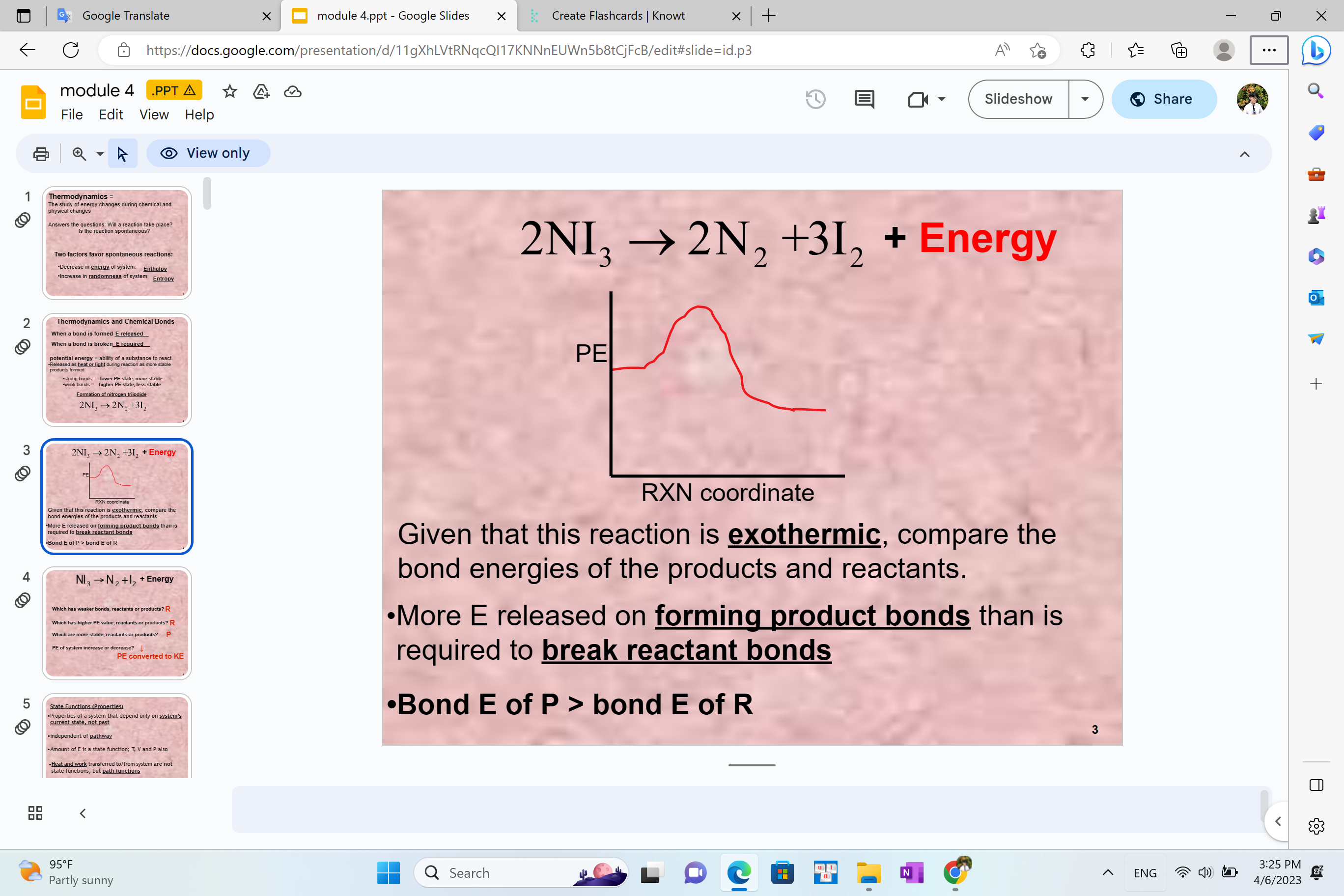
2NI3 → 2N2 + 3I2 + E
10
New cards
Given that this reaction is____, compare the bond energies of the products and reactants.
\
exothermic
exothermic
11
New cards
More E released on __**____**__ than is required to __**___**__
Forming product bonds, break reactant bonds
12
New cards
**Bond E of P __bond E of R**
**Bond E of P > bond E of R**
13
New cards
\
**Which has weaker bonds, reactants or products?**
**Which has weaker bonds, reactants or products?**
R
14
New cards
**Which has higher PE value, reactants or products?**
R
15
New cards
**Which are more stable, reactants or products?**
P
16
New cards
**PE of system increase or decrease?**
Decrease. PE converted to KE.
17
New cards
What are properties of state functions?
__**State Functions (Properties)**__
* Properties of a system that depend only on __**system’s current state, not past**__
\
* independent of __**pathway**__
\
* Amount of E is a state function; T, V and P also
\
* Properties of a system that depend only on __**system’s current state, not past**__
\
* independent of __**pathway**__
\
* Amount of E is a state function; T, V and P also
\
18
New cards
Properties of a system that depend only on____**, not ___**__
Properties of a system that depend only on __**system’s current state, not past**__
19
New cards
independent of __**___**__
independent of __**pathway**__
20
New cards
__**Heat and work**__ **transferred to/from system are not state functions, but ___**
__**Heat and work**__ **transferred to/from system are not state functions, but** __**path functions**__
21
New cards
What is **enthalpy or heat of reaction?**
E flow for a reaction at constant P.
22
New cards
An extensive property: ____
depends on amount present.
23
New cards
Never know exact enthalpy values only **ΔH:**
= **Hprod. - Hreact.**
24
New cards
For a given material or substance, the standard state is the ____for the material's thermodynamic state properties such as enthalpy, entropy, Gibbs free energy, and for many other material standards..
reference state (trạng thái tham chiếu)
25
New cards
The standard enthalpy change of formation for an element in its standard state is zero,
and this convention allows a wide range of other thermodynamic quantities to be calculated and tabulated.
and this convention allows a wide range of other thermodynamic quantities to be calculated and tabulated.
26
New cards
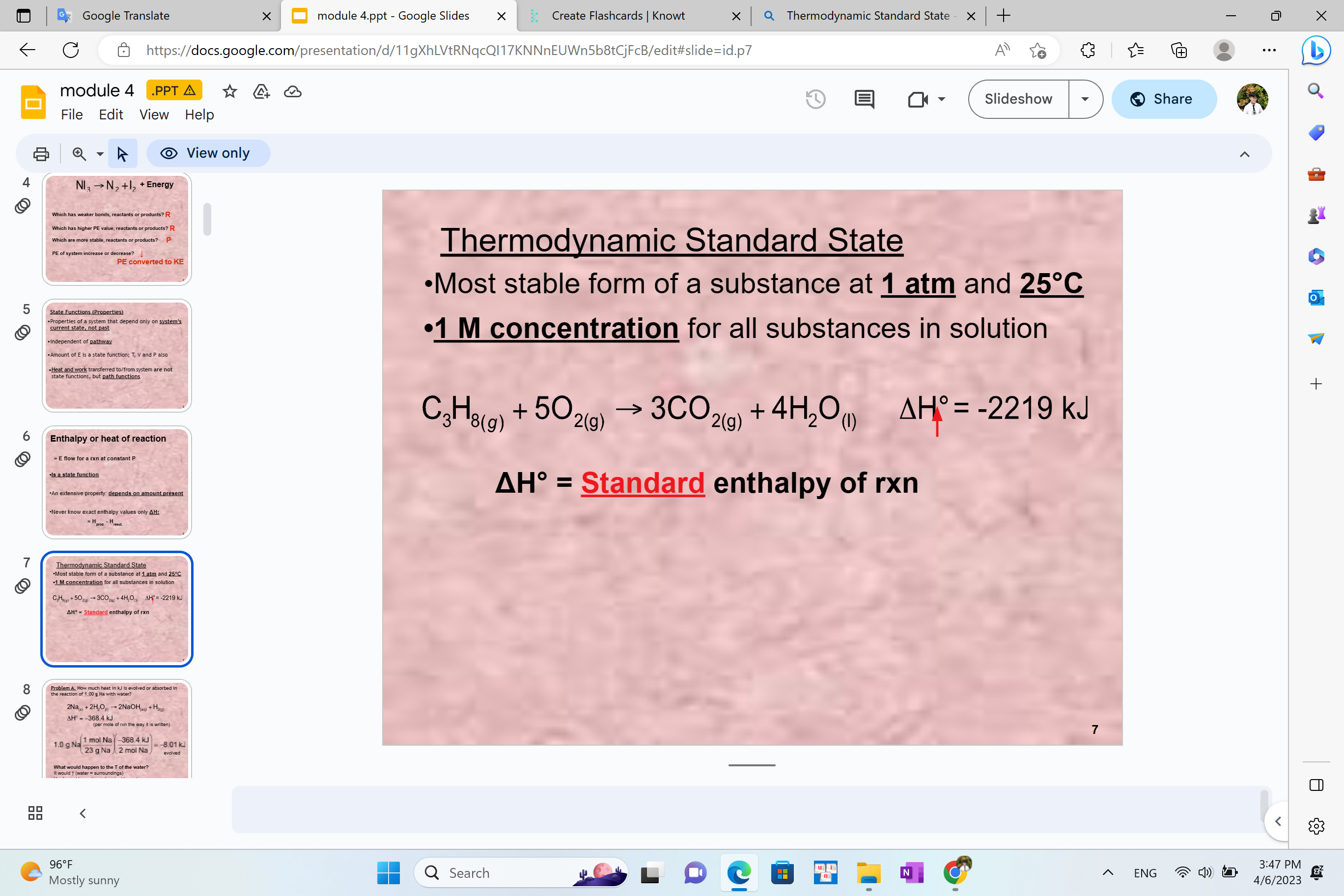
__Thermodynamic Standard State__
* Most stable form of a substance at __**1 atm**__ and __**25°C**__
* __**1 M concentration**__ **for all substances in solution**
* __**1 M concentration**__ **for all substances in solution**
27
New cards
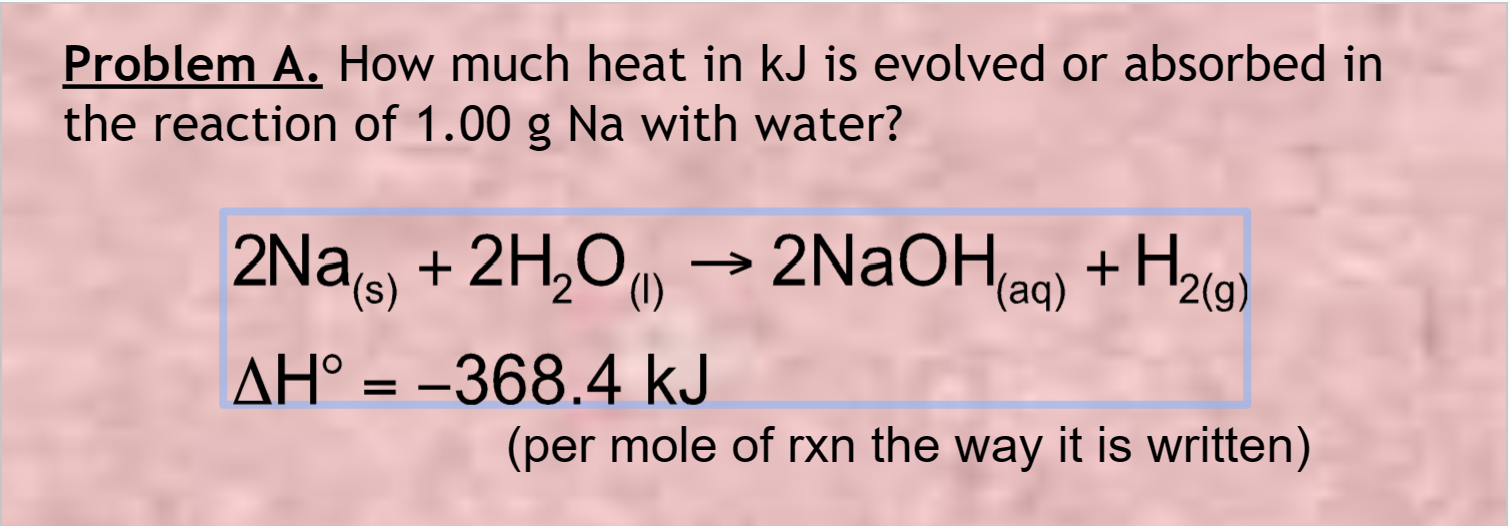
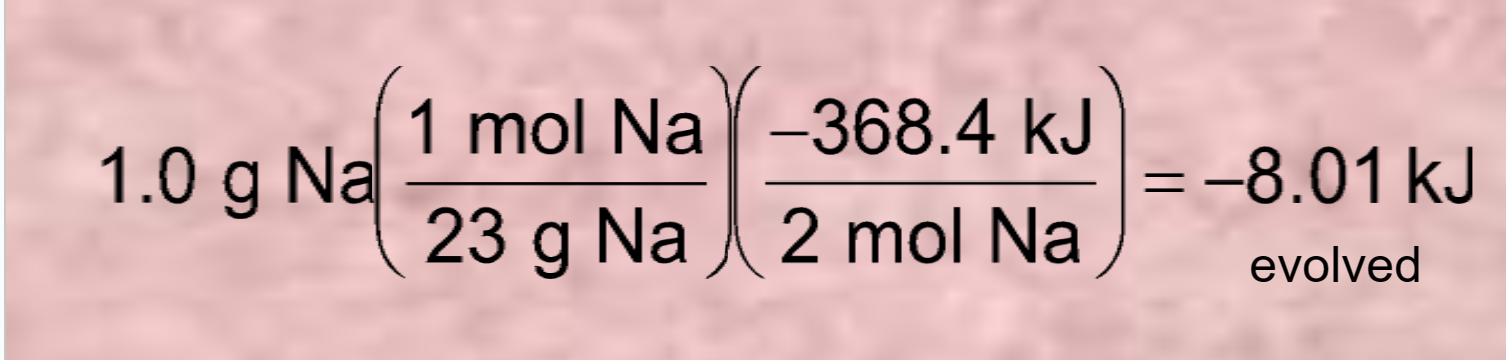
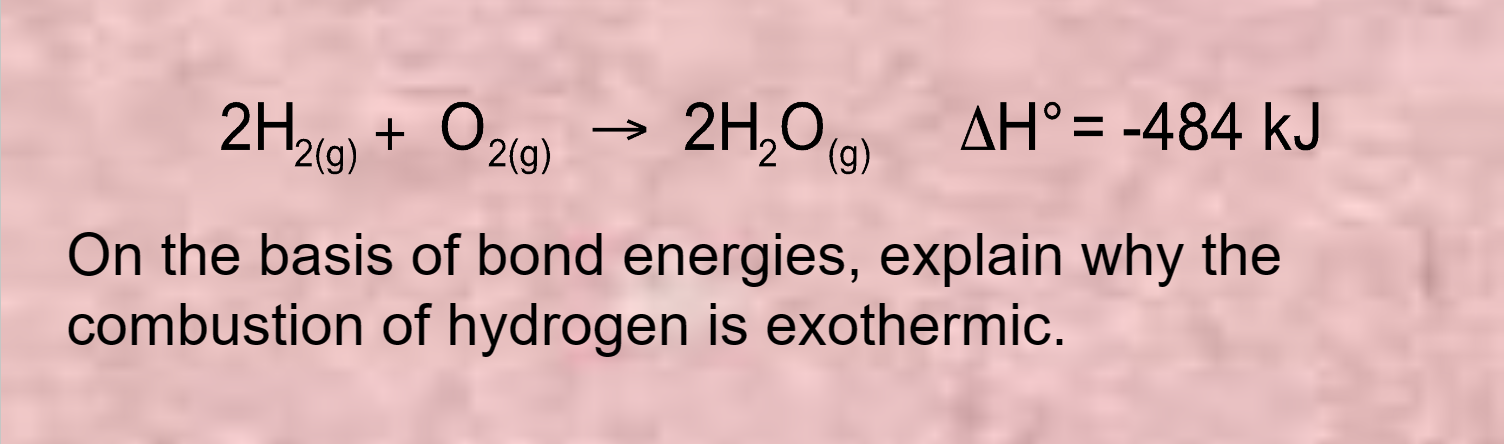
**ΔH° =** __**Standard**__ **enthalpy of rxn**
28
New cards
29
New cards
**What would happen to the T of the water?**
It would ↑ (water = surroundings)
H released by system, absorbed by water
It would ↑ (water = surroundings)
H released by system, absorbed by water
* It would ↑ (water = surroundings)
* H released by system, absorbed by water.
* H released by system, absorbed by water.
30
New cards
31
New cards
32
New cards
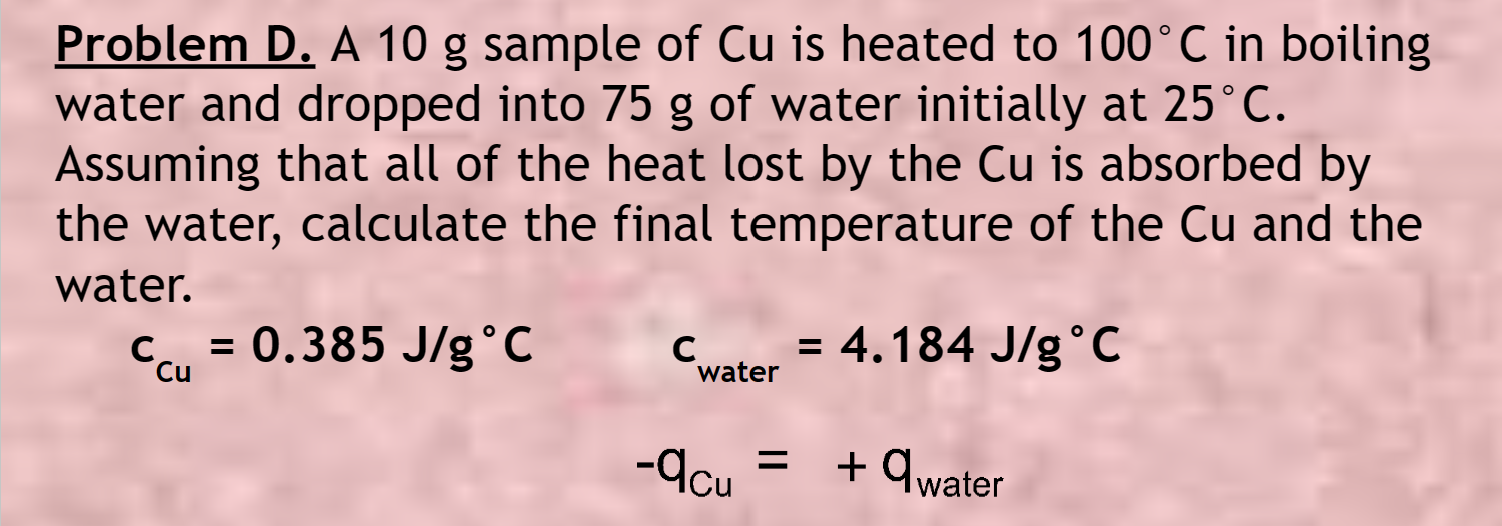
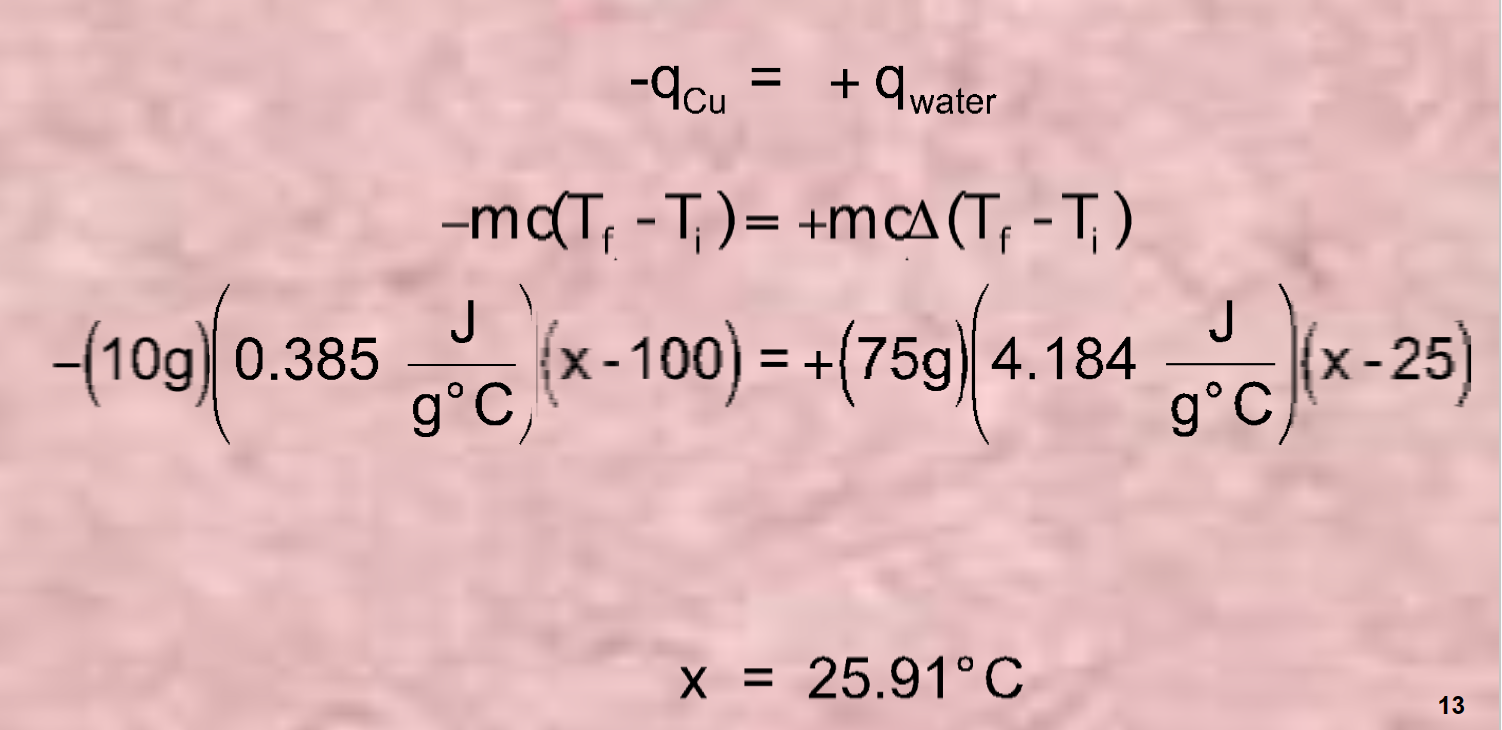
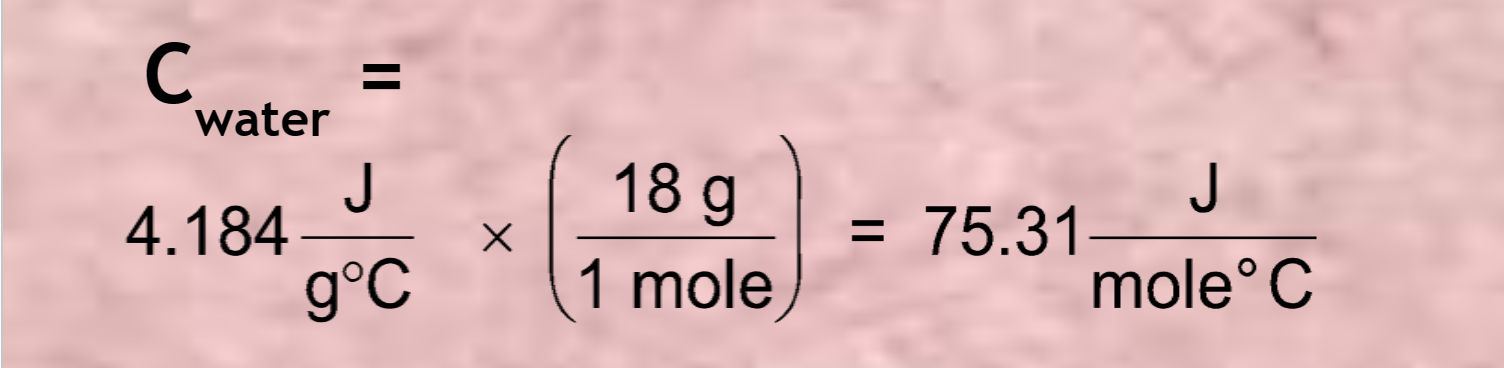
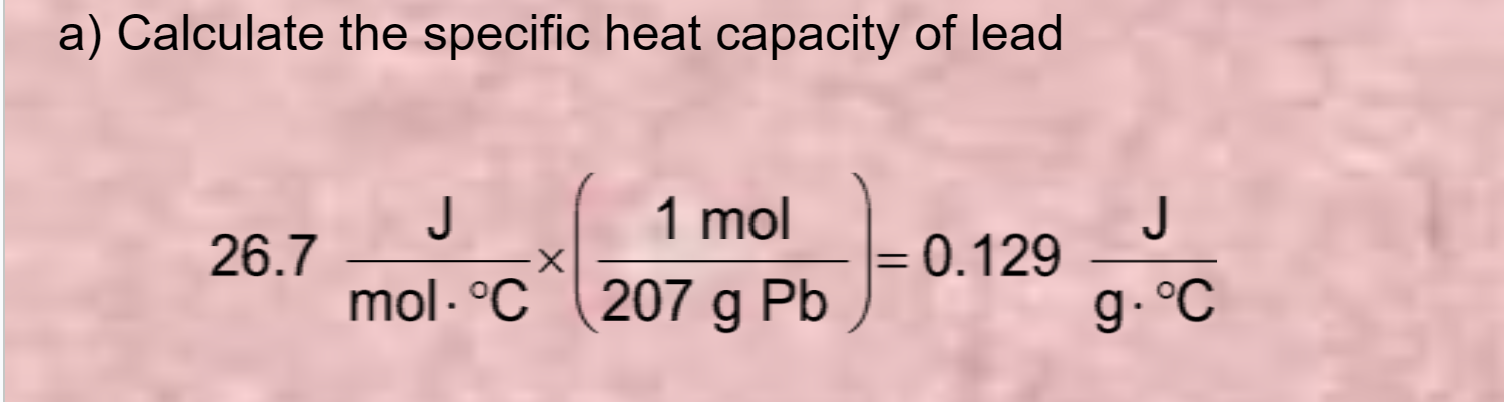
__Specific Heat Capacity (c)__
* Heat required to raise __**1.0**__ __**g of a substance 1°C**__
* Used for __**reaction within calorimeter.**__
* J/ g•oC
* For water = 4.184 J/ g•oC
* Used for __**reaction within calorimeter.**__
* J/ g•oC
* For water = 4.184 J/ g•oC
33
New cards
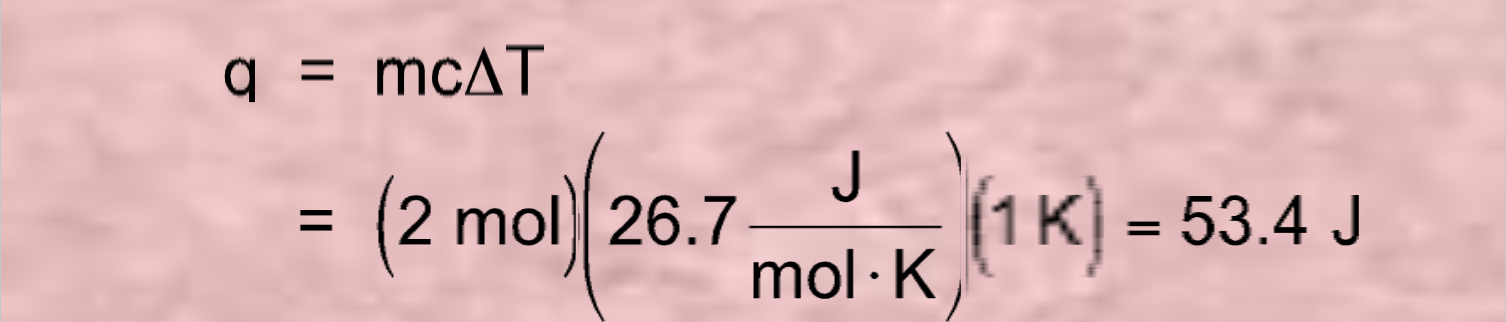
__Molar Heat Capacity__
* Heat required to raise 1.0 mol of a substance 1°C
* J/mol•oC
* J/mol•oC
34
New cards
__**Converting from specific heat to molar heat capacity**__
35
New cards

36
New cards

37
New cards