Gas Law's Unit Assessment
 Note
Note Call Kai
 Learn
Learn Practice Test
 Spaced Repetition
 Match
Match Flashcards
 Knowt Play
1/14

There's no tags or description
Looks like no tags are added yet.
Name | Mastery | Learn | Test | Matching | Spaced | Call with Kai | Chat |
|---|
No analytics yet
Send a link to your students to track their progress
15 Terms
Kinetic Molecular Theory
A theory that applies to the Ideal Gas Law and that explains the states of matter and is based on the idea that matter is composed of tiny particles that are always in motion; explains observable properties and behaviors in solids, liquids, and gases
Why is KMT important?
It explains gas laws, it predicts gases behaviors, it provides a model for understanding motion of molecules, and its real-world applications
What are the 3 assumptions of KMT?
Gas atoms/molecules move rapidly and randomly
Gas particles are really spaced out
Gas particles bounce off each other without losing energy
Gas atoms/molecules move rapidly and randomly
The fast motion of gas particles is random and give them a relatively large amount of kinetic energy; at higher temperatures, the gas particles have even more energy and move even faster
Ex: Gas leaking from a stove, which is why you can smell it so quickly
Gas particles are really spaced out
The size of the particles doesn’t matter, all gases are treated the same meaning you can compress gases; The particles of gas may either be atoms or molecules
Ex: Squeezing a balloon; under normal conditions the balloon is flexible and can expand or contract
Gas particles bounce off each other without losing energy
They bounce off each other without losing energy. Although their direction or speed may change after collisions, the total kinetic energy of the gas remains constant. This allows gas particles to keep moving rapidly and randomly, maintaining the gas’s temperature and pressure without slowing down or settling
Kinetic Energy
The energy an object possesses because of its motion
Ideal Gas
An imaginary gas whose behaviour perfectly fits the assumptions of KMT
Real Gases
Gases that don’t follow KMT assumptions
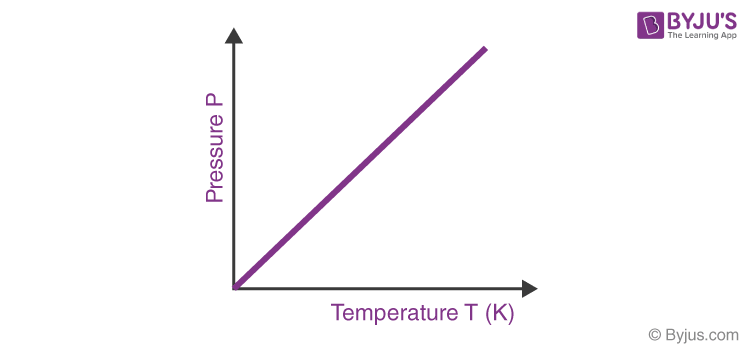
Gay-Lussac Law
At constant volume (v) and moles (n); Pressure (P) & Temperature (T) are directly related
Equation: P1 / T1 = P2 / T2
Acronym: GPT
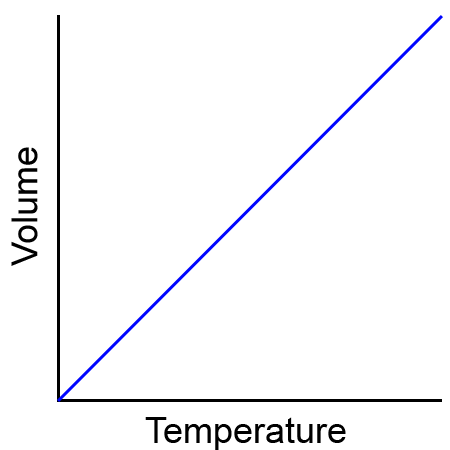
Charles Law
At constant pressure and moles, Volume (V) and Temperature (T) are directly related
Equation: V1 / T1 = V2 / T2
Acronym: CVT
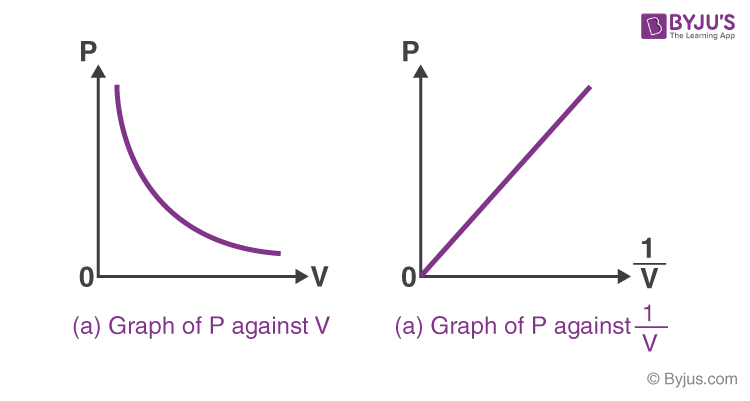
Boyles Law
At constant temperature and moles; Pressure (P) and Volume (V) are inversely related
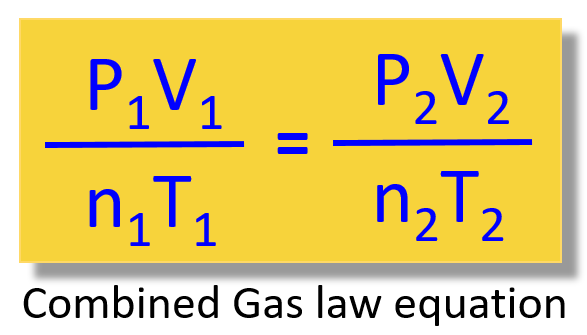
Ideal Gas Law
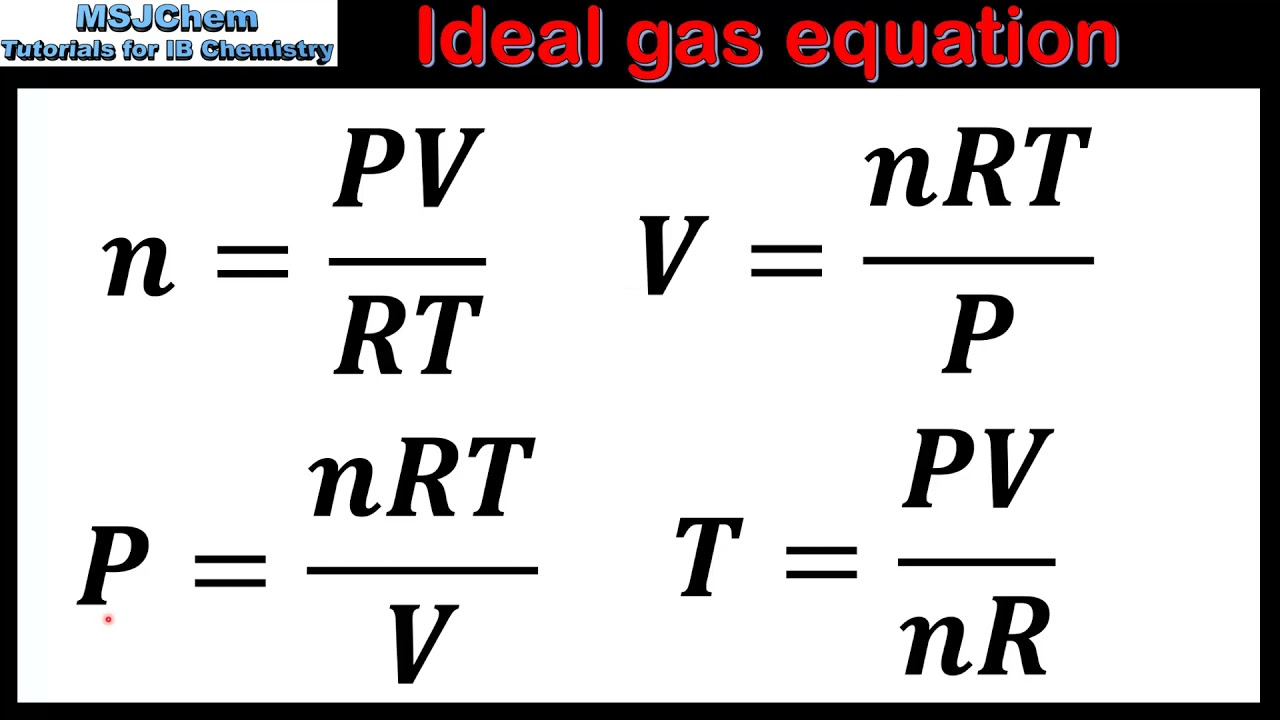
PV=nRT or (P1⋅V1) ÷ (N1 T1) = (P2⋅V2) ÷ (N2 T2)
What are the equations to solve for each variable?
Combined Gas Law