IB DT: Topic 1.1b: Psychological factors (copy)
 Call Kai
 Learn
Learn Practice Test
 Spaced Repetition
 Match
Match Flashcards
 Knowt Play
1/28

Earn XP
Description and Tags
credits https://docs.google.com/presentation/d/1KoTr1oOiMSxksFyoulkR_QUxGgPLH7Ynpv6bWBXjHUY/present?slide=id.g27ea3b09a06_0_380
Name | Mastery | Learn | Test | Matching | Spaced | Call with Kai |
|---|
No analytics yet
Send a link to your students to track their progress
29 Terms
What is psychological factor data?
The human factors that require or involve interpretation by the brain (light, smell, sound, taste, temperature and texture). These contribute to the success of user interfaces
What do successful user interfaces usually offer?
simplicity
ease of use
intuitive logic
organisation
low memory burden
visibility
feedback
affordance
mapping
How can psychological factor data be collected?
Through observation and recording: enables designers to think about their issues and use the data to improve their products.
User reactions whilst engaging with designed products have an impact on user experience.
Usability labs could be used for this.
How can light be considered as a psychological factor?
Provides ease of visibility - making reading text easier whether ambient, directed or on screens
How can smell be considered a psychological factor?
An olfactory response to an environment, being one of the most powerful sense a human possesses
How can noise be considered a psychological factor?
Being able to hear sound adequately so users can receive feedback from the product
How can taste be considered a psychological factor?
It is important for young children’s products who explore their world with their mouths. Toxins are an issue.
How can temperature be considered a psychological factor?
Hot or cold conditions affect humans productively
How can temperature be considered a psychological factor?
Provides valuable feedback, and information related to touch and grip
What should designers remember with regard to sensory information?
Our senses constantly provide us with information, many products help the user to understand and react to sensory information, making the product easier to use.
What is the significance of colour?
Can help the user understand the product:
safety features: red, yellow, orange
cleanliness: white
What are the four main scales used when collecting ergonomics data?
Nominal
Ordinal
Interval
Ratio
What is a nominal data scale? What is it used for?
Means ‘by name’ and is used in classification or division of objects into discrete groups, each of which is identified with a name. The scale does not provide any measurement within or between categories (no numerical significance - qualitative).
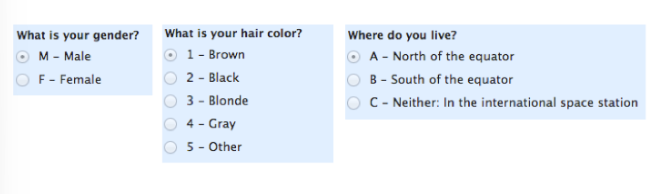
What is an ordinal data scale? What is it used for?
A statistical data type that exists on an arbitrary numerical scale where the exact numerical value has no significance other than to rank a set of data points. Deals with the order or position of items such as words, letters or symbols arranged in a hierarchical order. Qualitative.
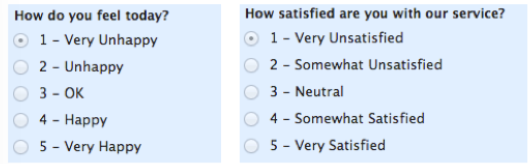
What is an interval data scale? What is it used for?
Interval data is based on numeric scales in which we know the order and exact difference between the values. Organised into even divisions - concerned with both the order and difference between variables - allows you to measure standard deviation and central tendency (quantitative).

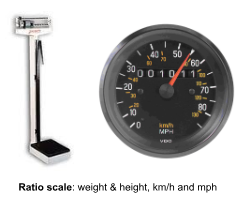
What is a ratio data scale? What is it used for?
A ratio data allows you to compare the differences between numbers. A quantitative scale where there is a true zero and equal intervals between neighbouring points. There cannot be negative values of a ratio scale.
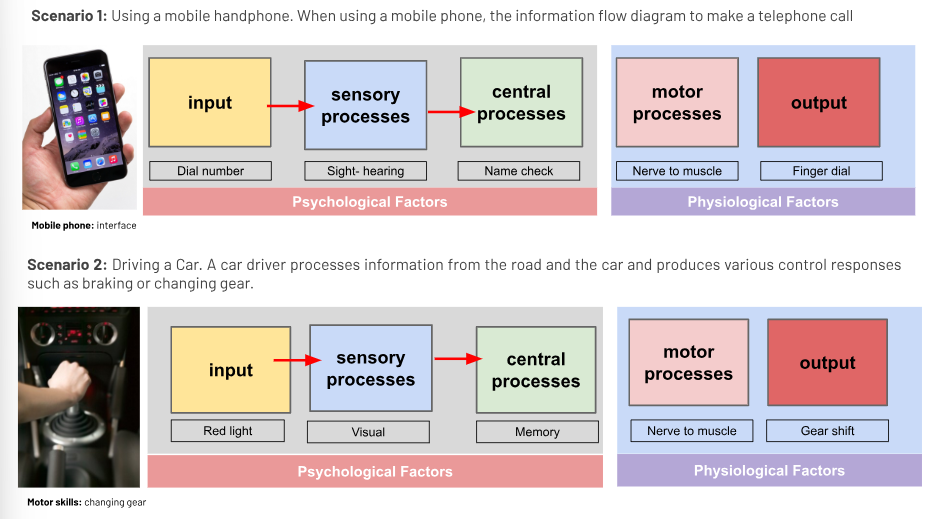
What is a human information processing system?
An automatic system that a person uses to interpret information and react. Normally comprised of inputs, processes (which can be sensory, central and motor), and outputs. Human information processing system theory compares the human mind to a computer, suggesting that we are information processers, and it is possible and desirable to study the internal cognitive processes that lie between the stimuli and the response we make.
What is the computer analogy?
The use of a computer as a tool for thinking how the human mind handles information.
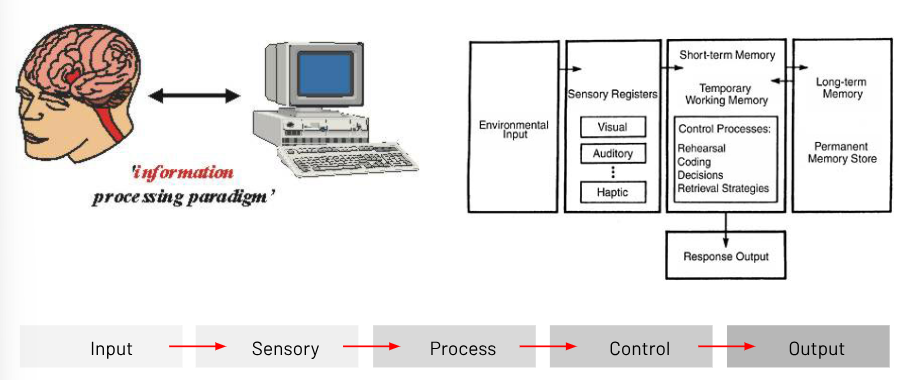
What are the information processing systems for receiving a mobile phone call and changing gears on a car?
What are environmental factors?
A set of psychological factors that can affect the performance of an individual that come from the environment that the individual is situated.
What can uncomfortable work environments affect?
Productivity
Physical and mental health
Incorporating psychological, physiological and cognitive ergonomics in the workplace can remedy an uncomfortable environment. These would help decrease stress levels, improve employee performance, reduce absenteeism and contribute to the wellbeing of individuals.
What is the effect of light on psychological factors?
Lighting can determine the visual sharpness that can be seen. Alertness, productivity and performance can be affected by light and their sources.
What is the effect of noise on psychological factors?
Excessive noise in the workplace cause workers to lose their hearing and/or suffer from tinnitus. Employers must provide hearing protection and assess the risk to workers’ health is noise is above 80 decibels.
What is the effect of spatial issues on psychological factors?
Space, colour and smell can affect personal productivity and performance. Open plan offices encourage communication but defensible spaces are often required for focussed thinking
What is the affect of air quality, temperature and humidity on psychological factors?
Thermal comfort involves a range of environmental factors which contribute to thermal comfort in offices and other working environments.
air temperature
radiant temperature
air velocity
humidity
What is alertness?
An environmental factor - the level of vigilance, readiness or caution of an individual. Critical for successful decision making across a broad range of complex and dynamic systems.
What is perception?
The way in which something is regarded, understood or interpreted. The organisation, identification and interpretation of sensory information in order to represent and understand the environment. The mind is programmed to make order when confronted with many objects - the consequence of this is that human beings tend to not really see a product or service, they see classes, groups or patterns of controls and feedback.
What is comprehension?
Related to understanding the meaning of what was perceived: recognising, interpreting and evaluating the significance
What is projection?
The ability to predict the situation in the near future, based on perceiving and understanding the dynamic elements of the environment. Situation awareness is a complex phenomenon that depends on several basic and higher level cognitive processes

