Medieval Europe(500-1500 CE)
 View linked note
 Call Kai
 Learn
Learn Practice Test
 Spaced Repetition
 Match
Match Flashcards
 Knowt Play
1/43

There's no tags or description
Looks like no tags are added yet.
Name | Mastery | Learn | Test | Matching | Spaced | Call with Kai | Chat |
|---|
No analytics yet
Send a link to your students to track their progress
44 Terms
Edict of Milan
An agreement by Emperor Constantine in the Roman Empire stating all citizens can worship whatever god or deity they want.
When did the Edict of Milan take place
318 AD
Why did the Edict of Milan happen
Emperor Constantine wanted to stop the persecutions Christians and other religions were facing beforehand.
When did Christianty become the offical state religion of Roman Empire
380CE
Tithe
a legal payment that required 10% of a persons income to the church
Indulgences
Could buy from priests to clear themselves of sin
Peasants
Bottom of the social hiearchy, used to make food and work on knights lands for protection from them
Knight
2nd bottom of the social hiearchy, would fight for nobles in return for land
Nobles
2nd highest in the social hiearchy, received land from king which were used to buy soldiers or to earn rent from peasants.Traded armies, taxes and soldiers in return from land
Clergy
Religious leaders, rich enough to be nobles as their income came from the Tithe
The king
Highest in the social heiarchy, owned all land and traded them to nobles and clergy for soldiers and tax.
Noble women in Medieval Europe
They were married off as early as 12 and were used to gain political power and wealth for the family
Peasant women in Medieval Europe
Weren’t married off as young due to child labor, they had the same duties as men but was expected to do household chores as well
Motte castle
A castle built on a raised earth mound, usually had a ditch around it(the keep was kept on the Motte while the castle walls were below)
Moat castle
A motte castle but the ditch around it was filled it with water
Keep(Castle)
The innermost tower of a castle
Palisades(castle)
The walls around the castle
Bailey(castle)
A fenced courtyard at the bottom of the hill
Concentric castle walls
Walls inside walls of the castle to trap invaders between the 2 walls, could have multiple layers of these.The inner wall was usually taller than the outer wall so archers could attack.
When did Edward the Confessor die
January 5th 1066AD
Trade fairs
massive seasonal/annual sale events that conected merchants from different regions.
Guilds
Regulated quality,supply, competition and price of goods in towns, provided social support and training for shop owners.Membership in guilds were required to own a shop.
Mediterran sea in trades
served as a crucial hub for east-west trade
What seas were Northern trades
North sea and Baltic sea
Silk road
East to west exchange/ Mediterranean sea trades, introduced new goods to Europe like silk and spices.Caused cultural diffusion
Commercial revolution
An increase in commerce/trade during the 11th-18th century and introduced new forms of currency, banking systems and credit.
Trades societal impact
Led to growth and prosperity to urban centers, cultural diffusion,demend for specilized crafts and goods and encouraged economic growth.
Hue and cry (stopping criminals)
When a person was seen commiting a cry, the observes would scream out an alarm and everyone near by would apprehend or kill the criminal.
Tithing(stopping criminals)
Every man over 12, in groups of ten households would share lawful responsibilties between themselves.If one was caught others would be forced to turn them in or they woud be fined.
Pose comitatus(stopping criminals)
If criminals were on the run, the sheriff could call nearby men no matter what they were doing and order them to chase the criminal.
Public humilation
Designed to embarrass the criminal and prevent them and others to commit crimes.The criminal would be alive but their social standing would be lowered
Public execution
Designed to kill the criminal for their crime and prevent others to commit crimes.
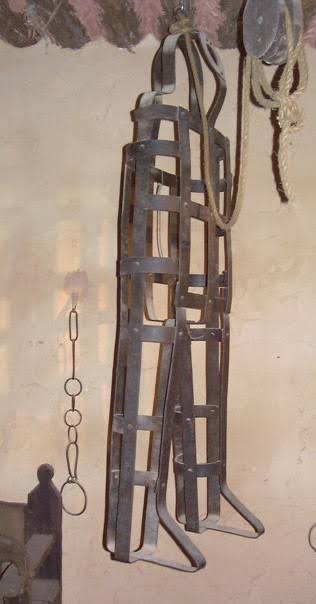
The coffin(punishment)
Public humilation and execution, kept inside under the sun, with animals eating their flesh, or in public where people threw things at them.Would be killed in the coffin if the crime was bad enough.
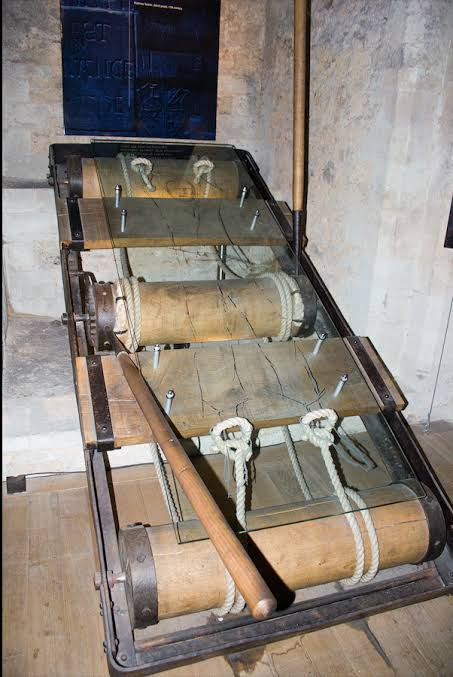
The rack torture
Pulled limbs in opposite directions using chains to strech out the person and break their bones/limbs.Used to make prisoners confess, would be shown to another person to make them confess as well.
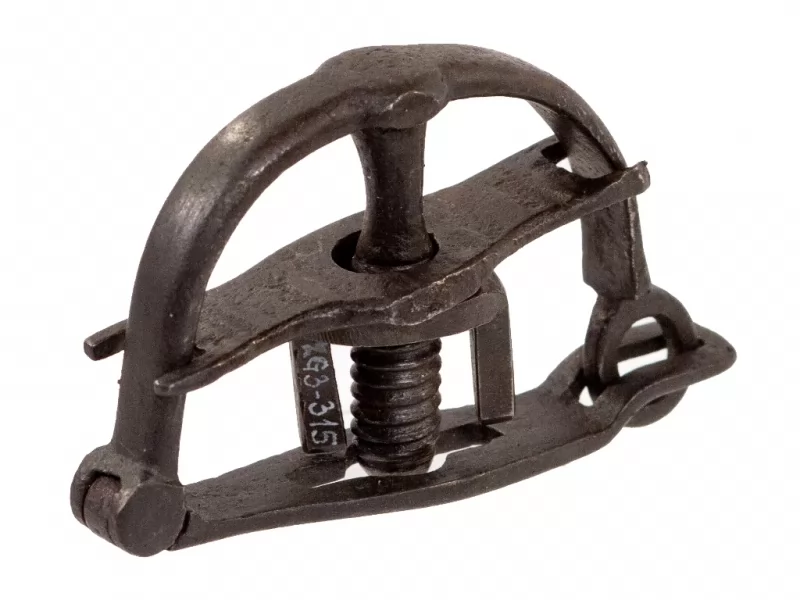
The thumbscrew torture
Designed to crush fingers, used for confession.Larger versions were made for knees and hands.
The rat torture
Put rats on top of a person’s stomach with a bucket over the rats, would then heat up the bucket so the rats would try to escape through digging through the person’s stomach.
The chair of torture
Made prisoners sit on a chair covered in thousands of spikes, the spikes were short enough so the prisoner would survive for hours and bleed to death.
The stocks torure
A form of public humilation where a person’s head, feet and arms were locked up on a wooden board in public.Used to punish minor offenders.
Boiling alive torture
Put prisoners in a pot of cold water and heated it until it would boil.