Medieval Europe(500-1500 CE)
Catholic Church
Christians in the Roman empire
After Christianity was found in the first century AD they faced persecution from the roman empire and were treated as criminals.
in 313 AD, Emperor Constantine issued the Edict of Milan, granting all citizens permission to worship whatever they wanted, including Christians.
Lead to Christianity becoming the official of the Roman Empire in 380CE
Christianty in Medieval Europe
After the fall of the Roman Empire the Catholic Church became a dominant force in Medieval Europe, shaping how people interacted with their faith, nobles and monarch.
Medieval Christians and the Church
People were legally required to pay 10% of their income to the church called a “Tithe”
People could buy “Indulgences” from priests to clear themselves of sin
Believed the church was all knowing and should not be challenged, without the church they would all go to hell
“The divine right of kings” stated only the Pope could crown a monarch
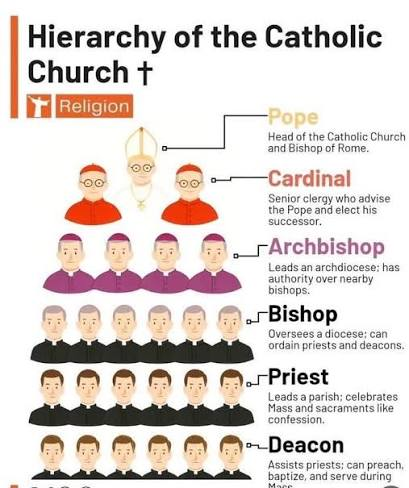
Church Hierachy
Feudal System
Social Hiearchy
The social hiearchy showing the power and wealth of each social class in Medieval Europe
Peasants was at the bottom, used to make food and work for knights in return for protection from knights.
Knights would fight for local lords and were given land as payment.The land would be farmed by peasants to produce income for the knight.
Nobles received land from king in, used to buy soldiers, would also rent out land to peasants in return for rent.They were required to provide the king with armies and horses.
The king owned all the land and would trade them to nobles and clergy for soldiers and taxes.

Influence of the church
Clergy(religious leaders) were rich enough to be nobles
Income came from Tithe, there did not have to take 10% taken out of their income for Tithe.
The king relied on the church for power due to the divine right of the king
Battle of Hastings
Reason
The king of England, Edward the confessor died on January 5 1066 without a heir, causing a competition for the crown.
King candidates
Edgar the Atheling, Edwards newphew and closest relative but was only 14 and often ill.
Harold Godwinson, Born in England and won many battles for the king, favoured by the people and Kings council.
William Duke of Normany, distant cousin of Edward from France, stated Edward promised William could be king.
Harald Hardrada, King of norway, was greedy and wanted more power, known to be fierce and cruel.
Conquest
Harold Godwinson is crowned king a day after Edwards death
Harald and William plan to invade for the throne
Harald arrive at the North English coast
Harald defeats an army led by Earl of Merica and Earl of Northumbria
Harold marches his army 320km north to fight Harald
They fight at Stamford bridge and Harald loses
William arives at Pevensey on the Sussex coast
Harold marches 432km south to face William
Harold loses to William due to the exhausting battle faced a couple week prior.
William was crowned king, altering England due to his Norman French background.
Women
Noble women
Noble women were married off as early as 12 for political power and wealth for the family.
Were expected to produce a male heir to carry on the line of her husband
1/5 women died during childbirth due to the poor medical care in medieval times
Could not own any property except as a widow
Peasant Women
Weren’t married off as young as noble women as they were used for labour.
Had the same farm duties as men but were also expected to do household chores
Warfare
Castles
Purpose
Were built to protect Monarchs or Lord’s lands
If conquered/taken by enemy, would be used to control the land
Some were built around cities and towns for protections
Building a castle
Made from timber
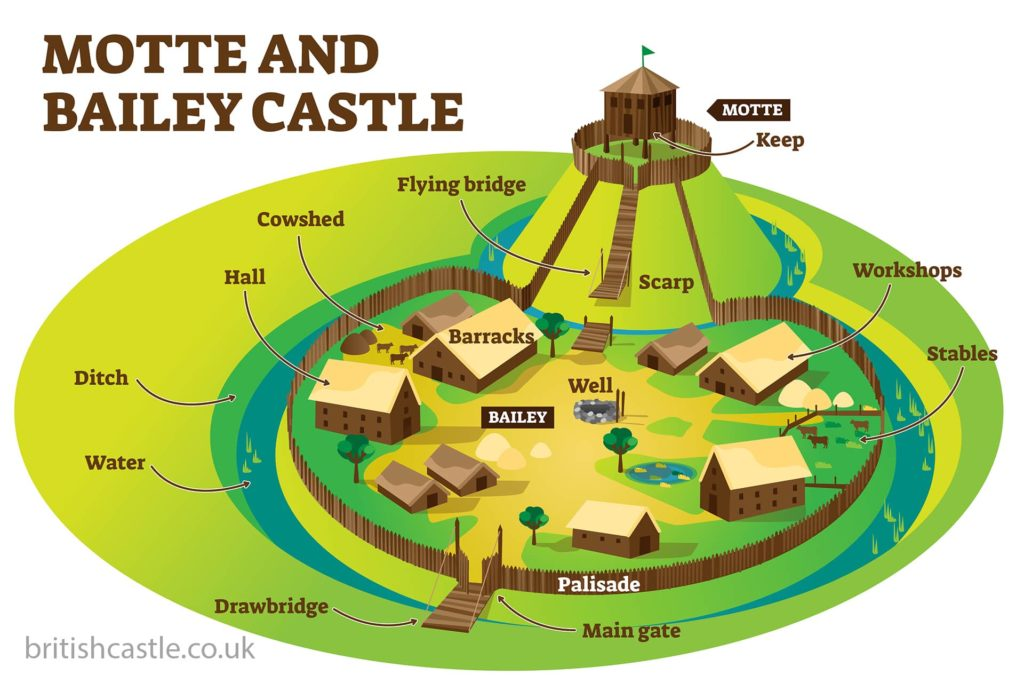
Built on a high mount called a Motte, surronded by a ditch, if it was near a river the ditch would be filled with water to create a Moat.
The innermost tower was called a Keep
The walls around the castle was called Palisades
The inner courtyard was called Bailey
Defending a castle
Concentric castle walls were more walls inside walls that would trap attackers between the two walls, the inner wall was usually higher than the outer wall so archers could attack.
Drawbridges could be lifted above the moat, blocking access to the gate.
Combat
Mounted knights
Knights were heavily armored warriors on horsebacks meant to destroy foot soldiers, they used heavy iron weapons
Battles
Were fought hand to hand
Battled in tightly grouped formations, one side would push against the other.
It was the job of mounted knights to charge into the formations and try to break them up.
Those who died did not get cemeteries or pensions for family, nor were there entitlement for disabled soldiers
The Crusades
Context
Jerusalem, is one of the holiest citys in Christianity, Judasim and Islam.
Therefore, they all wanted to control Jerusalem for themselves.
It has been under control by the Christians until 637AD until the Muslims took over
In 1054 AD, Roman christians and Orthodox Christians no longer belonged to the same church and saw each other as illegimate called The Great Schism
A group of Muslims attacked the Byzantine empire 1074AD causing the Orthodox Christians to seek help from the Roman Catholics only 20 years after The Great Schism
By 1095, the Orthodox Christians ask for help from the Roman Catholics once again