EENT - Middle Ear
 Call Kai
 Learn
Learn Practice Test
 Spaced Repetition
 Match
Match Flashcards
 Knowt Play
1/34

There's no tags or description
Looks like no tags are added yet.
Name | Mastery | Learn | Test | Matching | Spaced | Call with Kai |
|---|
No analytics yet
Send a link to your students to track their progress
35 Terms
What are the 4 main ear complaints of patients?
1. Hearing loss
2. Equilibrium or balance problems
3. Dizziness, vertigo
4. Tinnitus (auditory paresthesia)
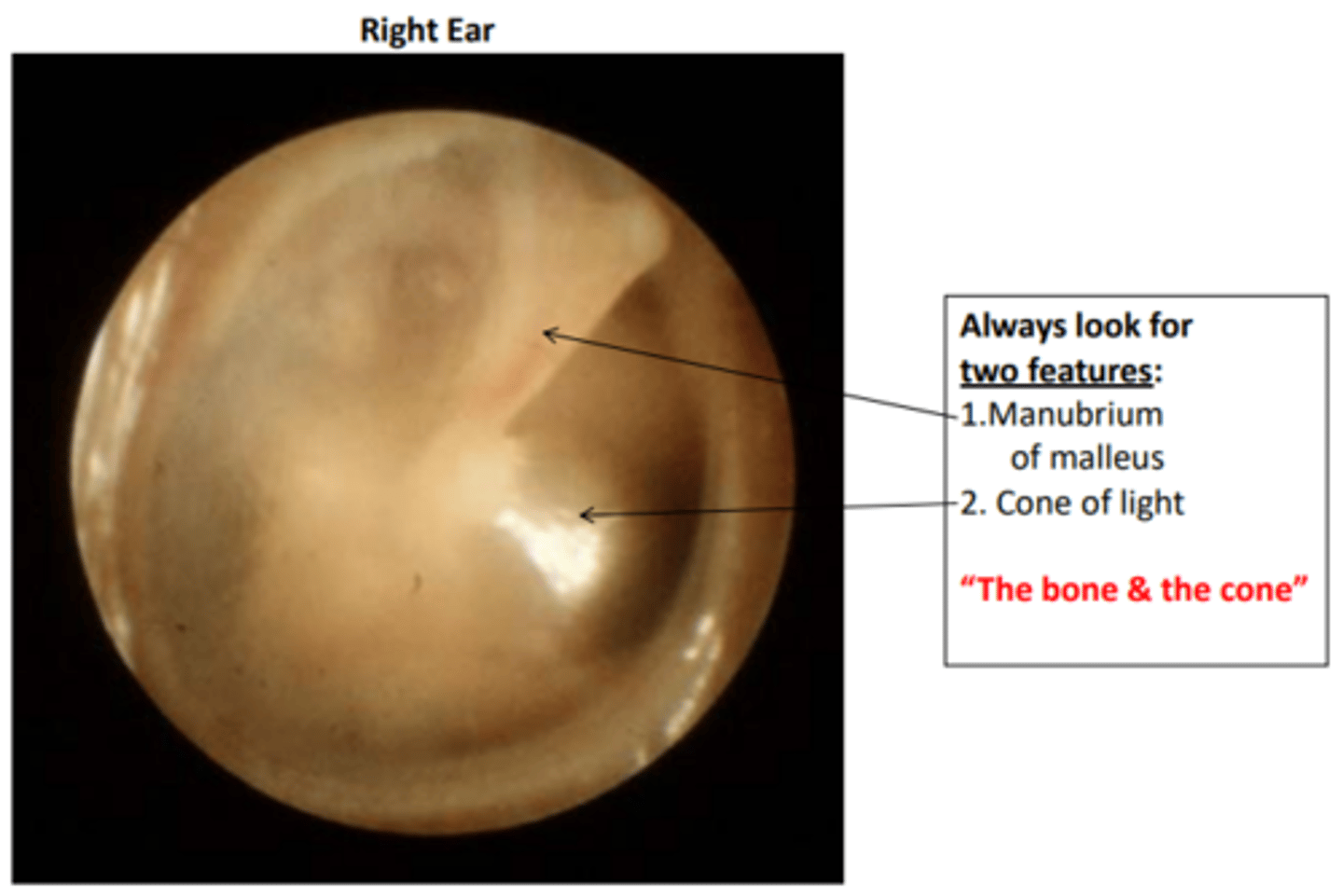
When looking into the ear, what are the 2 main features you should look for to know if the tympanic membrane looks normal?
1. Manubrium of malleus
2. Cone of light
“The bone & the cone”
A patient presents with hearing loss, dizziness, pressure in ear, earache, drainage of pus (sometimes), which of the Middle Ear Conditions is this?
a) Cholesteatoma
b) Acute Otitis Media
c) Otosclerosis
d) Tympanosclerosis
e) Barotrauma
a) Cholesteatoma
A ___________ is a benign tumor near eardrum that can grow into the middle ear destroying ossicles
Cholesteatoma
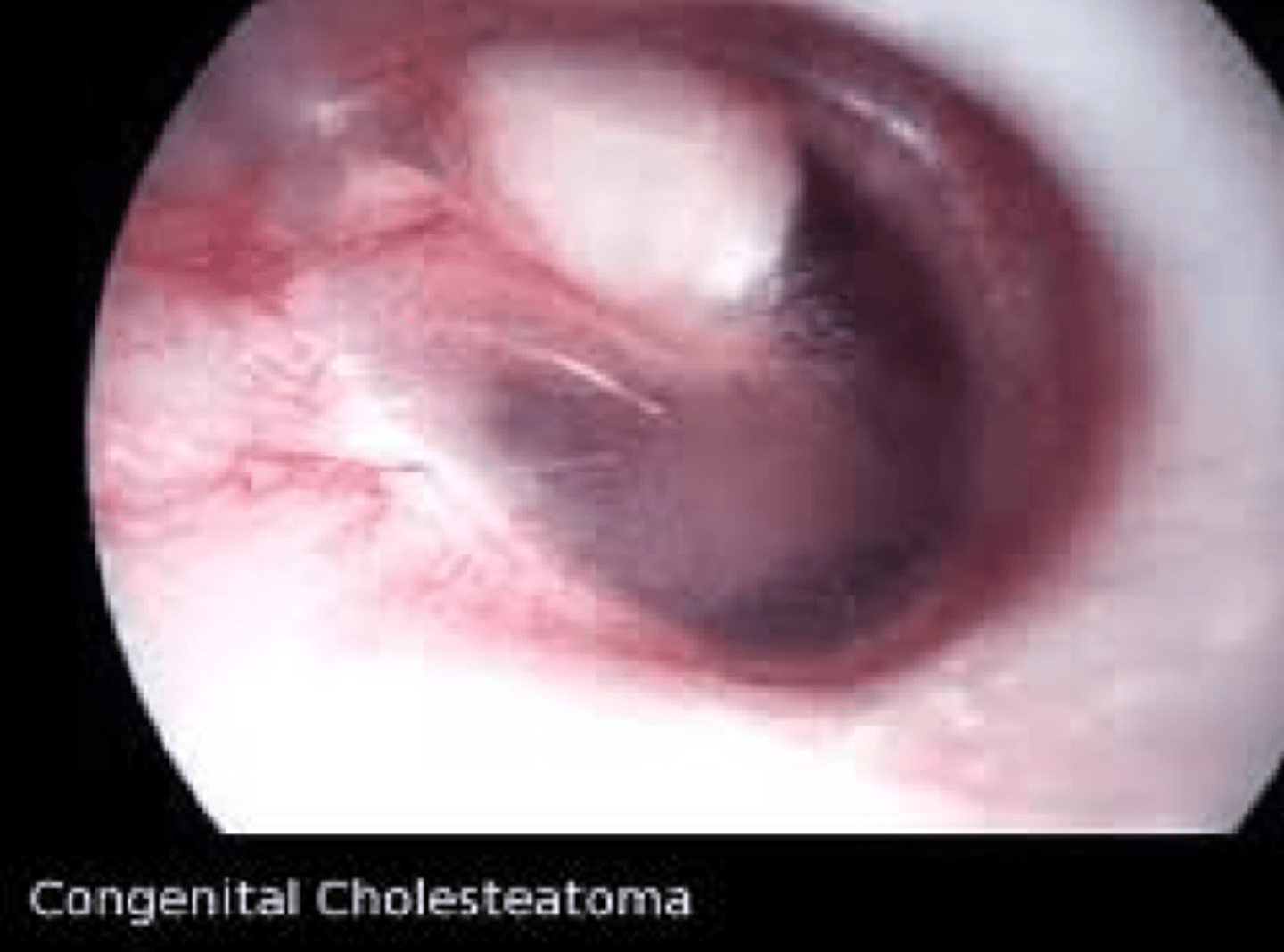
What does a Cholesteatoma appear as?
a) white mass behind or on eardrum
b) effusion of fluid in middle ear
c) pus filled infection of middle ear
d) irregular membrane, with dull white spots and/or pits
a) white mass behind or on eardrum
What are most Cholesteatoma due to?
• Most cholesteatomas are due to repeated middle ear infections
• Some are congenital epidermoid cysts - skin growing in the wrong place
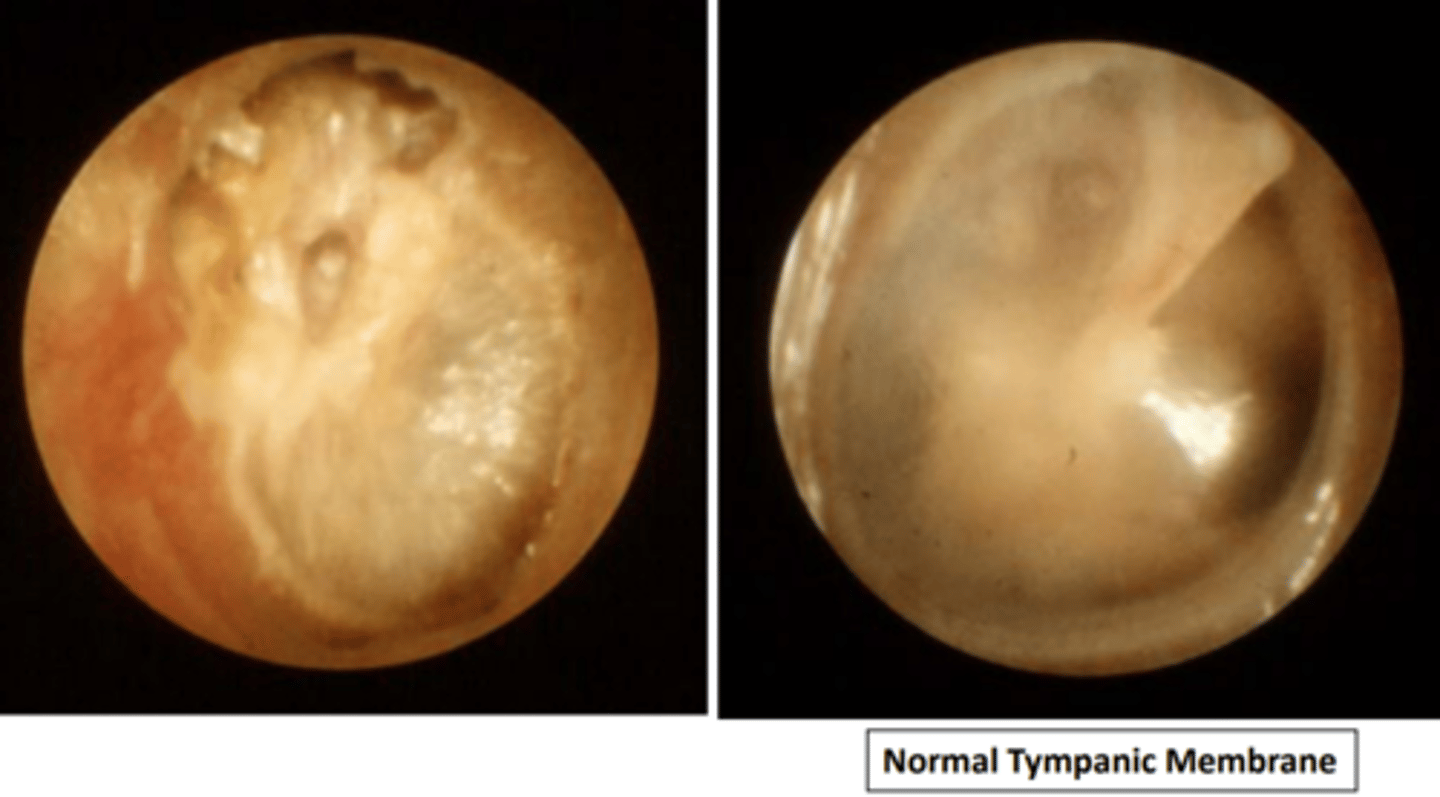
How is a Cholesteatoma treated? What does it look like if left untreated?
• Benign Tumor = surgery to remove growth completely, & to reconstruct damaged ossicles or eardrum
• Infected = Requires antibiotics if infection is present
• Can recur, so patient’s ears should be examined regularly
• Goal = preserve hearing (and language skills) and equilibrium/balance
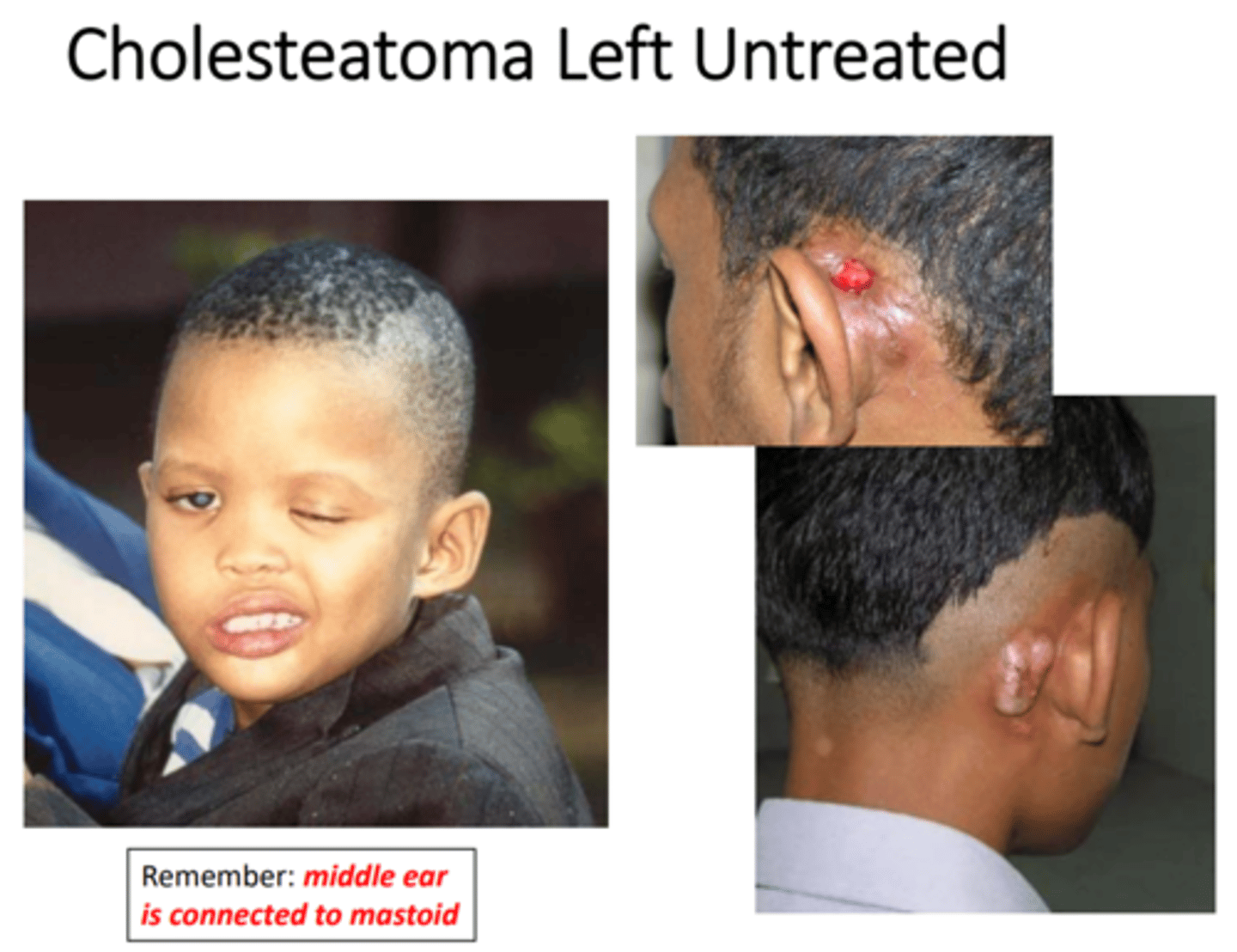
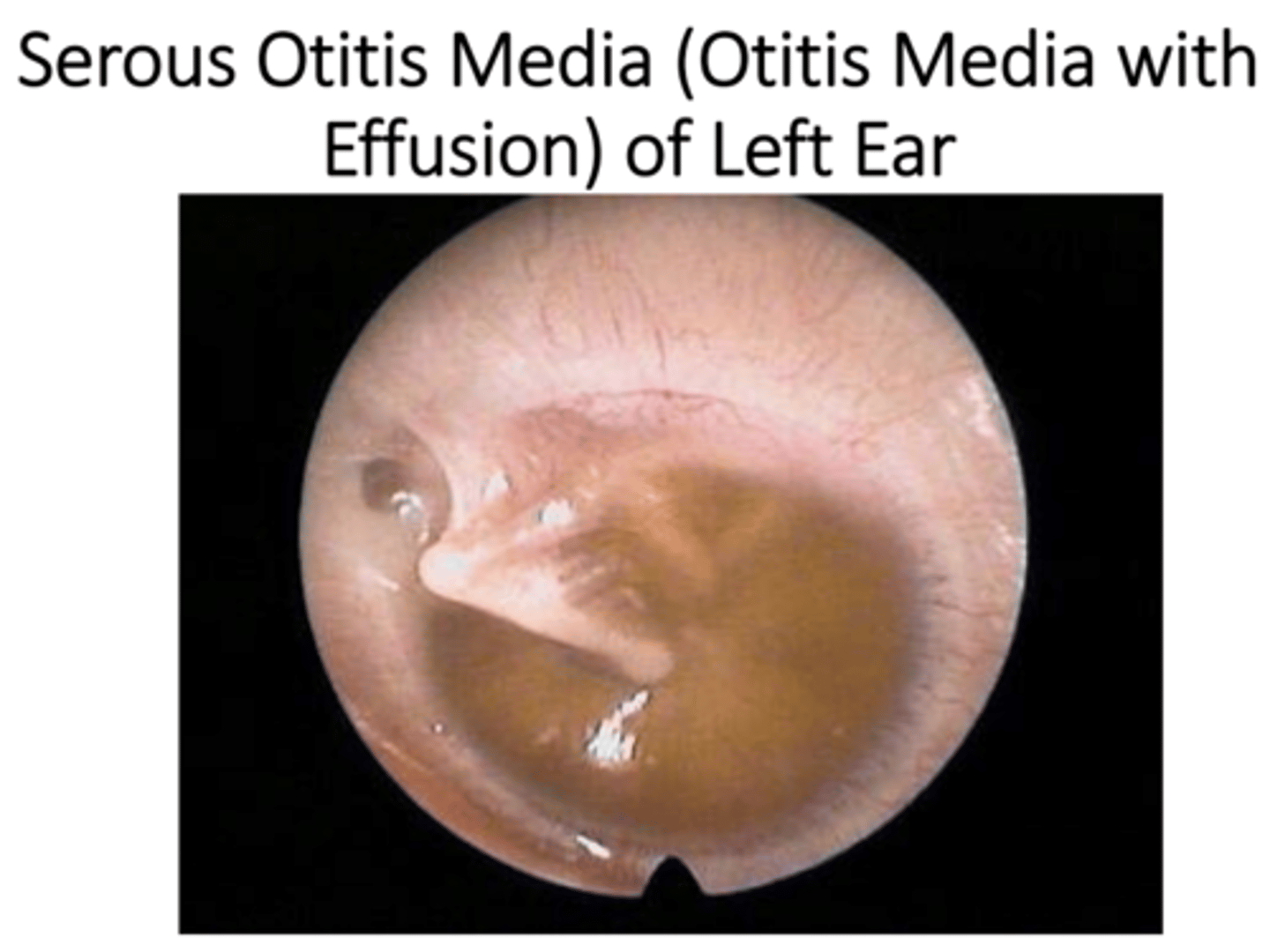
What does a Serous otitis media appear as?
a) white mass behind or on eardrum
b) effusion of fluid in middle ear
c) pus filled infection of middle ear
d) irregular membrane, with dull white spots and/or pits
b) effusion of fluid in middle ear
What does a Acute otitis media appear as?
a) white mass behind or on eardrum
b) effusion of fluid in middle ear
c) pus filled infection of middle ear
d) irregular membrane, with dull white spots and/or pits
c) pus filled infection of middle ear
___________ is the leading cause of pediatric visits to the medical doctor
Middle ear infection/Otitis Media
For Acute Otitis Media to be considered chronic, what needs to occur?
3 episodes within 6 months, or 4+ within a year
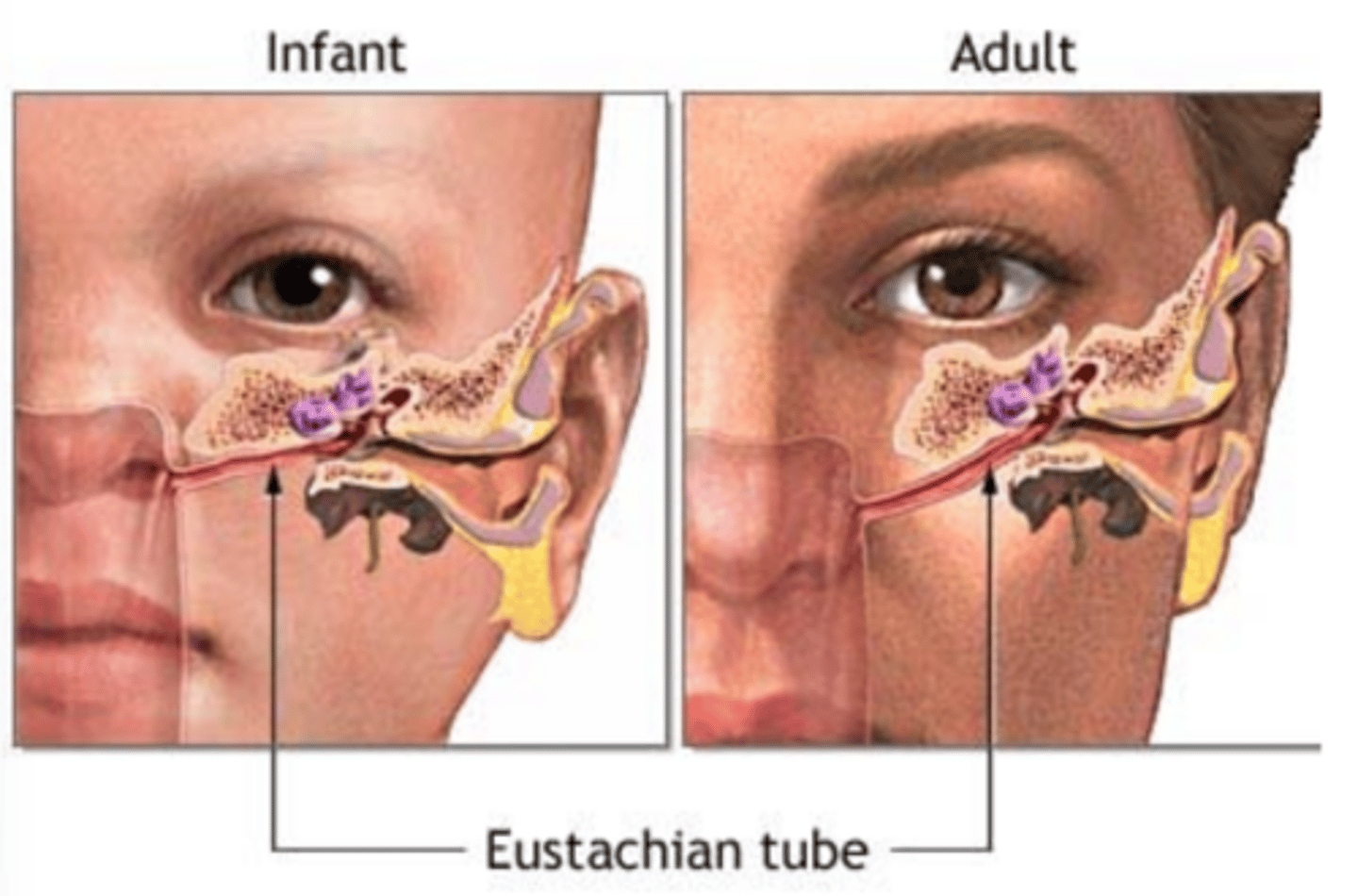
Why does Acute Otitis Media occur in children more often?
Anatomy = kids’ Eustachian tubes are:
• Shorter
• More horizontal
• Narrower
Physiology: kids immune systems haven’t yet seen or developed antibodies to many of the viruses and bacteria that cause otitis media
Most kids will have had at least 1 Acute Otitis Media by age _______
3
What are some epidemiological things than can attribute to Acute Otitis Media (try name 3)?
• Most often in kids, due to above reasons
• More males than females
• Family history, as always, is important
• More often in bottle‐fed, less in breast fed
• More often in day care kids and kids exposed to second‐hand smoke
• As with many infections of the respiratory tract, middle ear infections are more common in winter
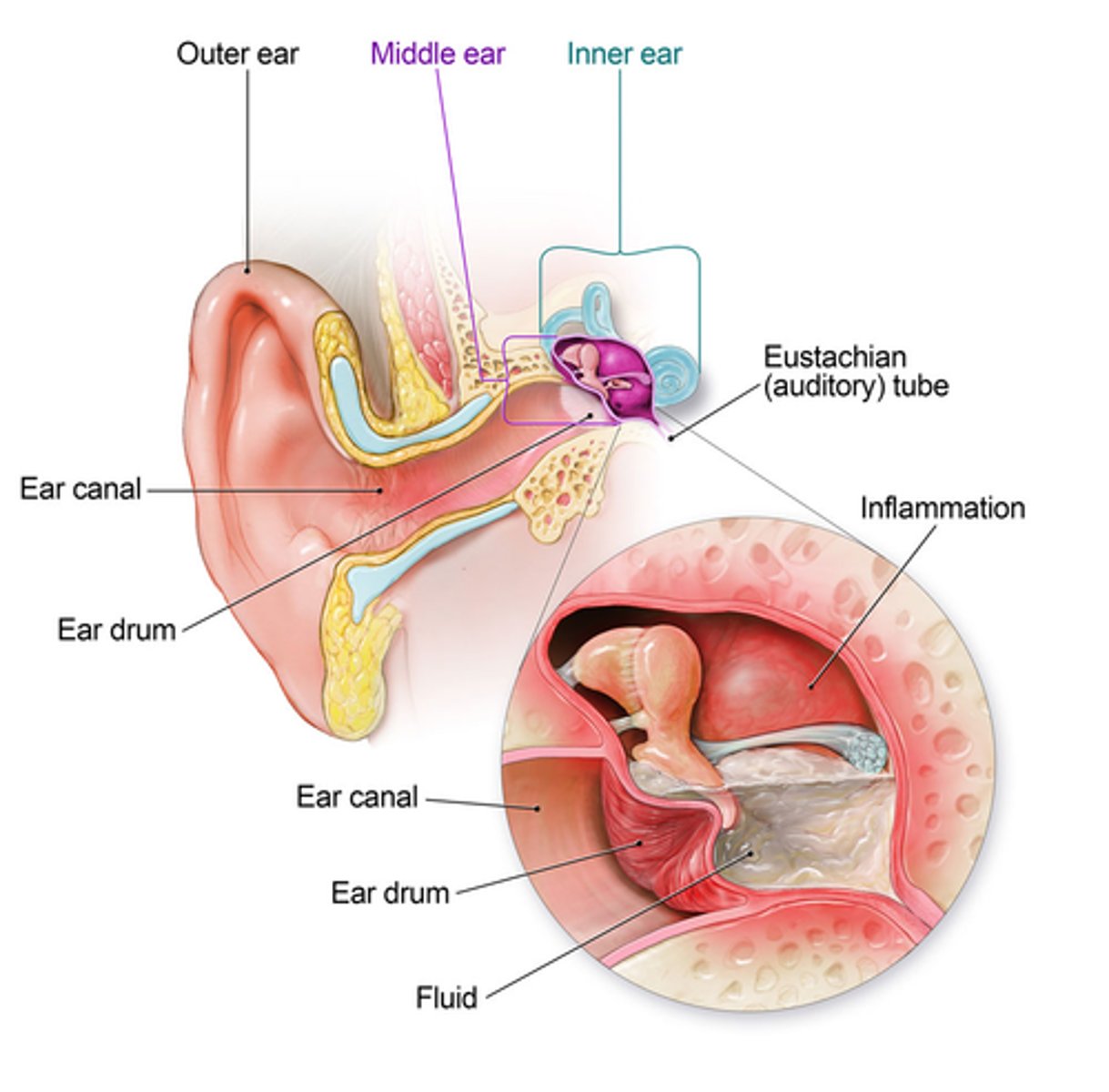
What is the pathophysiology behind Acute Otitis Media?
1) Eustachian tube inflammation → obstructed drainage of fluids
2) Viruses / bacteria grow in excess fluids
3) Trapped air in middle ear is gradually resorbed, causing inward traction 1st on tympanic membrane
4) Eventually, inflammation due to infection causes increased fluid in middle ear, causing the tympanic membrane to bulge outward 2nd
5) Pressure of pus and fluids causes pain and decreased hearing
*Spontaneous perforation of tympanic membrane may have occurred: indicated by drainage of pus and fluids into external ear canal*
*Fever often accompanies bacterial otitis media*
Acute Otitis Media can occur from a recent or current ________ infection very commonly
upper respiratory
Which of these on an exam reveals fever, tenderness to pressure on mastoid area, and tympanic membrane changes during otoscopic exam (redness, pain, pus, deformity of tympanic membrane):
a) Cholesteatoma
b) Acute Otitis Media
c) Otosclerosis
d) Tympanosclerosis
e) Barotrauma
b) Acute Otitis Media
How is serous otitis different from acute otitis media?
• Fever, if any, is lower
• Pain is low‐grade or absent
• Child appears less sick, less fussy, eats better
• May be fluid behind tympanic membrane, and bubbles, but less redness and no pus
What is the WASP protocol for treatment of Acute Otitis Media & Serous Otitis Media?
(Wait And See Prescription):
• Wait 48 hours, using ibuprofen & otic analgesic drops to lessen fever and pain during these two days
‣ Adjustments, acupuncture/acupressure points, vitamin C, and hydration, too!
• Fill prescription only if the child is worse (or not better) in 48 hours
What are some treatment/relief options for Otitis Media?
• Muncie Technique, Galbreath Technique
• Acupuncture/ Dry Needling
• Dietary and Supplementation (numerous options)
• Antibiotics
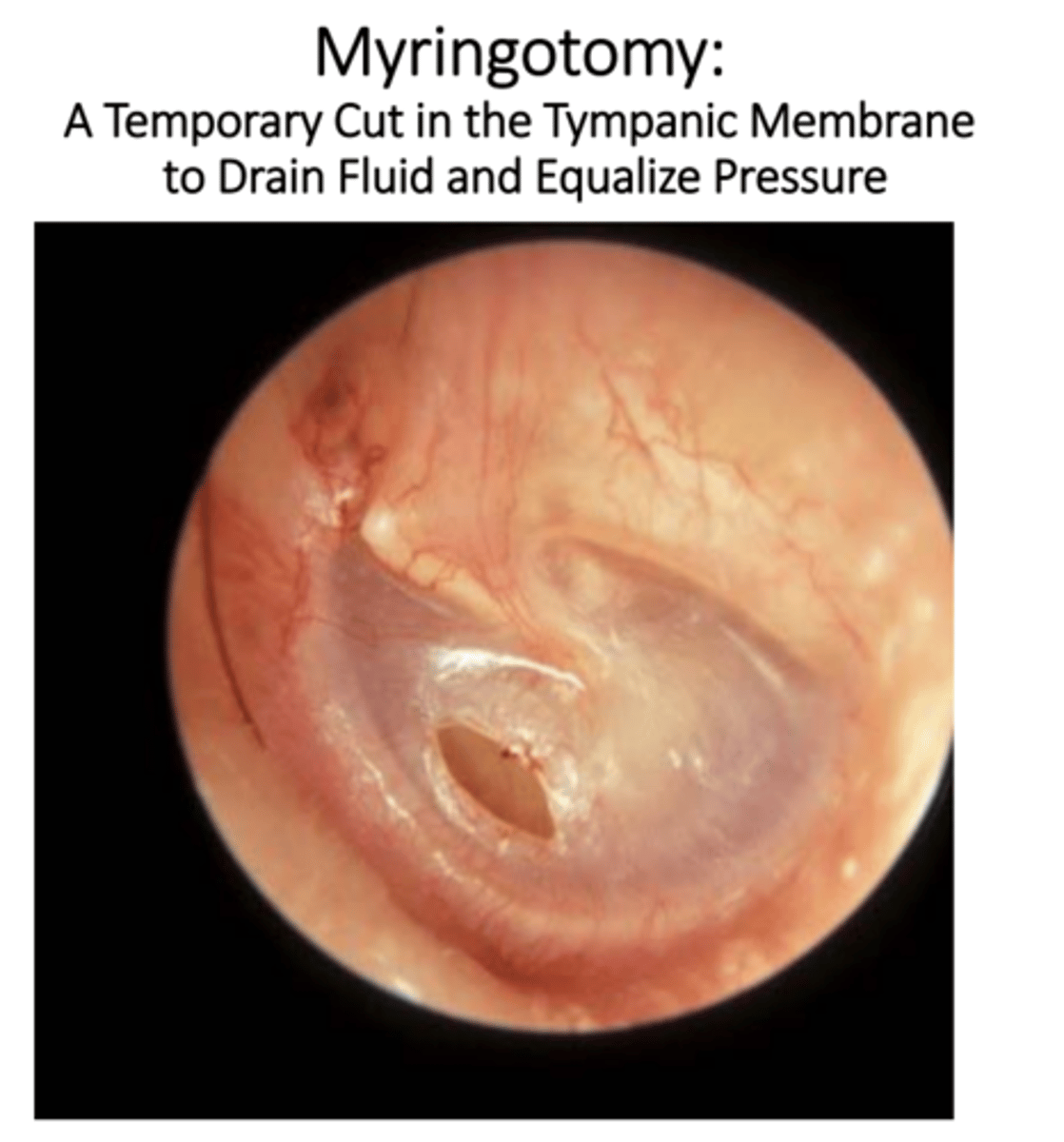
• Myringotomy with or without Tympanostomy Tubes
• Nasal saline drops and nasal syringe
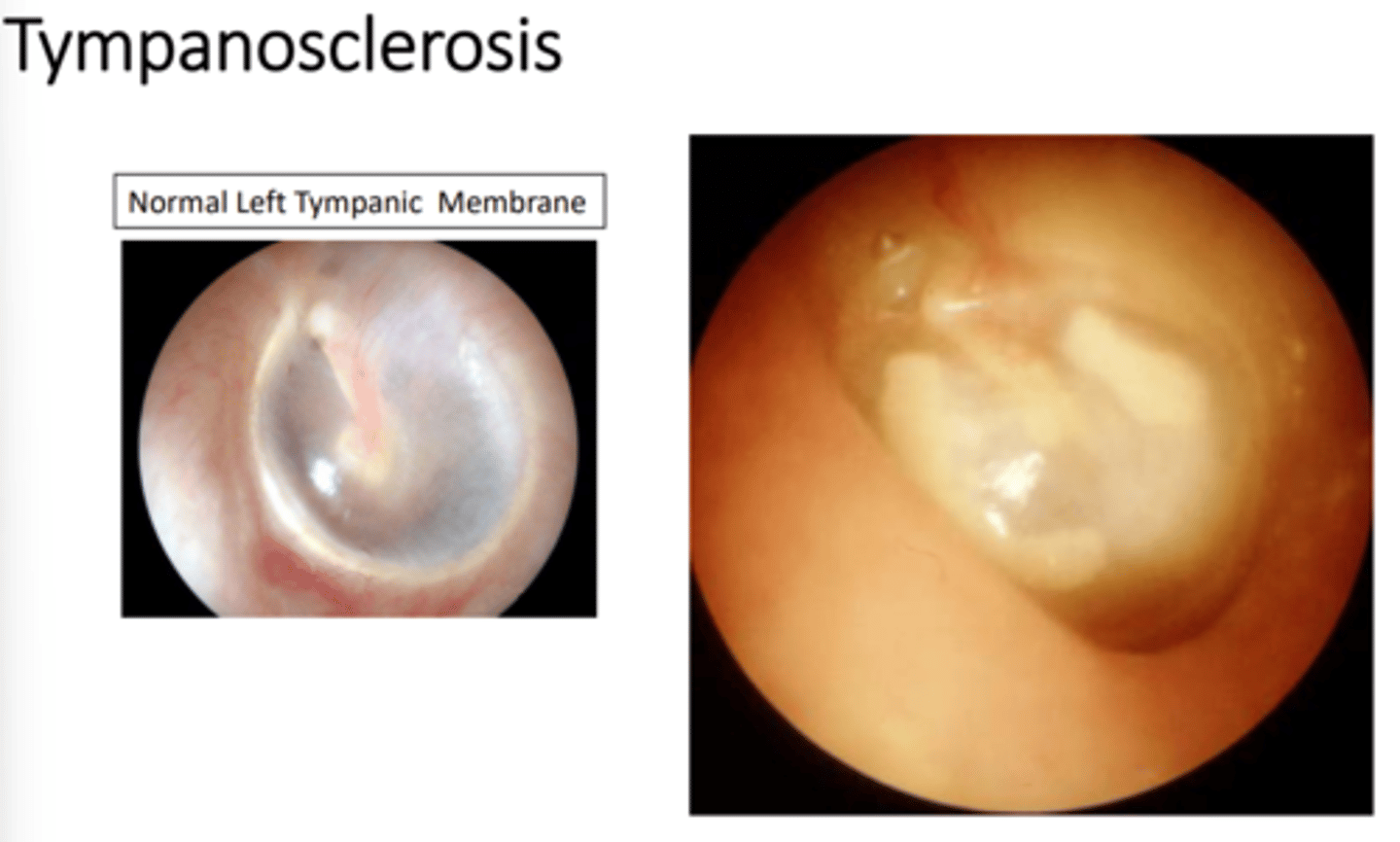
What does a Tympanosclerosis appear as?
a) white mass behind or on eardrum
b) effusion of fluid in middle ear
c) pus filled infection of middle ear
d) irregular membrane, with dull white spots and/or pits
d) irregular membrane, with dull white spots and/or pits
_________, also known as myringosclerosis, is the scarring of the eardrum secondary to acute otitis media or chronic, recurrent middle ear infections
a) Cholesteatoma
b) Acute Otitis Media
c) Otosclerosis
d) Tympanosclerosis
e) Barotrauma
d) Tympanosclerosis
How is a Ruptured/Perforated Tympanic Membrane treated?
• Most heal within 4‐8 weeks
• Antibiotics often prescribed to treat ‐ or prevent ‐ infection
• Self care: keep ear canal dry
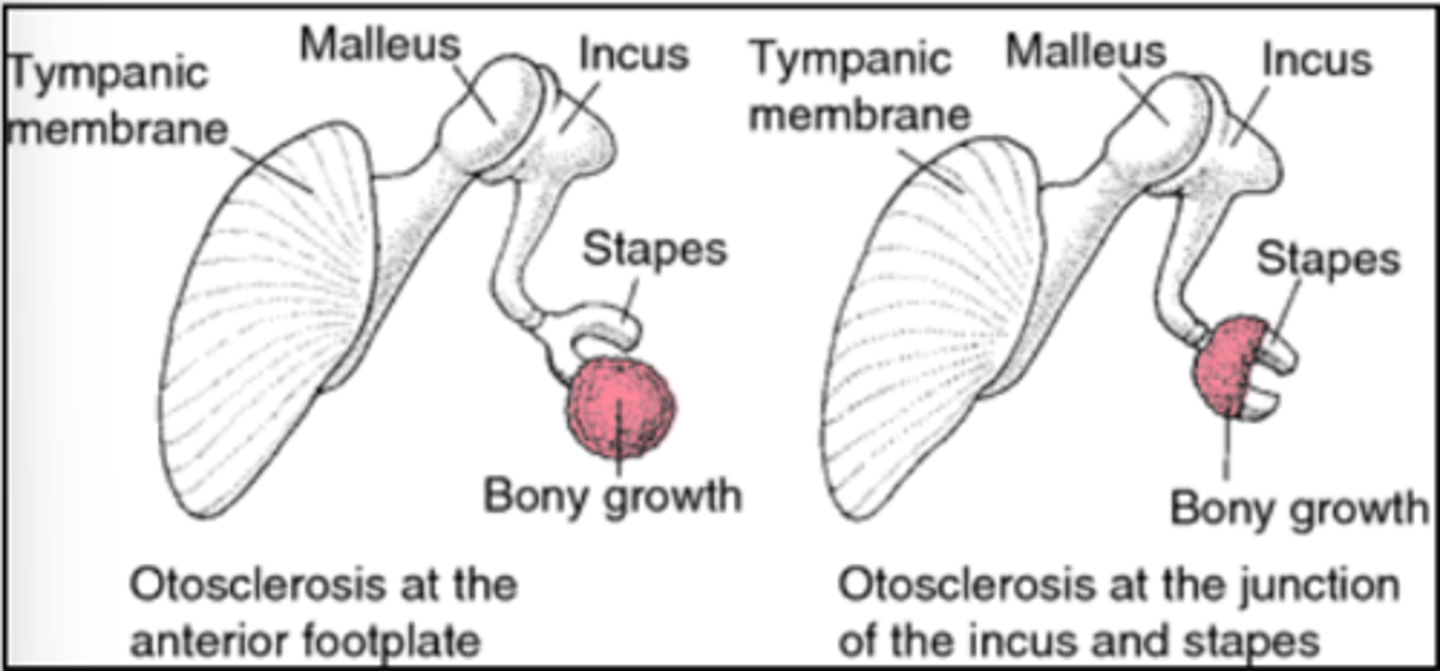
__________ is abnormal bone growth of the middle ear bones (ossicles) or of the bone that surrounds the inner ear
a) Cholesteatoma
b) Acute Otitis Media
c) Otosclerosis
d) Tympanosclerosis
e) Barotrauma
c) Otosclerosis
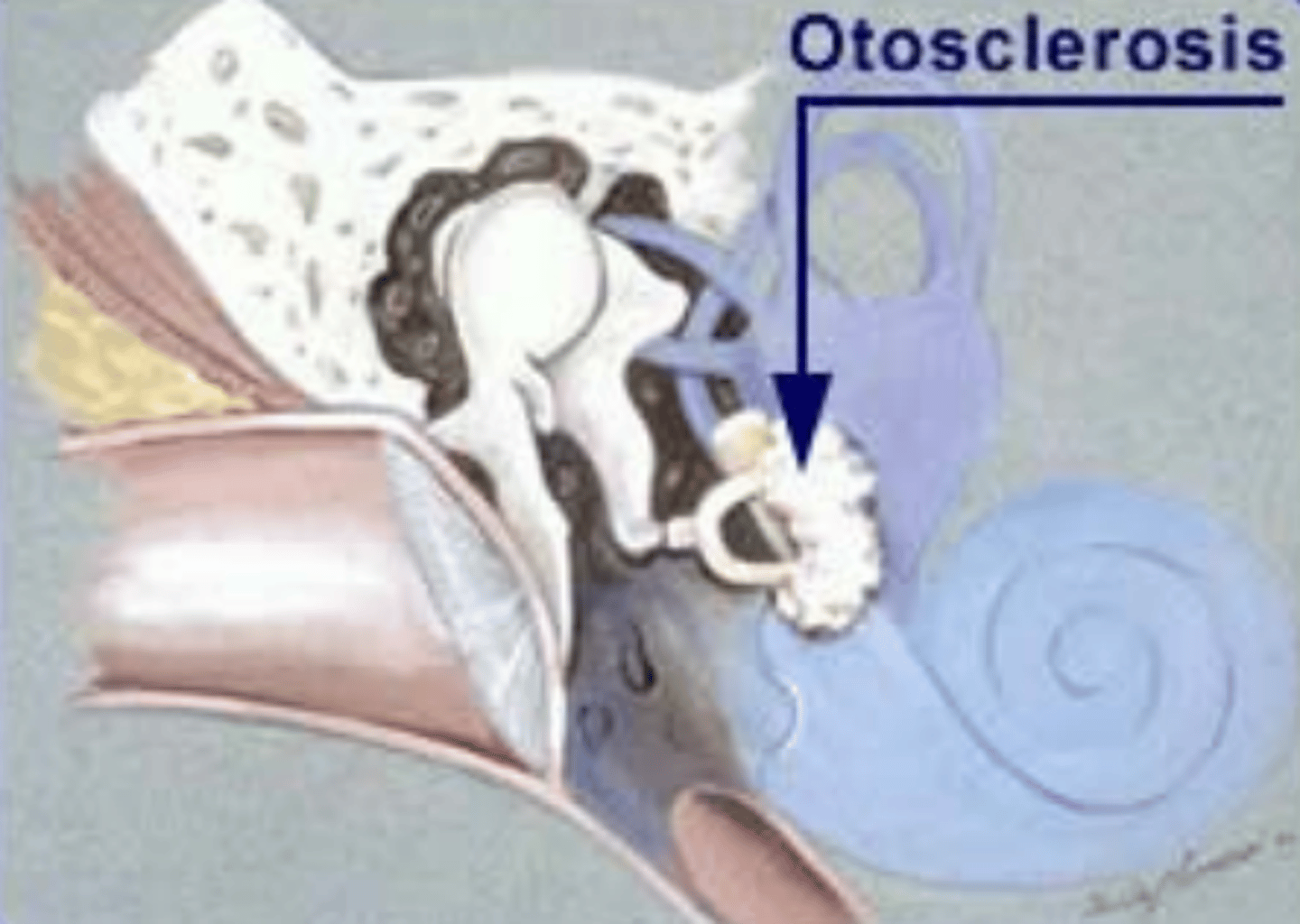
What is the most common bone affected with Otosclerosis?
stapes
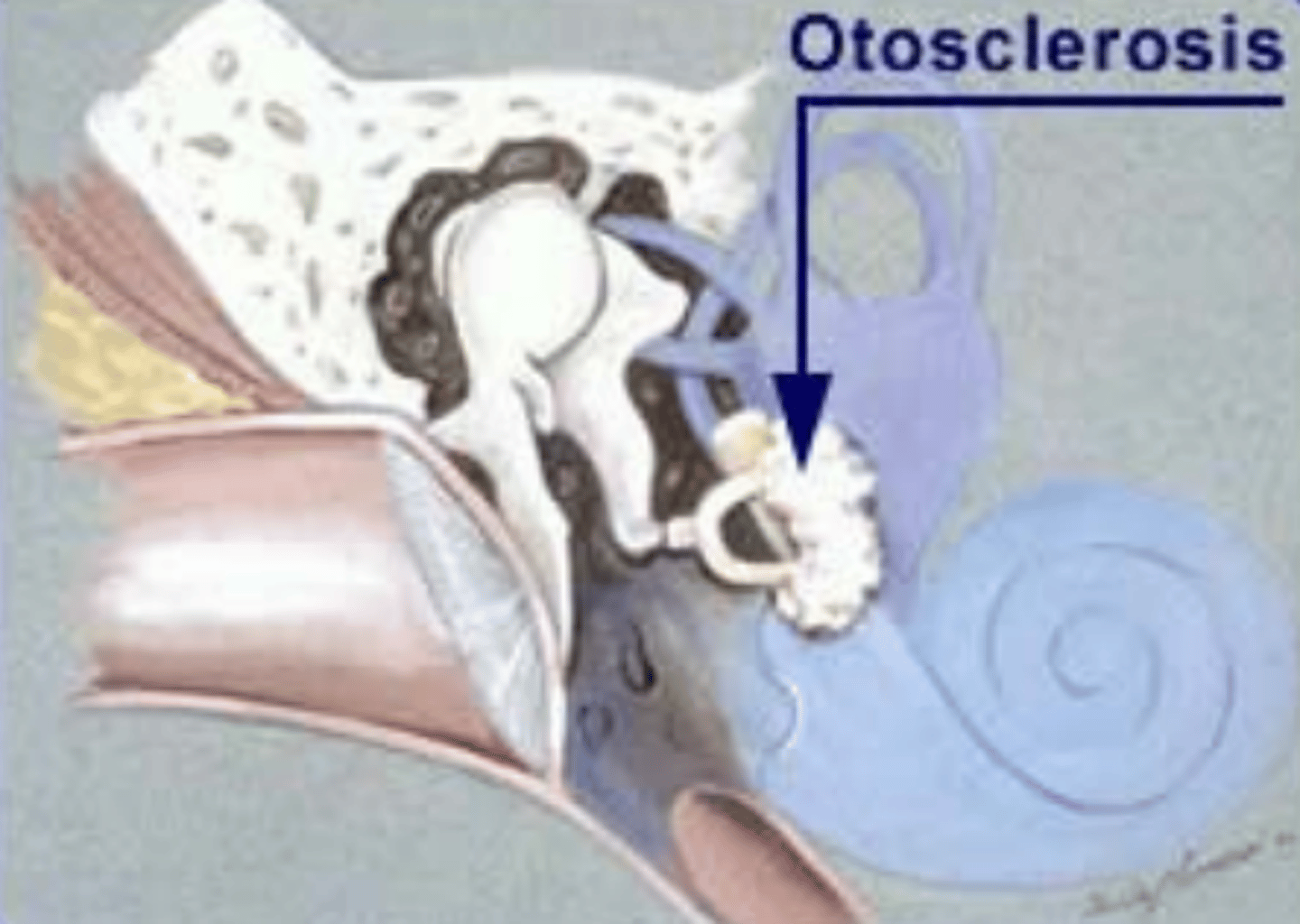
When Otosclerosis affects the ossicles, it eventually immobilizes them so that can no longer _________ or __________
vibrate or transmit sound
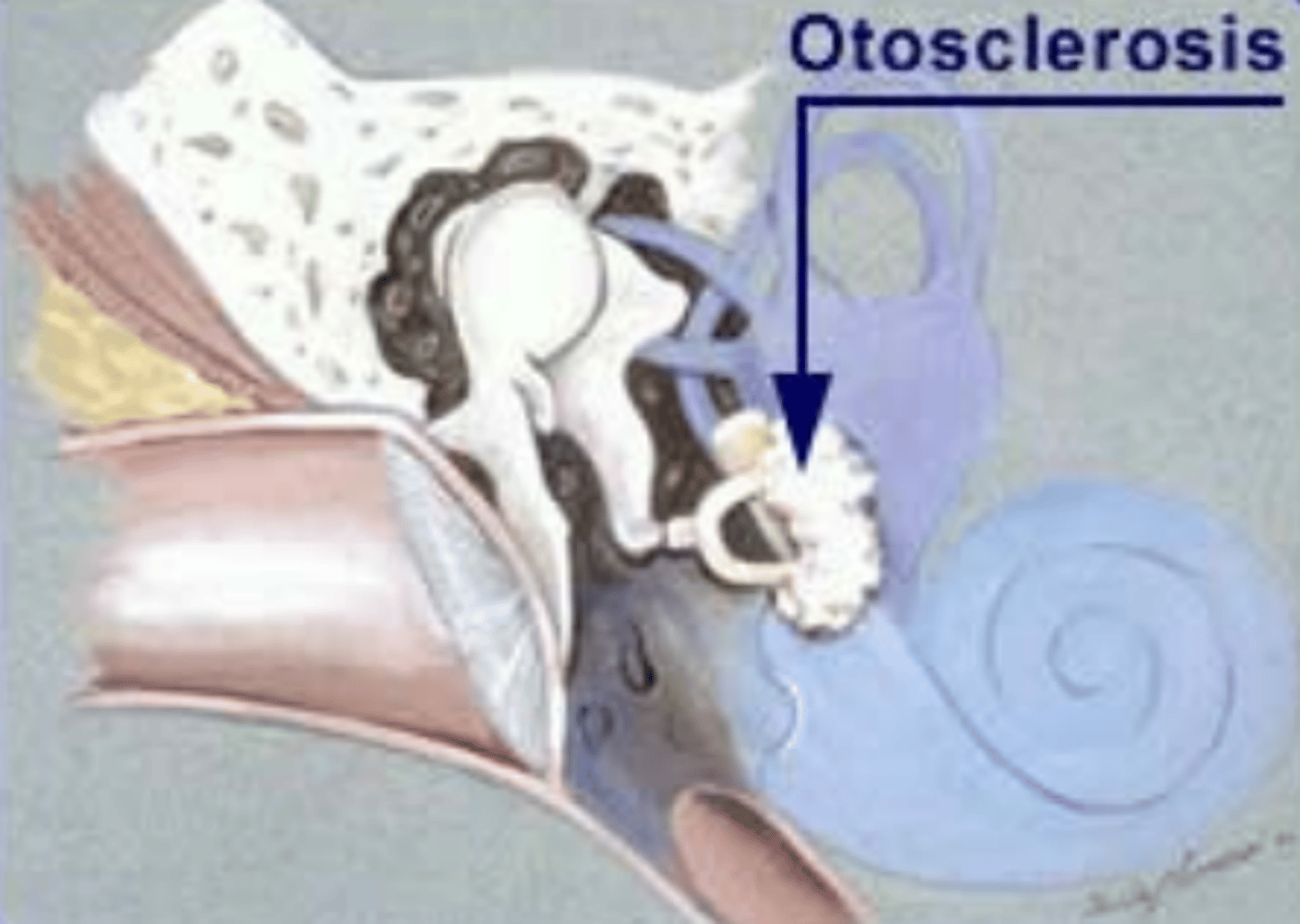
What is the main symptom of otosclerosis?
gradual hearing loss (one or both ears)
How is otosclerosis diagnosed?
• Weber: Sound will localize to involved ear if unilateral
• Rinne: Bone conduction is louder and longer than air conduction
• can’t usually see otosclerosis with otoscope – it’s too far away on the other side of the tympanic membrane
What may you refer an individual with otosclerosis for?
• Computed Tomography (CT) scan of temporal bone may reveal abnormal bone formation at the ossicles
• Referral to otolaryngologist or otologist is necessary to rule out other disease processes potentially causing hearing loss
How is otosclerosis treated?
• A hearing aid may help temporarily
• Stapedectomy and prosthesis surgery
• possible supplementation of sodium fluoride, calcium, and vitamin D
A __________ is an injury to the ear from changes in barometric pressure or water pressure
a) Cholesteatoma
b) Acute Otitis Media
c) Otosclerosis
d) Tympanosclerosis
e) Barotrauma
e) Barotrauma
What is the most common cause of a Barotrauma?
• blockage or partial blockage of eustachian tube
• sudden change in air pressure (airplane take‐offs, landings) or increased in water pressure (diving, swimming, bridge jumping)
What is Bartolomeo Eustachio famous for?
Italian anatomist in 1500's who identified Eustachian tubes
What is Antonio Valsalva famous for?
Italian from 1700's who first developed maneuver for equalizing air pressure in ears by:
• pinching the nostrils shut while . . .
• increasing pressure within the chest
What involved in the prevention and treatment of barotrauma?
• Chiropractic adjustments may help
‣ PARTS likely in upper C spine
• Acupuncture and soft tissue work
• Muncie/Fossa of Rosenmüller technique

