Vertebrates 3 - Reptiles
 Studied by 1 person
 Call Kai
 Learn
Learn Practice Test
 Spaced Repetition
 Match
Match Flashcards
 Knowt Play
1/17

There's no tags or description
Looks like no tags are added yet.
Name | Mastery | Learn | Test | Matching | Spaced | Call with Kai |
|---|
No analytics yet
Send a link to your students to track their progress
18 Terms
3 ways reptiles got out of water
more efficient heart/circulatory system
amniontic egg
excretory system
type of phylogentic group of reptiles
paraphyletic
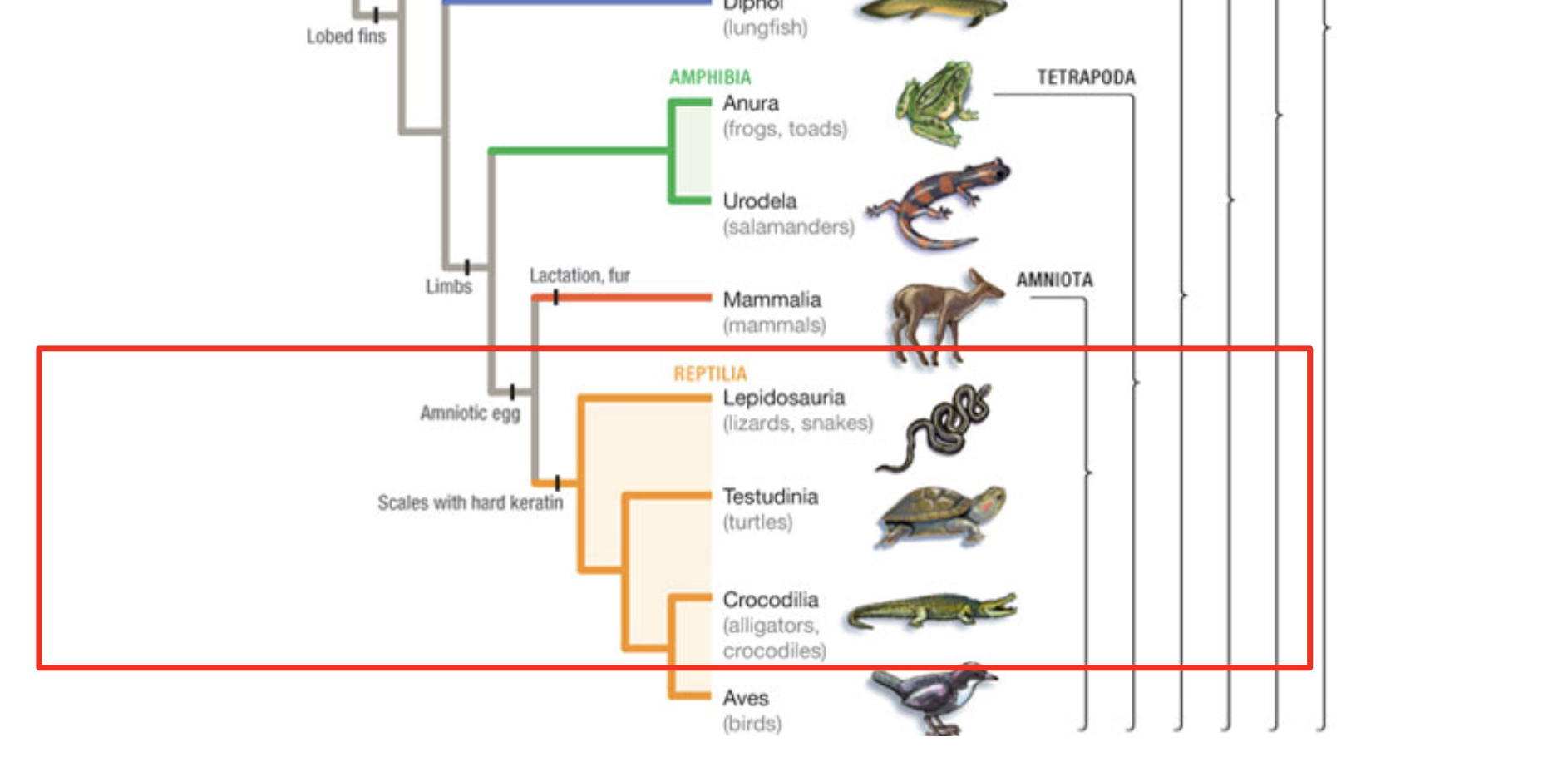
skin evolution
waterproof b-keratin skin
helps them conserve water so they can live in hot dry environments like deserts
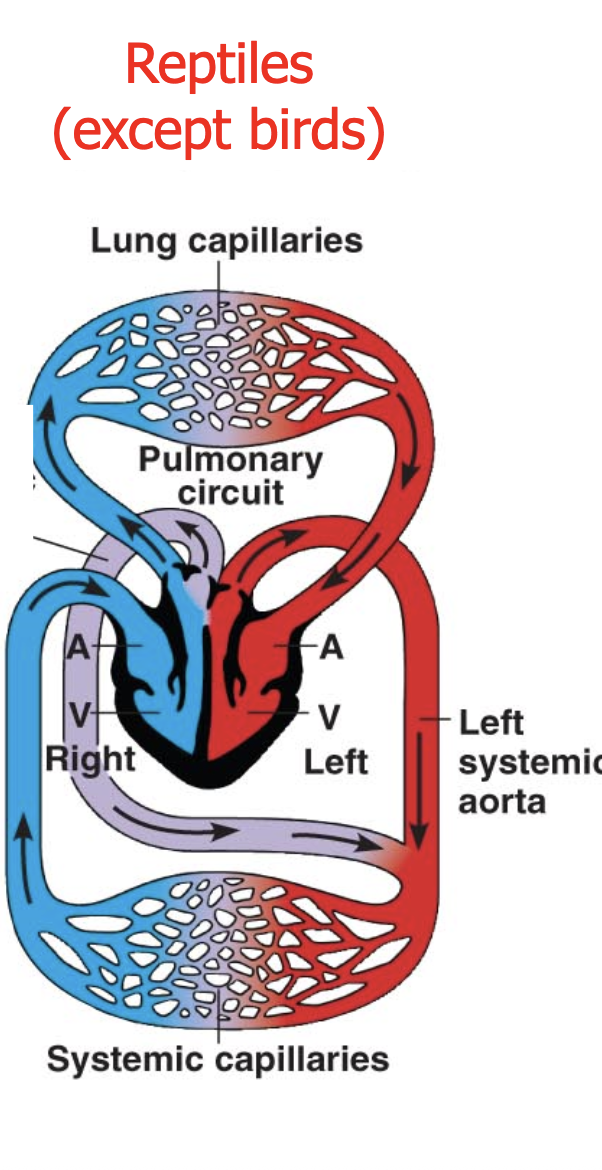
Reptile Circulatory System
‘4 chambered heart’ with an alternative circuit
blood can be shunted to the respritory surfaces (lungs) for when pressursized blood is needed (out of water)
OR if not needed…that valve closed and blood is just pumped to body for when they go back underwater
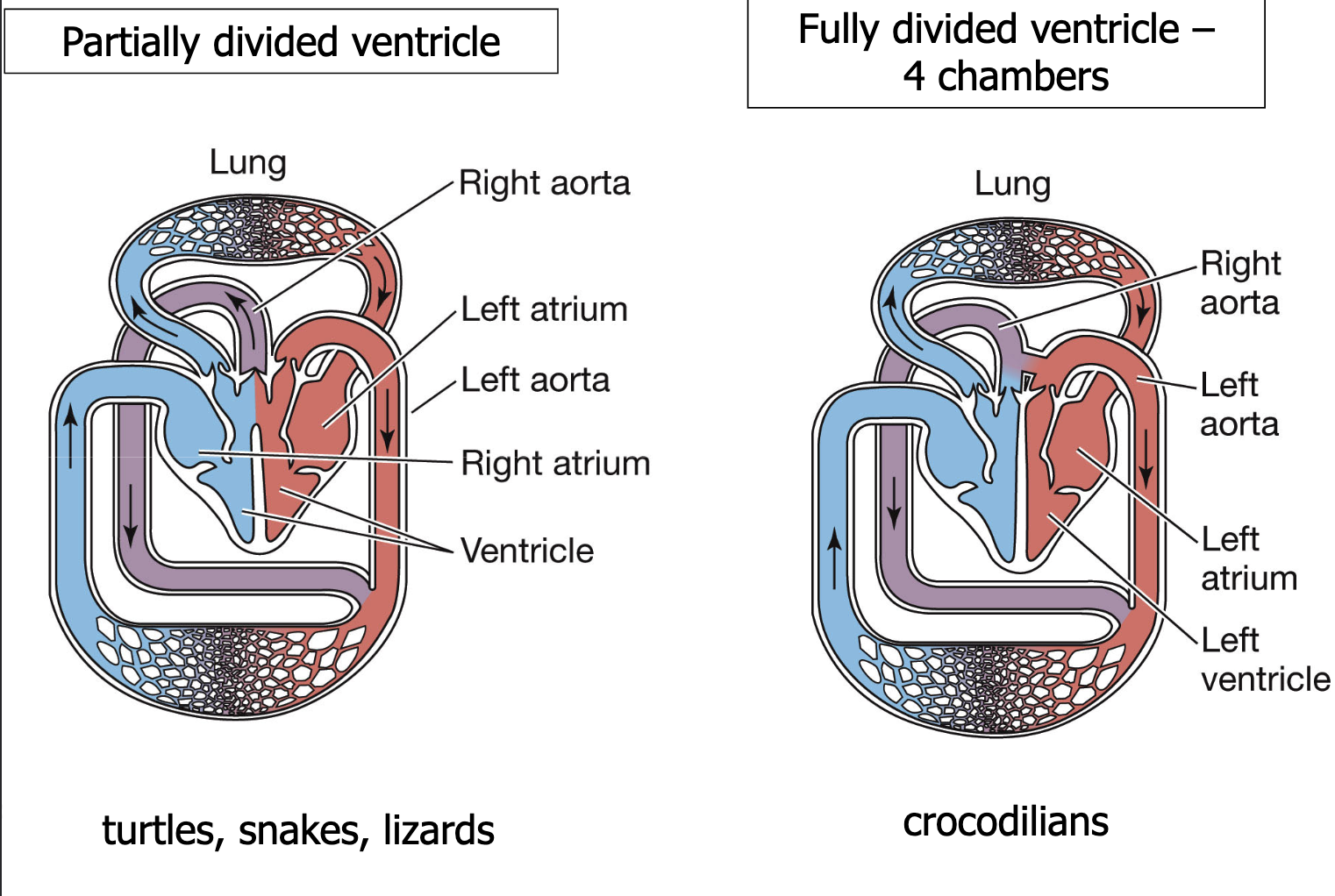
Turtles/Snakes/Lizards vs Crocodillian circulatory system
partially divded ventricle vs fully divided
External Shell of Amniotic Egg
made up of extra embryotic membranes
leathery and brittle (CaCO2)
permeable to gases (O2 and CO2)
fairly impermeable to water but can’t be layed submerged in water forever
not present in therian mammals (humans)
Reproduction
**bc terrestrial egg, sperm can penetrate
internal fert…the shell and albumen are formed in females oviduct
nitrogenous wastes
product of protien and DNA metabolism
ammonia, urea, uric acid
Ammonia NH3
very soluable in water, very toxic
need to be diluted or disposed of quickly or converted to less toxic form
used by rayfinned fish, aquatic inverts, larval amphibians
Urea
soluable in water, medium toxicitiy, needs less water for disposal
used by cartilagenous fish, adult amphibians, and mammals (humans)
Uric Acid
insoluable in water *hard for cleaning car
non toxic
little water needed for disposal
*all traits perfect for amniotic egg
used by insects, birds, and reptiles
Kidney Func and Process
regulate levels of water and dissolved solutes in blood and filter to form urine
squeeze everything out (to bowmans capsule) and then reabsorb what you still need
Testudinia (Turtles and Tortoises)
changed very little over evolutionary time
dorsal shell is expansion of ribs
mostly aquatic (some terrestrial)
humans exploit result in pop declines
Crocodillia
spend much time in water
build nests on land or floating piles of veg
Lepidosauria who and traits
include tuatara and squamates
horny scales
gas exchange only through lungs
Tuatara
resemble lizards…only 2 species survived
found in NZ only
have no external ears, nocturnal, well developed third parietal eye (light sensitive - help w carcadian rhythm)
Squamates
mostly lizards and highly diverse
32 events where some lost legs and became snakes!
Snakes
no limbs
200+ vertebrates
highly kinetic skull
vomeronasal organ (smelling tongue)
 Note
Note  Flashcards (30)