vocal ped final
 View linked note
 Call Kai
 Learn
Learn Practice Test
 Spaced Repetition
 Match
Match Flashcards
 Knowt Play
1/152

There's no tags or description
Looks like no tags are added yet.
Name | Mastery | Learn | Test | Matching | Spaced | Call with Kai |
|---|
No analytics yet
Send a link to your students to track their progress
153 Terms
What impact did the Roman Catholic Church have on vocal music education?
established schools, such as the one by Pope Sylvester, for liturgical singing.
Ancient Greek and Roman theories
Singing as a part of a complete humanistic education
What is bel canto?
An Italian term meaning 'beautiful singing' that emphasizes a flexible, florid singing style.
What are some key principles of Bel Canto technique?
Emphasis on pure tone, phrasing, and vibrato.
Who was Pier Francesco Tosi?
A vocal pedagogue and author known for focusing on style, execution, and literature for training singers.
What was a significant contribution of Manuel Garcia II to vocal pedagogy?
Invention of the laryngoscope (1854) and development of the voice register system.
What does vocology focus on?
voice habilitation and care.
tympanic membrane.
Commonly known as the eardrum, it vibrates in response to sound waves.
What are the 3 stages of learning
Attention/sensory register, working memory (short-term memory), long-term memory.
What is the goal of effective vocal training?
To achieve a free, easy, and flexible voice.
breath support
the relationship between inspiratory and expiratory muscles, used to regulate the sub-glottal pressure
Identify the four types of breathing outlined in the notes.
Clavicular, thoracic, abdominal, and appoggio.
What does muscular antagonism refer to?
The cooperation of two muscles that work together, such as in bending or straightening arms.
feedback
can be immediate, terminal, or concurrent, influencing how a student adjusts their performance
What is the significance of alignment in vocal pedagogy?
allows for optimal airflow and reduces tension, enabling a more efficient vocal production.
What did Richard Miller's work focus on?
His work, 'The Structure of Singing', emphasizes vocal function.
What type of breathing does not provide good support and is characterized by lots of air?
Clavicular breathing.
Chunking
combines units into organized groups, increasing the capacity of working memory.
What are the psychological aspects of vocal pedagogy that must be addressed?
vocal abuse, exploitation, and safety in teaching.
auditory feedback
comes from sound waves produced by a singer that return to their ears, both externally and internally
breath control
the release of air through the glottis, the speed of the air
What year did Tosi publish Opinioni del Cantori Antichie Moderni
1723
Thoracic breathing
Bottom of rib cage expansion during inhalation, involving the use of intercostal muscles.
clavicular breathing
Involves raising the shoulders and upper chest during inhalation, often leading to inefficient breath support.
abdominal breathing
the expansion of the abdomen during inhalation, promoting efficient breath support and diaphragm use.
appoggio breathing
balanced breath support, allowing for sustained and controlled phonation while maintaining an open throat and relaxed body.
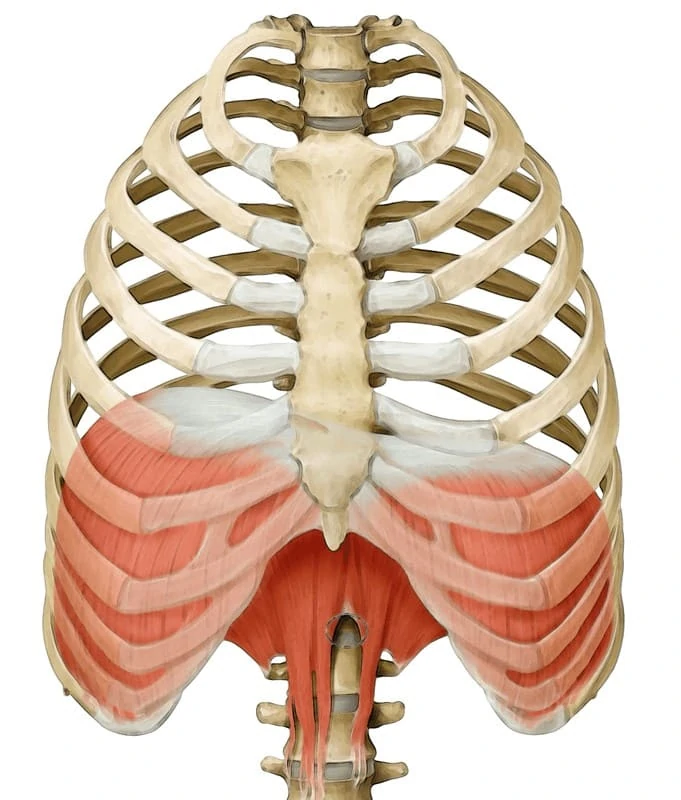
WHAT IS THIS??!?!?!?!?!
the diaphragm dummy
is the diaphragm used for inhalation or exhalation
inhalation
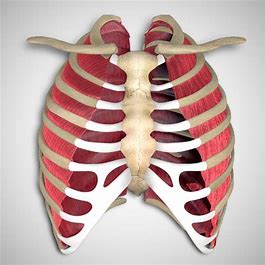
what are theeeeeese?
exterior intercostals
are exterior intercostals part of inhalation or exhalation
inhalation
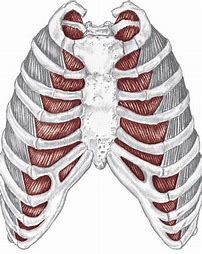
wot
interior intercostals
are interior intercostals for inhalation or exhalation
exhalation
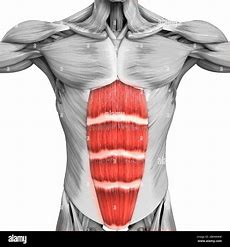
which muscle is dis
rectus abdominus
are the rectus abdominus used in inhalation or exhalation
exhalation
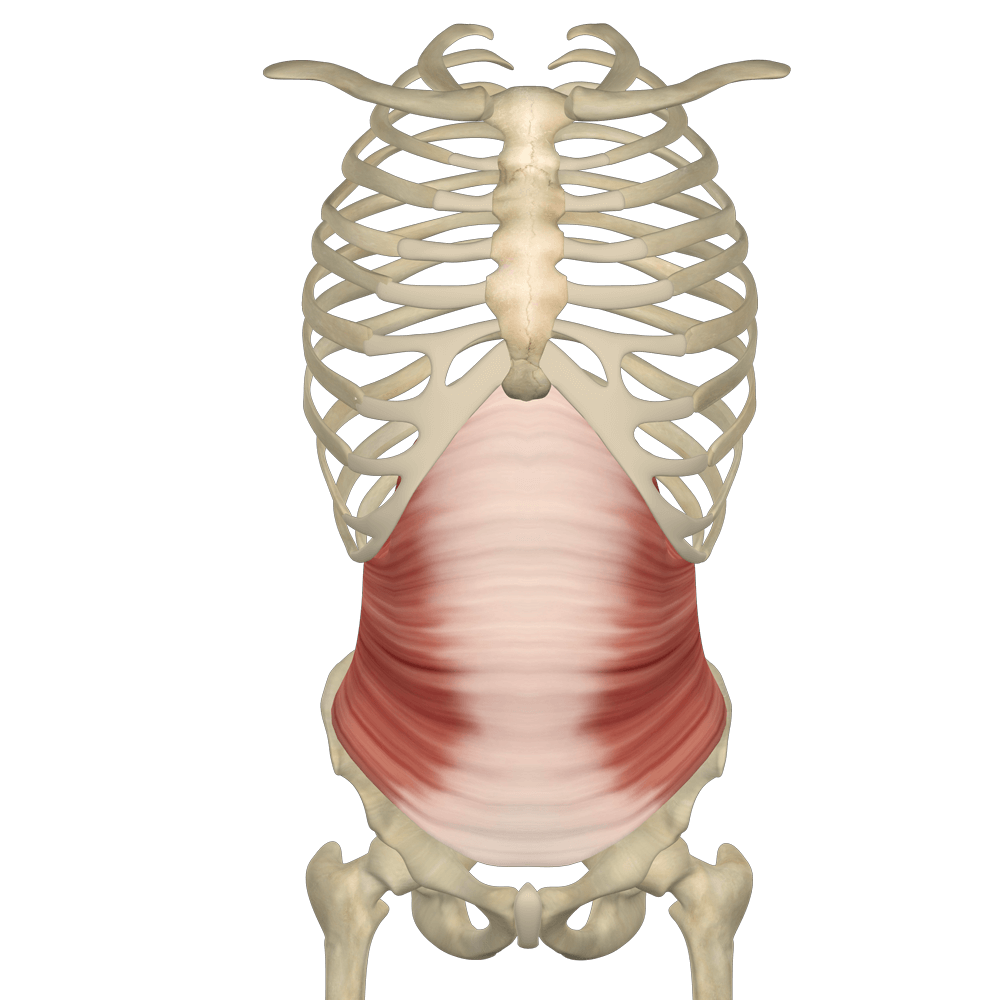
?
transverse abdominis
transverse abdominis is used in what
exhalation
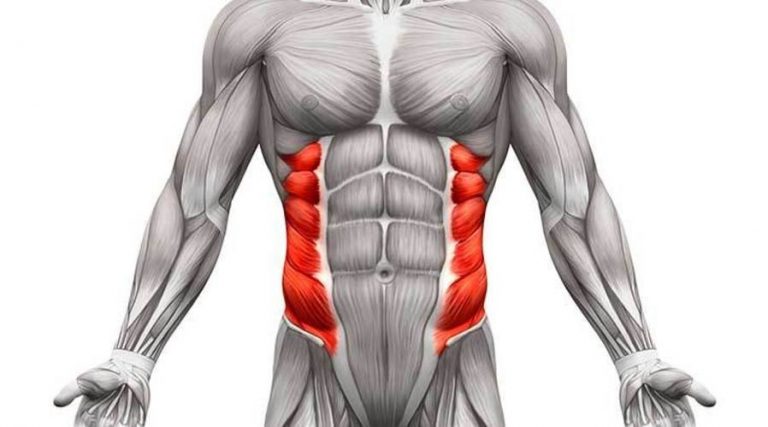
which one is this
external oblique abdominal muscles
external obliques are used in…
exhalation
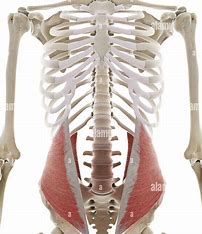
what?
the internal oblique abdominal muscles
internal obliques are used in ______
exhalation
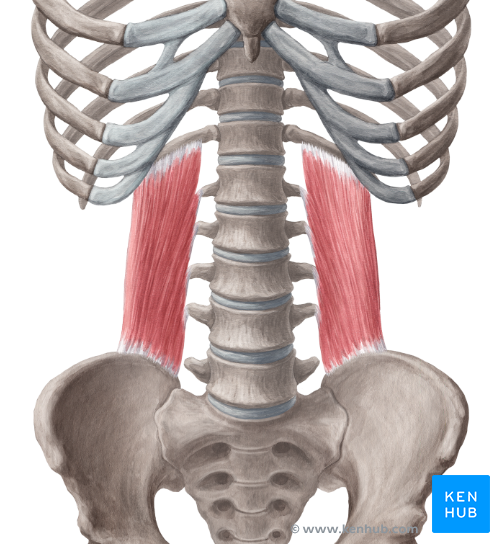
help a sister out
quadralus lumborum
what is the first stage of the breathing cycle
inhalation
second stage of the breathing cycle
suspension
third stage of breathing cycle
exhalation
last stage of the breathing cycle
recovery
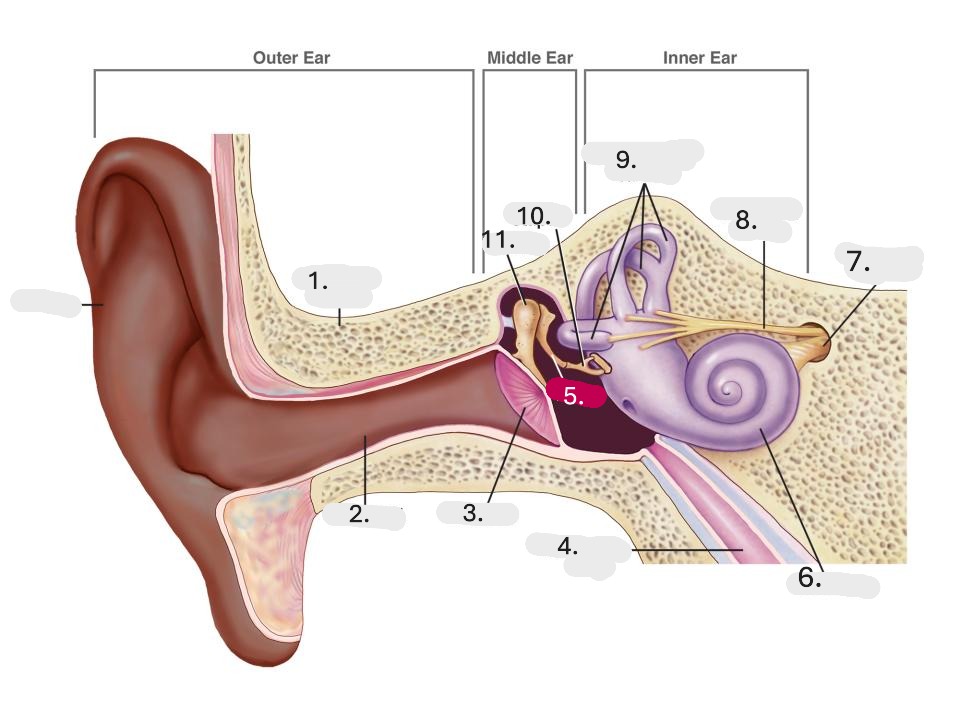
1.
temporal bone
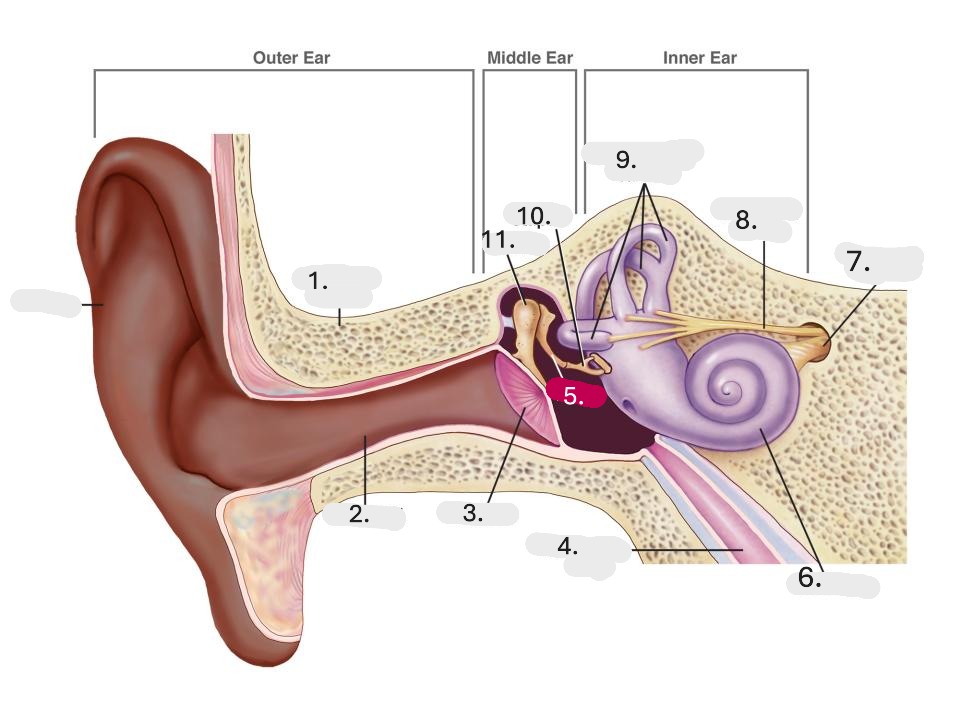
2.
ear canal
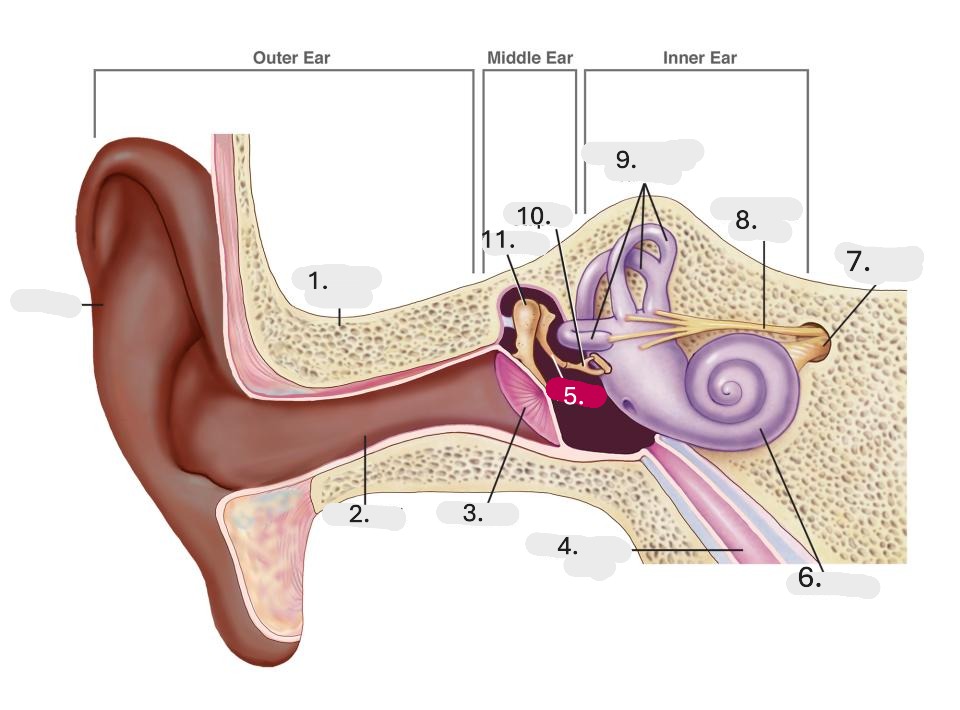
3.
tympanic membrane (eardrum)
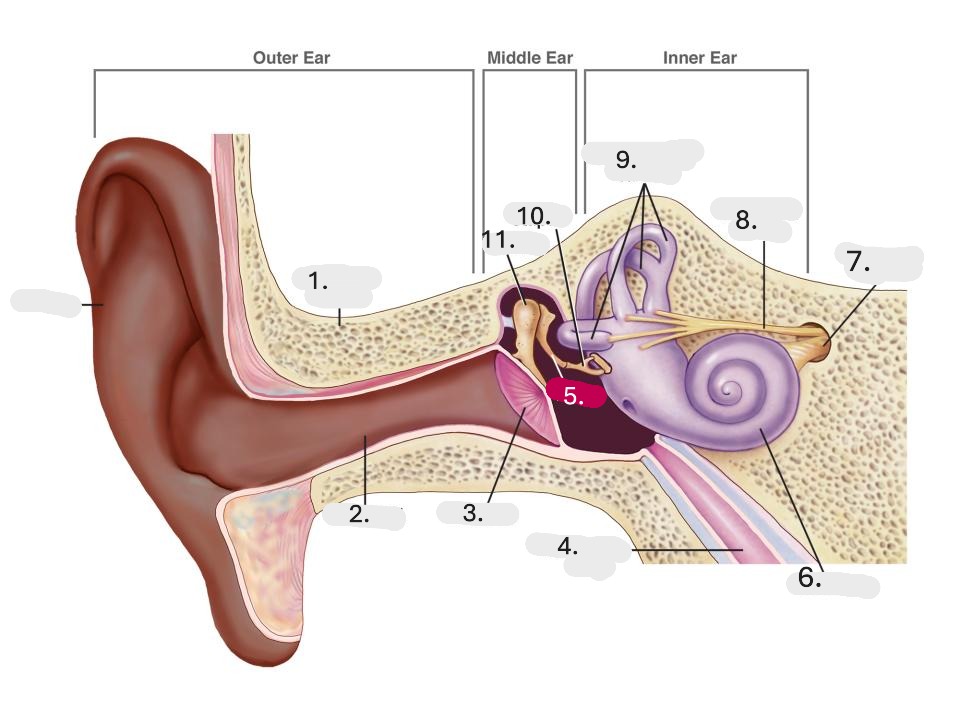
4.
Eustachian tube
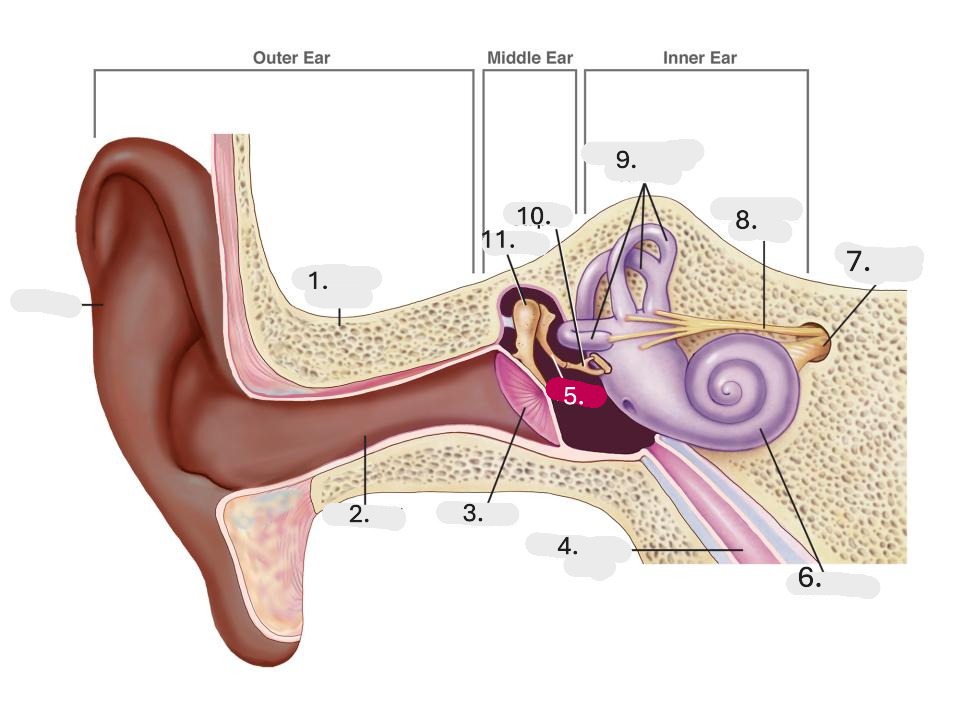
5.
incus
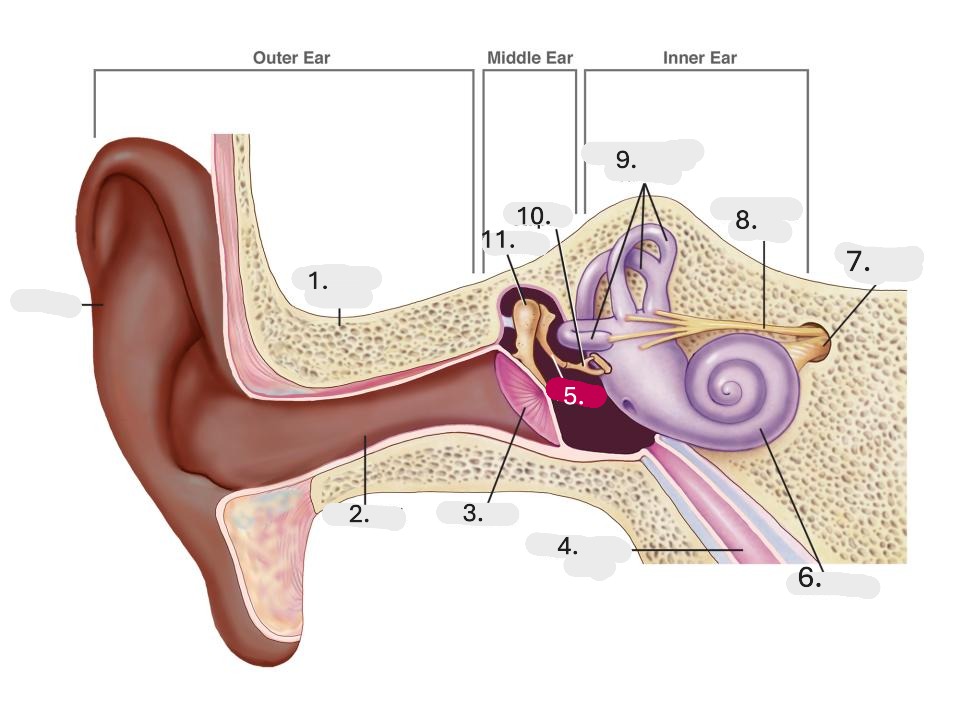
6.
cochlea
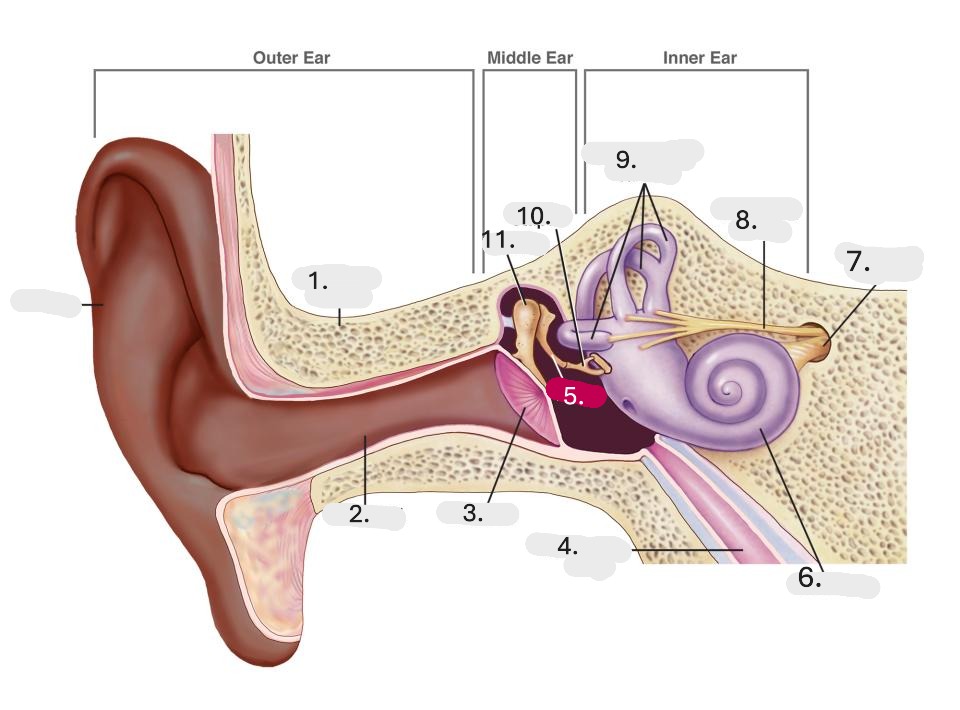
7.
auditory nerve
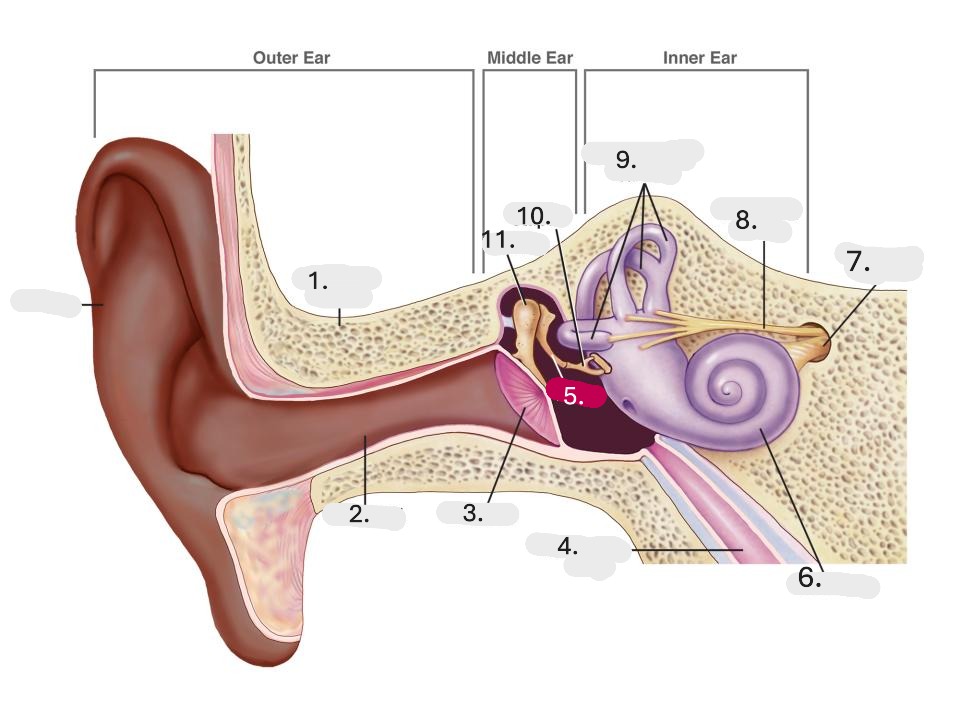
8.
vestibular nerve
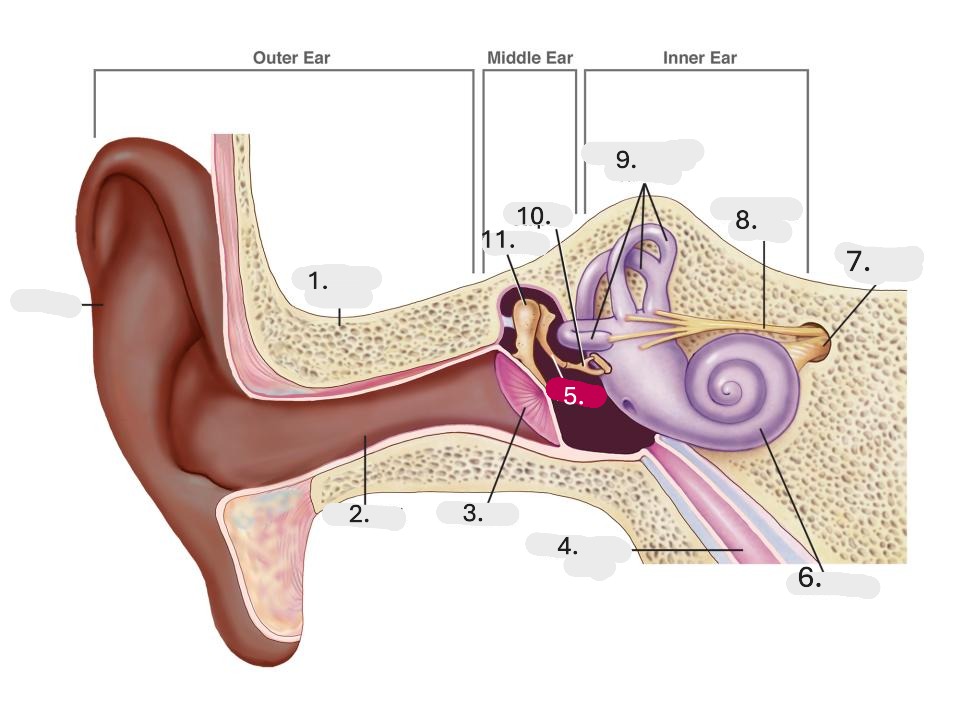
9.
semicircular canals
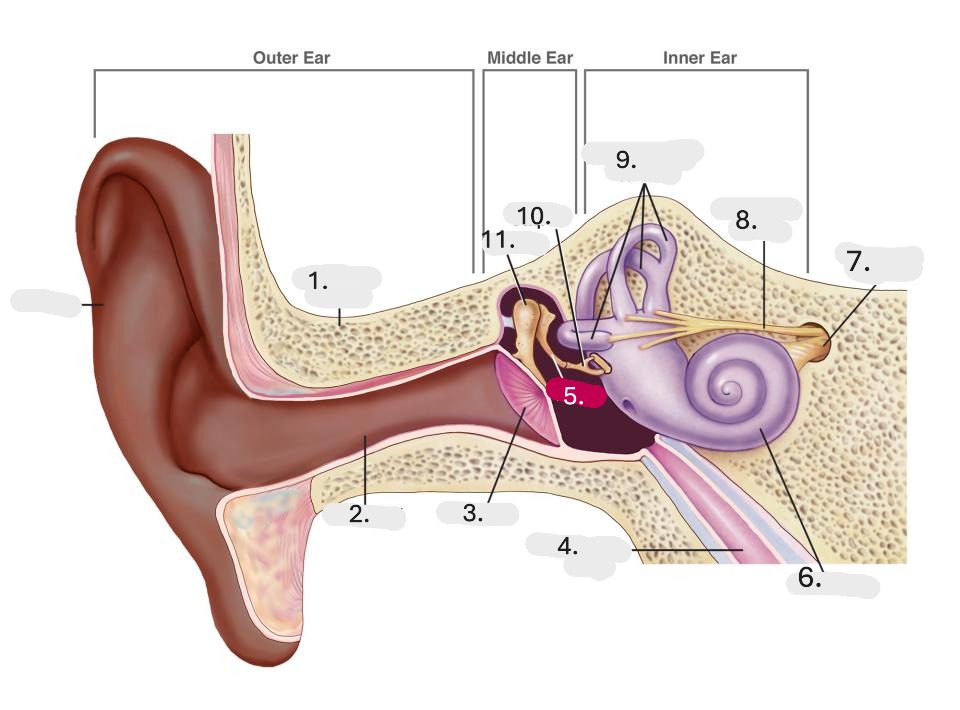
10.
stapes
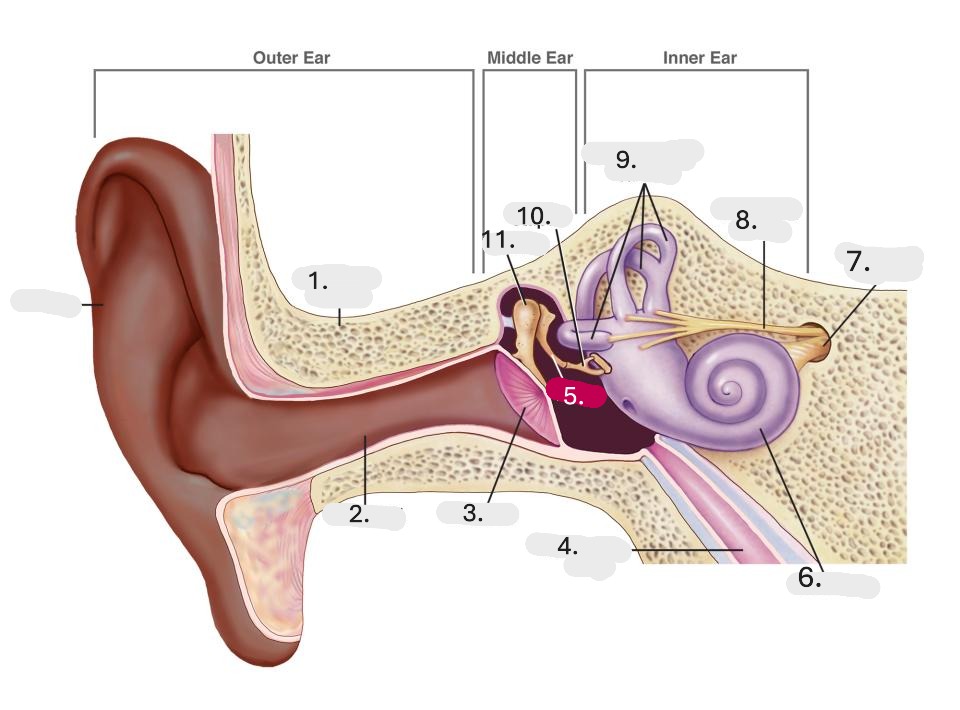
11.
malleus
What did William Vernard and Ralph Appelman do?
applied scientific principles to voice training (‘67)
Johan Sundberg and Berton Coffin are known for what?
pioneering research in vocal acoustics for classical voices
Ingo Titze is known for…?
His research of SOVT exercises (Semi-Occluded Vocal Tract)
Bright
provides brilliance and carrying power, with stronger, higher pitch overtones
Dark
provides warmth and fullness, stronger low pitch overtones
Twang
results from a narrowing of the vocal tract to produce a brassy, edgy timbre
Loft
created by relaxing and enlarging the pharynx and lifting the soft pallet
forward
resonating in the cheekbones, having brightness, described as being in the mask
back
often somewhat dark in vocal color, and tend to give the impression of being caught in the throat, or back of the mouth
lyric
A vocal quality characterized by a light, flowing, and expressive sound, often used in singing styles that emphasize melodic phrases.
dramatic
often darker in tone and more powerful, and full
clear
bright, focused, and easily understood. directly related to the amount of air that escapes with the sound
breathy
the result of incomplete closure of the glottis and is often made worse by poor breath support
clean
pure tone in vocal production
raspy
results from aperiodic events during vocal fold vibration, possibly caused by physiological and/or pathological voice disorders
healthy
related to clear and clean production, generally free of unwanted noise
damaged
hoarse and raspy that is beyond the direct control of the singer, cracking or popping, diplophonia
conversational
speech-like timbre, used by non-classical singers
ringing
caused by vocal tract amplification of very high overtones, essential for singers who must project their voices over the sound of an orchestra
nasal
tone that actively resonates in the nasal cavity, caused by a relaxed soft pallet that fails to seal the passageway from the back of the throat into the nose. Can coexist with various other vocal timbres
non-nasal
A type of sound quality in singing where the airflow does not resonate in the nasal cavities, resulting in a clearer, cleaner tone.
free
the most subjective of all the descriptors, generally based on personal experience, gives the impression of ease
forced
gives the impression of being taxing on the singer, if prolonged, they will induce hoarsness or noticable vocal fatigue
vibrato
a long-term vibration or oscillation, superimposed on a sustained pitch, often varies in its regularity
non-vibrato
lighter, purer, and straighter tone, often appears exclusively as an expressive device
wobble
a very slow vibrato can result from poor singing technique, prolonged periods of taxing voice use, neurological disorders, or simple old age
flutter
rapid vibrato, actually helpful in some ways for singers who specialize in highly melismatic repertoire
good diction
when text is intelligible, must be accurate and appropriate for the genre, sounds easy and natural
poor diction
excessively strenuous efforts to spit out the words, results in artificiality
stylistically correct
to be successful a performer must know, understand, and execute the unwritten rules
stylistically INcorrect
Failure to know, understand, or execute the unwritten rules of a performance.
the Renaissance had
Early vocal instruction as a part of music education
Rising importance of the voice in opera
Vocalists take on solo roles, enhancing the importance of voice training
Vocal Ped in the Baroque period
Transition from music ed to focused vocal training, Early vocal pedagogical treatises emerge, introduction to bel canto
Romantic Period Influence
Greater emphasis on emotional expression, Rise of virtuoso singers, particularly in opera
Stage one of memory lasts how long auditorily
2-4 seconds
How long does stage one of memory last visually?
less than a second
stage 2 of memory lasts how long?
5-20 seconds
stage 3 of memory lasts how long?
infinitely
stage 1 of memory
attention/sensory register
stage 2 of memory
short term/working
stage 3 of memory
long term
Declarative learning
know that, top-down
Procedural learning
know-how, bottom-up