Science
 Call Kai
 Learn
Learn Practice Test
 Spaced Repetition
 Match
Match Flashcards
 Knowt Play
1/30

Name | Mastery | Learn | Test | Matching | Spaced | Call with Kai |
|---|
No analytics yet
Send a link to your students to track their progress
31 Terms
Hypothesis
A testable explanation / idea
Theory
An explanation of natural phenomena
Scientific law
Describes a consistent pattern in nature under specific conditions
Will always hold true and theories cannot become law
Scientific Inquiry
Development of new explanations rooted in unbiased observations / investigations
First scientific method
Observations and questions
Second scientific method
Refining questions
Third scientific method
Forming a hypothesis, generally about a possible mechanism / association / interaction
Independent variable
Factor being tested, unaffected by other factors, and changes among experimental groups
Dependent variable
Factor being measures, affected by other factors, and doesn’t change among experimental groups
Null hypothesis
No difference between groups or treatments ( Easier to prove something wrong than right )
Control group
Same as experimental group except the individual variable
Fourth scientific method
Designing the experiment
Should think about what data, whats needed, when / where, who will collect, how to analyze the data
Qualitative data
Words / descriptions, subjective and prone to bias
Quantitive data
Measurable numerical values
Continuous data
Any numerical value ( length, time, electric current etc. )
Discrete values
Count data, fixed values, whole numbers ( number of electrons, roots, etc. )
Fifth scientific method
Experimental procedure
Include amount of material used, duration, who will record / manage data, and the type of data analysis
Sixth scientific method
Run experiment and record results
Raw data must be recorded in a well constructed / easily understood graph with the unit of measurement
Seventh scientific method
Data collection
Sample size
Number of times the measurements were taken
Accuracy
How close a measure value is to the true value
Precision
How similar the repeated values are to each other
Uncertainty
How much a measured data point differs
Eighth scientific method
Interpreting results
Inductive reasoning
Specific observations → general conclusion
Used to make generalizations
Deductive reasoning
General observations → specific conclusion
Taking two or more true statements to reach a conclusion
Ninth scientific method
Disseminating findings
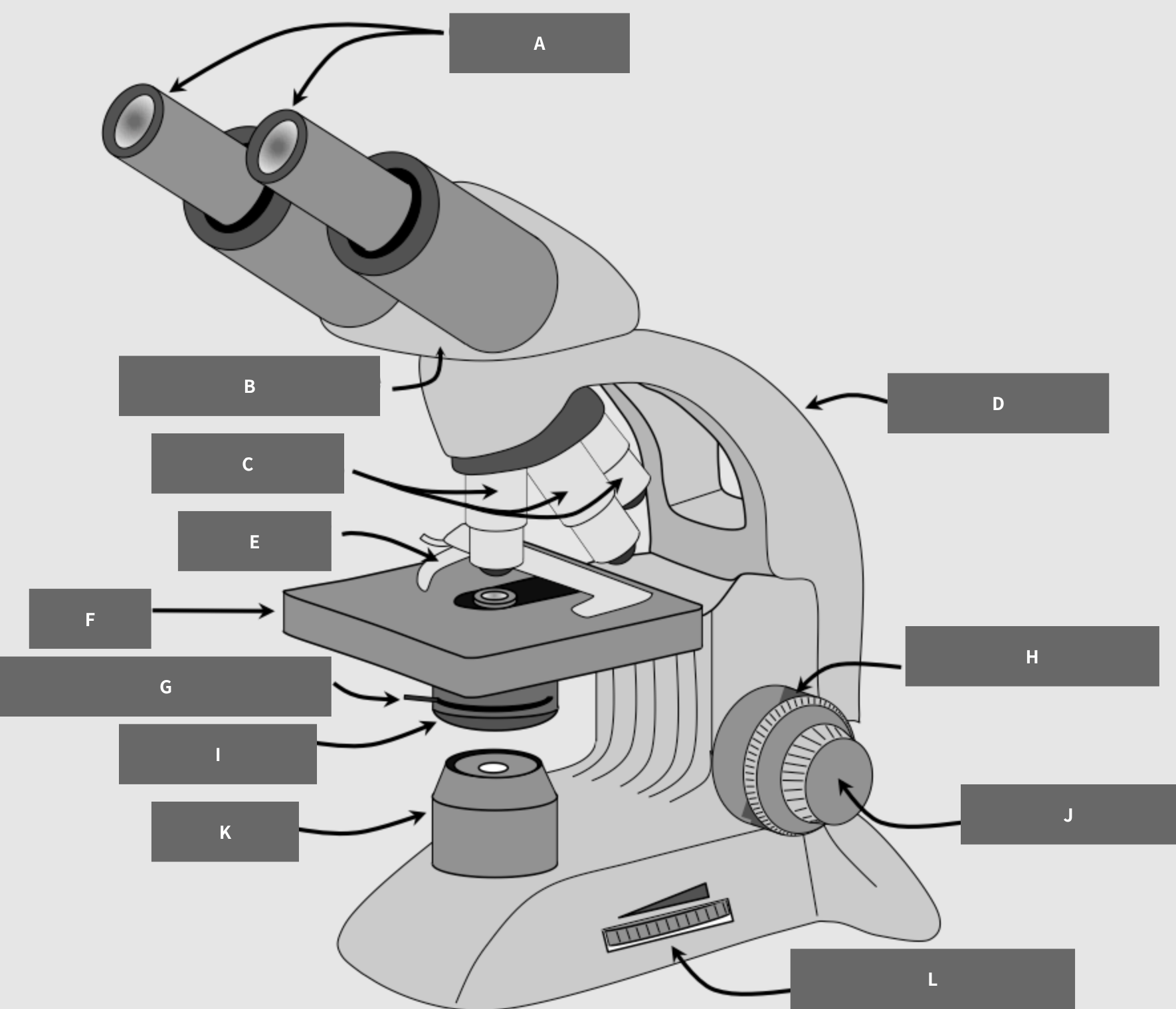
A, B, C
Ocular lenses, revolving nosepiece, and objective lens
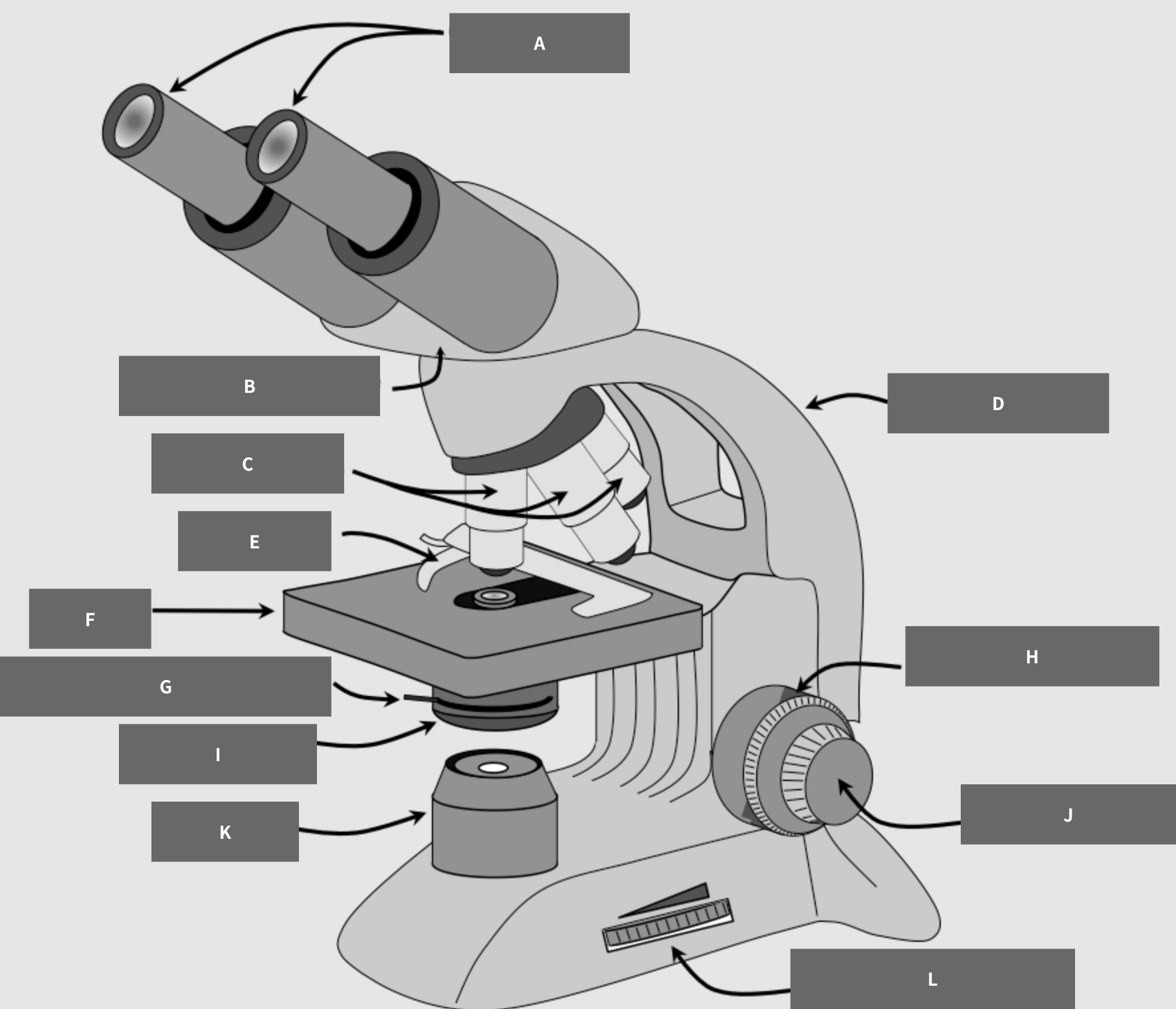
D, E, F
Carrying handle, slide holder, and stage
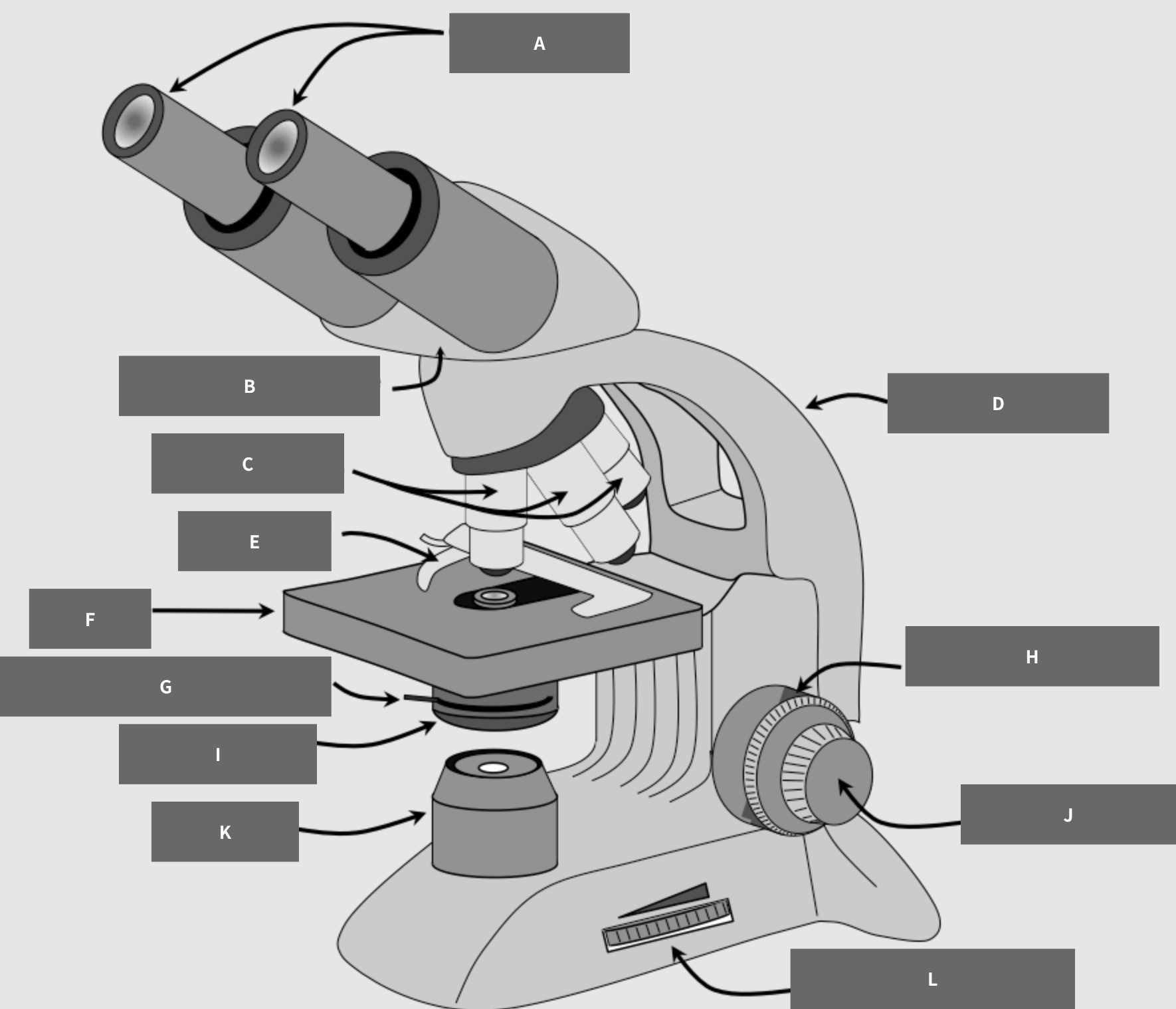
G, H, I
Condenser aperture lever, coarse adjustment, and condenser
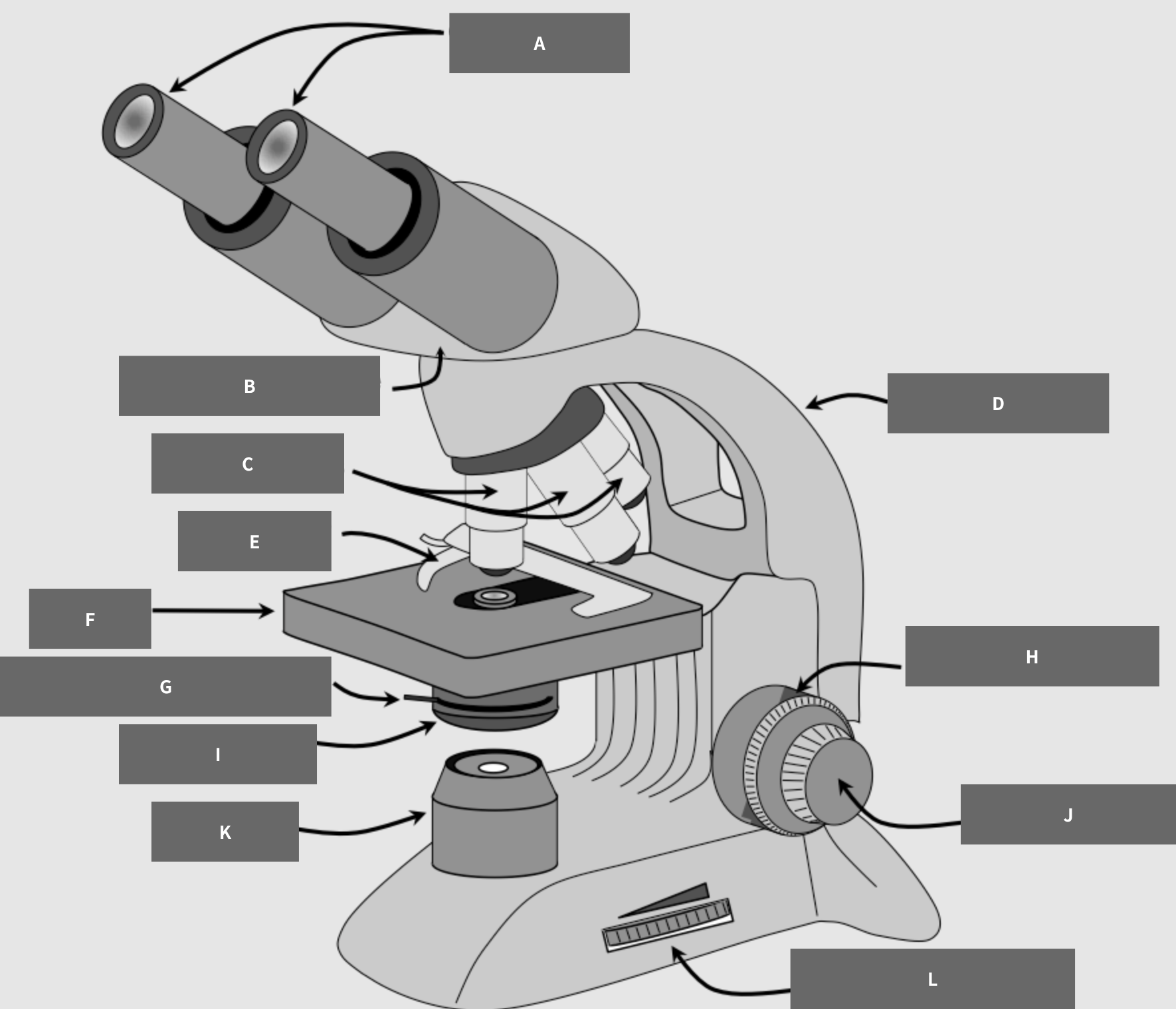
J, K, L
Fine adjustment, light, light intensity control