4.5.2 taxation
 Call Kai
 Learn
Learn Practice Test
 Spaced Repetition
 Match
Match Flashcards
 Knowt Play
1/14

There's no tags or description
Looks like no tags are added yet.
Name | Mastery | Learn | Test | Matching | Spaced | Call with Kai |
|---|
No analytics yet
Send a link to your students to track their progress
15 Terms
3 TYPES OF TAX
progressive
proportional
regressive
PROGRESSIVE TAX
where those who are on higher incomes pay a higher marginal rate of tax (pay higher % of income on tax)
direct taxes tend to be progressive(e.g. income tax)
PROPORTIONAL TAX
where proportion of income paid on tax remains the same whilst income of taxpayer changes e.g. 10% of income is spent on tax, regardless of income
Everyone pays same % of income on tax
REGRESSIVE TAX
where proportion of income paid in tax falls as income of taxpayer rises
those on higher incomes pay a smaller % of their income on tax
most indirect taxes are regressive
e.g. same rate of VAT- those on higher wages this represents a small proportion of their earnings compared to those on low wages
VARIABLES THAT CHANGES IN DIRECT AND INDIRECT TAXES AFFECT
incentives to work
tax revenues- the Laffer curve
income distribution
real output and employment
price level
trade balance
FDI flows
INCENTIVES TO WORK- NEGATIVE IMPACTS OF HIGH TAXES
high marginal rates of tax will discourage individuals from working (free market economists argue that supply of labour is elastic so decrease in marginal taxes on income will lead to a significant increase in work as individuals work longer hours and more people join the workforce)
high taxes on high income earners could encourage them to move abroad
taxes on poor may lead to poverty trap
high income tax reduces incentives more than high VAT- so switch from direct to indirect taxes may increase incentives
INCENTIVES TO WORK- EVALUATION OF NEG IMPACT
no definite evidence for link between income tax and incentives (e.g. nordic countries have high taxes but have similar rates of growth compared to lower tax countries like UK)
higher taxes mean people have to work longer hours in order to maintain their income and so even increases the incentive work
TAX REVENUES
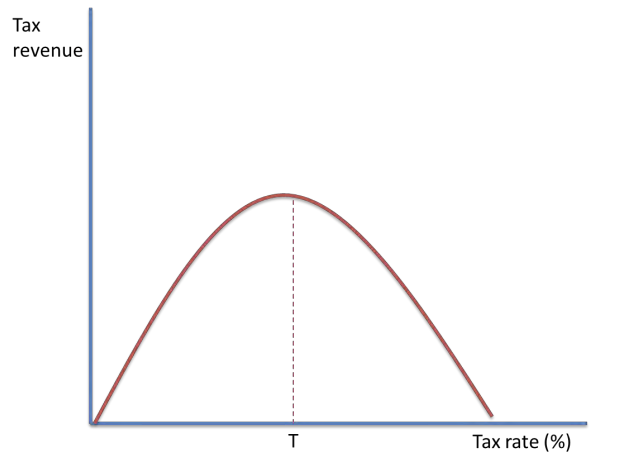
laffer curve shows how much tax revenue gov receives at each level of tax
up until ‘T’, as tax rates increase, gov tax revenue increases
after ‘T’, disincentive to work (may lead to tax evasion/avoidance) leads to falling tax revenue
‘T’ is the optimum tax rate where the gov can maximise their revenue
revenue from indirect taxes are uncertain as they depend on consumer spending
INCOME DISTRIBUTION
progressive tax will increase equality of income distribution as more money is taken from rich than from poor
regressive tax will decrease income equality
since direct taxes tend to be progressive and indirect taxes regressive, a move from indirect to direct taxes will improve equality
high corp taxes take money from shareholders and give to gov to spend on public and merit goods
REAL OUTPUT AND EMPLOYMENT
rise in direct taxes will reduce disposable income an individual has → cause a fall in their spending → fall in consumption and investment (less profits for firms) → fall in AD
higher indirect taxes increase costs for firms → decrease SRAS → impact will depend on where the economy is producing
can be argued that income taxes cause a disincentive to work and therefore reduce LRAS as the most skilled workers go overseas and more people become inactive (increase unemployment)
PRICE LEVEL
taxes can impact LRAS, SRAS and AD
so these changes will impact price depending on where economy is producing
indirect taxes often cause cost push inflation
TRADE BALANCE- POS IMPACT OF INCREASE IN TAXES
rise in taxes → decrease income → decrease consumption → spend less on imports
imports in UK are highly income elastic
so trade balance will improve in SR
TRADE BALANCE- EVAL OF POS IMPACTS
LR- lower AD → reduce businesses’ need to invest → reduce competitiveness → exports decrease
FDI FLOWS- POS IMPACT OF LOW TAXES
low taxes on profit in a country → encourage investment in that country since it will help them to see a higher level of return → increase FDI into that country
FDI FLOWS- EVAL OF POS IMPACT
problem with this is that it can be a ‘race to the bottom’- countries have to continue to lower their taxes to encourage investment
eventual result is a fall in revenues

