ceutics creams/ointments/gels
 Studied by 0 people
 Call with Kai
 Learn
Learn Practice Test
 Spaced Repetition
 Match
Match Flashcards
 Knowt Play
1/71

There's no tags or description
Looks like no tags are added yet.
Name | Mastery | Learn | Test | Matching | Spaced | Call with Kai |
|---|
No analytics yet
Send a link to your students to track their progress
72 Terms
____________ are semisolid preparations intended for external application to the skin or mucous membranes
ointments
_____________ is a semisolid dosage form containing 1 or more drug substances dissolved/dispersed in suitable base (w/o, o/w, wwb)
creams
_____________ are semisolid systems consisting of either suspensions made up of small inorganic particles or large organic molecules interpenetrated by a liquid
gels
which dosage form is a suspension rather than an emulsion
a. ointment
b. cream
c. gel
c. gel
t/f: ointments are used only for local effects
false. for both local and systemic effects
t/f: ointments with systemic effects should be considered if the patient is pregnant or nursing since drugs can enter fetal circulation
true
topical vs transdermal derm products
topical= skin is target organ
transdermal= systemic effects
types of non-medicated ointments
1. emollients (softening)
2. protective barriers (anti-dehydrants)
3. base or vehicle (ex: bulk materials)
4 types of semisolid ointment bases
1. oleaginous (hydrocarbon)- hydrophobic
ex: vaseline
2. absorption (largely hydrophobic, some water capacity)
3. water-removable (completely removed by water)
4. water-soluble (completely dissolves in water)
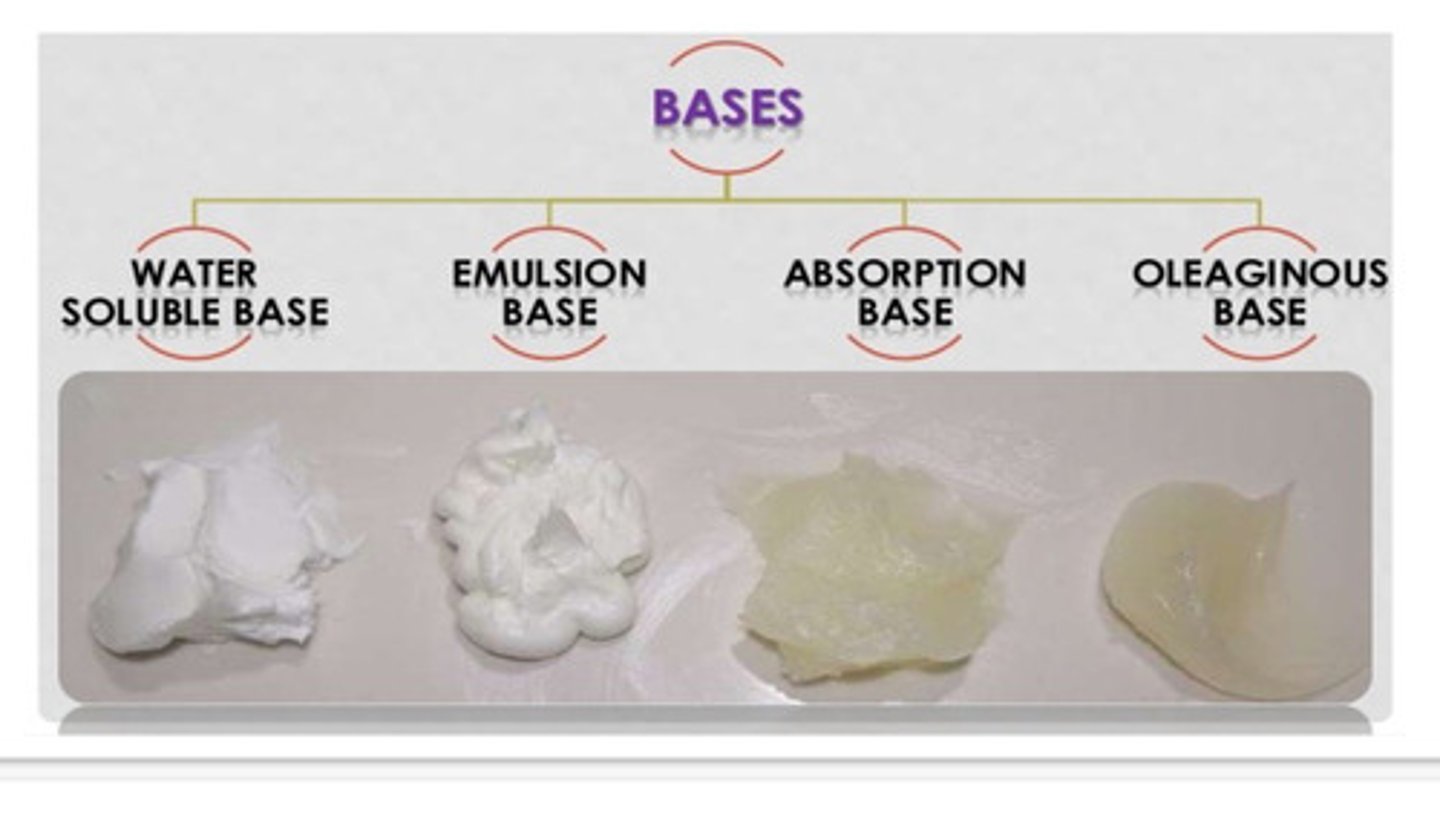
which semisolid ointment base has the largest emollient effect? why?
oleaginous base
decreases the escape of moisture bc remains on skin for long time without drying since water immiscible
oleaginous bases examples
petrolatum, white ointment, mineral oil
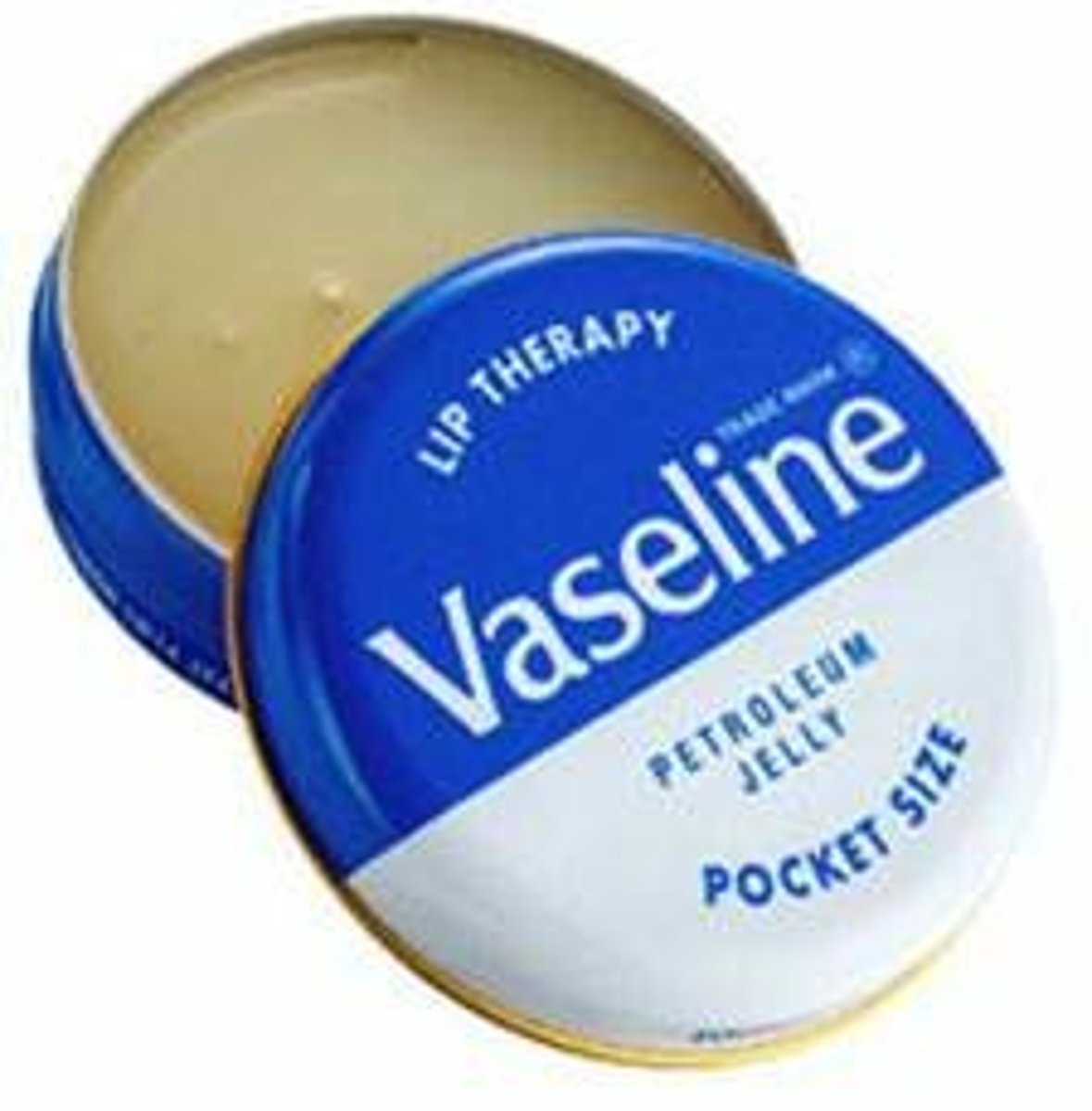
what type of semisolid base is vaseline? what is it also known as?
-oleaginous base
-yellow petrolatum, petroleum jelly
which semisolid base is made up of hydrocarbons?
oleaginous base ("oily")
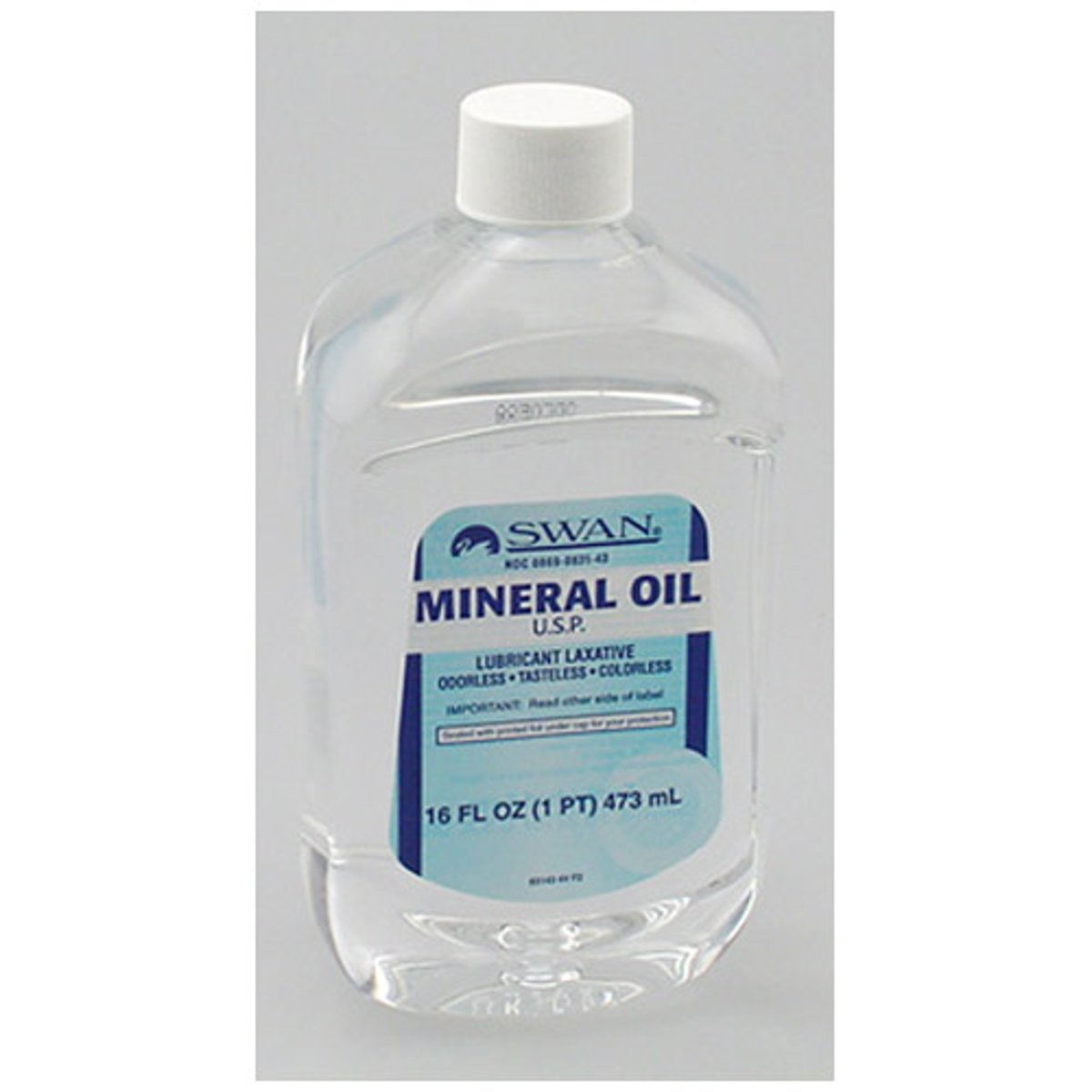
what levigating agent is used when powdered substances need to be incorporated into hydrocarbon bases
mineral oil (liquid petrolatum)
can absorption bases be removed with water?
no, not easily removed from the skin with water washing, because the external phase of emulsion is oleaginous
which semisolid base is used for w/o emulsification
absorption bases
2 types of absorption bases
1. emulsifiable base (HC): do not contain water but are designed to incorporate water to form an emulsion.
2. emulsified bases: already contain water as part of a W/O emulsion
emulsifiable base vs emulsified base examples
emulsifiable= hydrophilic petrolatum
emulsified= lanolin
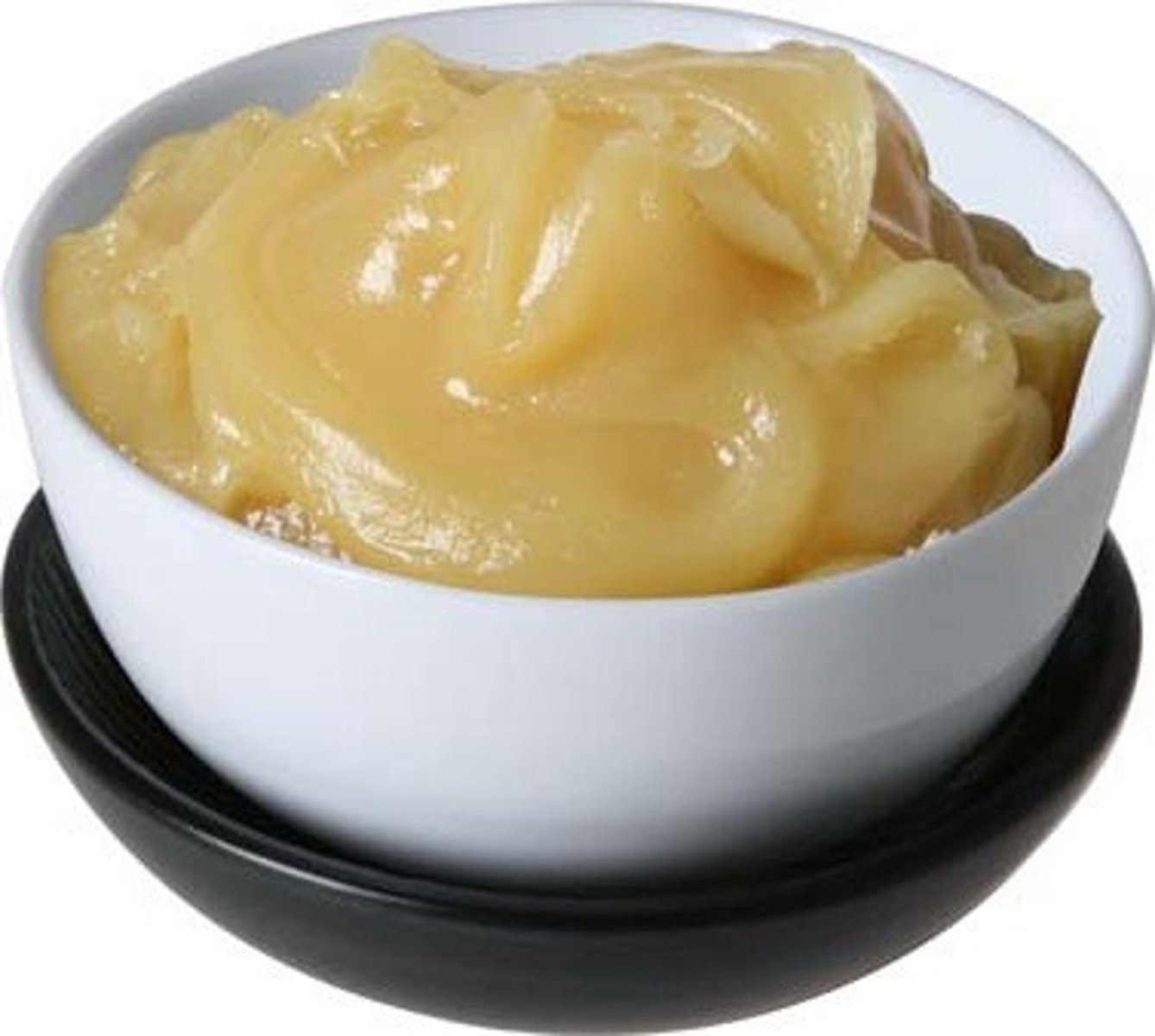
lanolin
oil from sheep wool (<0.25% water) (ex of emulsified base- absorption)
t/f: absorption bases form o/w emulsions
false. form w/o. oil is external phase= thats why theyre not easily washed from the skin
water removable bases
o/w emulsions resembling creams
- easily washed from skin since external phase is aqueous
t/f: water removable bases can be diluted with water or aqueous solutions
true. the external phase is aqueous
t/f: absorption bases can be diluted with water or aqueous solutions
false. they are w/o emulsions so external phase is oil
which semisolid base is used to absorb serious discharges
water-removable bases (o/w emulsions), pastes
water-soluble bases
- NO oleaginous components, "greaseless"
- completely water washable
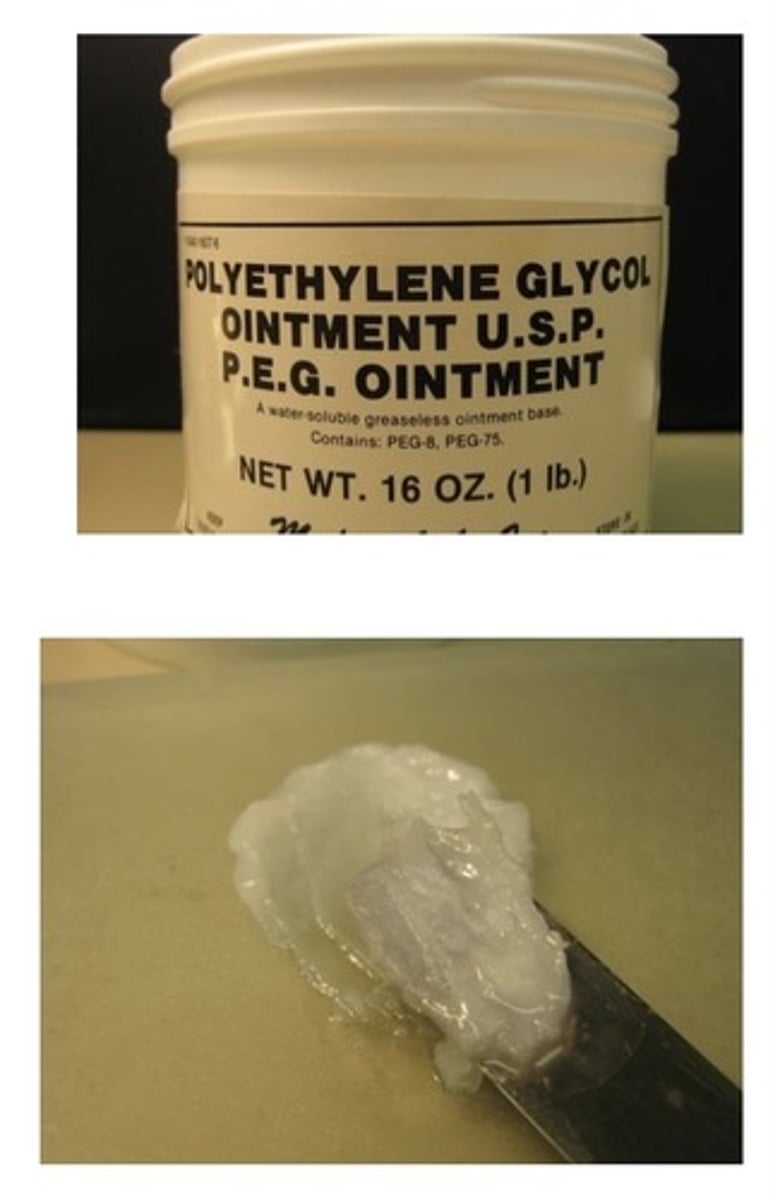
which semisolid base is used for the incorporation of solids
water-soluble bases
t/f: water soluble bases are completely water washable since only 10% of their composition is oil
false. they are completely water washable because they are completely hydrophilic. they do not have any oils
If 6 to 25% of an aqueous solution is to be incorporated into PEG ointment, replace 50g of PEG with ____________________
stearyl alcohol
which bases act as occlusive emollients?
oleaginous, absorption
which bases are greasy?
oleaginous, absorption
which base is anhydrous and can absorb some water
absorption
which bases are water washable
water-removable, water-soluble
which bases are nongreasy
water-removable, water-soluble
which base can be diluted with water
water-removable
which bases are non-occlusive (do not create barrier)
water-removable, water-soluble
which 4 factors contribute to the proper choice in base
1. action desired (release rate, topical? percutaneous?)
2. physical and chemical drug properties
3. bioavailability and stability
4. characteristic of surface its applied to
depending on the surface its applied to, when should you use
ointment:
cream:
lotion:
ointment: dry scaly skin
cream: weeping or oozing surfaces
lotion: intertriginous (skin rubs together)/ areas of friction
what would you apply on areas that rub together
lotion
what would you apply on an oozing surface
cream
what would you apply on dry scaly skin
ointment
2 ways to prepare ointments
1. incorporation/ levigation: dry powder + liquid physically mixed
2. fusion: melted together and cooled while mixing
requirements for ointments
1. microbial content
2. minimum fill
3. packaging, storage, labeling
also: sterility, metal particles content
3 types of cream bases
1. w/o
2. o/w
3. wwb (water washable base)
which cream bases can be removed with water
o/w and wwb
uses of creams based on area
-topical skin products
- rectal and vaginal (ease in spread and removal)
which dosage form is used for rectal and vaginal application? why?
creams-> preferred due to their ease in spread and removal
what is vanishing cream
o/w emulsion with HIGH water content
- humectant (preserves moisture)
- forms thin layer after water evaporates
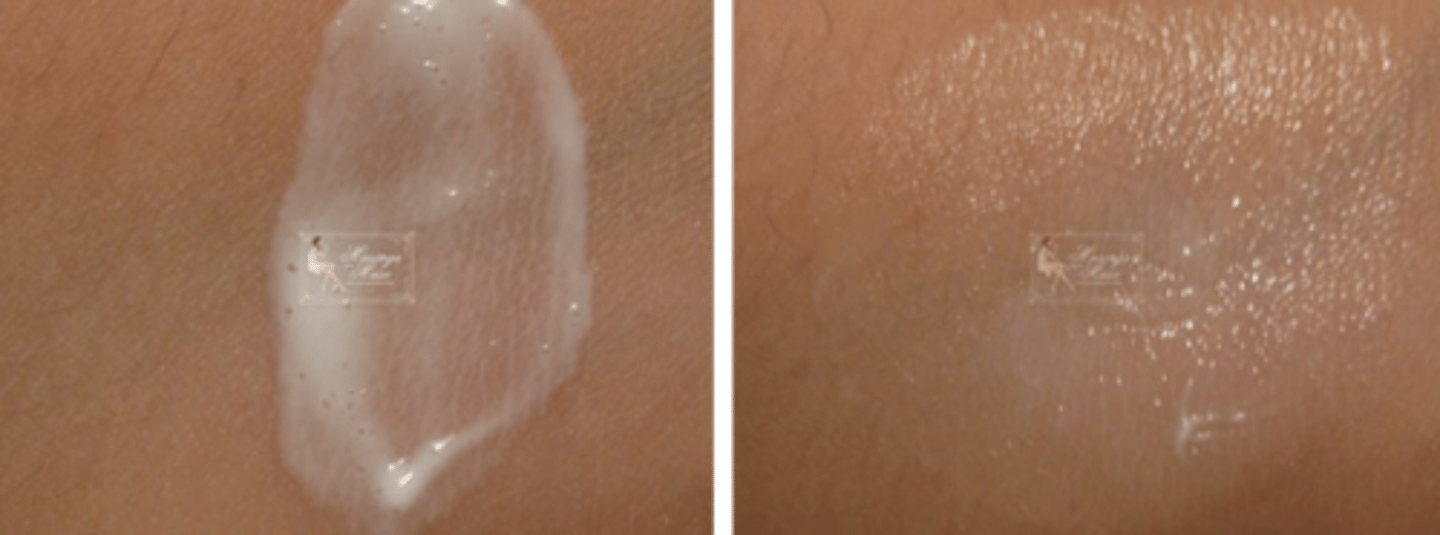
2 classifications of gels
1. single phase system
- has uniformly dispersed macromolecules in liquid (fused)
2. two phase system
- small floccules uniformly dispersed in gel matrix (suspension)
- magma
what is milk of magnesia magma an example of
gel 2 phase system
= gelatinous precipitate of Mg(OH)2
gels may thicken on standing, forming a _____________, and must be shaken before use
thixotrope
what is added to gels, creams, and ointments to deliver drugs transdermally
penetration enhancer
-DMSO, EtOH, PG, glycerin, urea, etc
DMSO, EtOH, PG, glycerin, and urea are all examples of
penetration enhancers
- used to give drugs transdermally
what are pastes
-semisolid dosage forms that contain 1+ drugs for topical application
- stiff; remain in place after application
- used to absorb serious secretions
which dosage form is used to absorb serious secretions bc of its stiffness, but is not compatible with hairy body parts
pastes
________________ are solid or semisolid adhesive masses spread on a backing of paper, fabric, moleskin, or plastic
plasters
why are plasters sometimes used over traditional dosage forms like gels or creams
adhesive masses provide prolonged contact at the site
describe the makeup of the skin surface
- film of emulsifies sebum, sweat, epidermal cells
- varies bc of sebum amount, washings, sweat evaporation
t/f: hair follicles and gland ducts can provide entry ways for drugs
true
how do drugs pass through the stratum corneum
diffusion
what does the rate of drug absorption through the stratum corneum depend on
drug Concentration
Aqueous solubility
o/w Partition coefficient
CAP
t/f: only drugs with aqueous solubility are good for stratum corneum penetration
false. substances with both aqueous and lipid solubility
t/f: the therapeutic effective drug concentration in the skin can be calculated based on pt
false. it is not known. treatment is based on qualitative measures which is why clinical efficacy varies
how would you counsel a pt on cream/gel/lotion use
1. clean affected area with soap and water-> dry
2. apply thin layer of medication with gentle pressure
3. unless specified, do not cover with bandage
4. if symptoms persist or irritation occurs, stop and talk to doc
t/f: in gels/ creams/ ointments use, allergic responses are fairly uncommon
false. they are common
non-derm topical applications of creams/gels/ointments
eyes, ears, nose, vagina
which dosage forms are used opthamically
sterile ointments and gels
for the eye, how do most drugs enter
simple diffusion through cornea conjunctiva and sclera
in addition to the regular ointment quality standards, what standards do ophthalmic have?
1. sterility
2. metal particle tests
t/f oleaginous bases increase the escape of moisture from the skin
false
absorption bases form ________ emulsions
w/o
water removable bases (select all that apply)
a. form o/w emulsions
b. resemble creams
c. form w/o emulsions
a,b
ointments used for transdermal application can be used to (select all)
a. achieve topical effect
b. deliver drug to circulation
c. deliver drug into skin
d. achieve systemic delivery
a,b,c,d (all)
 Note
Note  Flashcards (31)