GOLA examination flashcards
 Call Kai
 Learn
Learn Practice Test
 Spaced Repetition
 Match
Match Flashcards
 Knowt Play
1/285

There's no tags or description
Looks like no tags are added yet.
Name | Mastery | Learn | Test | Matching | Spaced | Call with Kai |
|---|
No analytics yet
Send a link to your students to track their progress
286 Terms
What legislation has the government implemented to improve safe working practices and welfare for workers?
The Health and Morals of Apprentices Act of 1802.
The Factories Act of 1833.
The Electricity (Factories Act) Special Regulations, 1908 and 1944.
What is the electricity at work regulations (EAWR)?
Created: 1st April 1989 (33 regulations)
What it does
Ensures electrical systems are constructed and maintained to prevent danger. It is the main electrical safety law in the UK. This is a statutory legislation.
Legal duties apply to
Employers
Employees
Self-employed persons
Affects
Any workplace with electrical systems
Key things to remember
Reg 4 : systems must be constructed to prevent danger.
Reg 13: Work on or near live conductors
Reg 14: Live working only when justified
Reg 16: Competence of persons
What is the building regulations - Part P (Electrical safety)?
Created: 2005 (18 main parts)
What it does
Ensures electrical installations in dwellings are safe. Requires electrical work to meet BS 7671 standards. This is a statutory legislation.
Legal duties apply to
Installers
Builders
Property owners
Affects
Domestic electrical work including:
houses
flats
gardens
outbuildings
Things to remember
Notifiable work:
New circuits
Consumer unit replacement
Work in special locations
Competent person schemes:
NICEIC
NAPIT
ELECSA
What is the health and safety at work act (HASAW)?
Created: 1974 (84 main parts)
Purpose
This is the main UK health and safety law.
It provides the framework for workplace safety legislation including the Electricity at Work Regulations. This is a statutory legislation.
Enforced by
The Health and Safety Executive (HSE)
Local authorities
Legal duties apply to
Employers
Employees
Self-employed persons
Manufacturers and suppliers of equipment
Who it affects
Anyone at work in the UK
Key thing to remember
Section 2 - Duty of employers to employees
Section 3 - Duty of others affected
Section 7 - Employee responsibilities
What is the Electricity safety, quality and continuity regulation (ESQCR)?
Created :2002 (35 regulations)
What it does:
Regulates electricity supply networks and distribution systems in order to protect the public and the consumer.
Covers:
earthing arrangements
supply characteristics
network safety
Legal duties apply to
Electricity distributors
Network operators
Affects
Supply companies
Installations connected to supply networks.
What is the provision and use of work equipment regulations (PUWER)?
Created: 1998 (37 regulation)
What it does
Ensures work equipment is:
safe
maintained
inspected
used by trained people
Legal duties apply to
Employers
Workplaces
Affects
Electrical equipment used at work.
What is the Management of health and safety at work regulations?
Created: Year: 1999 (27 regulations)
What it does
Requires:
risk assessments
safe working procedures
competent staff
Legal duties apply to
Employers
Affects
All workplaces including electrical work.
What is the Control of substances hazardous to health regulations (COSHH)?
Created: 1992
Last updated: 2002 (18 regulations)
What it does
COSHH requires that employers control exposure to hazardous substances both to protect employees and any others who may be exposed to such hazards from work activities. Statutory requirement.
Hazardous substances include:
chemicals
dust
biological agents
cleaning chemicals
battery acid
Legal duties apply to
Employers
Employees
Self-employed workers
Affects
Anyone working with or exposed to hazardous substances.
What is the work at height regulations?
Created: 2005 ( 17 regulations)
What it does
Prevents injury from falls when working at height.
Work at height includes:
ladders
roofs
platforms
towers
installing lighting
cable tray installation
Legal duties apply to
Employers
Self-employed workers
Anyone controlling work at height
Affects
All workers working at height.
Key principles (very important for exams)
Hierarchy of control:
Avoid working at height where possible
Use safe equipment to prevent falls
Minimise distance and consequences of a fall
Key exam points
Equipment must be inspected regularly
Workers must be trained
Work must be planned and supervised
What is the Lifting operations and lifting equipment regulations (LOLER)?
Created: 1998 (17 regulations)
What it does
Ensures lifting equipment is safe and properly inspected.
Examples:
cranes
hoists
lifting platforms
chain blocks
MEWPs
Legal duties apply to
Employers
People controlling lifting equipment
Affects
Workers using lifting equipment.
Key requirements
Equipment must be:
Strong and stable
Marked with Safe Working Load (SWL)
Thoroughly examined
What does PPE stand for and what are some examples of it?
Created: 1992
Updated: 2022
What it does
Requires employers to provide appropriate protective equipment where risks cannot be controlled by other means. This is a statutory legislation.
Legal duties apply to
Employers
Affects
Employees and workers.
What is the workplace (health, safety and welfare) regulations?
Created: 1992 ( 27 regulations)
What it does
Ensures workplaces are safe and suitable for workers. This regulation is statutory.
Legal duties apply to
Employers
People controlling workplaces.
Affects
All workplaces.
Key areas covered Workplace conditions
ventilation
temperature
lighting
Welfare facilities
toilets
washing facilities
drinking water
rest areas
Safety
safe floors
safe traffic routes
maintenance of workplace
What is the construction (Design and management) regulations?
Created: 1994
Current version: CDM 2015 (37 regulations)
What it does
The general provision of the regulations is to set out minimum standards necessary to promote safety on site. The regulations place specific duties on clients, designers and contractors to rethink their approach to health and safety, so that it is taken into account throughout the life of a construction project, from its inception to its subsequent final demolition and removal. These statutory regulations apply to all aspects of a construction site.
Affects
All construction projects in the UK.
Key exam points
Risk must be designed out where possible
A Construction Phase Plan must exist
A Health and Safety File must be produced
Equipment | Inspection |
|---|---|
Lifting equipment | Every 12 months |
Equipment lifting people | Every 6 months |
Difference between switching off and isolation.
And how many poles are single, three and four phase installations isolated by using.
Switching off may involve the breaking of normal load current or even higher current due to overload or short circuit.
Isolation is concerned with keeping the already dead circuit dead, so that re-closing the switch is not unintentionally possible.
A single-phase installation may be isolated using a double-pole device or a single pole device. An installation supplied with a three-phase or a four-wire system may be isolated using a three-pole or four-pole switch. A semi-conductor device, e.g. a dimmer, cannot be used for isolation.
What are all types of signs on a construction site?
Prohibition signs
Warning signs
Information signs
Mandatory signs
In the event of you discovering someone who has had an accident it is important that you check what?
Check for further danger to yourself and the casualty
Make an assessment of the casualty – are they bleeding, are they breathing, are they unconscious
Only move the casualty if it is really necessary;
for serious injuries the casualty should remain still until professional medical help has arrived
All accidents must be reported to the employer and details recorded into the accident book. To do so what do I need to record?
The date and time of the accident.
The details of what happened.
The details of the person injured.
The details of the injury sustained.
The details of any witnesses.
The name and signature of the person reporting the accident.
What to do in event of an electric shock.
Check your own safety. Ensure that you would not put yourself in any danger by helping the casualty.
Break the electrical contact by either switching off the supply, or removing the plug (if it is undamaged).
a) If necessary pull the cable free (only attempt this if the cable and plug, etc. are undamaged) or;
b) Break the contact by pushing or pulling the casualty free using non-conductive material, e.g. a wooden broom.
Check whether the casualty is conscious. If they are and it is possible, guide them to a safe place, making sure that further injuries are not sustained, e.g. banging their head falling down, etc.
What does the electrotechnical industry encompass?
It encompasses a number of specialisms which range from things like electrical maintenances and repairs to public lighting installations.
What does maintenance cover in the construction industry?
This covers the repair, refurbishment and restoration of existing buildings and structures.
What does civil engineering cover in the construction industry?
Civil engineering involves the construction and installation of services for large structures such as bridges, roads, motorways, docks, harbours and mines.
What does building and structural engineering cover in the construction industry?
This type of company broadly covers the construction and installation of services for buildings such as factories, offices, shops, leisure centres, hospitals, schools, and of course, houses. Specialist contractors are normally the people who operate in this field.
What are different types of specialist jobs for an electrician?
Highway electrical systems
cable jointing
electrical maintenance
Electrical machine drive installations
panel building
instrumentations
How a design stage works for projects?
The architect, consulting engineer, quantity surveyor and clerks of works are traditionally part of the architect’s design team.
In smaller firms, the client expects the electrician to ensure that the installation is properly designed and carried out.
In larger firms, they might have an internal architect team that makes things simpler and possibly cheaper.
What is a tendering process?
Tendering is the process by which a contractor works with the drawings and specifications issued by the consulting engineer and submits in writing, in competition with others, a total estimated cost for carrying out the work (i.e. materials, tools, equipment and labour).
What does an estimator do?
The estimator’s task is to calculate the total cost that will be given in the tender.
How can all types of information be stored?
Email (most used way)
Printers
Fax machine
Telephone
written messages ( hand written notes)
USB flash memory drives
Electronic file server
external flash drives
optical media (CDs)
microforms (stores images)
Printed materials (papers)
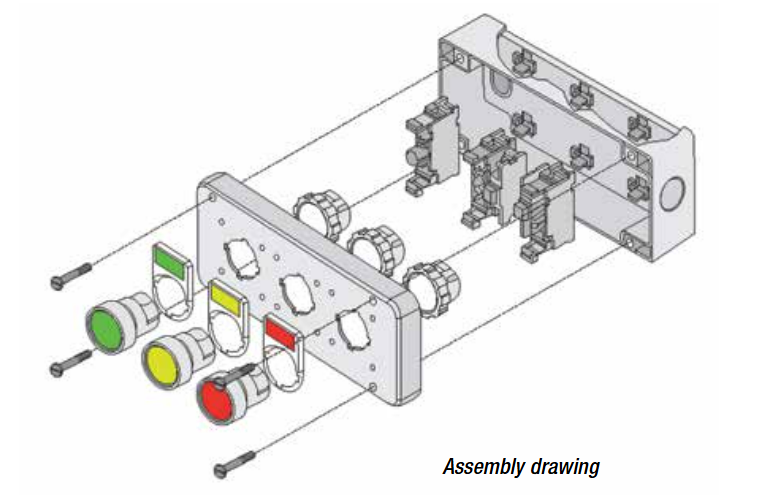
What is an assembly drawing?
Assembly drawings are technical drawings that illustrate how multiple components fit together to form a complete product or structure, showing the arrangement and relationship of parts
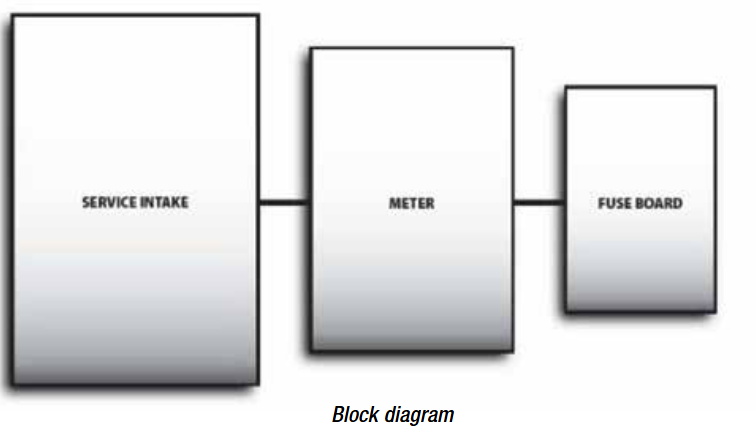
What is a block diagram?
A block diagram can be used to relate information about a circuit without giving details of components or the manner in which they are connected. In block diagrams, the various items are represented by a simple figure or symbol, such as square or rectangle, labelled to indicate its purpose.
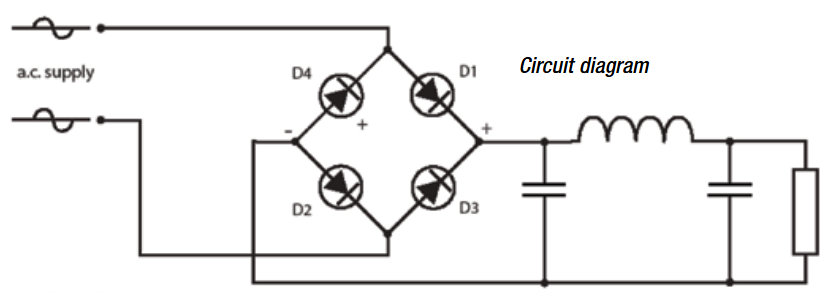
What is a circuit diagram?
Circuit diagrams use symbols to represent all circuit components and shows how these are connected. A circuit diagram should be as clear as possible and follow a logical progression route from supply to output. In all other respects, the circuit diagram cannot be regarded as a direct source of information. This is because it does not represent the physical outline of the circuit
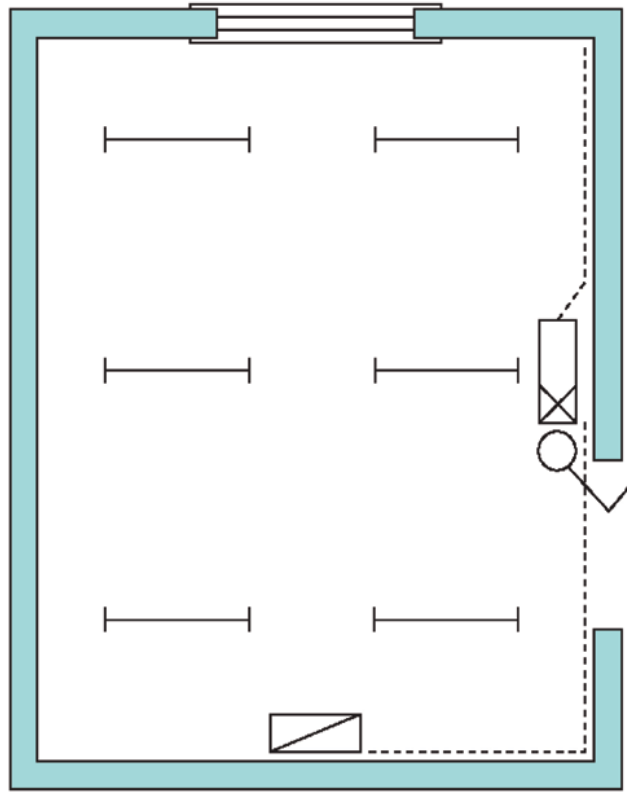
What is a lay out diagram?
They are often based upon architects’ drawings of the building in which the electrical system is to be installed. This type of drawing shows the required position of all equipment, metering and control gear, and they normally show the plan view of the installation.
Why is recording of drawing changes so important?
In an ideal world, every installation would exactly follow the architect’s, designer’s, or consulting engineer’s original plans. In reality, however, everyone knows that problems can occur which will mean that cables must be routed in another way, or conduit must be fixed in a different position. These changes must be recorded so that, in future, when maintenance or alterations are needed, the actual layout of the installation is known.
What is a schematic diagram?
These diagrams do not show precisely how to wire components but they do show how the circuit is intended to work. Schematic diagrams tend to be used for larger, more complicated electrical installations such as control systems for motor starters and heating systems (Like a standard circuit diagram with symbols).
What is a site plan?
A site plan will show the entire area that is being worked upon. In terms of a house, for example, the site plan would not just show a single room or a floor but the whole dwelling, including all the land and gardens up to and including the property boundary.
What is a Wiring diagram?
The physical layout is taken into consideration. The components and connections show a pictorial version of those found in the actual circuit. Wiring diagrams can be used to carry information of a specific nature relating to the connection or wiring of components.
How are manufacturers data and service manuals used?
Almost all equipment will be supplied with manufacturers’ fitting instruction and other technical data or information sheets. These should be read and understood. Occasionally you may need more details about an item. You can get this from the manufacturer’s catalogue or datasheets, website, or by speaking directly to the manufacturer. Once the installation of the item is complete, they should be kept safely in a central file then to be given to the customer once the installation is installed.
What is a Gantt chart used for and how does it work?
A Gantt chart shows jobs or activities (normally in one colour) and when it is due to happen and for how long it will take. Main contractors use this sort of chart as it shows when individual trades are coming into a site. Another line of colour can be added underneath the certain trade to show weather it is on time or behind schedule.
How do scales work when designing?
Layout, assembly and site drawings give information about physical objects, such as the floor layout in a building, or a mechanical object. If the drawing were the same size as the object, the drawings would often be far too big to handle.
To find a measurement on the actual physical object, you measure the distance on the drawing and multiply it by the scale.
1:100 means in reality the object is 100 times bigger than on paper. Where as, 100:1 means the object is magnified 100 times bigger on paper than in reality. Any types of units can be used.
What must scaffolding that is built to a height greater than 2 m have?
Toe boards and guard rails
Actual full-size measurements calculated by taking measurements from the drawing and multiplying them by?
100
What is the difference between schematic and circuit diagrams?
A schematic diagram focuses on the logical function of an electrical circuit, showing how components are connected and how the circuit is supposed to behave.
A circuit diagram, on the other hand, is a more detailed representation that includes the physical layout of components and wiring, including specific wire colours.
Ways of taking precautions for risks.
If you take just a moment to think about what you are doing, or are about to do, you will find that you can avoid most potentially dangerous situations. Another of the most effective ways to reduce the risk of accidents is to try to remove the cause, such as storing conduit horizontally and locked away. Reporting potentially hazardous situations to your supervisor will be affective.
What are the important things to ask when looking for hazards for a risk assessment?
What are the actual and/or potential hazards?
Are these hazards significant?
Are the hazards covered by satisfactory precautions so that the risk is small or should new or revised precautions and/or procedures be put in place?
What is a hazard and a risk?
A hazard can be defined as: anything that can cause harm (e.g. working from ladders or scaffolding, substances such as asbestos, chemicals, electricity, etc).
A risk can be defined as: the chance, high or low, that somebody will be harmed by the hazard.
Step 1 of carrying out a risk assessment.
step 1 is looking for hazards.
Take a walk around the workplace. Look at what could reasonably be expected to cause harm. such as faulty electrical connections, damaged cables, materials that are ejected from machines and pressure systems. Also check with your employees, as they may have noticed things that are not immediately apparent to you.
Step 2 of carrying out a risk assessment.
Step 2 is decide who might be harmed and how.
Apprentices and trainees, young workers, new and expectant mothers etc., who may all be at particular risk. Visitors, contractors, cleaners, maintenance workers, etc., who may not be in the workplace all the time. All of these and more could be harmed.
Step 3 of carrying out a risk assessment.
Step 3 is evaluate the risk.
Evaluate the risks and try to decide if the precautions that may already be in place are adequate or if more should be done. Assess how likely it is that each hazard could cause harm. This evaluation and assessment will determine whether or not more needs to be done to reduce the risk. However, you must accept that even after all reasonable precautions have been taken, some risk usually remains.
Step 4 of carrying out a risk assessment.
Step 4 is to record your findings.
If you have 5 or more people in employment you must record any significant findings in your assessment, this means writing down the hazards and conclusions. You must also tell your co workers of this as well as keep the sheet in a safe place as it can protect you from a civil liability.
What you must record is: A proper check was made, you asked who may be affected, all the obvious significant hazards were dealt with, taking into account the number of people who could be involved and the remaining risk is low and the precautions taken are reasonable.
Step 5 of carrying out a risk assessment.
Step 5 is to review your assessment.
Sooner or later the existing situation will change. You will bring in different substances or procedures, or new machines that could lead to new hazards. If there are any significant changes, these should be added to the risk assessment to take account of the new hazard. However, if a new job introduces significant hazards of its own, you will want to consider each of these in their own right.
What causes most slip, trips and falls in the work place.
Most slips, trips and falls come from either lifting and handling, or working at heights. More than a quarter of all work related accidents are connected to manual handling.
Most causes can be due to:
Fluids spilt on the floor
Polythene sheeting that may be left lying around
Projecting scaffolding poles and other objects
The plastic strapping from around bricks or other packaging
Trailing cables (one of the most common causes of trips)
Checks before lifting loads.
Before you lift any load you should always make the following checks:
Assess the weight, size and shape of the load.
Has it got sharp edges?
Is there somewhere you can put it down, either on route or when you get there?
Is the route free of obstructions?
Will the load fit through the doors and are the doors open?
What is a time sheet?
Timesheets are very important to you and your company. These are the permanent record of the work done on a site and include details of:
Each job
Expenses
Overtime
Travelling time
The information on the time sheet allows the company to track its costs and to make up your wages. If you work on several sites over the course of a week, you may need to fill in a separate timesheet for each job.
What is the purpose of a job sheet?
Some electrical contracting companies issue job sheets to their electricians. These job sheets provide detailed information about a job to be done. Job sheets frequently require the customer to sign them to indicate that the work has been done. Usually they will include:
A clear description of the work to be carried out
Any special instructions or special conditions (e.g. pick up special tools or materials)
The customer’s name and address
What is the purpose of a variation order (VO)?
The purpose of the VO is to record the agreement of the client for any extra work to be done, as well as any change that this will make to the cost and completion date of the project. A variation order is issued when the work done is different, or varies, from the original work agreed in the contact and listed in the job sheet. This is done so the terms of the previous contract aren’t broken.
What is the purpose of a day worksheet?
Work that is done outside the original scope of the contract, perhaps as a result of a variation order initiated by the architect for example, is known as day work. Day work sheets are usually quoted at a higher price and need to be signed of by the client.
It is important that the installation team who are on site record any extra time, plant and materials that may be used when doing day work. Once work is completed, completed day work sheets need to be taken to a office receipt.
What is the purpose of a purchase order?
Before a supplier will send out any materials or equipment, they will require a written purchase order. The purchase order should include details of the material, quantity required, and may (sometimes) specify a particular manufacturer.
The purchase order may also specify a delivery date and address. Purchase orders may be created from phone calls, emails websites etc,. A conformation code will be sent to the client right after.
What is the point of a delivery note?
Materials delivered directly to a site will arrive with a delivery note. The delivery note should contain the following information:
A list of the type, quantity and description of any materials that are being delivered in this particular load
The name of the supplier
The time period allowed for claims for damage
Who the materials are being sent to
When materials arrive on site you should make sure you try to do the following:
Check each item against the delivery note.
Check for obvious signs of damage.
Ensure that they are unloaded and stored correctly.
What is the purpose of a site report?
Site reports contain details of work progress, defects, problems and delays and most companies require regular reports about the progress on site. Sometimes additional reports on particular problems or incidents will be made and such reports may enable the company to:
Provide evidence when they make claims for progress payment
Spot problems that keep being repeated and take action to eliminate them
Take prompt action to avoid any difficulties that may be building up
Site report memo is usually short and brief, normally about a single issue such as materials not being delivered on time or a particular safety issue.
How scaled drawings work
Scale drawings are used for planning and preparing an installation. Scaled drawings use fixed ratios, for example 1:150. This would mean that every 100 mm on the drawing is 150 times bigger in reality. Scaled drawings can therefore be used to plan detailed installations in advance.
How to take recording in-site measurements for materials for a job.
When you arrive on a site to take measurements it is always best to carefully record them in a notebook, and keep this safe. If you measure incorrectly or forget the measurement It could mean that you order too much or too little material. That is why its best to write down the measurements and to keep it safe.
If you are required to carry out measurements on site, there are a number of tools that you can use to help, such as long measuring tapes and laser distance measurers.
How to prepare a materials list for a new project.
If you are working for a large contractor you would probably be able to order the materials needed from a central store. If not, then you could order them directly from a local wholesaler. In either case, the process of working out what you need is exactly the same.
The first thing to do is to get a copy of the layout drawing. As it would be a scaled down drawing it is possible to take measurements from the diagram and work out the actual dimensions of the building, so that you can prepare a materials list for the job.
Step 1: Count up all the major pieces of equipment needed
Step 2: Decide the best runs of conduit and trunking
Step 3: Calculate lengths of trunking, conduit and cable required
Step 4: Include accessories, fixings, etc.
Step 5: Consider special access equipment like a ladder.
How does an AC generator work?
AC generators produce electricity using magnetic induction. As a magnet (or magnetic field) rotates around a coil of wire, the magnetic lines of flux are “cut” by the conductor, which induces an electromotive force (emf). The maximum emf occurs when the coil cuts the maximum number of flux lines, typically at 90° to the magnetic field. As the coil continues to rotate, the induced emf decreases to zero when the coil is parallel to the flux lines. This completes a positive half-cycle. When the rotation continues, a negative half-cycle is generated. Plotting this emf over time produces a sine wave, which is the characteristic output of an AC generator.
What is known as the voltage measurement from positive to negative peak?
Its known as the peak to peak value.
What are hertz and what is the equation for this?
When one cycle of emf is generated with one complete revolution of the loop over a period of one second, then we would express this as a frequency of 1 Hz. The frequency of the waveform is equal to speed of the loop’s rotation.
Frequency (f) = Number of revolutions (n) x Number of pole pairs (p)
If this is applied to the simple AC generator we looked at earlier, and the loop is rotated at 50 revolutions per second, then:
Frequency = 50 x 1 (there is 1 x pole pair) = 50 Hz
What does periodic time mean for a wave form and what is the equation for this?
Periodic time or period means he amount of time it takes to complete one cycle of a wave from.
Therefore, if 50 cycles are produced in one second, one cycle must be produced in a fiftieth of one second. This relationship is expressed using the following equation:
Periodic time(T)= 1/frequency = 1/f
Formula for heat produced in a DC current.
You know that when current flows into a resistor, heat is produced. When direct current is flowing in a resistor, the amount of electrical power converted into heat is expressed by the formula:
P = i2 x R or P = V x I
What is a emf?
Electromotive force (EMF) is the electrical energy supplied by a source per unit charge that drives current around a complete circuit. It represents the potential difference produced by the source that provides the “push” needed to move electrons through a conductor. EMF can be produced by different types of energy sources. For example, batteries generate EMF through chemical reactions, generators produce EMF when a conductor moves through a magnetic field (electromagnetic induction), and solar cells create EMF by converting light energy into electrical energy. Regardless of the source, EMF is measured in volts (V) and represents the energy available to move electric charge through a circuit.
How is the root mean square (RMS) or the effective value of a waveform (voltage and current) is calculated?
In DC circuits, RMS is calculated by simply multiplying the voltage and the current. Where as, AC circuits are a little difficult as the voltage never stays the same.
Take as many instantaneous values (value of voltage or current at a specific point in time) in a half cycle. This can be done by sinø X peak = instantaneous vaule.
Do this as many times as you can and square each value you have. (the more you can divide the values, the more accurate the RMS will be). Then add all the values together and divide that figure by the total values you recorded.
Finally, find the square root of the final value. This final value is what is known as the RMS value. Dividing the square root by 2 is the equivalent to roughly 1.414 or multiplying by 0.707
Vrms = V peak x 0.707
Irms = I peak x 0.707
How to use the heating affect method for an AC circuit.
If a DC alternator heats up a resistor in a circuit to 100 degrees, then a AC alternator will only heat it up to 70.7 degrees. This is expressed using the formula:
Heating affect of 1A maximum AC = 70.7 = 0.707
Heating affect of 1A maximum DC = 100 = 0.707
Imax = Irms x 1.414 is the equation to find out how much heat is produced from a resistor in an AC circuit.
Why does a DC alternator produce more heat than a AC alternator?
Because DC stays at a peak voltage the entire time, where as the AC alternator peaks for a very short amount of time.
Why do generators use electromagnets instead of permanent magnets?
They use electromagnets because by changing the direction of current flow the poles of the electromagnet can be reversed. And by adjusting the amount of current flowing through the wire, the strength of the electromagnet can be controlled.
How can a DC motor be reversed?
By reversing the direction of the current through the armature. This is normally achieved by reversing the armature connections only and is the easiest way. Reversing the direction of the current through the field, thereby changing the field polarity.
How is a DC series motor constructed and what is it best suited for?
The series motor is also called a universal motor because it can be used in both DC and AC situations. It has the field coil wired in series with the armature which gives it a high starting torque (rotational force) and also means it has a variable speed characteristic. This type of motor is good at starting heavy loads, but the speed will increase as the load is decreased.
How is a shunt motor constructed and what is it best suited for?
The shunt motor has the armature and field circuits wired in parallel, and this produces constant field strength (magnetic field generated) and motor speed (the rate at which the motor spins), although the speed can still vary with load changes.
How is a compound motor constructed and what is it best suited for?
The compound motor combines the characteristics of both the series and the shunt motors. This means that it has high starting torque and reasonably good speed torque characteristics. However, because it is complex to control, this particular arrangement is usually only used on large bi-directional motors.
Why did AC generators become the main choice?
Transformers make it easy to adjust AC to a higher or lower voltage very efficiently. This is useful, because transmitting at high voltage reduces current and power loss and allows the use of smaller cable sizes, lowering costs.
Good AC motors (and generators) are easier and cheaper to build and maintain than good DC motors.
How does a relay work?
A relay is an electromechanical switch that uses an electromagnet to create a magnetic field to open or close one or many sets of contacts.
Control a high-current circuit with a low-current signal, as in all the lights in a theatre auditorium or of a leisure centre being controlled from a single 5 amp switch in the foyer or reception.
Control a high-voltage circuit with a low-voltage signal, as in some types of modem.
Control a mains-powered device from an extra low-voltage switch.
What are the things to consider when choosing the correct relay?
Contact arrangement - The contact geometry indicates how many poles there are, and how they open and close.
Coil voltage – this indicates how much voltage (e.g. 230 V, 24 V ) and what kind (AC or DC) must be applied to energise the coil. Always make sure that the coil voltage matches the supply being fed into it.
Contact ratings – this indicates how heavy a load the relay can run
How a Low pressure mercury lamp is constructed and how it produces visible light?
Its basically a glass tube having a filament at each end, with the tube filled with low pressure mercury vapour and a mix of additional gases such as krypton or argon. The inside of the glass tube has a phosphor coating and at each end there is a sealed set of oxide-coated electrodes, known as cathodes. In use, an ark forms causing the ionisation of the mercury gasses emitting ultra violet light.
This in turn excites the tubes phosphor coating and converts it into visible light. A choke or a transformer is used to give a quick initial charge of voltage to activate the lamp but then decreases to maintain the light.
What is colour appearance for a lamp?
This is the actual look of the lamp. The two ends of the scale are described as warm and cold. These extremes are related to temperatures: the higher the temperature, the cooler the lamp.
This is important for the overall effect, and generally warm lamps are used to give a relaxed atmosphere, while cold lamps are used wherever efficiency and business-like attitudes are a priority.
What is colour rendering for a lamp?
This describes a lamp’s ability to show colours as they truly are. This can be important depending on the building usage, such as a art gallery or a museum. The rendering of colour can also affect people’s attitude to work etc.
What should site members do for visitors when they visit a site that don’t have facilities?
Brief the visitor on site safety
Check the reason for the visit
Check the validity of the visitor
Establish whom they wish to see
If a request is made that is beyond your authority, contact an authorised person
Issue an identification badge if necessary
Issue them with a hard hat and high visibility jacket if necessary
Log their arrival time and departure time
Receive visitors in a manner that fosters goodwill
General guidelines fore safe working practising and storing
Check that the plugs and cables of hand-held power tools are in good condition.
Replace frayed cables and broken plugs.
Electrically powered tools must be PAT certified in accordance with your employer’s procedures and HSE guidance.
Ensure handles are properly fitted and secure, and free from splinters.
Keep cutting tools, saws, chisels, drill bits, etc. sharp and in good condition.
What are the 2 main types of insurance and what are they?
Public liability insurance - covers an employer for claims made against it by members of the public or other businesses. While public liability insurance is generally voluntary, employers’ liability insurance is compulsory. Employers can be fined if they do not hold a current employers’ liability insurance policy that complies with the law.
Liability insurance - It is a legal requirement that all employers carry liability insurance. Employers liability act of 1969 ensures that employers have at least a minimum level of insurance cover (£5 million) against any such claims. If the business is apart of a group then the group must be covered for at least £5 million.
This insurance is enabled to cover the cost of compensation from any illness or injury on or off from work except from motor car injuries. When an employer makes a claim, they must make sure they did not violate any of the circumstances in the contract.
Surrounding conditions where electrical accidents can become greater
Damp/wet surroundings, such as construction sites, where unsuitable equipment can easily become live and make its surroundings live.
Outdoors, where equipment may not only become wet but may be at greater risk of damage.
cramped spaces with a lot of earthed metalwork, such as inside a tank, where if an electrical fault were to develop it could be very difficult to avoid a shock.
Where items of equipment are involved in greater risk than others.
Extension leads are particularly liable to damage:
- To their plugs and sockets
- To their electrical connections and to the cable itself
Other flexible leads, particularly those connected to equipment that is moved a great deal, can suffer from similar problems
Safety precautions so that electrical installations are safe.
Install new electrical systems to a suitable standard, e.g. BS 7671 Requirements for Electrical Installations, and then maintain them in a safe condition.
Check electrical equipment used in flammable/explosive atmospheres. It should be designed to stop it from causing ignition. You may need specialist advice.
Choose and use equipment that is suitable for its working environment.
Ensure that equipment is safe when supplied and maintain it in a safe condition.
Existing installations should also be properly maintained.
If the plug is not the moulded-on type, ensure that all the wires are properly connected to the correct terminals in the plug top.
Provide an accessible and clearly identified switch near each fixed machine to cut off power in an emergency.
Regularly inspect and test portable electrical equipment (PAT ).
Replace damaged sections of cable completely.
Risks can sometimes be reduced by using air, hydraulic, hand or battery-powered tools. These are especially useful in harsh conditions.
Use RCDs to protect equipment outside the equipotential zone
Best ways of reducing the risk of injury when using electrical equipment
One of the best ways of reducing the risk of injury when using electrical equipment is to limit the supply voltage to the lowest needed to get the job done. For example:
Temporary lighting can be run at lower voltages, e.g. 12, 25, 50 or 110 volts.
Where electrically powered tools are used, battery-operated ones are safest.
Portable tools are readily available that are designed to be run from a 110 volt centre-tapped-to-earth supply.
Checks for when using a hire company for equipment
check that any hire company you may use operates a proper system of Preventive Plant Maintenance, as well-maintained plant and equipment is less likely to break down, will emit fewer pollutants, and will help prevent spillage of oil and fuel to the environment site because if it brakes whilst its your responsibility, you will have to pay for the costs.
What are the two types of specifications?
A specification is an explicit set of requirements to be satisfied by a material, product, or service, as detailed by the end user (the client).
Section 1: General specification
This section will give general information about an installation’s circumstances. This could include things like the wiring systems, enclosures and equipment. It may also give generic requirements applicable to any project issued by the consulting engineer.
Section 2: Particular specification
This section is where you would find any specific details about the project being tendered for. For example, Section 2 may say that for this job the installation will be carried out in over braided flexible conduit to provide EMI/RFI shielding. If there are no specific conditions that apply to the project, then the contractor would need to see what the consulting engineer’s general requirements are; this information would be contained.
How Manufacturers’ data sheets and manuals should be used
Almost all equipment will be supplied with some form of fitting and installation instructions and may also have other technical data or information sheets. These instructions and data sheets should be read and understood before attempting to fit the item concerned.
Once an item is installed, any manuals, data sheets, etc., should be kept safely and given to the customer in a handover manual when the project is completed.
Who are the main people reports and schedules are for?
Technical information will need to be communicated to all of the people working on an installation or work site, and there are several key individuals who need to be involved and consulted in the use of such technical information. The correct interpretation and use of technical information is vital for the successful completion of a job.
Operatives (trades people), Supervisors, Contractors, Subcontractors, Site agents, Clients.
What is a report writing for?
Reports usually describe the process of an investigation, or perhaps a problem. The purpose of a report is to inform an individual, or a team, enabling them to make informed decisions by presenting all the relevant facts. A report may also include some recommendations for action. In a construction project, a report may be needed for many reasons, e.g.:
A description of an equipment installation problem
An explanation of why there is an attendance problem on site
An investigation into the different ways of solving a problem (with perhaps recommendation for action)
Any progress made since the last report
Who writes report writing?
Often a report is requested by someone who needs more information about an issue, while at other times a report may be written by someone who has information to share. It is important that what you are trying to write is clear and straight to the point. Many companies will have a certain structure they must report in.
What are site diaries (like a daily record)?
As a project develops, more labour force, tasks and work areas will increase. This will make it more difficult for the person in charge to control. Circumstances like these are where a site diary as like a daily record is needed. Typically a site diary should be used to record things such as:
Both official and unofficial meetings, including their dates and times
The details and dates of any actions that needed to be taken
Any staffing issues
Details of any discrepancies in deliveries and action taken
Agreed variations
What is critical path analysis?
Whilst on a project, you will realise that everything can not be completed at once (walls need to be built before the roof). We then need a way to organise how a project should develop. Critical path analysis (CPA) was a technique developed in the 1950s to control large construction and maintenance projects, and has been used routinely in many industries since then.
The first step in constructing a critical path network (CPN) is to list all the activities, what must be done before they can start (the sequence), and the expected time required for each task to be completed. It is worth noting, however, that in many projects there will be some activities that are not on the critical path.
How a critical path analysis diagram is laid out
This diagram has a circular start of activity event (1) with an arrow going left to right to end of activity event (2). above the arrow there is an activity description (A) and below the arrow there is the time required. A dummy activity is used when there are more than one activity happening at the same time. This can be shown by a second arrow from start activity event A pointing to activity event end B (3) then with a dotted line back to end activity event A (2). This and end of Activity event B(3) can both have another activity stemming from it. The total project time is the longest path of days to end activity event.
Who is the person responsible for issuing job sheets and time sheets on site?
The contract supervisor.
How production of energy in a polyphase system works (power station)
Most electricity in the UK is produced in power stations by an alternator rotates to generate electricity. In the majority of cases, by water that’s heated until it becomes high-pressure steam.
As it rotates the it produces an alternating voltage (AC). The speed of rotation of the generator determines the frequency. In the UK, generators are controlled to rotate at a speed that produces 50 cycles per second
Volt drop formula
Vd = I x R
Therefore, if a supply cable was carrying a current of 2000A and the resistance of the cable was 2 Ω, then 4000 volts would be dropped over the length of the supply cable. It can be seen then that transmission at low voltage values with high currents would mean the installation of very large cables and switchgear indeed.
What is the national grid?
The National Grid is a network of nearly 5000 miles of overhead and underground power lines that link power stations together. This network is interconnected throughout the country.
The transmission network transports electricity from generation units to distribution companies and a small number of large industrial customers. The distribution companies then deliver electricity to the majority of customers through lower voltage networks. It is done this way so that if a problem occurs from one power station or line, power can flow from another. Electricity is transmitted around the grid, mainly via steel-cored aluminium conductors which are suspended from steel pylons
The cost of installing cables underground is excessive.
Air is a very cheap and readily available insulator.
Air also acts as a coolant for the heat being generated in the conductors.

