9th Grade Honors Bio
 Studied by 12 people
 Call Kai
 Learn
Learn Practice Test
 Spaced Repetition
 Match
Match Flashcards
 Knowt Play
1/198

There's no tags or description
Looks like no tags are added yet.
Name | Mastery | Learn | Test | Matching | Spaced | Call with Kai |
|---|
No analytics yet
Send a link to your students to track their progress
199 Terms
8 characteristics of life
Order, sensitivity to environment, reproduction, adaptation, homeostasis/regulation, growth, energy, evolution (old socks roam away from home to grow exceptionally eager)
Order
Highly organized, hierarchy. Ex: atom, smallest and most fundamental unit, then molecule, then cell, then cell organelles
Sensitivity to environment
React to environment and things within environment, movement towards stimuli is positive, away is negative
Reproduction
single celled organisms are a sexual, duplicated DNA, multicellar, produce reproductive germline, gamete, oocyte, and sperm. Fertilization=new indivisual=DNA passed to offspring
Adaptation
Learning to fit within an environment, consequence of natural selection, advancing reproductive potential by surviving and reproducting. Not constant, environment changes so species must change.
Homeostasis and Regulation
All organisms need regulatory mechanisms to carry out functions. Ex: organs carry out oxygen, remove waste, deliver nutrients, and cool the body. To function, good conditions necessary. Internal conditions important to; thermoregulation (homeostasis)
Growth and development
Do this bc of genes that give directions for growth, young recieve parental characteristics
Energy
Source of energy is necessary for metabolism, whether photosynthesis or food.
Evolution
mutations cause diversity of life and adaptations OVERTIME
Scatter plot
When comparing multiple numbers with two variables (ex, independent and dependent)
Line graph
Shows changes over short or long periods of time
Histogram
Shows date distribution on a scale (ex, 10-20, 20-30, etc.)
Cell theory
cells are in all living things, cells are the basic unit of life, and existing cells turn into new cells
Prokaryotic cells
No nucleus
Eukaryotic cells
Has a nucleus
organelles only in plants
Chloroplast, Plastids, large permanant vacuole
orangelles only in animals
Centrioles (centrosomes), Lysosomes, Small Vacuoles
organelles only in bacteria
Pili, no membrane bound organelles, free floating DNA, no nucleaus, Fembrea, capsule
Bacteria and animal cells
Flagellum, Cellia
Animal and plant cells
Mitochondria, Nucleus, Vesicles, ER, Golgi Body, Cytoskeloton, Vacuoles, contained DNA, membrane bound organelles
Plant and Bacteria cells
cell wall
All cells
Cytoplasm, Cell Membrane, DNA, Ribosomes
Graphing variable location
y: dependent, x: independent
independent v dependent
independent: what a person a changes in an expierience. Dependent: relies on independent, measured reaction
Nucleus
Eukaryotic, most important part, houses DNA, directs ribosomes. Has an envolope, chromosomes, nucleolis (produce and assemble ribosomes), nuclear pores, nucleoplam Reproduction, regulation, order
Smooth endoplasmic reticulum
Network of tubes membraneous, continuous with nucleus, no ribosomes and has lipid (fat) synthesis. homeostasis, growth, and development
Rough Endoplasmic Reticulum
Has rivosomes and protiens, protien synthesis, post translation folding, sorting, and modifications, Homeosasis, growth, development
Golgi Body
Packages lipids and protien molecules, especially protiens that need to be exported out of the cell. By nucleus and ER. Homeostasis, order, growth
Vesicles
Focused on fusing w plama membrane and other membrane bound sacks for storage and transport, homeostasis, stimuli
Vacuole
Bigger than vesicles, storage and transport, break down macro molecules, water in plants, homeostasis
Lysosome
Animal cell, disposes, breaks down protiens, lipids, acids, etc. Enzymes with high PH. Homeostasis.
Mitochondria
Power house, energy, makes ATP, makes carbon dioxide. Muscle matrix cell, cellular repiration. Homeostasis and energy
Chloroplast
Own DNA and ribosomes, plant cell organelles, glucose, photosynthesis, has chlorphyll inside. Growth and devolopment, homeostasis
Cell Membrane
Plasma membrane, phospholipid bilayer w protiens that seperate the cell, controls passages, homeostasis, stimuli
Cell Wall
Outside of the membrane, protects cell and gives shape and support, Homeostasis, adaptation, order
Ribosome
Cellular structures, protiens, RNA inside w orders from nucleus. Code of amino acids, Order, homeostasis, growth
Cytoskeloton
Network of filaments, support and give shape, position organelles and tracks that help cells to move, filaments, order, homeostasis, response, adaptation
Cytoplasm
Where organelles are suspended, 70-80 percent water, homeostasis, energy
Centrioles
Animal cells, play a role in cell division, spindle fivers for cytokinesis to occur, organized tubes, regulate position of organelles. Order, reproduction, energy.
Virus
Half living, can only reproduce with a host
Molecules that diffuse easily
Small, nonpolar, uncharged
Carrier protiens
Bind to molecules and transfer them across the membrane
Adhesion
Substances molecules (specifically water) being attracted to other substances
Cohesion
molecules attracted to each other
What phospholipid heads are made of
Glycerol and phosphate
Phospholiped heads are ________
hydrophilic, and can interact with water due to the presence of a polar phosphate group
What phospholiped tails are made of
saturated and unsaturated fatty acids
Phospholiped tails are _________
hydrophobic and nonpolar bc it doesn’t have a phosphate group
What adds to membrane fluidity
Kink in tail (unsaturated fatty acid tail), mosaic structure (because of embedded), and cholestoral
Passive transport
Down concentration gradient, diffusion, osmosis, facilitated diffusion, goes from high to low solute concentration, doesn’t use energy
Active transport
Against gradient, low to high concentration, uses energy, normally is aided by protiens, sodium potassium pump
Osmosis
water moves across the membrane toward area with highest solute concentration (high to low water). It will move toward a hypertonic solution bc of their high solute
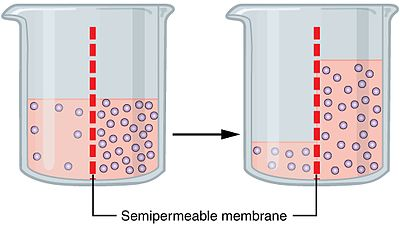
Diffusion
molecules move from high to low concentration easily to reach equilibrium
Diffusion is easy bc of 3 things
Small, nonpolar, and uncharged
Glycolipid
carbs connected to lipids
Glycoprotien
carbs connected to protiens
integral protien
A protien which goes through the entirety of the cell and aids in transport
peripheral protien
A protien which goes through some of the cell and helps in cell cell recognition
Turgidity
when a cell grows/ cells (plant) and the membrane pushes against the cell wall
Plasmolysis
When a cell shrinks (plant)
Hypertonic
High solute concentration, causes an animal cell to shrivel and a plant cell shrinks also (plasmolysis)
Hypotonic
Low solute concentration, causes a cell to swell (plants love, animals hate)
Isotonic
solute concentration is the same on the inside and outside of the cell, or there is an equal amount of solute and solvent
Turgor pressure
hydrostatic pressure in plant cells which pushes plasma membrane against cell wall
Cytolosis
bursting of an animal cell in a hypotonic solution
Facilitated diffusion
Passive transport, diffusion with the help of a protien
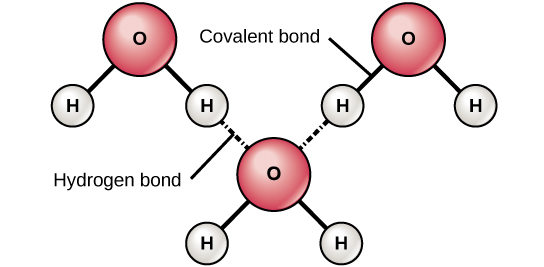
Water Molecules
two hydrogen (delta positive), one oxygen (delta negative), so it’s polar, connected through hydrogen bonds , bc partial positives and negatives attract, causes a dipole moment (bond moments direction from a + to a -) bc of partial charge seperation (going up)
Bulk transport
Cells transporting large molecules
Flaccid
Isotonic in plant cells
Lysed
Hypotonic in animal cells
Endocytosis
Actuve transport which moves particles into the cell, membrane invaginates, forms pocket, pinches off, becomes new vesicle from plama membrane
Phagocytosis
Cell eating, a cell taking in large particles like other cells, form of endocytosis
pinocytosis
Smaller vesicles with liquid, from of endocytosis
Exocytosis
Expel material from cell to form extra cellular fluid. Waste is enveloped and fuses with membrane, opens envelope and waste expels
Functions of membrane protiens
Transportm intercellular joining, enzyme activity, cell to cell recognition, sitgnals, cyto skeleton
Gated channel protiens
Open and close when physically or chemically stimulated, can change shape
Sodium Potassium Pump
Maintains levels, uses 1 ATP to pump 3 sodium ions out and 2 potassium ions in; active transport
semipermeable
selectively permeable, specific molecules in and out
Tonicity
How a cell’s volume changes because of osmosis
functions of membrane protiens
ionic and molecular transport, electron transport, signal transduction, enzymatic reactions and intercellular communication
concentration
amount of solute
Molecules that cannot pass through
charged or too large, such as Glucose (too big) or Ions (polar)
punnett square
A diagram used to predict the genetic outcomes of a cross between two individuals, illustrating the possible allele combinations of offspring. It applies rules of probablility that predict that outcome of a genetic cross. It helps to determine observable traits.
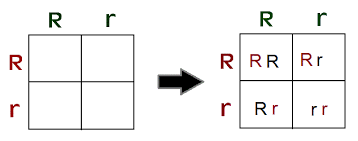
Genotype
The allelles of a person’s gene. Ex: 50% Aa
Phenotype
The physical characteristics that occur from a genotype. Ex: 50% blue eyed
gene
a unit of heredity which goes from the parent to the offspring and determines the charactersistcs of the offspring
Allele
The different forms of a gene
complete dominance
gregor mendel’s theory with dominant and recessive alleles. Ex: RR, Rr, rr
Homozygous
It can be homozygous dominant or homozygous recessive, but either way there is no carrier. In other words, the individual has two identical alleles for a trait. Ex: TT. Ex: tt.
Heterozygous
An individual having two different alleles for a trait. Ex: The individual has one dominant allele and one recessive allele, such as Aa.
Multiple alleles
Multiple alleles control 1 trait
Blood types
The human blood types are blood type A, B, AB, and O. It is controlled by Codominance and multiple alleles. There are two dominant alleles: I^A and I^B, and one recessive allele: i.
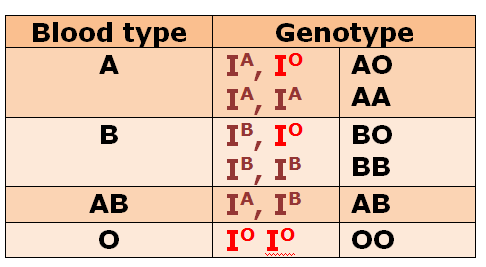
Blood Type A
The genotype is I^A I^A or I^Ai. It can donate blood to types AB and A. It can recieve blood from types A and O. It has the antibody Anti-B and a A antigen.
Blood Type B
This genotype is I^BI^B or I^Bi. It can donate blood to AB and B. It can receive blood from blood types O and B. It has the antibody Anti-A and a B antigen
Blood Type AB
This genotype is I^AI^B. It can donate blood to blood type AB. It can receive blood from A, B, AB, and O (universal reciever). It has no antibodies and A and B antigens.
Blood Type O
This genotype is ii. It can donate blood to A, B, AB, and O (universal donor). It can receive blood only from type O. It has the antibodies Anti-A and Anti-B, and no antigens.
dominant allele
the gene that masks the recessive gene; represented by a capitol letter
recessive allele
the masked gene; represented by a a lowercase letter
Incomplete dominance
a mixed trait is possible, portraying a blended characteristic. Ex: C exponent R, C exponent W
Codominance
Both alleles are fully expressed, showing a mix. Ex: RW

