PSYC 181: Unit 2 Study Guide
 Call Kai
 Learn
Learn Practice Test
 Spaced Repetition
 Match
Match Flashcards
 Knowt Play
1/130

There's no tags or description
Looks like no tags are added yet.
Name | Mastery | Learn | Test | Matching | Spaced | Call with Kai | Chat |
|---|
No analytics yet
Send a link to your students to track their progress
131 Terms
Biological Psychology
Field of psychology in which psychologists study the link between biology and behavior
Neurons
Cells which conduct electricity and "talk" to one another by sending chemical messages between each other
Nervous system
Body system consisting of a network of pathways carrying messages between the brain and other parts of the body
Sensory neuron
Neurons that transmit sensory information from sensory receptors to the brain and spinal cord
Motor neuron
Neurons that transmit impulses from the brain and spinal cord to other parts of the body such as muscles and glands
Interneuron
neurons located entirely within the brain and spinal cord that act as links between sensory neurons, motor neurons, and the brain and spinal cord
Cell body (soma)
Largest part of the neuron which houses the cell's DNA
Dendrites
Branch-like extensions of the neuron that receive messages from other neurons
Axon
A cable-like part of the neuron that carries messages away from the cell body
Myelin sheath
A fatty layer that surrounds the axon and acts as an electrical insulator; increases speed of electrical impulse (MS is a condition that causes degeneration of this insulating layer, causing signals to muscles to slow)
Axon terminal butons
the ends of axons that connect to neighboring nerve cells and contain neurotransmitters
Neurotransmitter
A chemical released by neurons that carries information to other neurons
resting potential
When a neuron is not transmitting an impulse, it stays at its _______________ ____________(-70 mV).
threshold
The neuron must receive a strong enough stimulus to reach its ______________ potential.
all or none
Like a gun, an action potential cannot only fire part-way; this is a concept known as a(n) _____-___-__________ response.
action potential
Once a neuron's threshold potential is met, it fires an __________ ___________, and positive ions rush into the cell, causing depolarization; the membrane potential reverses to +40 mV
presynaptic; postsynaptic
Once one action potential occurs, a chain reaction of action potentials travels down the axon to the terminal butons of the ______________ neuron; the impulse then travels across the synapse via neurotransmitters to the receptors of dendrites of the ______________ neuron.
synapse
The gap between the presynaptic neuron and the postsynaptic neuron across which chemical neurotransmitters travel
Excitatory Post-Synaptic Potential (EPSP)
One of 2 types of signals created on post-synaptic dendrites:
After neurotransmitters bind, depolarization moves membrane potential toward threshold and excites the axon to produce more impulses
Inhibitory Post-Synaptic Potential (IPSP)
One of 2 types of signals created on post-synaptic dendrites:
After neurotransmitters bind, hyperpolarization moves membrane potential away from threshold and inhibits more impulses from being produced
frequency
Stimulus strength is conveyed by ____________ of action potentials or quantity of neurons producing action potentials.
Serotonin
Neurotransmitter whose functions include mood, hunger, sleep, and arousal; undersupply linked to depression
Dopamine
Neurotransmitter whose functions include movement, learning, attention, emotion; oversupply linked to schizophrenia, undersupply linked to Parkinson's disease and ADHD
Acetylcholine
Neurotransmitter which enables muscle action, learning and memory; Alzheimer's disease deteriorates neurons which produce this neurotransmitter
Norepinephrine
Neurotransmitter whose functions include controlling alertness and arousal; undersupply can depress mood and cause ADHD-like attention problems
Endorphin
Neurotransmitter which are the body's natural pain relievers; function in the brain similarly to opium-based drugs such as morphine
GABA
Major inhibitory neurotransmitter; undersupply linked to seizures, tremors, and insomnia
Agonists
Molecules which mimic the structure of neurotransmitters (EX: Morphine mimics the action of endorphins by stimulating receptors in brain areas involved in mood and pain sensations)
Antagonists
Molecules which block neurotransmitters from binding to their receptors (EX: Curare poisoning paralyzes its victims by blocking ACh receptors involved in muscle movement)
Central Nervous System (CNS)
The part of the nervous system composed of the brain and spinal cord; coordinates skeletal and muscular systems, responds to sensory information from the outside world, and generates emotions, stores memories, and involved in personality
Peripheral Nervous System (PNS)
The part of the nervous system composed of the nerves of the body outside of the brain and spinal cord
Somatic Nervous System
The part of the peripheral nervous system associated with voluntary control of body movements (conscious control)
Autonomic Nervous System
The part of the peripheral nervous system involving neurons that control involuntary bodily functions and operate below consciousness
Parasympathetic Division
A subdivision of the autonomic nervous system that slows the heart rate and relaxes muscles ("calm down")
Sympathetic Division
A subdivision of the autonomic nervous system that activates the body in times of stress; increases breathing, heart rate, pupil dilation, and sweating ("emergency nervous system", "fight or flight")
adrenal glands
The sympathetic division increases the activity of these glands, while the parasympathetic division decreases the activity of these glands
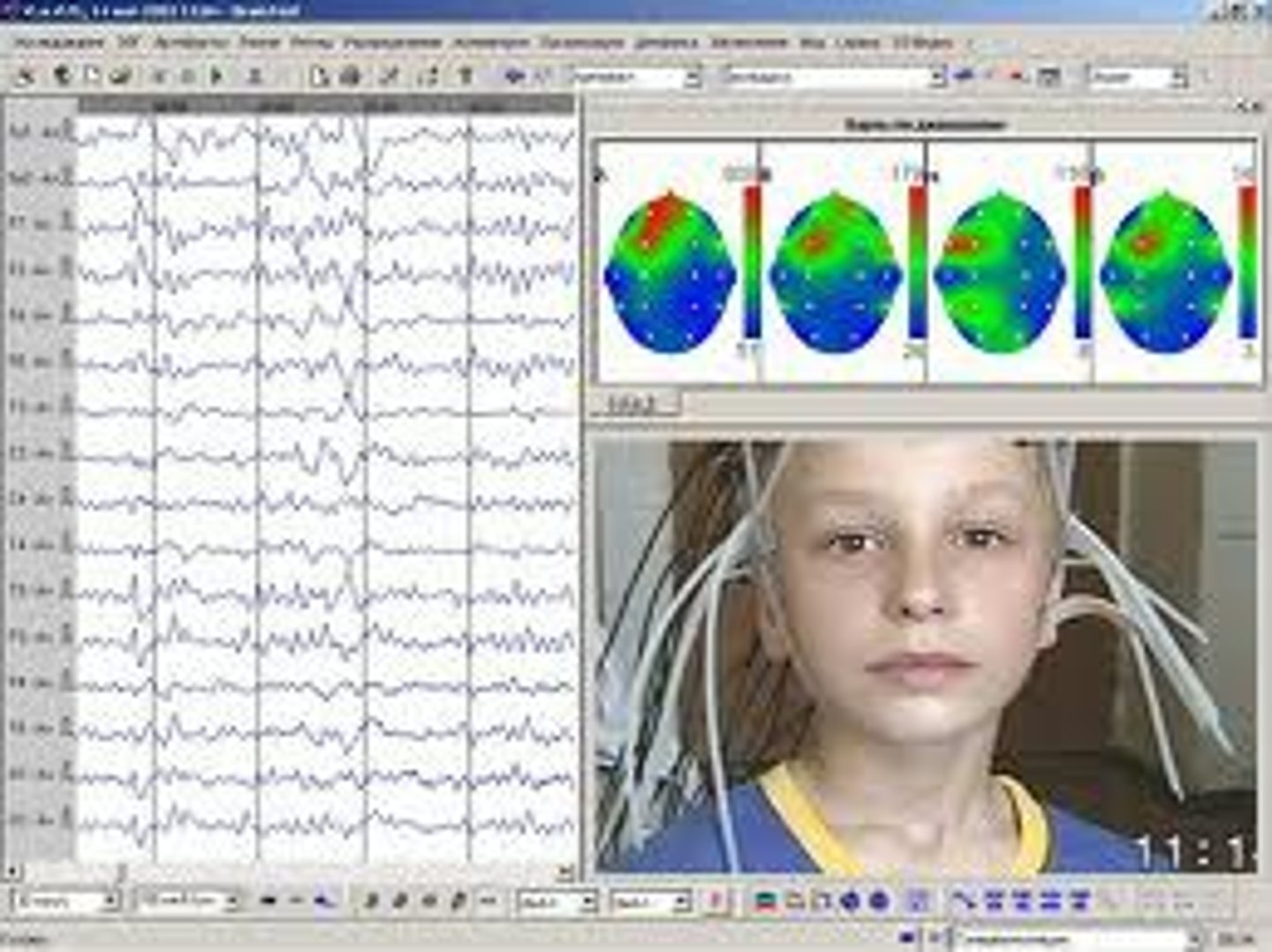
EEG (electroencephalogram)
A recording of the electrical waves sweeping across the brain's surface; useful in studying seizures and sleep
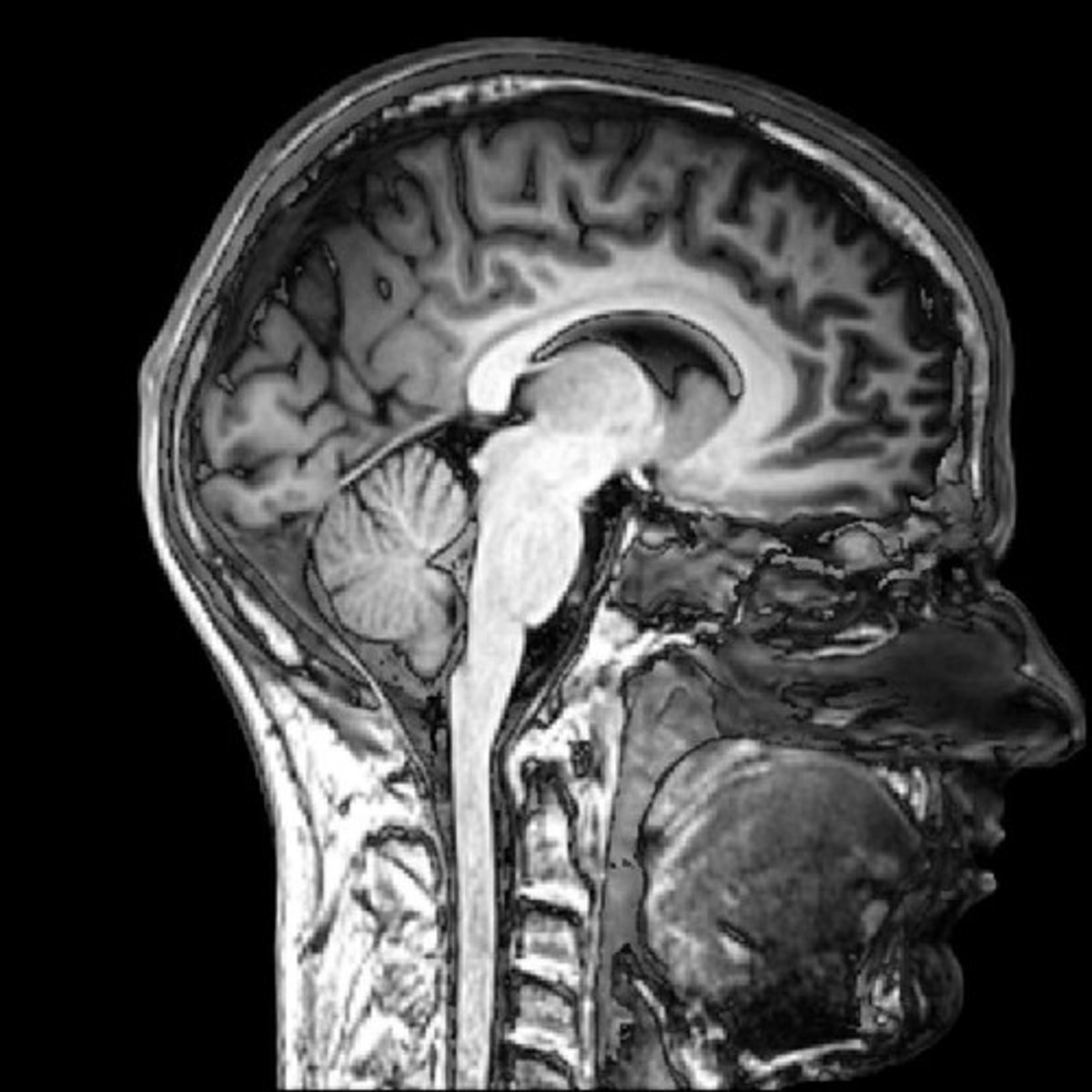
MRI (magnetic resonance imaging)
Makes images from signals produced by brain tissue after magnets align the spin of atoms.
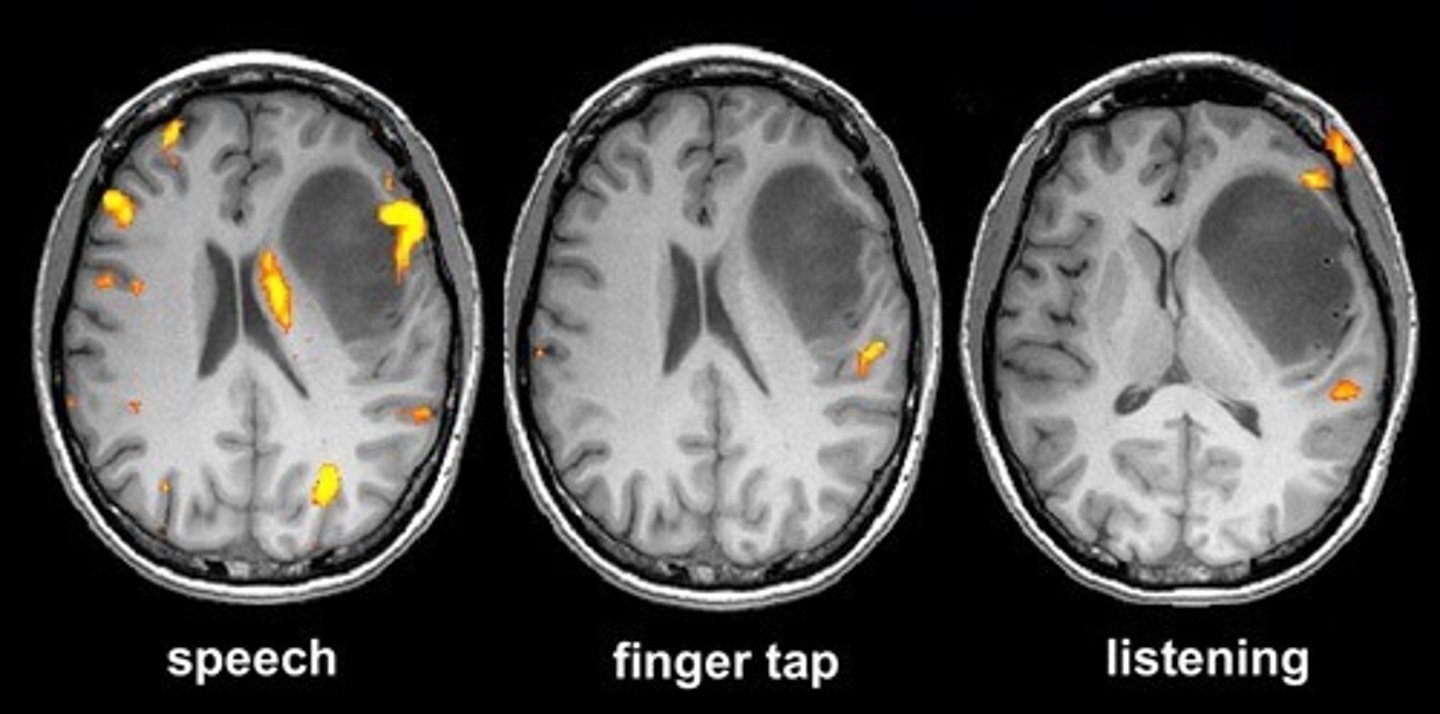
fMRI (functional MRI)
Reveals brain activity and function rather than structures; compares successive MRI images taken a split second apart, and shows changes in the level of oxygen in blood flow in the brain.
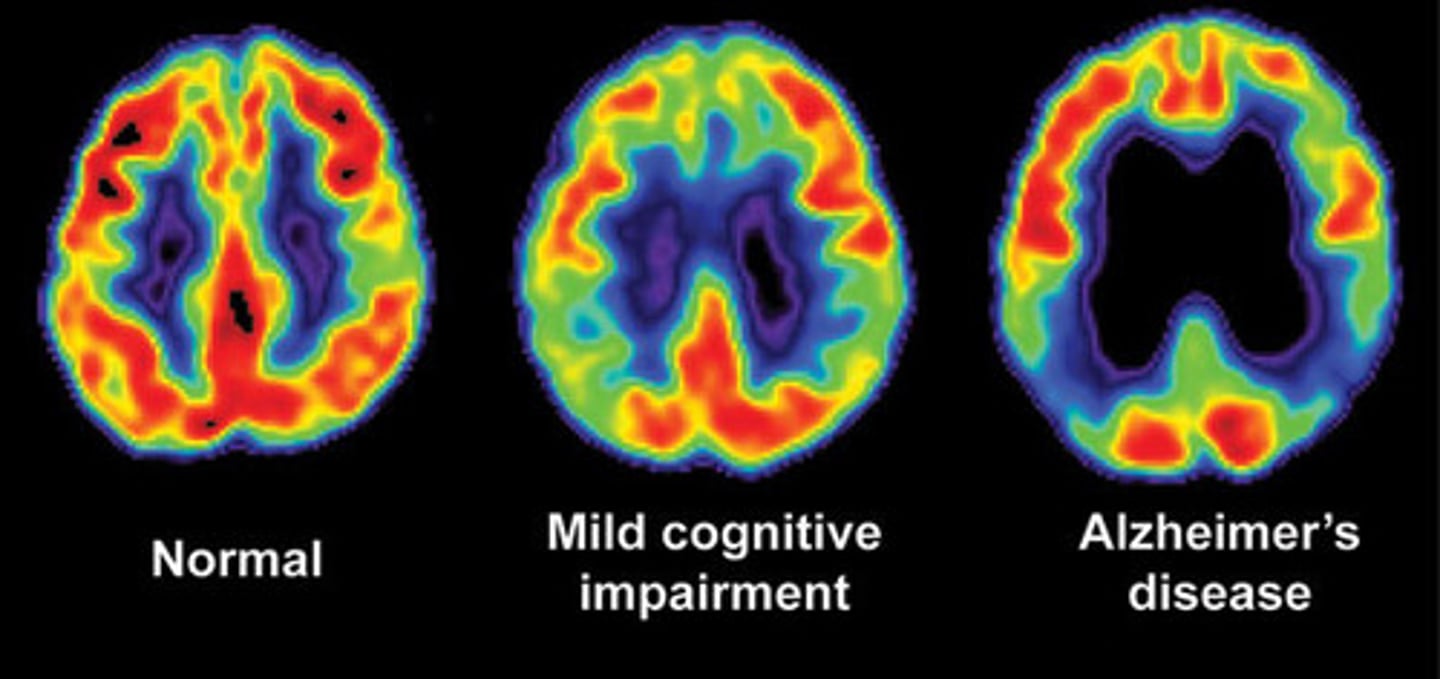
PET scans (positron emission tomography)
Allows us to see what part of the brain is active by tracing where a radioactive form of glucose goes while the brain performs a given task (uses radioactive dye to highlight active areas of the brain)
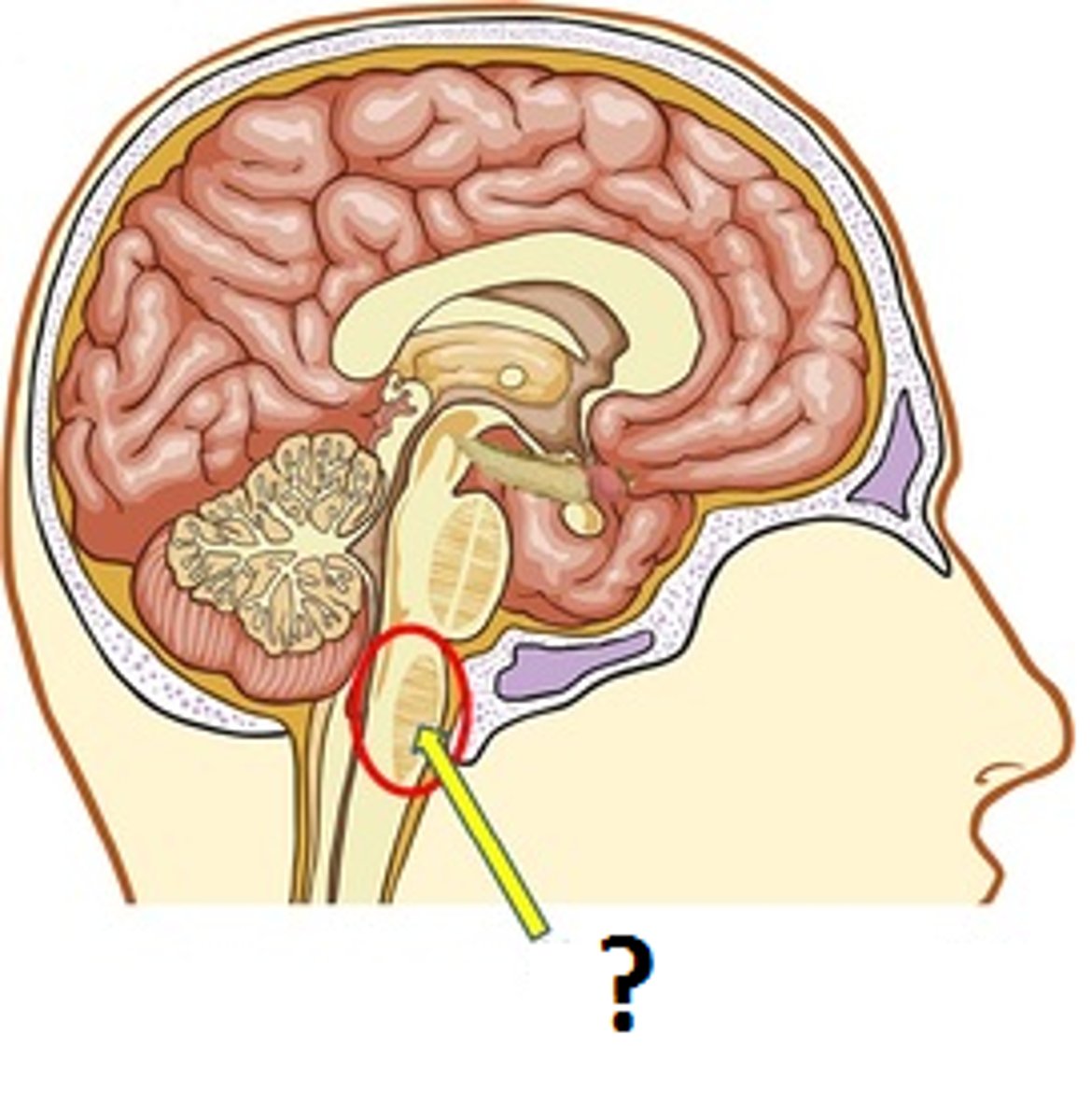
Medulla
Elongated structure in the hindbrain at the top of the neck and base of the skull which regulates basic, automatic behavior (e.g. breathing, digestion, heart rate)
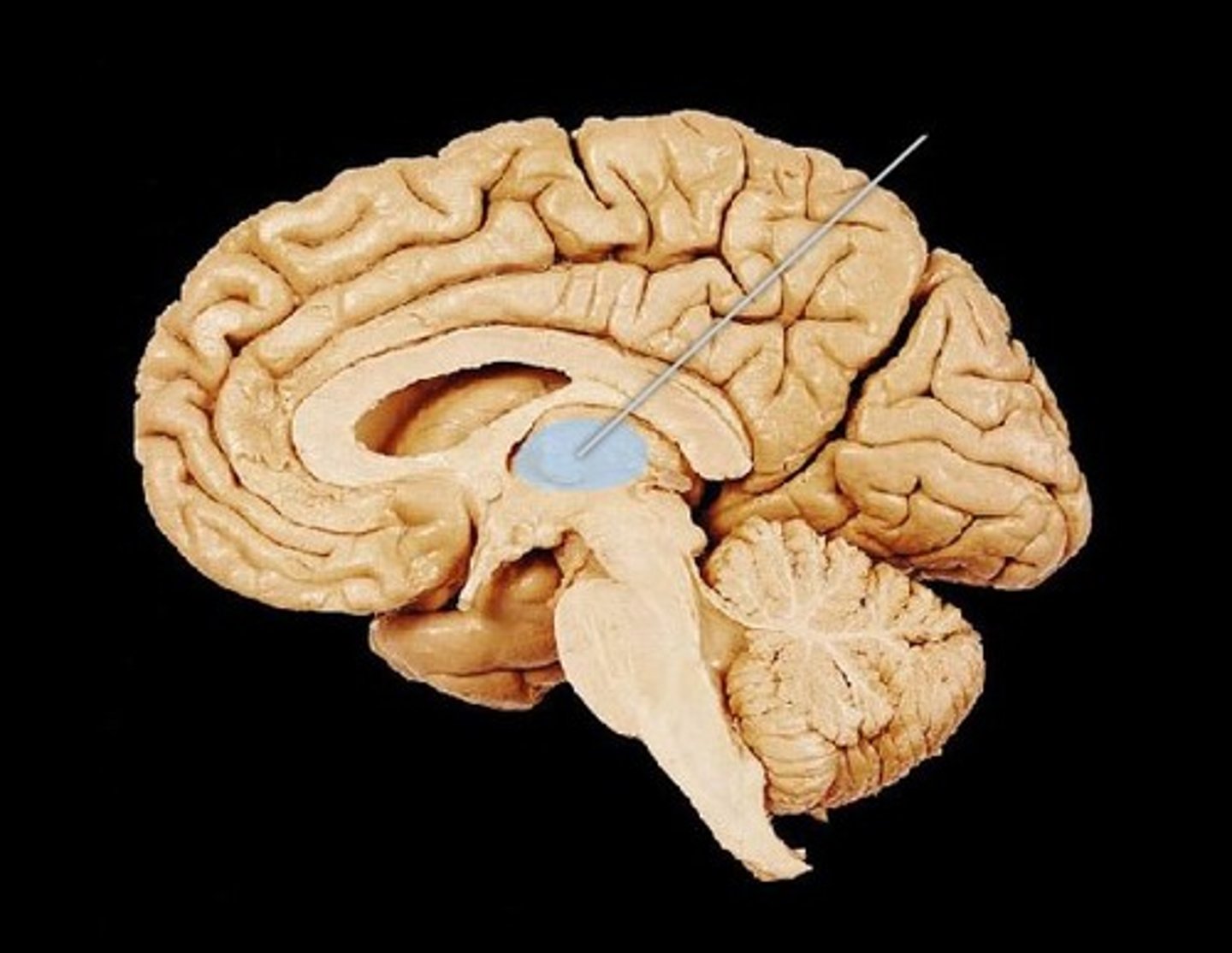
Thalamus
part of the forebrain (right in the center) which is analogous to a switchboard operator. Relays sensory info (except smell) to the cerebral cortex
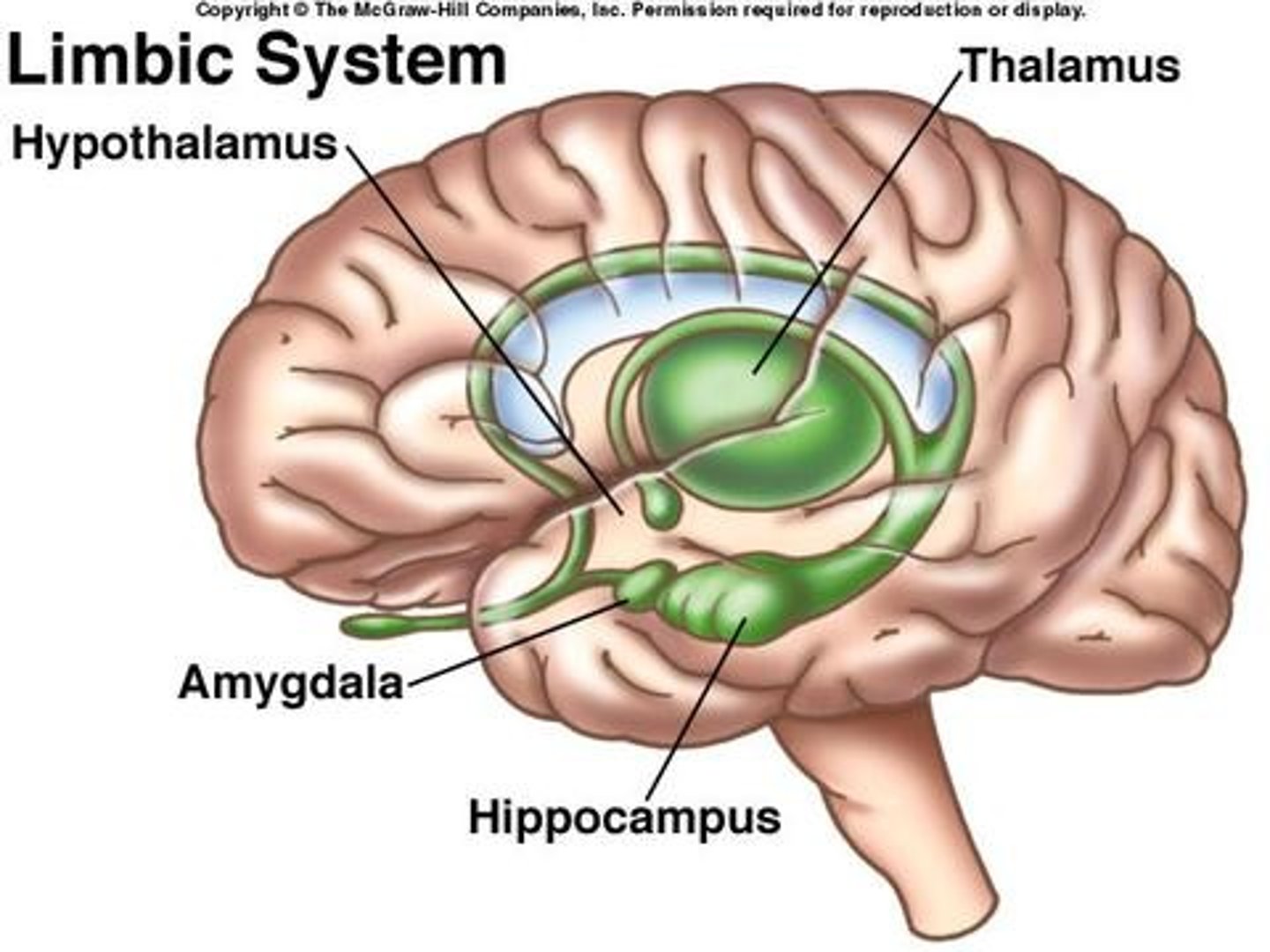
Hippocampus
A part of the limbic system which wraps around and is important in forming memories
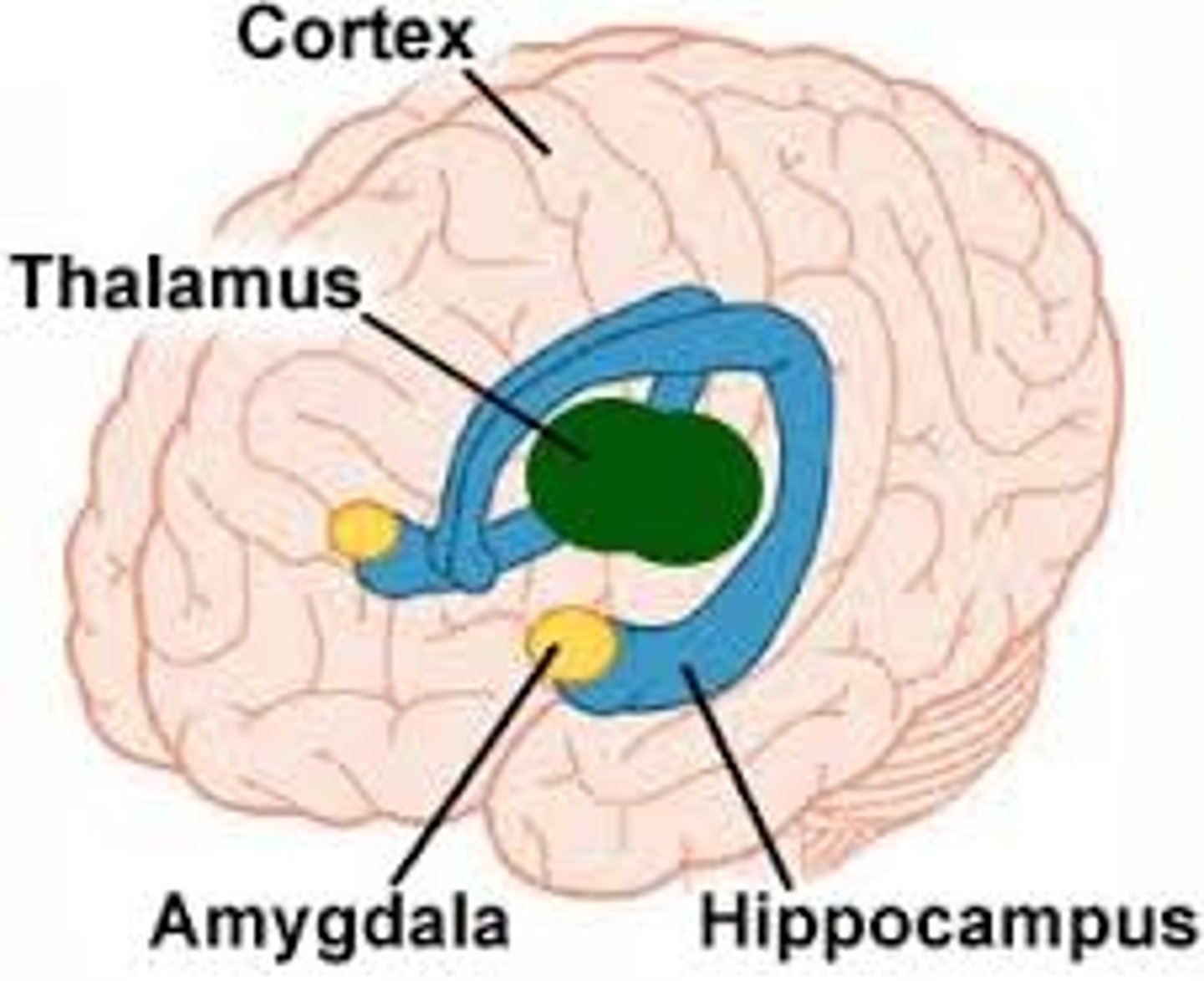
Amygdala
Pair of almond shaped structures in the limbic system which are important in processing emotions (motivation, emotional control, fear response, and interpretations of nonverbal emotional expressions)
Hypothalamus
Part of the forebrain that secretes hormones and regulates "the 4 F's": food, fight-or-flight, sex; commands sympathetic fight-or-flight response
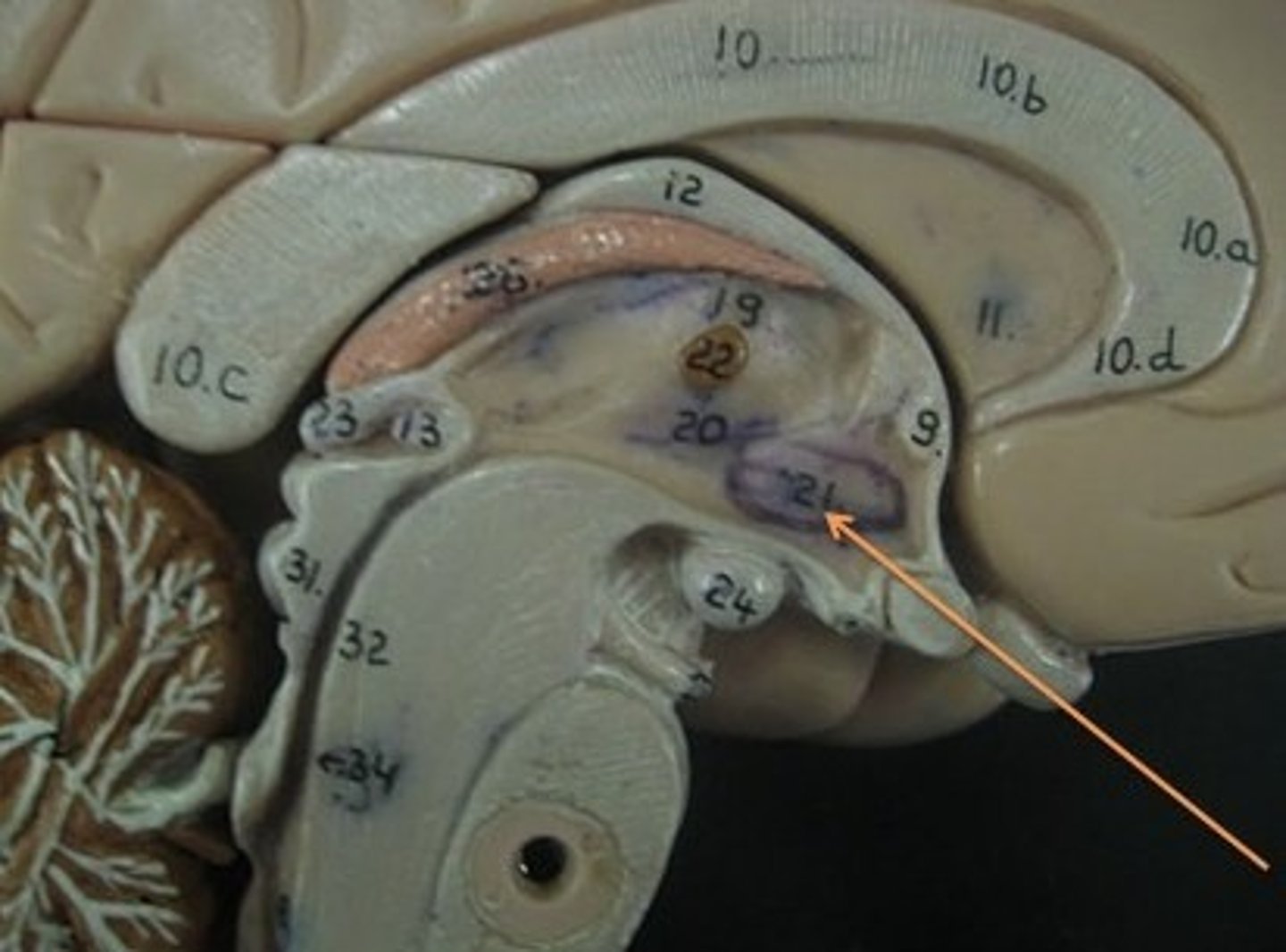
Cerebellum
Part of the hindbrain responsible for coordinating movement and balance
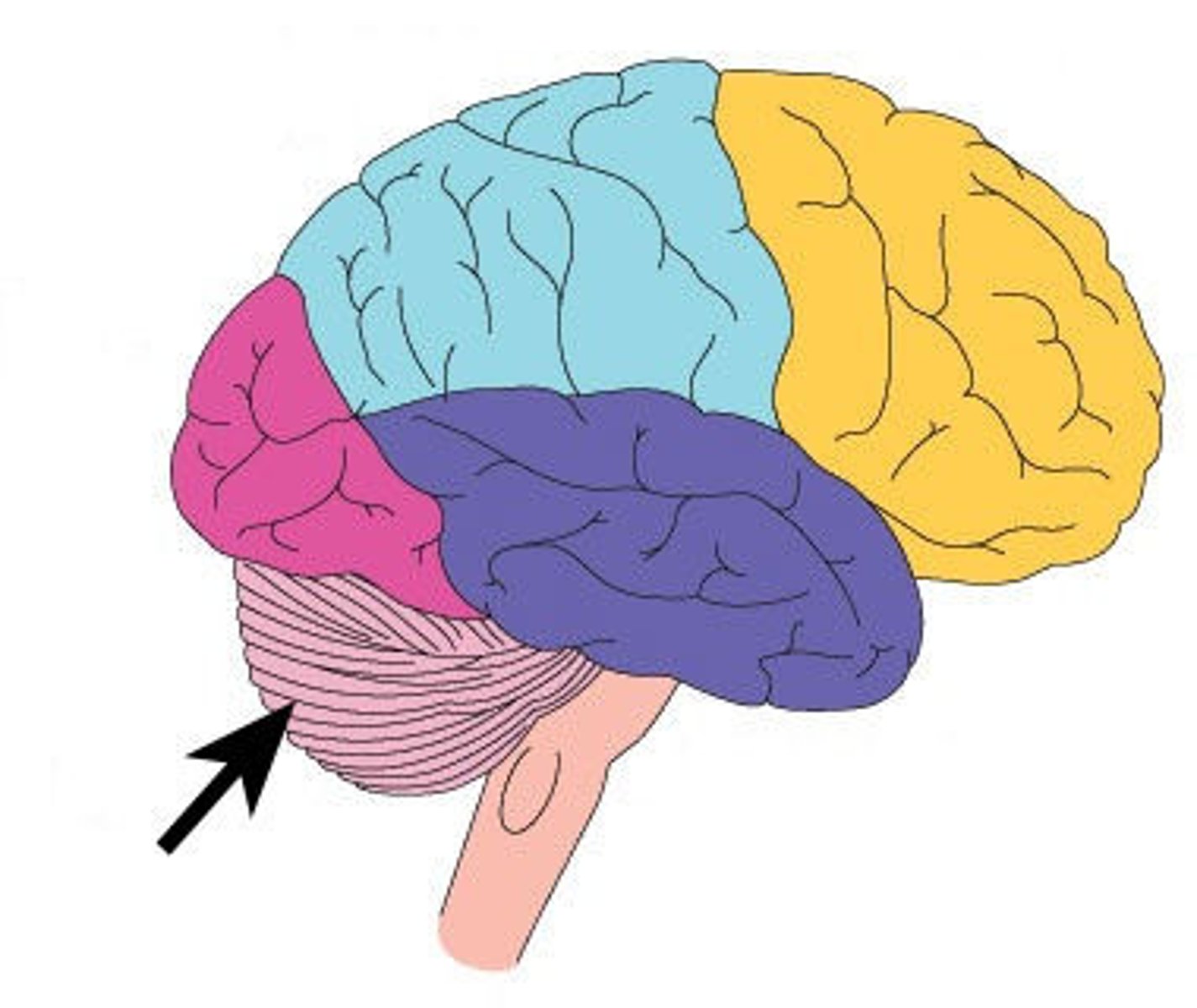
Frontal lobe
The lobe of cerebral cortex behind the forehead that is involved in motor control and higher intellectual functions; contains the motor cortex
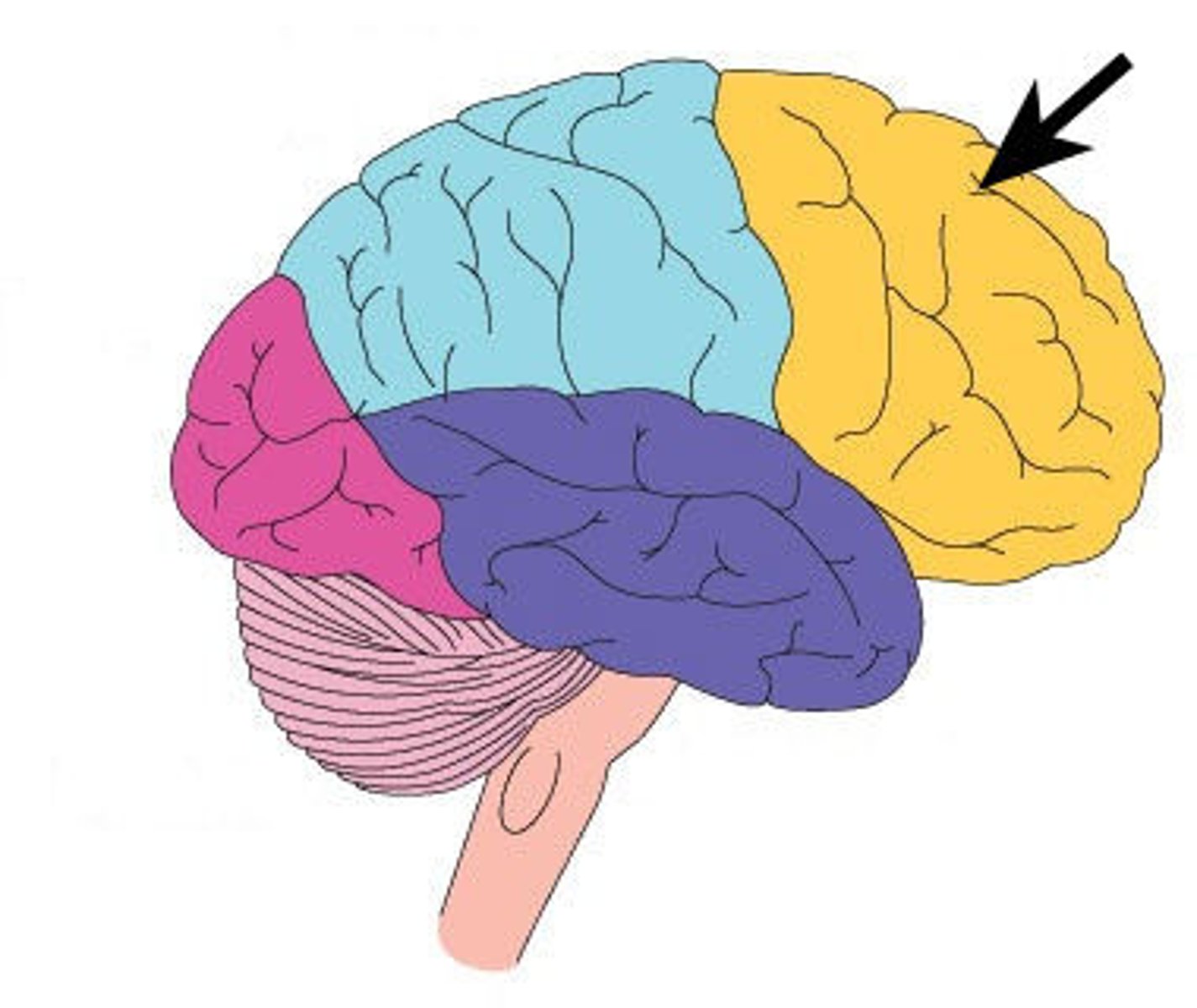
Parietal lobe
Lobe of cerebral cortex that plays a major part in touch, pressure, and temperature; contains the somatosensory cortex
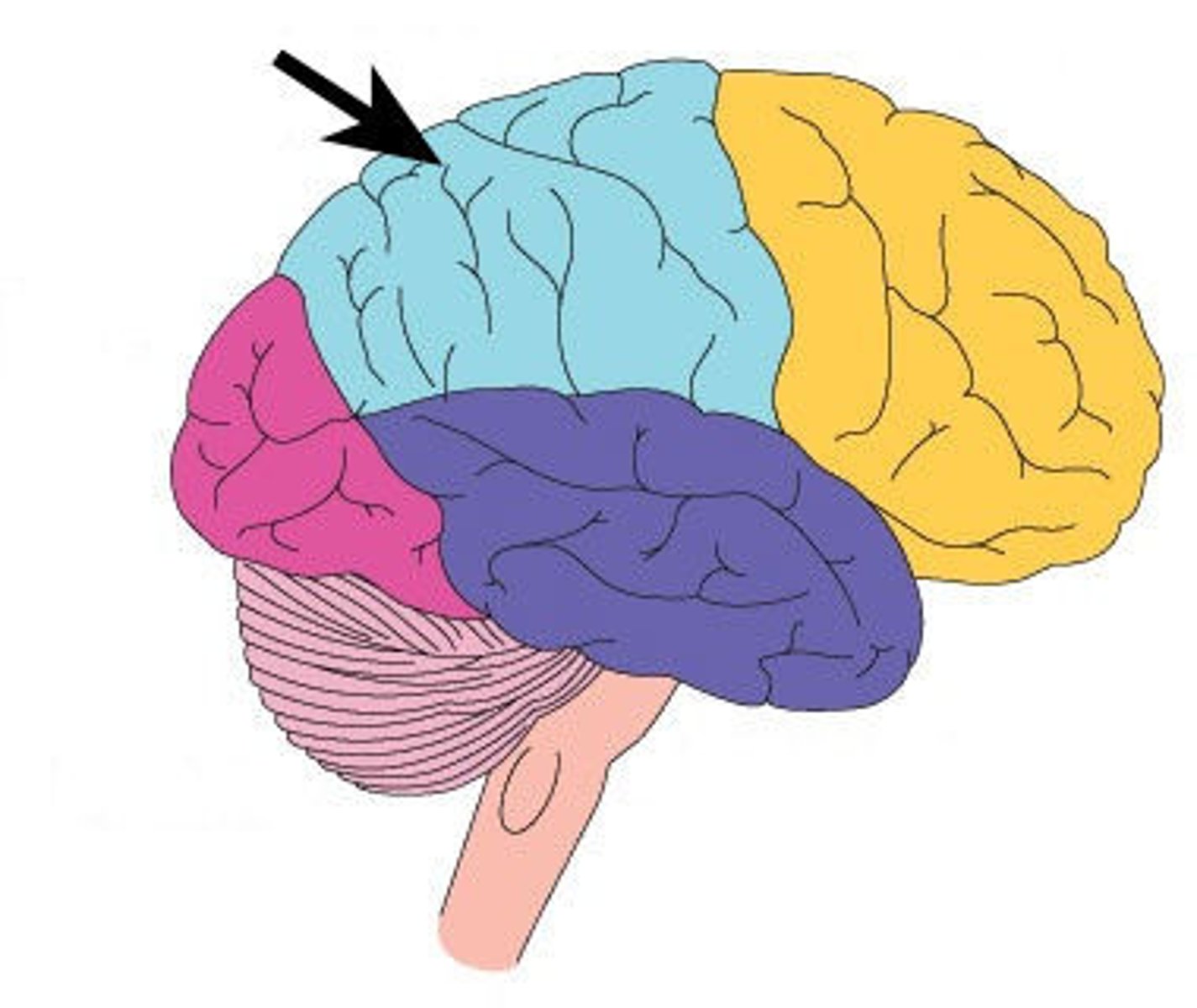
Temporal lobe
Lobe of cerebral cortex that contains the auditory cortex, as well as important structures for language, memory, and emotion
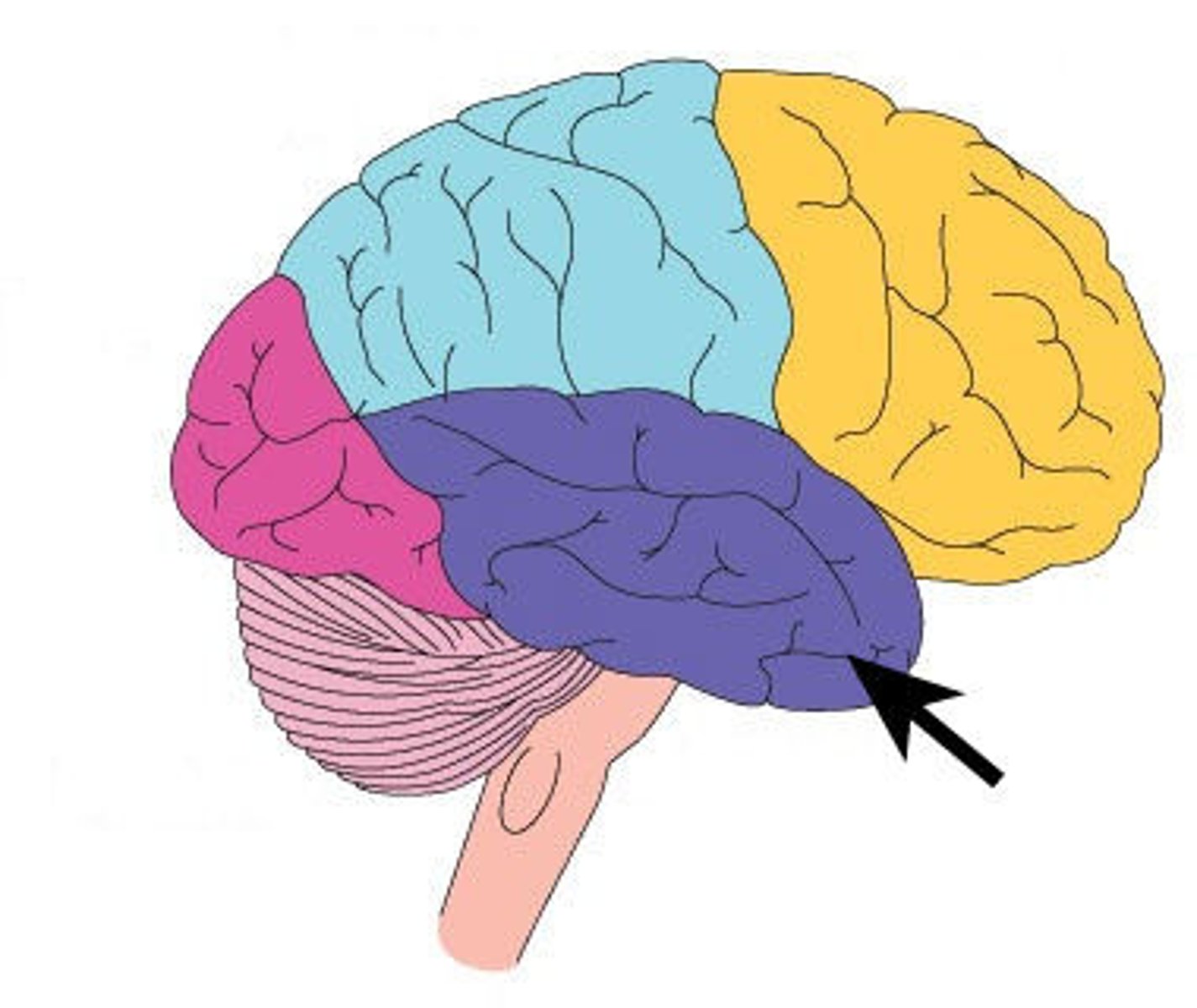
Somatosensory Cortex
Area of the cerebral cortex to which the sensory signals are sent
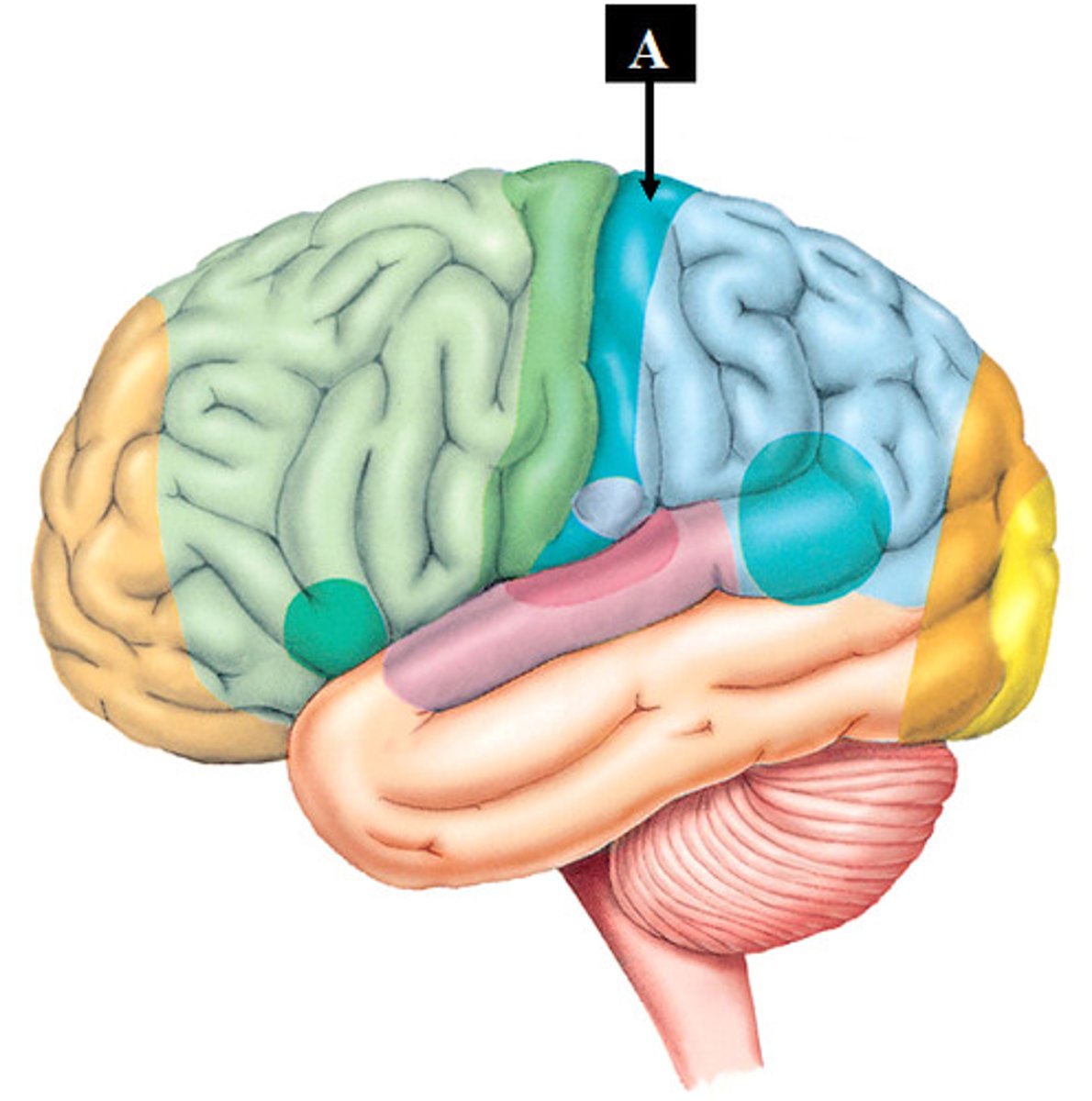
Occipital lobe
Lobe of cerebral cortex in the rear of the brain that is responsible for vision; contains the visual cortex
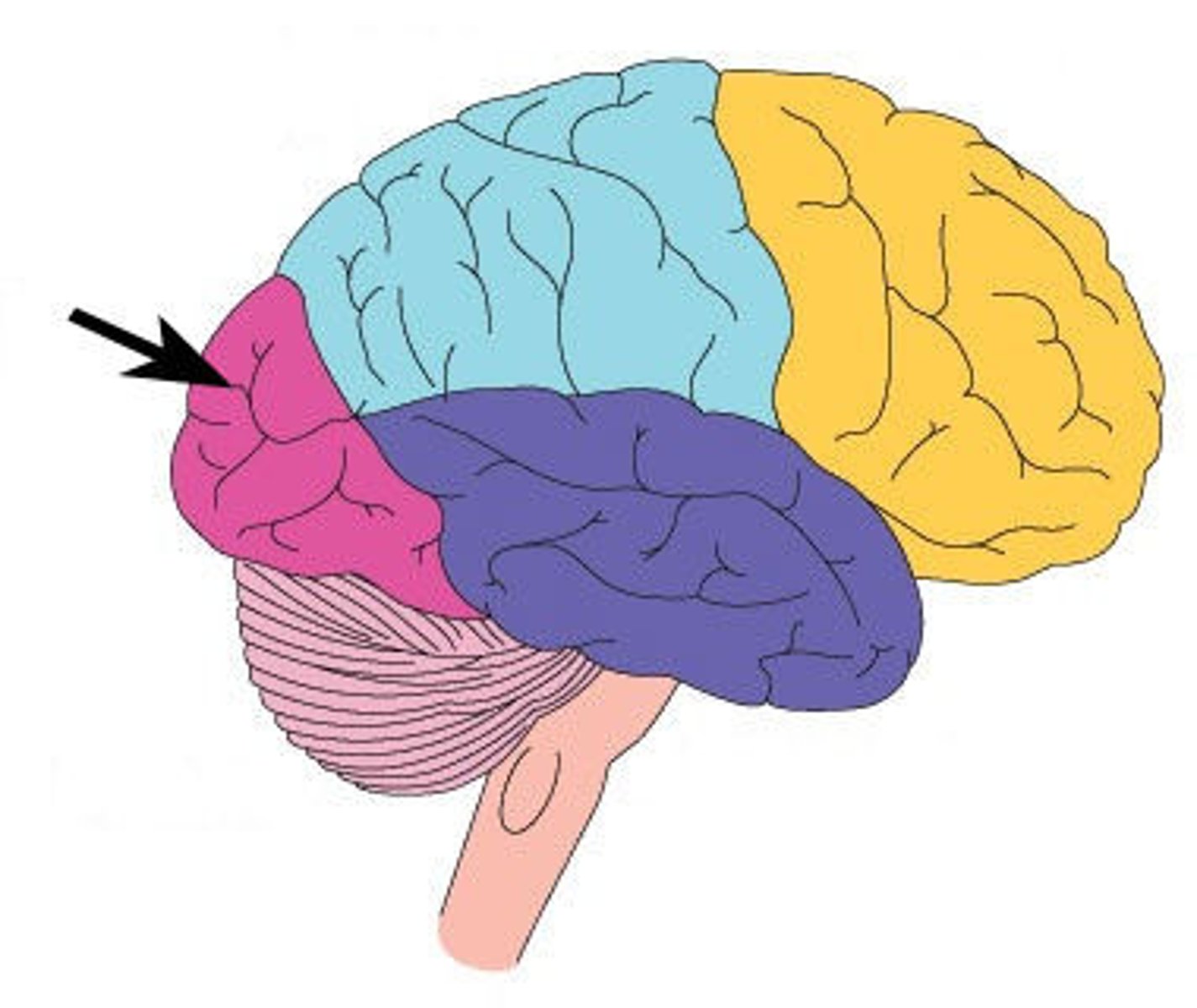
Auditory Cortex
The center for interpreting the sounds and language that we hear
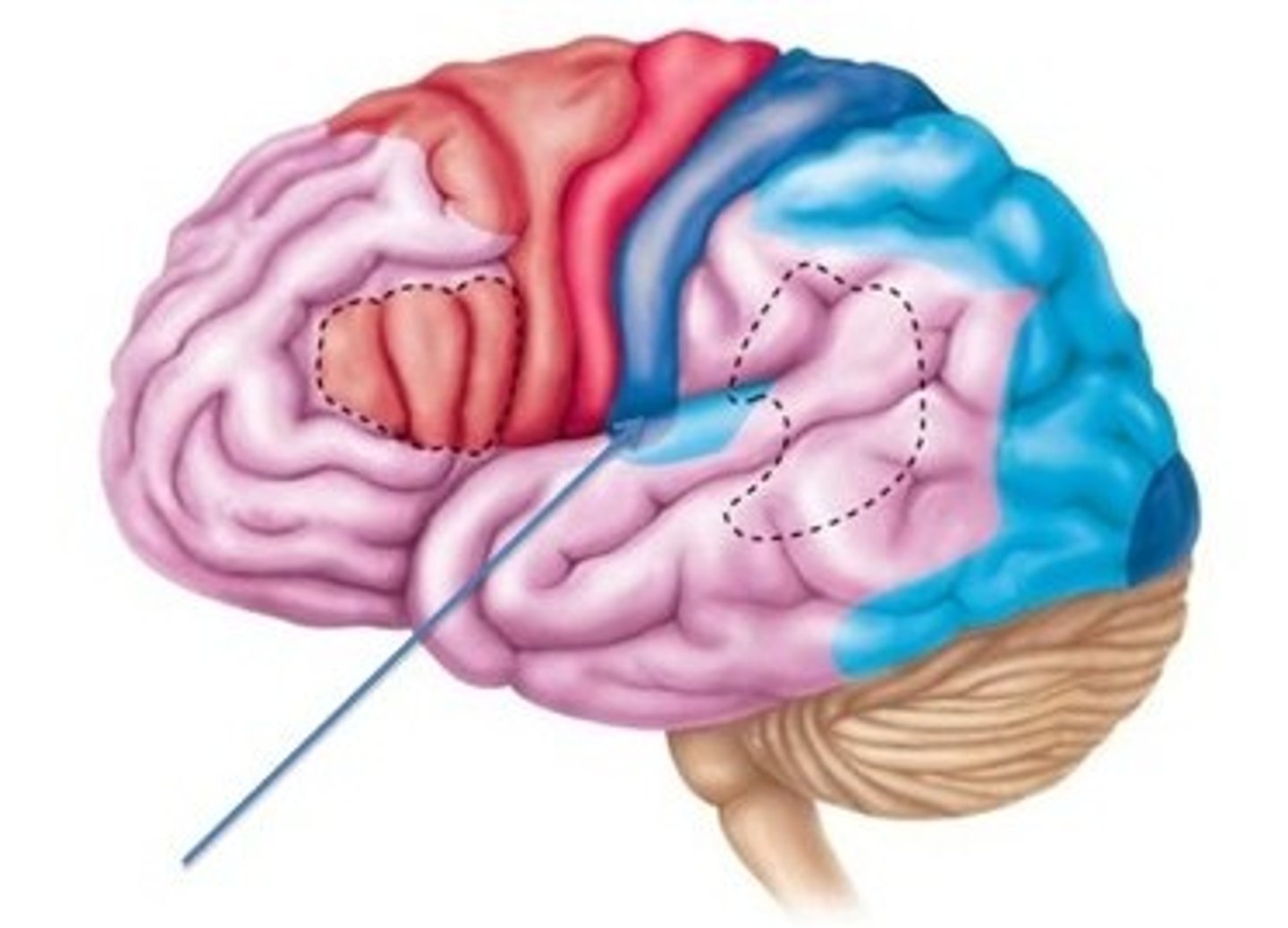
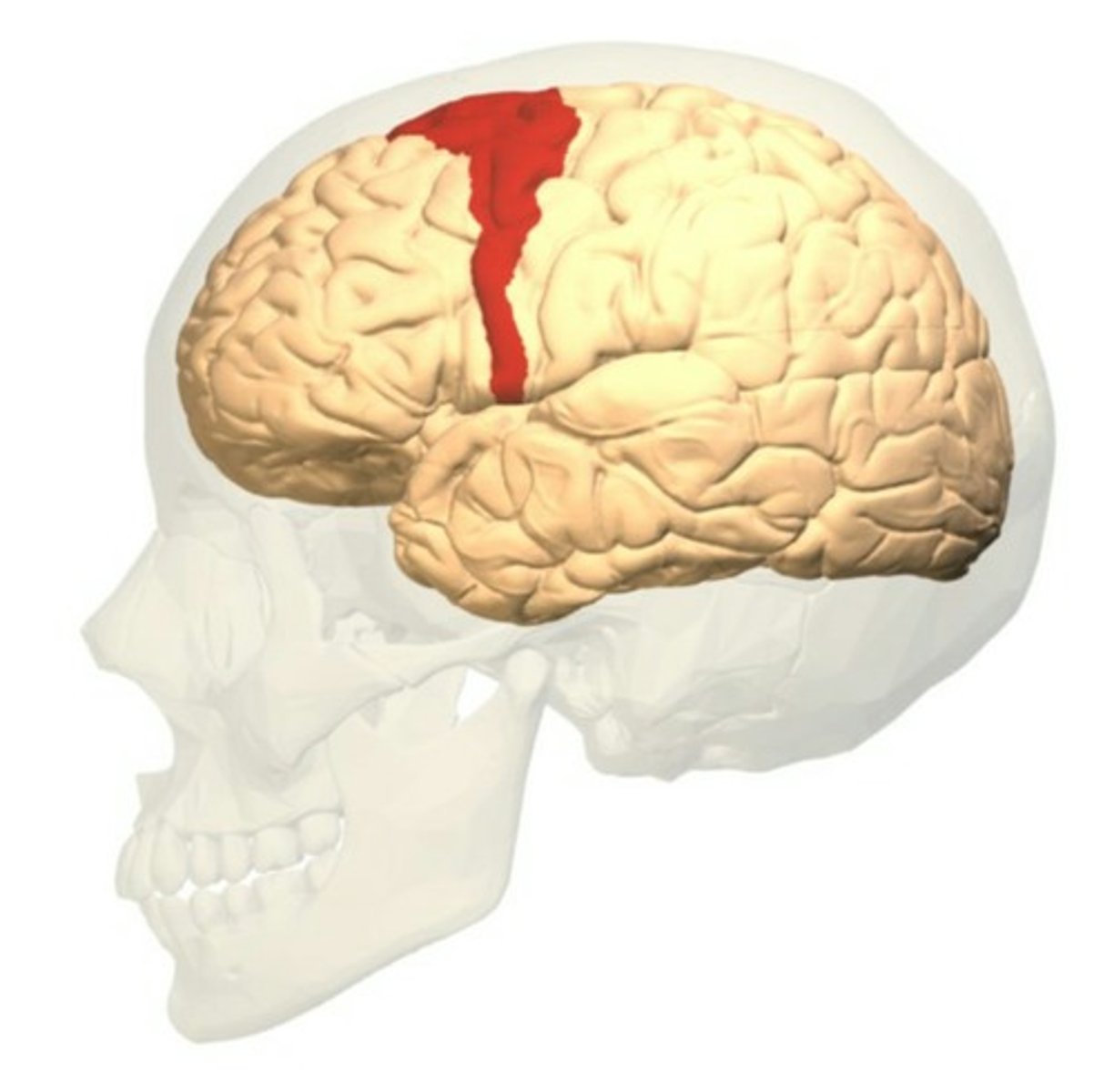
Motor Cortex
A strip of brain tissue in the frontal lobe of the cortex involved in planning and directing muscle movement
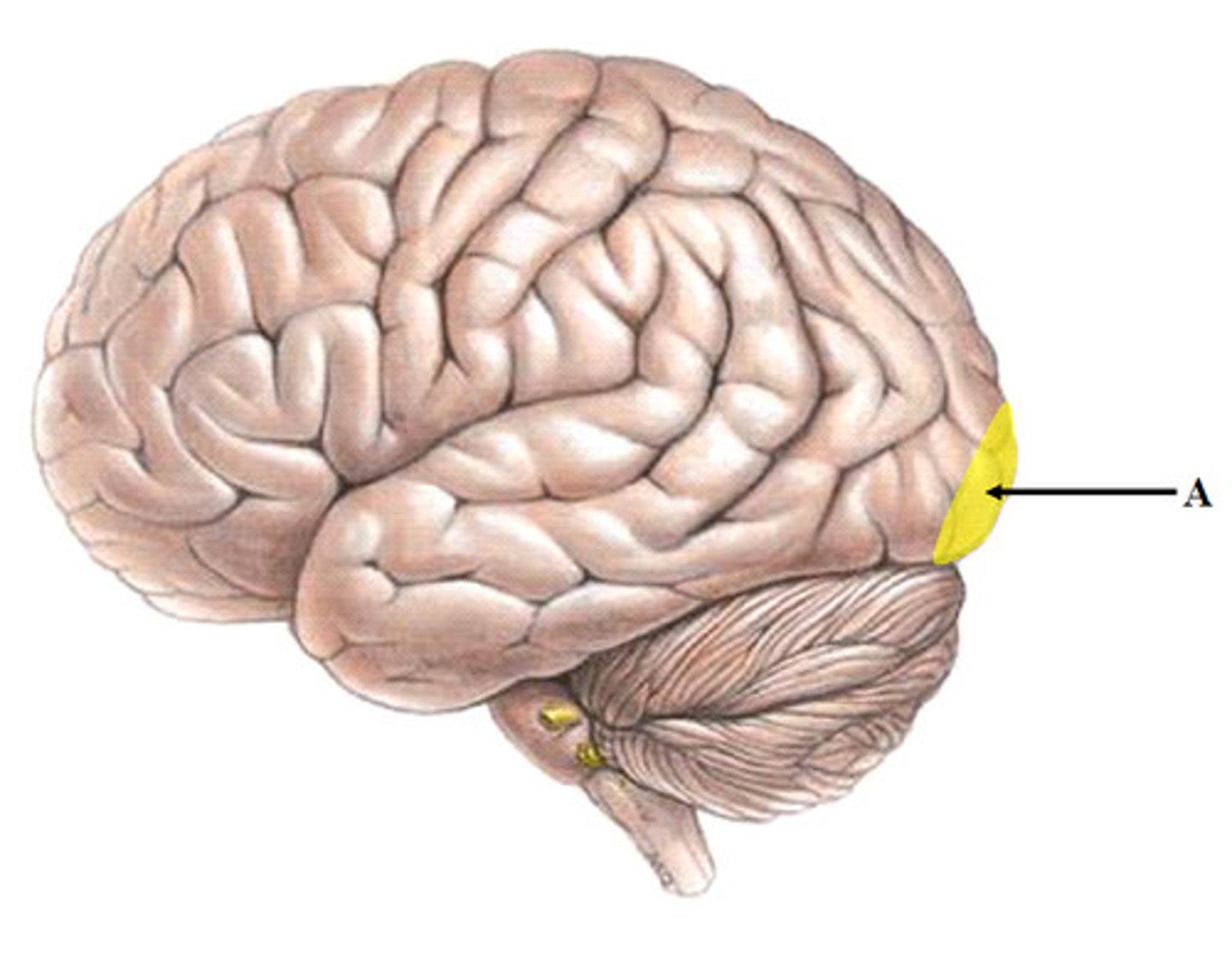
Visual Cortex
Receives and interprets information coming from the eyes by way of the optic nerves
Broca's Area
Region in the frontal lobe linked to language production (motor speech area which helps in movements required to produce speech. When there is an issue in this area, a patient can understand the speech of others, but can't produce any speech him or her self.)
Wernicke's Area
Region in the temporal lobe responsible for comprehension of language (helps in understanding speech and using the correct words to express our thoughts. When there is an issue in this area, a patient may be able to produce speech, but cannot understand the speech of others.)
Prefrontal Cortex
Brain region that has been implicated in planning complex cognitive behavior, personality expression, decision making, and moderating social behavior.
Corpus Callosum
Axon fibers connecting the two hemispheres of the brain
Parts of the body that require more sophisticated movement (such as fingers) take up more neurons and brain space than those that don't (such as butt cheeks).
Explain why there are more neurons in motor cortex devoted to moving the fingers than to moving your butt cheeks..seriously.
Left Hemisphere
Cerebral hemisphere which controls right half of body and right field of vision; in charge of language; conscious; analytical; attempts to explain cause and effect of events; better at math and logical reasoning
Right Hemisphere
Cerebral hemisphere which controls left half of body and left field of vision; unconscious; better at recognizing faces, detecting tone/emotion of voice, using imagination, and drawing pictures; looks at "big picture" rather than minor details
plasticity
The ability of the brain to change itself in response to experience or damage at any age
A child's (adult's synapses are much more stable/established, won't adapt as well)
Whose brain is more "plastic": a child's or an adult's? How do you know?
consciousness
A state of awareness of yourself and your situation (inner thoughts, feelings, outside world)
Consciousness is dynamic
Consciousness can be altered
Consciousness involves both arousal (wakefulness/alertness) and awareness (understanding world around you)
Consciousness is produced by brain activity
4 key traits of consciousness
NREM (no rapid eye movement)
The periods during sleep where eyes don't move much, brain is less active, and dreams don't occur; body may move restlessly
REM (rapid eye movement)
"Dreaming sleep"; the periods during sleep where the eyes rapidly move and brain activity resembles that of one who is awake. Paradoxical because brain is very active, but body is not active (due to muscles temporarily paralyzing)
beta waves (small, rapid, bunchy pattern)
Which EEG wave patterns are associated with being alert and awake?
alpha waves (slower, small, bunchy pattern)
Which EEG wave patterns are associated with being awake but relaxed?
delta waves (large, very slow brain waves)
Which EEG wave patterns are associated with being in deep sleep?
beta waves (brain waves similar to awake but occur in dream state)
Which EEG wave patterns are associated with being in REM sleep?
Restoration Theory
Which of the 3 sleep theories is described:
Sleep repairs and restores the body's physical and mental functioning
Evolutionary Theory
Which of the 3 sleep theories is described:
Sleep evolved as an adaptive mechanism to increase our chances of survival (by not being out at night with predators)
Information Processing Theory
Which of the 3 sleep theories is described
The purpose of sleep is to help humans process information from the day before and prepare the brain for new information to be received in the coming day
Insomnia
The most common sleep disturbance; characterized by difficulty falling asleep, staying asleep, or waking frequently throughout the night
Sleep Apnea
A breathing problem that occurs during sleep in which the sleeper stops breathing for several seconds at a time (characterized by snoring, pauses, and gasps for air)
Narcolepsy
Chronic neurological disorder in which a person has episodes of sudden and excessive daytime sleepiness; "sleep attacks" can occur throughout the day without warning
REM Behavior Disorder
a sleep disorder in which the muscles aren't paralyzed like they should be and a person physically acts out his or her dreams while remaining asleep
Somnambulism
clinical term for "sleep-walking"
Psychological Value
Dream theory which suggests that dreams have psychological significance
Sigmund Freud's early psychoanalytic theory for dreams in which dreams had 2 meanings: manifest content (obvious surface description) and latent content (hidden conflicts and desires)
Dreams may help you realize where you stand on a problem, may be important to your sense of self, may help you organize your thoughts and emotions, or may help you solve problems in your waking life
Dreams involve fear and anxiety to give people a chance to work through threatening situations to prepare for potential dangers in real life
Cognitive Value
Dream theory which suggests that dreams serve an important function in strengthening the cognitive processes of learning and memory; helps establish neural memory networks
Random-Activation
Dream theory which suggests that dreams are a normal, yet random, by-product of the brain's nightly activity; random memories and thoughts are activated and the brain tries to make a meaningful story (Hobson and McCarley's activation-synthesis hypothesis)
"Blind" sight
A condition in which a person can respond to a visual stimulus without consciously experiencing it because conscious high track processing is damaged, but unconscious, automatic low track processing remains intact (EX: woman has a brain injury and can't consciously see, but can unconsciously complete visual tasks)
Selective attention
the focusing of attention on selected aspects of the environment and the blocking out of others; what we focus on/notice (EX: dangerous for texting and driving)
Selective inattention
our failure to notice part of our environment when our attention is directed elsewhere (inattentional blindness; change blindness or choice blindness); what we are not focused on, what we do not notice
Inattentional blindness
Simons & Chabris (1999) showed that half of the observers failed to see the gorilla-suited assistant in a ball-passing game; this showed an inability to see an object or person in our midst; this is called ____________ ____________.
Change blindness
What type of blindness was shown in a study in which ⅔ of people didn't notice when the person they were giving directions to was replaced by a similar-looking person?
Sensation
The process by which our sensory receptors and nervous system are STIMULATED by energies from our environment. (The brain receives input from the sensory organs)
Perception
The process by which energy from the environment (sensory information) is interpreted into RECOGNIZED patterns. The brain makes sense out of the input from sensory organs.
Top-down processing
Processing information by using models, ideas, and expectations from previous experience to interpret sensory information ("Is that something I've seen before?")
reception (stimulation of sensory receptors)
transduction (change stimulation to neural impulses)
transmission (neural info delivered to brain for processing)
What are the 3 steps of the process of sensation?
Sensory receptors
Specialized cells that convert physical energy into electrical energy that can be transmitted as nerve impulses to the brain
Law of Specific Nerve Energies
States that different sensory modalities exist because signals received by the sense organs stimulate DIFFERENT nerve pathways leading to DIFFERENT areas of the brain.
synesthesia
a condition in which stimulation of one sense also evokes another (EX: touch evokes taste sense; sound evokes visiual experience)
Absolute threshold
The minimum level of stimulus intensity needed to detect a stimulus half the time. Anything below this threshold is considered "subliminal." (EX: hearing tests from elementary school)
Difference threshold
the minimum difference (in color, pitch, weight, temperature, etc.) for a person to be able to detect the difference half the time.
sensory adaptation
a diminished response to an unchanging stimulus; Prevents us from having to respond continuously to unimportant information (vision doesn't adapt b/c eyes continuously and imperceptibly shake)
Perceptual set
what we expect to see, which influences what we do see (an example of top-down processing)
color (hue)
In vision, frequency of light wavelengths determines the ___________ of what we see.
intensity (bright or dull)
In vision, amplitude (height) of light waves determines the ___________ of the color that we see.