3. Gender
 Studied by 0 people
 Call Kai
 Learn
Learn Practice Test
 Spaced Repetition
 Match
Match Flashcards
 Knowt Play
1/15

There's no tags or description
Looks like no tags are added yet.
Name | Mastery | Learn | Test | Matching | Spaced | Call with Kai |
|---|
No analytics yet
Send a link to your students to track their progress
16 Terms
why does the gender pay gap matter
normative reasons
talent gap - girls outperform boys along the educational track therefore low job market participation lead to lower productivity
what should salaries depend on
supply and demand for labour
production function for a firm producing Y units of a product
AL^(1-alpha)
A - productivity
L - total labour input
1-alpha - output elasticity of labour
sketch the production function
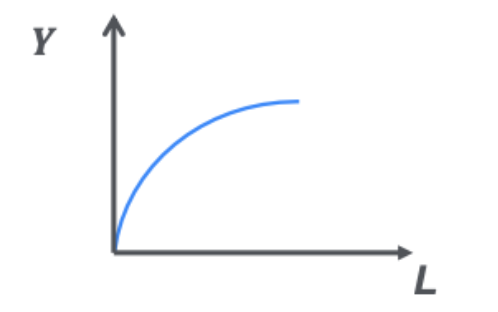
Marginal product of labour
dY/dL = (1-apha)
firms profit earn wage rate is w and product price is 2
2Y - wL = 2AL^(1-alpha) - wL
maximising profit of 1Y - wL = 2AL^(1-alpha) - wL
dprofit/dL = (1-alpha)AL^(-alpha) - w
share of labour in income Lw/Y =
1 - alpha
find be differentiating and substituting in Y for A
how to calculate Labour supply elasticity for Ls = f(w)
calculate dL/dw by differentiating f(w)
then plug into dL/dw x w/L
causes of gender pay gap
women are more risk averse - role of social norms (nurture)
women are more highly educated but less likely to choose paths with higher potential future earnings
combined impact of higher labour supply elasticity for women and high elasticity of earnings to hours for high paying jobs
child penalty ()social norms
impact of high elasticity of earnings to hours
reducing workload slightly → larger reduction in pay → workers are pushed toward long, inflexible hours
→ more common in higher payed jobs → women have a much stronger preference to flexible hours
→ women in rich countries have a higher labour supply elasticity → changes in earnings don’t cause significant changes in hours worked
impact of high labour supply elasticity
women in rich countries have a higher labour supply elasticity → changes in earnings don’t cause significant changes in hours worked → due to females having more time constraints eg childcare
combined impact of labour supply elasticity and elasticity of earnings to hours
earnings highly elastic to hours for high paying jobs
→ small reduction in hours = significant reduction in pay
→ but women experience a higher labour supply of elasticity
→ constraints on time eg childcare
→ women more effected on average
→ gender pay gap at the top
remedy policies
family friendly policies
gender neutralising childcare
positive discrimination
changing social norms
statistical discrimination
when employers use group averages (e.g. gender, ethnicity) as a proxy for unobserved individual characteristics such as productivity, attachment, or turnover risk
preference-based discrimination
discrimination driven by prejudice, where employers behave as if hiring a disliked group entails an extra cost beyond the actual wage.
 Note
Note  Flashcards (77)