Biopsych
 AP Practice
 Call Kai
1/98

Earn XP
Description and Tags
Name | Mastery | Learn | Test | Matching | Spaced | Call with Kai | Chat |
|---|
No analytics yet
Send a link to your students to track their progress
99 Terms
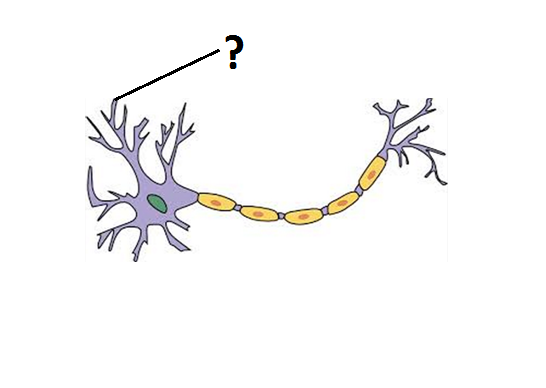
Dendrites
the 'listeners' of a neuron that receive information from another neuron
Dendrites (image)
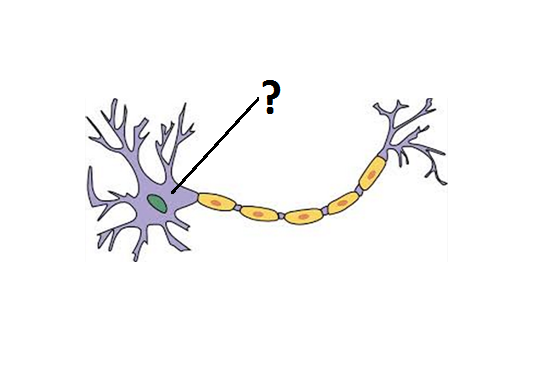
Soma (cell body) (image)
Axon (image)
Myelin Sheath (image)
Axon Terminals (image)

Soma (cell body)
Contains the nucleus and important parts to keep the cell alive; doesn't really play a role in the communication process
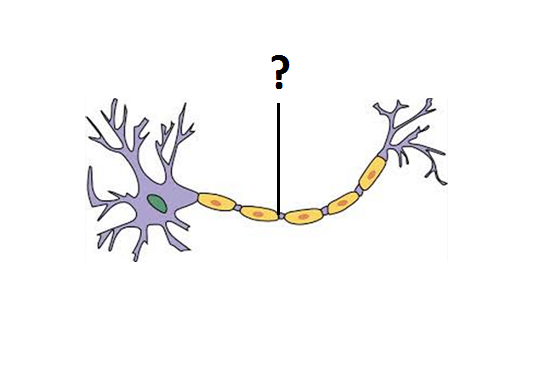
Axon
tail-like structure down which the electrical charge travels
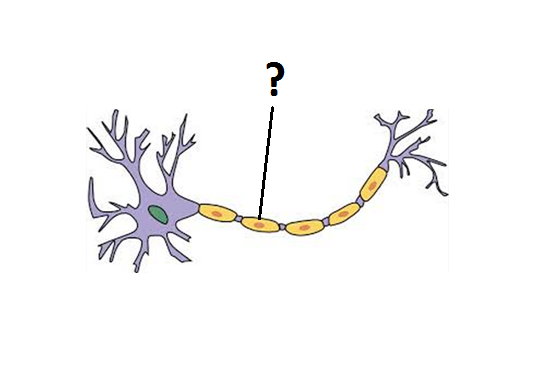
Myelin Sheath
Glial cells that have wrapped around the axon and protected/insulated it
Axon Terminals
branches at the end of the axon that contain the neurotransmitters
Neurotransmitters
chemical messengers that cross the synapse between neurons
Synaptic Vesicles
Sacs in the tips of the axon terminals that contain the neurotransmitters
Synapse
The gap between neurons
Receptor Sites
Holes in the surface of a dendrite into which the neurotransmitters fit
All-or-None Principle
A neuron fires or doesn't; It doesn't partially fire
-55 mv
the threshold at which a neuron fires
-70 mv
charge of a neuron at resting potential
Reuptake
Neurotransmitters going back to the axon terminals that released them after the other neuron fires
+NA
ions that are outside the neuron when at resting potential and enter the neuron as it gets closer to firing
-K
ions that are inside the neuron when at resting potential
Schwann Cells
Glial Cells in the Peripheral Nervous System that for myelin sheath
Oligodendrocytes
Glial Cells in the Central Nervous System that form myelin sheath
Glial Cells
Nourishing cells that wrap around the axon to form myelin sheath
Acetylcholine
Neurotransmitter associated with muscle movement
Acetylcholine (low levels)
associated with Alzheimer's
Myasthenia Gravis
Autoimmune disease in which antibodies attack receptor sites for acetylcholine
Glutamate
Neurotransmitter that causes the neuron to fire and pass the message on; the major excitatory neurotransmitter
GABA
Major inhibitory neurotransmitter; Causes the neurons to be less likely to fire
Serotonin
A neurotransmitter that affects hunger,sleep, arousal, and mood.
Substance P
Neurotransmitter involved in transmitting pain messages in the brain
Dopamine
Neurotransmitter associated with pleasure and rewards
Dopamine (high levels)
Schizophrenia
Dopamine (low levels)
Parkinson's Disease
Epinephrine/Norepinephrine
fight-or-flight neurotransmitter
Adrenaline/Noradrenaline
fight-or-flight hormone
Endorphins
The body's natural painkillers
Oxytocin
Hormone released during social bonding, especially with mothers and newborn infants; The 'Cuddling Hormone'
Agonist
Drugs or chemicals that mimic or increase the effect or neurotransmitters
Antagonist
Drugs or chemicals that reduce or block the effect of neurtransmitters
Tabula Rasa
The idea that we are born with a 'blank slate' and learn through experience
Dualism
The idea that we have a physical brain and a non-physical mind
Monism
The idea that our mind is a product of our physical brain
Phrenology
The idea that the bumps on our brains determine our personalities and traits
Franz Joseph Gall
Founder of Phrenology
Localization of Function
the idea that various brain regions have particular functions
Nodes of Ranvier
gaps in the myelin sheath that charge the action potential
Empiricism
The idea that we learn everything from experience and aren't born with knowledge
Multiple Sclerosis
Disease in which the immune system eats away at the myelin sheath
Parkinson's disease
Associated with low levels of dopamine
Alzheimer's Disease
Associated with low levels of acetylcholine
Schizophrenia
Associated with high levels of dopamine
Central Nervous System (CNS)
Made up of the Brain and Spine
Peripheral Nervous System (PNS)
All the nerves and neurons that connect the body to the spine
Sensory Neurons
neurons that carry incoming information from the body to the brain and spinal cord
Afferent Neurons
Another name for sensory neurons
Motor Neurons
neurons that carry outgoing information from the brain and spinal cord to the muscles and glands
Efferent Neurons
Another name for Motor Neurons
Interneurons
Neurons in the brain and spinal cord
Somatic Nervous System
Subdivision of the PNS that controls voluntary activities
Autonomic Nervous System
Subdivision of the PNS that controls involuntary activities like breathing and heart beat
Sympathetic Nervous System
Subdivision of the Autonomic Nervous System that activates the 'fight-or-flight' response, getting the body to an aroused, alert state
Parasympathetic Nervous System
Subdivision of the Autonomic Nervous system that calms the body down after a stressful situation and gets back to normal functioning
Lesion Method
Observing the effects of damage to the brain
EEG
Method of studying the brain in which electrodes are put on the scalp to measure brain waves (no image of the brain)
CT Scan
Method of studying the brain that involves taking x-rays
MRI
Method of studying the brain that involves detailed cross-sectional images of the brain using magnetic waves
fMRI
Method of studying the brain that involves a cross-sectional image of the brain that shows changing levels of oxygen; shows where the brain is active
PET Scan
Method of studying the brain that involves tracing radioactive glucose in the brain to see where the brain is active
Split-Brain Studies
Severing the corpus callosum to help with epilepsy (seizures)
Lateralization
The idea that the right side of the brain controls the left side of the body and vice versa
Cerebrum
The big, wrinkly, outside part of the brain
Medulla
The initial swelling of the brain stem that controls vital functions like heartbeat and breathing
Pons
A brain structure on the brain stem that relays information from the cerebellum to the rest of the brain and plays a role in sleep and dreams
Reticular Formation
A nerve inside the brain stem that is responsible for ignoring unchanging information or alerting us to new information
Thalamus
The traffic officer; Relays information to the correct part of the brain
Limbic System
The structures tucked up inside the cerebrum including the hypothalamus, amygdala, and hippocampus
Hypothalamus
In charge of the 4 F's (fight, flight, feeding, fornication(sex))
Pituitary Gland
The Master Gland in charge of the rest of the endocrine system
Endocrine System
System of glands throughout the body that release hormones into the bloodstream
Cerebellum
Structure on the back of the brain stem that is responsible for coordinating muscle movements, balance, and learning procedural memories
Amygdala
Brain Structure located on the tips of the hippocampi involved in strong emotional responses like fear and anger
Hippocampus
Brain structure responsible for storing new memories
Corpus Callosum
Brain structure that connects the left and right hemispheres of the brain
Frontal Lobe
Lobe of the brain that's responsible for thinking, problem-solving, and moving
Parietal Lobe
Lobe of the brain that contains the sensory cortex, where sensations of touch are sent
Temporal Lobe
Lobe of the brain responsible for hearing and speech comprehension
Occipital Lobe
Lobe of the brain responsible for vision
Homunculus
Weird, gremlin-looking dude that represents the areas of the sensory/motor cortices
Broca's Area
Area of the left, frontal lobe responsible for the production of speech
Wernicke's Area
Area of the left temporal lobe responsible for comprehending speech of producing meaningful speech
Broca's Aphasia
Damage to the part of the brain that results in inability to produce any speech
Wernicke's Aphasia
Damage to the part of the brain that results in inability to understand speech or produce meaningful speech
Prefrontal Cortex
part of frontal lobe responsible for thinking, planning, and language
Neuroplasticity
The brain's ability to form new neural connections and adapt/change
Nature vs. Nurture
The debate between the impact of genetics and environment on behavior and the mind
Nature (nature v. nurture)
Genetic impact on behavior
Nurture (nature v. nurture)
Environmental influences on behavior
Heritability
How much a trait is due to genetics
myasthenia gravis
An autoimmune disorder in which the body attacks the receptor sites for acetylcholine