Functional Groups

0.0(0)
Studied by 4 people
call kaiCall Kai
Locked
learnLearn
examPractice Test
spaced repetitionSpaced Repetition
heart puzzleMatch
flashcardsFlashcards
GameKnowt Play
Card Sorting

1/25

Last updated 2:29 PM on 9/9/26
Name
Mastery
Learn
Test
Matching
Spaced
Call with Kai
Chat

No analytics yet

Send a link to your students to track their progress

26 Terms

1
New cards

Alkanes

hydrocarbonds with only single bonds

-ane suffix
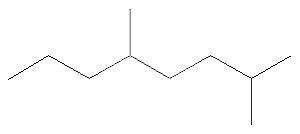
<p>hydrocarbonds with only single bonds</p><p>-<em>ane</em> suffix</p>
2
New cards

Alkenes

hydrocarbons that have a C-toC double bond

-ene suffix

-cycloalkenes always cis isomers

<p>hydrocarbons that have a C-toC double bond </p><p>-<em>ene</em> suffix </p><p>-cycloalkenes always <em>cis</em> isomers</p>
3
New cards

Alkynes

hydrocarbons with a C-to-C triple bond

-yne suffix

the 2 Pi bonds on the functional group are reactive

<p>hydrocarbons with a C-to-C triple bond </p><p>-<em>yne</em> suffix</p><p>the 2 Pi bonds on the functional group are reactive </p>
4
New cards

Aromatic hydrocarbons (arenes)

a ring of 6 Carbons with 3 double bonds

Highly stable in part because of resonance

<p>a ring of 6 Carbons with 3 double bonds<br><br>Highly stable in part because of resonance</p>
5
New cards

-Branched or unbranched alkanes have the molecular formula
-Saturated hydrocarbons

C(n)H(2n+2)

6
New cards

Not all aromatic molecules are hydrocrabons

oxygen, nitrogen, and sulfur
1. the molecule is a planar, cyclic structure

2. the atoms in teh molecule are alll making Pi bonds

3. the totla number of Pi electrons is equal to 2, 6, 10, 14, etc


<p>oxygen, nitrogen, and sulfur <br>1. the molecule is a planar, cyclic structure </p><p>2. the atoms in teh molecule are alll making Pi bonds</p><p>3. the totla number of Pi electrons is equal to 2, 6, 10, 14, etc </p><p></p>
7
New cards

Alcohols

contain a hydroxyl goup (-OH) — R-OH

-ol suffix
VERY polar, H-bonding interactions are possible

Have higher BP from H bonding
Acid/base

<p>contain a hydroxyl goup (-OH) — R-OH</p><p>-<em>ol</em> suffix <br>VERY polar, H-bonding interactions are possible </p><p>Have higher BP from H bonding <br>Acid/base</p>
8
New cards

Ethers

two alkyl groups bonded to an oxygen R-O-R

<p>two alkyl groups bonded to an oxygen R-O-R</p>
9
New cards

Carbonyl group

C=O

At least one oxygen atom is double bonded to a C

<p>C=O </p><p>At least one oxygen atom is double bonded to a C </p>
10
New cards

Aldehyde

alkyl group and a H bound to a C=O

polar molecules with dipole-dipole interactions (no H-bonding)

<p>alkyl group and a H bound to a C=O </p><p>polar molecules with dipole-dipole interactions (no H-bonding) </p>
11
New cards

Ketone

two alkyl groups bound to a C=O

polar molecules with dipole-dipole interactions (no H-bonding)

<p>two alkyl groups bound to a C=O</p><p>polar molecules with dipole-dipole interactions (no H-bonding) </p>
12
New cards

Carboxylic acids

combination of a C=O and -OH group, sharing a common C atom

General formula: R-COOH

Very polar- can make H-bonding interactions

<p>combination of a C=O and -OH group, sharing a common C atom </p><p>General formula: R-COOH</p><p>Very polar- can make H-bonding interactions </p>
13
New cards

Acid Halide

Carbonyl group bonded with Br, Cl, F, or I
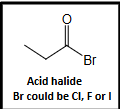
<p>Carbonyl group bonded with Br, Cl, F, or I </p>
14
New cards

Ester

An ether with a carbon double bonded with an oxygen.

Oxygen has to be bonded to the same carbon as the double bonded oxygen
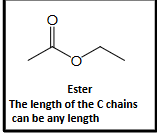
<p>An ether with a carbon double bonded with an oxygen. <br><br>Oxygen has to be bonded to the same carbon as the double bonded oxygen</p>
15
New cards

Amide

a carbonyl group with a N attached to the carbonyl C
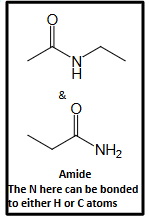
<p>a carbonyl group with a N attached to the carbonyl C </p>
16
New cards

Amine

R-NH2 (Primary amine)
R-NH-r (secondary amine)
R-N-R2 (tertiary amine)
+N(R)4 (Quaternary amines)

<p>R-NH2 (Primary amine) <br>R-NH-r (secondary amine) <br>R-N-R2 (tertiary amine) <br>+N(R)4 (Quaternary amines) </p>
17
New cards

Nitriles or Cyanos

Contains a cyano (or nitrile) group C triple bonded to N
CH3-C≡N

<p>Contains a cyano (or nitrile) group C triple bonded to N<br>CH3-C≡N</p>
18
New cards

Nitro compounds

contain a nitro (NO2) group
The O atoms can do resonance

<p>contain a nitro (NO2) group <br>The O atoms can do resonance </p>
19
New cards

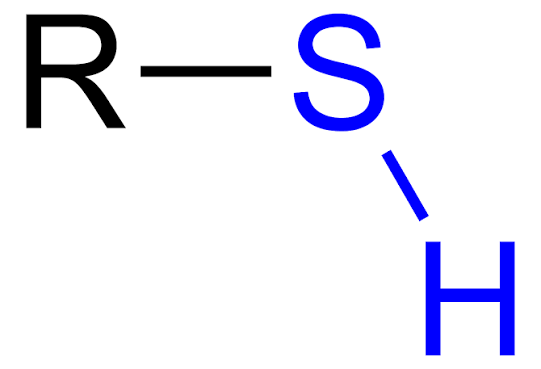
Thiols

contain a sulfhydryl group (R-SH)

similar to alcohols
<p>contain a sulfhydryl group (R-SH) </p><p>similar to alcohols </p>
20
New cards

sulfides or thioethers

similar to ehters (R-S-R’)

<p>similar to ehters (R-S-R’) </p>
21
New cards

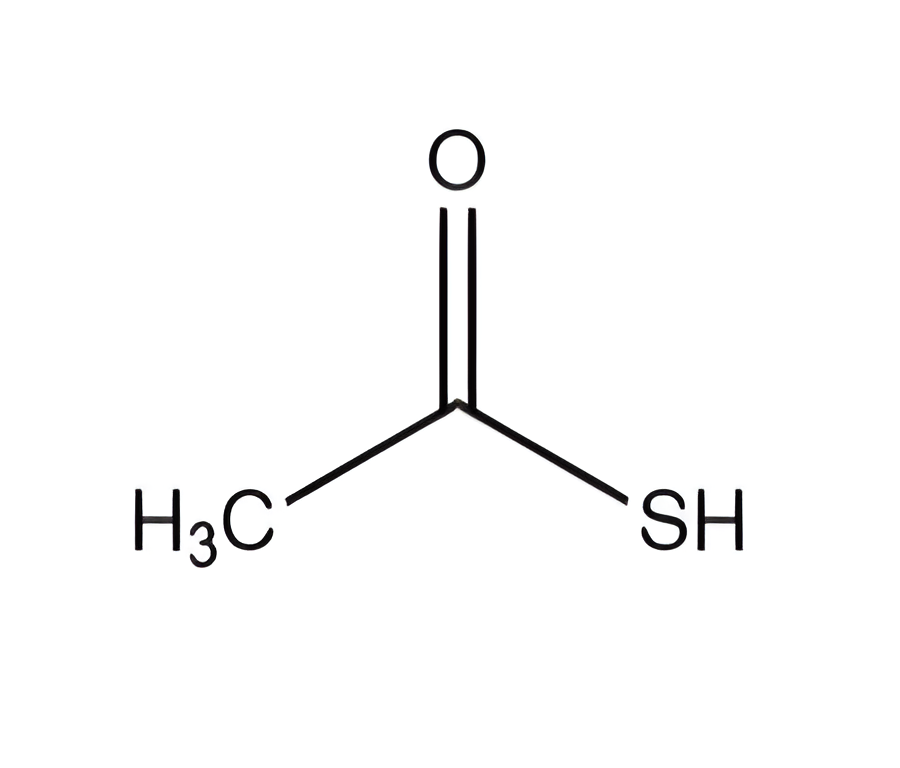
thioESTERs

similar to esters
-can be a SH or SR next to the carbonyl C

-S can do resonance here
<p>similar to esters <br>-can be a SH or SR next to the carbonyl C </p><p>-S can do resonance here</p>
22
New cards

Sulfonic acids

similar to carboxylic acids
S, expanded octet

<p>similar to carboxylic acids <br>S, expanded octet</p>
23
New cards

Sulfoxide

mildly oxidized form of a thioether

—R-SO-R

<p>mildly oxidized form of a thioether</p><p>—R-SO-R</p>
24
New cards

Sulfone-

a fully oxidized form of a thioether

—R-SO2-R

<p>a fully oxidized form of a thioether</p><p>—R-SO2-R</p>
25
New cards

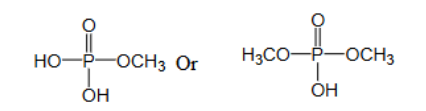
phosphate esters

RO-PO2-OR
-these are the functional groups that hold a chain nucleic acids in a molecule of RNA or DNA together

-the phosphorous is in the phosphate form here

-the O atoms can do resonance
<p>RO-PO2-OR<br>-these are the functional groups that hold a chain nucleic acids in a molecule of RNA or DNA together </p><p>-the phosphorous is in the phosphate form here </p><p>-the O atoms can do resonance </p>
26
New cards

Phosphine

phosphorous bonded to 3 different carbon atoms

<p>phosphorous bonded to 3 different carbon atoms </p>



