A&P II Units 1-3 Exam
 Studied by 20 people
 Call Kai
 Learn
Learn Practice Test
 Spaced Repetition
 Match
Match Flashcards
 Knowt Play
1/123

Earn XP
Description and Tags
Bony thorax, Upper vertebral column & lower vertebral column.
Name | Mastery | Learn | Test | Matching | Spaced | Call with Kai |
|---|
No analytics yet
Send a link to your students to track their progress
124 Terms
The sternal notch is at what vertebral level?
T2-T3
The sternal angle is at what vertebral level?
T4-T5
What vertebral landmark is ~1.5” above the sternal notch?
T1
What vertebral landmark is 3”-4” below the sternal angle?
T7
In a rib x-ray, how can you tell if the patient is older?
You can see the cartilage is calcified in the ribs
Why do an oblique rib?
It elongates & opens up the shaft/axillary margin of the rib
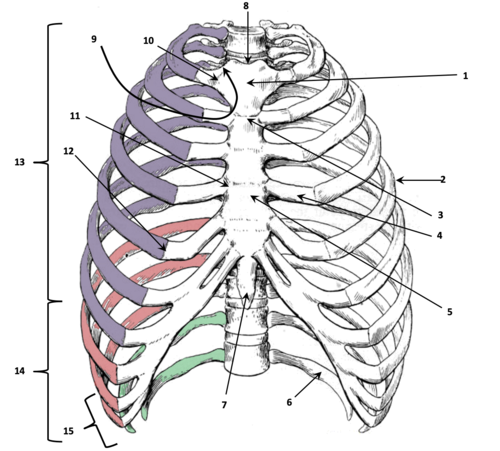
Label 1-15
Manubrium
Body/shaft of the 5th rib
Sternal angle
Costal cartilage of 4th rib
Body/shaft of the sternum
Rib 12
Xiphoid process
Manubrial/Sternal/Jugular notch
Sternoclavicular articular facet
1st sternocostal joint
4th sternocostal joint
5th costochondral joint
True ribs 1-7
False ribs 8-12
Floating ribs 11 & 12
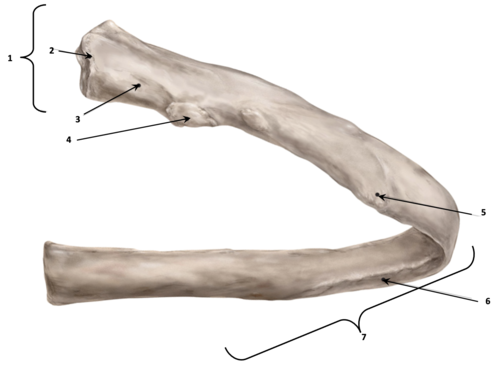
Label 1-7
Vertebral end
Head
Neck
Tubercle
Angle
Costal groove
Body/shaft
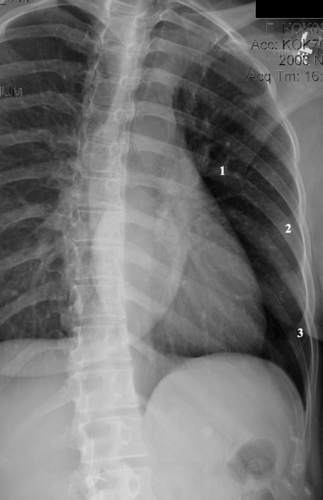
Label 1-3
Angle of the 6th rib
Body/shaft of the 6th rib
Sternal end of the 6th rib
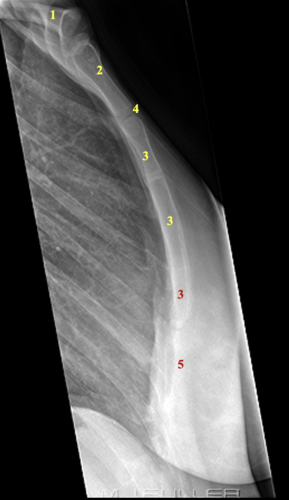
Label 1-5
Clavicles
Manubrium
Body/shaft
Sternal angle
Xiphoid process
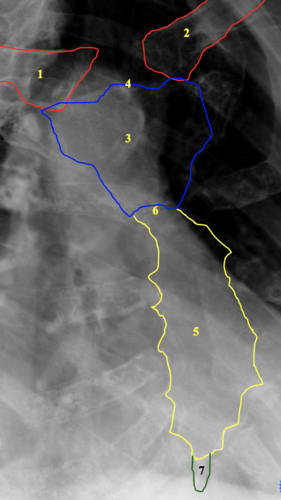
Label 1-7
Right clavicle
Left clavicle
Manubrium
Sternal/Manubrium/jugular notch
Body/shaft
Sternal angle
Xiphoid process
The bony thorax consists of…
The sternum & 24 ribs
What is the anterior anchor for some ribs and protects the mediastinal structures?
The sternum
Where is the sternoclavicular articular facet?
Lateral to the sternal notch
The sternal angle is?
Fused articulation between body & manubrium about 2" below the sternal notch
How many costal articular facets are there on the right side?
7
How many costal articular facets are there on both the right and left side?
14
What is the xiphoid made of?
cartilage
The xiphoid process sits at what vertebral level?
T9-T10
How many ribs have vertebral articulation?
All 12, posteriorly w/ thoracic spine
How many ribs have sternal articulation?
The first 7
Ribs 1-7 are classified as…
True ribs due to their sternal articulation
Ribs 8-12 are classified as…
False ribs since they do not articulate directly with the sternum
Ribes 11-12 are classified as…
Floating ribs since they do not have any anterior articulation
Vertebral end of the rib contains?
head, neck, tubercle, & angle
What is the costal groove?
On inside for blood vessels and nerves (not radiographically visible)
Sternal end of rib
Costal cartilage (not radiographically visible), 3"-5" inferior to vertebral end
Where are Sternoclavicular Joints located? what is the class & movement?
Between the sternum and clavicles; diarthrodial/gliding
Where are Sternocostal Joints located?
Between the costocartilage of ribs 1-7 and the sternum
Sternocostal Joint 1 class and movement
Synarthrodial/ no movement
Sternocostal Joints 2-7 class and movement
Diarthrodial/ gliding
Where are the costochondral Joints located? What is the class and movement?
Between the bony rib and costocartilage; synarthrodial/no movement
What two ribs do not have a costochondral joint?
Ribs 11 and 12
Where are the costotransverse Joint located? What is the class and movement?
Between the transverse process and tubercle of the rib; diarthrodial/gliding
Where are the costovertebral Joint located? What is the class and movement?
Between the posterior vertebral bodies and head of ribs; diarthrodial/gliding
Where are the Atlanto-axial joint located? What is the class and movement?
Between C-1 and C-2. C-1 rotates around the dens of C-2. Diarthrodial class with two articular points… 1 pivot & 2 gliding
The top of the shoulders is at what vertebral level?
C7
The thyroid cartilage is at what vertebral level?
C5
The angle of mandible is at what vertebral level?
C3
The mastoid tip (behind the ear) is at what vertebral level?
C1
The ear canal is at what vertebral level?
~1” above C1
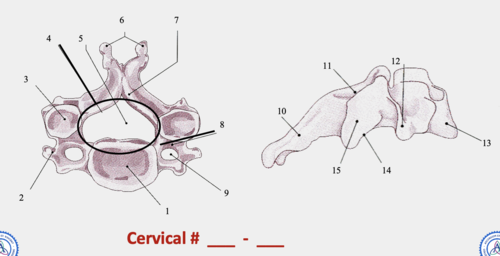
Cervical #__-__?
C3-C7
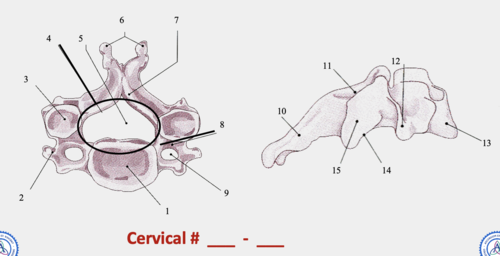
Label 1-15
Vertebral body
Transverse process
Superior articular process
Vertebral foramen
Spinal cord
Bifid tip of spinous process
Lamina
Pedicle
Transverse foramen
Spinous process
Vertebral foramen
Transverse process
Vertebral body
Inferior articular process
Articular pillar
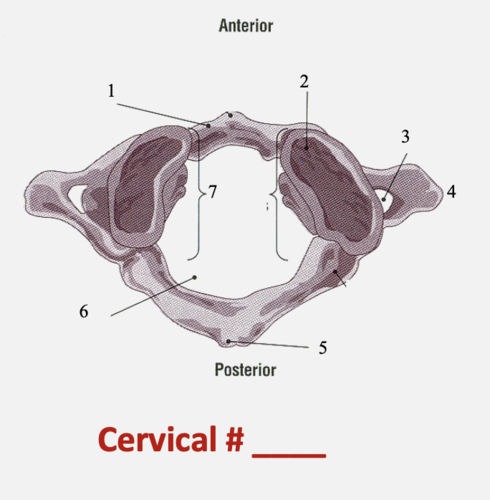
Label 1-7
Anterior arch
Superior articular process
Transverse foramen
Transverse process
Posterior arch
Vertebral foramen
Lateral masses
C1 vertebrae is known as
Atlas
C2 vertebrae is known as
Axis
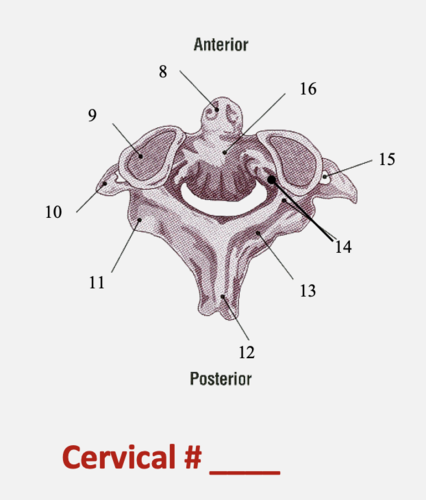
Label 8-16
Dens (odontoid process)
Superior articular process
Transverse process
Inferior articular process
Spinous process
Lamina
Pedicle
Transverse foramen
Vertebral body
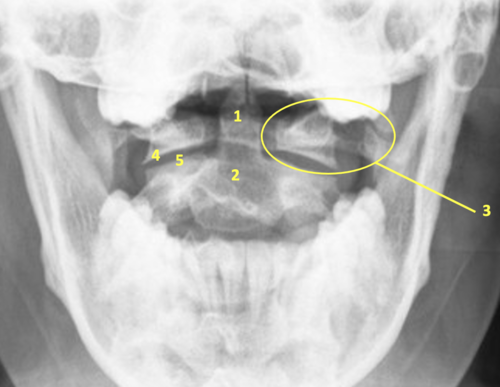
Label 1-5
Dens of C2
Vertebral body of C2
Lateral mass of C1
Inferior articular process of C1
Superior articular process of C2
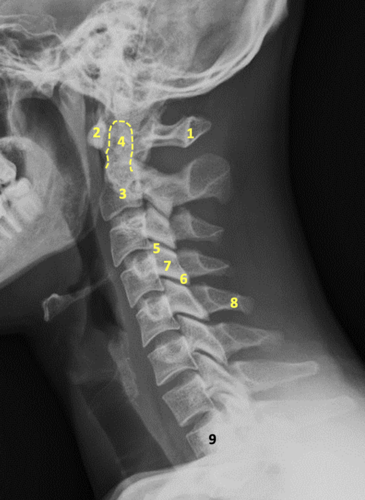
Label 1-9
Posterior arch of C1
Anterior arch of C1
Body of C2
Dens (odontoid) of C2
Superior articular process of C4
Inferior articular process of C4
Articular pillar of C4
Spinous process of C5
Body of T1
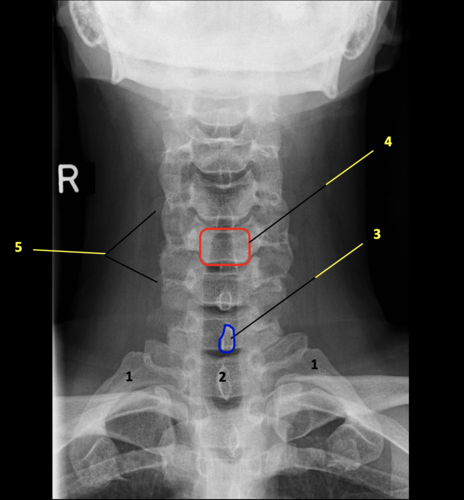
Label 1-5
1st rib
T1
Spinous process of C7
Vertebral body
Transverse process
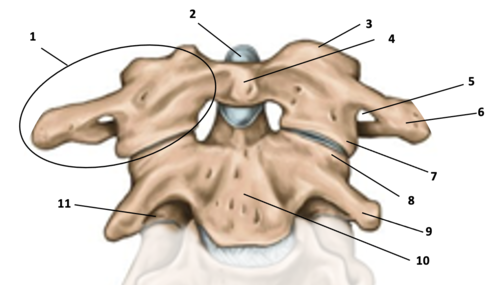
Label 1-11
Lateral mass
Odontoid process (dens)
Superior articular process
Anterior arch
Transverse foramen
Transverse process
Inferior articular process
Superior articular process
Transverse process
Vertebral body
Inferior articular process of C2
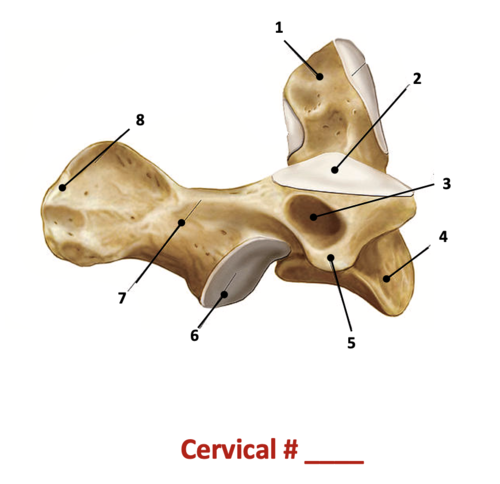
Label 1-8
Dens (Odointoid process)
Superior articular surface
Transverse foramen
Vertebral body
Transverse process
Inferior articular surface
Lamina
Spinous process
Facets for rib articulations are at?
Posterior vertebral bodies and transverse processes
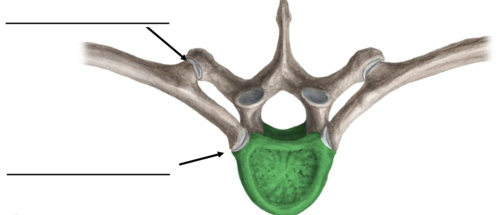
What joint is the top arrow pointing to?
Costotransverse joint
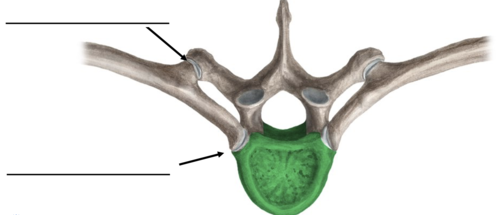
What joint is the bottom arrow pointing to?
Costovertebral joint
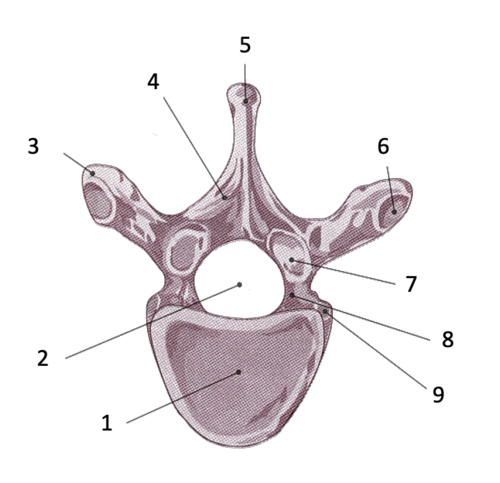
Label 1-9
Vertebral body
Vertebral foramen
Transverse process
Lamina
Spinous process
Costotransverse facet
Superior articular process
Pedicle
Costovertebral facet
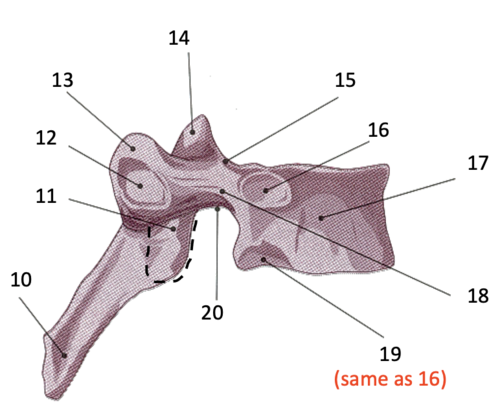
Label 10-20
Spinous process
Inferior articular processs
Costotransverse facet
Transverse process
Superior articular process
Superior vertebral notch
Superior costovertebral facet
Vertebral body
Pedicle
Inferior costovertebral facet
Inferior vertebral notch
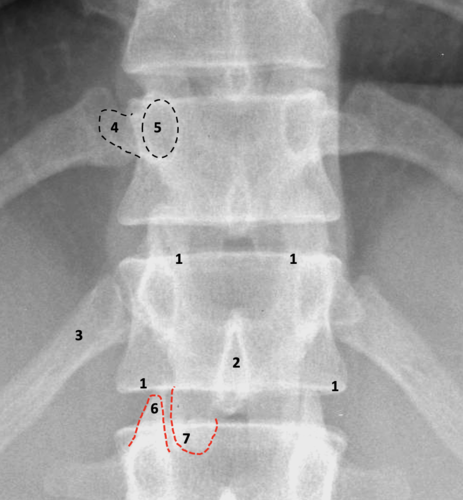
Label 1-7
Vertebral body
Spinous process
Posterior rib
Transverse process
Pedicle
Superior articular process
Inferior articular process
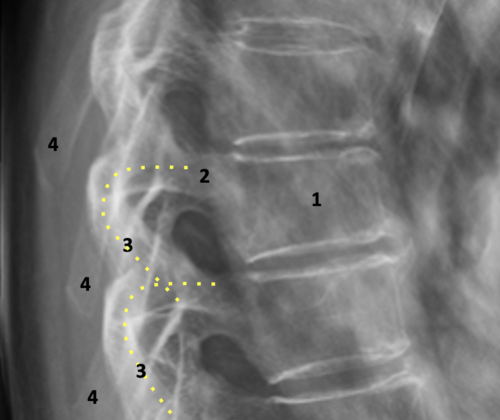
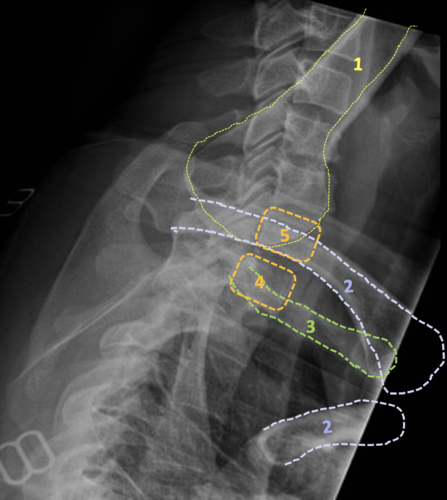
Label 1-4
Vertebral body
Pedicle
Posterior ribs
Spinous processes
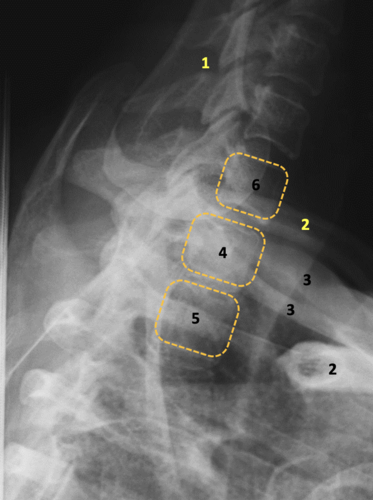
Label 1-5
Humerus
Clavicles
1st rib
Body of T1
Body of C7
Label 1-6
Humerus
Clavicles
1st rib
Body of T1
Body of T2
Body of C7
How would you describe lumbar vertebral bodies?
Larger than thoracic and cervical, they bears all the weight
The spinous process of the lumbar vertebra are?
Large and rounded
The lamina of the lumbar vertebra contains?
Pars interarticularis, which bridges the superior and inferior articular processes
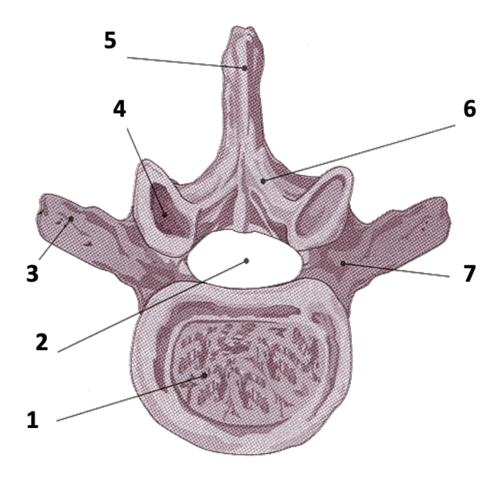
Label 1-7
Vertebral body
Vertebral foramen
Transverse process
Superior articular process
Spinous process
Lamina (Pars interarticularis)
Pedicle
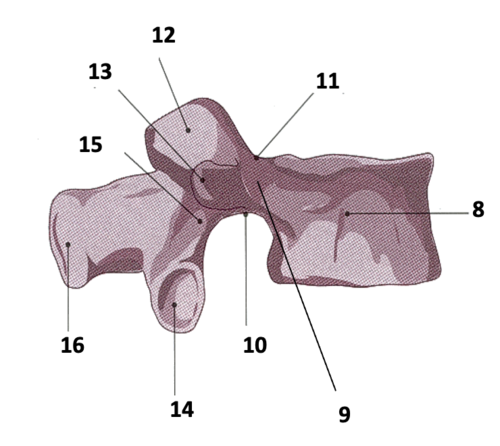
Label 8-16
Vertebral body
Pedicle
Inferior vertebral notch
Superior vertebral notch
Superior articular process
Transverse process
Inferior articular processs
Lamina (Pars interarticularis)
Spinous process
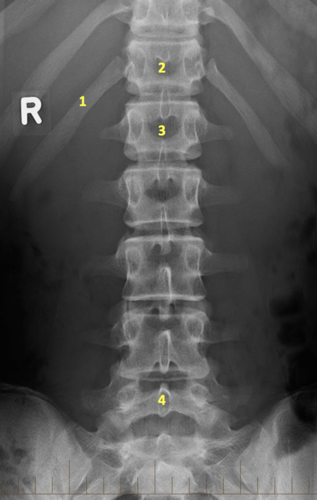
Label 1-4
12th posterior rib
T12
L1
L5
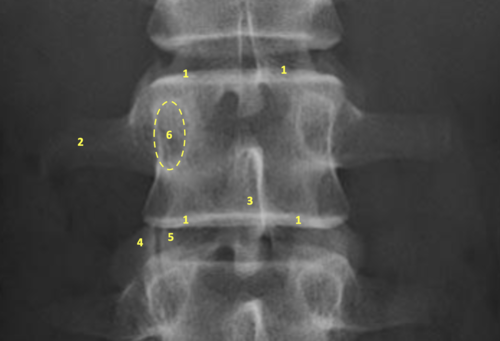
Label 1-6
Vertebral body
Transverse process
Spinous process
Superior articular process
Inferior articular process
Pedicle
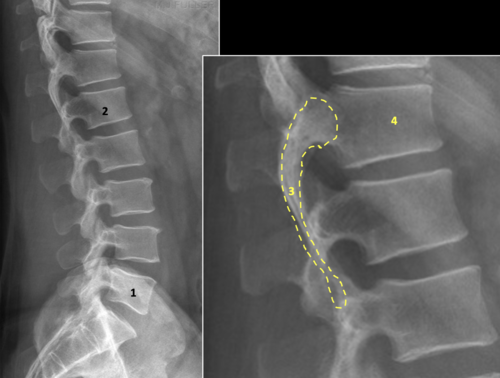
Label 1-4
L5
L1
12th rib
Vertebral body of T12
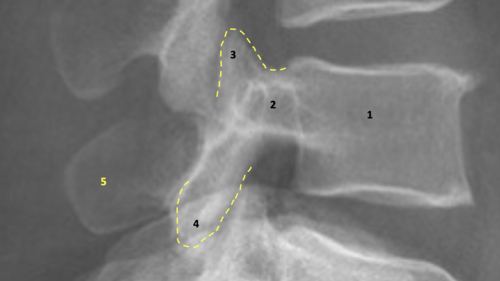
Label 1-5
Vertebral body
Pedicle
Superior articular process
Inferior articular process
Spinous process
What are Intervertebral Foramina?
the openings behind vertebral bodies, formed by superior & inferior vertebral notches that allow nerve roots to exit the spinal canal
Intervertebral foramina are best seen on..?
Lateral lumbar x-rays
What are zygapophyseal (facet) Joints?
the articulations formed between the superior and inferior processes
What is the class and movement of zygopaphyseal (facet) joints?
Diarthrodial & gliding
Zygapophysial joints are demonstrated on…?
Oblique lumbar spine positions
"Scotty dogs" represent the detailed anatomy of the…
Zygapophyseal joints of the lumbar spine demonstrated on oblique radiographs
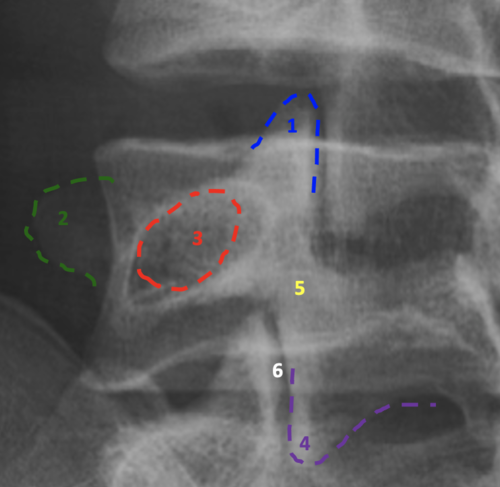
Label 1-6
Ear: Superior articular process
Nose: Transverse process
Eye: Pedicle
Leg: Inferior articular process
Neck: Pars interarticulais
Zygapophyseal joint
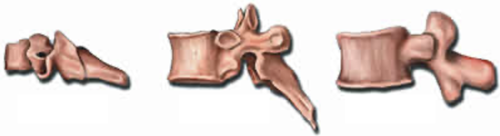
Label what type of vertebra left to right
Left: Cervical
Middle: Thoracic
Right: Lumbar
The body (S1) of the sacrum attaches to?
L5
Does the sacrum have an inferior articular process?
No
Where are Intervertebral Joints located? What is the class & movement?
Between the vertebral bodies, amphiarthrodial class, limited movement (slight expansion and contraction but no free movement)
Intervertebral Joints consists of?
Inner "gelatin-like" nucleus pulposus surrounded by cartilage rings of annulus fibrosus
The wing (ala) of the sacrum articulates with?
the ilium to form the S.I. joint
Thoracic zygapophyseal joints are best seen on?
70 degree oblique (RPO) T-spine
Cervical zygapophyseal joints are best seen on?
Lateral C-spine
Is the articular surface of the sacrum anterior or posterior?
Posterior
What is the sacral foramina?
4 pairs between each fused sacral segment for blood vessel & nerve transmission
How many fused segments does the coccyx have?
4 fused segments
What part of the sacrum body protrudes anteriorly & supports the body of L-5?
The sacral promontory
What is the sacral crest?
The fused spinous processes of the posterior sacrum
What are the paired projections on the posterior sacrum on each side of the sacral hiatus?
Cornu (Horn)
What does the sacrum and coccyx both have?
Left and right coccyx horns
Where are the transverse processes located on the coccyx?
Laterally off the base of the coccyx
What is the sacral canal?
It is the continuation of the vertebral canal for spinal nerves
The apex is what part of the coccyx?
The inferior tip
The sacral canal ends at…
the sacral hiatus (NOT present in coccyx)
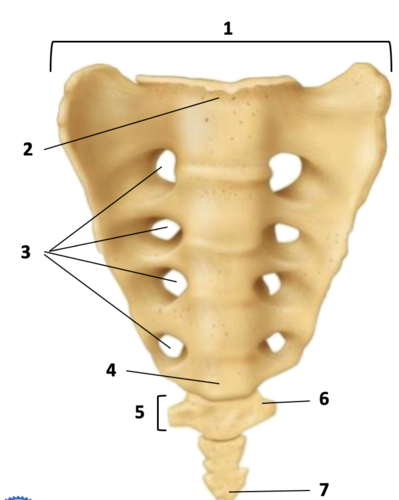
Label 1-7
Base of the sacrum
Body of the sacrum
Sacral foramina
Apex of sacrum
Base of the coccyx
Transverse process
Apex of coccyx
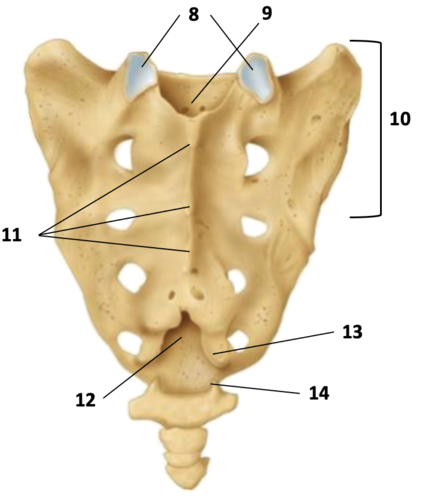
Label 8-14
Superior articular process
Vertebral canal
Articular surface of wing/ ala
Sacral crest
Sacral hiatus
Cornu (horn) of sacrum
Cornu (horn) of coccyx
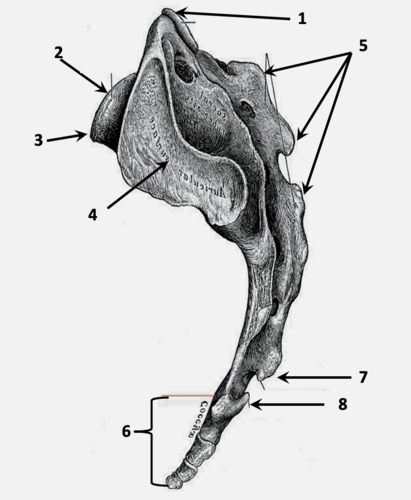
Label 1-8
Superior articular process
Body (base)
Sacral promontory
Articular surface of wing/ ala
Sacral crest
Coccyx
Cornu (horn) of sacrum
Cornu (horn) of coccyx
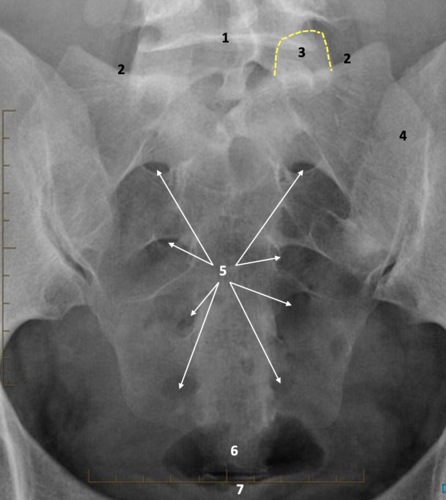
Label 1-7
L5
Base of sacrum
Superior articular process
Wing/ ala
Sacral foramina
Apex of sacrum
Coccyx (base)
 Note
Note  Flashcards (21)