pre- and probiotics OTC ex 4
 Call Kai
 Learn
Learn Practice Test
 Spaced Repetition
 Match
Match Flashcards
 Knowt Play
1/4

There's no tags or description
Looks like no tags are added yet.
Name | Mastery | Learn | Test | Matching | Spaced | Call with Kai |
|---|
No analytics yet
Send a link to your students to track their progress
5 Terms
enteric microbiota
community of microflora in the GI tract
GI tract hosts approximately 300-500 species of commensal bacteria but also fungi, parasites, and viruses
Some view the microbiome as ”a superorganism” in a symbiotic relationship with the gut mucosa
Some label it as a “supporting organ” because of its large role in supporting normal bodily functions
Microbiome aids in
digestion
modulating the systemic and local immune system
breaking down potentially toxic food compounds
synthesizing certain vitamins and AAs
providing a GI barrier
influencing disease development, which is where much research is focused
prebiotics
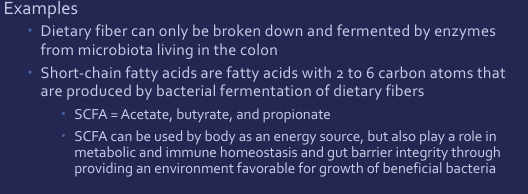
support the enteric microbiota and typically are substances that are fermented in the colon
these must selectively stimulate growth and/or activity of one or a small number of health-promoting bacteria species residing in the colon, with consequent benefit to the host
Inulin-type fructans and fructooligosaccharides (FOSs)
most common prebiotics
Inulin is partially hydrolyzed into FOSs
Found in small amounts of foods like bananas, asparagus, onion, leek, garlic, seaweed, soy and wheat
Both prebiotics significantly increase bifidobacteria concentrations
SEs: bloating, flatulence, and GI discomfort occur at 15 g or higher
Those with lactose intolerance may experience more side effects

human milk oligosaccharides (HMOs)

