CVA Notes: Postcranial
 Note
Note Call Kai
 Learn
Learn Practice Test
 Spaced Repetition
 Match
Match Flashcards
 Knowt Play
1/36

There's no tags or description
Looks like no tags are added yet.
Name | Mastery | Learn | Test | Matching | Spaced | Call with Kai | Chat |
|---|
No analytics yet
Send a link to your students to track their progress
37 Terms
A discrete but repeating series of cartilaginous or bony elements, evolved from block-like elements in early vertebrates; its evo complicated due to various elements arose or were lost multiple times
Bases of ventral arches enlarged @ notochord.
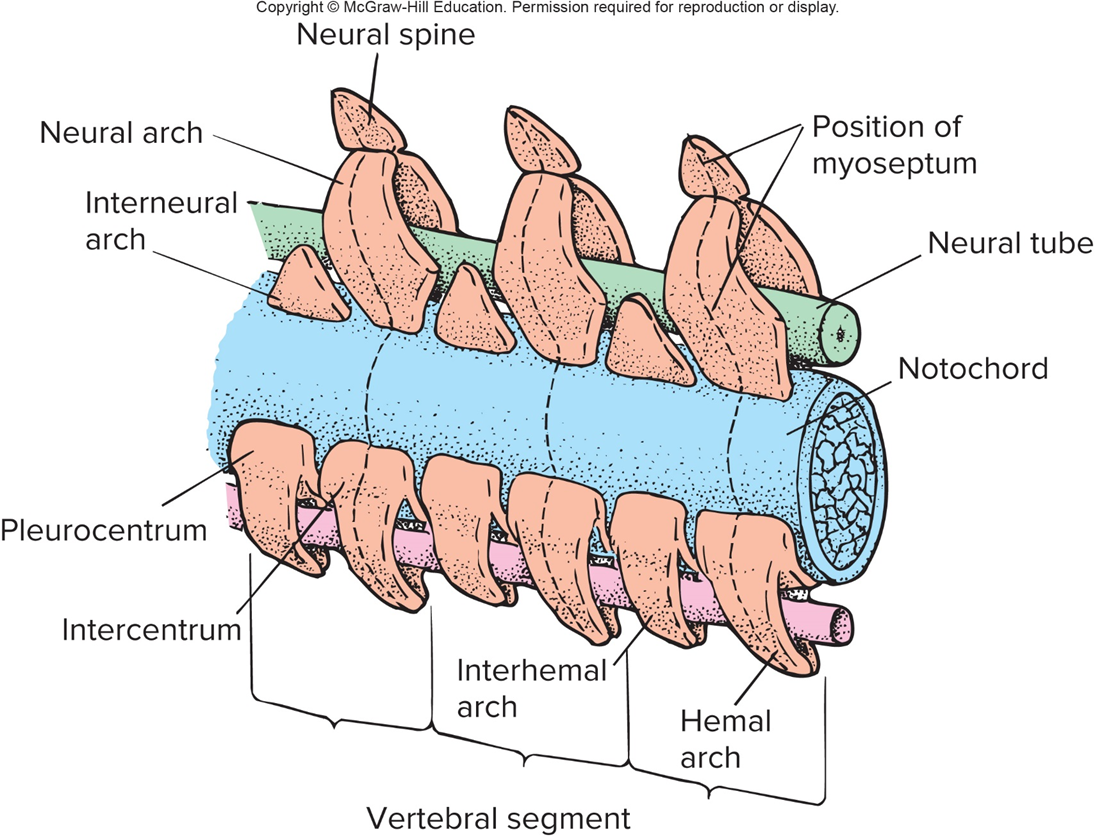
Intercentrum
base of hermal arch. Dom in temnospodyls
Pleurocentrum
base of interhemal arch. Dom in amniotes
More ribs surrounding viscera →
fewer ribs surr. thoracic cavity (ribs are larger/ thicker to compensate)
Cervical vertebrae allow for...
head movement (neck turning)
Living agnathans
Hagfish have notochord only as adults;
Lampreys possess some small cartilaginous vertebral elements, but notochord dominates
Characterized by a prominent/ large notochord and hard-to-document vertebral elements in fossil forms.
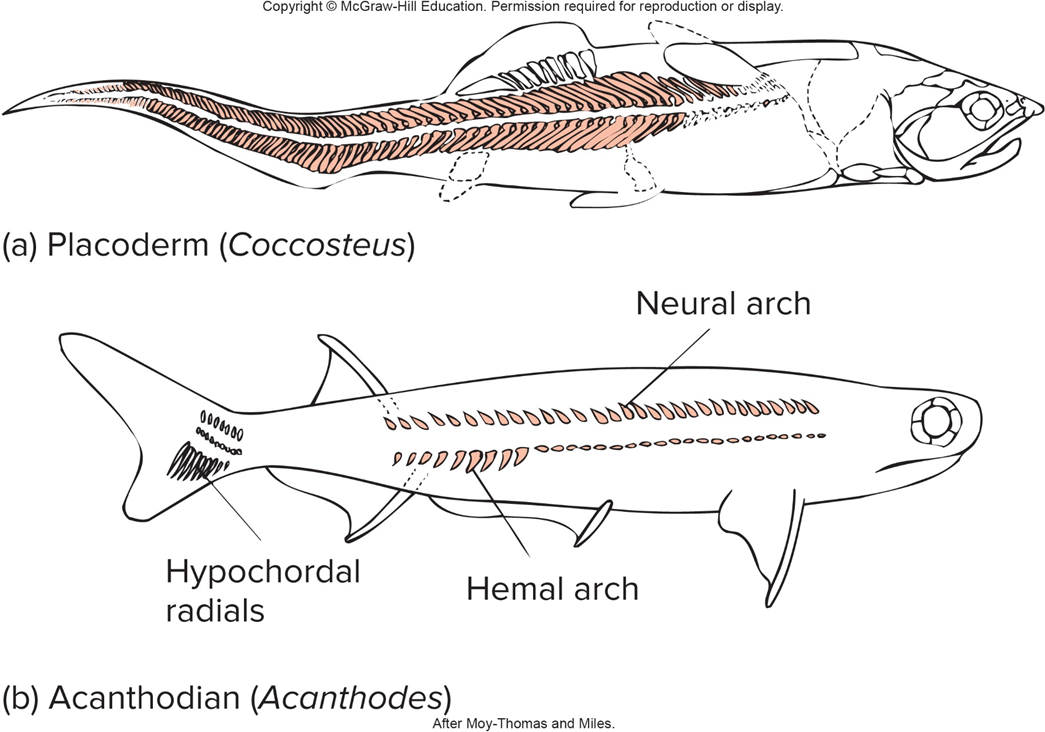
Ancient gnathostomes: Acanthodians & Placoderms
notochord prominent; no vertebral centra; some arches present
Ancient gnathostomes: Ancient Chondrichthyes
prominent notochord, arches present
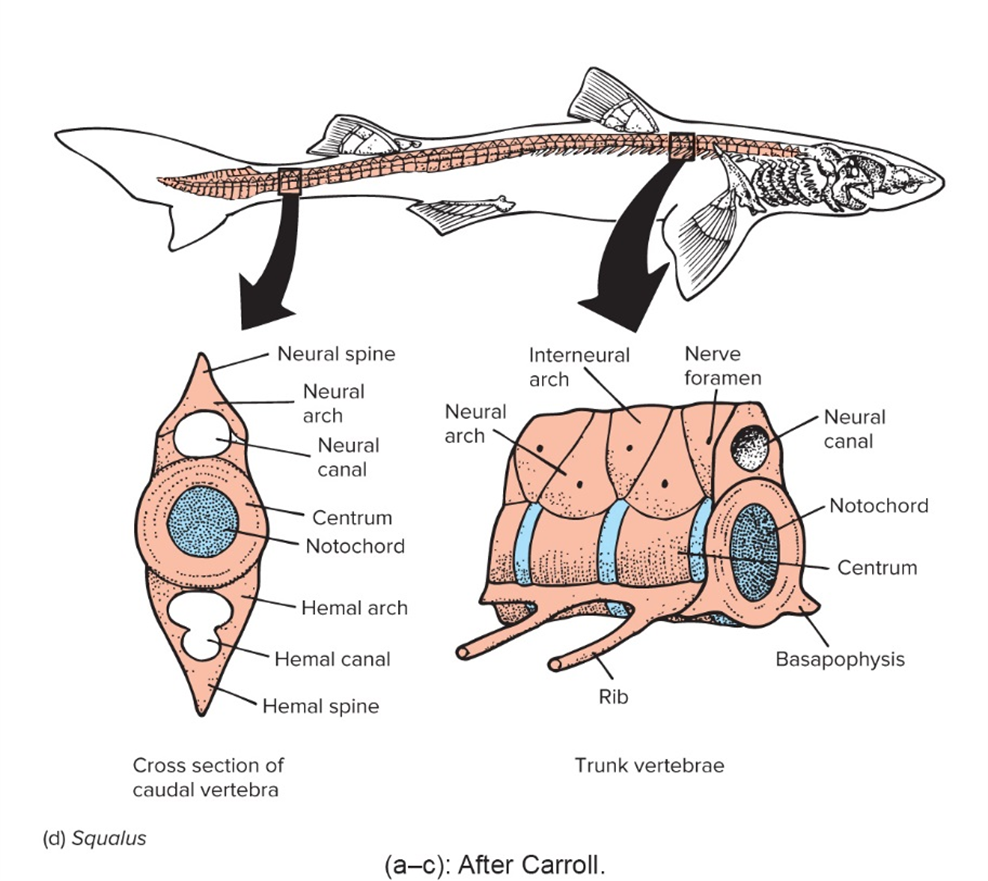
Chondrichthyes (modern): Modern
vertebrae prominent; notochord remnant w/in vertebral column (amphicoelous intervertebral joints)
Chondrichthyes (modern): Osteichthyes
(ie Sturgeons & paddlefishes): vertebral column dominant but secondarily unossified, notochord retained
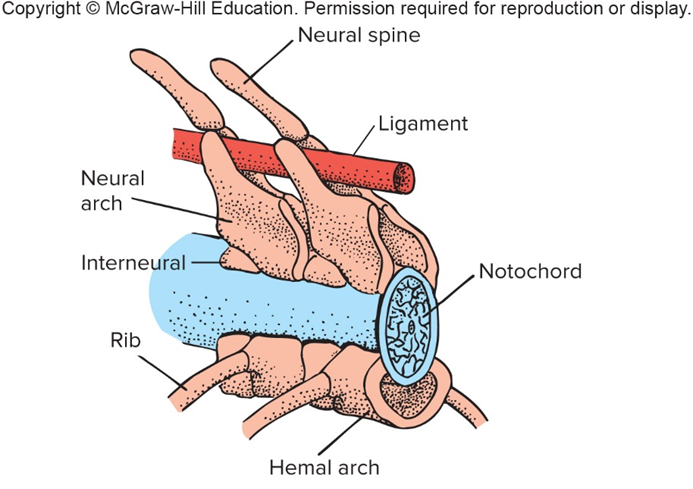
Chondrichthyes (modern): Adv. Ost. (incl. Teleosts)
Vertebra dom & column ossified but no notochord present
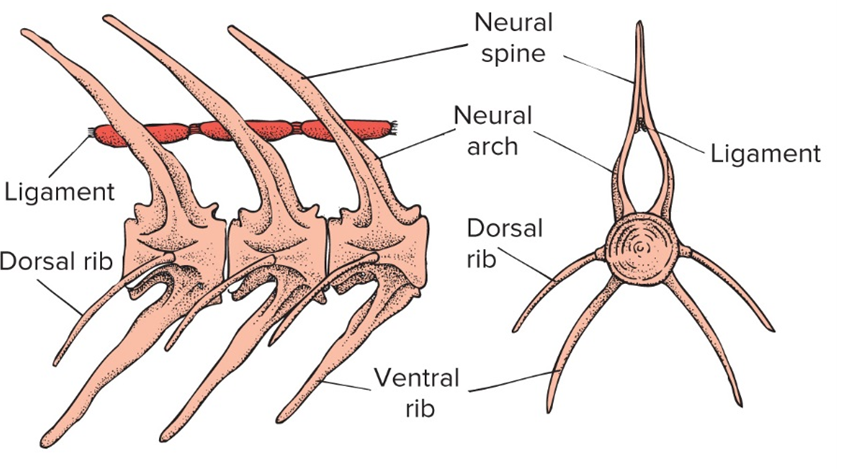
Chondrichthyes (modern): Sarcopterygian
Ancient forms generally more ossified than modern forms
Amphibians: Temnospondyl
One of 3 lineages of 4pods evolved from Rhipidistians: intercentrum dom., leading to modern amphibians, hemal arch forms the body (…→Urodeles → Anurans)
Amphibians: Anthracosaur
1 of 3 lineages of 4pods evolved from Rhipidistians: An ancient lineage leading to modern amniotes, pleurocentrum dom., interhaemal arch forms the body.
Amphibians: Ichthyostegids
Diffuse arrangement of vertebral elements and are now extinct.
Amphibians: Urodeles (salamanders)
Vertebral column arched and 4pod-like;
1x midventral sternal plate that articulates w/ shoulder girdle
Amphibians: Anurans (Frogs)
Vertebral column arched and 4pod-like;
1x xiphisternum, sometimes w/ xiphoid cartilage or another element called omosternum
Sauropsids are...
modern anthracosaurs (our ancestors)
Head-neck articulation
atlas and axis: 1st 2 cervical vertebrae, allowing movement of head
Snake’s Adaptations
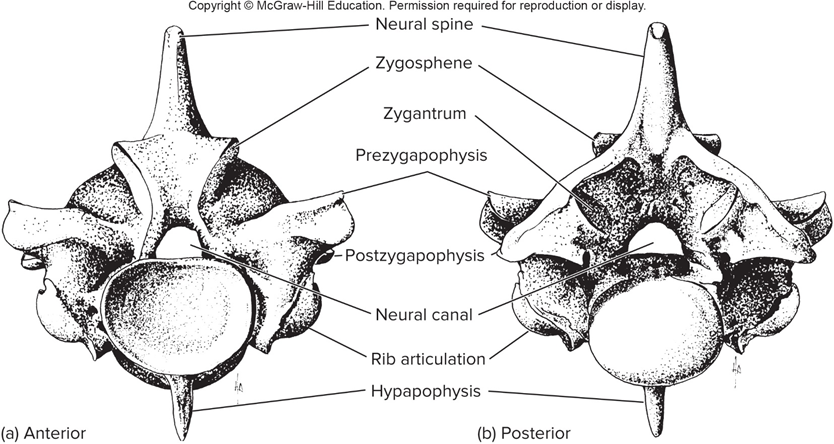
extra zygopophyses to manage twisting
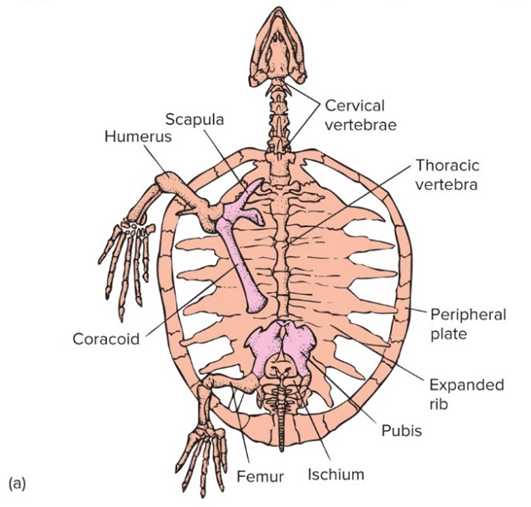
Testudines
vertebrae fused w/ shell
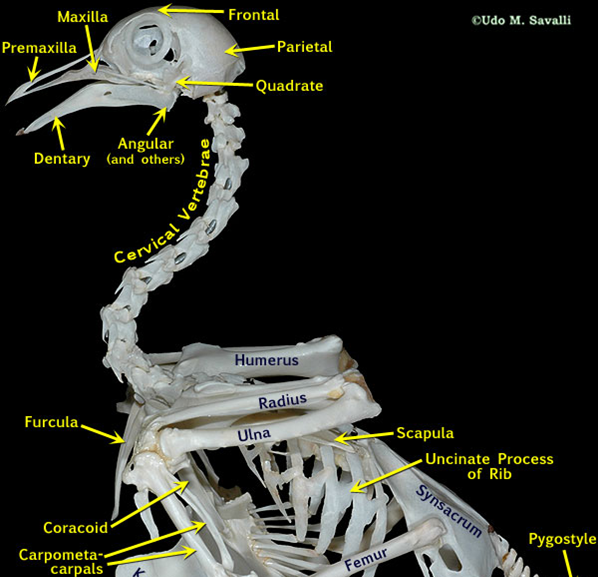
Bird Adaptations
uncinate processes for fight muscle attachment, pringle/ saddle like built
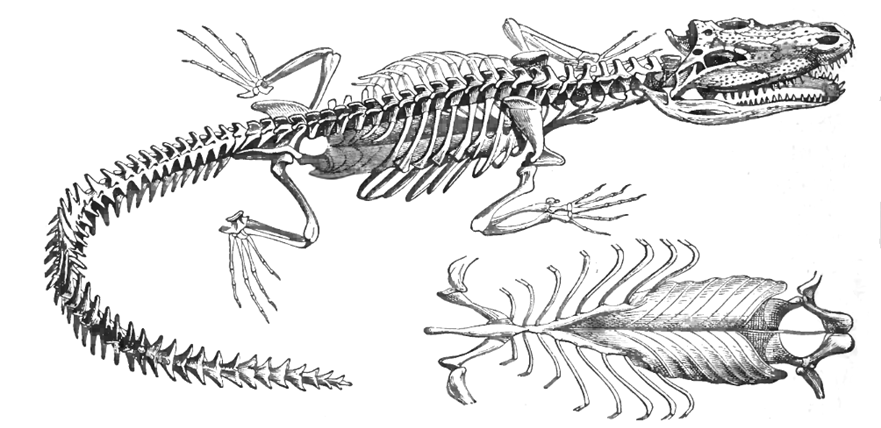
Dermal bony 'ribs' found in the abdominal region of crocs only
The fused pelvic bones including public, ischial, and iliac bones.
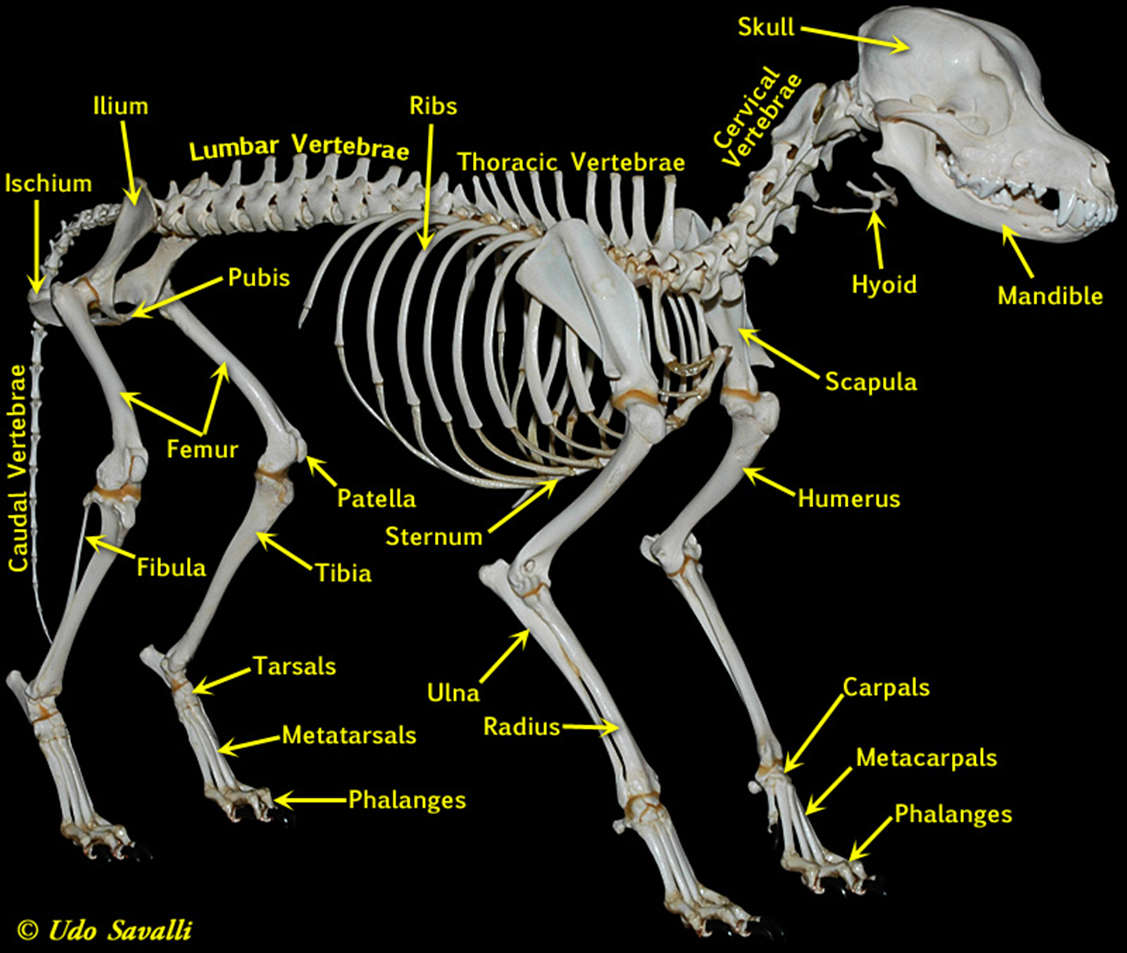
Thoracic vertebrae
c. 12, w/ ribs
Typically 7 vertebrae in mammals, allowing for neck movement.
A group of fused vertebrae, usually 2-3 in mammals, with humans having 5.
The simplified and reduced vertebrae at the tail end of vertebrates, lacking ribs.
Mammal’s adaptation for Life on Land
Limbs are now below the body and not to its side, which is a big deal when conserving energy just to stands or lift body upward.