CVA Notes: Postcranial
Axial Skeleton:
Axial skele defines & supports longitudinal axis of the body
Notochord: long, cont.s rod of fibrous conn. tissue
Older vs. vertebral column but replaced by it in development in most vertebrates
Vertebral column: discrete but repeating series of cartilaginous or bony elements
originated as block-like elements in early vertebrates (ie. Haikouella)
V. column evolution complicated, because various elements arose or were lost multiple times
Impossible to examine embryos of early vertebrates which limits our understanding
Vertebral Anatomy:
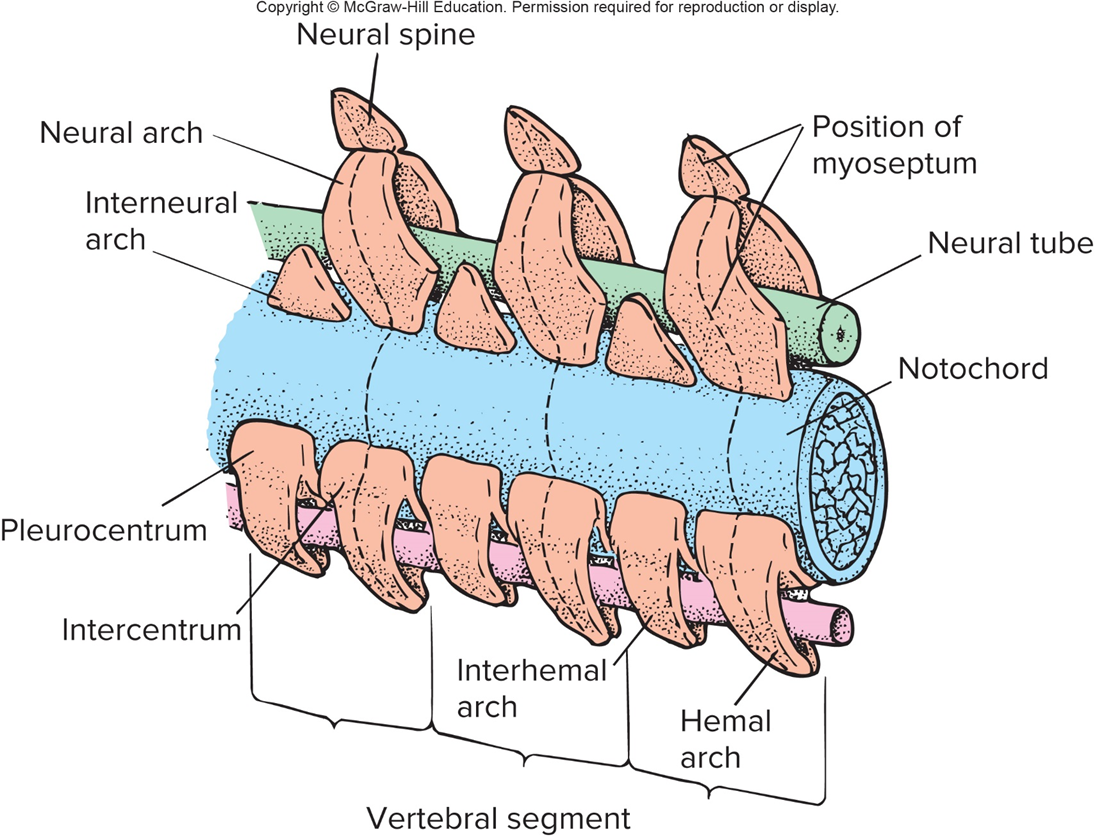
Dorsal arches:
Neural: spinal cord passes through this
Interneural
Ventral arches:
Hemal
Interhemal
Centra: bases of ventral arches enlarged @ notochord
Intercentrum: base of hemal arch. Dom in temnospodyls (anamniotes)
Pleurocentrum: base of interhemal arch. Dom in amniotes
Vertebral segment: up to 2 dorsal arches, 2 ventral arches, and 2 centra
Phylogeny:
Maj. Patterns:
Greater ossification from ancestral pattern; consolidation of segment components
Vertebral column: straight →arched
Ribs: more ribs surr. viscera →fewer ribs surr. thoracic cavity
(ribs, however, are larger/thicker to compensate)
Adaptations for life on land:
Arches for support
Zygopophyses: little projection b/w each vertebrate that prevent torsion/ twisting
Cervical vertebrae allow head movement (neck turning)
Agnathan Axial Skele:
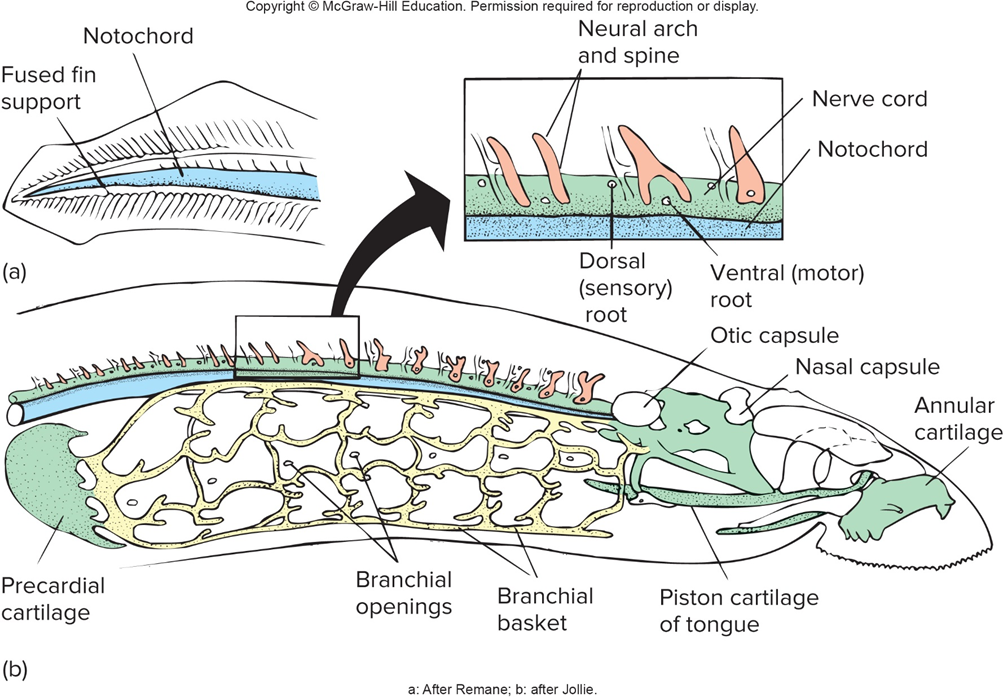
Notochord large and prominent
Vertebral elements hard to document in fossil forms…or, weren’t present
Living agnathans:
hagfish have notochord only as adults
Lamprey possess some small cartilaginous vertebral elements but notochord dominates
Ancient gnathostomes:
(a) Acanthodians & Placoderms: notochord prominent; no vertebral centra; some arches present
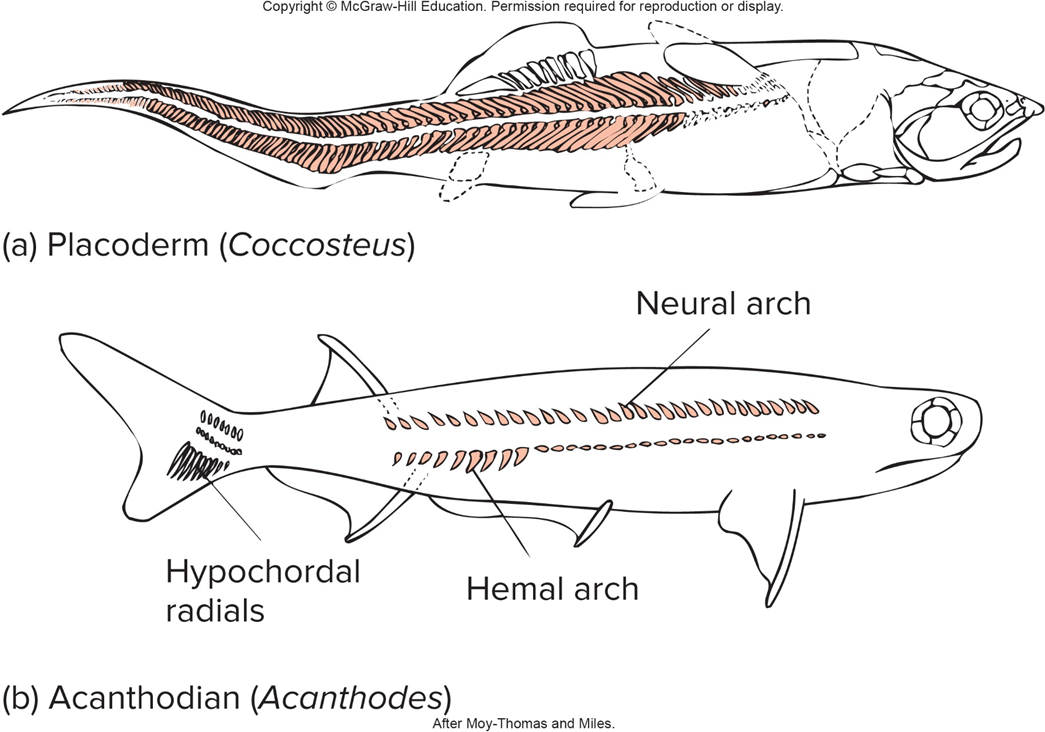
(b) Ancient Chondrichthyes: prominent notochord, arches present
Chondrichthyes (modern):
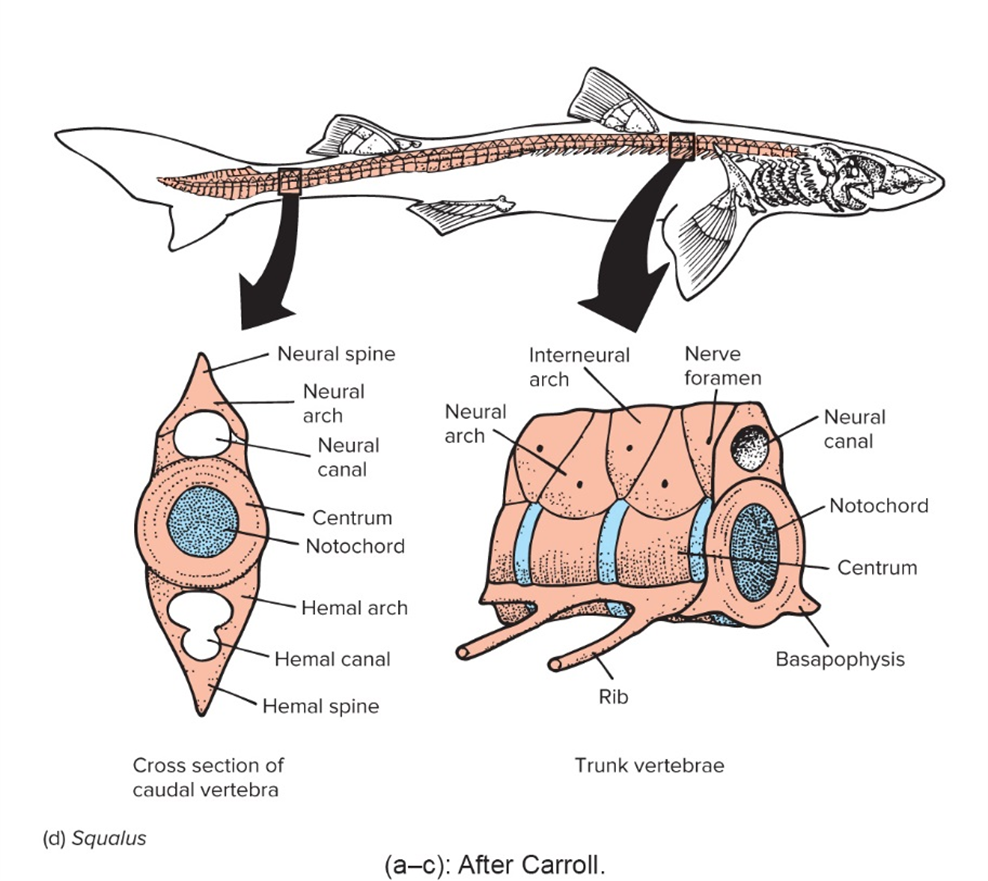
Modern: vertebrae prominent; notochord remnant w/in vertebral column (amphicoelous intervertebral joints)
Osteichthyes:
Primitive Ost. (ie Sturgeons & paddlefishes): vertebral column dominant but secondarily unossified, notochord retained
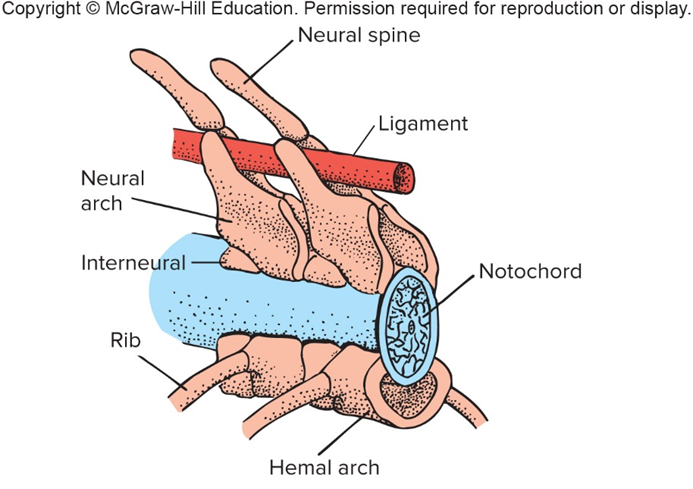
Adv. Ost (incl. Teleosts): Vertebra dominant & column ossified, no notochord present
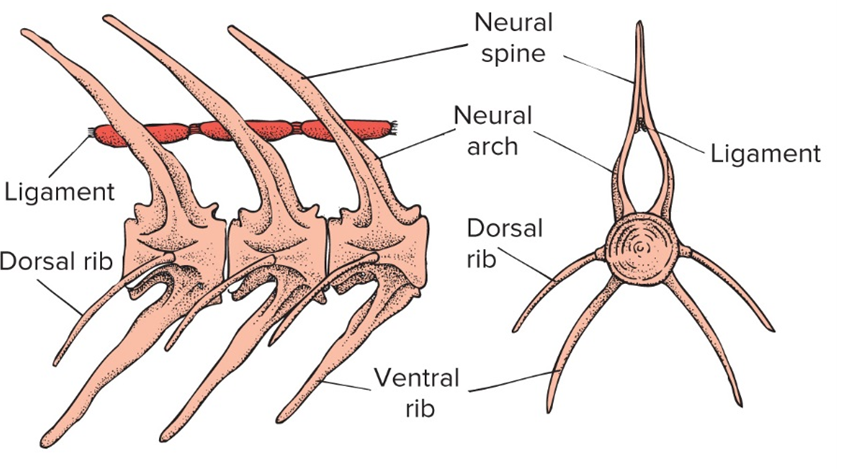
Sarcopterygian: Ancient forms generally more ossified than modern forms
Amphibians:
3 lineages of 4pods evolved from Rhipidistians:
Temnospondyl: intercentrum dominant, leading to modern amphibians, hemal arch forms the body (…→ Urodeles → Anurans)
Anthracosaur: pleurocentrum dominant, leading to modern amniotes, interhemal arch forms the body
Ichthyostegids: lil dusion of vertebral elements, extinct
Urodeles (Salamanders):
Vertebral column straight and fish-like
1x midventral sternal plate that articulates w/ shoulder girdle
Anurans (Frogs):
Vertebral column arched and 4pod-like
1x xiphisternum, sometimes w/ xiphoid cartilage or another element called omosternum
Sauropsids:
Modern anthracosaurs (our ancestors)
Head-neck articulation: Atlas and axis: 1st 2 cervical vertebrae, allowing movement of head
Adaptations:
Snake: extra zygapophyses to manage twisting
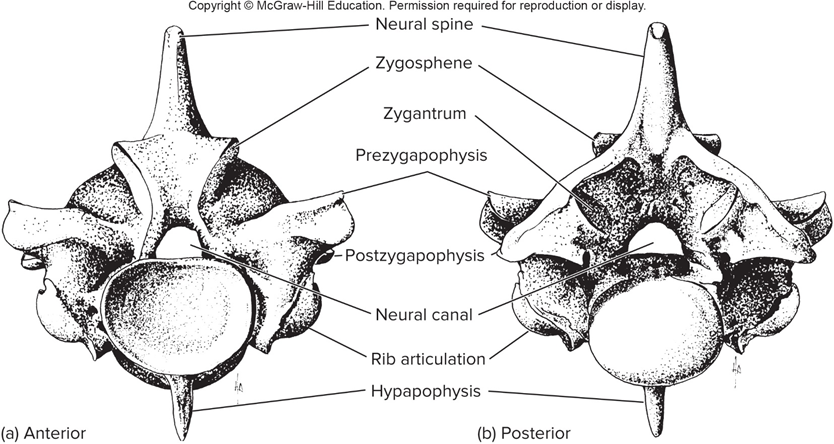
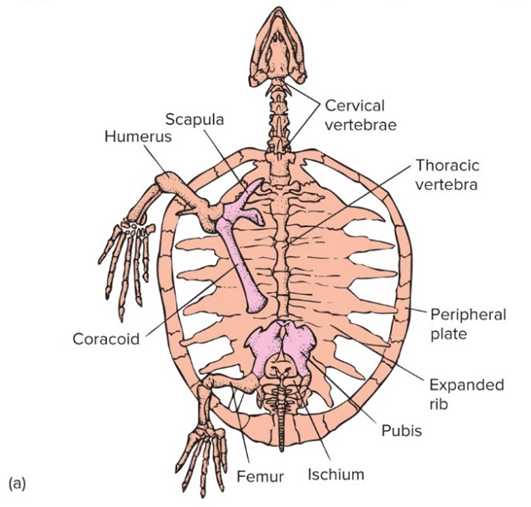
Testudines: vertebrae fused w/ shell
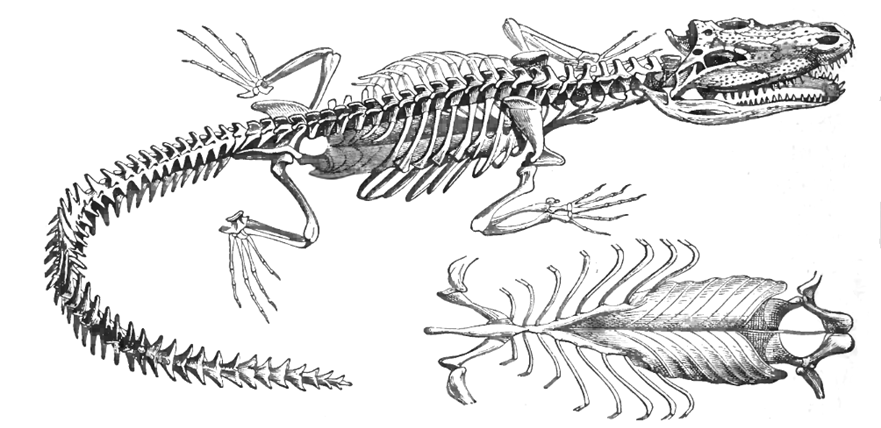
Gastralia: dermal bony “ribs” in abdominal region
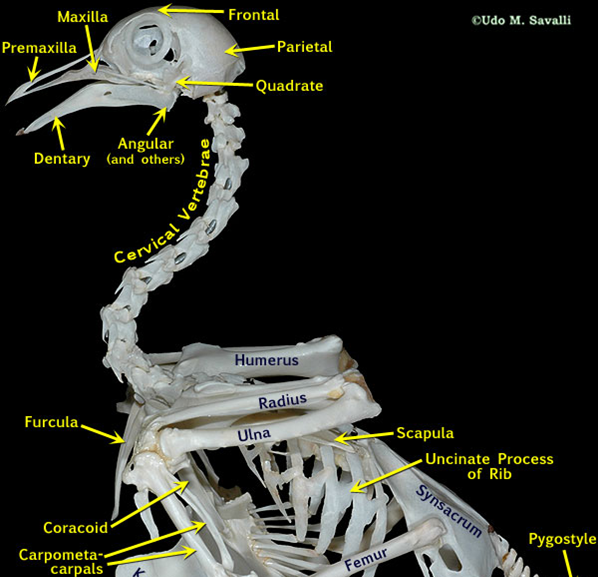
Birds: uncinate processes for fight muscle attachment, pringle/ saddle like built
Mammals:
Limbs are now below the body and not to its side, which is a big deal when conserving energy just to stands or lift body upward.
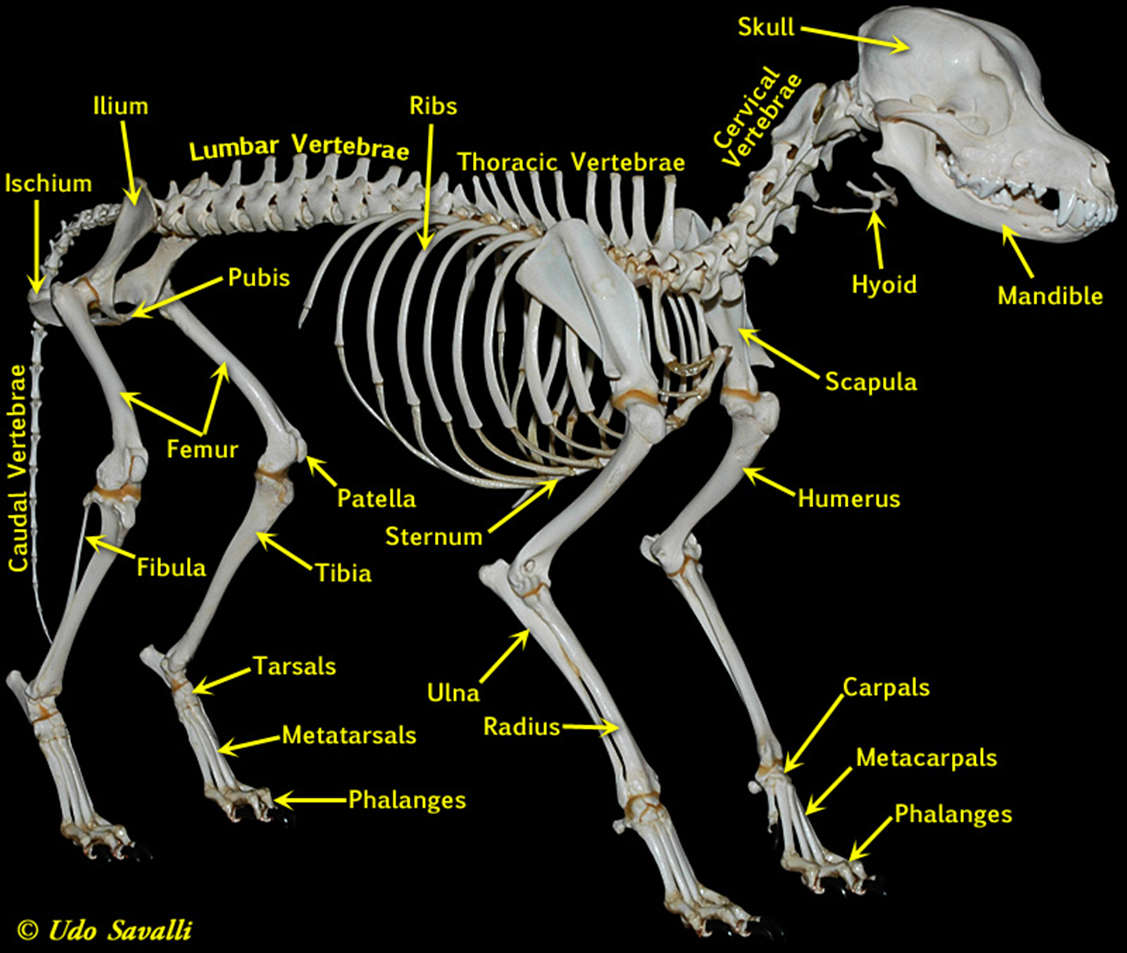
Typically 7 cervical vertebrae (neck)
Thoracic vertebrae: c.12, w/ ribs
Lumbar: c.7, w/out ribs
Sacrum of fused vertebrae, usually 2-3, humans have 5
Caudal vertebrae much simpler, reduced compared to reptilian caudal vertebrae…few to many but lacking ribs
Innominate bone: fused public, ischial, and iliac bones