Intro to Nervous System
 Call Kai
 Learn
Learn Practice Test
 Spaced Repetition
 Match
Match Flashcards
 Knowt Play
1/26

Earn XP
Description and Tags
HS 1300 Dr. McWatt UWO Objectives: Describe the basic cells of the central and peripheral nervous system, Differentiate between a typical motor versus sensory neuron, Explain the role of myelin and define white matter versus gray matter, Describe the structural and functional differences between the central versus peripheral nervous systems, as well as the somatic versus autonomic nervous systems
Name | Mastery | Learn | Test | Matching | Spaced | Call with Kai |
|---|
No analytics yet
Send a link to your students to track their progress
27 Terms
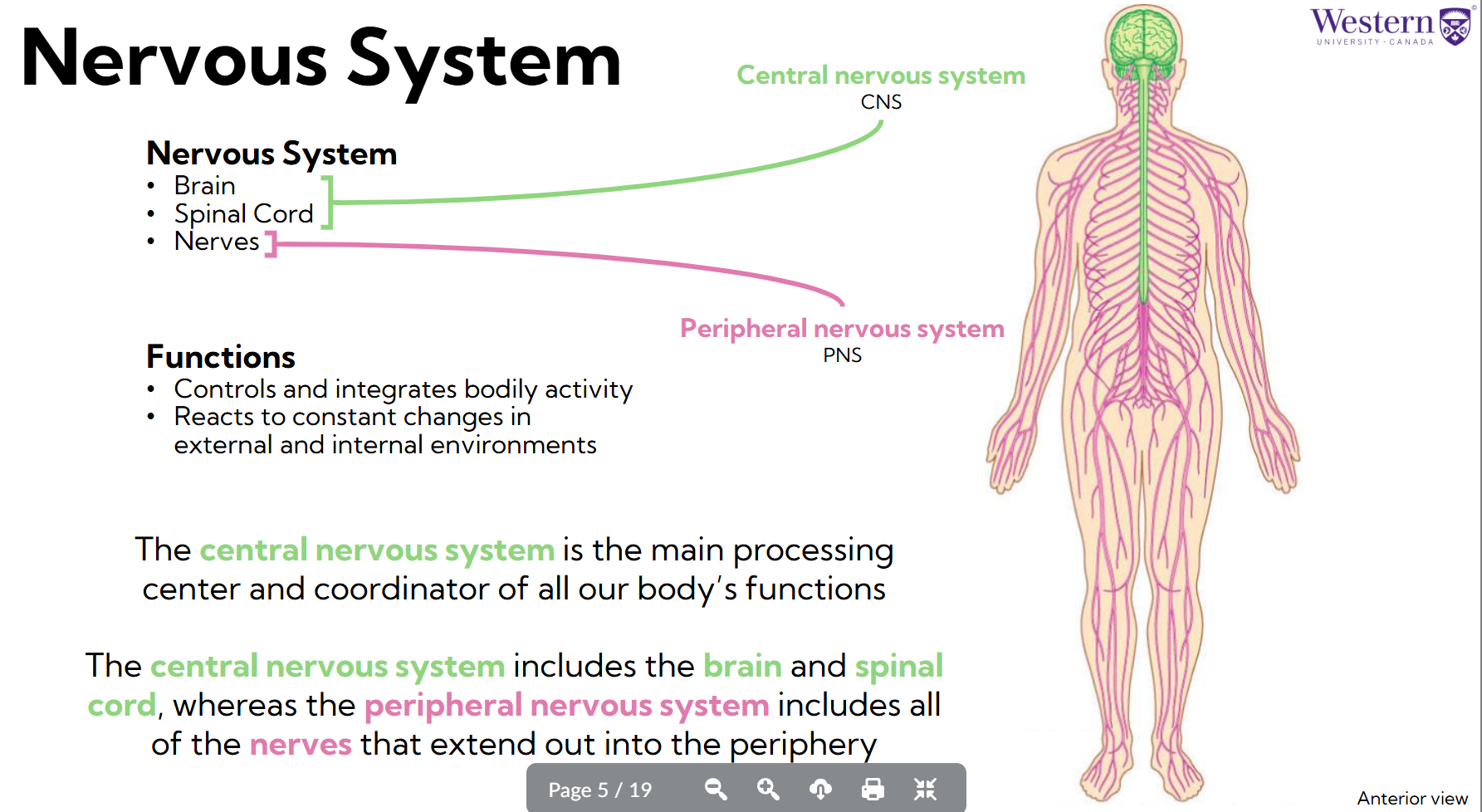
What are the two components of the nervous system?
Central Nervous System: Brain and spinal cord
Peripheral Nervous System: Nerves
What are neurons and what do they do?
the basic unit of the CNS
transmit electrical impulses to one another to communicate info
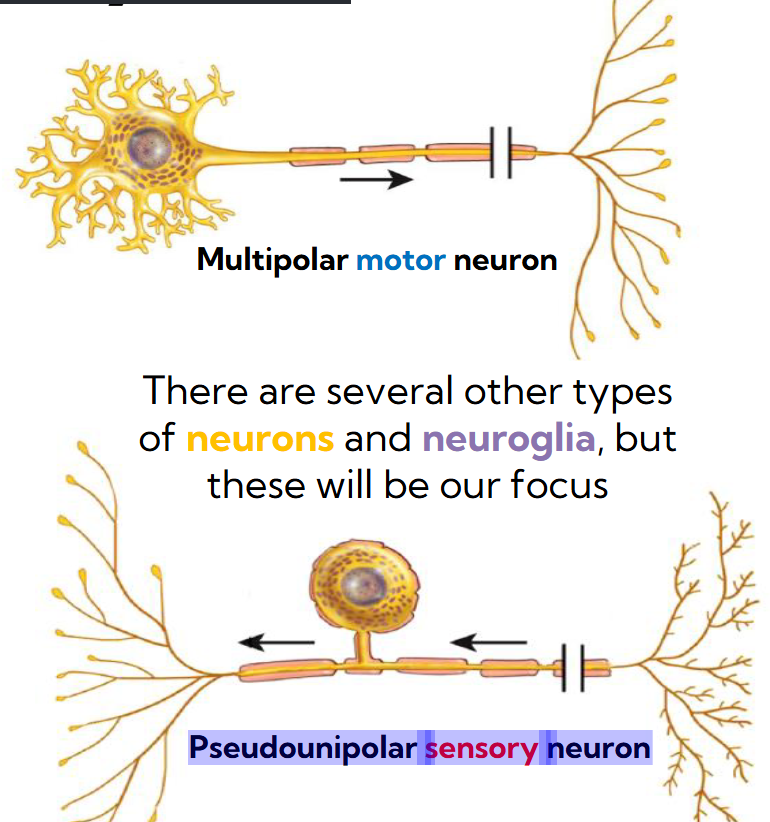
What are the 2 types of neurons?
Multipolar motor neuron
Pseudounipolar sensory neuron
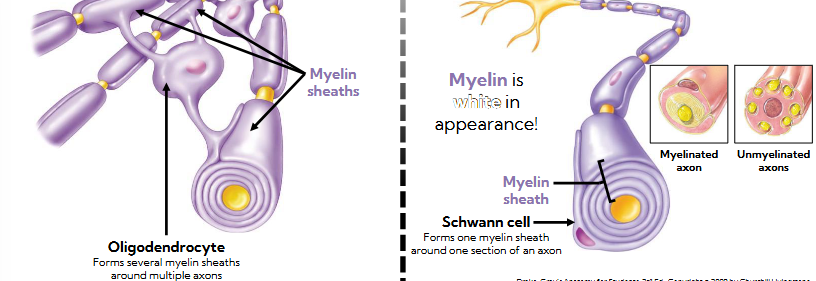
Name the 2 neuroglia talked about in this course and how many myelin sheaths they form around however many axons:
Oligodendrocyte in the CNS: forms SEVERAL myelin sheaths around MULTIPLE axons
Schwann cells in the PNS: forms ONE myelin sheath around ONE section of axon
What is neuroglia?
Non- neuronal, non-excitable cells
5x as abundant as neurons
Support for neurons
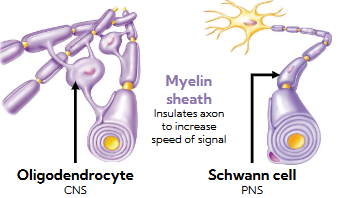
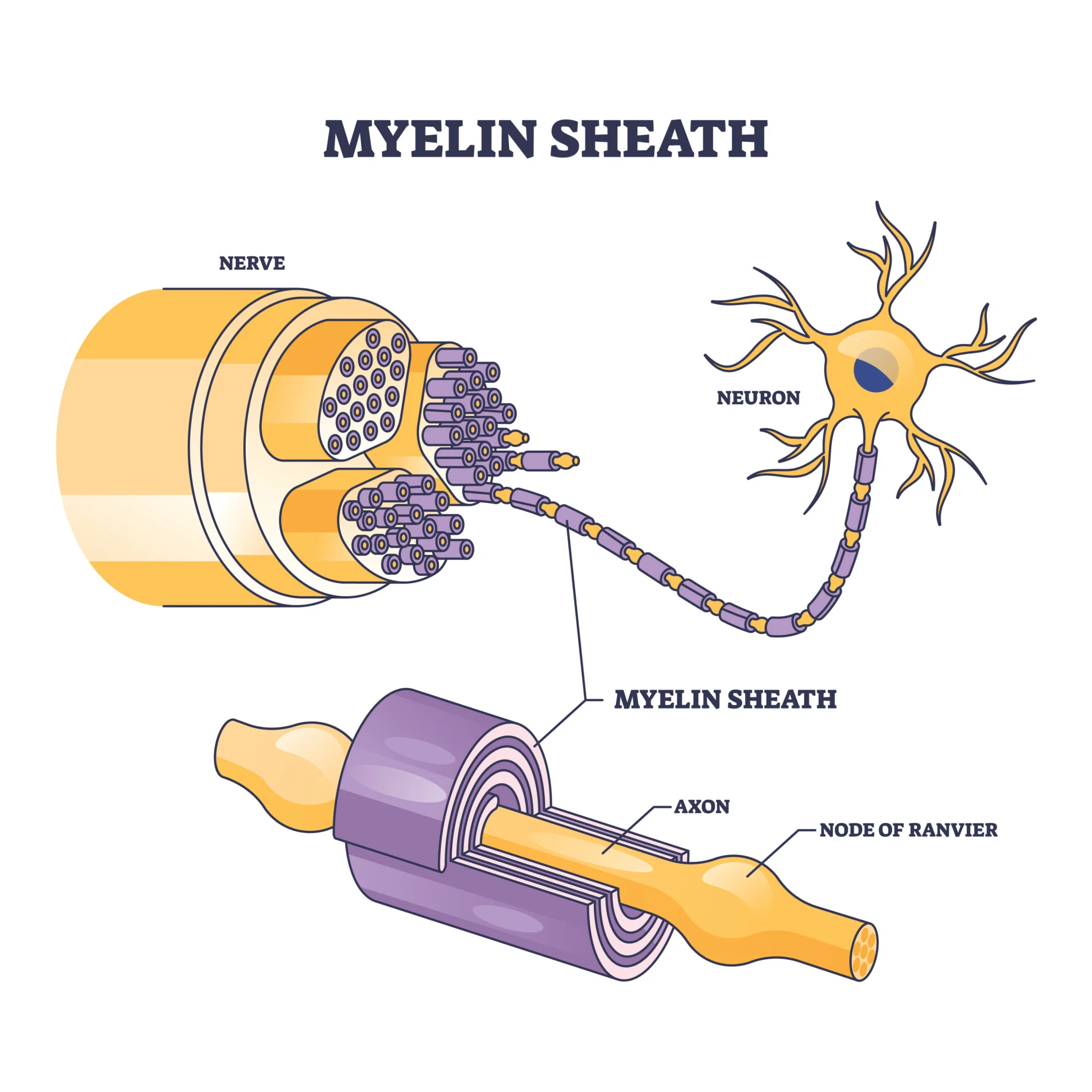
What is myelin sheath?
Insulates axon to increase speed of signal
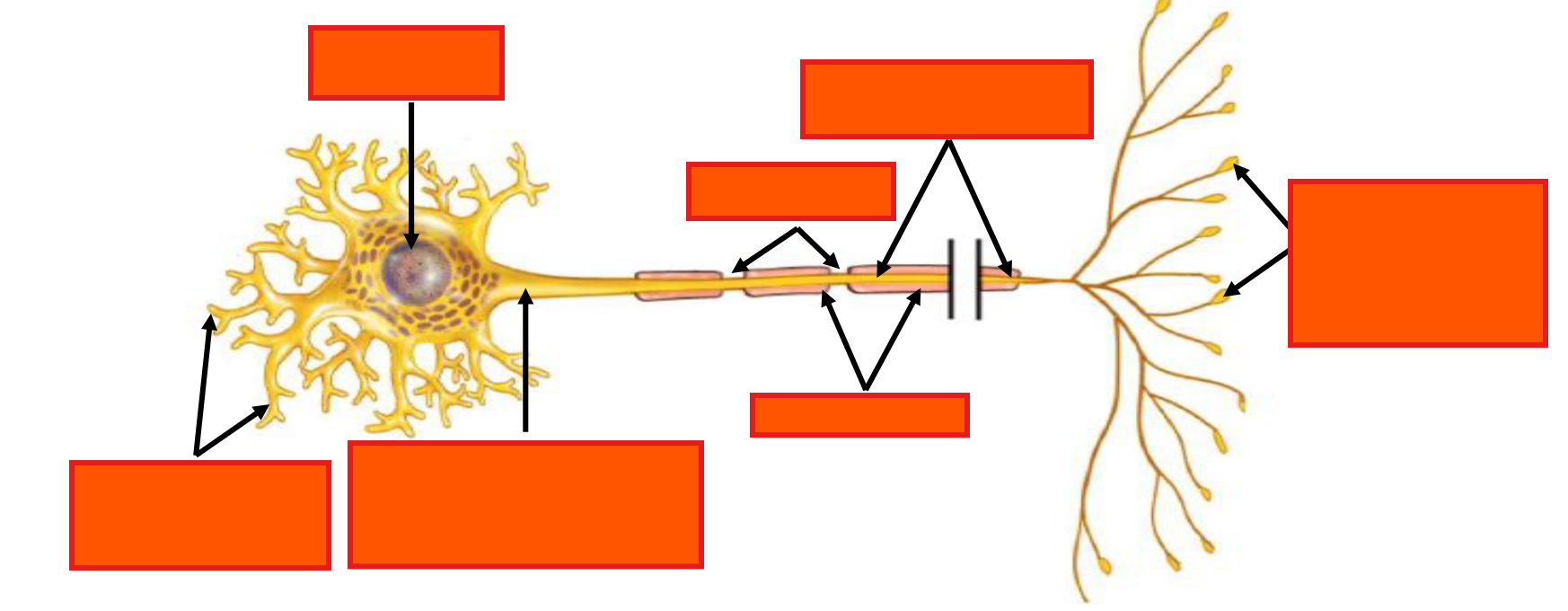
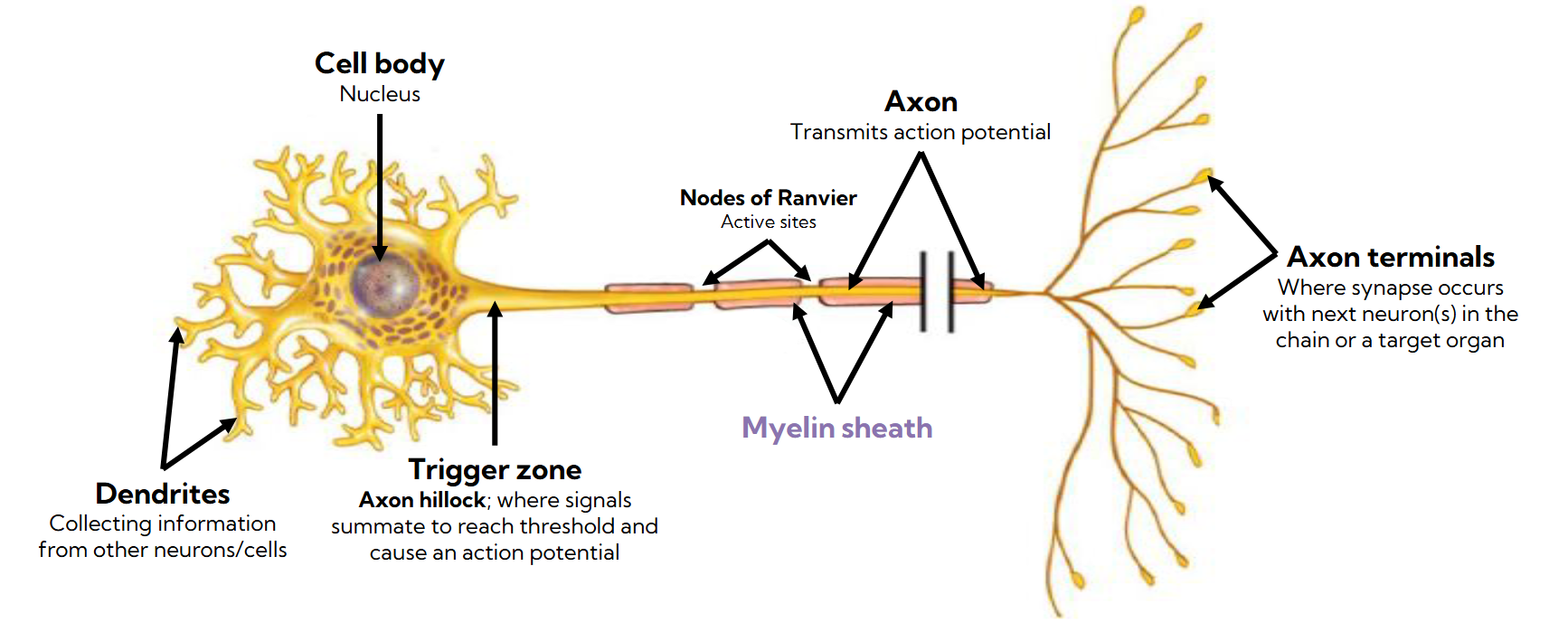
Label the multipolar motor neuron and explain what each part does:
Motor neurons send signals from the —- to ——-
from CNS
to Target organs
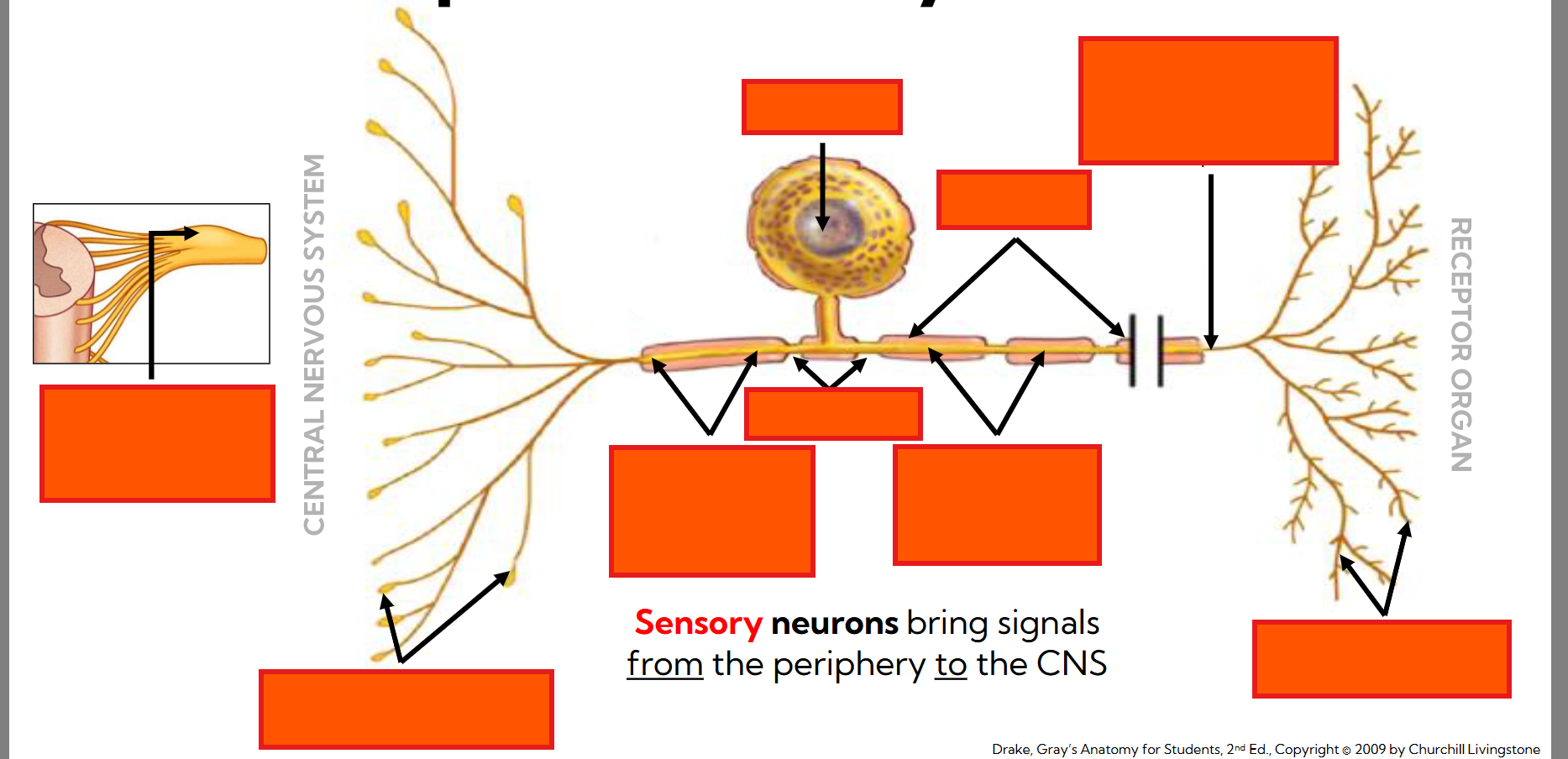
Label the pseudounipolar sensory neuron and explain what each part does:
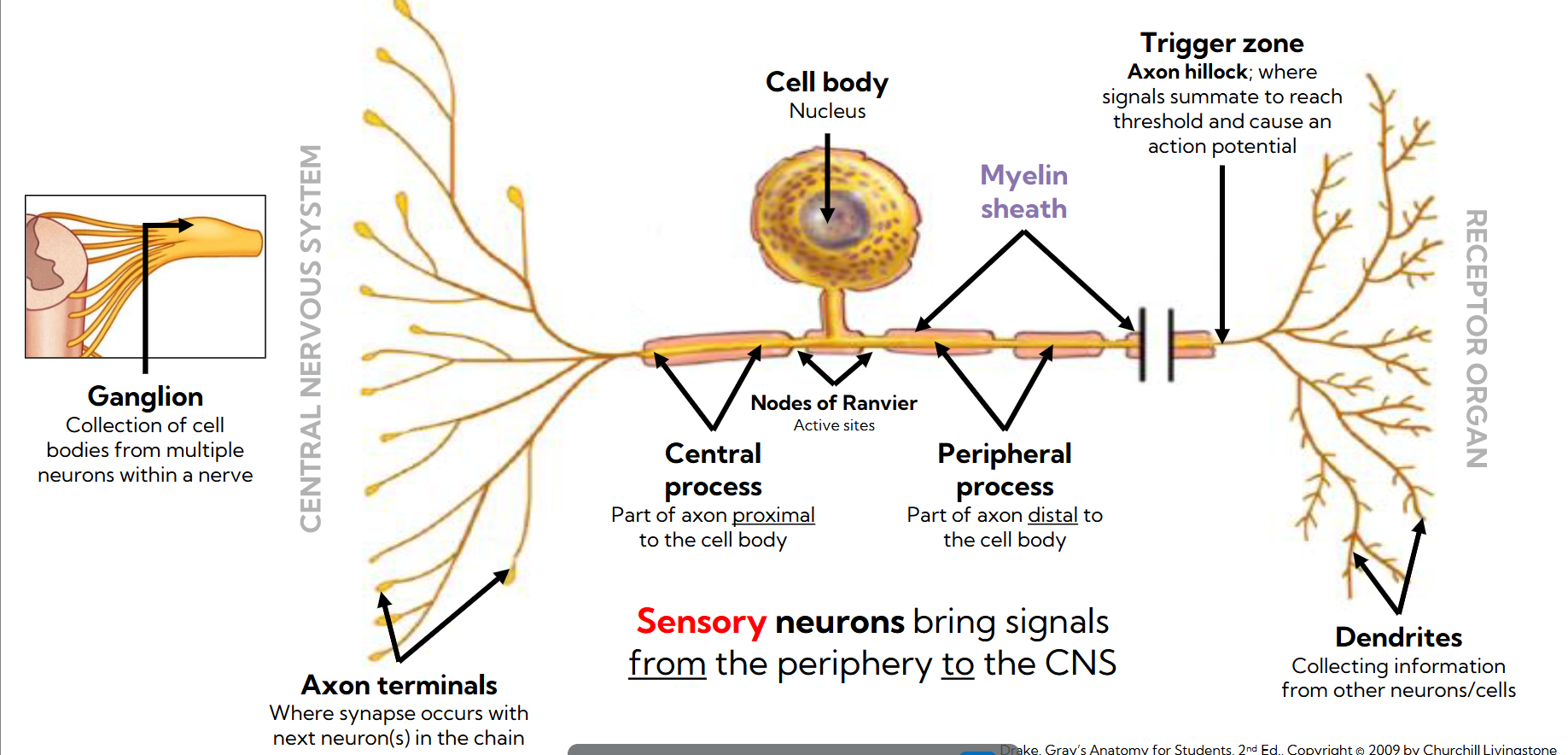
What is multiple sclerosis and where does it occur?
Degradation of oligodendrocytes
Occurs in CNS
What is Gullian-Barre Syndrome and where does it occur?
degradation of schwann cells
Occurs in peripheral nervous system
White vs Gray Matter
White matter has myelinated axons for communication
Gray matter has unmyelinated neuron cell bodies that process info
Where is white matter located?
Tracts, axons, fascicles
Where is grey matter located?
Nerves, cortex, nucleus (ex. ganglia)
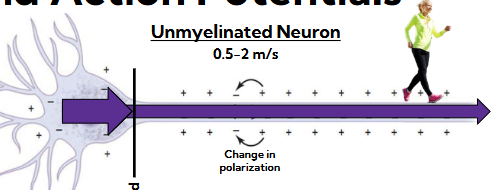
The pathway of a signal in an unmyelinated neuron
Multiple action potentials need to be summated to overcome threshold
Depolarization of neuron occurs which sends action potential down the neuron
The speed is very slow (0.5-2ms)
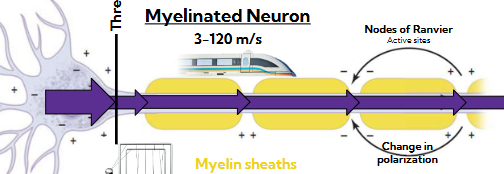
The pathway of a signal in a myelinated neuron:
Depolarization only occurs at nodes of ranvier (between each myelin sheath)
Causes a very quick impulse as it is only depolarizing at the ranvier (3-120m/s)
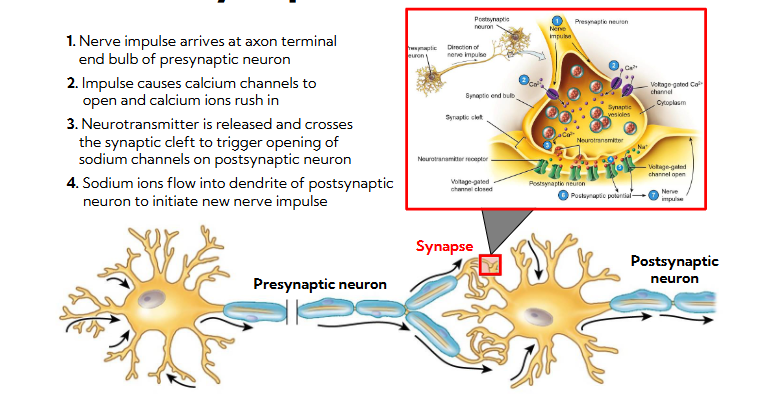
The 4 steps of neuronal synapse (As action potentials are sent down; these will send the impulse to the next neuron
The very end of the axon terminal will synapse with dendrite on the next neuron
This is done by neurotransmitters as it is not a physical action)
Steps
Nerve impulse arrives at axon terminal end bulb of presynaptic neuron
Impulse causes calcium channels to open and calcium ions rush in
This changes polarization which causes neurotransmitter to release and crosses the synaptic cleft to trigger opening of sodium channels on postsynaptic neuron
This initiates a new nerve impulse; sodium flows into dendrite of postsynaptic neuron to initiate new nerve impulse
2 components of Peripheral nervous system:
Autonomic and Somatic
Characteristics of autonomic ns
Peripheral innervation to visceral organs and glands
- can’t control
- heart beat, digestion, glands, etc
Characteristics of Somatic nervous system
Peripheral innervation to all other tissues -
Voluntary motor control
- conscious thought
- muscle, skin, etc
What are the 2 parts of the autonomic nervous system
Parasympathetic NS and Sympathetic NS
Where do the parasympathetic signals come from
Cranial nerves and sacral spinal levels
Where do sympathetic nerve signals come from
T1-L2 via the sympathetic chain/trunk
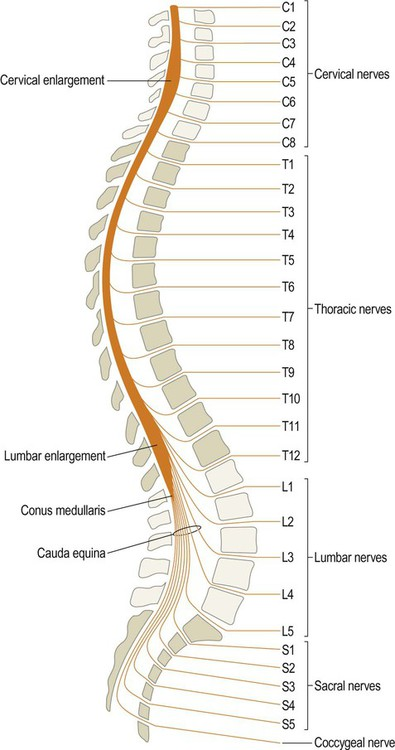
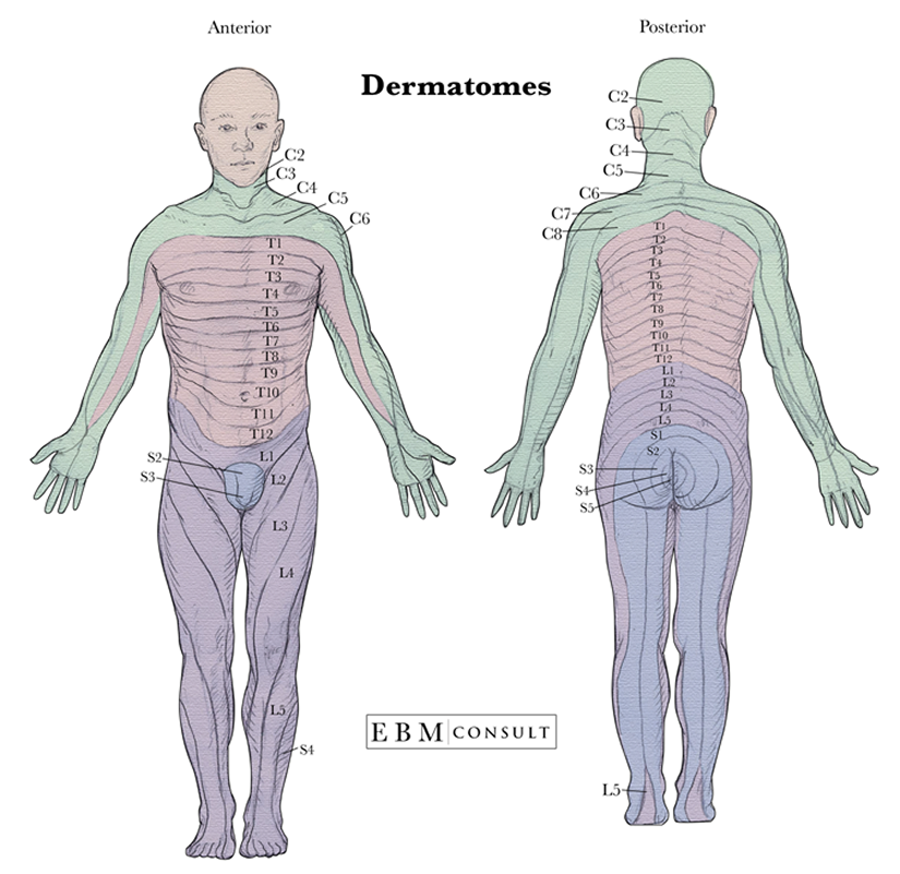
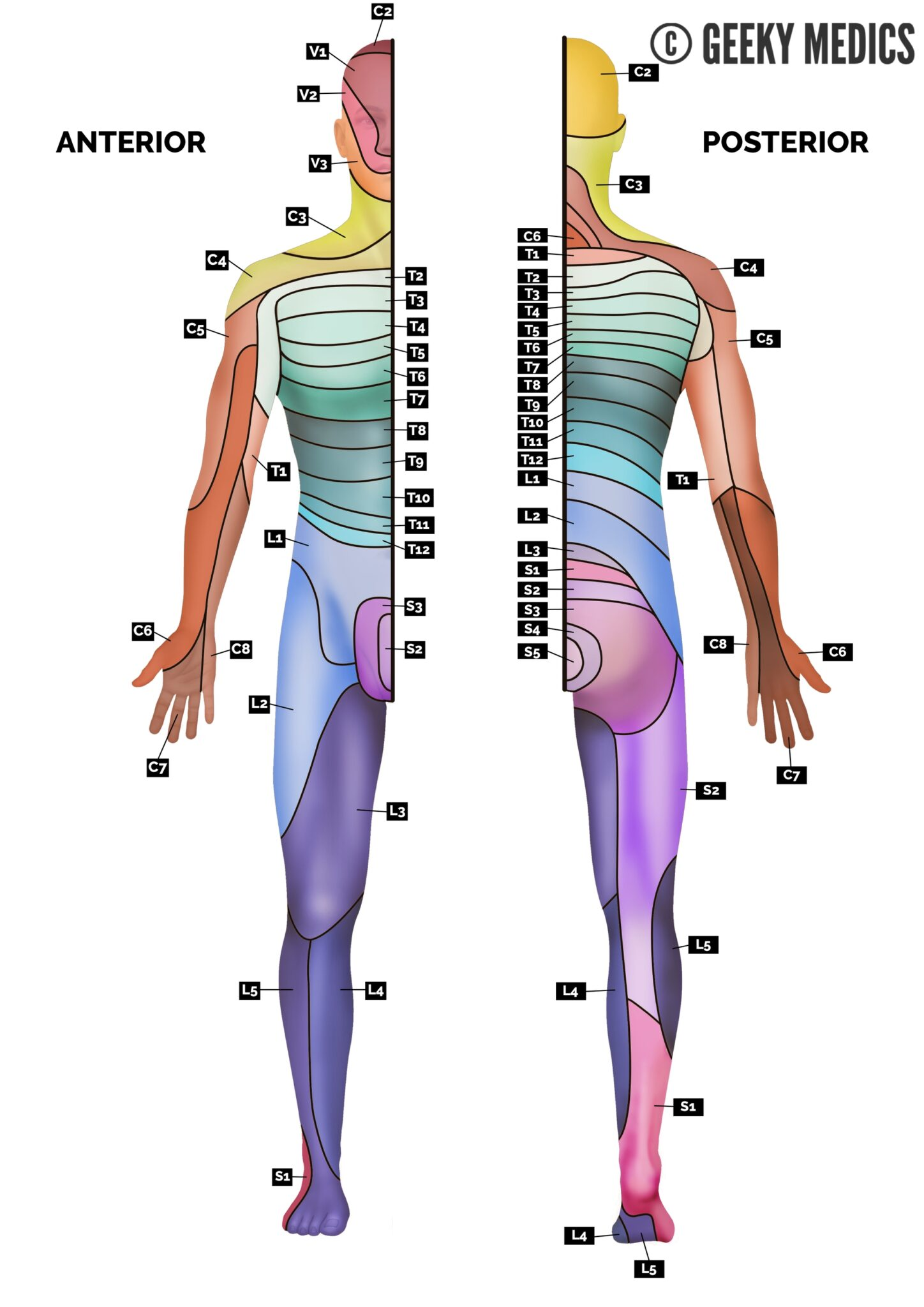
What is a dermatome?
Area of skin supplied by a single spinal nerves SENSORY fibers.
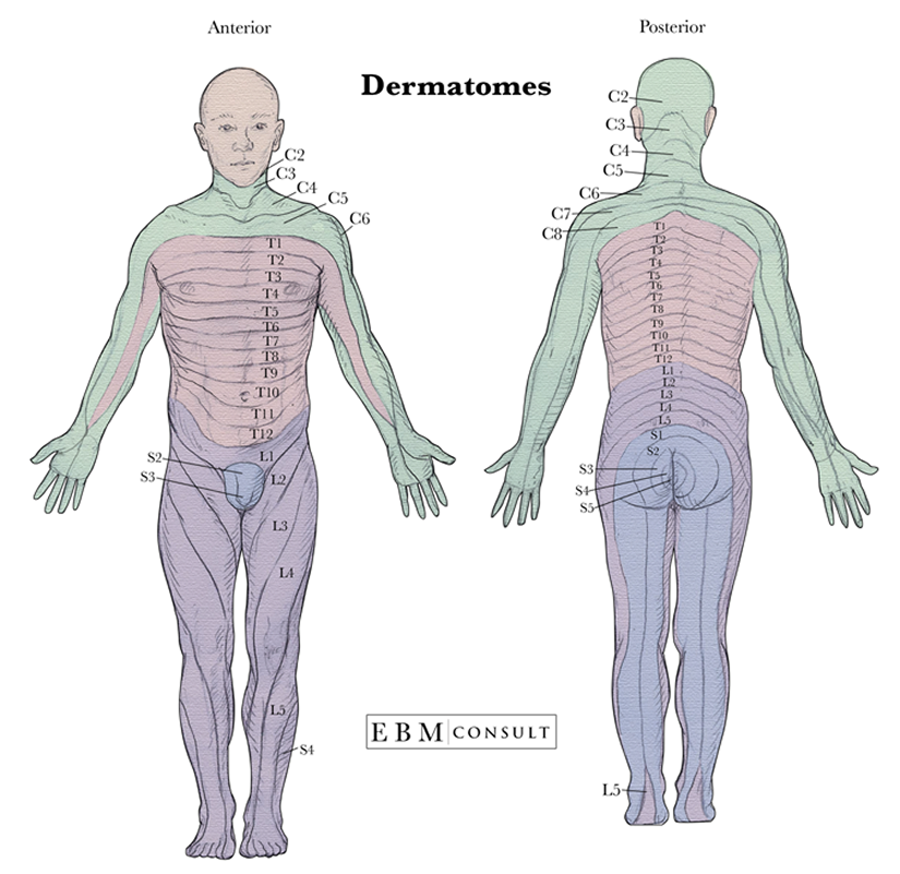
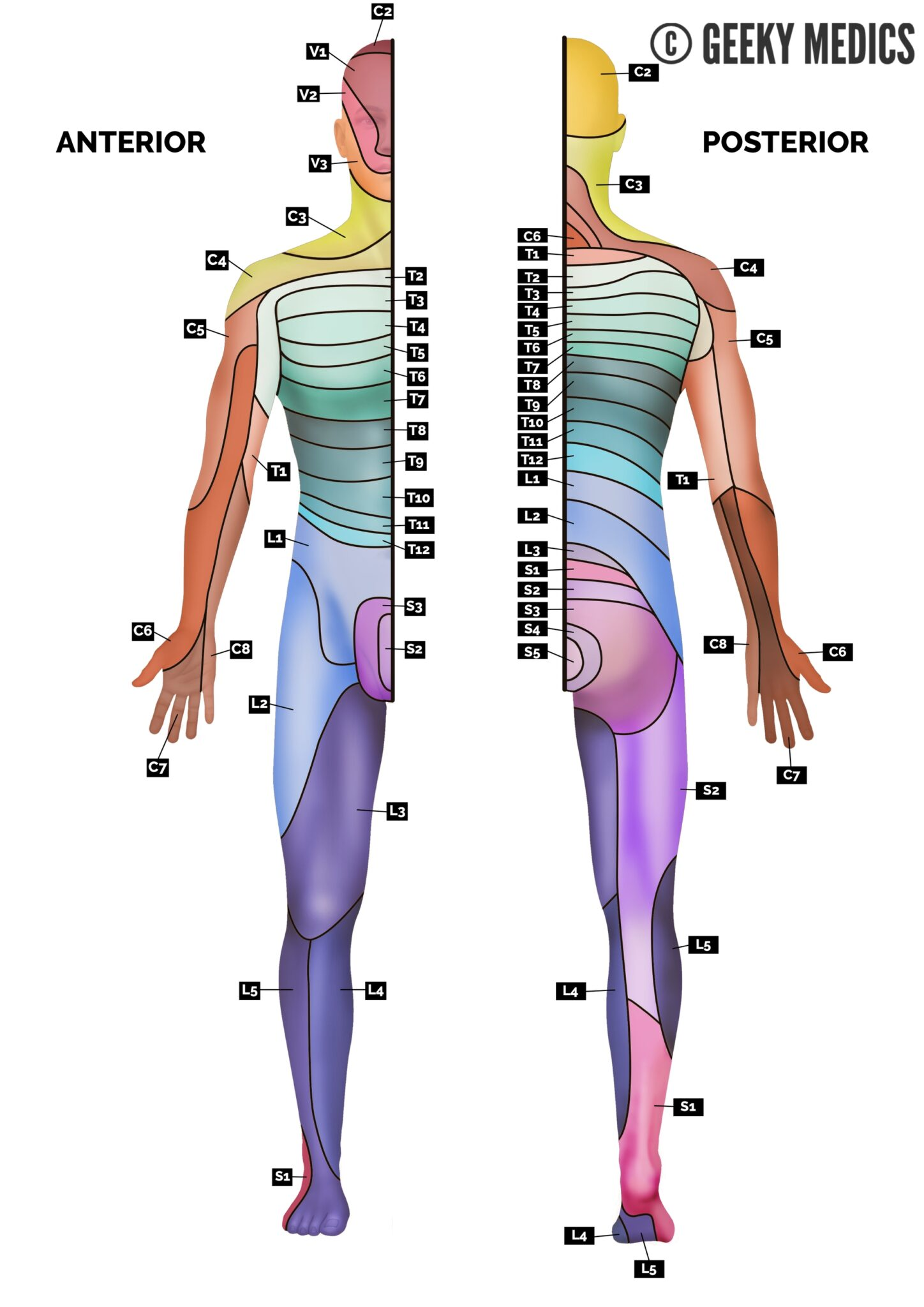
What is a myotome?
A group of muscles innervated by a single spinal nerves MOTOR fibers.
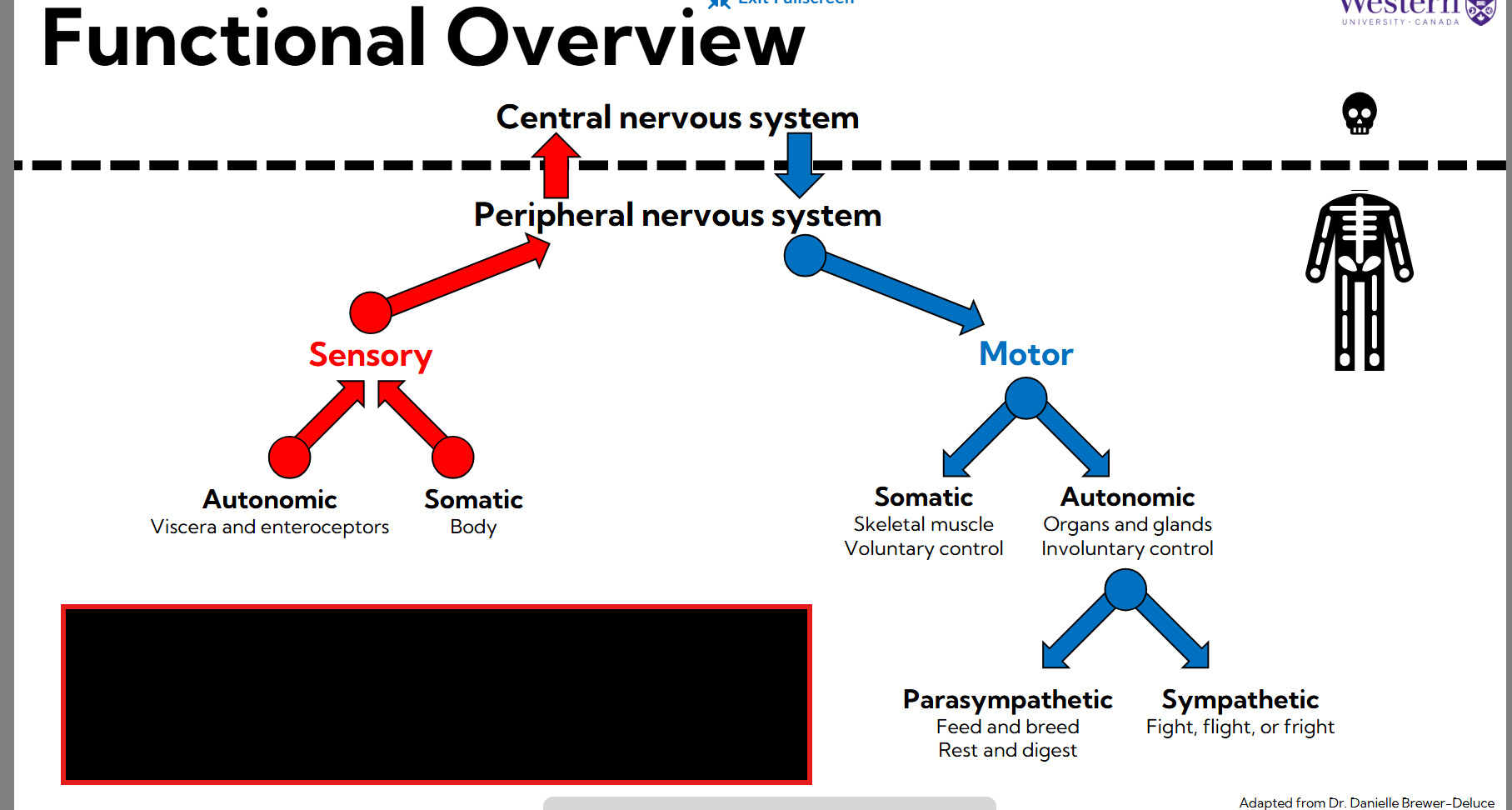
Functional Overview
CNS receives SENSORY info from PNS (thru external and internal environments) which processes info and produces a responses via MOTOR system.
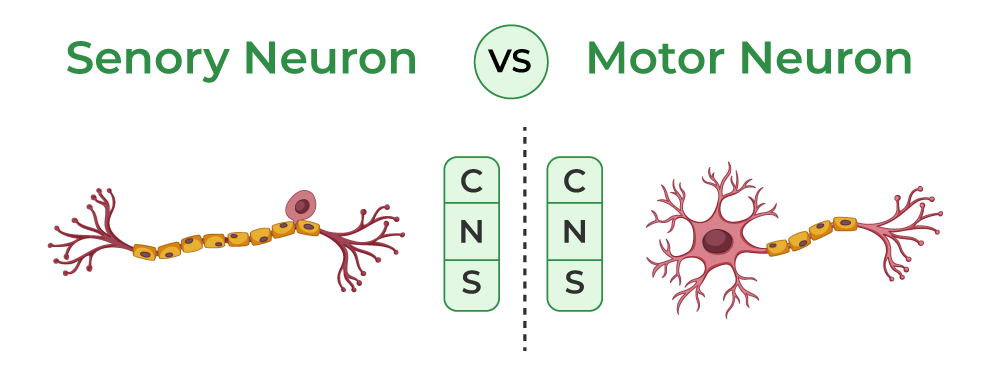
Afferent vs Efferent
Sensory: Afferent
Motor: Efferent

