Genetics and Cell Division: Mitosis, Meiosis, and Inheritance
 Studied by 2 people
 Call with Kai
 Learn
Learn Practice Test
 Spaced Repetition
 Match
Match Flashcards
 Knowt Play
1/45

There's no tags or description
Looks like no tags are added yet.
Name | Mastery | Learn | Test | Matching | Spaced | Call with Kai |
|---|
No analytics yet
Send a link to your students to track their progress
46 Terms
Genes containing their own unique DNA sequence program cells to synthesize certain enzymes and proteins, which produce an organism's inherited traits. When DNA is replicated, the copies of those genes can produce traits that are passed from parent to offspring.
Explain how traits are transmitted from parents to offspring
Somatic cells
These cells are diploid (two sets of chromosomes) and divide through mitosis to produce two identical daughter cells for growth and repair
gamete cells
These cells are haploid (one set of chromosomes) and are produced through meiosis, which creates four genetically unique daughter cells for sexual reproduction.
Genetic information held by two homologous chromosomes (Mitosis)
Carry the same genes in the same order, but may have different alleles.
Genetic information held by two non-homologous chromosomes (Meiosis)
They carry completely different genes from each other
Genetic information held by two sister chromatids (mitosis)
Identical copies of the same chromosome containing the same alleles at every gene location.
Genetic information held by two Non-sister homologous chromatids(meiosis):
Two chromatids from two different homologous chromosomes (one from each parent) that carry different alleles(a version of a gene that determines a specific trait) for the same genes and can exchange segments.
Sex Chromosomes
a chromosome responsible for determining the sex of an individual
Autosomes
A chromosome that is not directly involved in determining sex; not a sex chromosome.
Haploid Cells (n)
·Contain a single set of chromosomes. In humans, this means 23 chromosomes, including 22 autosomes and 1 sex chromosome.
These cells are typically gametes (sperm and egg cells)
Diploid Cells (2n)
Contain two sets of chromosomes, one from each parent, totaling 46 chromosomes in humans. These are typical of somatic (body) cells.
why fertilization and meiosis must alternate in all sexual life cycles
Meiosis reduces chromosome sets from diploid (2 sets) to haploid (1 set) in gametes. Fertilization restores the diploid number by combining two haploid cells. This prevents chromosome number from doubling with each generation.
Gametes are the only haploid cells. Meiosis produces haploid gametes, which fuse during fertilization to form a diploid zygote → develops into a multicellular diploid organism. (Example: Human)
one of the three life-cycle patterns characteristic of eukaryotes for animals
Alternate between multicellular diploid sporophyte (produces spores by meiosis) and multicellular haploid gametophyte (produces gametes by mitosis). (Example: Fern)
one of the three life-cycle patterns characteristic of eukaryotes for plants and some algae
Mostly haploid; haploid cells produce gametes by mitosis. After fertilization, the brief diploid zygote undergoes meiosis to return to haploid state. (Example: Mushroom)
one of the three life-cycle patterns characteristic of eukaryotes for most fungi and some protists
Meiosis I
Homologous chromosomes separate
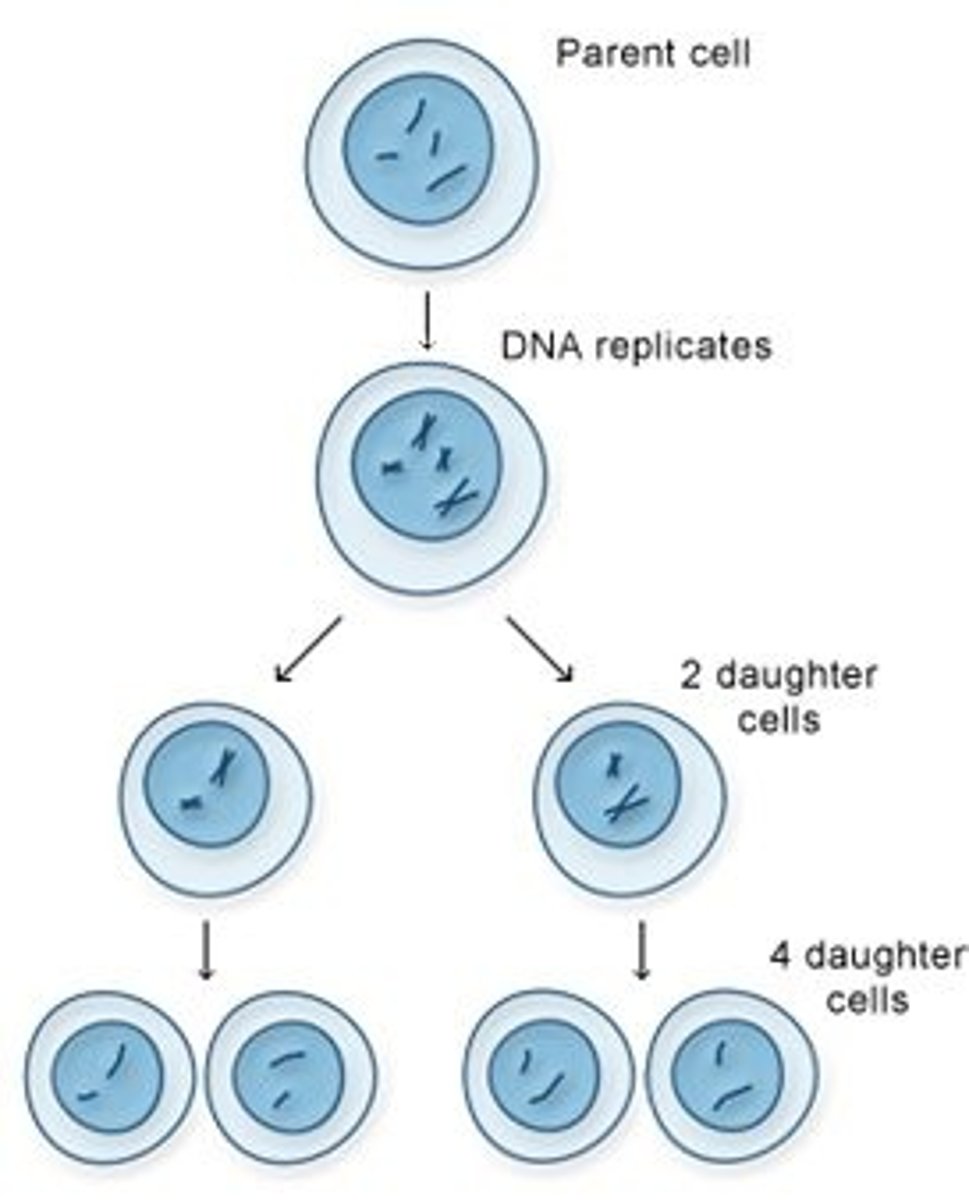
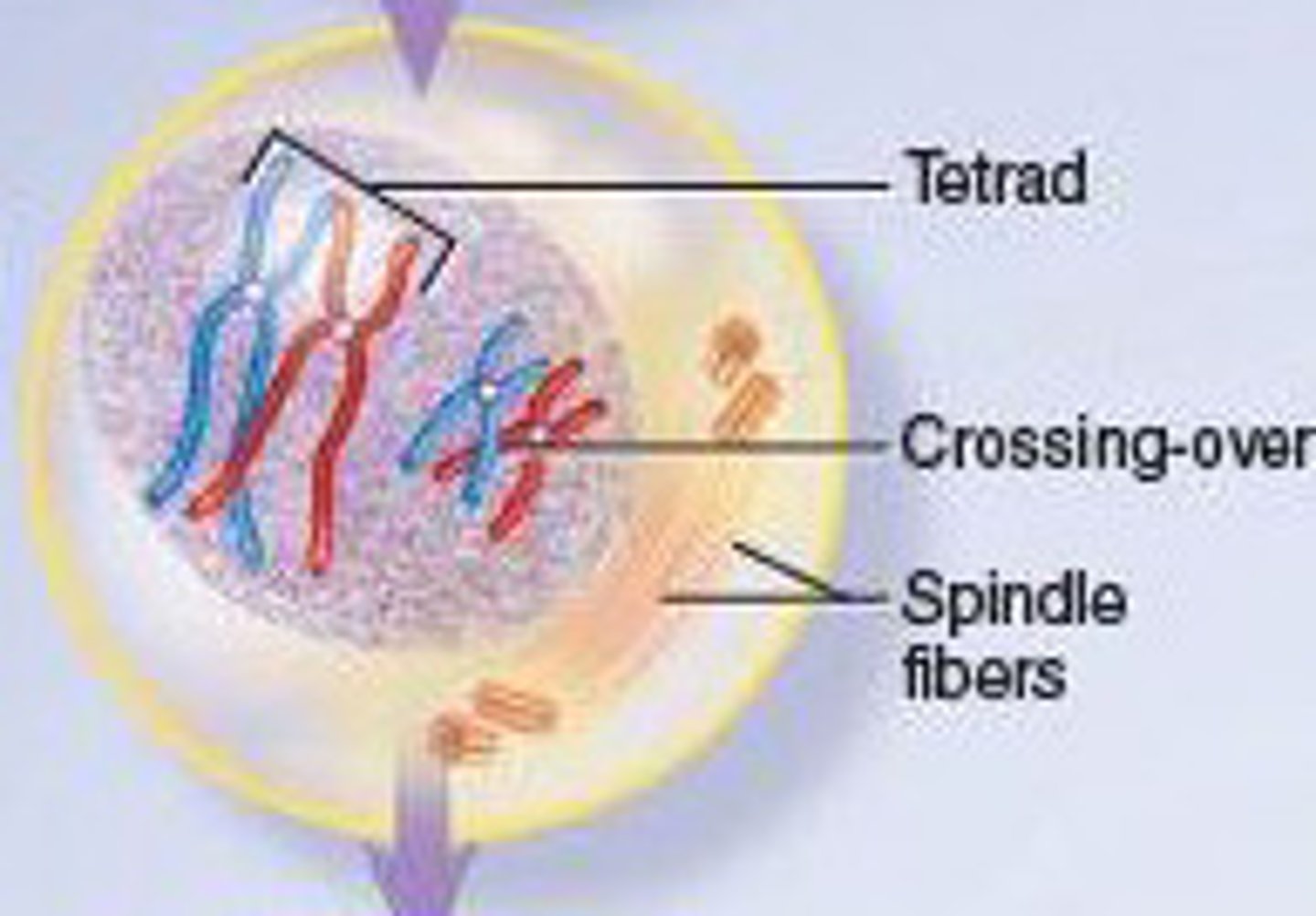
Prophase I
Chromosomes pair up (tetrads) + crossing over (swap genes)
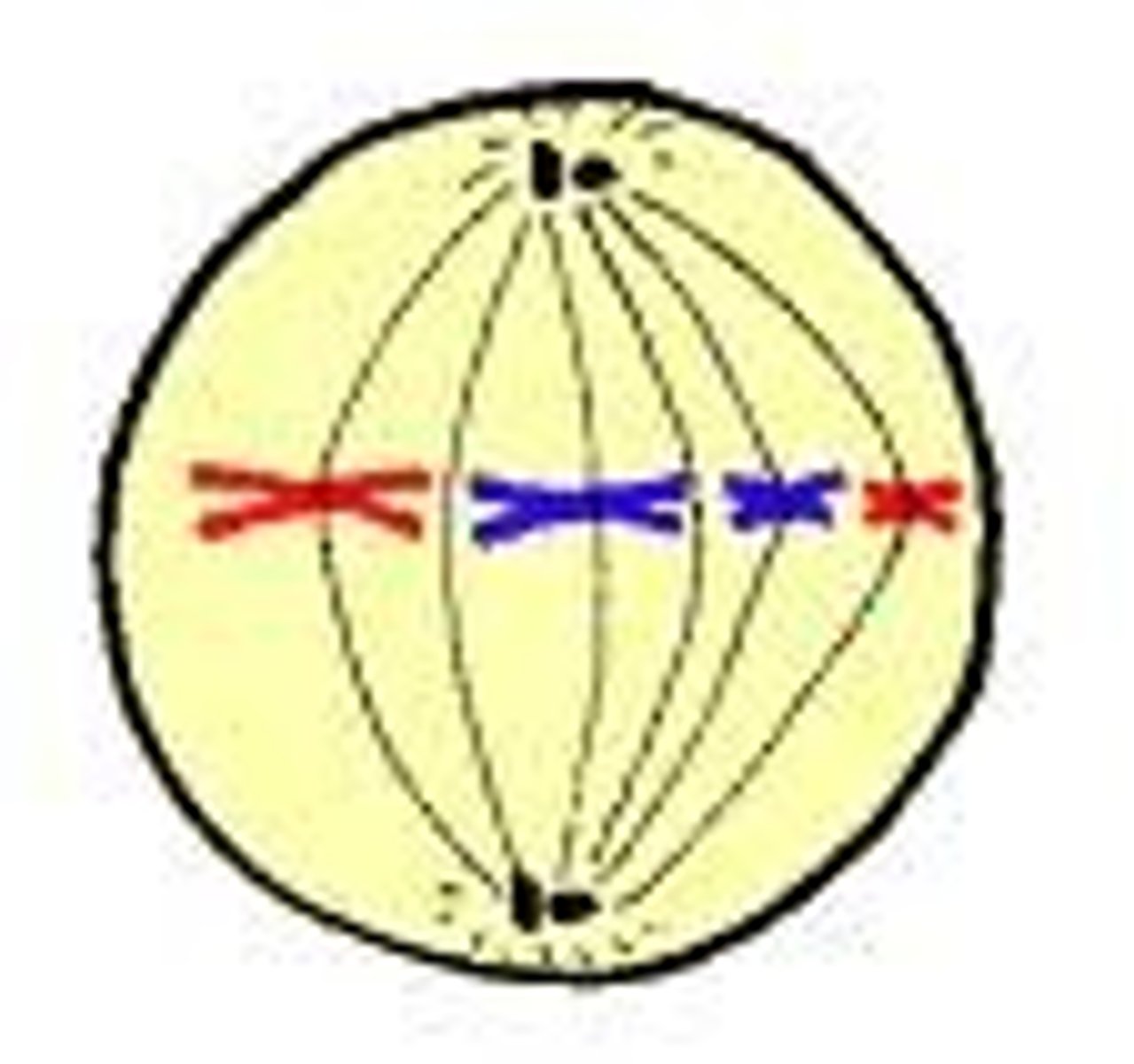
Metaphase I
Paired homologous chromosomes line up across the center of the cell (Independent assortment
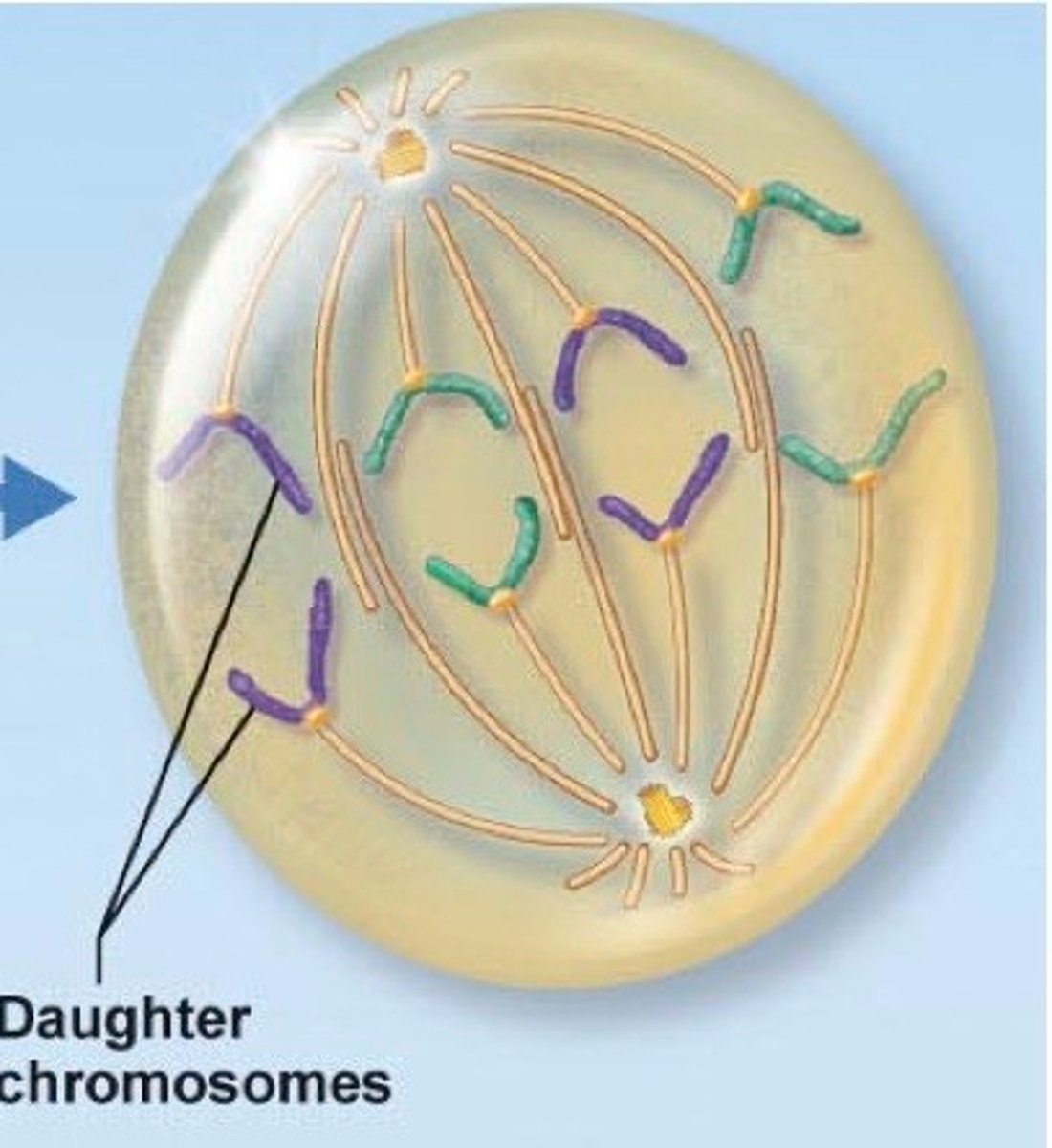
Anaphase I
Homologous chromosomes separate to opposite poles.
Meiosis II
sister chromatids separate
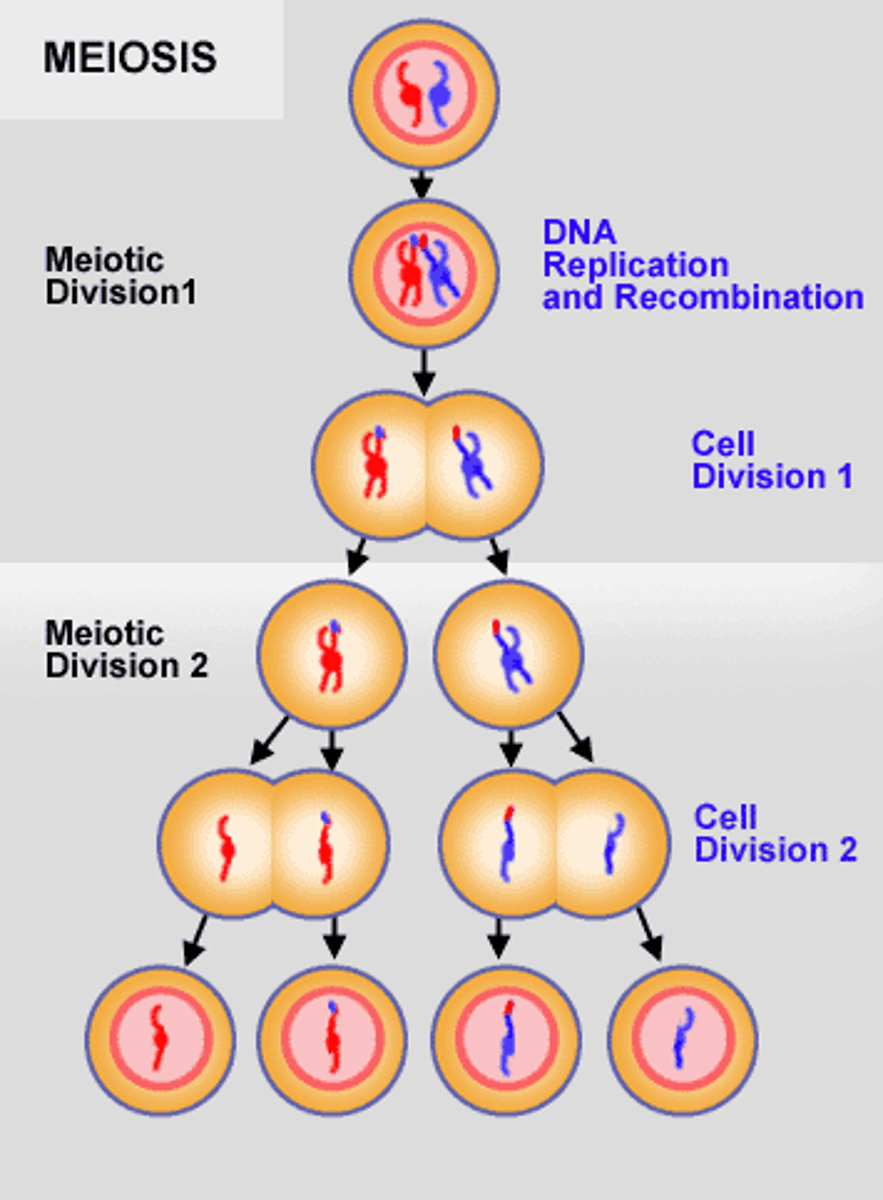
Prophase II
A new spindle forms around the chromosomes
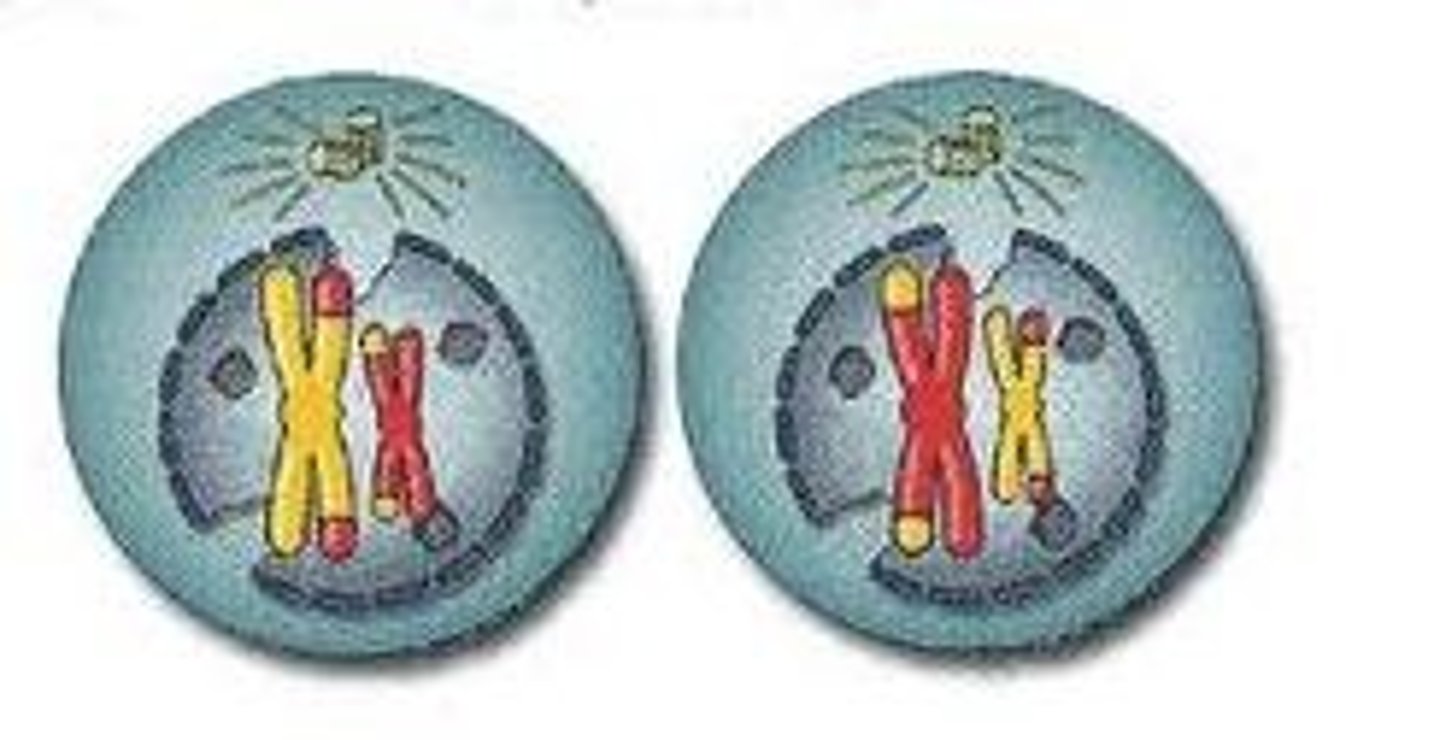
Metaphase II
The chromosomes line up single file.
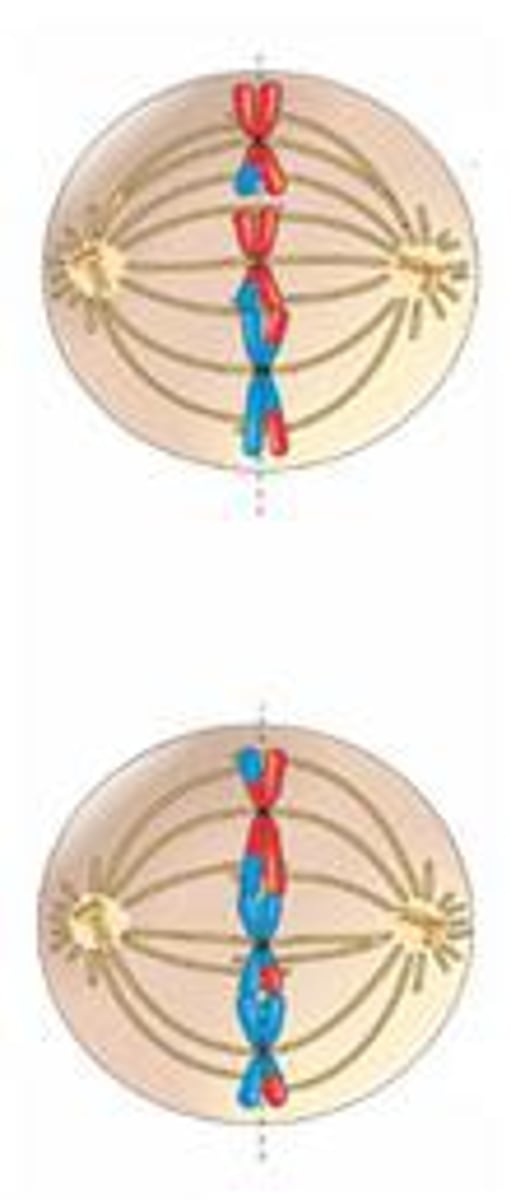
Anaphase II
Sister chromatids separate
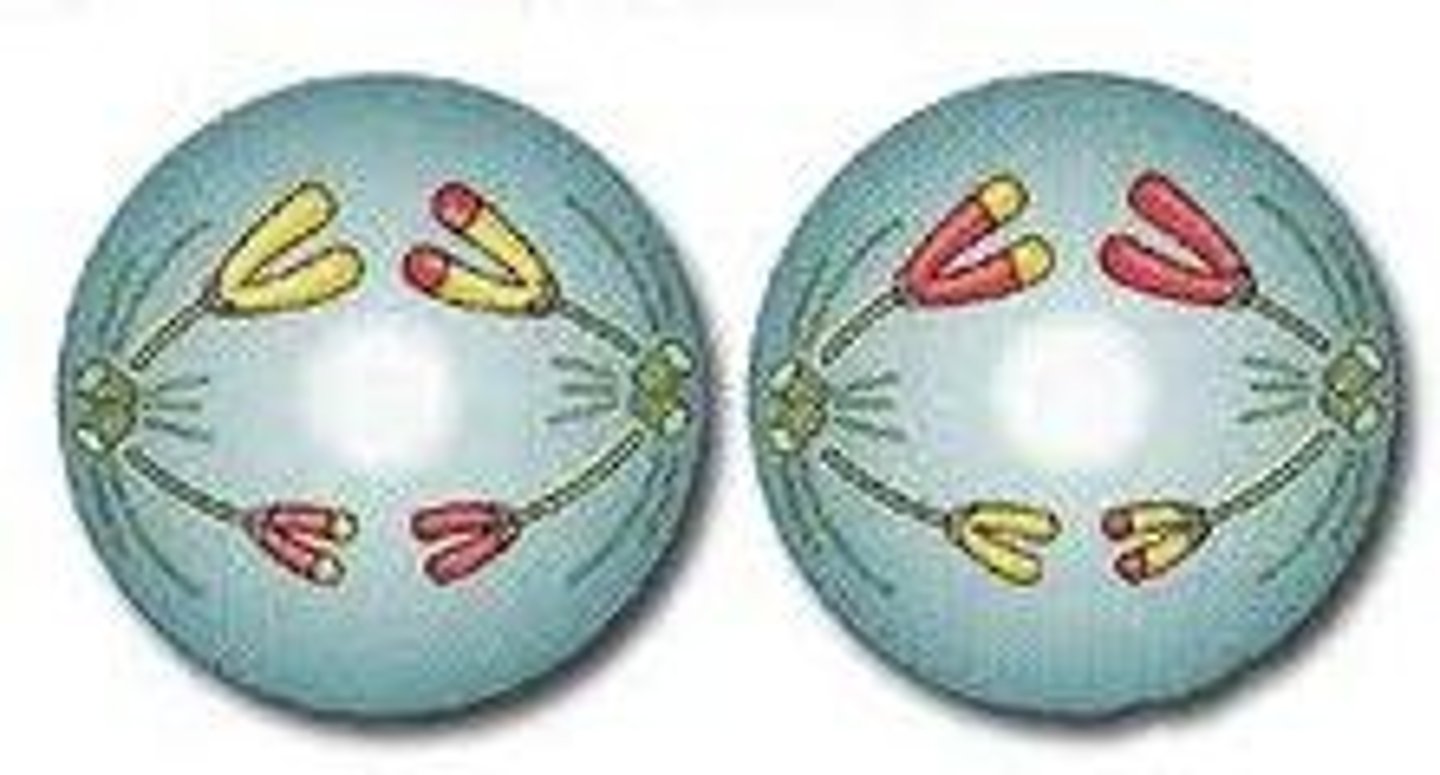
Telophase II
4 genetically unique haploid cells form
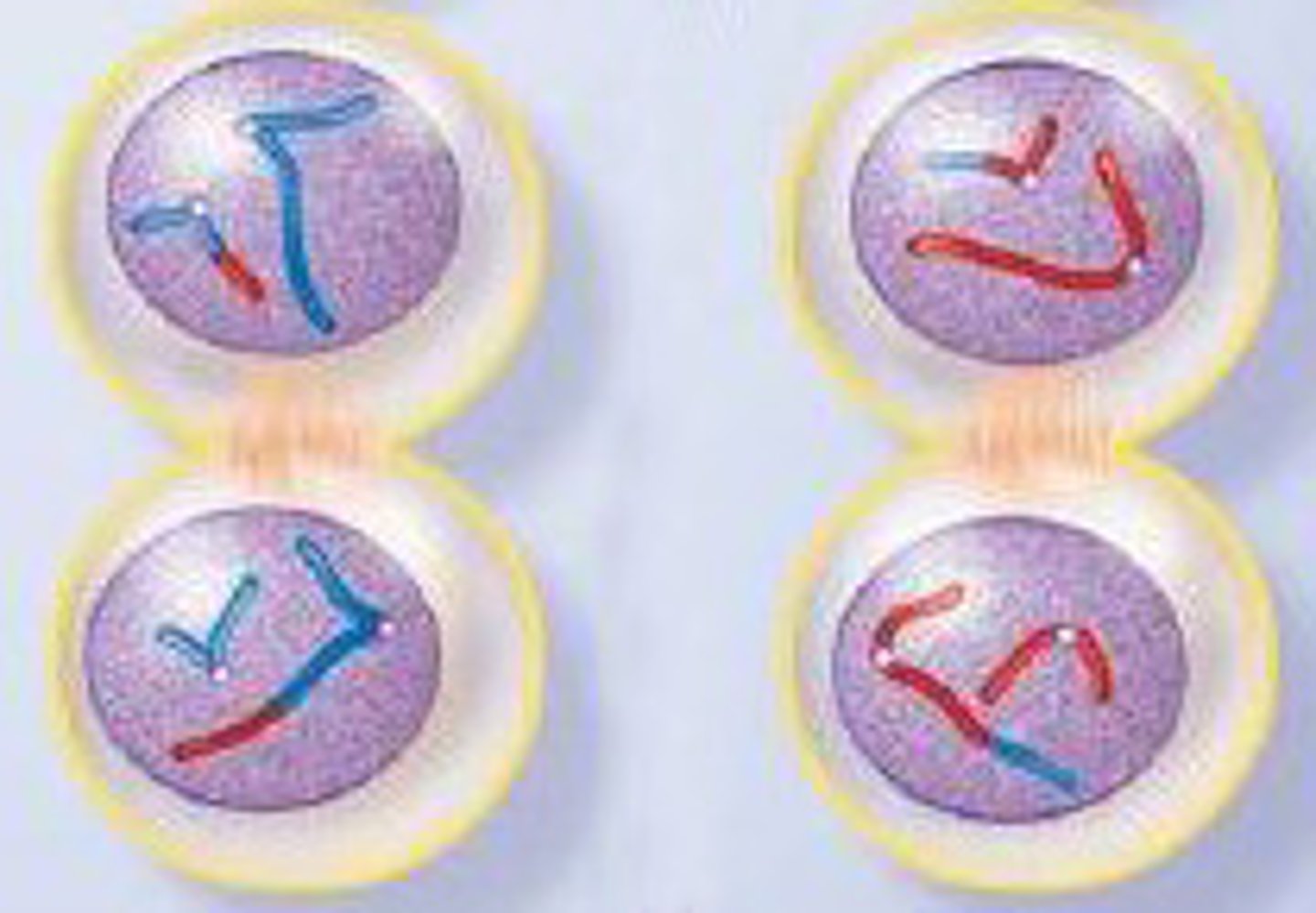
Telophase I
2 haploid cells form (each still has sister chromosomes)
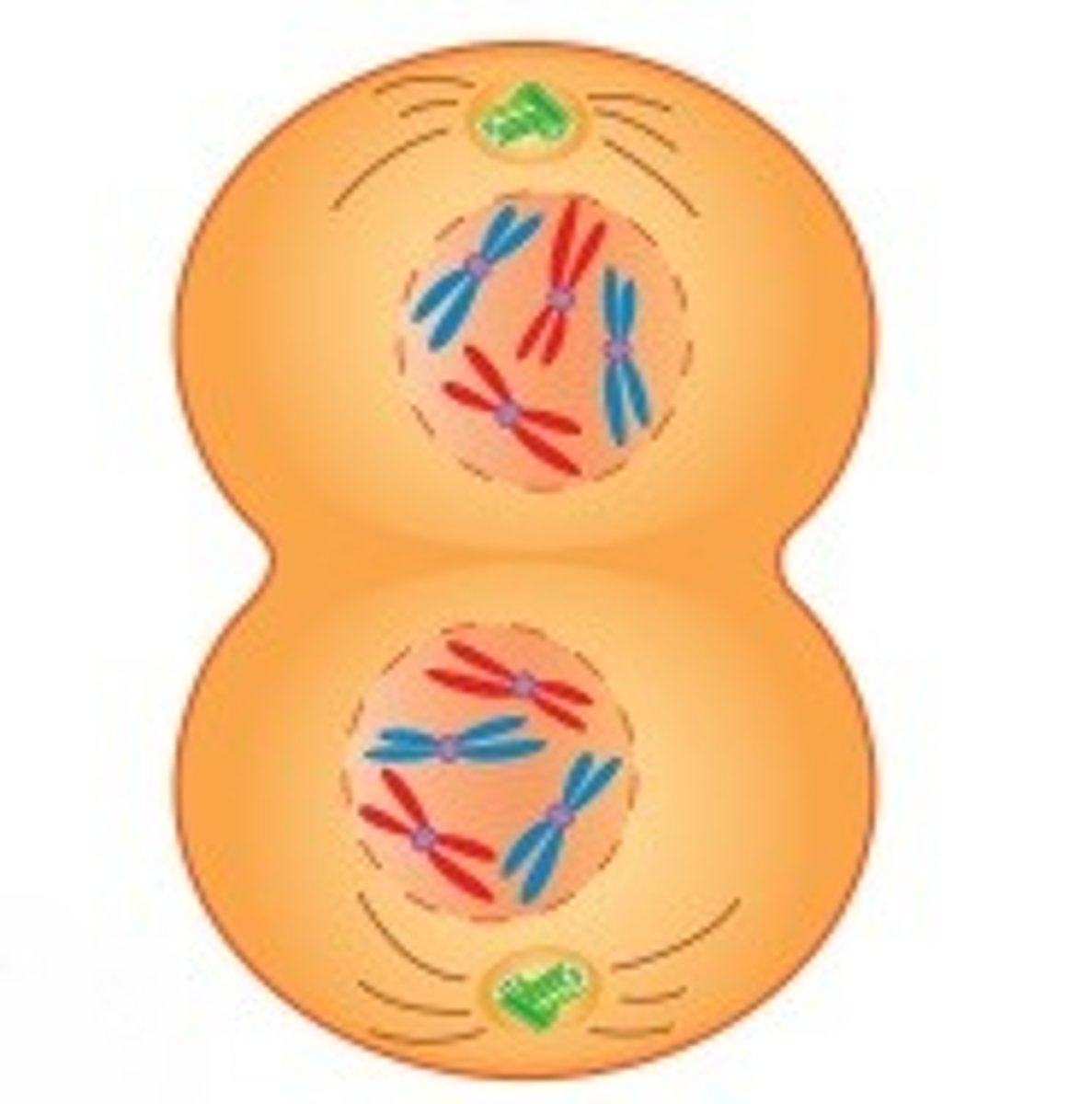
Mitosis
happens once and makes 2 identical cells used for growth and repair. The chromosome number stays the same — diploid to diploid. There is no crossing over and no genetic variation
Meiosis
happens twice and makes 4 unique cells (sperm or eggs). The chromosome number is cut in half — diploid to haploid. Crossing over and independent assortment create genetic variety.
Why meiosis I reduces ploidy:
During meiosis I, homologous chromosomes (pairs) separate. Each new cell gets only one chromosome from each pair, so the total number of chromosomes is reduced by half.
Mitosis
No pairing of homologous chromosomes.
In Metaphase, single chromosomes line up one by one at the middle.
Anaphase: Sister chromatids separate, making two identical cells with the same chromosome number.
Meiosis 1
Homologous chromosomes pair up (form tetrads) during Prophase I.
In Metaphase I, these pairs (tetrads) line up side by side at the middle.
Anaphase I: The homologous chromosomes separate, but sister chromatids stay together.
This reduces the chromosome number by half (diploid → haploid).
independent assortment
Happens in Metaphase I of meiosis.
Homologous chromosome pairs line up randomly.
Each gamete gets a different mix of maternal and paternal chromosomes
Crossing Over
Happens in Prophase I of meiosis.
Homologous chromosomes exchange pieces of DNA.
Creates new gene combinations on each chromosome.
Random Fertilization
Any sperm can fertilize any egg.
The combination of two unique gametes makes millions of possible outcomes
The number of possible chromosome combinations in gametes = 2ⁿ, where n = the haploid number (half the diploid number).
If the diploid number = 8 → haploid = 4 → combinations = 2⁴ = 16 possible gamete combinations.
Given the diploid number of chromosomes, calculate the number of combinations that chromosomes can be assorted in an organism's gametes.
Purpose of Meiosis
Sexual reproduction (production of gametes: sperm and egg).
Purpose of Mitosis
Occurs in somatic (body) cells (e.g., skin, liver, muscle).
How many divisions occur in Mitosis?
One division (Prophase, Metaphase, Anaphase, Telophase).
How many cell divisions occur during meiosis?
Two sequential divisions (Meiosis 1&2)
How many daughter cells are produced during meiosis?
Four daughter cells
How many daughter cells are produced during mitosis?
Two daughter cells
Total number of chromosomes at the end of meiosis
Haploid(n) because the chromosome number is halved from parent cell
Total number of chromosomes at the end of mitosis?
Diploid (2n) because the chromosome number remains the same as the parent cells.
What is the genetic outcome of mitosis?
Daughter cells are genetically identical to parent cells
What is the genetic outcome of Meiosis?
Daughter cells are non-identical to parent cells
Where does crossing-over occur?
Prophase 1 of Meiosis
Which form of nuclear division has homologous chromosome pairing?
It occurs in Meiosis to form tetrads in Prophase 1.
 Note
Note  Flashcards (22)