The Big issue (need to add miss fishcer industry + spec)
 Studied by 0 people
 Call Kai
 Learn
Learn Practice Test
 Spaced Repetition
 Match
Match Flashcards
 Knowt Play
1/62

There's no tags or description
Looks like no tags are added yet.
Name | Mastery | Learn | Test | Matching | Spaced | Call with Kai |
|---|
No analytics yet
Send a link to your students to track their progress
63 Terms
What is The Big Issue?
A magazine sold by homeless people - offering them an opportunity to earn an income.
It’s written by professional journalists.
It’s a ‘street newspaper’ founded by Bird and Roddick in 1991.
Why are people homeless?
Lack of affordable housing
Cost of living crisis
Drugs, alcohol
What genre of magazine is The Big Issue?
A hybrid - current affairs and entertainment
Partisan definition
Supporting a particular cause.
The Big Issue is partisan, as it supports people facing poverty and homelessness.
Other magazines are politically neutral.
Big Issue front cover
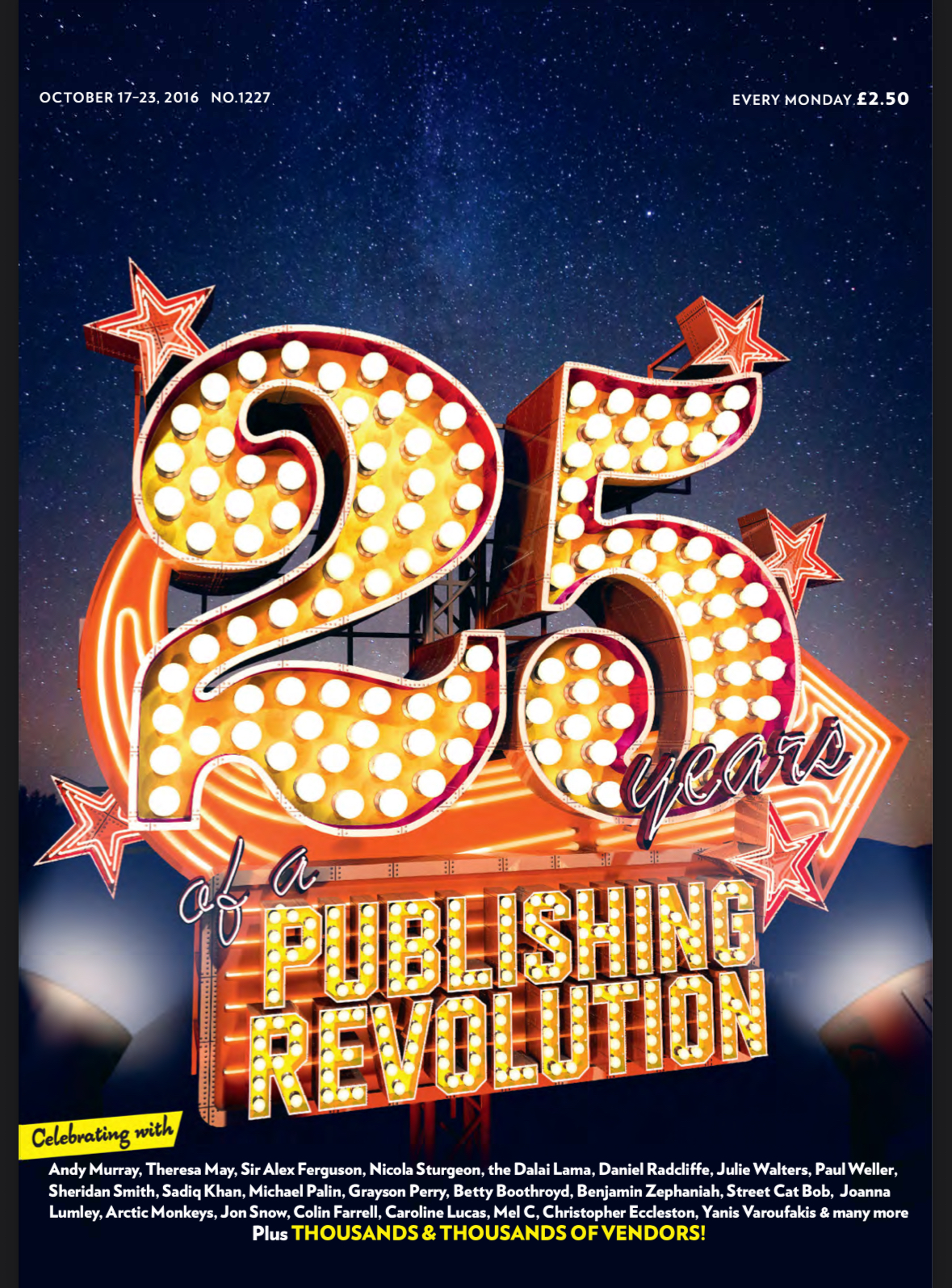
FRONT COVER ANALYSIS: What is the main focus of the front cover?
The “25 years of a publishing revolution” billboard.
This is unconventional, as current affairs magazines normally have celebrities as the main focus.
What are the other unconventional features on the front cover?
The lack of cover lines - this is because they don’t need to draw attention to customers in shops. The vendors do this for them.
There are no people on the front cover.l
What are the more conventional features on the front cover?
The bright colours - red and yellow - form positive associations with the magazine.
The lights on the billboard give a feeling of luxury.
The dark, starry background contrasts the bright billboard - drawing more attention to it.
What font is constantly used?
A sans-serif font.
This attracts a lower-class audience.
What are the masthead and logo examples of?
Iconography.
What’s significant about this edition of The Big Issue?
It’s a special edition - 25 year anniversary
Contents page of Big Issue
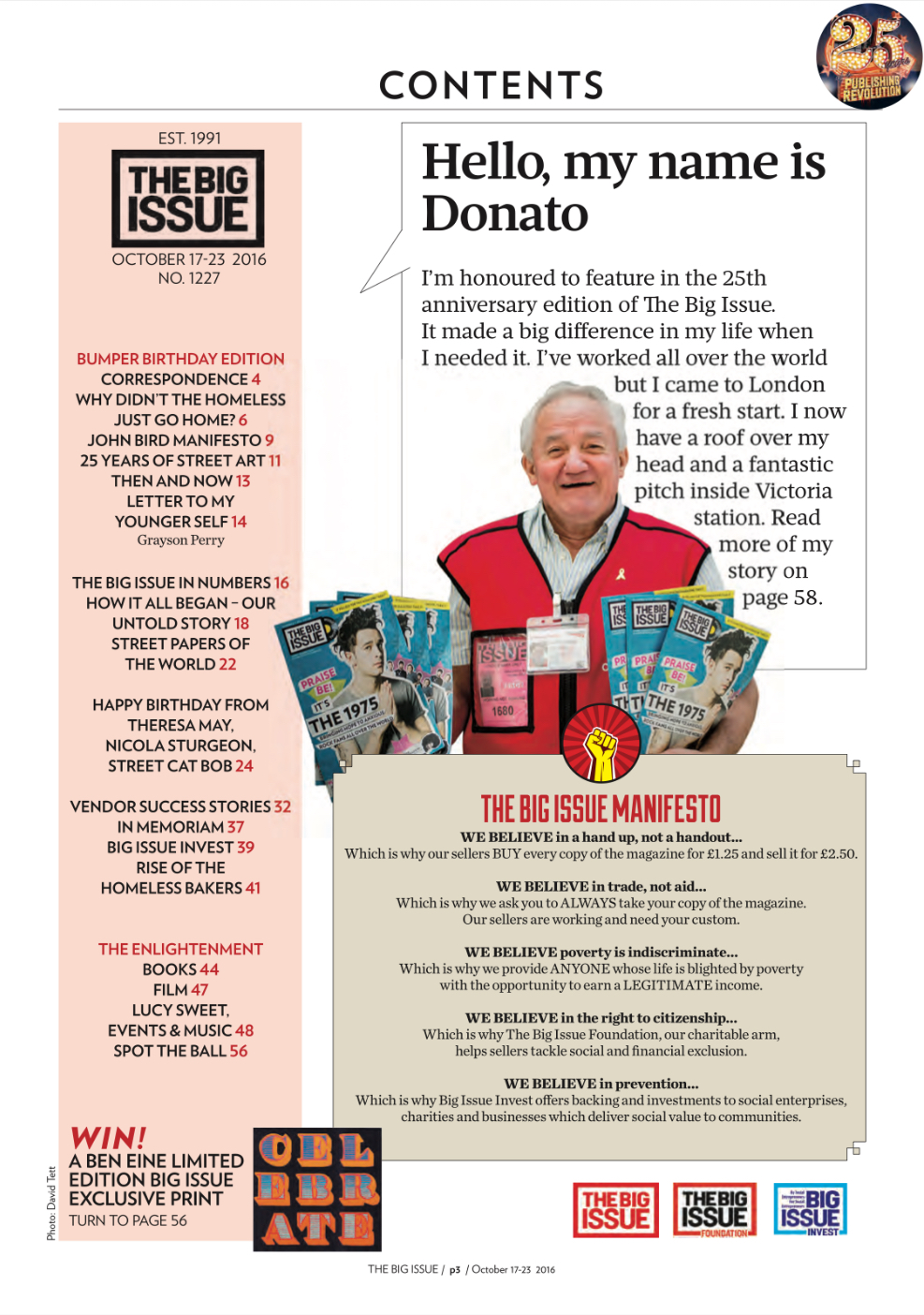
How are vendors represented on the contents page?
Positively.
Vendor “Donato” is shown smiling and holding copies of The Big Issue.
He says The Big Issue “made a big difference” in his life, and that it’s given him “a roof over my head”.
This emphasises the good cause of the magazine - encouraging readers to purchase another issue.
What incentives are featured?
“WIN! a Ben Eine limited issue Big Issue exclusive print”
Explain the typography on the contents page.
Red text - used for key info, titles
Black text - used for the body
What’s the purpose of the manifesto?
To be a public declaration of the magazine’s policy and aims, used to persuade readers to support the cause.
The red fist symbol emphasises their political cause.
“a hand up, not a handout” reinforces the good cause of vendors selling the magazine.
What’s David Gauntlett’s identity theory?
The theory that gender representations that circulate in contemporary media products are more diverse and complex than those of previous generations - ‘open realm of possibilities’.
Gauntlett suggests that there is a ‘pick and mix’ approach to modern identity, as we borrow and combine different ideas from media products.
Grayson Perry “letter to my younger self” article (text)
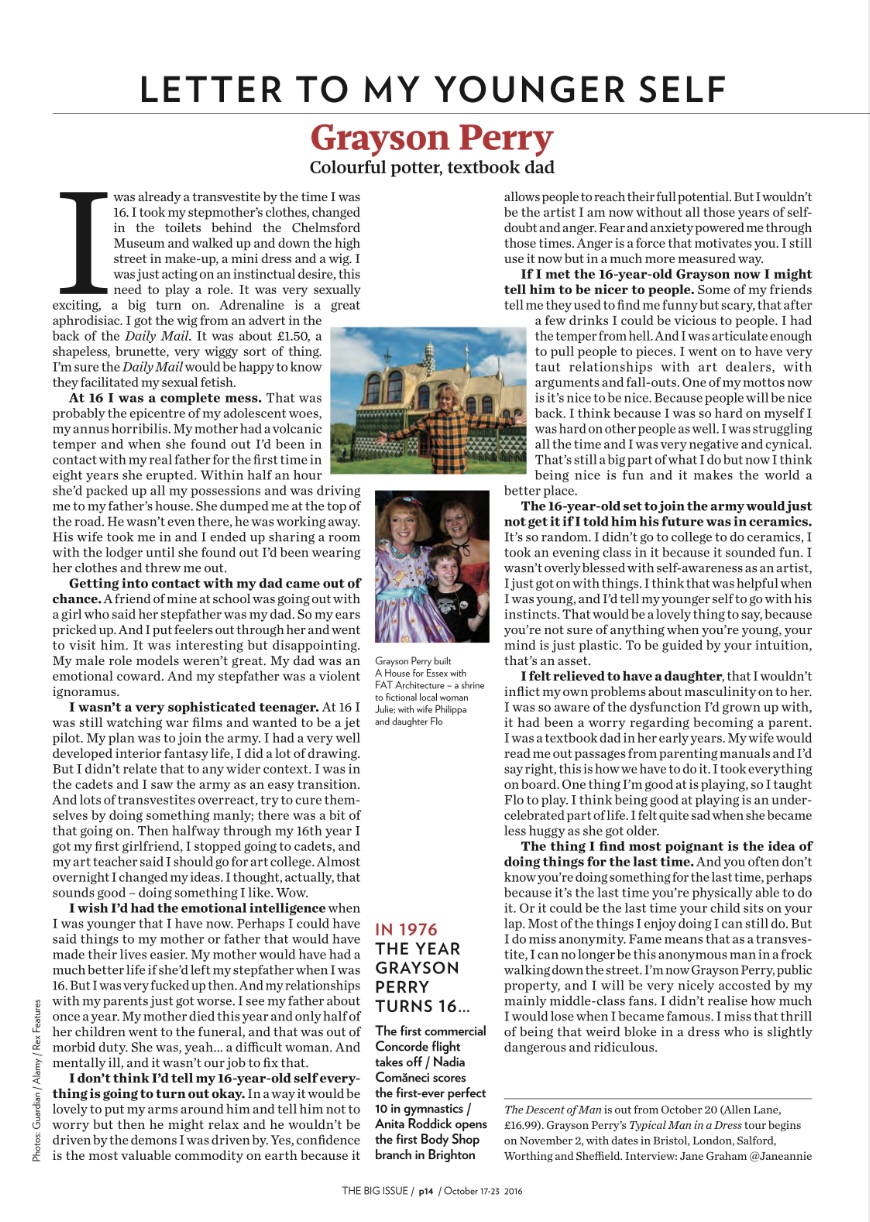
Image of Grayson Perry article
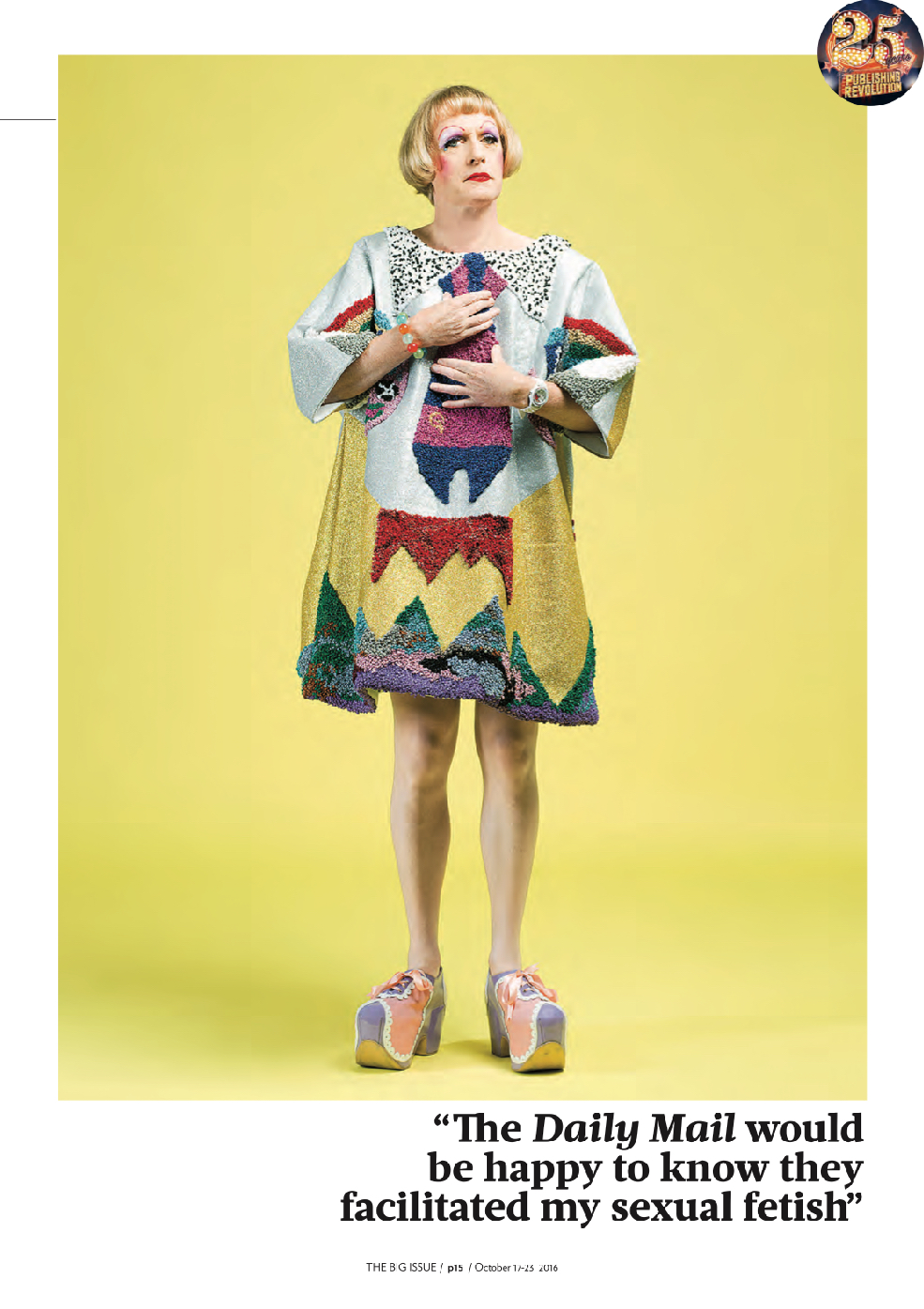
How can Gauntlett’s identity theory be applied to this article?
It directly links to Gauntlett’s identity theory.
Grayson Perry being a transvestite is a far more complex gender representation than those of previous generations.
Perry has used a ‘pick and mix’ approach to create his identity.
Does the image of Perry support this?
Yes.
He makes direct address with the camera whilst wearing a very unique feminine, colourful outfit.
This shows that Perry is comfortable and dominant, even with his unique and colourful appearance.
What is the effect of the green background?
It emphasises Perry’s uniqueness.
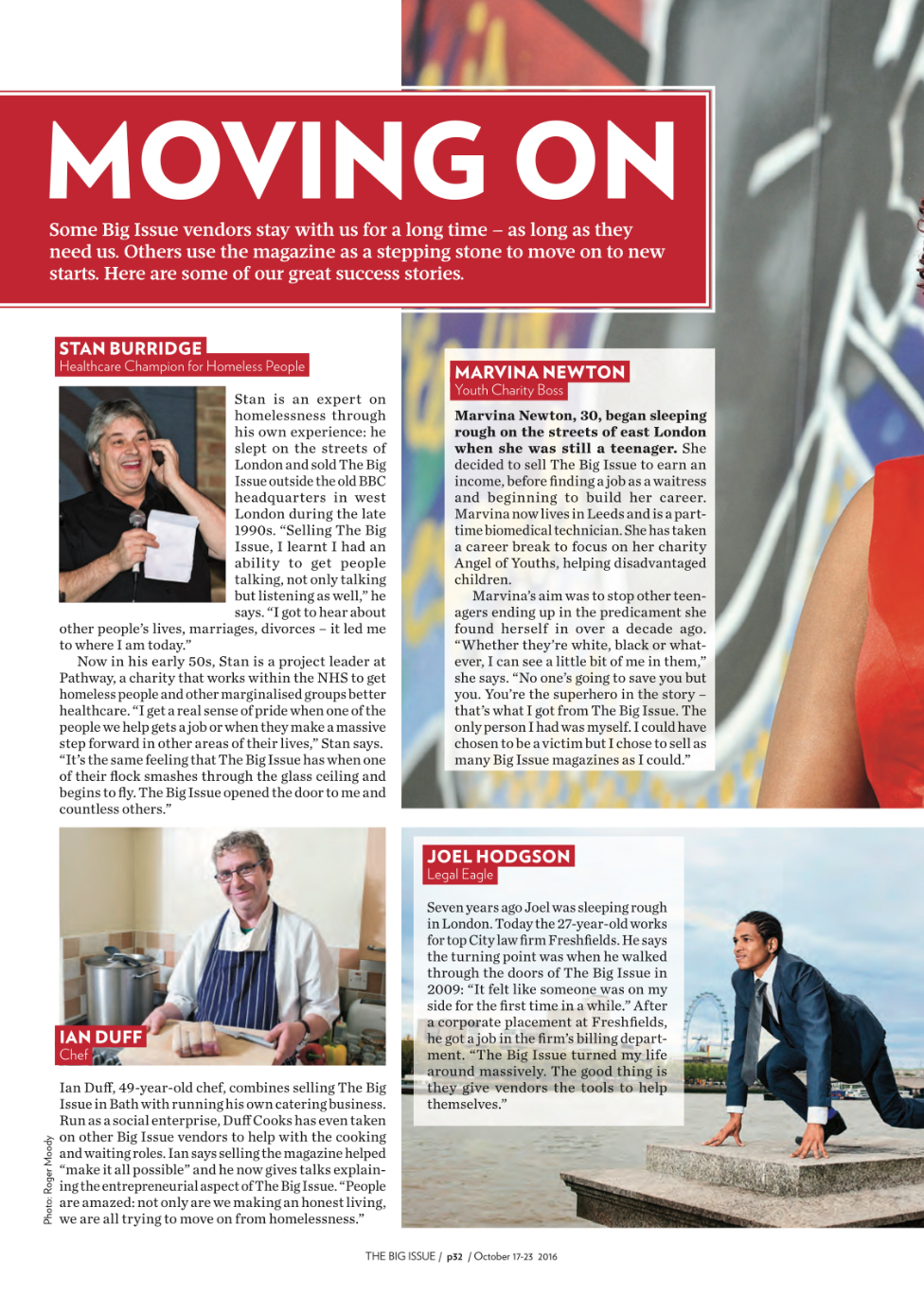
“Moving on” article (1/3)
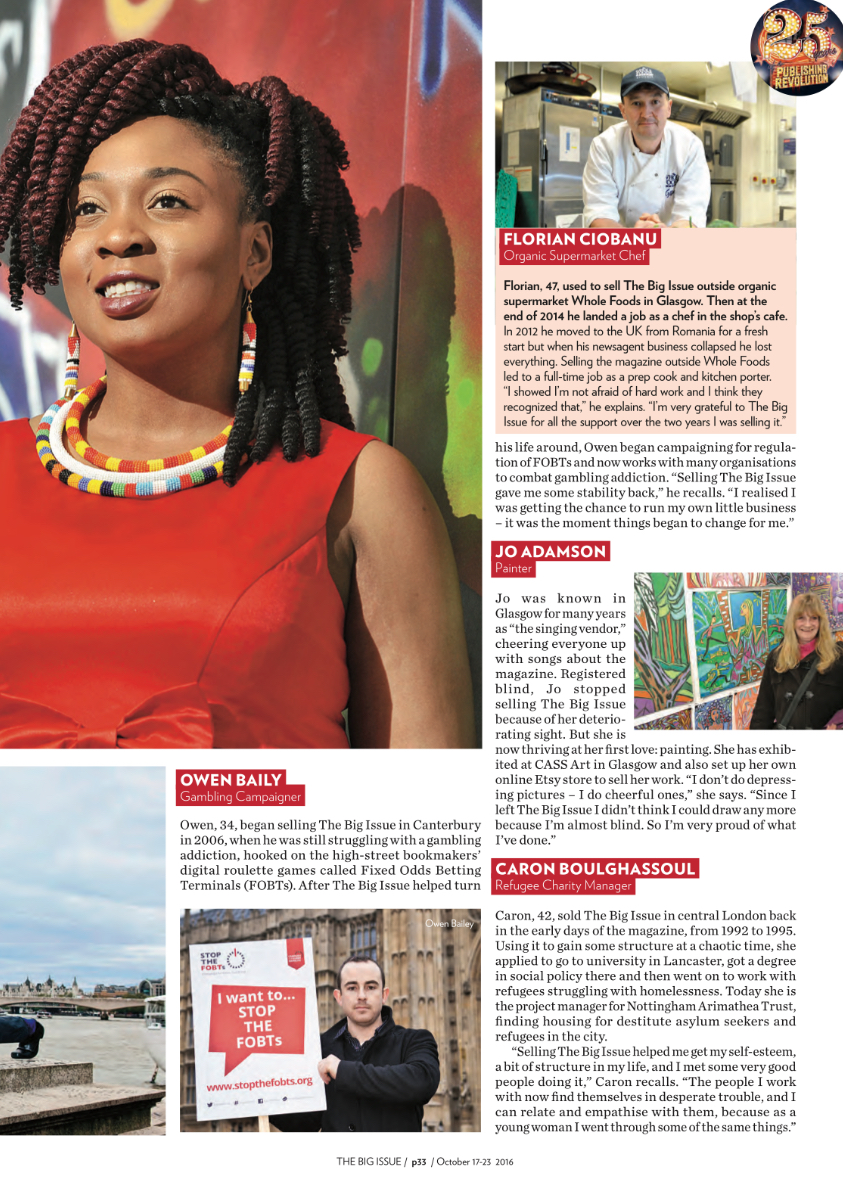
“Moving on” article (2/3)
“Moving on” article (3/3)
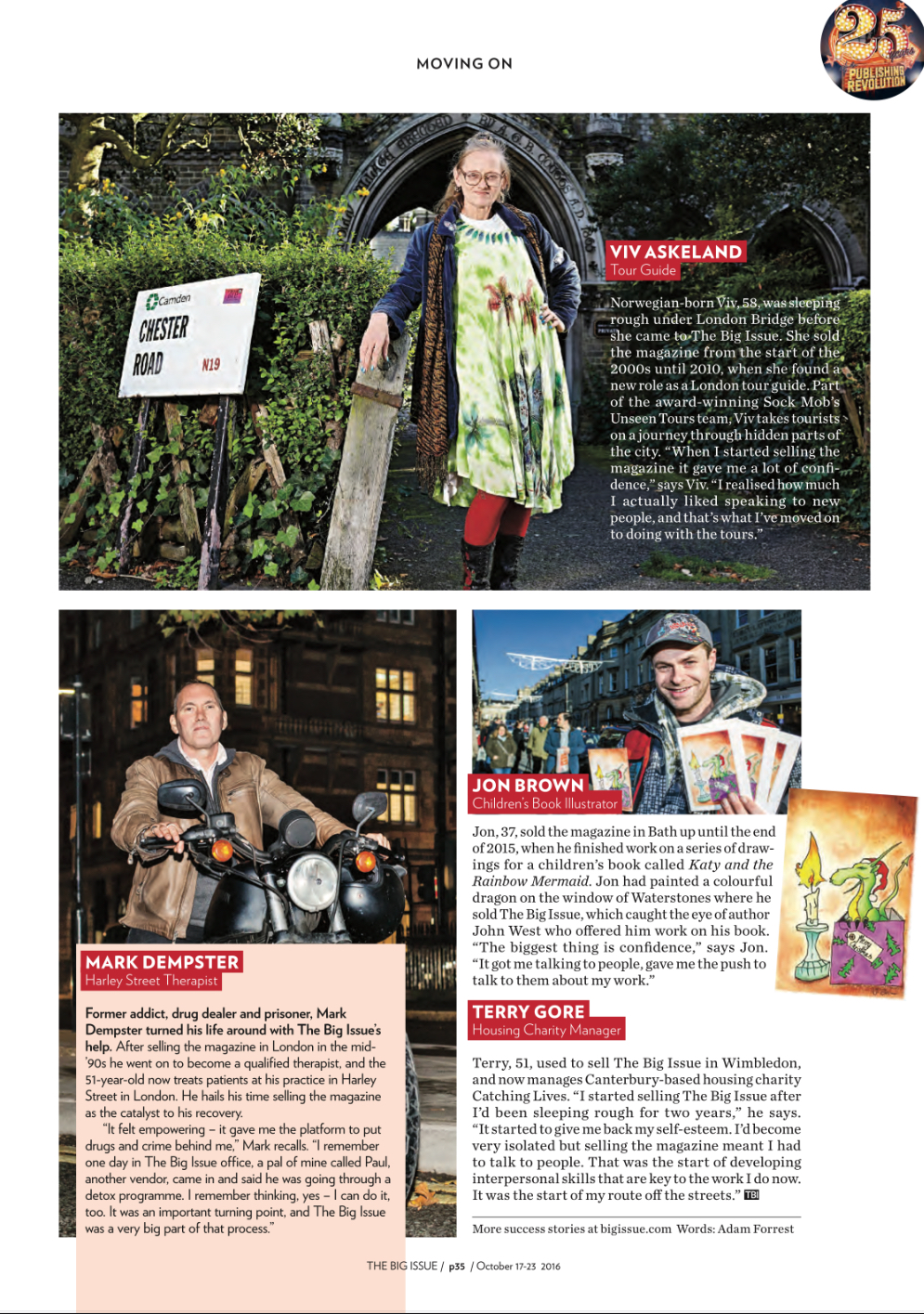
What is this article about?
Success stories of previous Big Issue vendors.
How are homeless people presented in the article?
As capable and hardworking individuals - not passive victims.
This links to Hall’s representation theory - homeless people are unfairly stereotyped in the media as being less capable.
Describe the visual codes in the article.
The images show all previous vendors in confident, empowering poses or smiling.
The colourful backgrounds signify creativity.
Describe the dress codes in the article.
They contrast the stereotype of homeless people wearing dirty clothes - suits and chef uniforms are seen.
This also shows that they are professionals.
What can be said about the subjects in the article?
They are diverse - different ages, genders, ethnic backgrounds.
The fact that Marlina Newton (black woman) is the biggest image contrasts the beliefs of Bell Hooks
“No soggy bottoms here!” Article
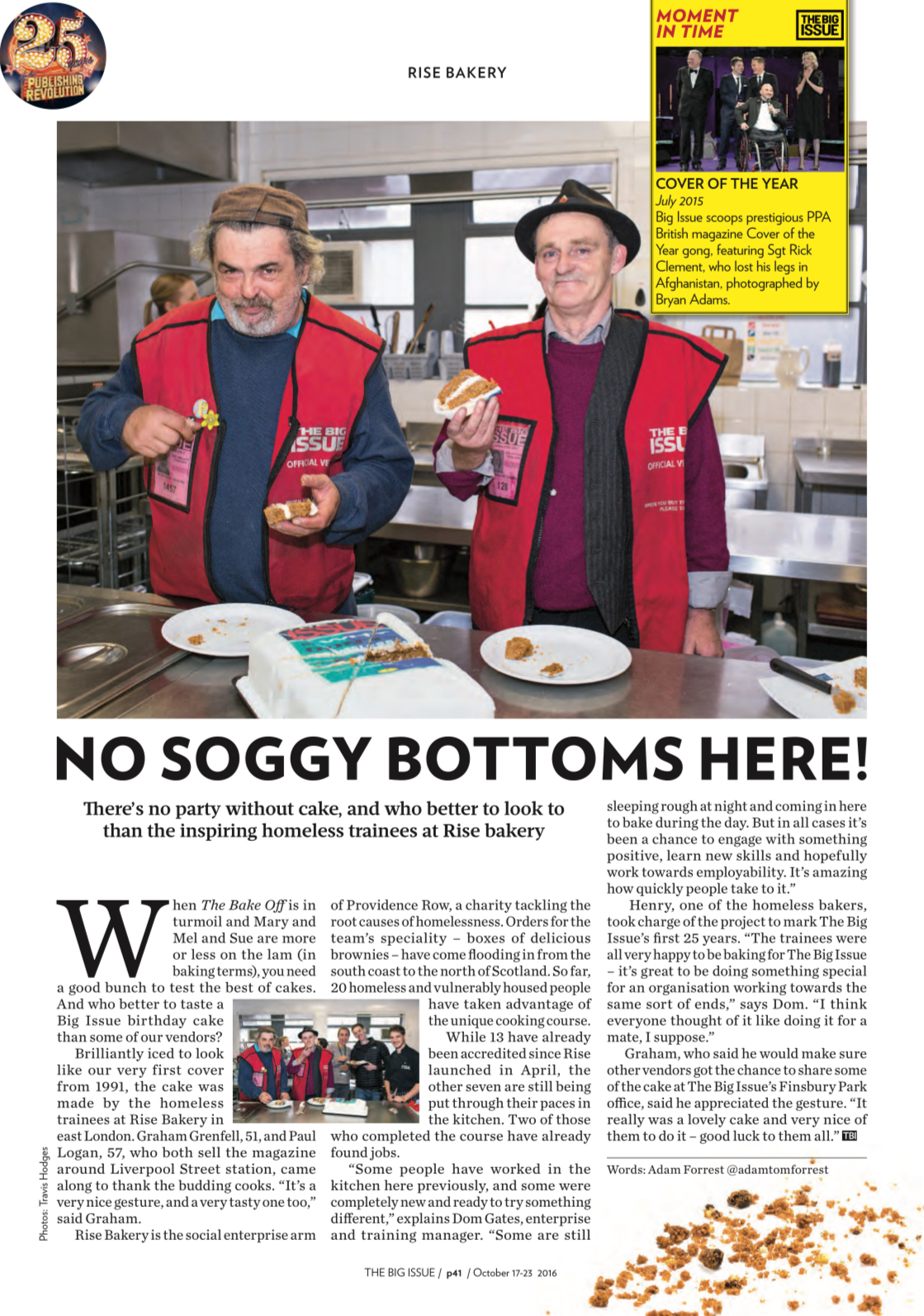
What is the article about?
It focuses on Rise Bakery - a company that trains homeless people in baking skills.
The article shows how homeless people (Big Issue vendors) are being helped into work - shows that The Big Issue is ethical.
The success stories of homeless people working with the company fit the Big Issue’s mission of supporting marginalised people.
What is significant about the title of the article?
It’s a reference to The Great British Bake Off - Judges sometimes criticise cakes by saying they have a “soggy bottom”.
This helps engage an audience - readers recognise the humorous reference.
The title of the article shows that the bakers are skilled, challenging negative stereotypes about homeless people.
How are homeless people presented in the article?
As hardworking - The image shows them serving a cake. This challenges stereotypes that homeless people are lazy.
As ordinary and relatable people - They’re quoted directly and named. This humanises them.
As grateful - quotes show them being thankful for the opportunity. Although this may show them to be dependant on charity.
Describe the visual codes in the article
Setting - professional kitchen with steel surfaces and clean environment. These professional standards show that this is real employment.
Dress codes - the vendors wear shirts and jumpers under their Big Issue vest. This presents them as ordinary people.
The shot is eye level - shows equality with the reader.
Possible critical view of the article
It only focuses on success stories.
It doesn’t show ongoing struggles.
It makes homelessness seem easy to escape.
Donato “My Pitch” article
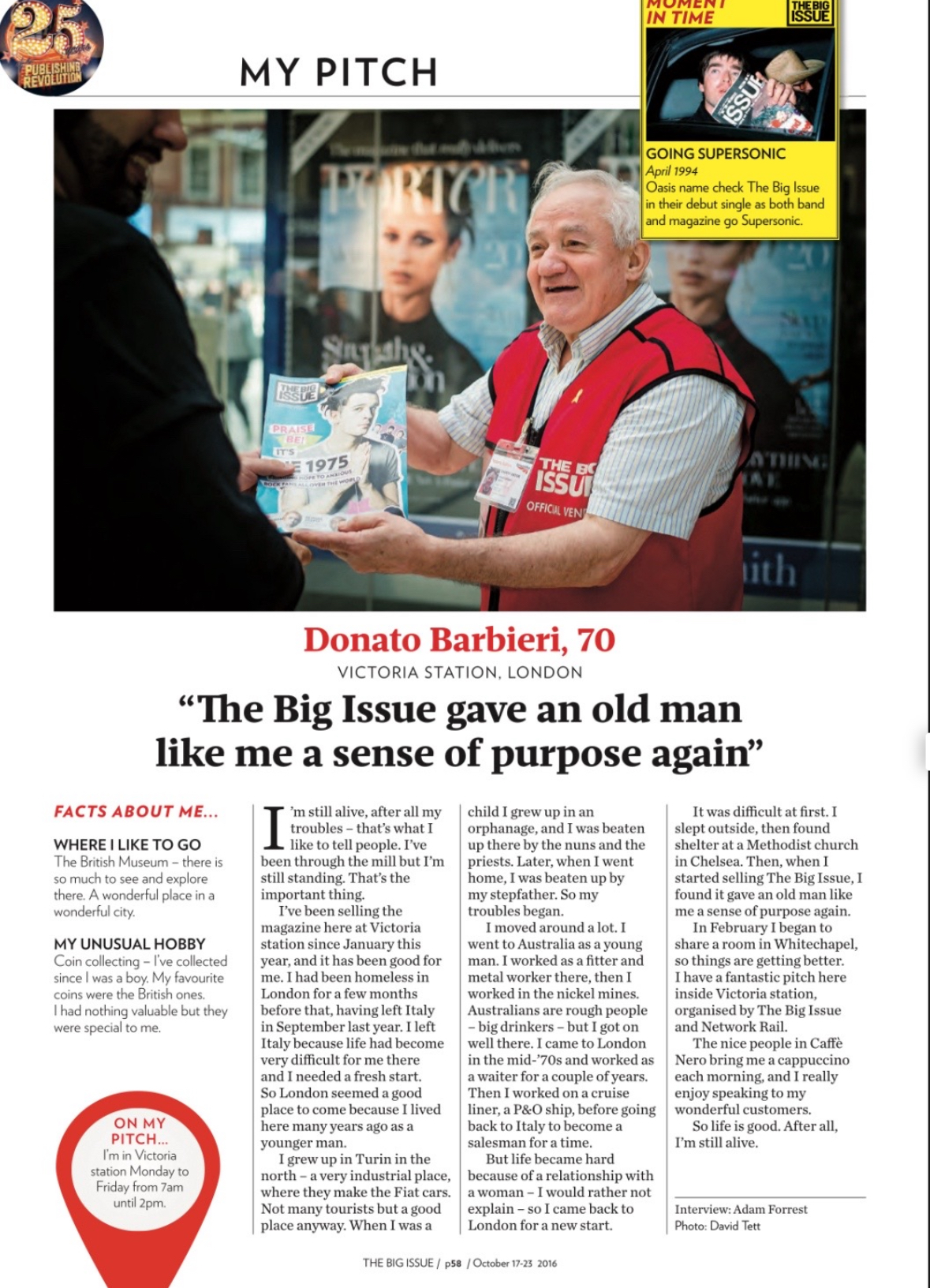
What’s the article about?
It’s a personal profile of a 70 year-old vendor called Donato.
The article tells his life story and shows how the Big Issue helped him.
The focus on the individual humanises homeless people and creates empathy for the reader.
What’s the effect of the headline?
It is a quote from Donato: “The Big Issue gave an old man like me a sense of purpose again”.
This is emotional and personal. It again creates empathy.
It also reinforces the positive purpose of The Big Issue.
Describe the visual codes in the article
Setting - Busy urban background, realistic. This shows he thrives in a public place.
Dress codes - Big Issue vest and ID card convey legitimacy and professionalism. He looks like he has a proper job.
Body language/facial expression - He smiles whilst having an open posture. This shows his friendliness and his pride in his work.
Camera angle - eye-level angle makes us connect emotionally, no power imbalance with the reader.
How are homeless people presented in the article?
Having a complex life - the article explains Donato’s family and relationship problems (abuse). This creates empathy for him.
Hardworking - The article explains how Donato works regularly and is committed to his job.
Resilient and strong - Donato says “I’m still alive”, “I’m still standing”. He is a fighter, not a victim.
What’s the effect of the ‘Facts about me’ box?
It includes Donato’s hobbies, favourite places and interests.
It makes him seem normal and relatable - humanising him.
Turn2us “10p a week saved our home” advert
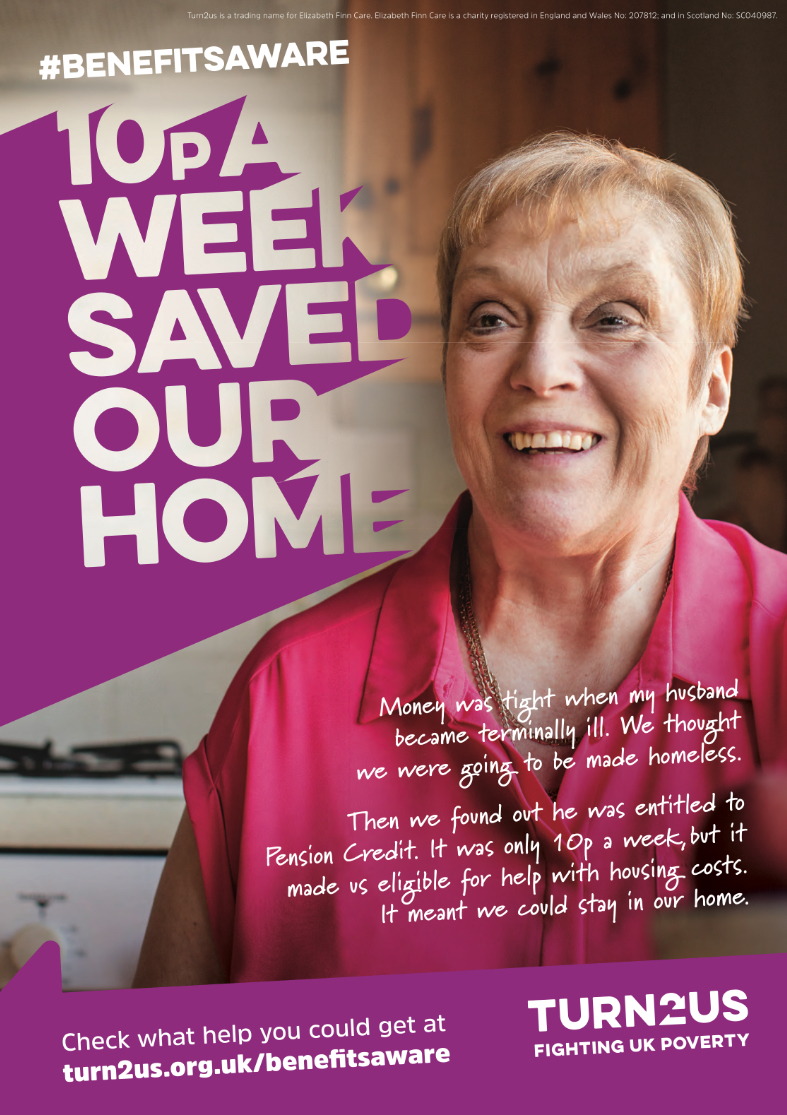
What’s being advertised?
It’s an advert for a charity/benefits-awareness campaign helping people in poverty access benefits.
Advert analysis
An older woman who appears to be an ordinary working-class citizen is featured. Her plain dress code signals authenticity.
She has a big smile on her face.
The language is emotional and narrative-driven: “money was tight”, “we thought we were going to be made homeless”
“10 p a week” saving their home highlights how small amounts of money can affect vulnerable people.
I, Daniel Blake film advert
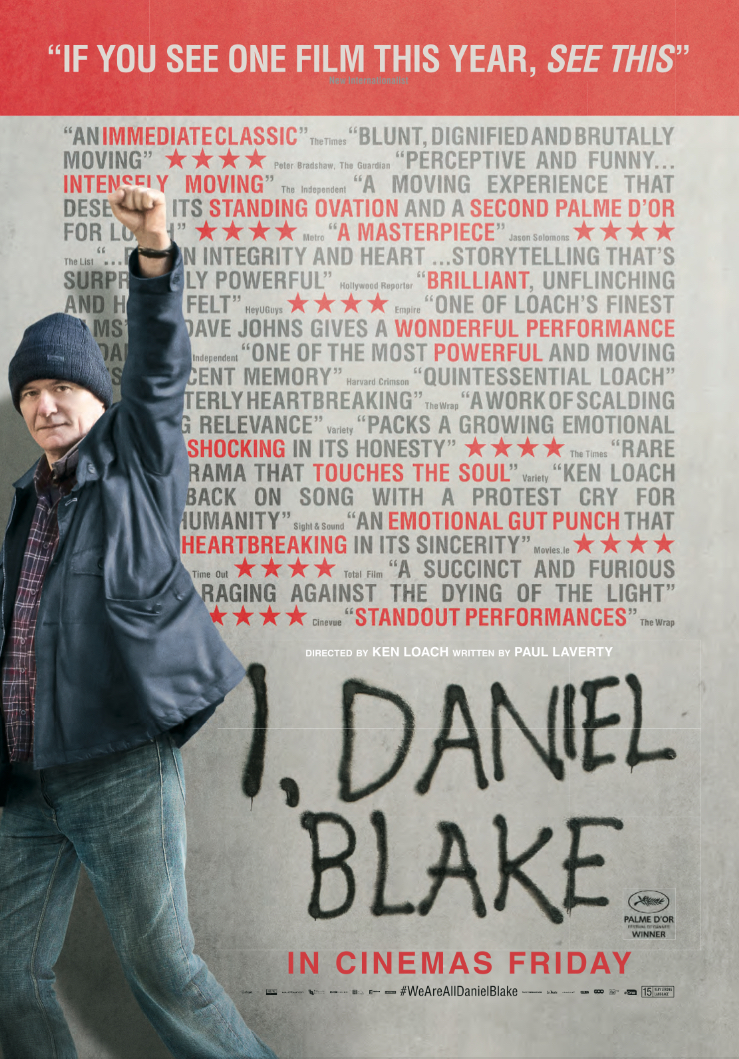
What’s being advertised?
Ken Loach’s social realist film “I, Daniel Blake”
Advert analysis
An older, working-class man is seen raising his fist. This is a symbol of protest and struggle.
The review quotes repeatedly emphasise emotion - “powerful”, “heartbreaking”.
This aligns the film with activism and political consciousness - key values of The Big Issue as a magazine supporting marginalised people.
Club de Fromage advert

What is being advertised?
A fun, nostalgic nightclub and themed party events.
Advert analysis
The tone is very informal and playful
The bright colours and chaotic layout signal youth culture and The polaroid-style photos are lighthearted and relatable
The advert targets the magazine’s youthful readers
What do these adverts suggest about The Big Issue’s target audience?
They are socially-conscious, politically-aware readers. This is reflected in the adverts with themes of poverty and activism
They’re compassionate - Turn2us advert speaks directly to readers who care about inequality
Urban, younger adults - Club de Fromage advert indicates pop culture and nightlife
How do these adverts appeal to the target audience?
Emotional storytelling - Turn2Us and I, Daniel Blake adverts use real-life experiences and strong emotional triggers
Authenticity - high beauty standards are avoided, appealing to an audience valuing honesty and realism
Benefits and protest themes reflect the lives and concerns of The Big Issue’s readers
How is a realistic representation of homeless life shown in the magazine?
Mentioning of drugs, alcohol and violence experienced by vendors.
The vendors talk about how they’ve overcome these issues.
Not all representations of homeless people are idealised.
What political stance does the magazine have?
Left-wing (labour).
Eg Margaret Thatcher (conservative) is criticised
The magazine paints a negative picture of conservative governments - it thinks they are responsible for the amount of homelessness.
How are men represented in the magazine?
“Westworld” SKY advert - the man wears a suit, he’s looking down with a neutral expression. This is a stereotypical representation of men - hegemonic masculinity.
The article about artists only features male artists. This shows how men are seen as more important than women in society.
Grayson Perry article contrasts this - adding a more modern representation of men.
How are women represented in the magazine?
Female leaders - Theresa May, Nichola Sturgeon.
Turn2Us advert - represent women as being financially dependant.
Why does the magazine feature mostly men?
As men are more likely to be made homeless than women.
So the focus is on creating positive role models for men.
AUDIENCE: Who is The Big Issue targeted at?
Urbanites - people who live in towns/cities who lead busy lifestyles
Socially-aware people
Stats of Big Issue audience
60% under 44
60% female
72% ABC1 (professionals)
59% married
What genre of content does the magazine focus on?
Niche content - focuses on the social issue of homelessness
How can Gerbner’s cultivation theory be applied to The Big Issue?
Repeated exposure to themes such as homelessness and poverty cultivates the idea for the audience that homelessness is an ongoing social issue that needs to be changed.
This results in feelings of empathy for the audience.
INDUSTRY: What is The Big Issue Ltd?
An independent magazine company that isn’t part of a larger conglomerate.
 Note
Note  Flashcards (25)