A&P Chapter 1: Introduction to Human Body
 Call Kai
 Learn
Learn Practice Test
 Spaced Repetition
 Match
Match Flashcards
 Knowt Play
1/81

Earn XP
Description and Tags
Name | Mastery | Learn | Test | Matching | Spaced | Call with Kai |
|---|
No analytics yet
Send a link to your students to track their progress
82 Terms
gross anatomy
science of macroscopic anatomy; things that can be seen with naked eye (surface anatomy, regional anatomy, systemic anatomy)
surface anatomy
study of internal structures as they relate to the overlying skin structure OR surface markings to understand internal anatomy through visualization/palpitation
regional anatomy
considers the regions of the body (head, extremities, all systems in region)
systemic anatomy
all structures of a particular system in body; regardless of location
microscopic anatomy
concerned with structures too small to be seen with the naked eye (cytology, histology)
cytology
study of cells (components + functions)
histology
study of tissues (function)
developmental biology
growth/development of individual from fertilization to death
embryology
first eight weeks of growth/development after fertilization of egg; earliest stage
pathological anatomy
structural changes associated with disease
imaging anatomy
internal structures visualized with x-rays, MRI, CT for analysis/intervention
clinical anatomy
applying anatomy to medicine, dentistry, etc
molecular physiology
functions of individual molecules (proteins, DNA, etc)
neurophysiology
functional properties of nerve cells
endocrinology
hormones and their impact on functions
cardiovascular physiology
functions of the heart and blood vessels
immunology
body’s defense against disease
respiratory physiology
functions of air passageways/lungs
renal physiology
functions of the kidney
exercise physiology
changes in cell + organ functions due to muscular activity
pathophysiology
functional changes associated with disease/aging
[structural organization]
chemical level
least complex; composed of atoms (smallest stable units of matter arranged to form molecules/compounds). (ex: water, proteins)
[structural organization]
cellular level
cells are the structural building blocks of plants/animals; produced by pre-existing cells through interactions between molecules + compounds. smallest unit capable of performing all vital life functions (ex: muscle cells, blood cells, nerve cells, etc.)
[structural organization]
tissue level
specialized groups of cells + cell products that work together to perform functions (ex: muscle tissue, nerve tissue, etc.)
[structural organization]
organ level
consists of two or more tissues working in combo to perform functions; type of tissue dictates the function (ex: heart, lung, etc.)
[structural organization]
organ system level
organs interact to form organ systems, which perform vital life functions
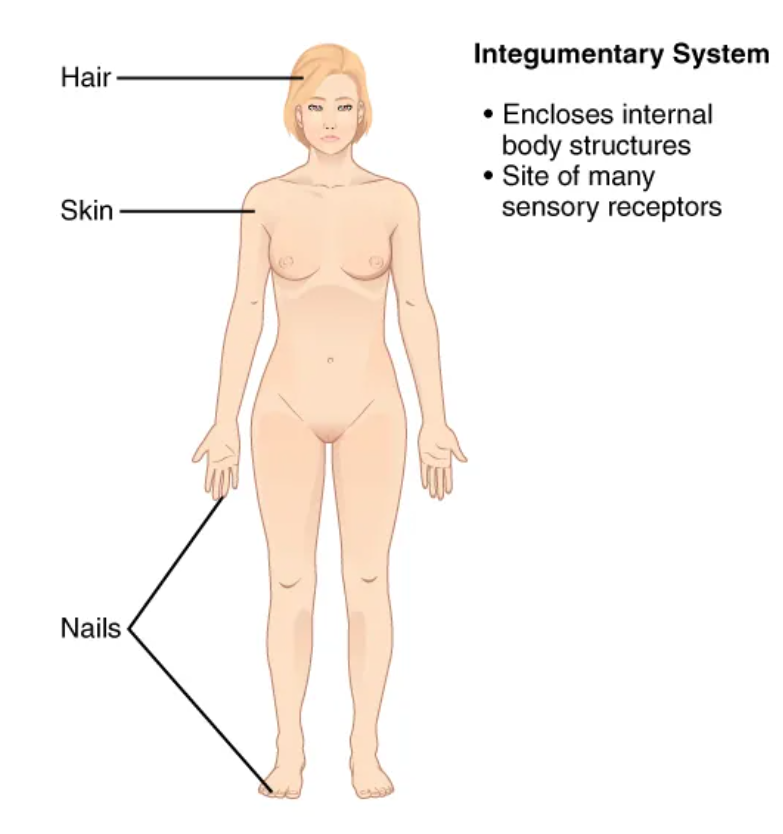
integumentary system
external support/protection + temperature regulation (skin, hair, nails)
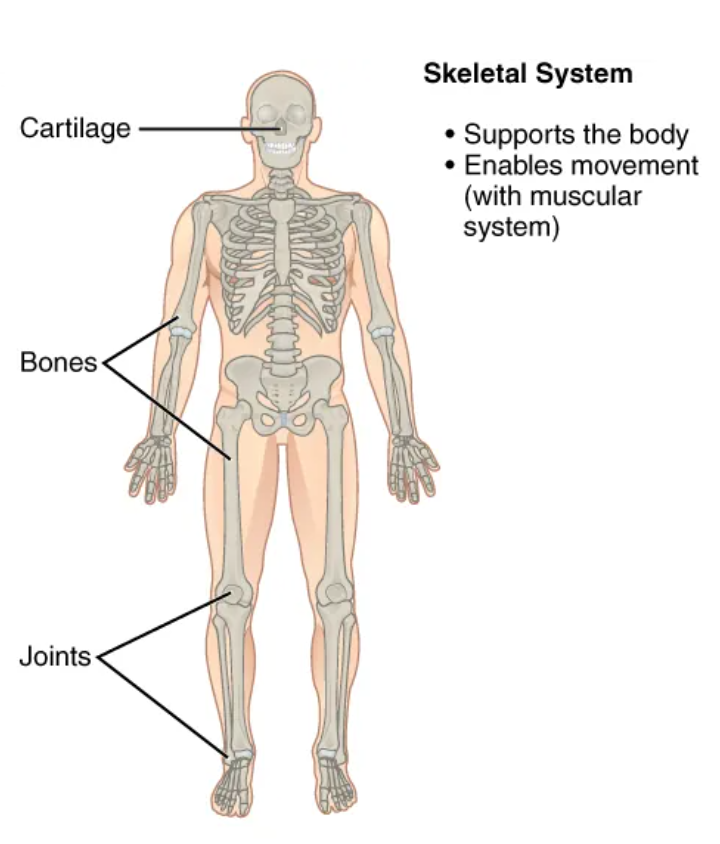
skeletal system
internal support/flexible frame for movement, forms blood cells, stores minerals (bones, joint, cartilage)
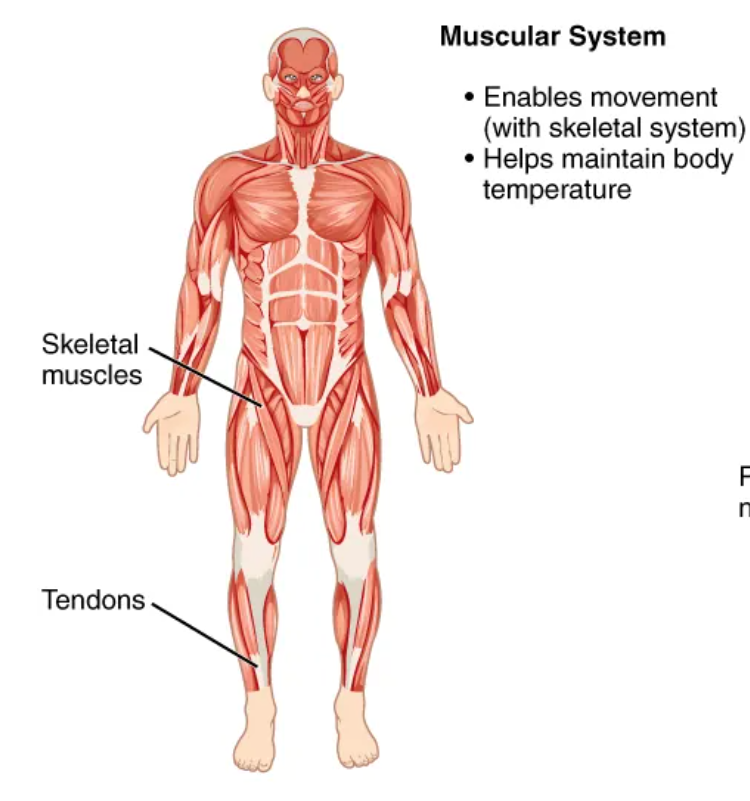
muscular system
motion support, heat production (skeletal muscles, tendons)
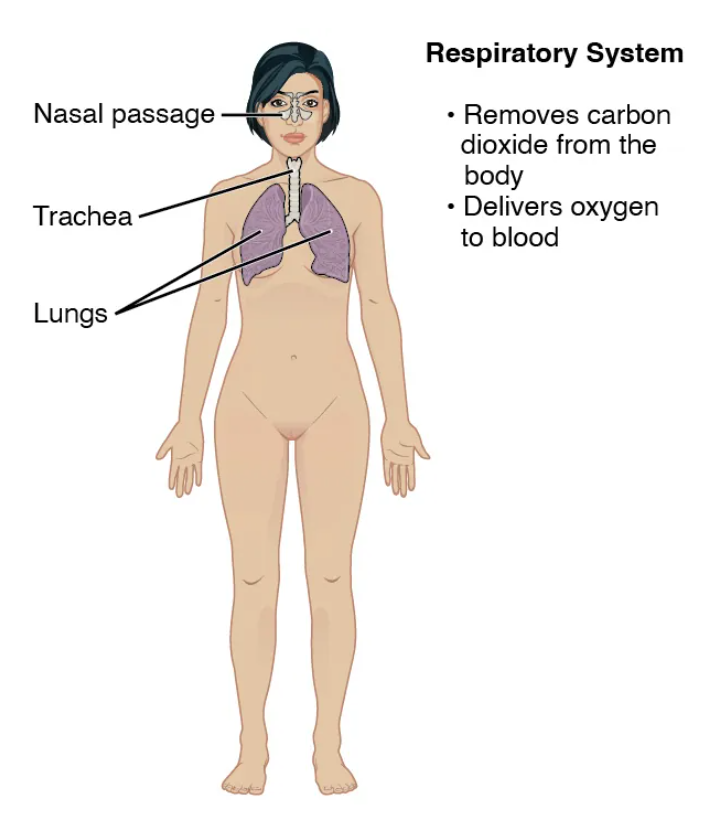
respiratory system
exchanges oxygen/carbon dioxide between air and circulating blood (lungs, trachea, larynx, nasal passages)
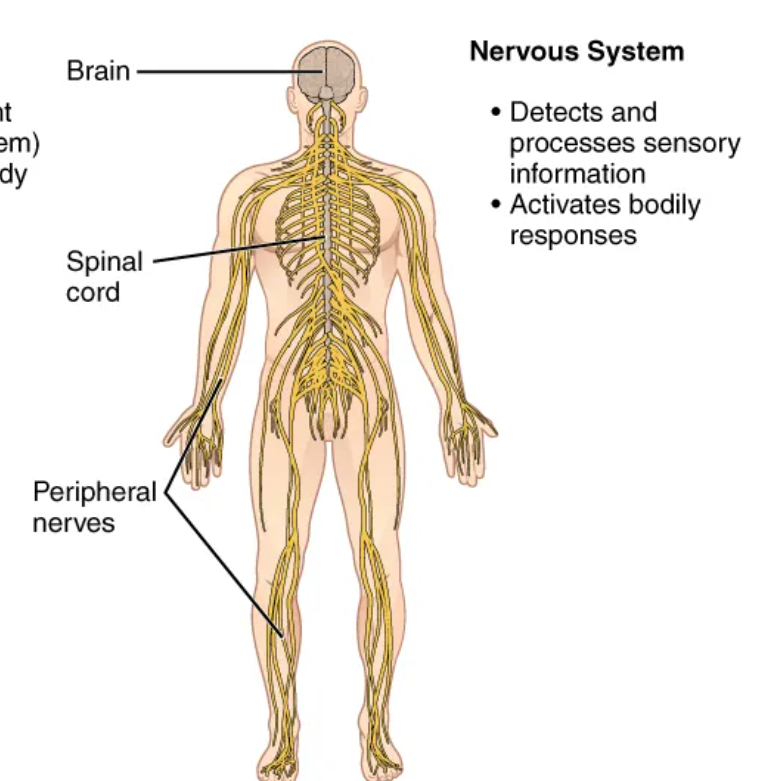
nervous system
responds to stimuli, coordinates other systems (brain, spinal chord, peripheral nerves)
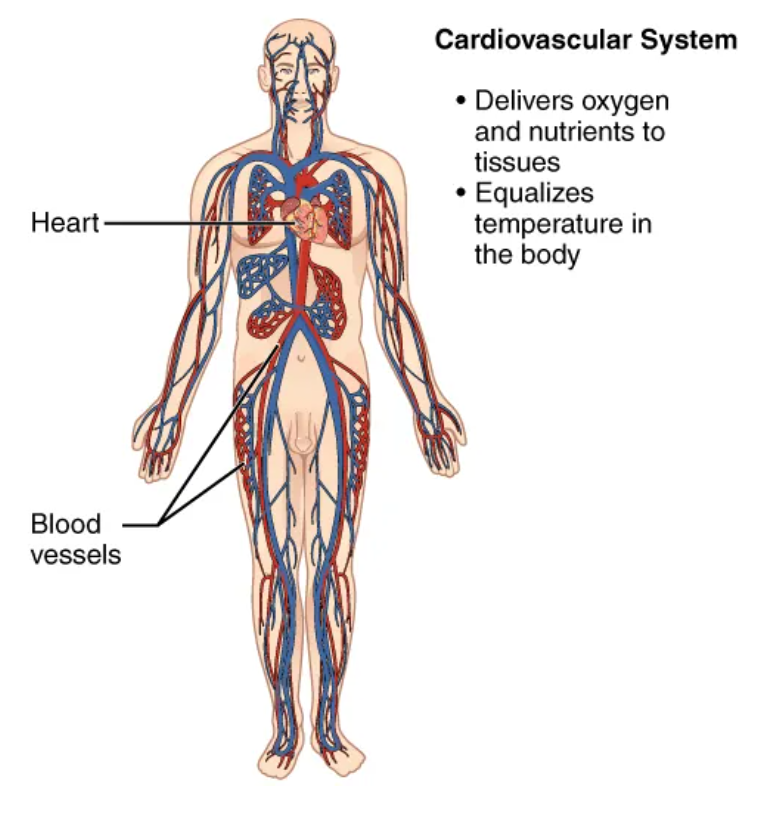
circulatory/cardiovascular system
internal transport of nutrients/oxygen to cells while wastes/carbon dioxide are transported away from body cells (heart, blood vessels)
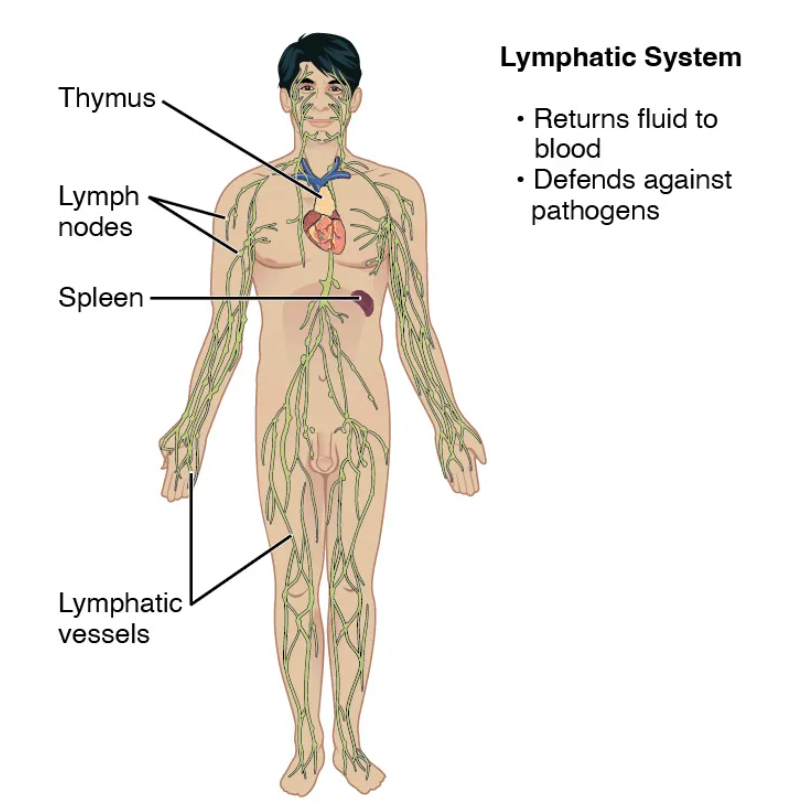
lymphatic/immune system
protects from infections and diseases, transports tissue fluid called lymph, absorbs fats (lymph nodes, spleen, thymus gland, bone marrow, tonsils)
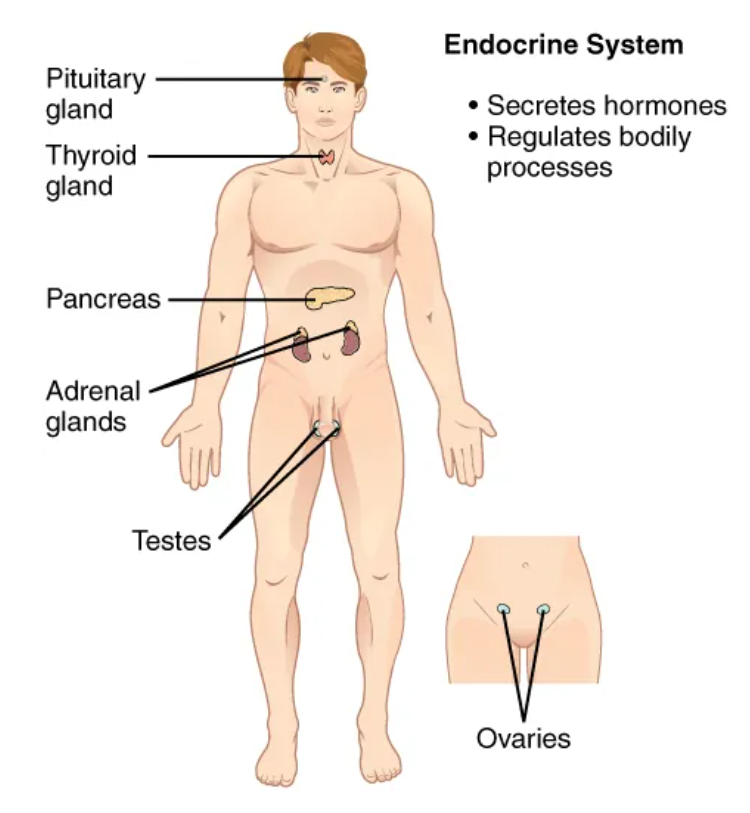
endocrine system
secretion of hormones that direct changes in other systems (thyroid, pituitary gland, adrenal gland, pancreas, pineal)
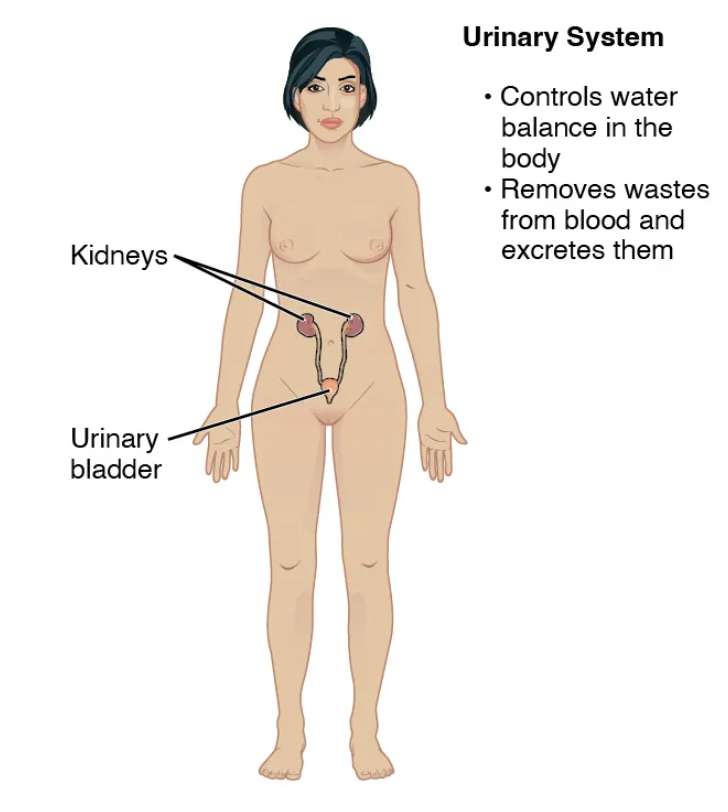
urinary system
filters blood to remove waste, excess water, and salts. contains pH/electrolyte balance (kidneys, uterus, urinary bladder, urethra)
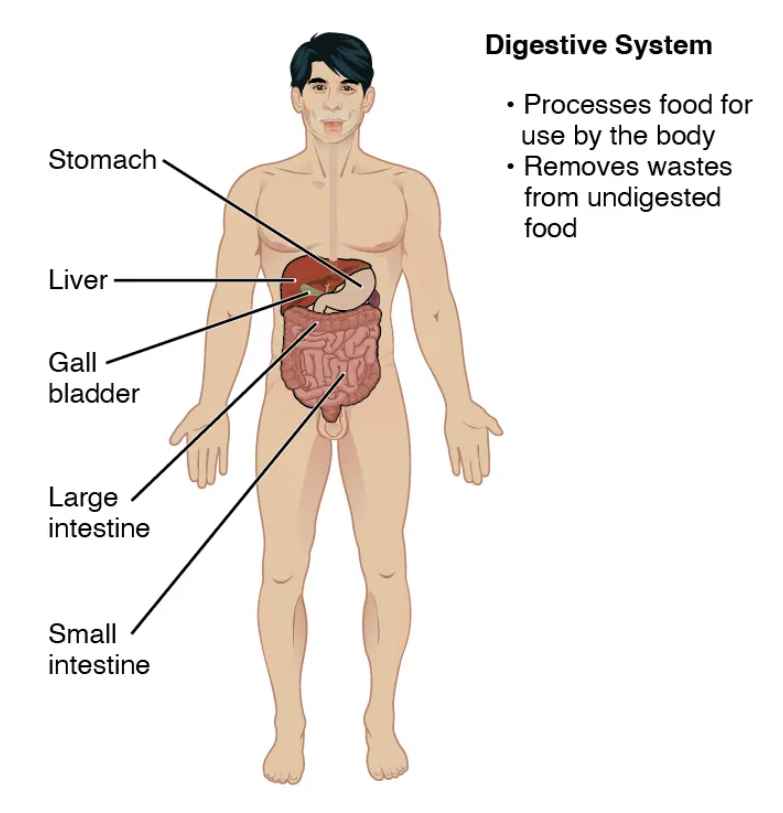
digestive sysmtem
intake, breakdown, and absorption of food - nutrients, minerals vitamins, and water; eliminates feces (salivary glands, esophagus, stomach, small/large intestines, liver, gallbladder)
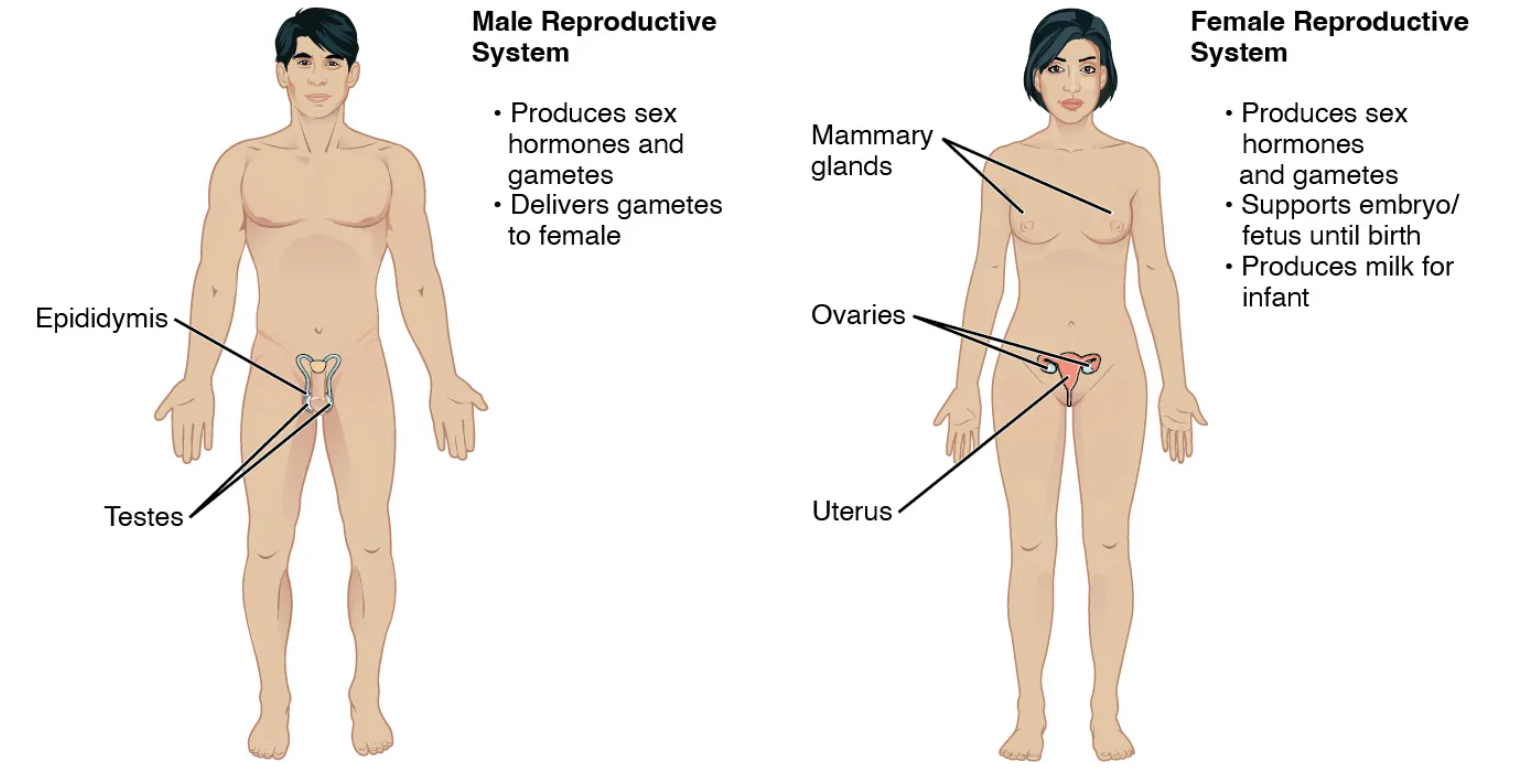
reproductive system
produces sperm + eggs; secretes sex hormones and copulation (ovaries, uterus, vagina, mammary glands and testes, scrotum, prostate gland, seminal vesicles, penis)
levels of organization in order
chemical, cellular, tissue, organ, organ system, organism
All of the basic life processes of the human body
Organization, metabolism, responsiveness, movement, development/growth/reproduction
[Basic life processes]
Organization
separation of one area from another; organism, cell, organ, etc. Controls what enters/exits each area
[Basic life processes]
Metabolism
all chemical reactions in a cell/organism
1) anabolic: smaller/simpler molecules are combined to create a larger, more complex substance (requires input of energy = ENDERGONIC)
2) catabolic: larger, more complex substances are broken down into smaller, simpler molecules (releases energy = EXERGENIC)
3) ATP: compound that stores/releases energy (ADP→ ATP = anabolic, ATP→ADP = catabolic)
[Basic life processes]
Responsiveness
body’s ability to adjust to changes in internal/external environment
[Basic life processes]
Movement
coordinated/intentional change in location/position
Requirements for human life
Oxygen, nutrients, narrow range of temperature, atmospheric pressure
Homeostasis
maintaining a steady state within narrow limits
receptor: detects changes in internal/external environment or a stimulus
control center: receives + processes the info from receptor and sends commands
effector: responds to the commands by opposing the stimulus
Negative feedback loop
provides stability by shutting off/reducing original stimulus.
Positive feedback loop
accelerates a process to completion by increasing stimulus
[Abdominopelvic Quadrants]
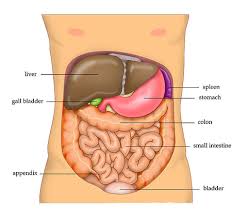
Right upper quadrant
liver, right kidney, gallbladder, right adrenal gland
[Abdominopelvic Quadrants]
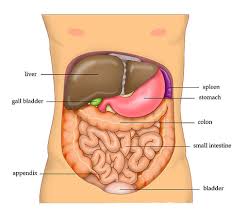
Left upper quadrant
some of liver, spleen, stomach, pancreas
[Abdominopelvic Quadrants]
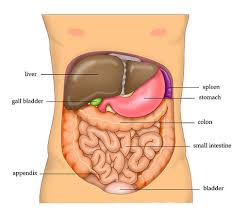
Right lower quadrant
appendix, cecum (start of large intestine), ascending colon
[Abdominopelvic Quadrants]
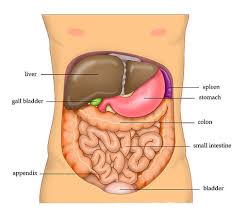
Left lower quadrant
descending colon
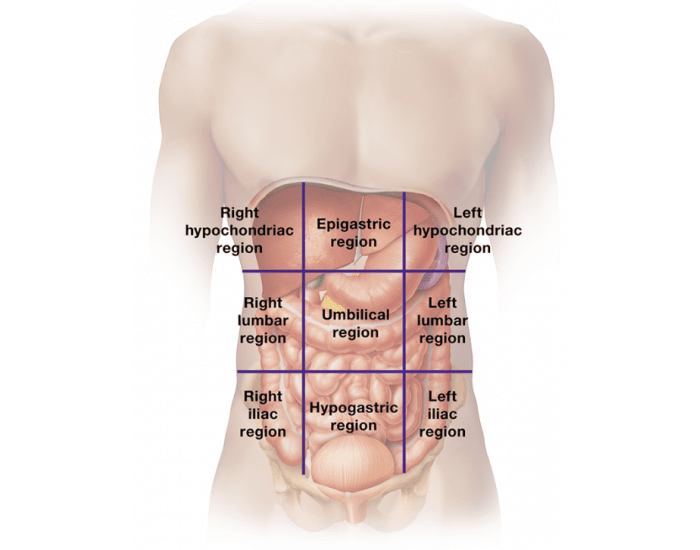
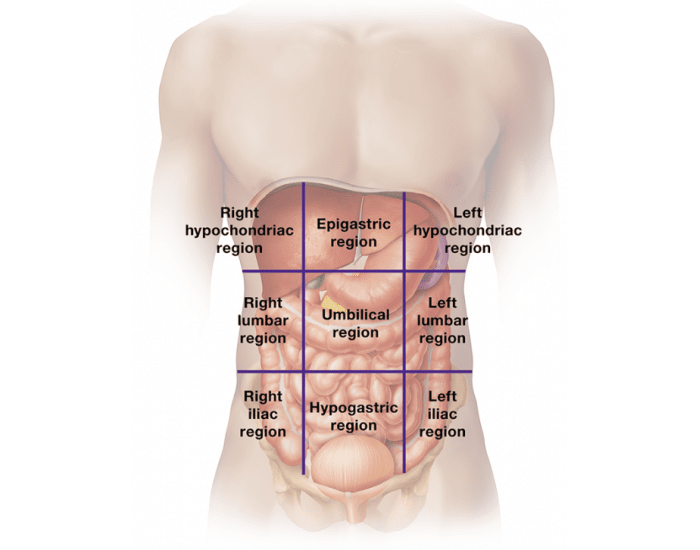
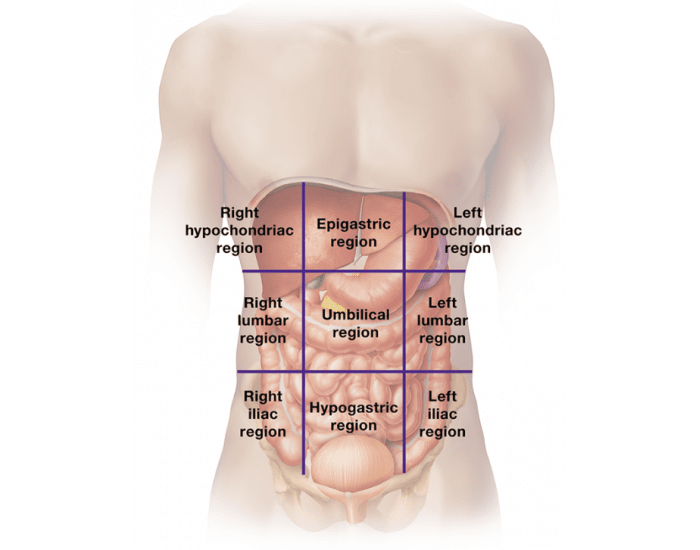
[Abdominopelvic Regions]
Top row
Epigastric: top/middle (superior to umbilical region)
Right/left hypochondriac region: surrounds epigastric
[Abdominopelvic Regions]
Middle row
Umbilical: centermost, deep, surrounds navel (most middle)
Right/left lumbar regions: surrounds umbilical
[Abdominopelvic Regions]
Bottom row
Hypogastric: bottom, middle (inferior to umbilical region)
Right/left iliac regions: surrounds hypogastric (inguinal)
[Body Planes]
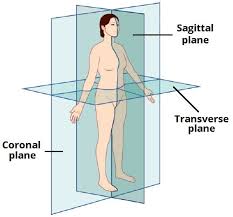
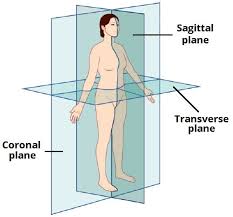
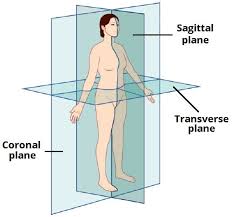
Sagittal Plane
Vertical plane that separates into right/left parts
1) Midsagittal: right down the middle
2) Parasagittal: divide isn’t in the middle
[Body Planes]
Frontal (Coronal) Plane
divides body into front/back (anterior/posterior) parts
[Body Planes]
Transverse (horizontal) Plane
divides the body into horizontal/vertical planes (superior/inferior)
[Body Planes]
Oblique Plane
cuts made diagonally between horizontal/vertical planes
[Body Cavities]
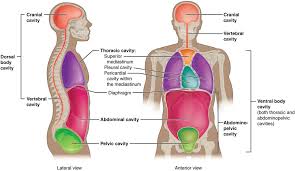
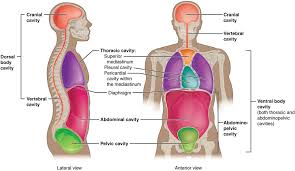
Dorsal Cavity (from head to spine). What two cavities does it have?
1) Cranial cavity: contains the brain
2) Vertebral cavity: contains the spinal cord
[Body Cavities]
Ventral body cavity (from shoulder to pelvis). What kind of organs does it house and what two cavities does it have?
It contains the VISCERA/guts.
1) Thoracic cavity:
a)pleural cavity: right/left, contains lungs.
b) mediastinum: between pleural cavities, contains thymus, lymph, esophagus, trachea (inside: PERICARDIAL - heart)
2) Abdominopelvic cavity:
a) abdominal cavity: contains digestive organs (stomach, spleen, liver, gallbladder, small/large intestines)
b) pelvic cavity: bladder, reproductive organs
[Body Cavities]
Serous Membrane
Lines the dorsal/ventral body cavities and secretes a lubricating fluid.
1) meninges: lines the dorsal cavity
2) pleura: lines the pleural cavity (hearts/lungs)
3) pericardium: lines the pericardial cavity (hearts/lungs)
4) peritoneum: lines abdominal cavity, reproductive organs
[Medical Imaging]
Radiography
used for bone densitometry and mammography. projects high energy electromagnetic radiation.
[Medical Imaging]
MRI (magnetic resonance image)
used for differentiating between normal and abnormal tissues (tumor, brain abnormalities, blood flow). no exposure to large doses of radiation, but loud/claustrophobic.
[Medical Imaging]
CT Scans (computed tomography)
used to visualize soft tissue detailed, cross-sectional, 3D images of bones, blood vessels, and soft tissues. slices of x-rays are assembled.
[Medical Imaging]
Ultrasound (sonography)
high frequency sound waves are used. noninvasive/painless = used for pregnancy.
[Medical Imaging]
PET Scan (positron emission tomography)
CANCER - used to study physiology of body structures (metabolism). radioactive bursts go to area with high metabolic activity like cancer.
[Medical Imaging]
Endoscopy
colonoscopy, laparoscopy, arthroscopy.
Superior (cranial)
above/towards the head or upper body
Inferior (caudal)
below; away from head. towards lower body
anterior (ventral)
towards/at the front of the body
posterior (dorsal)
towards/at the back of the body
medial
towards the middle of the body
lateral
away from the middle of the body
proximal
closer to the point of attachment/origin of body part
distal
farther from point of attachment/origin of body part
superficial (external)
towards/at surface of body
deep (internal)
away from surface of body
intermediate (directional term)
between a more medial and a more lateral structure
Which correctly describes how the circulatory system interacts with the respiratory system?
1) Delivers blood to the kidneys so the blood can be filtered.
2) Transports white blood cells throughout the body to fight disease
3) Absorbs and delivers digested nutrients to the cells
4) Delivers oxygen from the lungs to cells and drops off carbon dioxide from the cells to the lungs
4) Delivers oxygen from the lungs to cells and drops off carbon dioxide from the cells to the lungs
Which two systems are interacting in this example:
White blood cells are produced and transported throughout your body in your bloodstream.
1) Immune System and Circulatory System
2) Circulatory System and Respiratory System
3) Immune System and Integumentary System
4) Integumentary System and Circulatory System
1) Immune System and Circulatory System
Skin : _______________ System :: Hypothalamus : __________________ System
1) Integumentary; Nervous
2) Endocrine; Nervous
3) Circulatory; Endocrine
4) Integumentary; Endocrine
4) Integumentary; Endocrine
Concept Map