chapter 10: Modernism
 Studied by 1 person
 Call with Kai
 Learn
Learn Practice Test
 Spaced Repetition
 Match
Match Flashcards
 Knowt Play
1/42

Earn XP
Description and Tags
terms, names and artworks
Name | Mastery | Learn | Test | Matching | Spaced | Call with Kai |
|---|
No analytics yet
Send a link to your students to track their progress
43 Terms
Salon d’Automne
An annual Paris exhibition (founded 1903) that promoted modern art and helped introduce avant-garde movements such as Fauvism
Armory show (New York 1913)
The first major exhibition of modern art in the United States, introducing American audiences to European avant-garde styles like Cubism and Fauvism
Symbolism
A late 19th-century movement that emphasized imagination, dreams, and inner emotion over realistic representation
Fauvism
An early 20th-century movement characterized by bold, non-naturalistic colors and expressive brushwork
Expressionism
A movement focused on conveying emotional and psychological experience through distortion, intense color, and exaggerated forms
Cubism
Analytic Cubism: Objects broken into fragmented, overlapping planes and muted colors & synthetic Cubism: Simpler forms, brighter colors, and the use of collage and mixed materials
Der Blaue Reiter
A German Expressionist group (founded 1911) that explored spirituality, abstraction, and expressive color in art
Dada
An anti-art movement reacting to World War I, using absurdity, chance, and readymades to challenge traditional art values
Surrealism
A movement inspired by psychoanalysis that sought to express the unconscious through dream-like imagery and unexpected juxtapositions (founded by André Breton)
Museum of Modern Art (MoMA) & the modernist canon
Played a key role in defining and promoting modernism by selecting, exhibiting, and interpreting works that became central to the accepted history of modern art
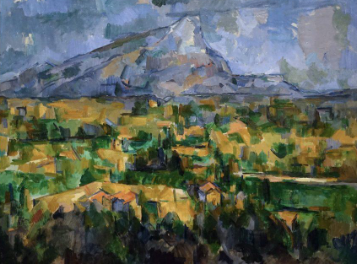
Paul Cézanne
French artist from the middle 19th - early 20th century, reduction of nature to geometric forms and color planes, “Treat nature by means of the cylinder, the sphere, the cone.”, preparing the ground for Cubism
“Mont Sainte-Victoire” (Paul Cézanne, early 20th century)
Paul Gaugin
French artist from the middle 19th century, Primitivism, non-Western influence, depth of symbols and meaning, preparing the ground for Symbolism
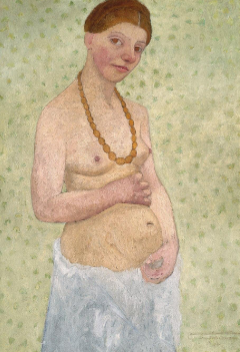
Paula Modersogn-Becker
German artist from the late 19th - early 20th century, pioneering and very procutive female artist, member of the artists’ colony Worpswede
“Self-Portrait at 6th Wedding Anniversary” (Paula Modersogn-Becker, early 20th century)
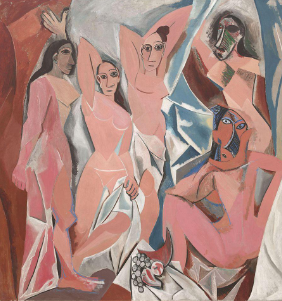
Pablo Picasso
Spanish artist from the late 19th - late 20th century, Cubism artist, simplification and fragmentation of art
“The Young Ladies of Avignon” (Pablo Picasso, early 20th century)
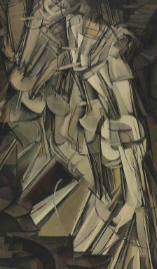
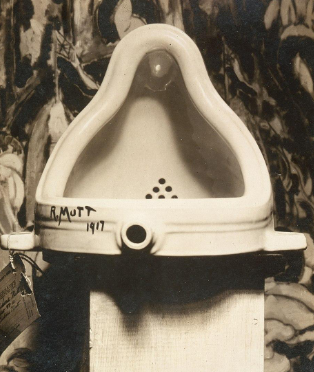
Marcel Duchamp
French artist from the late 19th - late 20th century, known for his ready-mades (ordinary objects as art), Dada style
“Nude Descending a Staircase, No.2” (Marcel Duchamp, early 20th century)
“The Fountain” (Marcel Duchamp, early 20th century)
Sonia Delaunay
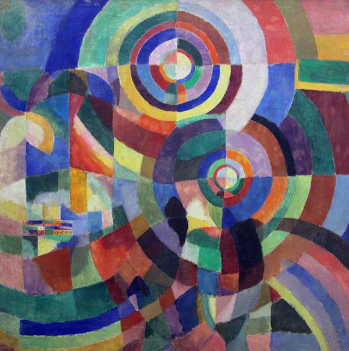
Russian-born, French artist and designer from the late 19th - late 20th century, known for Orphism (rooted in Cubism)
“Electric prisms” (Sonia Delaunay, early 20th century)
El Lissitzky
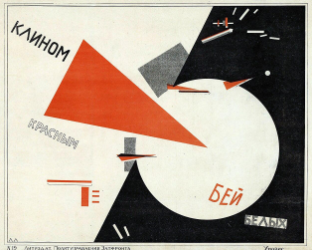
Russian painter, illustrator, designer, … from the late 19th - middle 20th century, helped Malevich develop Suprematism
“Beat the Whites with the Red Wedge” (El Lissitzky, early 20th century)
Piet Mondriaan
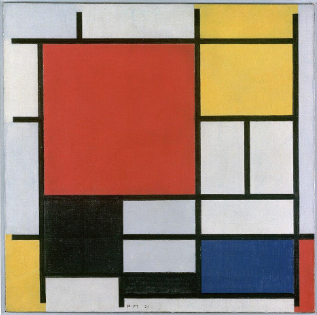
Dutch artist from the late 19th - middle 20th century, “De Stijl” (art movement and journal, proposed ultimate simplicity and abstraction) and Neo-Placticism (“Nieuwe beelding”)
“Composition in Red, Yellow, Blue and Black” (Piet Mondriaan, early 20th century)
Käthe Kollwitz
German artist from the middle 19th - middle 20th century, itense engagement with themes of poverty, war, grief, … early work in Realism style, later shift towards Expressionism
“The Mothers” (Käthe Kollwitz, early 20th century)
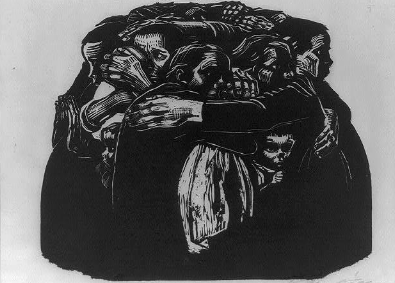
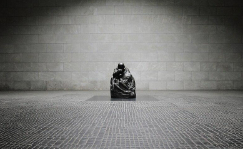
“Mother with her dead son” (Käthe Kollwitz, middle 20th century)
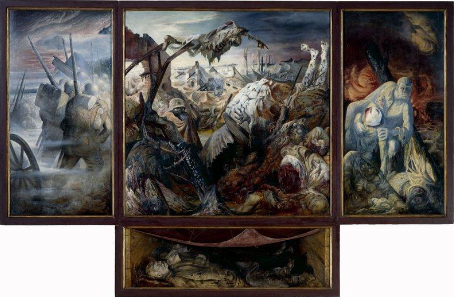
“The War” (Otto Dix, early 20th century)
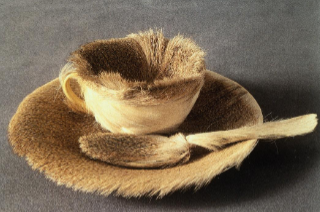
Meret Oppenheim
German artist from the 20th century, Surrealism style, influence of Dada, Surrealist objects as conceptual shock
“Object (Breakfast in Fur)” (Meret Oppenheim, middle 20th century)
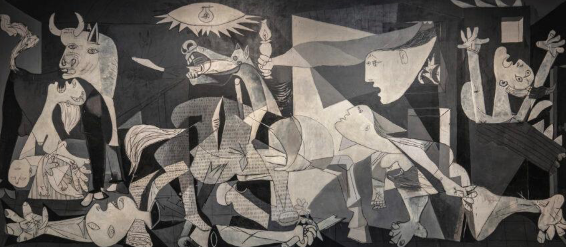
“Guernica” (Pablo Picasso, middle 20th century)
Arnold Böcklin
Swiss artist from the 19th century, focus on mysterious landscapes, psychological atmosphere, linked to Romanticism and Academism (had academic training)
Gustav Klimt
Austrian artist from the middle 19th - early 20th century, known for his Symbolism style, use of decorative flatness and gold leaf, synthesis of painting, craft and design
Fernand Khnopff
Belgian artist from the middle 19th - early 20th century, Symbolism style, Symbolist detachment, dream-like figures, paves the way for Surrealism
Edvard Munch
Norwegian artist from the middle 19th - middle 20th century, Expressionsim styles, themes of anxiety, love, death, … intense colors, wavy lines, … (“The Scream”)
Die Brücke
Artists’ group active in Dresden and Berlin (1905 - 1913), brutal colors, rough brushwork, reflecting strong emotions, revival of woodcut technique, “Primitivism”
Wassily Kandinsky
Russian artist from the middle 19th - middle 20th century, pioneer of non-figurative painting, influenced by music (synesthesia), from artists’ group “Der Blaue Reiter”
Synesthesia
Artworks influenced by music pieces
Orphism
Rooted in Cubism, but aiming at pure, lyrical abstraction, vibrant, contrasting colors, dynamic geometric forms, sense of movement and rhythm
Hannah Höch
German artist from the late19th - late 20th century, Dada style, known for collages and photomontage, social and political critique in post-war Germany
Frida Kahlo
Mexican artist from the 20th century, Surrealism style, symbolic art, exploration of identity, body and gender (“The Two Fridas”)
 Note
Note  Flashcards (24)