L21- Human Diseases Caused by Viruses & Prions
 Studied by 0 people
 Call with Kai
 Learn
Learn Practice Test
 Spaced Repetition
 Match
Match Flashcards
 Knowt Play
1/33

There's no tags or description
Looks like no tags are added yet.
Name | Mastery | Learn | Test | Matching | Spaced | Call with Kai |
|---|
No study sessions yet.
34 Terms
Chickenpox overview
• Chickenpox (Varicella) is very contagious. Typically,
in children 2-7 years. Acquired via droplet
inhalation.
• Pre-vaccine effected about 4 million children
annually and killed up to 150.
• Symptoms: Small vesicles erupt on face and upper
body. Vesicles fill with pus. When they rupture,
they scab and often leave scars.
Chickenpox Viral Structure:
dsDNA varicella-zoster virus.
Contain 6 glycoproteins that function in viral attachment.
Attach to cells on the respiratory epithelial cells.
Chickenpox Incubation period
incubation for 10-23 days of
division in the body
Chickenpox Testing
Vesicles can be observed visually. Whole
blood ELISA Lab tests are required to confirm.
Chickenpox and shingles are the same virus
• Immunity: Individuals who recover are not completely
free of the virus. Dormant virus can still reside in the
dorsal root ganglia. In situations where the individual is
immunocompromised (age, cancer, HIV, transplants,
psychological stress) the virus is activated.
• Medication: Acyclovir can be taken to shorten the
outbreak. Shingles vaccine is typically administered to
people who are 60 + years of age.
Covid Structure Virus
Large enveloped +stranded RNA virus –
Coronaviridae. Spike proteins attached to envelope
help with attachment to host ACE2 on the respiratory
track.30,000 nucleotides, coding for enzymes (RdRp) and spike protein
7 Coronaviruses-
4 cause common cold. 3 are more serious.
SARS-CoV – Epidemic in 2003 – 8000 cases, 774 dead.
MERS-CoV – Epidemic in 2012 – 2500 cases, 935 dead (34% mortality rate)
SARS-CoV2 – Pandemic 2019- 240 million cases, 4.9 million deaths (% can’t be calculated due to asymptomatic infections).
Covid Genome
Less likely to undergo mutation to RdRp that has
proofreading activity.More cases, more replication, more mutations.
79% homology to the original SARS-CoV.
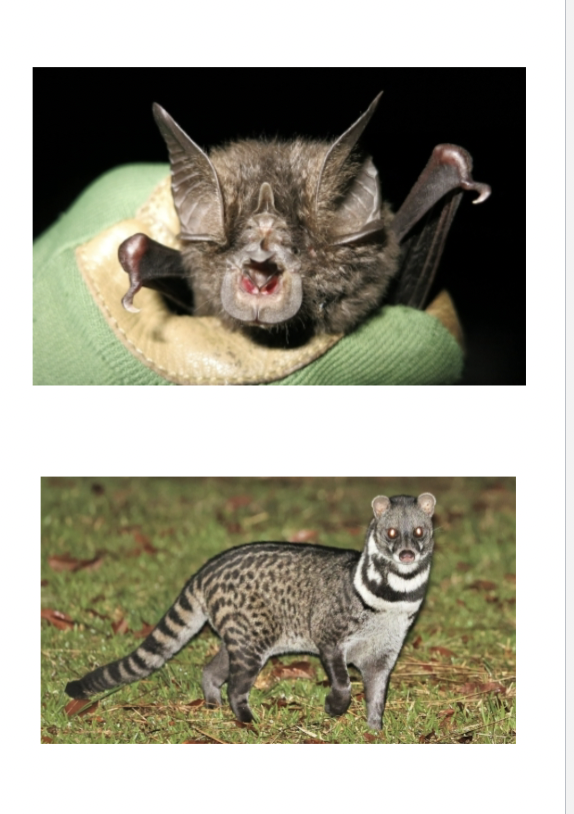
1st reservoir.
Horseshoe bates - 88% sequence homology to covid in humans
Civets – Wild cat. Intermediate host. Then jumped to humans.
Covid Symptoms
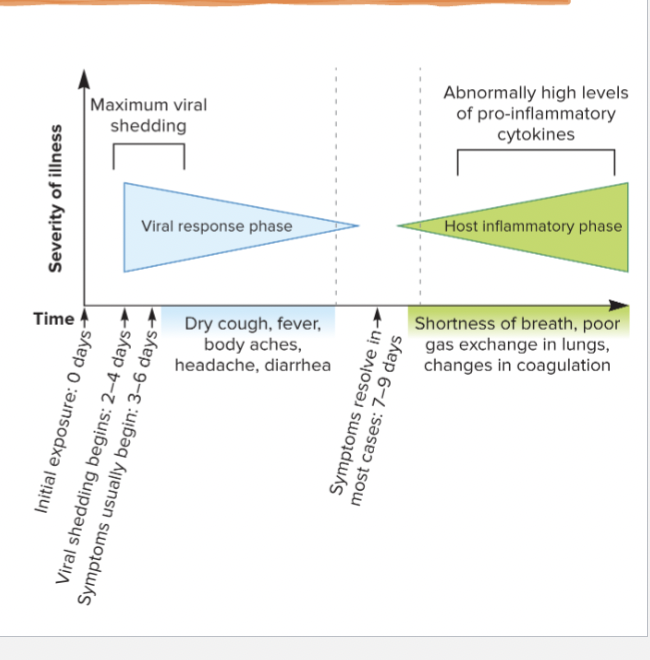
Symptoms only seen in about 40% of the infected
cases.Two phases of symptoms.
1. Clearing the virus- Symptoms start at ~day 4.
Virus present in aerosols. Greatest viral load at
the peak of symptoms. Fever, dry cough, loss of
smell/taste, body aches, headaches.
2. Dealing with inflammatory response. Only seem
in some patients. After the infection clears,
patient still can’t breathe and can’t oxygenate the
body.
Covid Testing/treatment
Most sensitive is RT-PCR testing.
Can detect even a single viroid.
Antigen testing in at-home tests. Not as
sensitive.Blood antibody tests can also be preformed.
The antibodies can last for several months
after infection.
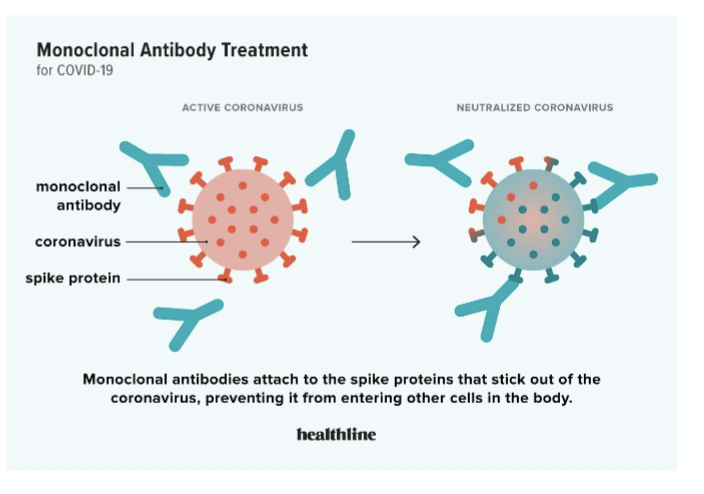
Antibodies can be extracted from 1
person and administered to another
individual to help with severe symptoms.
Covid Treatment
• No Cure.
• Vaccinate as many people as possible = herd immunity (90%).
• 2% of population with serious symptoms will overwhelm the hospital systems.
Influenza A and Influenza B cause the flu Overview
First case seen in 1580s and since then, 31 pandemics have been documented.
1918- Spanish Flu, killed 50 million people. Other major flu pandemic are Asian flu. Hong Kong flu, Russian flu, Swine flu.
Influenza A and B symptoms
Fever, chills, runny nose, muscle aches, fatigue,
headaches.Virus is acquired by inhalation or ingestion.
Influenza A and Influenza B cause the flu: Structure
Negative strand RNA virus.
Family Orthomyxoviridae.
Three generas are Influenzavirus A, Influenzavirus B, Influenzavirus C.
Type A and B are human diseases
Has 2 envelope spikes hemagglutinin (HA) and
neuraminidase (NA). HA binds to host, NA hydrolyzes the mucus on the epithelium cells and results in endocytosis of virus.Viral classification based on their HA (HA1 – HA18) and NA (N1-N11). Different recombination’s form different subtypes.
Human form binds best to human tracheal epithelial calls
Influenza A and Influenza B cause the flu Mechanism
DNA: RNA sequence undergoes random mutations.
Depend on RNA dependent RNA polymerase to replicate their RNA genome which lacks proofreading activity.
Result in minor antigenic changes (antigenic drifts).
Antigenic drifts result in mismatch between virus and seasonal vaccine.
Mutations result in flu spike every 3-5 years.
Antigenic shift results in more significant changes in DNA sequence that are caused by the interaction of 2 different flu strains. This causes Pandemics. Often happens in China. The H5N1 and H7N9 are avian flu viruses that are most concerning to the CDC and WHO. They are closely monitored, and any positive cases are closely traced.
Influenza A and Influenza B Incubation Period
1 – 2 days,
virus adheres to host respiratory epithelium.
Once in the cytoplasm, the HA functions in releasing virus from the nucleocapsid
Influenza A and Influenza B Treatment
Antiviral drugs such are
oseltamivir,
zanamivir,
peramivir
can reduce duration and severity of symptoms if taken within the first 48 hours.
These neuroaminidase inhibitors prevent the actions of neuroamindase and prevent detachment from host cells
Measles Background
Most contagious disease in the world.
Preventable, but still leading cause of death in young
children globally. 134k deaths in 2015. Not an issue in the developed world but cases still arise in unvaccinated children in the U.S
Measles Structure
Negative strand, enveloped RNA virus.
Genus Morbillivirus.
The DNA encodes 8 proteins (6 structural). The
viral hemagglutination glycoprotein attaches on the
receptors on activated B, T, and Antigen-presenting cells.Fuses with host cell and genetic material released in host cytosol.
Viral mRNA is capped and polyadenylated.
Virus is assembled on the host inner membrane.
Measles Symptoms
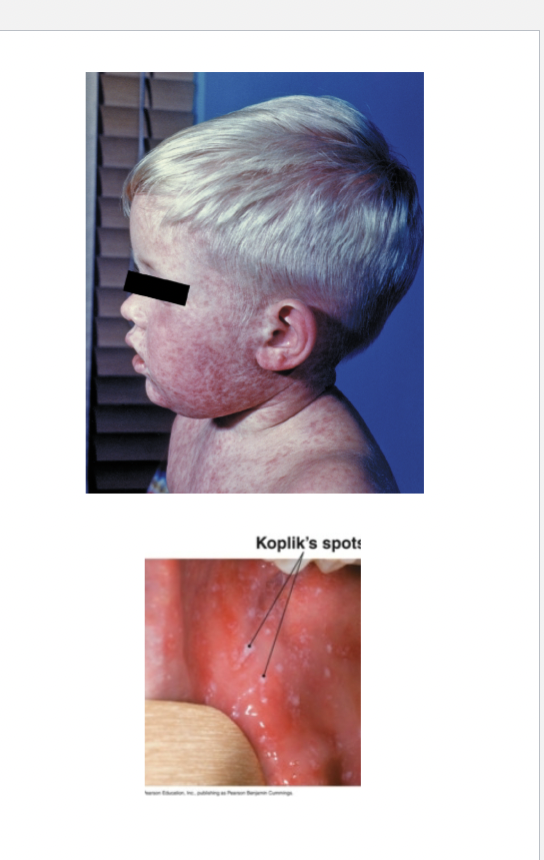
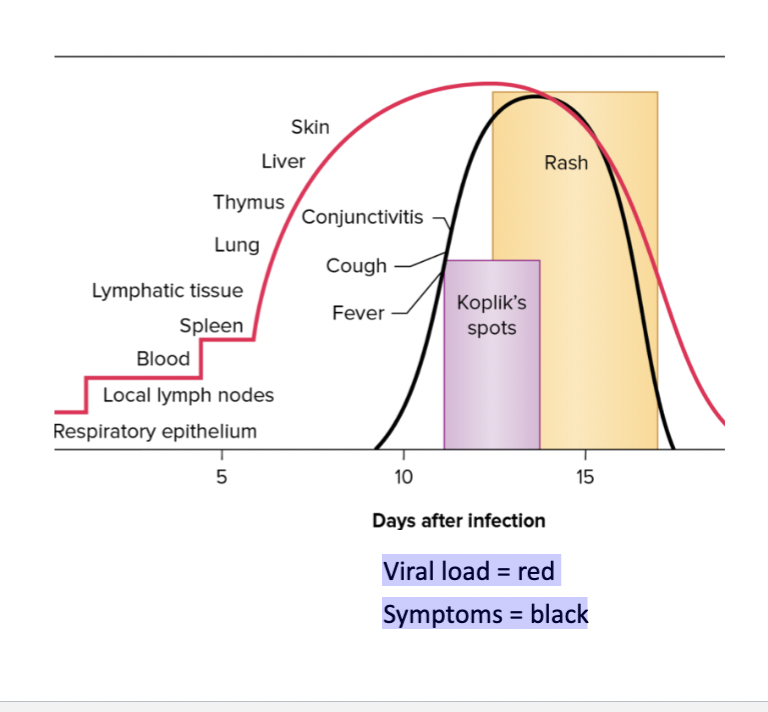
Early symptoms include nasal discharge, cough, fever, headaches, conjunctivitis which lead to a rash consisting of red small bumps.
Rash lasts for about 7 days. Koplik’s spots are sometimes seen in the mouth. Early symptoms subside but more serious central nervous system degeneration result in permanent cognitive deficits and sometimes death.
Measles Incubation Period
0 – 14 days incubation period. Symptoms begin
after the 10th day
Measles Treatment
Treatment: No treatment is available.
MMR combination vaccine is available
and recommended and provide
lifelong immunity.
Viral load = red
Symptoms = black
Rubella (German Measles) Background
First Described in Germany in the 1800s. Very contagious and typically in children between the ages of 5-9 years old
Rubella (German Measles) Structure
Caused by the Rubella virus which is an enveloped,
positive strand RNA virus. Member of the Togaviridae.Transmitted in saliva and respiratory droplets
Rubella (German Measles) Incubation Period
The incubation period is between 12-23 days
Rubella (German Measles) Treatment
No treatment.
Vaccination as a preventive measure.
No rubella in the U.S. since 2009.
Rubella (German Measles) Symptoms
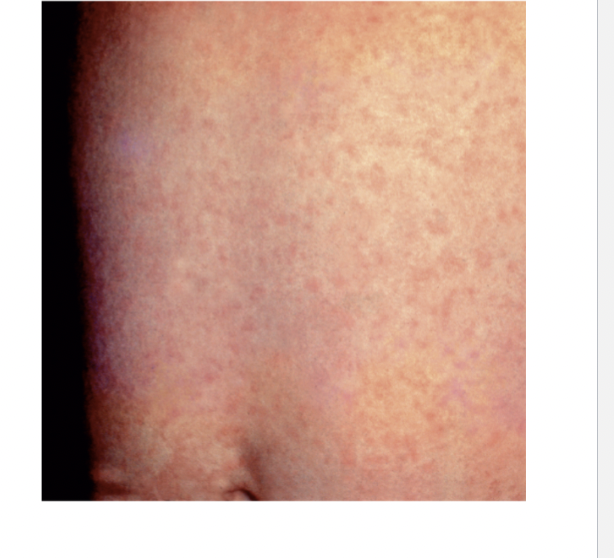
A rash of small spots. Typically lasting about 3 days. Accompanied by a fever.
Not such an issue for children but very
serious if contracted by a pregnant female.
Can lead to premature delivery, fetal death,
damage to heart, eyes, ears, and brain
(Congenital rubella syndrome).
Acquired Immune Deficiency Syndrome (AIDS) Overview
Some viruses are not airborne and need close contact between individuals to allow for transmission.
Contact includes touching, kissing, sexual contact (semen increases HIV virulence by 100,000-fold), body fluids and secretions, open wounds.
One of the most devastating infections is acquires immune deficiency syndrome (AIDS).
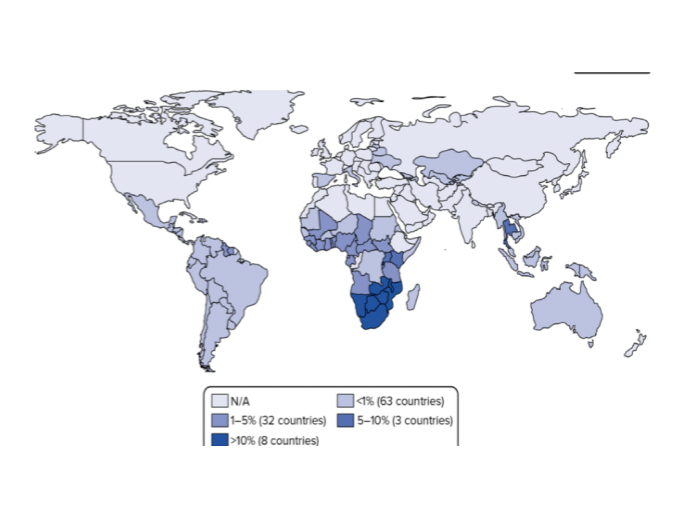
By 2014, about 37 million people were infected. Less half those people were being treated with antiviral therapy. This is still an improvement from the numbers in 2010 where less than 25% were being treated.
The HIV virus can progress to AIDS if left untreated.
Left untreated, AIDS is fatal within 10 years post infection.
Anti-retroviral treatment can significantly
reduce morbidity and mortality.
HIV structure
Positive-strand, enveloped RNA virus from the Retroviridae family. HIV-1 is dominant in the U.S. HIV 2 is dominant in Africa.
Virus contains the enzymes reverse
transcriptase, integrase, as well as
protease.
Viral Attachment
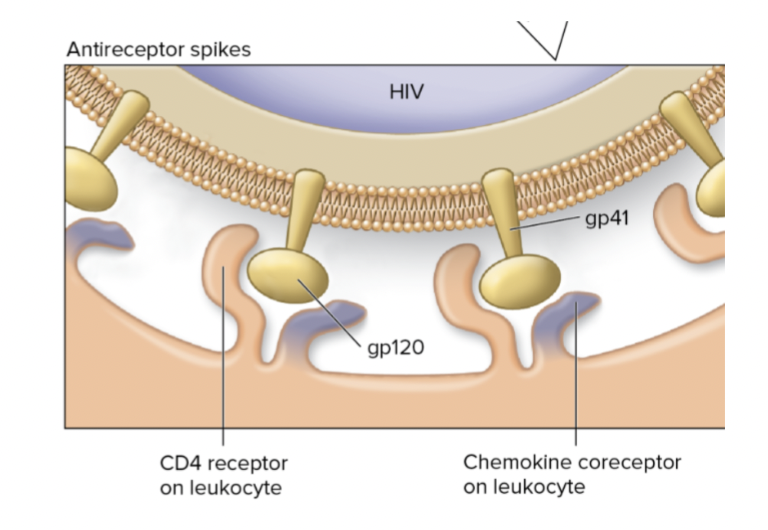
To infect host cell, the HIV viral gp120
envelope protein binds to the CD4
receptor + chemokine co-receptor (CCR5
or CXCR-4) on T cells, macrophages, and
dendritic cells. Dendritic cells are likely the
first cells infected.Attachment to host cell doesn’t occur if
the individual has a homozygous mutation
in their CCR5 co-receptor. Heterozygous
individuals have altered presentation of
the disease.
HIV viral Entry
The HIV virus enters the host cell by endocytosis or membrane fusion.
Endocytosis: The viral membrane is stripped in the vacuole
HIV genome
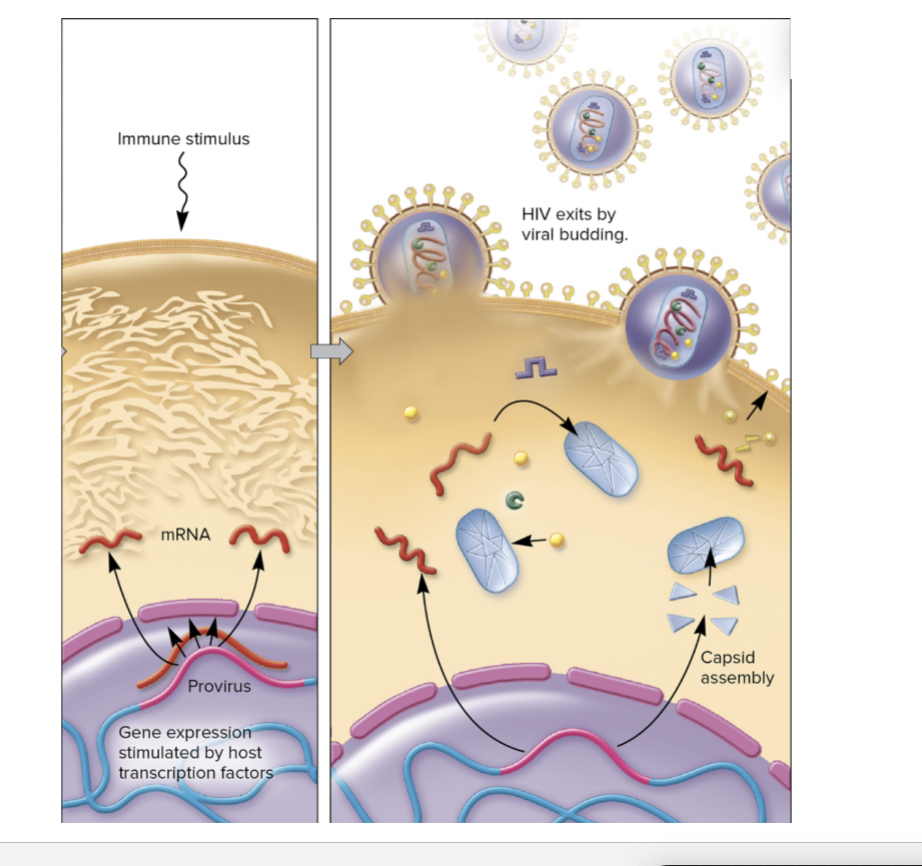
Once inside the cell, the RNA is used as a template to make a double- stranded DNA molecule using the reverse transcriptase.
The double stranded DNA (provirus) and the viral integrase make their way
to the nucleus where integrase fuses the viral DNA into the cell’s DNA.Provirus can remain latent for many years.
When active, the provirus can be transcribed into mRNA and translated into a long polypeptide. The polypeptide is cleaved into individual proteins using
viral protease.Proteins are used to assemble new virions.
Virions are released from host cell. Host cell dies in the process
AIDS Symptoms
Early symptoms of infection (2 to 4 weeks post infection): Rash, fever, malaise,
headaches, rash, weight loss, enlarged lymph nodes.Asymptomatic stage: Latent stage of viral infection can last as long as 10 years.
Chronic symptomatic stage: great multiplication of virus. CD4 cells decline,
fever, weight loss, malaise, fatigue, anorexia, lymphadenopathy.As CD4 cells continue to decline, secondary infections arise (oral candidiasis, TB,
Mycobacterium avium, pneumonia, meningitis, cytomegalovirus, encephalitis,
and many others). Viral infected macrophages can also cross the blood brain
barrier which can lead to central nervous system effects (headaches, cognitive
changes, reflexes, ataxia, severe sensory and motor changes)
AIDS Treatment
Antiviral treatments that target RT, Integrate, Replication, etc.
No vaccine currently available because the virus is
constantly changing its antigenic properties.
 Note
Note  Flashcards (34)