Chapter 3 Princeton

0.0(0)
studied byStudied by 0 people
0.0(0)
full-widthCall Kai
learnLearn
examPractice Test
spaced repetitionSpaced Repetition
heart puzzleMatch
flashcardsFlashcards
GameKnowt Play
Card Sorting

1/95

encourage image

There's no tags or description

Looks like no tags are added yet.

Study Analytics
Name
Mastery
Learn
Test
Matching
Spaced
Call with Kai

No study sessions yet.

96 Terms

1
New cards

abiotic

related to factors or things that are separate and independent from living things, nonliving.

2
New cards

acid

any compound that releases hydrogen ions when dissolved in water. Also, a water solution that contains a surplus of hydrogen ions.

3
New cards

air mass

mass-enormous bodies of air that move as a unit.

4
New cards

A layer

a soil horizon the layer below the O layer is called the A layer. The A layer is formed of weathered rock, with some organic material often referred to as
topsoil.
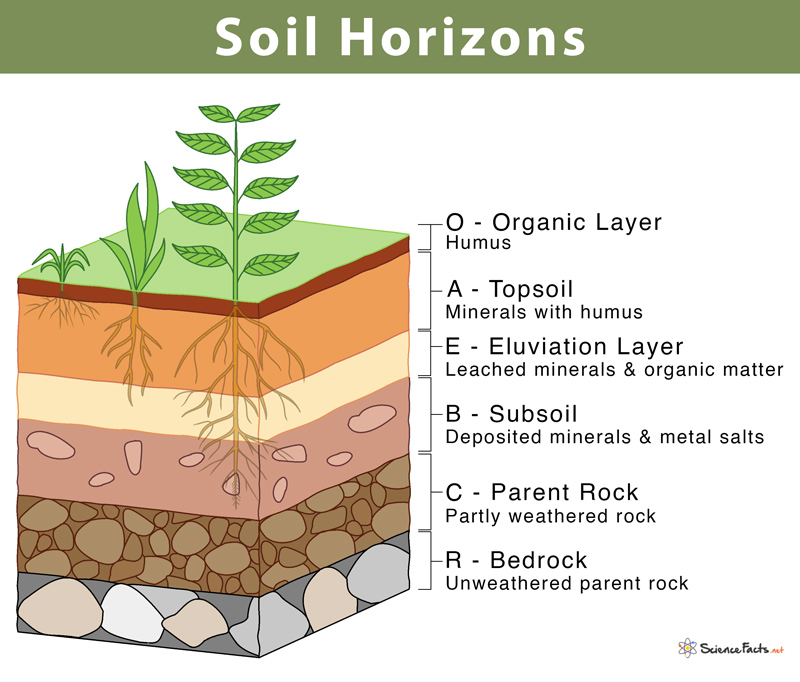
<p>a soil horizon the layer below the O layer is called the A layer. The A layer is formed of weathered rock, with some organic material often referred to as<br>topsoil.</p>
5
New cards

alkaline

a basic substance chemically, a substance that absorbs hydrogen ions releases hydroxyl ions, in reference to natural water, a measure of the base content of the water.

6
New cards

aquifer

an underground layer of porous rock, sand, or other material that allows the movement of water between layers of nonporous rock or clay. Aquifers are frequently tapped for wells.
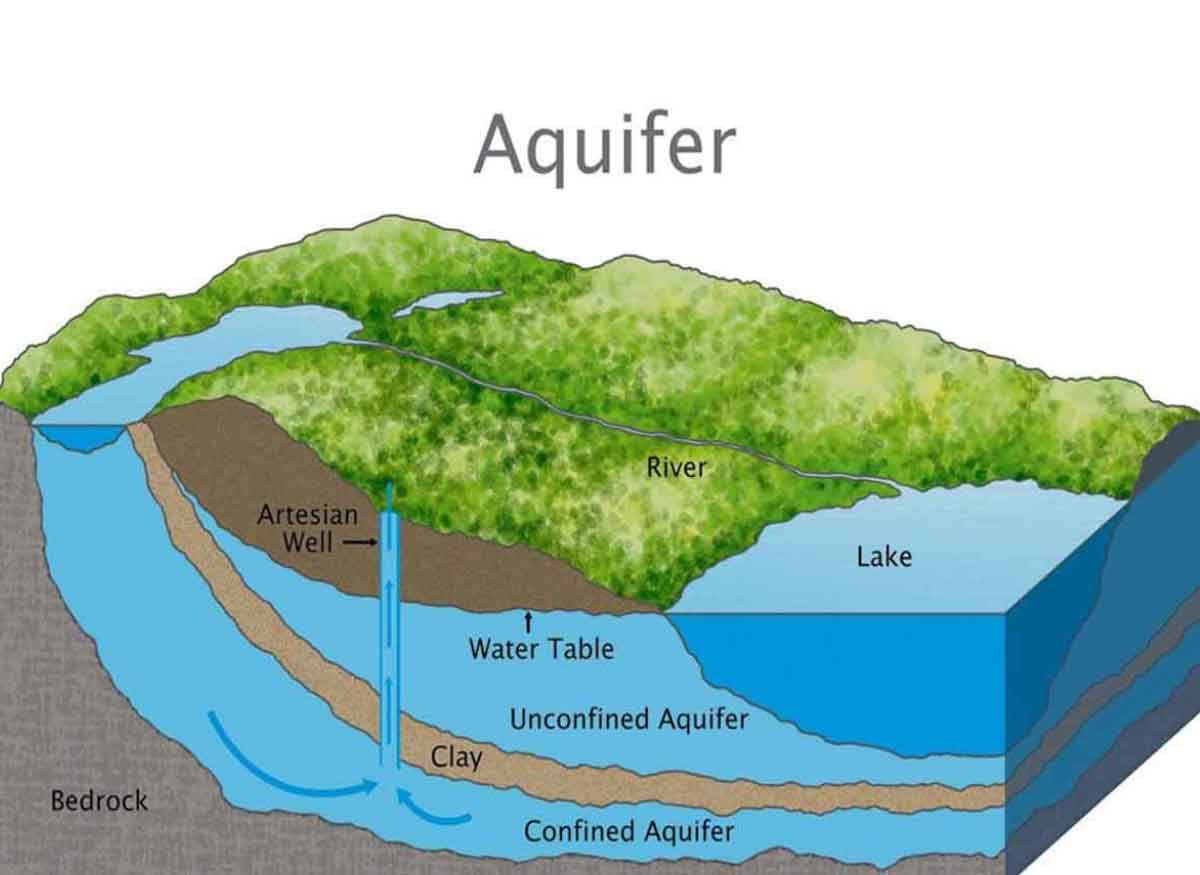
<p>an <span style="color: rgb(0, 255, 214);">underground layer of porous rock,</span> sand, or other material that allows the movement of water between layers of nonporous rock or clay. Aquifers are frequently tapped for wells.</p>
7
New cards

arable

land that's fit to be cultivated.
asthenosphere -- the part of the mantle that lies just below the lithosphere.

8
New cards

atmosphere

the gaseous mass or envelope surrounding a celestial body especially the one surrounding the earth which is retained by the celestial body's gravitational field.

9
New cards

barrier island

a long, relatively narrow island running parallel to the mainland,built up by the action of waves and currents and serving to protect the coast from erosion by surf and tidal surges.
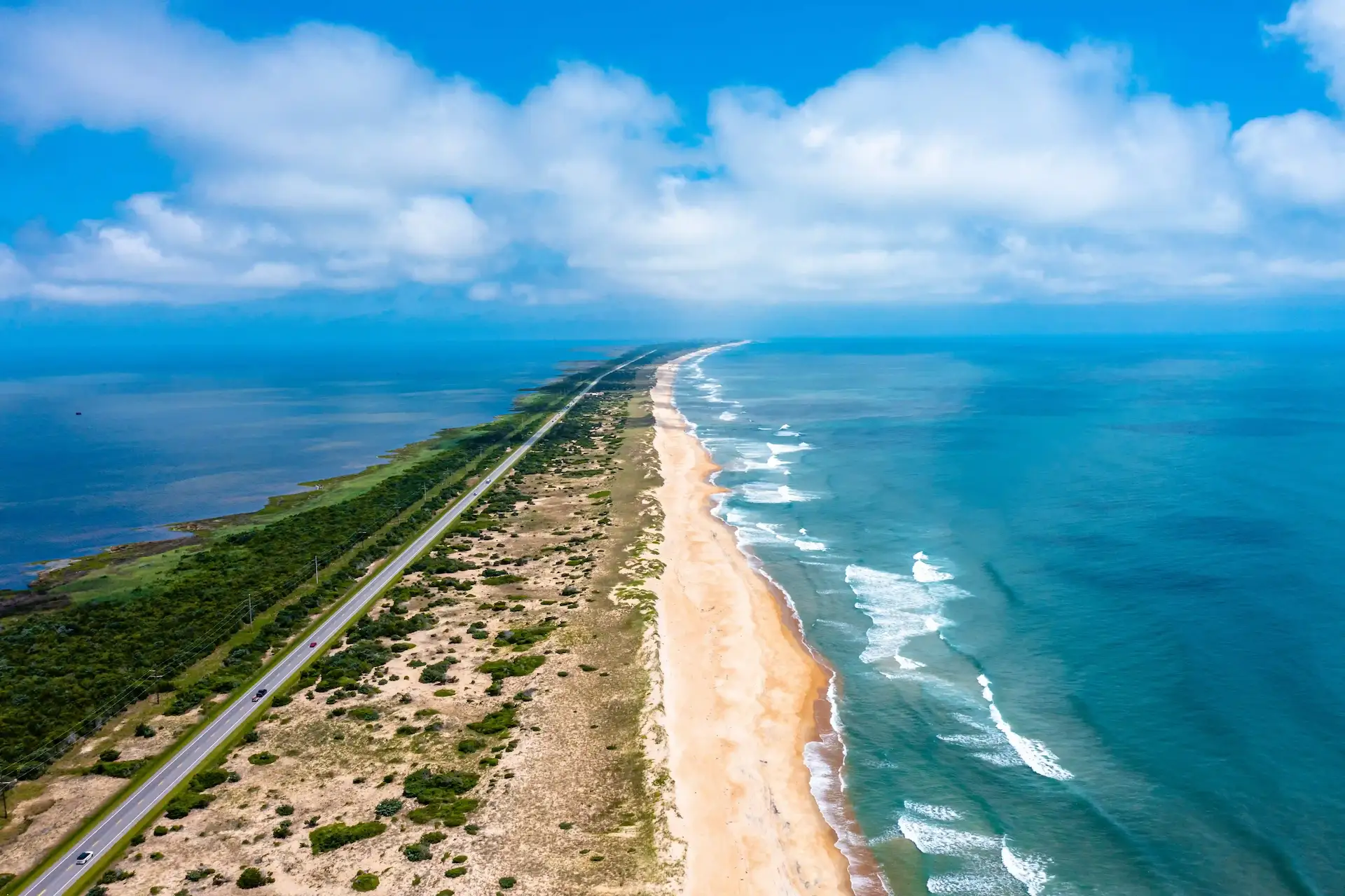
<p>a long, relatively narrow island running parallel to the mainland,built up by the action of waves and currents and serving to protect the coast from erosion by surf and tidal surges.</p>
10
New cards

biological weathering

any weathering that's caused by the activities of living
organisms.
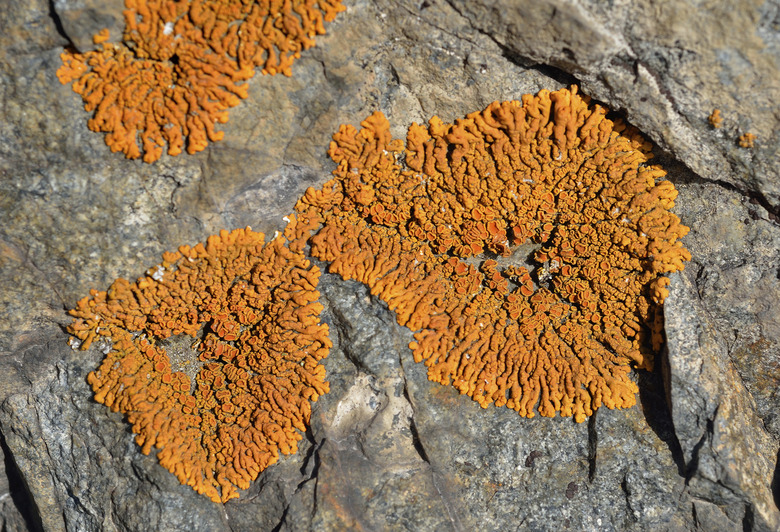
<p>any weathering that's caused by the activities of living<br />
organisms.</p>
11
New cards

biotic

living or derived from living things.

12
New cards

B layer

a soil horizon,receives the minerals and organic materials that are leached out of the A horizon.
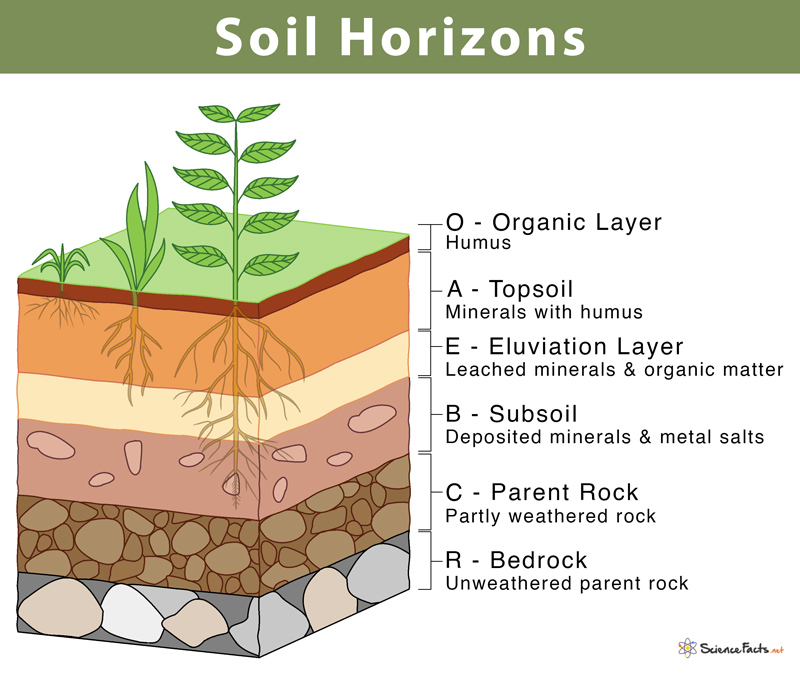
<p>a soil horizon,receives the minerals and organic materials that are<strong> leached out of the A horizon.</strong></p>
13
New cards

chemical weathering

the result of chemical interaction with the bedrock that is typical of the action of both water and atmospheric gases.

14
New cards

C layer

a soil horizon, is made up of larger pieces of rock that have not undergone much weathering.
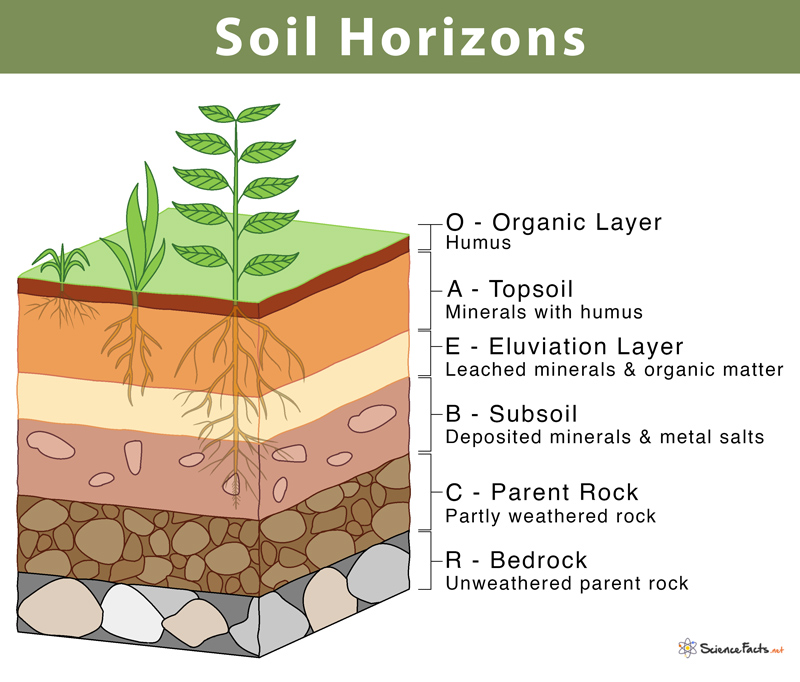
<p>a soil horizon,  is made up of larger pieces of rock that have not undergone much weathering.</p>
15
New cards

clay

the finest soil, made up of particles that are less than 0.002 mm in diameter.
16
New cards
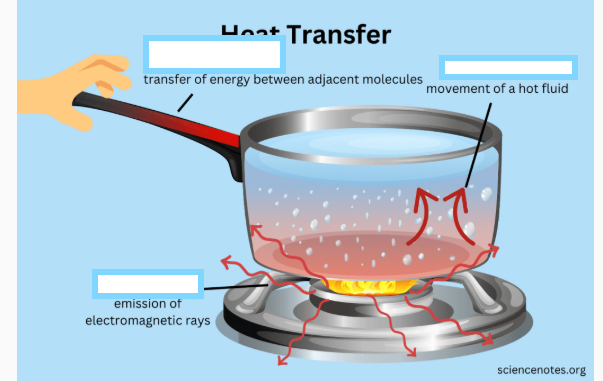
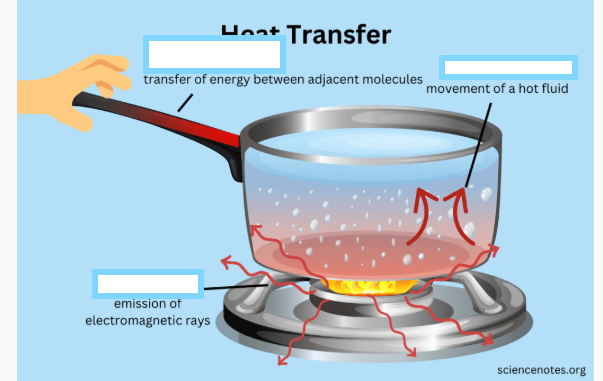
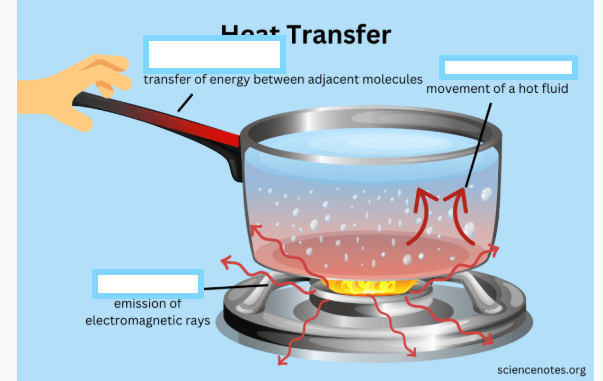
conduction
the transmission or conveying of something through a medium or passage, especially the transmission of electric charge or heat through a conducting medium without perceptible motion of the medium itself.
17
New cards

convection

the vertical movement of a mass of matter because of heating and cooling, this can happen in both the atmosphere and Earth's mantle.
<p>the vertical movement of a mass of matter because of heating and cooling, this can happen in both the atmosphere and Earth's mantle.</p>
18
New cards
convection currents
air currents caused by the vertical movement of air due to atmospheric heating and cooling.
19
New cards
convergent boundary
a plate boundary where two plates are moving toward eachother.
20
New cards
coral reef
an erosion-resistant marine ridge or mound consisting chiefly of compacted coral together with algal material and biochemically deposited magnesium and calcium carbonates.
21
New cards
Coriolis effect
The observed effect of the Coriolis force, especially the deflection of an object moving above the earth, rightward in the Northern Hemisphere, and leftward in the
Southern Hemisphere.
22
New cards
crop rotation
the practice of alternating the crops grown on a piece of land-for example, corn one year, legumes for two years, and then back to corn.
23
New cards
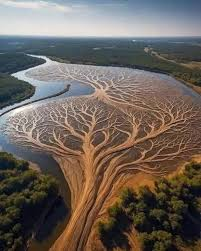
delta
a usually triangular alluvial deposit at the mouth of a river.
24
New cards
divergent boundary
a plate boundary at which plates are moving away from each other. This causes an upwelling of magma from the mantle to cool and form new crust.
25
New cards
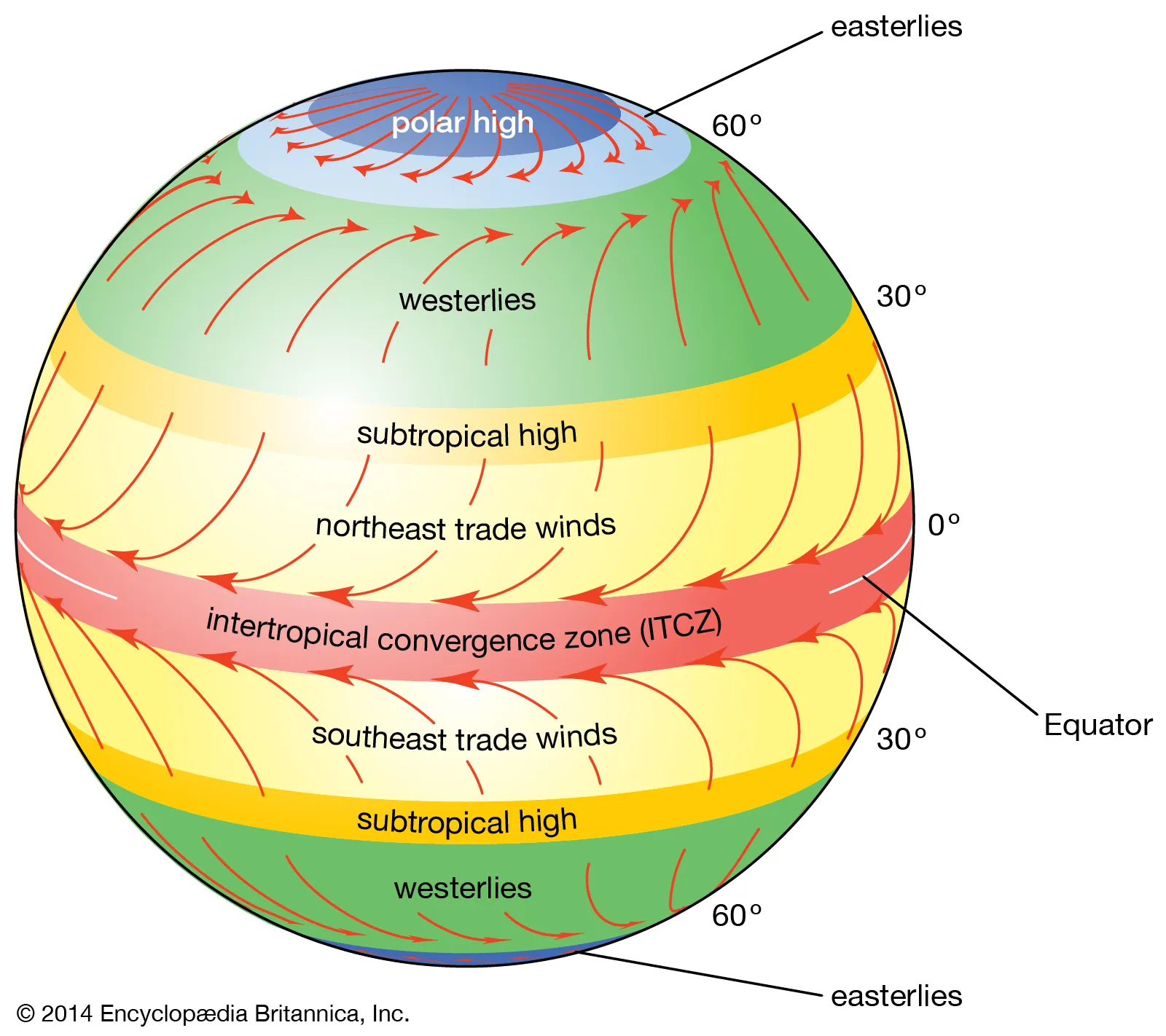
doldrums
a region of the ocean near the equator, characterized by calms, lightmwinds, or squalls.
26
New cards
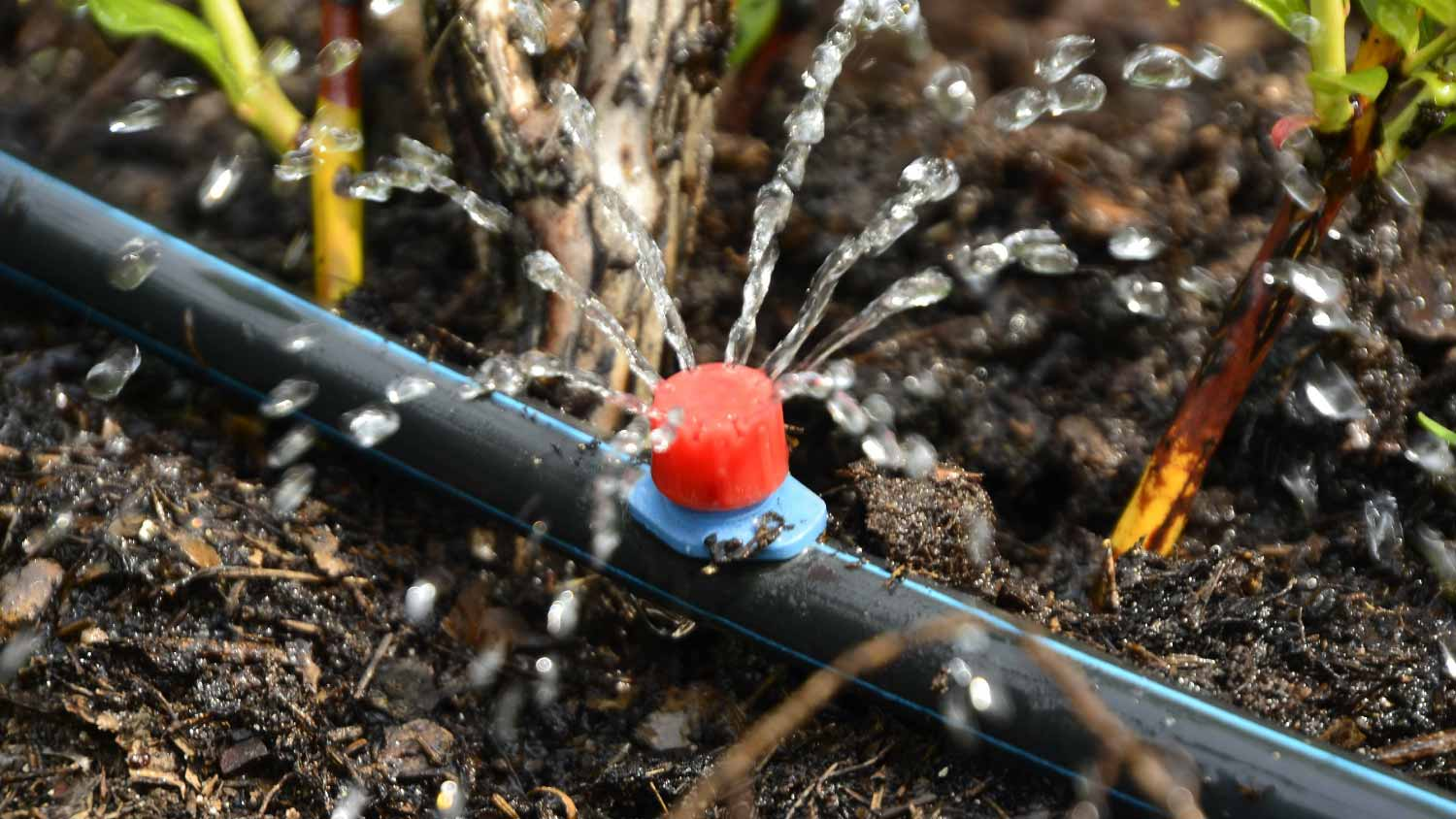
drip irrigation
a method of supplying irrigation water through tubes that literally drip water onto the soil at the base of each plant.
27
New cards
earthquake
the result of vibrations that release energy. They often occur as twomplates slide past one another at a transform boundary.
28
New cards
convergent boundaries
are responsible for the most powerful and deep earthquakes
29
New cards
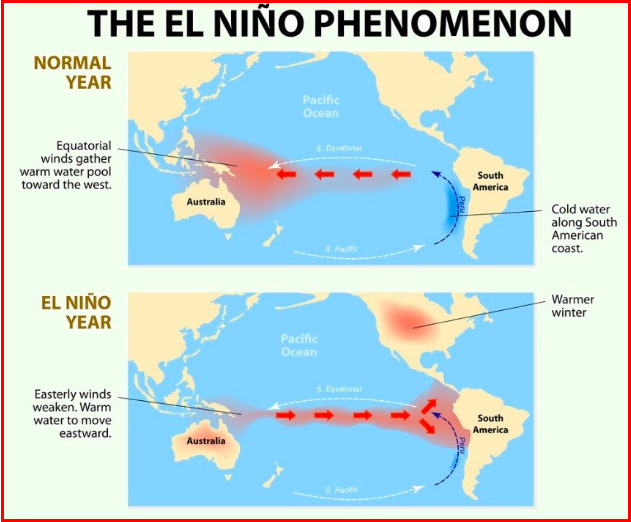
El Nino
a climate variation that takes place in the tropical Pacific about every (3-7) three to seven years, for a duration of about one year.
30
New cards

Pacific Ocean surface waters in the central/eastern equatorial region become unusually warm

El Niño is a natural climate pattern where _____________, weakening east-to-west trade winds, which disrupts global weather, causing altered rainfall (droughts/floods) and temperature shifts, typically every 3-7 years, as the "warm phase" of theEl Niño-Southern Oscillation (ENSO) cycle, opposite to La Niña.
<p><span>El Niño is </span><strong><mark data-color="rgba(0, 0, 0, 0)" style="background-color: rgba(0, 0, 0, 0); color: inherit;">a natural climate pattern where _____________, weakening east-to-west trade winds</mark></strong><span>, which disrupts global weather, causing altered rainfall (droughts/floods) and temperature shifts, typically every 3-7 years, as the "warm phase" of the</span>El Niño-Southern Oscillation<span> (ENSO) cycle, opposite to La Niña.</span></p>
31
New cards

‘the child’

El Nino basically means

32
New cards

little girl

La Nina literally means

33
New cards

El Nino Southern Oscillations or the ENSO.

In normal times, when the tropical South Pacific Ocean experiences high pressure, alternatively the tropical Indian Ocean experiences low pressure conditions. However, these pressure conditions are sometimes reversed, and result in low pressure in the Pacific and alternatively high pressure in the Indian Ocean. This is the periodic change in pressure conditions which is referred to as the Southern Oscillation.   These changes in the pressure conditions being developed in the Pacific and Indian oceans are connected with the phenomenon of El Nino. This connected phenomenon is referred to as the ______________________.

34
New cards

warming , cooling

"Enso" most commonly refers to the El Niño-Southern Oscillation (ENSO), a major climate pattern of ______(El Niño) and _____(La Niña) in the tropical Pacific affecting global weather.

35
New cards
erosion
the process of soil particles being carried away by wind or water. Erosion moves the smaller particles first and hence degrades the soil to a coarser, sandier,stonier texture.
36
New cards
estuary

the part of the wide lower course of a river where its current is met by the tides. (brackish water)
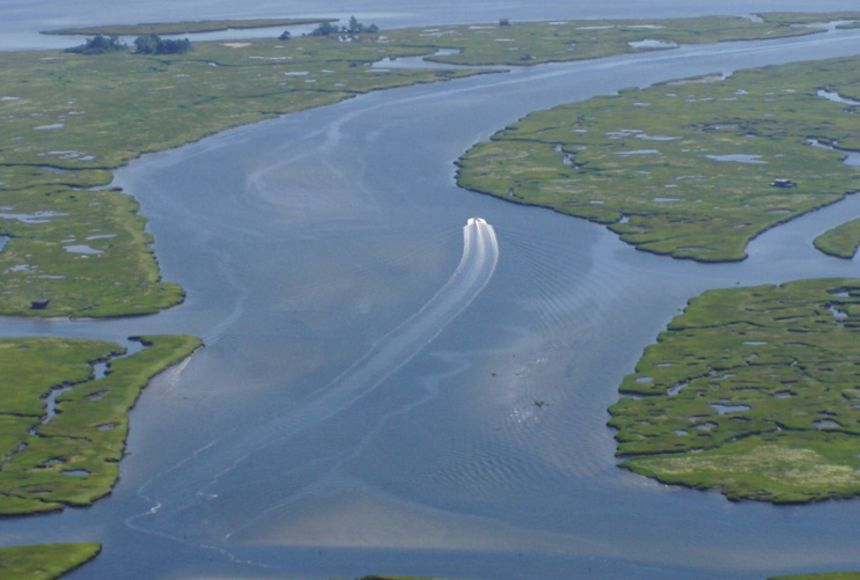
<p>the part of the wide lower course of a river where its current is met by the tides. (brackish water) </p>
37
New cards
fault
the place where two plates abut each other
38
New cards

squall

A _________is a sudden, sharp increase in wind speed lasting minutes, as opposed to a wind gust, which lasts for only seconds
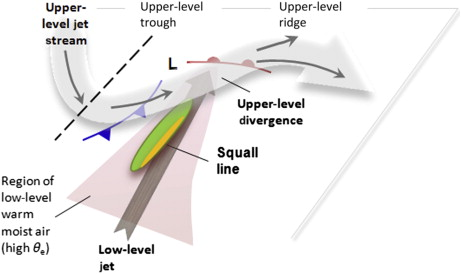
<p>A _________is a sudden, sharp increase in wind speed lasting minutes, as opposed to a wind gust, which lasts for only seconds</p>
39
New cards
Green Revolution
the development and introduction of new varieties of (mainly) wheat and rice that has increased yields per acre dramatically in countries since the 1960s.
40
New cards
greenhouse effect

the phenomenon whereby the earth's atmosphere traps solar radiation, caused by the presence in the atmosphere of gases such as carbon dioxide, water vapor, and methane that allow incoming sunlight to pass through but absorb heat radiated back from the earth's surface.

41
New cards
Hadley cell

a system of vertical and horizontal air circulation predominating in tropical and subtropical regions and creating major weather patterns. keywords: circulation, subtropical.

42
New cards
headwaters

the water from which a river rises a source.

43
New cards

horizon

a layer of soil.

44
New cards
humus
the dark, crumbly, nutrient-rich material that results from the decomposition of organic material.
45
New cards
T hurricane (typhoon, cyclone)

a severe tropical cyclone originating in the equatorial regions of the Atlantic Ocean or Caribbean Sea or eastern regions of the Pacific Ocean, traveling north, northwest, or northeast from its point of origin, and usually involving heavy rains.

46
New cards
inner core
the molten core of the Earth.
47
New cards

Iron & Nickel:

__________ The main metallic components, making up the bulk of the core. 

Light Elements: Sulfur, oxygen, and silicon are present, influencing its density and properties. 
48
New cards
insolation
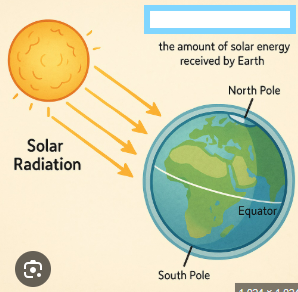
the delivery rate of solar radiation per unit of horizontal surface.
49
New cards
jet stream

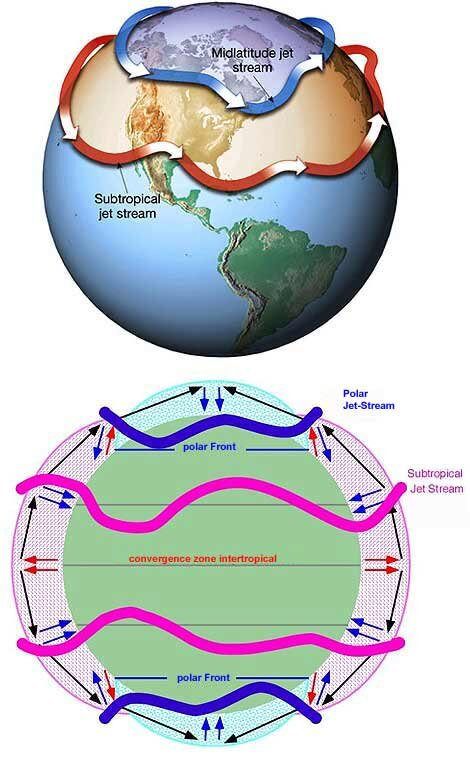
a high-speed, meandering wind current, generally moving from a westerly direction at speeds often exceeding 400 km (250 miles) per hour at altitudes of 15 to 25 km (10 to 15 miles).

key: fast river of air that flows high up in the sky .

  • Hot air and cold air meet

  • The air moves fast where they meet

<p>a high-speed, meandering wind current, generally moving from a westerly direction at speeds often exceeding<span style="color: rgb(253, 150, 150);"> 400 km (250 miles)</span> per hour at altitudes of<span style="color: rgb(33, 243, 255);"> 15 to 25 km (10 to 15 miles).</span></p><p><span style="color: rgb(33, 243, 255);">key: </span> <strong>fast river of air</strong> that flows <strong>high up in the sky</strong> <span data-name="airplane" data-type="emoji">✈</span><span data-name="cloud" data-type="emoji">☁</span>.</p><ul><li><p><strong>Hot air</strong> and <strong>cold air</strong> meet</p></li><li><p>The air moves fast where they meet</p></li></ul><p></p>
50
New cards
land degradation
when soil becomes water-logged and then dries out, and salt forms a layer on its surface.
51
New cards
La Niña
a cooling of the ocean surface off the western coast of South America, occurring periodically every 4 to 12 years and affecting Pacific and other: weather patterns.
52
New cards
lithosphere
the outer part of the Earth, consisting of the crust and upper mantle, approximately 100 km (62 miles) thick.
53
New cards
loamy

soil composed of a mixture of sand, clay, silt, and organic matter. mantle-the layer of the earth between the crust and the core.
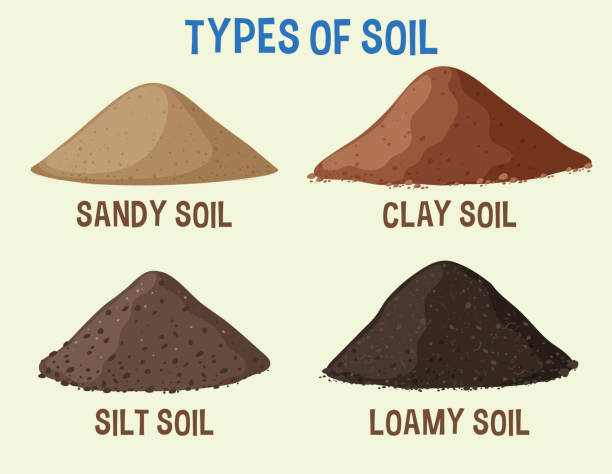
<p>soil composed of a mixture of sand, clay, silt, and organic matter. mantle-the layer of the earth between the crust and the core.</p>
54
New cards

humus, loam

Ang_____ay nabubulok na organikong materyal, samantalang ang____ ay uri ng lupang may halong buhangin, banlik, luwad, at humus.

55
New cards
monoculture
the cultivation of a single crop on a farm or in a region or countr, amsingle, homogeneous culture without diversity or dissension.
56
New cards
monsoon
a wind system that influences large climatic regions and reverses direction seasonally.
57
New cards
O layer
the uppermost horizon of soil. It is primarily made up of organic material, including waste from organisms, the bodies of decomposing organisms, and live
organisms. physical (mechanical) weathering-any process that breaks rock down into smaller pieces without changing the chemistry of the rock, typically wind and water.
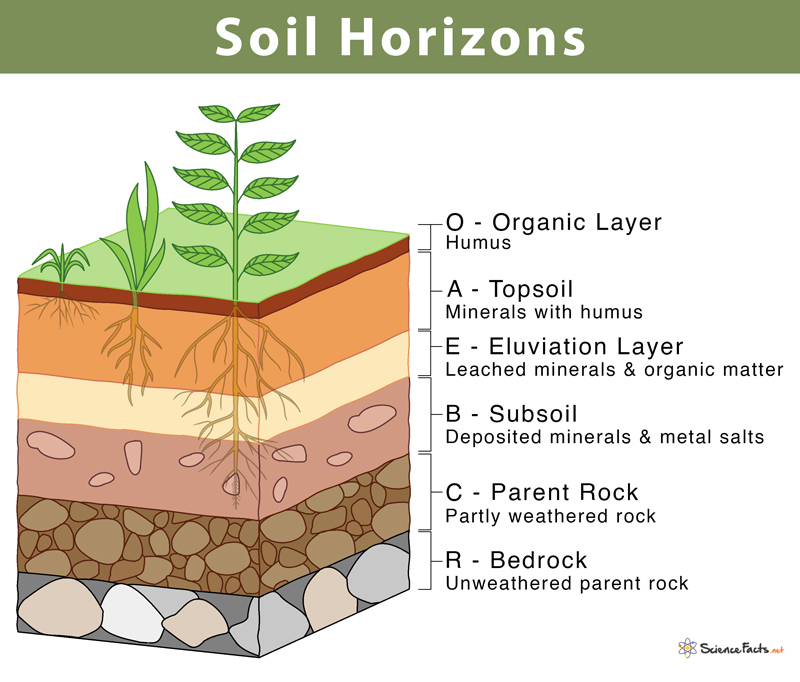
the uppermost horizon of soil. It is primarily made up of organic material, including waste from organisms, the bodies of decomposing organisms, and live
organisms. physical (mechanical) weathering-any process that breaks rock down into smaller pieces without changing the chemistry of the rock, typically wind and water.
58
New cards
HURRICANE
EAST
PACIFIC, ATLANTIC
59
New cards
TYPHOON
WEST
PACIFIC
60
New cards
CYCLONE
INDIAN
OCEAN, AUSTRALIA
61
New cards

western

Philippines is located in the ____ part of the Pacific Ocean,

62
New cards
EL NINO
TROPICAL
PACIFIC, 3-7 YEARS
63
New cards
LA NINA
SOUTH
AMERICA, 4-12 YEARS
64
New cards
MOHO
The division in the lithosphere between the crust and the mantle is called the Mohorovicic
discontinuity, does not
exist at a uniform depth, because not
all regions of Earth are equally balanced in isostatic equilibrium
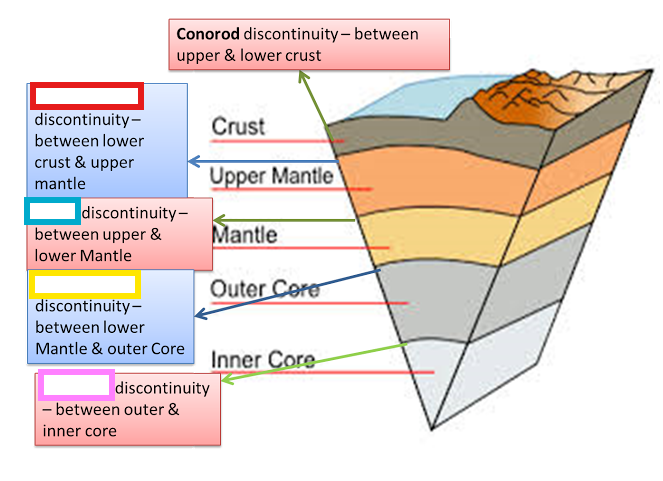
The division in the lithosphere between the crust and the mantle is called the Mohorovicic
discontinuity, does not
exist at a uniform depth, because not
all regions of Earth are equally balanced in isostatic equilibrium
65
New cards

Conrad Discontinuity:

Transition  zone between SIAL and SIMA.

66
New cards

Repiti Discontinuity

Transition zone between Outer mantle and Inner mantle.
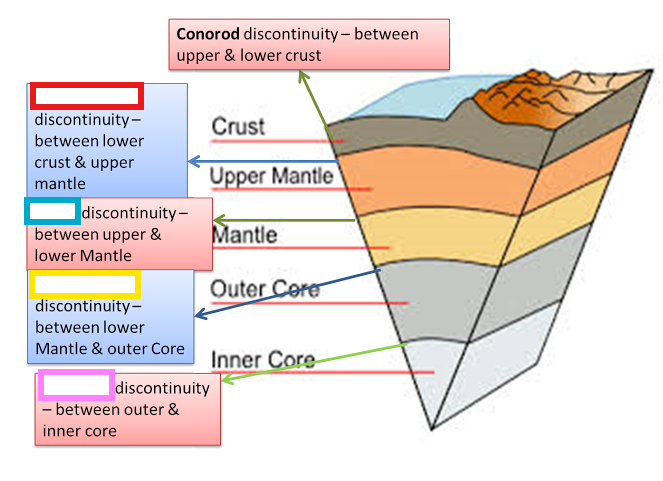
<p><span><span>Transition zone between Outer mantle and Inner mantle.</span></span></p>
67
New cards

Gutenberg Discontinuity

Transition zone between Mantle and Core.
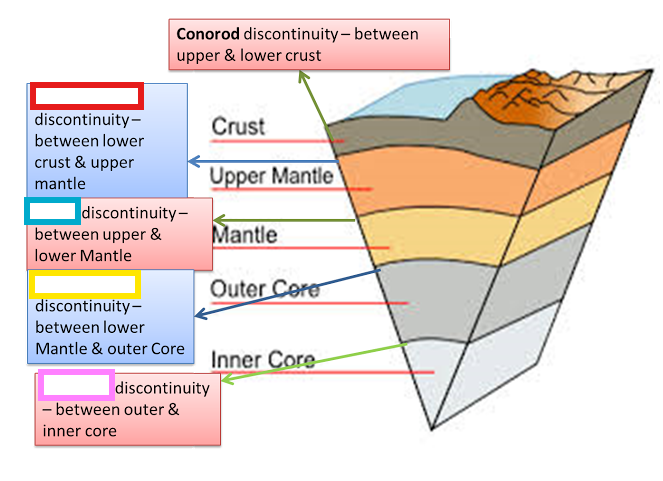
<p><span><span>Transition zone between Mantle and Core.</span></span></p>
68
New cards

Lehman Discontinuity:

Transition zone between Outer core and Inner core.
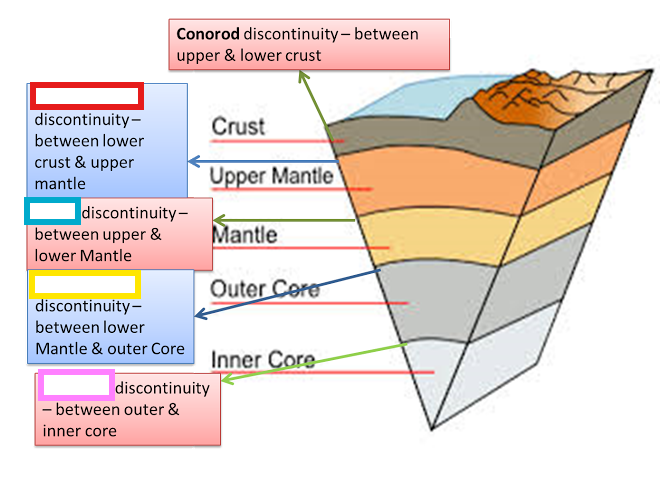
<p><span><span>Transition zone between Outer core and Inner core.</span></span></p>
69
New cards

Fission splits a large atom into smaller ones, while fusion joins small atoms together.

Which statement BEST describes the difference between nuclear fission and nuclear fusion?

70
New cards

used in nuclear power plants

If Fusion → happens in the Sun

Fission → ______________

71
New cards

The Sun produces energy using nuclear fusion, which joins small atoms together.

Which statement about the Sun’s energy is CORRECT?

72
New cards
plate boundaries
the edges of tectonic plates.
73
New cards
prior appropriation
when water rights are given to those who have historically used the water in a certain area.
74
New cards
rain shadow
the low-rainfall region that exists on the leeward (downwind) side of a mountain range. This rain shadow is the result of the mountain range's causing precipitation on the windward side.
75
New cards
red tide

a bloom of dinoflagellates that causes reddish discoloration of coastal ocean waters. Certain dinoflagellates of the genus Gonyamlax produce toxins that kill fish and contaminate shellfish.
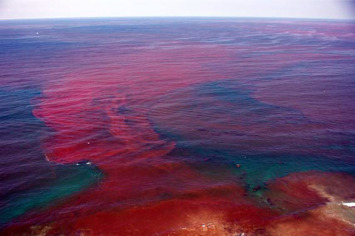
<p>a bloom of dinoflagellates that causes reddish discoloration of coastal ocean waters. Certain dinoflagellates of the genus <span style="color: rgb(246, 162, 162);"><strong>Gonyamlax</strong></span> produce toxins that kill fish and contaminate shellfish.</p>
76
New cards
R horizon
The bedrock, which lies below all of the other layers of soil, is referred to as the
77
New cards
riparian right
the right, as to fishing or to the use of a riverbed, of one who owns riparian land (the land adjacent to a river or stream).
78
New cards
salinization
the process in which soil becomes saltier and saltier until, finally, the salt prevents the growth of plants. Salinization is caused by irrigation, as salts brought in with the water remain in the soil as water evaporates.
79
New cards
sand
the coarsest soil, with particles 0.05-2.0 mm in diameter.
80
New cards
silt
soil with particles 0.002-0.05 mm in diameter.
81
New cards
Southern Oscillation
the atmospheric pressure conditions corresponding to the periodic warming of El Niño and cooling of La Niña.
82
New cards
subduction zone
in tectonic plates, the site at which an oceanic plate is sliding under a continental plate.
83
New cards
thermocline
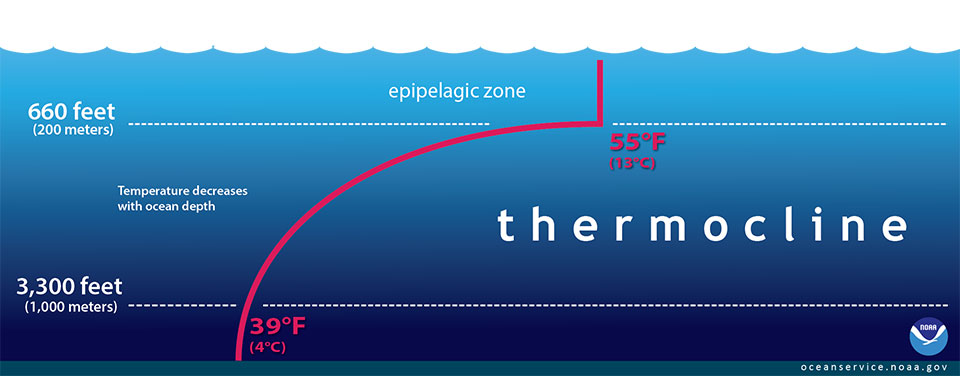
a layer in a large body of water, such as a lake, that sharply separates regions differing in temperature, so that the temperature gradient across the layer is
abrupt.
a layer in a large body of water, such as a lake, that sharply separates regions differing in temperature, so that the temperature gradient across the layer is
abrupt.
84
New cards
thermosphere
the outermost shell of the atmosphere, between the mesosphere and outer space, where temperatures increase steadily with altitude.
85
New cards
topsoil
the A layer of soil is often referred to as topsoil and is most important for plant growth.
86
New cards
trade winds
the more or less constant winds blowing in horizontal directions over the earth's surface, as part of Hadley cells.
87
New cards
transform boundary
also known as transform faults, boundaries at which plates are moving past each other, sideways.
88
New cards
tropical storm
a cyclonic storm having winds ranging from approximately 48 to 121 km (30 to 75 miles) per hour.
89
New cards
upwelling
a process in which cold, often nutrient-rich, waters from the ocean depths rise to the surface.
90
New cards
volcanoes
an opening in the earth's crust through which molten lava, ash, and gases are ejected.
91
New cards
watershed
the region draining into a river system or other body of water.
water-scarce-countries that have a renewable annual water supply of less than 1,000 m3 per person.
92
New cards
water-stressed
countries that have a renewable annual water supply of about 1,000-2,000 m3 per person.
93
New cards
weather
the day-to-day variations in temperature, air pressure, wind, humidity, and precipitation mediated by the atmosphere in a given region.
94
New cards
weathering
the gradual breakdown of rock into smaller and smaller particles, caused by natural chemical, physical, and biological factors.
95
New cards
wetlands
a lowland area, such as a marsh or swamp, that is saturated with mois ture, especially when regarded as the natural habitat of wildlife.
96
New cards