notes from cognitive psychology
 Call Kai
 Learn
Learn Practice Test
 Spaced Repetition
 Match
Match Flashcards
 Knowt Play
1/99

There's no tags or description
Looks like no tags are added yet.
Name | Mastery | Learn | Test | Matching | Spaced | Call with Kai |
|---|
No analytics yet
Send a link to your students to track their progress
100 Terms
disciplines in cognitive psych
psychology
linguistisc
computer science (AI)
neuroscience
philosophy
cognitive anthropology
3 dimensions of variation
variation according to:
the acpect fo cognition being studied
the level of organisation at which that aspect is studied
the degree of resolution of the techniques that are being used
strategies for repsonding to the integration challenge
global strategies: look for overarching models explaining how cognitive science fits together
local strategies: briding levels of explanation and levels of organisation
modularity of the mind
the mind if made up of innate, functionally independent modules
basic assumptions of cognitive pscyhology
firmly acknowledge existence of mental processes, focus on investigating them
see the mind as active → selecting info from envrionment, relating it to prior knowledge, acting on the processing results
3 reasons for rapid growth of cognitive psychology
behaviourism couldnt account for findings in areas such as language acquisition
new measuring devices to examine mental activity
rise of computer and mind-as-computer metaphor → most significant
history of cognitive science
philosophers (rationalism/associatism) — introspectionists (empericism) — behaviourism — information processing theorists (connectionism) — neuroscientific approach to understanding cognition
how to upgrade the mind
improving individual parts of the CRUM model
data: chunking
algorithm: add meta-cognitive routines
slow down for high stakes
force alternative decisions
uses of models
describe
predict
explain
control (treatments)
prescribe (how it should be done)
emulate (AI)
2 computational models
symbolic models
mechanisms for manipulating symbolic representations. believing a cat is lazy, need both symbols
connectionist models
models of cognition preserving neural information processing properties
property of aboutness
to say they involve representations
mental processes have 2 things
mental states and mental content
the act of believing and the content that the cat is lazy
explanandum
thing to be explained
why does the fire have different colours?
explanans
the explanation itself (model)
it is because…
secondary explananda
things we dont want to explain
3 levels of marr
computational level
algorithmic level
implementation level
computational level
what is the goal of the computation, why is it appropriate, and what is the logic of the strategy by whcih it can be carried out?
what is the model supposed to do? the goal
the explanandum
algorithmic level
how can this computational theory be implemented? what is the representation for the input and output, and what is the algrithm for the transformation?
how is it computed? set of instructions
explanans
implementation level
how can the representation and algorithm be realised physically?
CRUM
representational power
computational power
psychological plausibility
biological plausibility
practical plausibility
CRUM explanation schema
explanation target
— why do people have a particular kind of behaviour?
explanatory pattern
— mental representations and algortithmic processes which produce the behaviour
5 assumptions about compuations in the brain on which connectionist models are based
neurons integration information
receive
if exceeds threshold, neuron fires
signal passed down
neurons pass information about the level of their input
activity level
brain structure is layered
hidden layers
the influence of one neuron on another depends on the strength of the connection between them
weight determines the effect
learning is achieved by changing the strength of connections between neurons
change the weights
human characteristics of connectionist models
relatively immune to damaged components or to noise input
allow retreival by content
are likely to retreive typical instances from categories
nodes
processing units of the model
typicality effect
the answers which are more likely to be given are typical examples of the category. some info is more easily retreivable
constraint satisfaction
each unit influences the states of all units its attached to. system can find a state in which any change in activity levels would reduce the overall number of satisfied constraints
allows for consensus, not exact evidence - fault tolerance
supervised learning
given training data, comes up with a model explaining this data
inputij = ajwij
the input for a cetain cell is the activity times the weight of a previous cell
netinputi = Ejajwij
the total input fo a cell is the cum of all activity times all weights of all previous cells
types of inputs
linear
threshold linear
sigmoid
binary threshold
DELTAwij = [ai(desired) - ai(obtained)]aje
the change in weight is determined by the desired output minus the obtained output. it put it back through the network, so i also consider the activity of the cell. and then i change the weight based on this
[ai(desired) - ai(obtained)]
the difference between the desired and actual activity level of unit i
ensures that the size of any weight change is proportional to the size of the error
bias unit
receive no input.
weights can change from learning
negative: base firing
positive: threshold
supervised learning
calculate error, this info gets sent back
unsupervised learning
HEBBS LAW: cells that fire together wise together. dont calculate the error
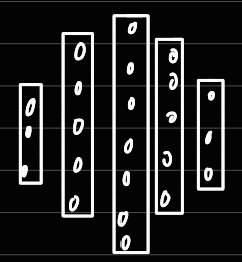
deep
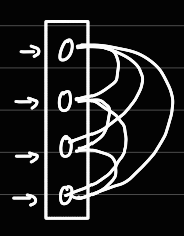
auto-associator
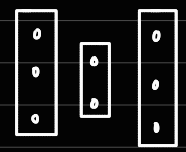
hidden - layer
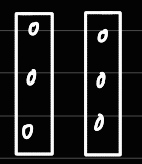
simple associator
basics of Bayesian statistics
perception, prediction, and decision making all come down to reasoning with probabilities
cue combination
incorporate both visual and acoustic observations as likelihood functions
Bayesian statistics
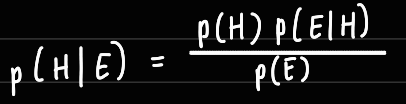
shifts in x-axis
prior shift
shift in y-axis
likelihood shifts
posterior probability distribution
brain’s beliefs in each possible world state based on prior/likelihood
mondegreens
high prior, flat likelihood (ambiguous)
prediction error minimising
track own systems reliability
presicion weighting: estimation of reliability
error units: carry all unexplained sensory info
predictive processing
brain is proactively generating perceptions by continuing to recreate from top-down the world of sensory signals
constantly minimising prediction errors
change your predictions (prior)
change your actions (likelihood)
Gregory’s constructivist theory (PERCEPTION)
indirect, top-down
construction based on physical sources of energy
perception = best guess
constructivist because he is saying that retinal images are ambiguous and we construct the perception i out mind.
meaningless sensory cues + cognition = meaning
Gibson’s theory of direct PERCEPTION
less computation
the part thats not moving is telling you where you’re going
optic array: pattern of light with all the visual information
The world provides us all the info we need
optic array
pattern of light with all the visual information
optic flow patterns
texture gradients
affordances
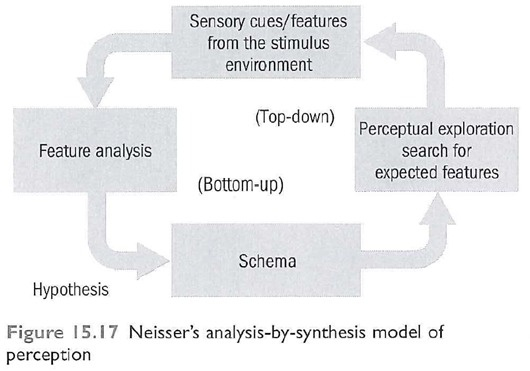
Neisser’s analysis-by-synthesis model of PERCEPTION
good viewing conditons - bottom up
ambiguous stimuli - top-down
most times it is both
Marr’s computational theory of vision (PERCEPTION)
4 stages of deriving representation fo the shape of the object from retinal info:
image (gray-scale description)
primal sketch
2,5D sketch
3D model representaion
each stage makes info more complex
BOTTOM UP
gestalt psychology
elements of visual input are linked, the identity of the elements depends on the link
gestalt principles
similarity
proximity
good continuation
closure
simplicity
figure/ground
common faith
Barslou’s simulation view of concepts (PERCEPTION)
recognising is top-down. seeing thre word chair evokes the chair related experiences
re-enactments reported as imagery
imagery debate
when you perceive something in your mind, is it the same mechanisms at play when you are perceiving it in real life?
degree to which imagery/visuo-spatial processing overlap
critical views:
demand characteristics
images can only be transformed
expert/beginner will see different things
epiphenomenon: byproduct
symbolic distance effect
difference judgements easier when things are widely different
cat, whale — cat, plane
feature detectors
features we rely on depends on how we interpret the data. we choose what matters for recognition
high vs. low imagery skills
high: actually visualise in their heads
low: self-referential strategies. you match features and try to match it
prone to error
overt attention
head shift
covert attention
no looking difference, attention somewhere else
characteristics of attention
steerability
selecting
3 categories of attention
alerting: alters the cognitive system something needs to be processed more (BAYESIAN)
orienting: reorienting after being alerted, makes attention more coherent
execution: balancing repsonsiveness to the flow of sensory information + memory with adherence to own goals
stroop interference: when activation of one concept interferes with the activation of another
inattentional blindness
gorilla. miss obvious changes because you paid attention to something else
attention
the prioirised processing of some inputs from a larger set of selectable items
cocktail party effect
top down attention / endogenous attention
voluntary
lunch-line effect
bottom-up attention / exogenous attention
involuntary
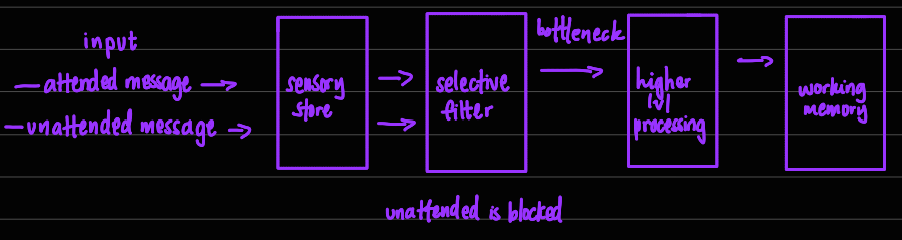
Broadbent’s filter model of ATTENTION
bottlebeck: selective filter
attenuation filter: filtered stimuli are dampened not blocked, salient can pass through → explains lunchline effect
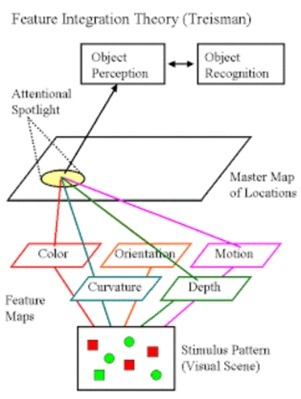
feature integration theory (ATTENTION)
feautre segregation
feature maps
features come together on the master map
top-down processes of recognising and attention
explains how we recognise
resource theory (ATTENTION)
single resource: attention = limited
degradation of multitasking
multiple resources
some tasks combine well
Posner task
Cue validity → reaction time
focus on cross. given cues about where attention is supposed to go. valid and invalid cues.
see how fast you steer back to right side after invalid cue
attention improves attention
change blindness
sistaind inattentional blindness
ambiguous images
selective attention: posner task
MBCT
being mode insted of doing mode
more weight to likelihood, more weight to prediction error, large belief updates
enhancing sensory precision at lower level of cortical hierarchies
decentring
being able to experience thoughts and precepts simply as events in the mind that arise and pass
prediction errors carry high weight → carried up to higher levels where abstract beliefs are represented → constant belief updates at higher levels may lead to recognising that “fixed beliefs” can actually change
reactivity
plattening priors: any deviation from the mean is less meanignful and thus decreases the impulse to reponse to incoming sensations
as a result of being mode and decentred perspective → constant belief updates → higher prediction errors are acceptable → less tendency to defend beliefs against anxiety
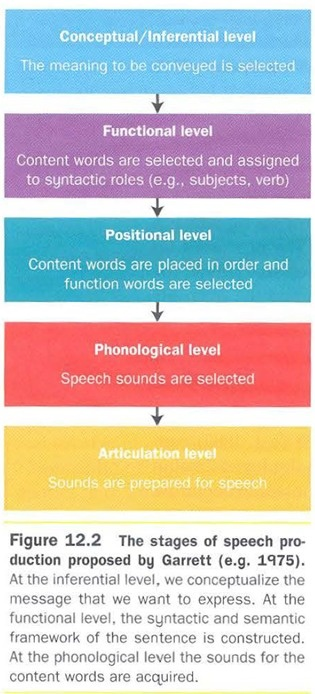
Garret’s model of speech production (LANGUAGE)
top-down
speech errors
meaning → words → order → sound → prepare for speech
doesnt account for errors across levels
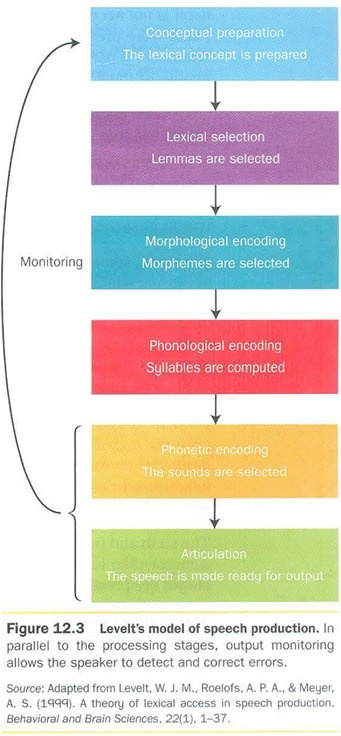
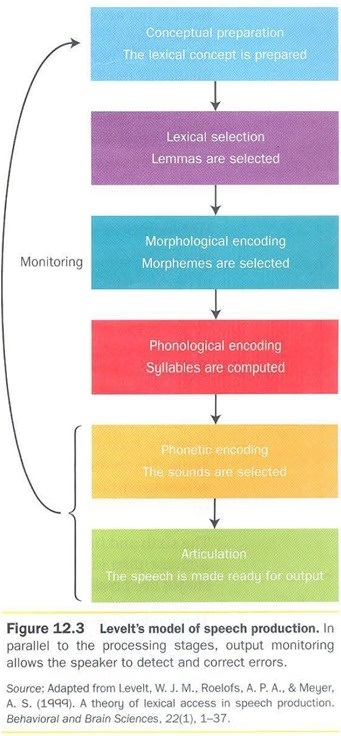
Levelt’s model of speech production (LANGUAGE)
top down
production of single words
concept of word prepared → selected → meaning concept selected → syllabes selected → sounds → speech preparation
monitoring: recognising an error (may be broken in speech difficulties)
feedback between levels limited
modular theories of speech production
series of non-interacting stages. each stage different kind of processing
interactive/parallel theories of speech production
less constrained, multiple sources of info operating
Dell’s spreading activation model (LANGUAGE)
connectionist
predict speech errors
4 levels
semantic level
conceptualise what we want to say
syntactic level
structure of the sentence
morphological level
morphemes selected
phonological level
sounds activated
think of meaning → serveral possible words active → the most active word wins → the sounds of that word activate → the sounds are place in order and spoken
invarience problem
speech not always the same
the segmentation problem
difficutlt to distinguish sinlge words in continuous speech
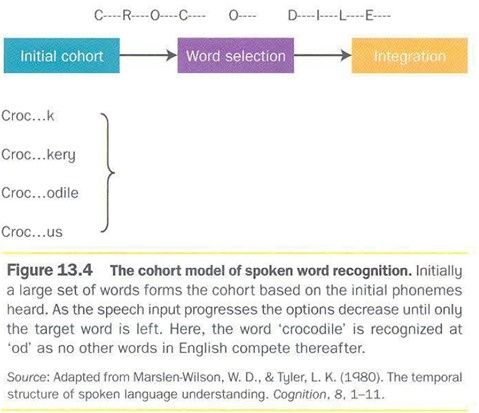
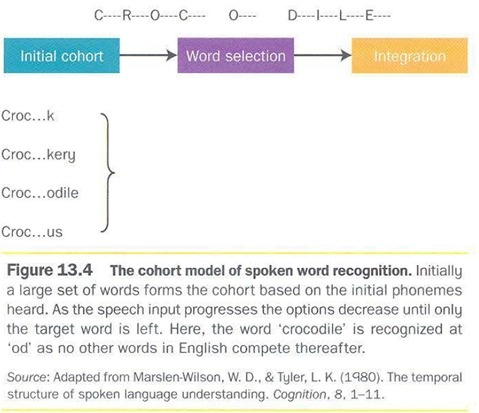
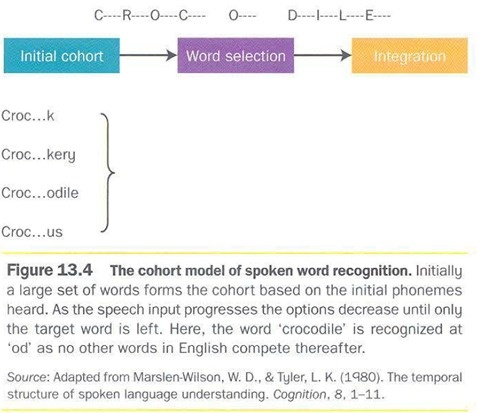
the cohort model (LANGUAGE)
expectations once we hear initial phonemes
uniqueness point: point where other optino have reduced so much that one word remains
context plays early role.
evidence: lexical decision task: string of words, decide if it a word
sometimes delay in word recognition…
TRACE model (LANGUAGE)
top down
spoken input
constantly updates
3 layers of detector:
feature level: basic sound properties
phoneme level: recognise individual speech sounds
word level: phonemes activate possible words
why TRACE: you hear, your brains leaves a trace of activation across the network
the dual route model of reading (LANGUAGE)
step 1: see word
route 1: grapheme-to-phoneme coversion
letters → sounds
sound out letters
for new words
route 2: lexical route
word recognition → meaning → pronounciation
recognise word visually
find it in stored known words
assess meaning
retreive correct pronounciation → word recognition
route 3: direct lexical route
word recognition → pronounciation
you can pronounce it, even if you dont know its meaning
dual route:
sounding out rules
recognising stored words
4 characters of emotions
cognitive: appraising significance of emotion
motivational-behavioural: acions in reponse to emotion
somatic: physiological reponses to emotion
subjective-experimental: actual experience
Paul Ekman: Basic EMOTION theories
there are seperate discrete emotions with distinct facial expressions
they have distinct evolutionary functions
Ekman study
non-literate cultures
short stories → what emotion is it?
facial expression → what emotion is it?
westerners also understood their expressions
not always consistent
some cultures have shame universal
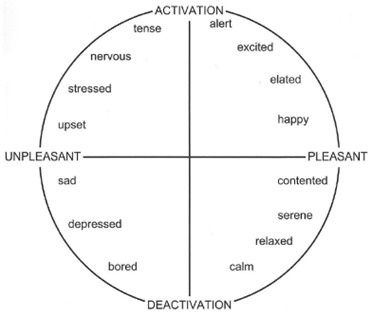
dimensional-affective space models (EMOTION)
valence: (un)pleasantness
arousal: engagement/reponsiveness
multidimensional models (EMOTION)
scalability
calence
persistence
generalisation
global cordination
automaticity
social cordination
James- Lange theory (EMOTION)
body → interpretation = emotion
facial feeback hypothesis: 🙂 → happy feelings
x paralysation
x people differ in introception
x experiencing emotion first: blushing?
x no cognition

Cannond-Bard theory (EMOTION)
physiological + emotional state at the same time
can have different emotions in response to the same physiological symptoms
can have no emotions in reponse to physiological symptoms
characteristic, but do not give rise to emotion
x no cognition

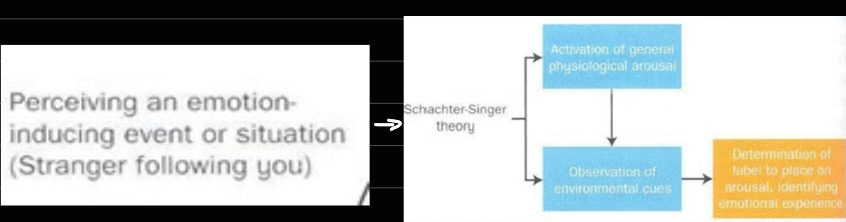
two factor theory, Schachter-singer theory (EMOTION)
situation dependent
physiological arousal + interpretation
test: adrenaline
placed in anger/euphoria
if told about side effects, they dont attribute it to emotion
if not told about side effects, they attribute it to emotion
Affective primacy Zajonc’s theory (EMOTION)
cognition independent from emotion. can be effective judgement without emotion
mere exposure effect
cognition is conscious
🙂 / ☹ experiment
unconscious (4 m/s): 🙂 did have effect
conscious (1s): 🙂 had no effect
Cogntive-primacy, Lazarus appraisal theory (EMOTION)
emotion involves cognitive appraisals
emotions are goal-directed mechanisms
3 types of cogntitive appraisals:
primary: initial assessment
secondary: assessment with resources
reappraisal: continual monitoring
emotion as a result from interpretations of our reactions
multilevel theories (EMOTION)
pre-attentive and conscious processes in emotion
fast/slow route
basic emotions
anger, disgust, fear, happiness, sadness, surprise
predictive coding
through accurately inferring causes, the brain can anticipate needs of body + prep to meet needs before they arise
prior: predict what is needed/whats most likely
prediction is updates by prediction error
emotion
likelihood + current brain state → inluence probability of future brain states
concept
mental representations
context dependent
conepts are predictions that the brain uses to categorise sensory inputs and motor actions
= predictive coding
there is variation is emotion categories
meaningful: so we can generalise
challenge: needs regularities to make predictions
experience depends on (EMOTION)
introception of bodily signals
higher-level cognitive apprialsals
recognition or emoiton first
Connan-bord/ holman barret: same time
James-lange / affective primacy: emotion first - then recognition
two-factor / cognitive primacy: recognition first - then emotion
Explore top notes

