unit 1 not on sac

0.0(0)
Studied by 0 people
call kaiCall Kai
learnLearn
examPractice Test
spaced repetitionSpaced Repetition
heart puzzleMatch
flashcardsFlashcards
GameKnowt Play
Card Sorting

1/20

encourage image

There's no tags or description

Looks like no tags are added yet.

Last updated 10:45 PM on 3/26/26
Name
Mastery
Learn
Test
Matching
Spaced
Call with Kai

No analytics yet

Send a link to your students to track their progress

21 Terms

1
New cards

The Proteome

uThe proteome is the complete set of proteins expressed by the genome of an individual cell or organism at a given time.
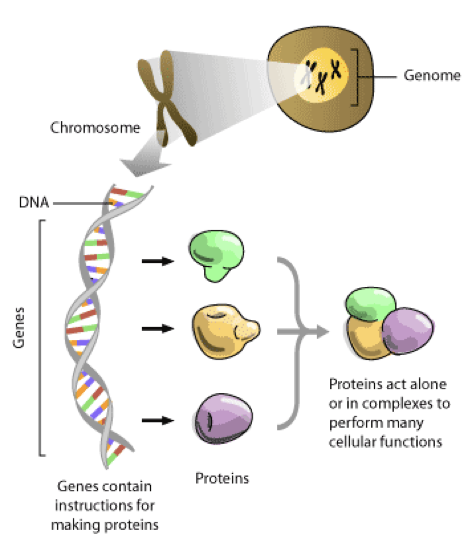
<p><span>u<strong>The proteome is the complete set of proteins expressed by the genome of an individual cell or organism at a given time. </strong></span></p>
2
New cards

Types of Proteins

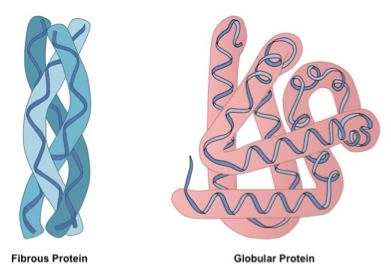
Fibrous proteins – generally elongated and insoluble, used for structure e.g. collagen in connective tissue, keratin in har and nails.

Globular Proteins – compactly folded and coiled into spherical tertiary and quaternary structures, generally soluble, have outer hydrophilic region and inner hydrophobic core, most enzymes and hormones are globular.
<p><span>Fibrous proteins – generally elongated and insoluble, used for structure e.g. collagen in connective tissue, keratin in har and nails.</span></p><p><span>Globular Proteins – compactly folded and coiled into spherical tertiary and quaternary structures, generally soluble, have outer hydrophilic region and inner hydrophobic core, most enzymes and hormones are globular. </span></p>
3
New cards

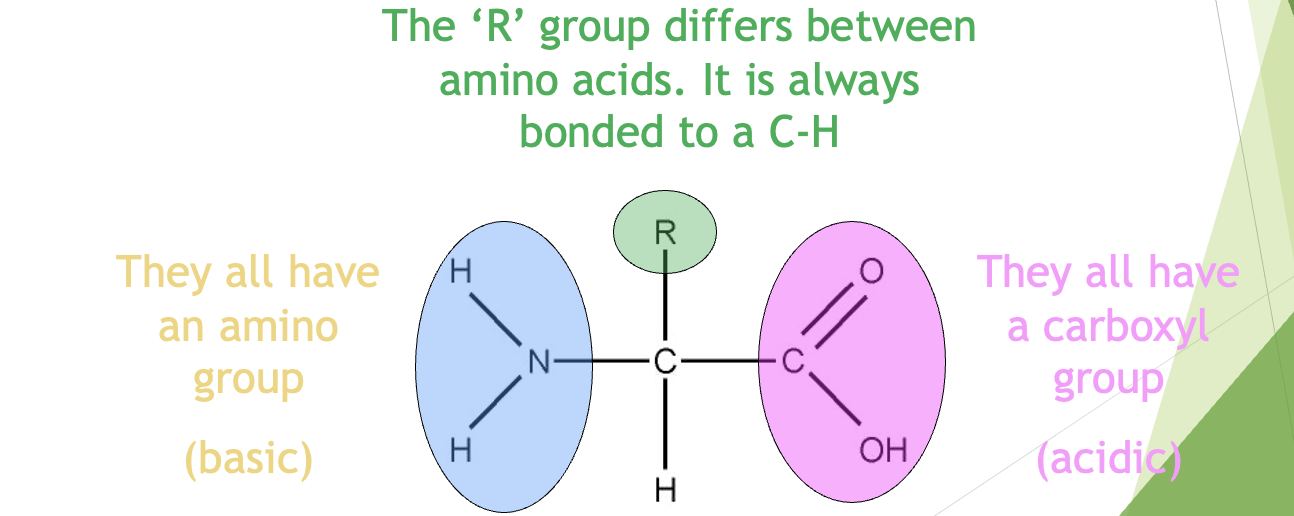
The Monomer – An Amino Acid

4
New cards

Building a Polypeptide Chain

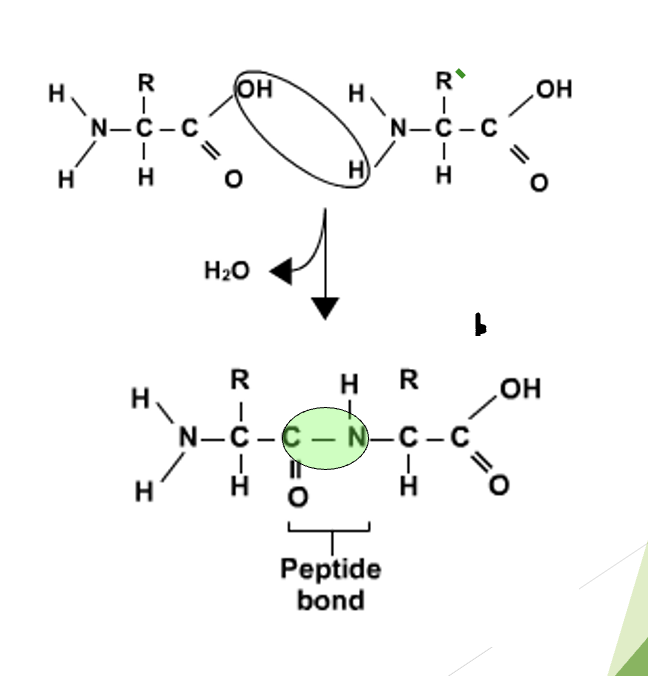
Process called condensation polymerisation. One amino acid bonds to another (hydrogen and oxygen from the carboxyl group of one amino acid join), one molecule of water is released (condensation). A peptide bond is formed between them, and the molecule is now called a dipeptide. Many amino acids joined together forms a polypeptide chain.
5
New cards

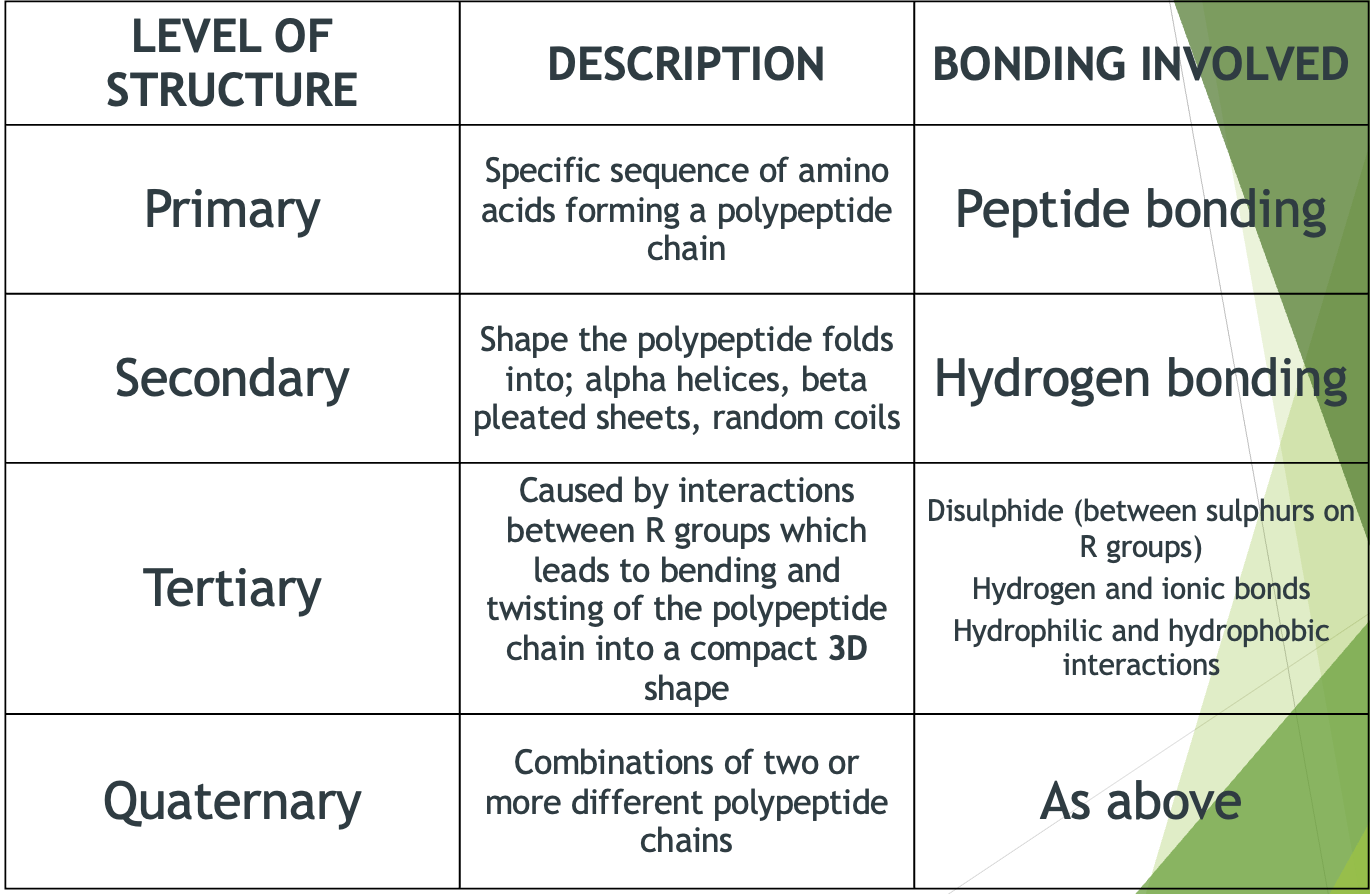
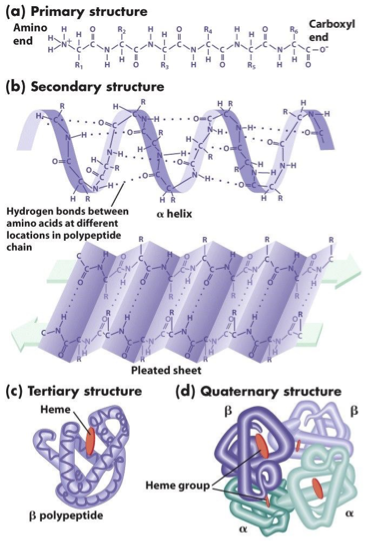
Hierarchical Structure of Proteins

<img src="https://assets.knowt.com/user-attachments/407d0a36-545b-482b-9550-01b3857f61d7.png" data-width="100%" data-align="center"><p></p>
6
New cards

3D shape depends on

primary structure because the amino acid side groups respond differently to water, altering the shape.

Hydrophobic – water repelling. A hydrophobic side group will turn inwards, away from the water, towards the centre of the protein molecule.

Hydrophilic – water attracting. A hydrophilic side group will turn outwards, forming hydrogen bonds with the surrounding water molecules.

7
New cards

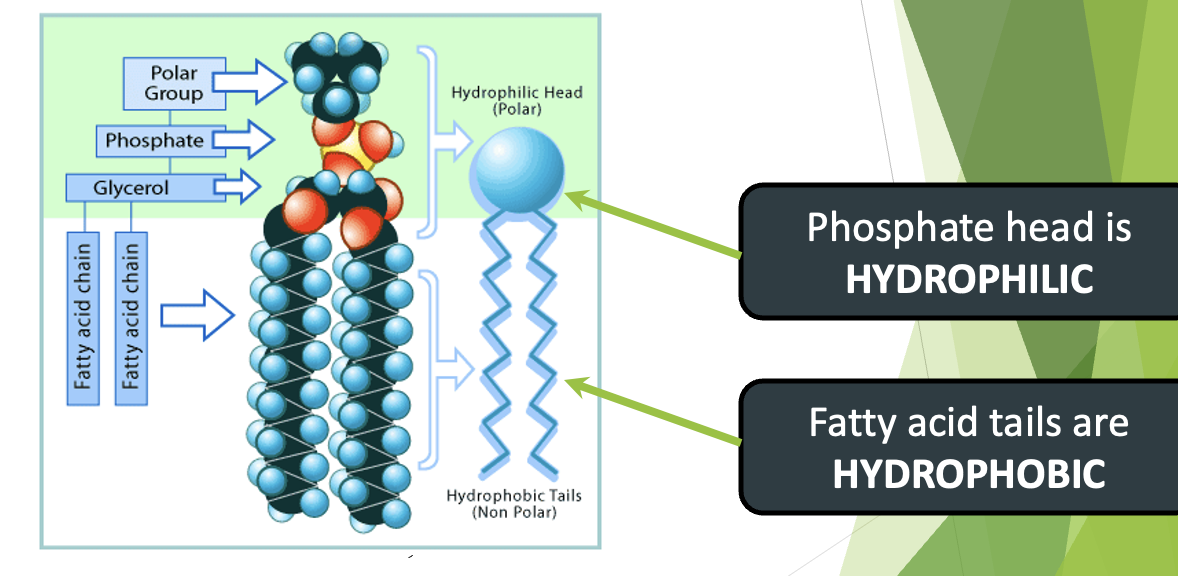
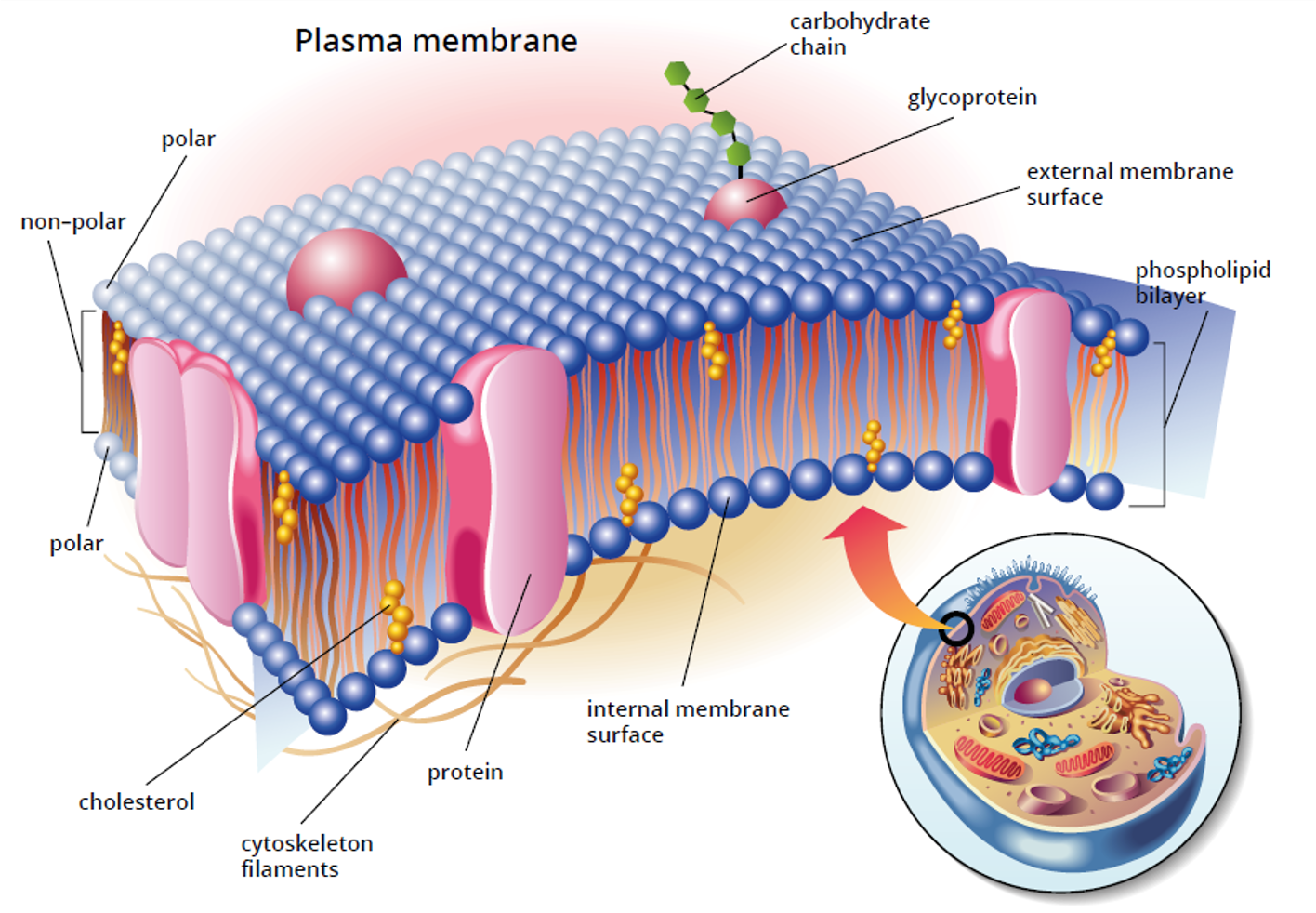
plasma membrane and Phospholipids

<img src="https://assets.knowt.com/user-attachments/3e7e872b-e911-4741-beab-20f989dbcc9a.png" data-width="100%" data-align="center"><p></p>
8
New cards

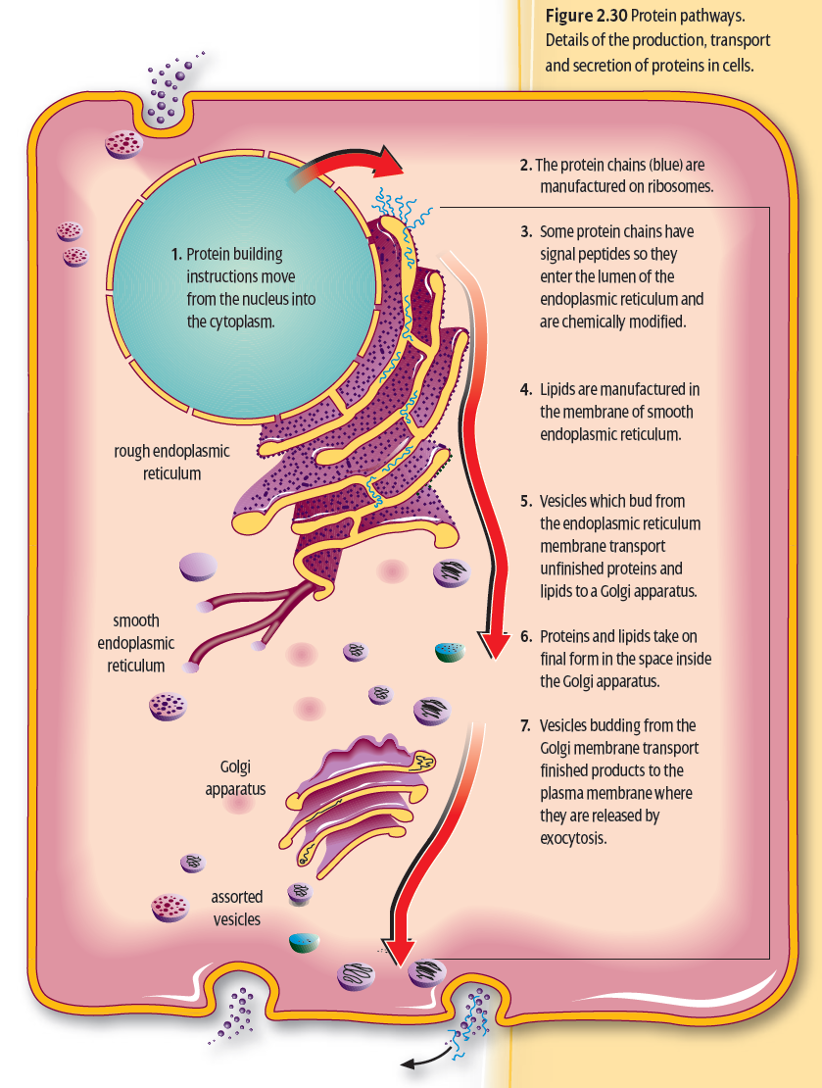
exporting proteins

<p></p>
9
New cards

Rough Endoplasmic Reticulum

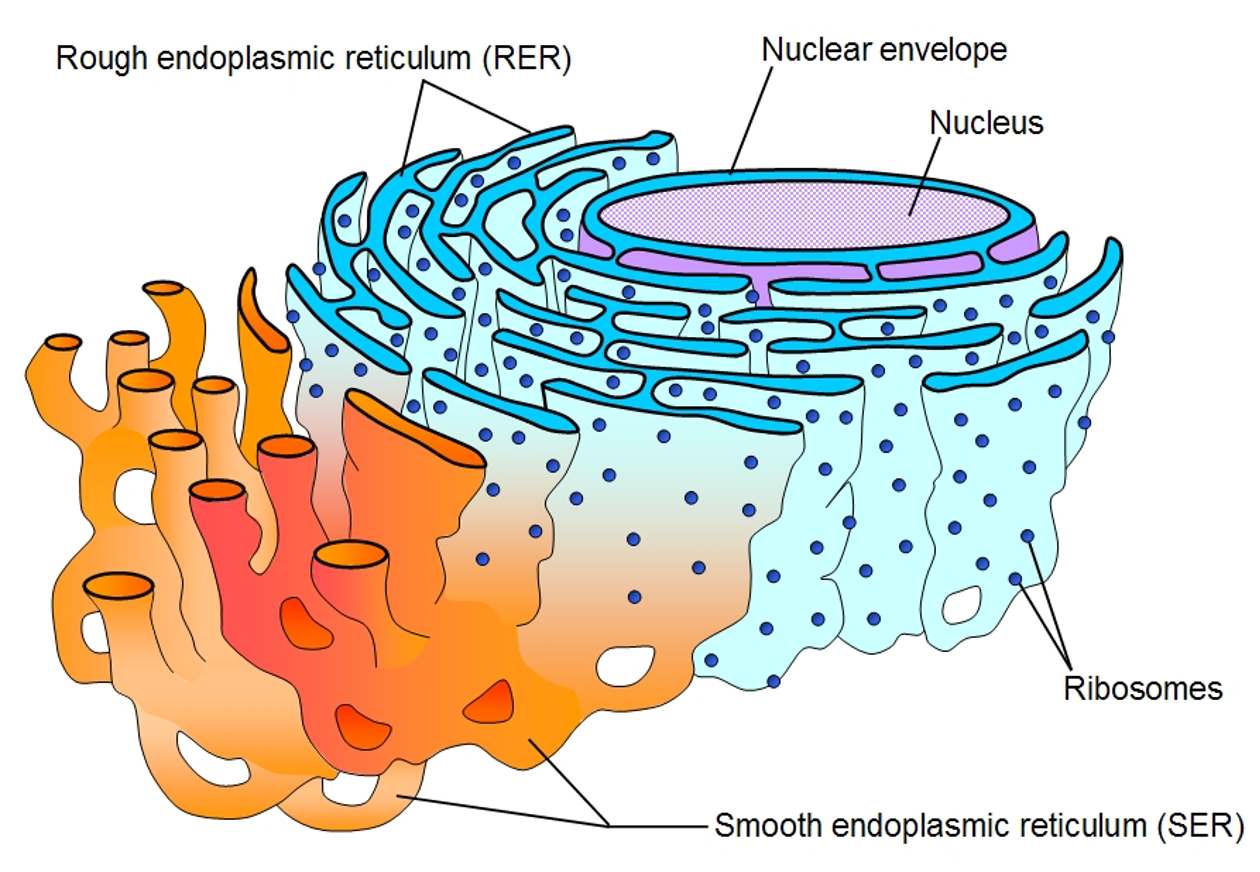
series of folded membranes forming channels called cisternae).

Ribosomes attached.

Synthesis and process proteins by adding other molecules.
<p><span>series of folded membranes forming channels called cisternae).</span></p><p><span>Ribosomes attached.</span></p><p><span>Synthesis and process proteins by adding other molecules. </span></p>
10
New cards

The Golgi Apparatus

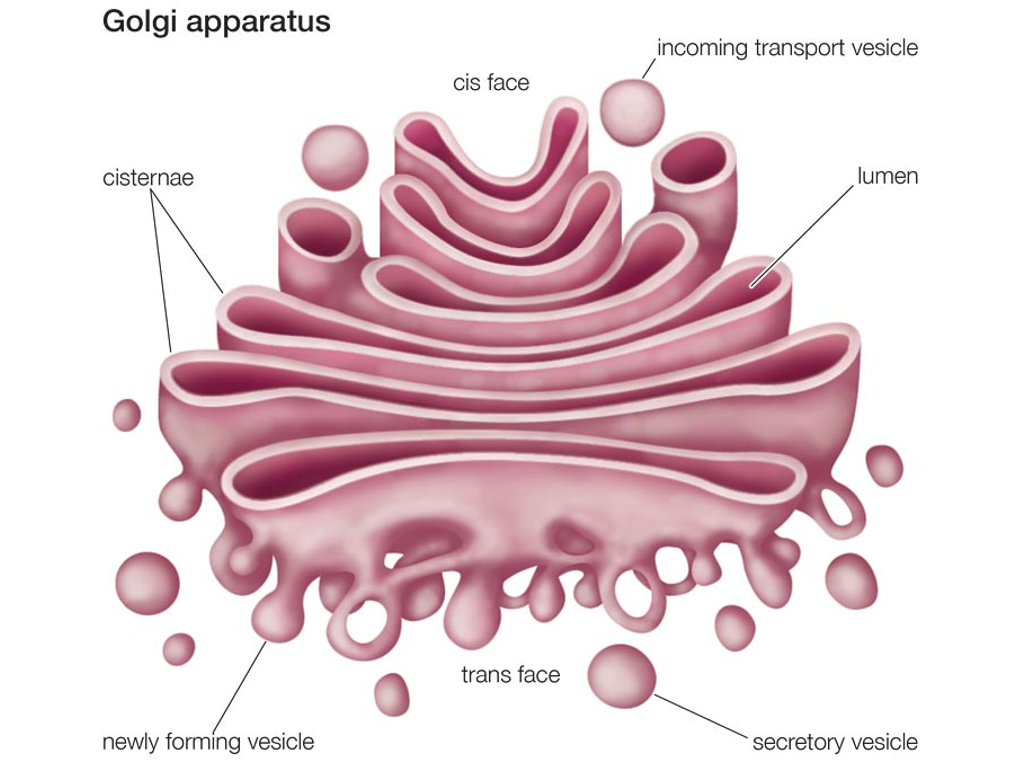
Consists of several layers of membranes.

Proteins are transported in transition vesicles and are sent to the Golgi apparatus from the ER.

Further processing and modification of proteins.

The Golgi complex packs the proteins into secretory vesicles and are stored in the cytosol and then excreted via exocytosis (except lysosomes).
<p><span>Consists of several layers of membranes.</span></p><p><span>Proteins are transported in transition vesicles and are sent to the Golgi apparatus from the ER.</span></p><p><span>Further processing and modification of proteins.</span></p><p><span>The Golgi complex packs the proteins into secretory vesicles and are stored in the cytosol and then excreted via exocytosis (except lysosomes).</span></p>
11
New cards

enzymes

Globular proteins with tertiary or quaternary structure, role is to increase the rate of (catalyse) biochemical reactions. end in ase. reusable.

12
New cards

How do Enzymes Work?

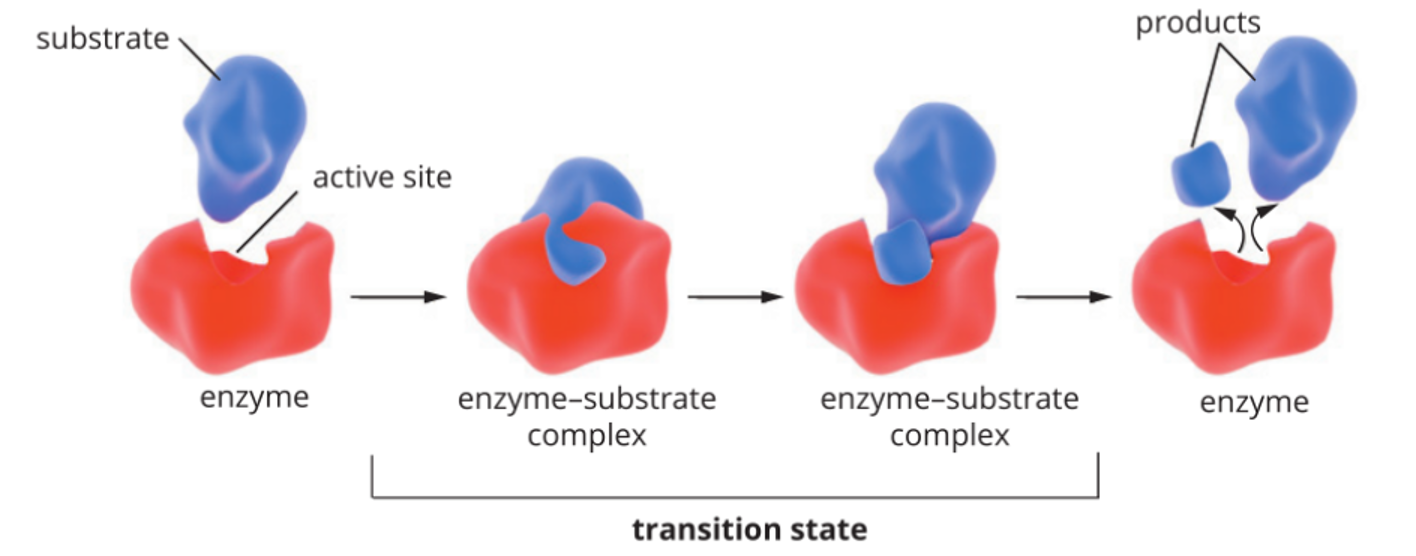
Enzymes work on molecules - substrates by binding to them. Specific structure to match a specific substrates. Either building molecules or breaking down large molecules into smaller ones. Specific region called the active site where the substrate binds and where catalysis occurs. (enzyme-substrate complex is formed).

Lipase + Fat à Fatty acids + Glycerol

Lipase is the enzyme.

Fat is the substrate.

Fatty acids and glycerol are the products.

active site: flexible and capable of changing its shape in order to conform to the shape of substrate and achieve a tighter fit. (conformational change).
<p><span>Enzymes work on molecules - </span><strong>substrates</strong><span> by binding to them. <strong>Specific structure </strong>to match a specific substrates. Either building molecules or breaking down large molecules into smaller ones. Specific region called the <strong>active site </strong>where the substrate binds and where <strong>catalysis</strong> occurs. (<strong>enzyme-substrate complex </strong>is formed).</span></p><p><span>Lipase + Fat </span>à Fatty acids + Glycerol</p><p><span>Lipase is the <strong>enzyme</strong>.</span></p><p><span>Fat is the <strong>substrate</strong>.</span></p><p><span> Fatty acids and glycerol are the <strong>products</strong>.</span></p><p><span><strong>active site: flexible</strong> and capable of changing its shape in order to conform to the shape of substrate and achieve a tighter fit. (<strong>conformational change</strong>). </span></p>
13
New cards

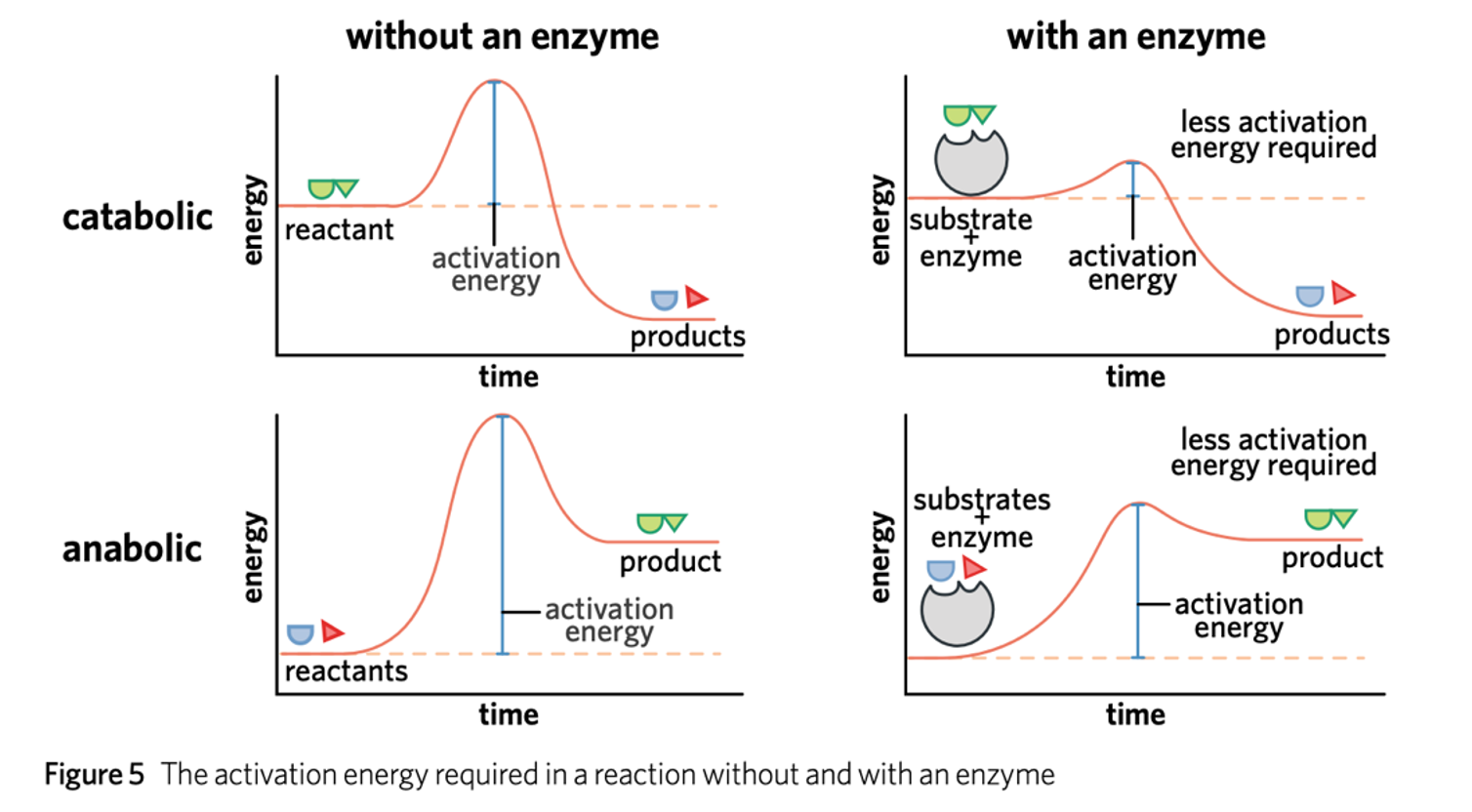
Activation Energy

energy required to get a reaction started.

14
New cards

Catabolic Reactions

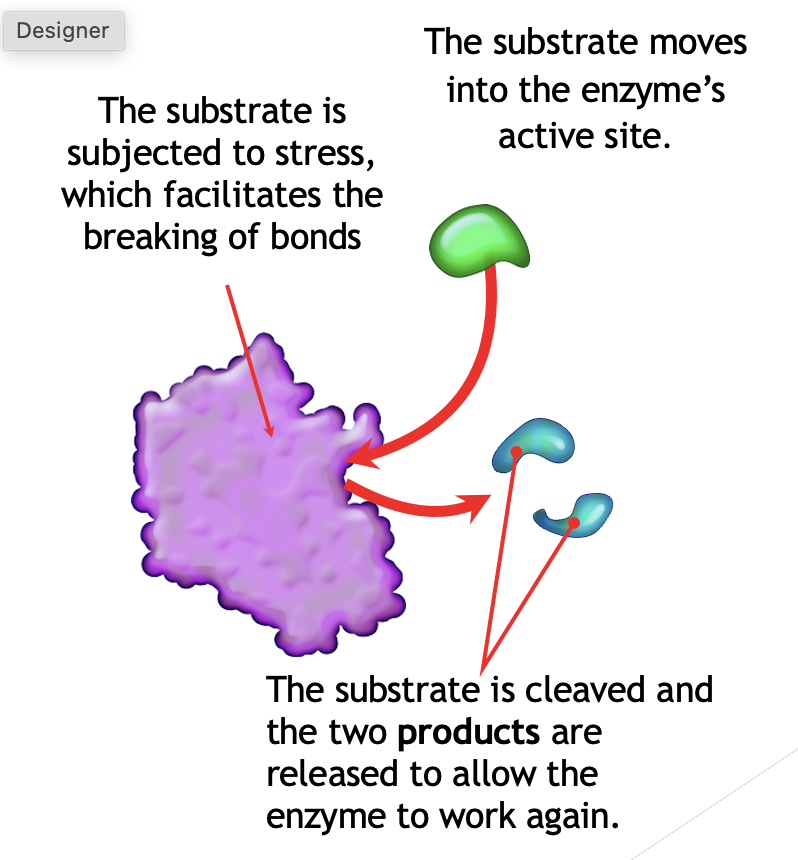
Breakdown of larger molecules into smaller components, with the release energy (called exergonic reactions).
15
New cards

Anabolic Reactions

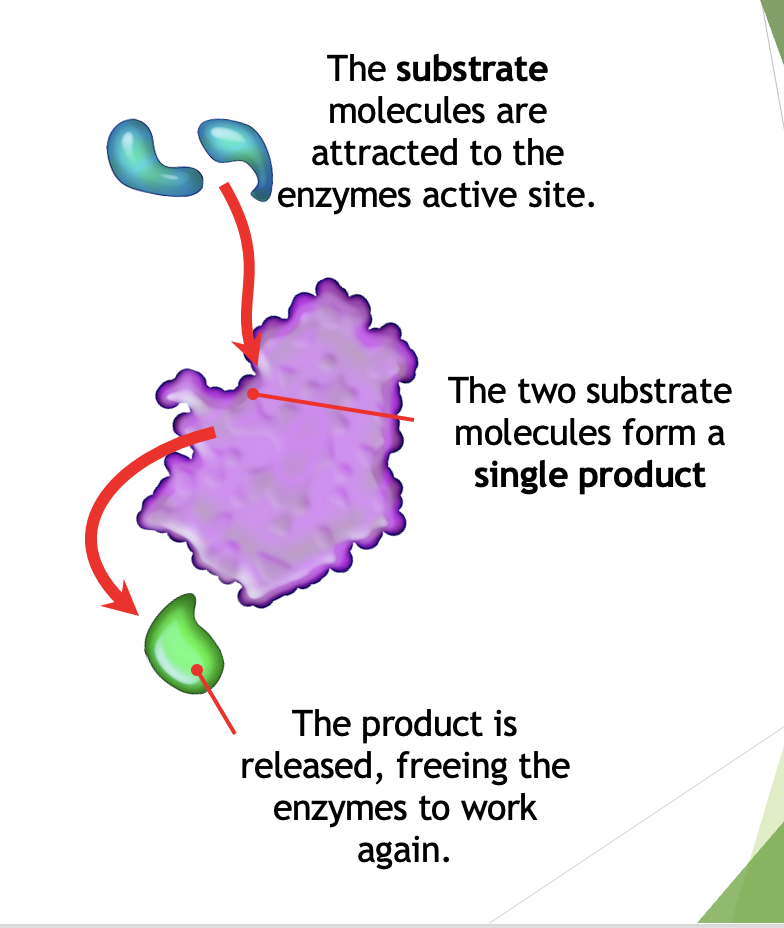
smaller molecules are joined to form larger ones, an input of energy is required (called endergonic reactions).
<p><span>smaller molecules are joined to form larger ones, an input of energy is required (called <strong>endergonic</strong> reactions).</span></p><img src="https://assets.knowt.com/user-attachments/a939f282-d9f6-4e8e-9234-1e6c4763eefc.png" data-width="100%" data-align="center"><p></p>
16
New cards

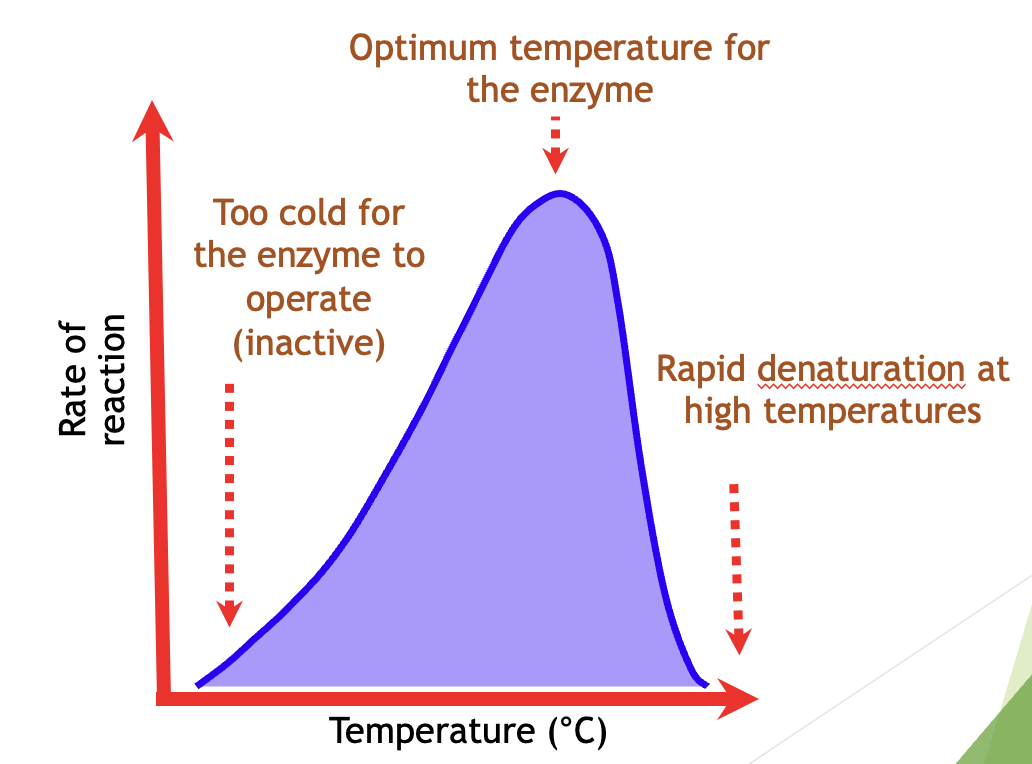
Denaturing Enzymes

The secondary and/or tertiary structure of the protein is lost – the amino acid chains unravel.

This destroys the shape of the active site.

can no longer act as a catalyst.

-heat, extreme, ph, chemcials

irreversible
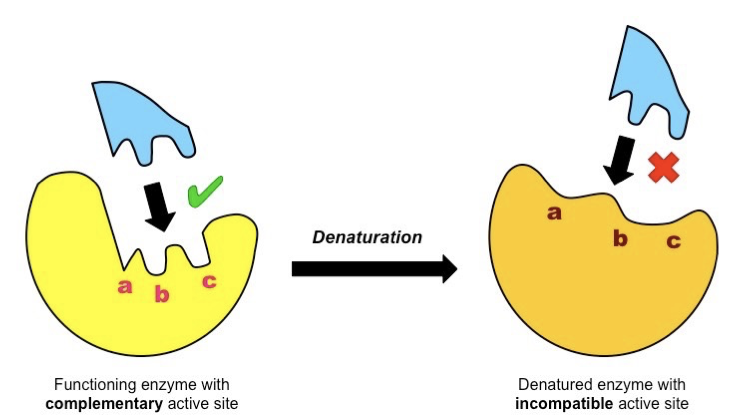
<p><span>The secondary and/or tertiary structure of the protein is lost – the amino acid chains unravel.</span></p><p><span>This destroys the shape of the active site.</span></p><p><span>can no longer act as a catalyst.</span></p><p><span>-heat, extreme, ph, chemcials</span></p><p><span>irreversible</span></p><p></p>
17
New cards

Effect of Temperature

knowt flashcard image
18
New cards

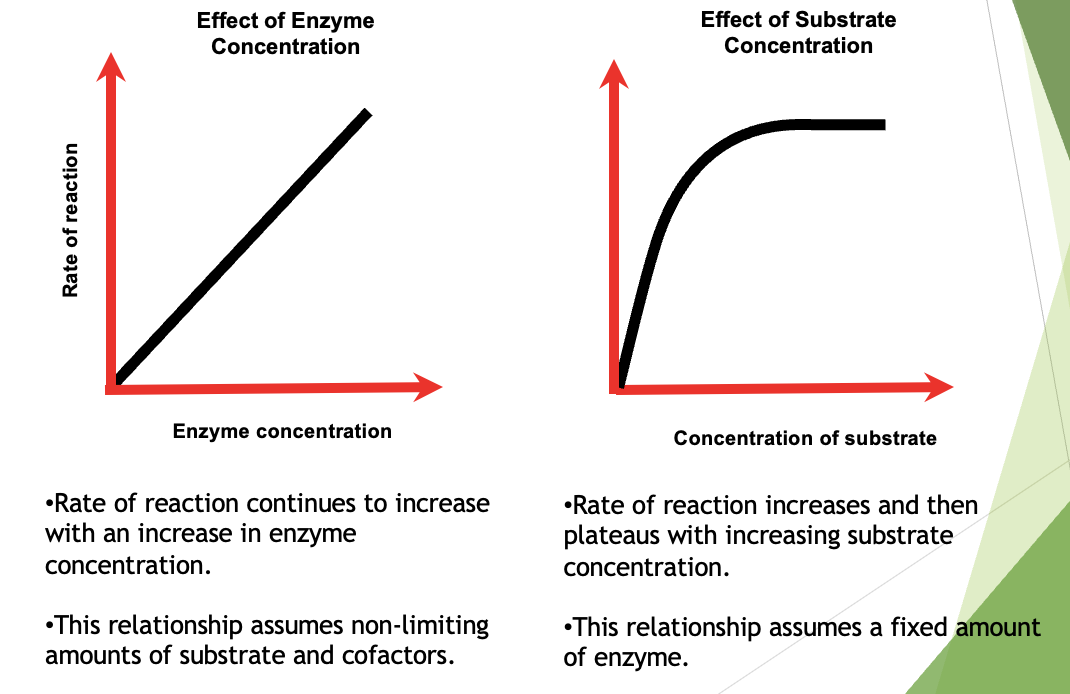
Effect of Enzyme Concentration

uAs long as there is an excess of substrate molecules, there will be a proportional increase in the rate of reaction as the enzyme concentration increases.

uIf there is not an excess of substrate molecules, then eventually the rate reaches a maximum speed.
19
New cards

Competitive Inhibition (Reversible)

A competitive inhibitor is a molecule that competes with the substrate for binding to the enzyme’s active site.

As its shape is complementary to the active site, it binds temporarily to the active site, preventing an enzyme-substrate complex from forming.
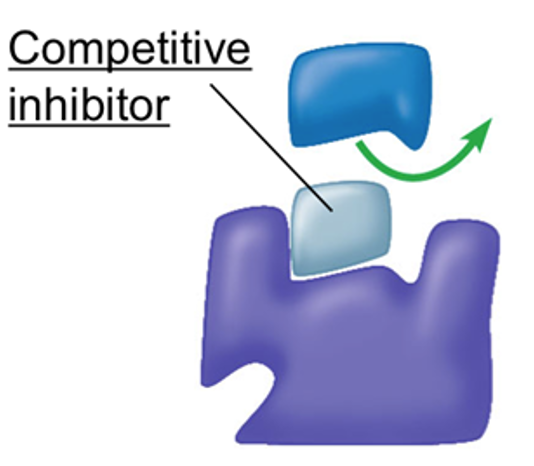
<p><span>A competitive inhibitor is a molecule that competes with the substrate for binding to the enzyme’s active site.</span></p><p><span>As its shape is complementary to the active site, it binds <strong>temporarily</strong> to the active site, preventing an enzyme-substrate complex from forming. </span></p>
20
New cards

Non-Competitive Inhibition (Reversible)

The inhibitor molecule binds with the enzyme in another part of the enzyme (allosteric site), not at the active site.

This binding alters the shape of the enzyme, and therefore it’s active site.

The enzyme cannot successfully form an enzyme-substrate complex.
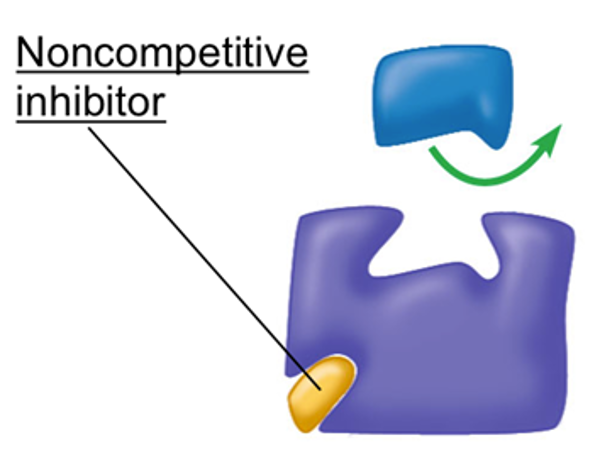
<p><span>The inhibitor molecule binds with the enzyme in <strong>another part of the enzyme (allosteric site), not at the active site</strong>.</span></p><p><span>This binding <strong>alters the shape </strong>of the enzyme, and therefore it’s active site.</span></p><p><span>The enzyme cannot successfully form an enzyme-substrate complex.</span></p><p></p>
21
New cards

Nucleic Acids

organic macromolecules that store and transmit inherited characteristics of organisms (hereditary information).

They encode instructions for the synthesis of proteins.

They are linear polymers made of repeated subunit monomers called nucleotides.

Two types – DNA and RNA.

Explore top notes

note
context
Updated 146d ago
0.0(0)
note
Prepositions (copy)
Updated 169d ago
0.0(0)
note
Gas Exchange
Updated 1159d ago
0.0(0)
note
World History- Ancient Greece
Updated 891d ago
0.0(0)
note
AP Calculus AB - Ultimate Guide
Updated 546d ago
0.0(0)
note
S.I.E.L Method
Updated 1366d ago
0.0(0)
note
1.1: What is Science?
Updated 1209d ago
0.0(0)
note
context
Updated 146d ago
0.0(0)
note
Prepositions (copy)
Updated 169d ago
0.0(0)
note
Gas Exchange
Updated 1159d ago
0.0(0)
note
World History- Ancient Greece
Updated 891d ago
0.0(0)
note
AP Calculus AB - Ultimate Guide
Updated 546d ago
0.0(0)
note
S.I.E.L Method
Updated 1366d ago
0.0(0)
note
1.1: What is Science?
Updated 1209d ago
0.0(0)

Explore top flashcards

flashcards
Auditory Perception
29
Updated 814d ago
0.0(0)
flashcards
roots and shit
72
Updated 302d ago
0.0(0)
flashcards
Discoveries of Cell Theory
89
Updated 1058d ago
0.0(0)
flashcards
MTGE 122
155
Updated 1068d ago
0.0(0)
flashcards
NE Vocabulary 16-25
25
Updated 1128d ago
0.0(0)
flashcards
IB World Religions
36
Updated 932d ago
0.0(0)
flashcards
health assessment exam 1
187
Updated 914d ago
0.0(0)
flashcards
Auditory Perception
29
Updated 814d ago
0.0(0)
flashcards
roots and shit
72
Updated 302d ago
0.0(0)
flashcards
Discoveries of Cell Theory
89
Updated 1058d ago
0.0(0)
flashcards
MTGE 122
155
Updated 1068d ago
0.0(0)
flashcards
NE Vocabulary 16-25
25
Updated 1128d ago
0.0(0)
flashcards
IB World Religions
36
Updated 932d ago
0.0(0)
flashcards
health assessment exam 1
187
Updated 914d ago
0.0(0)