Lab 8 Sensory and Reflex Physiology and the Spinal Cord
 Call Kai
 Learn
Learn Practice Test
 Spaced Repetition
 Match
Match Flashcards
 Knowt Play
1/43

There's no tags or description
Looks like no tags are added yet.
Name | Mastery | Learn | Test | Matching | Spaced | Call with Kai |
|---|
No analytics yet
Send a link to your students to track their progress
44 Terms
sensory receptor
specialized cell that transmits signals to sensory neurons
modality gated channel
opens in response to a stimulus other than a neurotransmitter or a voltage change at the plasma membrane
sensory modalities
Different forms of sensation (e.g., touch, pain, pressure, heat, cold, vision, taste, hearing, and smell)
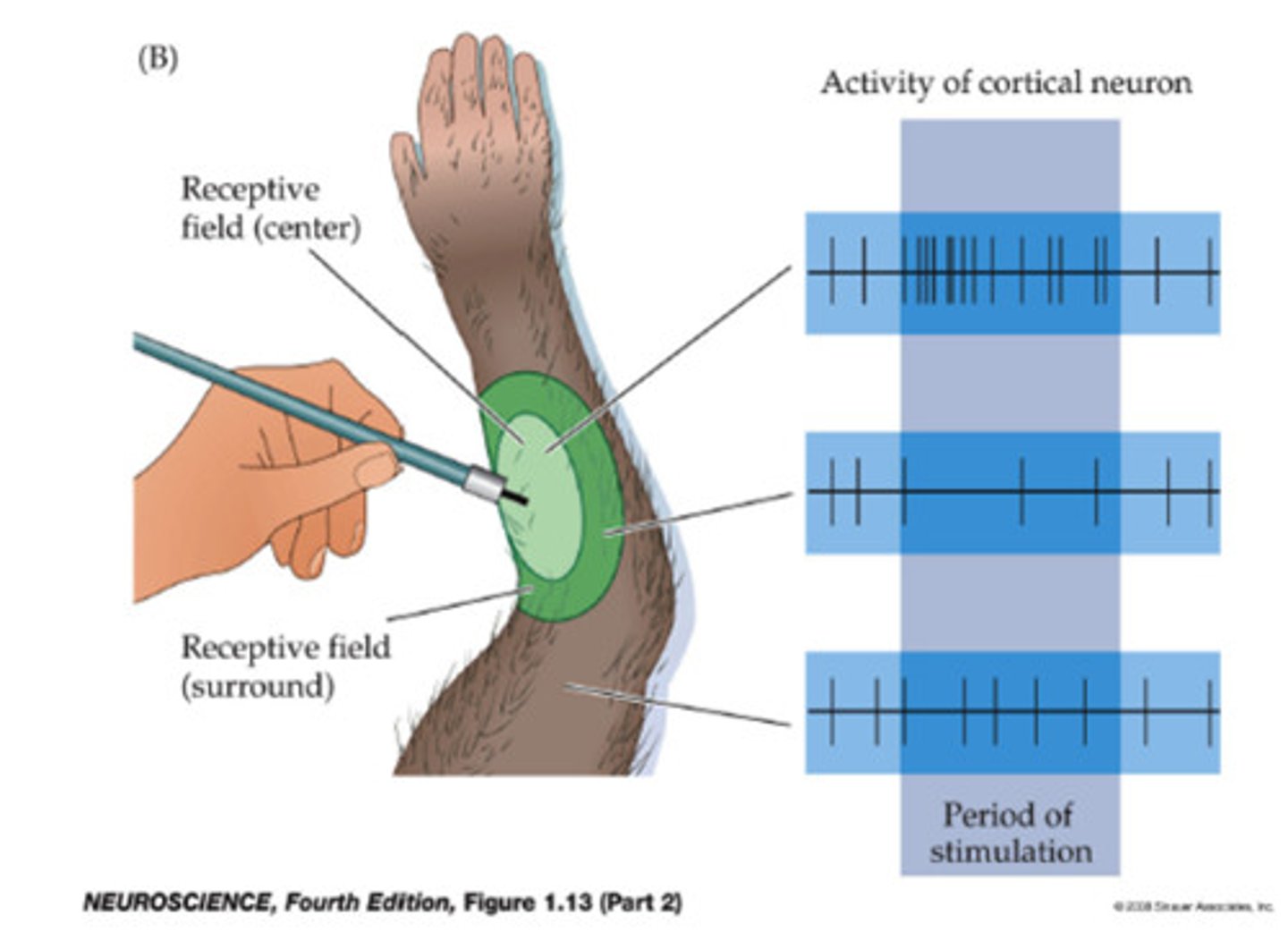
receptive field
the region of the sensory surface that, when stimulated, causes a change in the firing rate of that neuron; •Smaller fields allow more precise stimulus localization
sensation
stimulus we are consciously aware of
sensory adaptation
•decreased awareness continuous stimulus due to decrease in frequency of action potentials despite stimulus
•ex. no longer smelling a certain smell in an area
tonic receptor
a receptor in which the frequency of action potentials declines slowly or not at all as stimulation is maintained; limited adaptation - respond continuously ex. proprioceptors and nociceptors (pain receptors)
phasic receptor
a receptor in which the frequency of action potentials drops rapidly as stimulation is maintained; adapts rapidly - will only respond to new stimuli; ex. mechanoreceptors
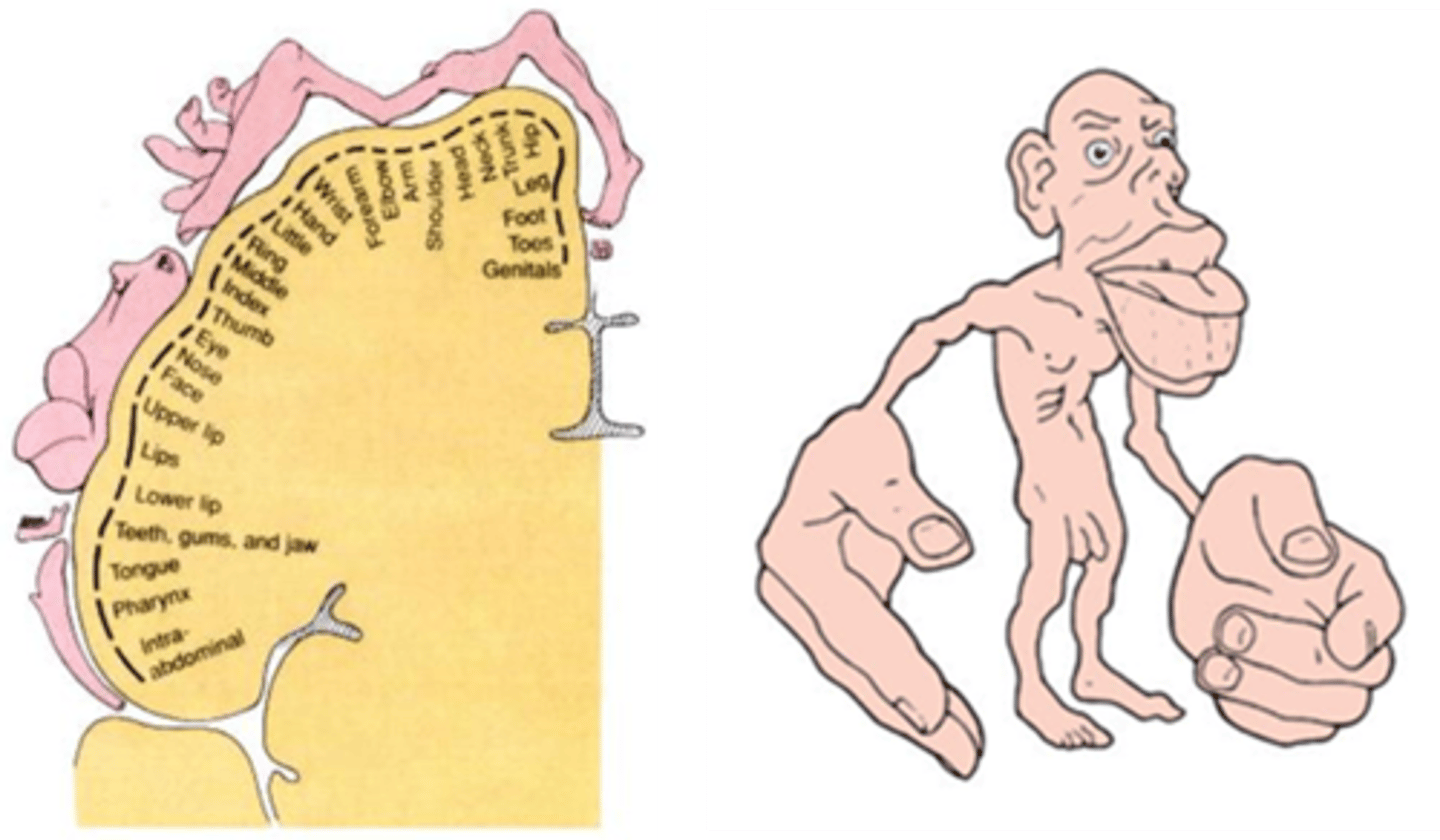
sensory homunculus
Demonstrates that the area of the cortex dedicated to the sensations of various body parts is proportional to how sensitive that part of the body is
reflex
rapid, preprogrammed, involuntary responses of muscles or glands to a stimulus
•A stimulus is required to initiate
•Response is rapid; involves a chain of only a few neurons
•The response is preprogrammed; always the same
•The response is involuntary; no intent or awareness before it happens
•A survival mechanism - we respond to a potentially detrimental stimulus immediately and awareness comes later
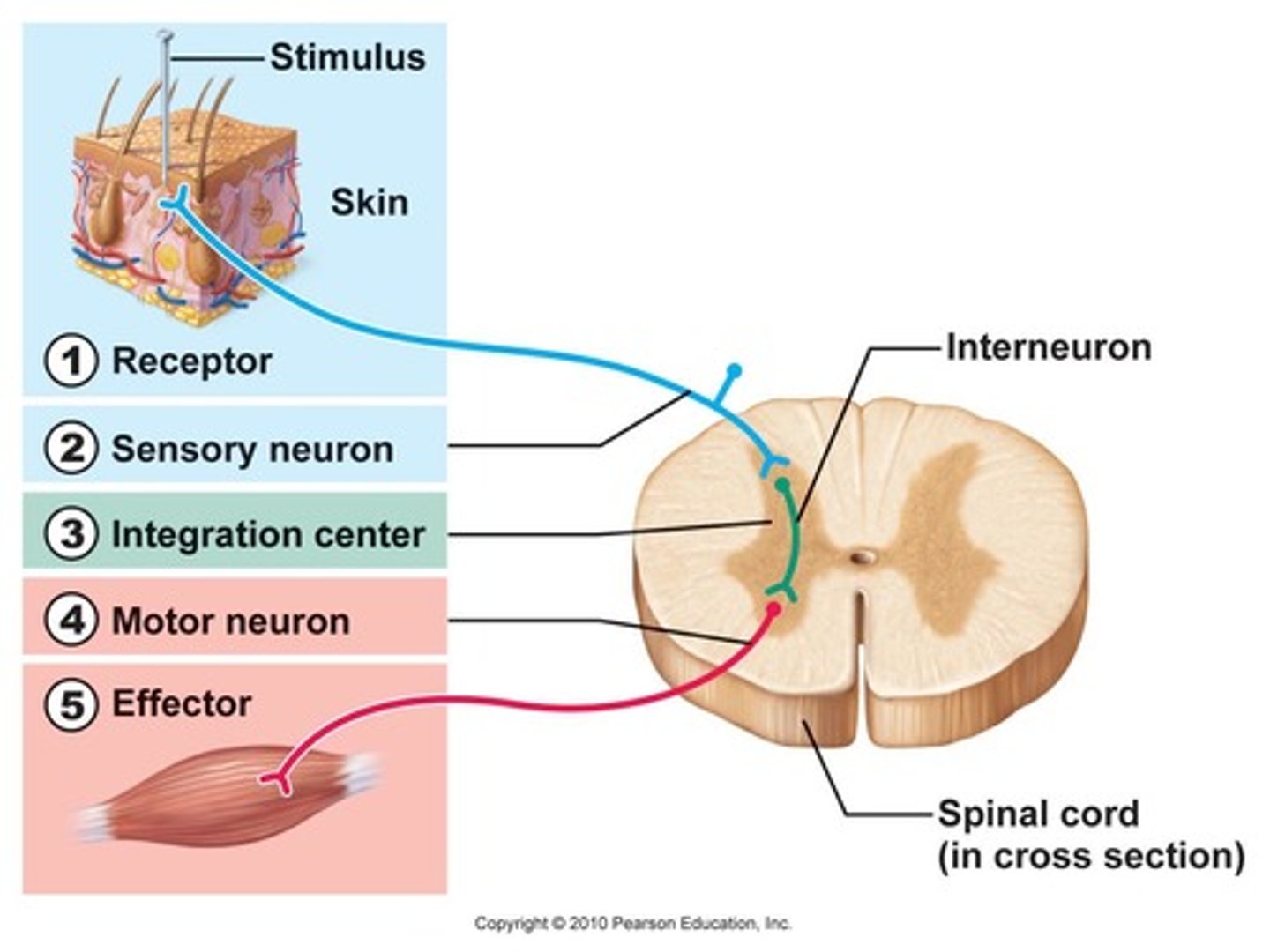
reflex arc
sensory receptor → sensory neuron → (interneuron), motor neuron → effector
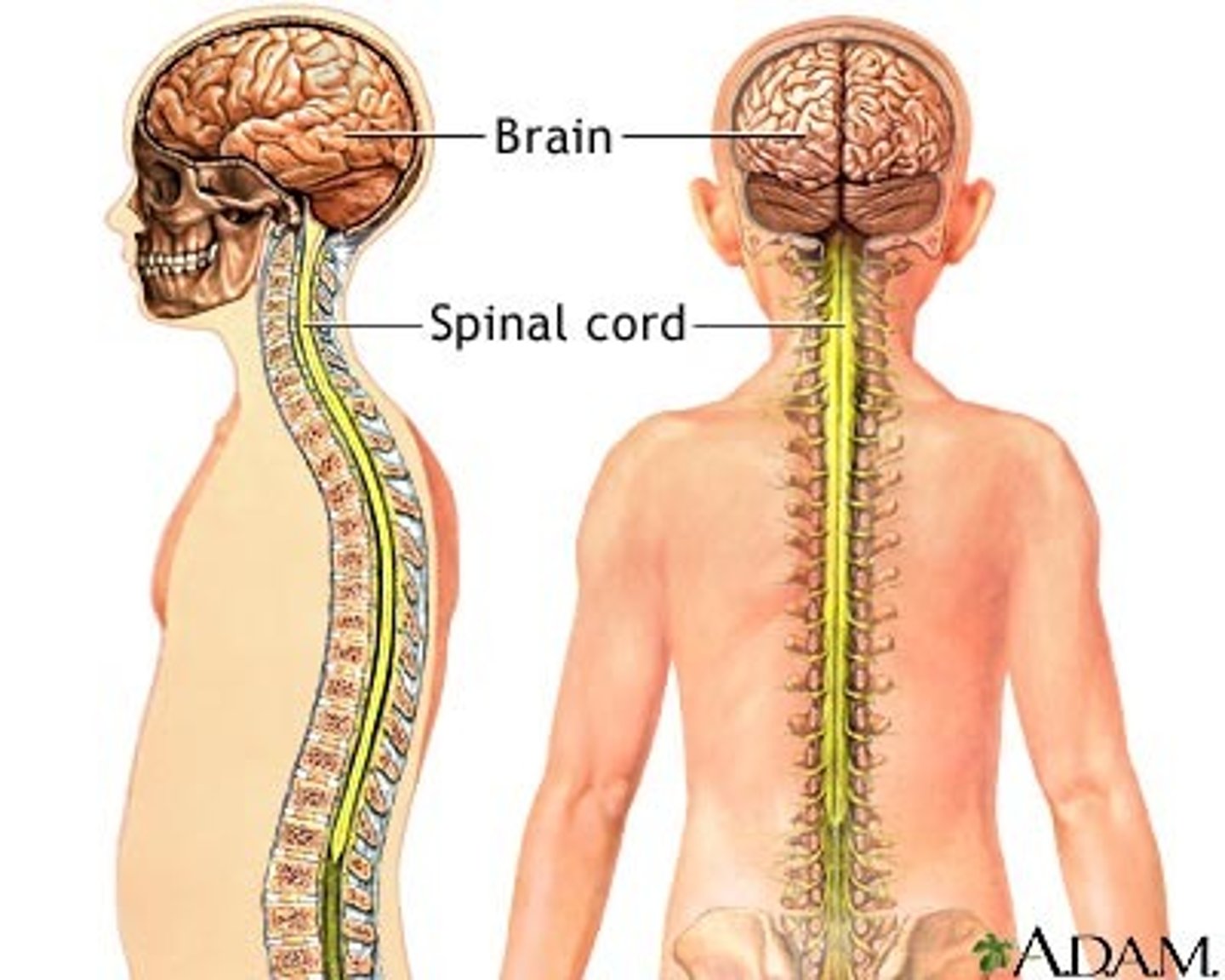
spinal cord
a major part of the central nervous system which conducts sensory and motor nerve impulses to and from the brain; housed within the vertebral canal
nerve
bundle of axons in PNS
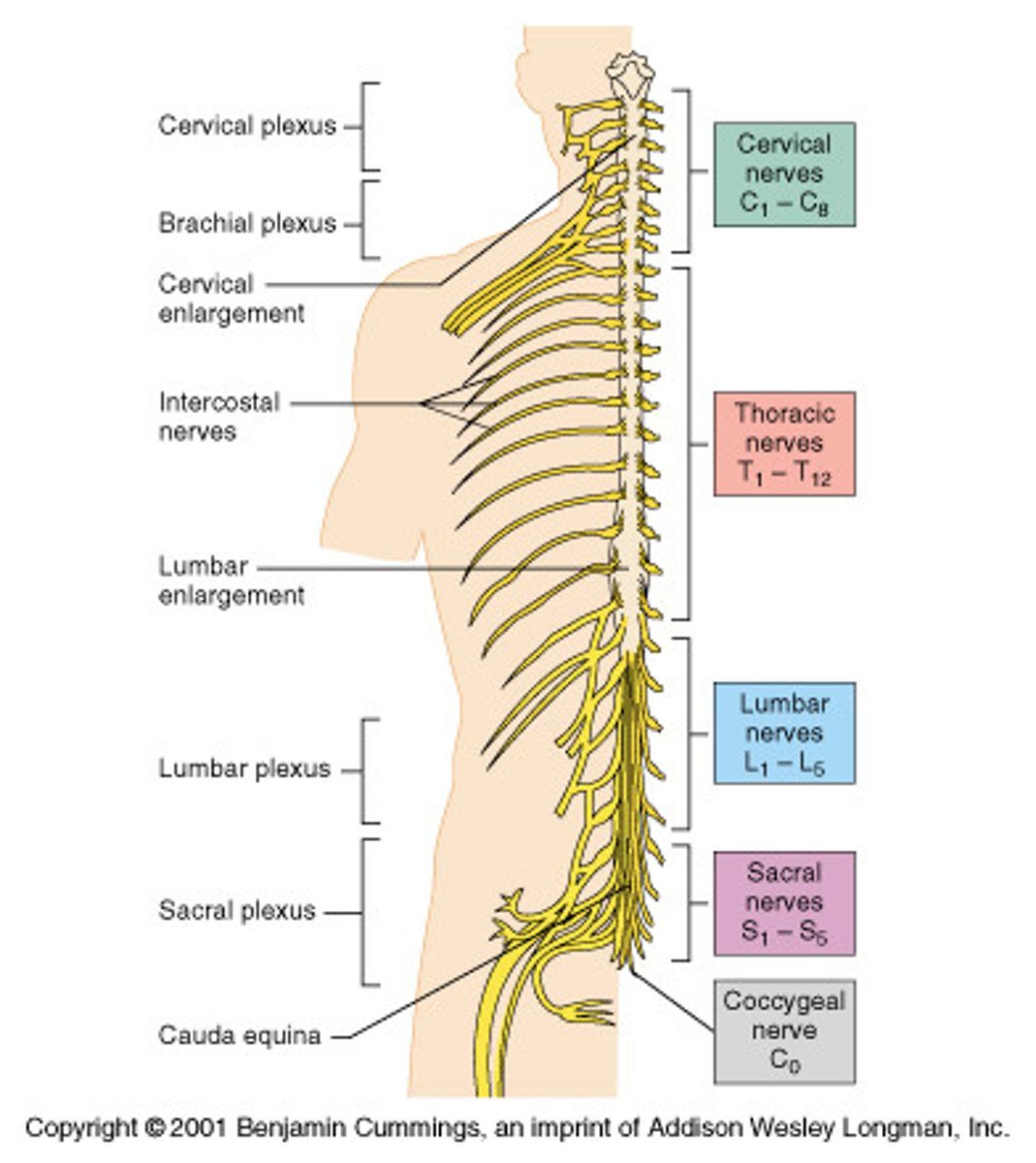
spinal nerves
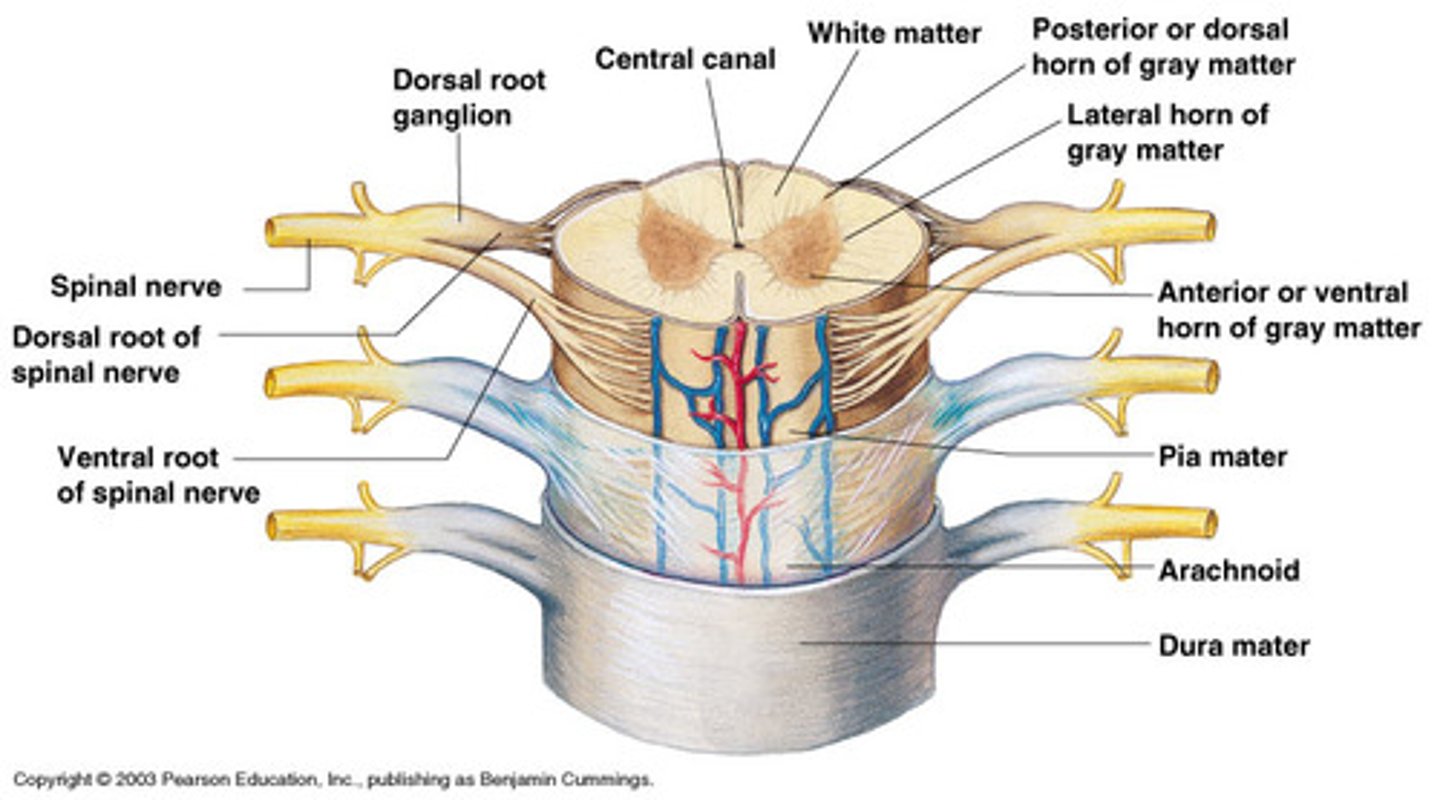
31 pairs of nerves arising from the spinal cord; letter abbreviation for region of spine they originate from; forms where the anterior and posterior roots join; mixed nerves (contain sensory and motor fibers)
posterior (dorsal) rootlets
merge to form a root
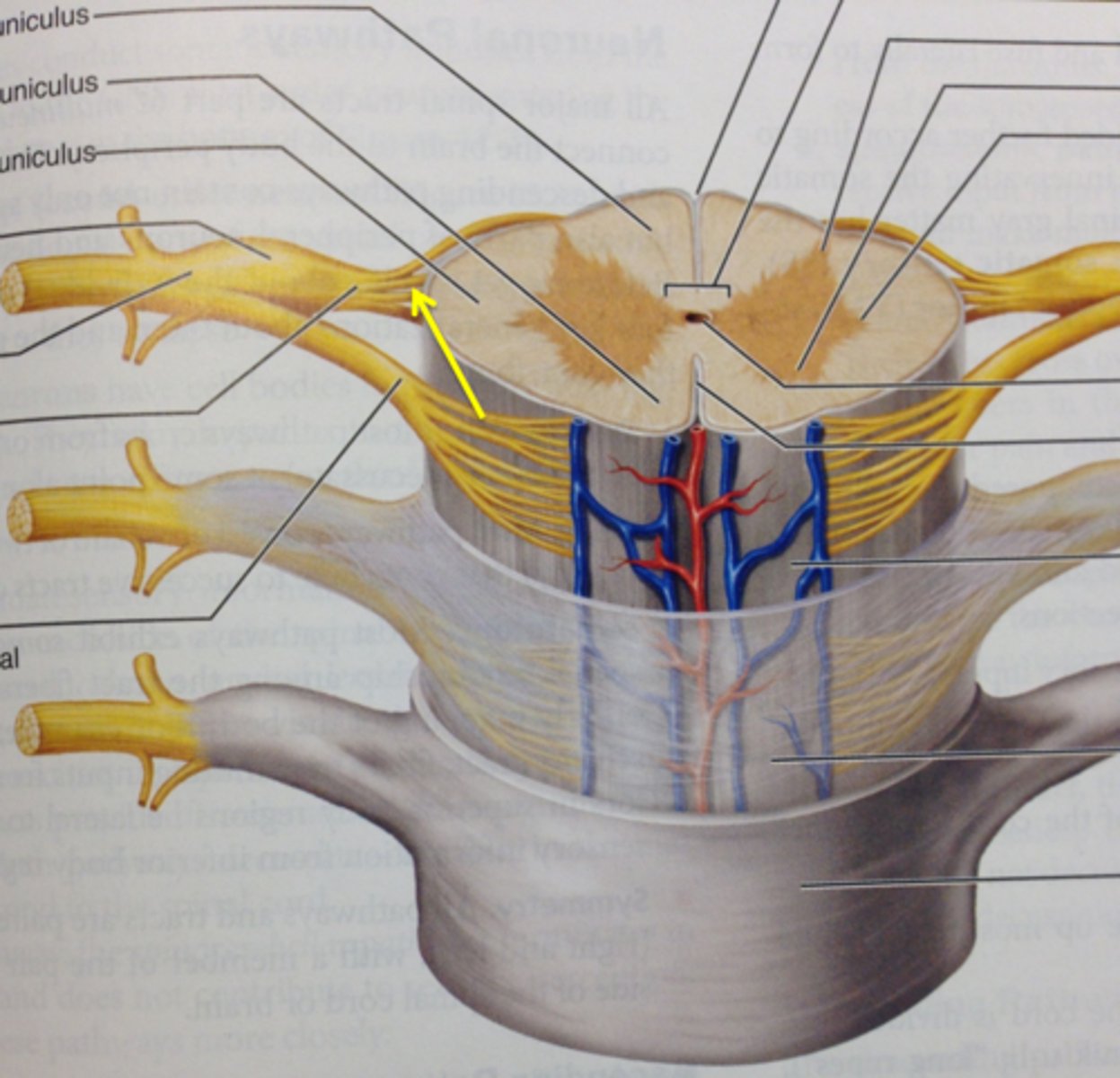
posterior (dorsal) root
contains sensory axons
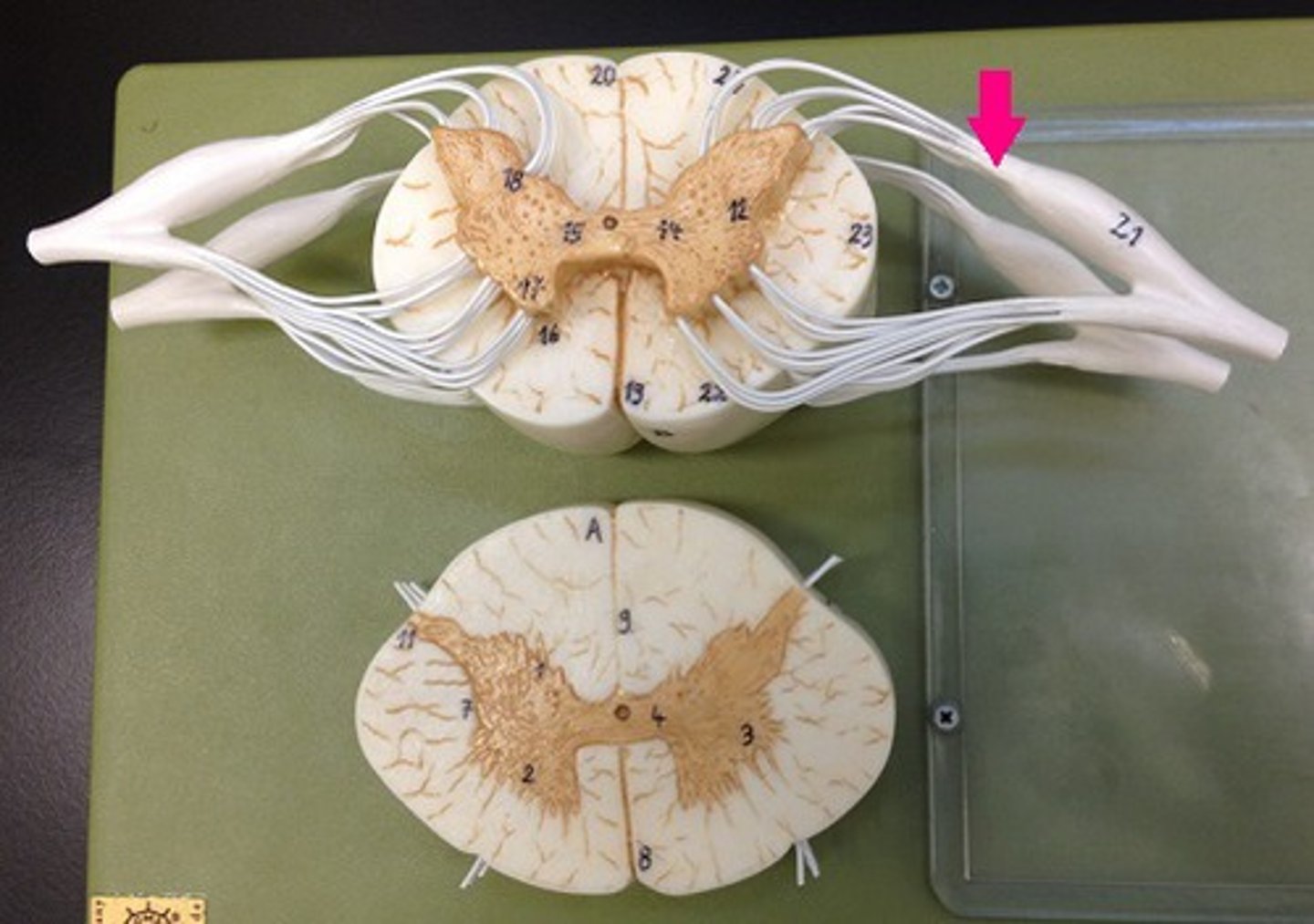
posterior (dorsal) root ganglion
contains cell bodies of sensory neurons
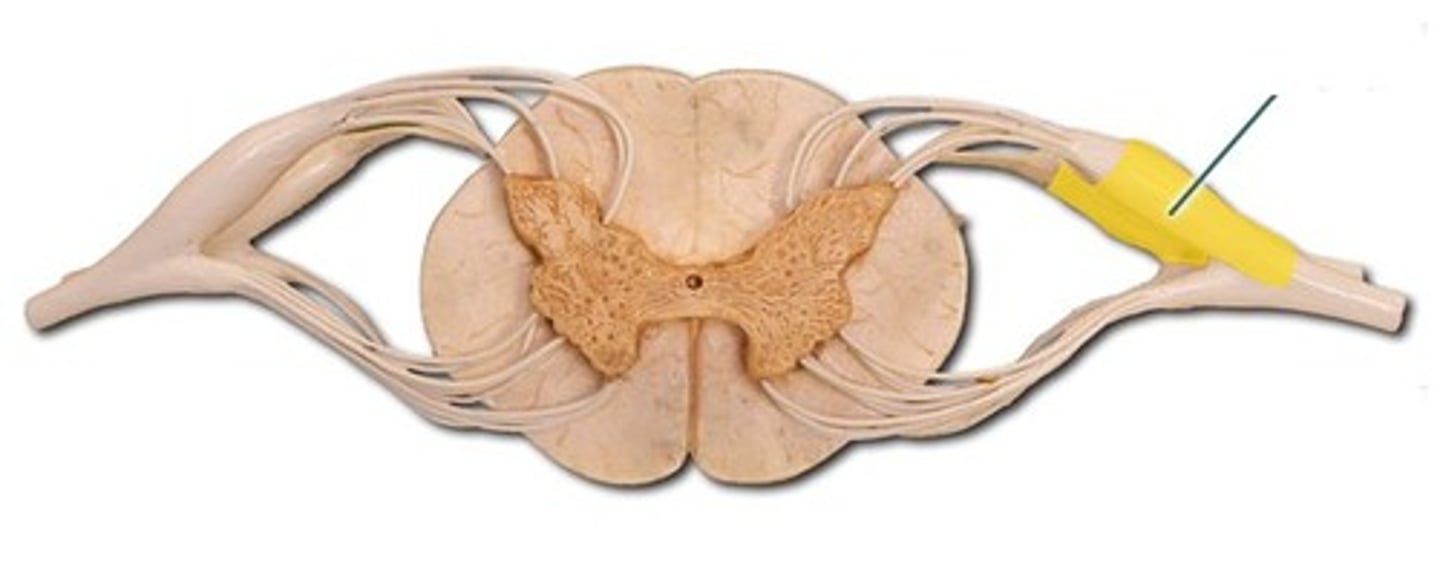
true spinal nerve
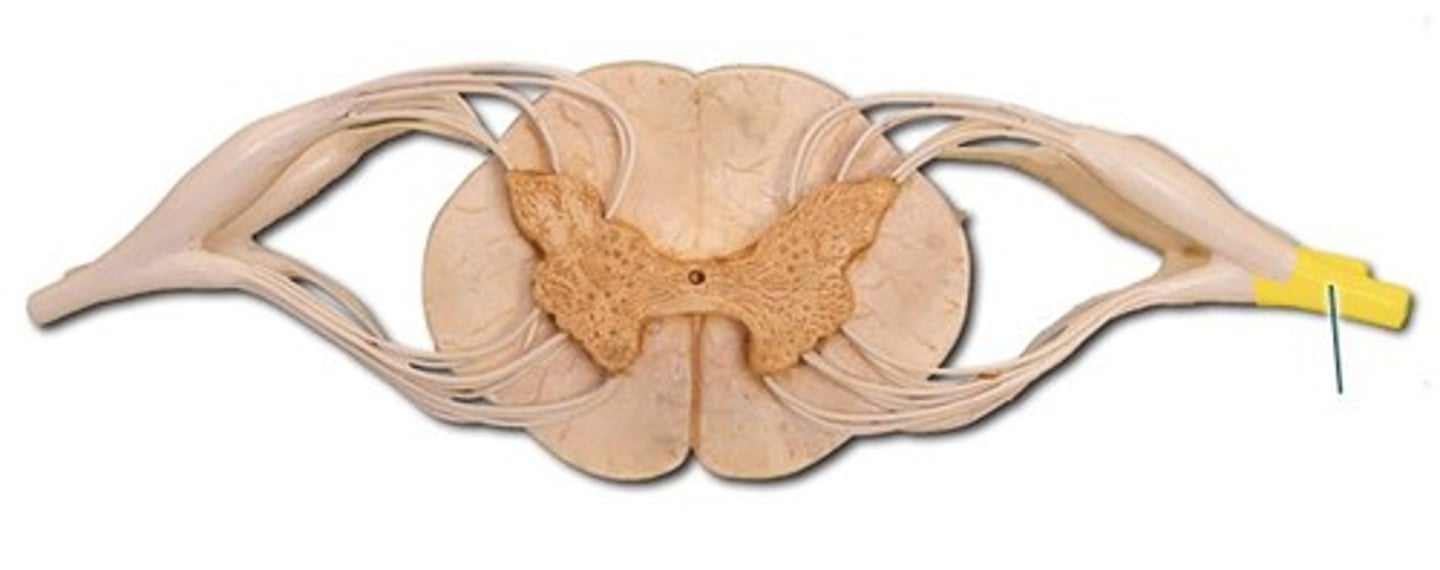
anterior root
contains motor axons
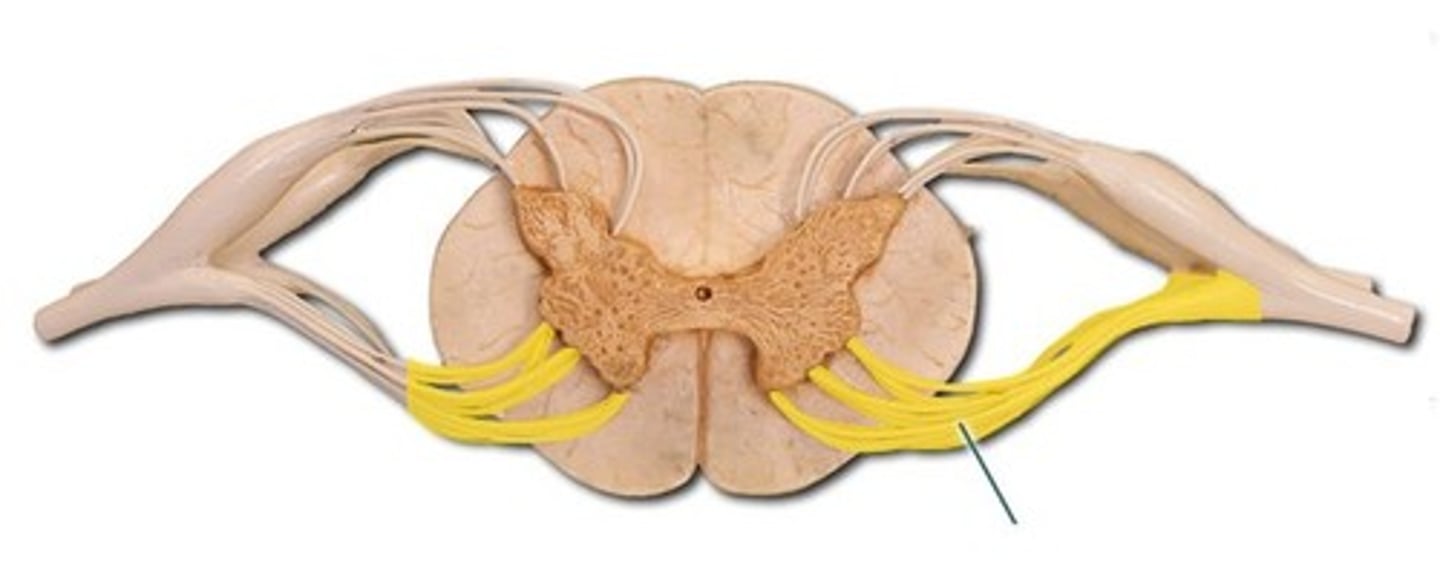
ramus
points where the spinal nerve branches; occurs away from the spinal cord
posterior (dorsal) ramus
innervates the muscles and joints in that region of the spine and the skin of the back
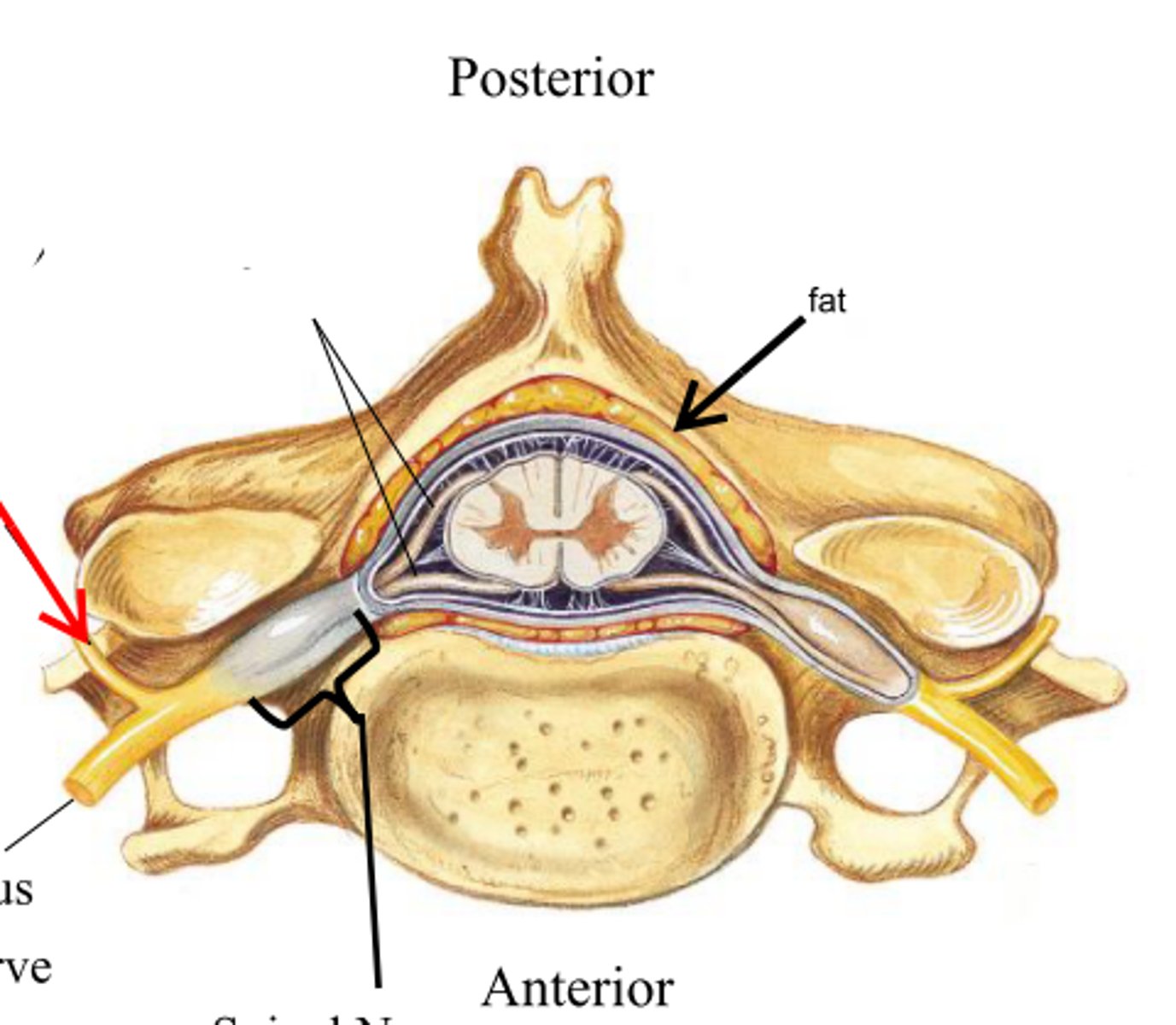
anterior (ventral) ramus
•Splits into multiple other branches
•At different levels, this ramus innervates anterior and lateral trunk, upper limb, lower limb
•Participates in plexuses
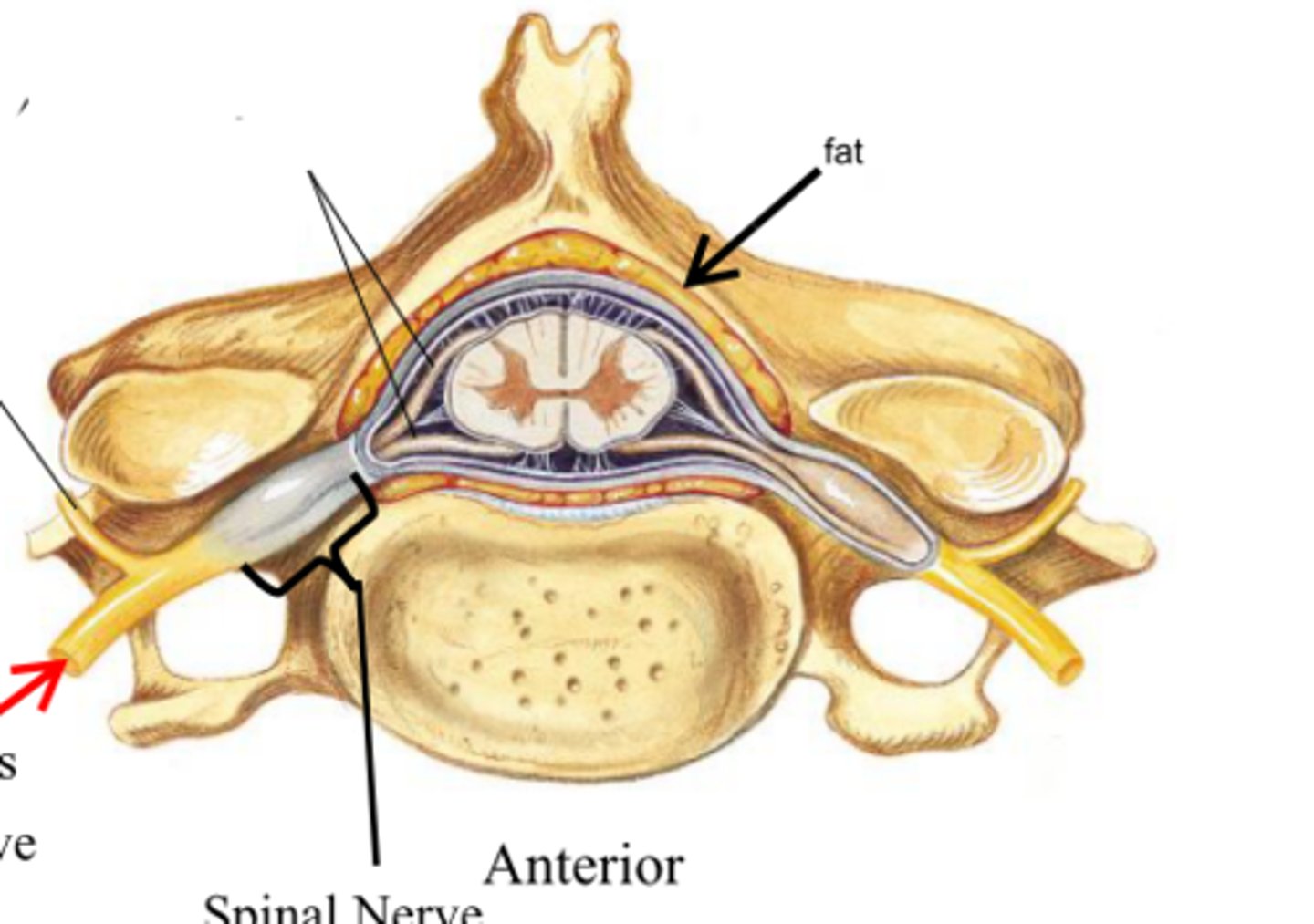
cervical region of spinal cord
supplies neck, shoulders, and upper limbs, C1-8
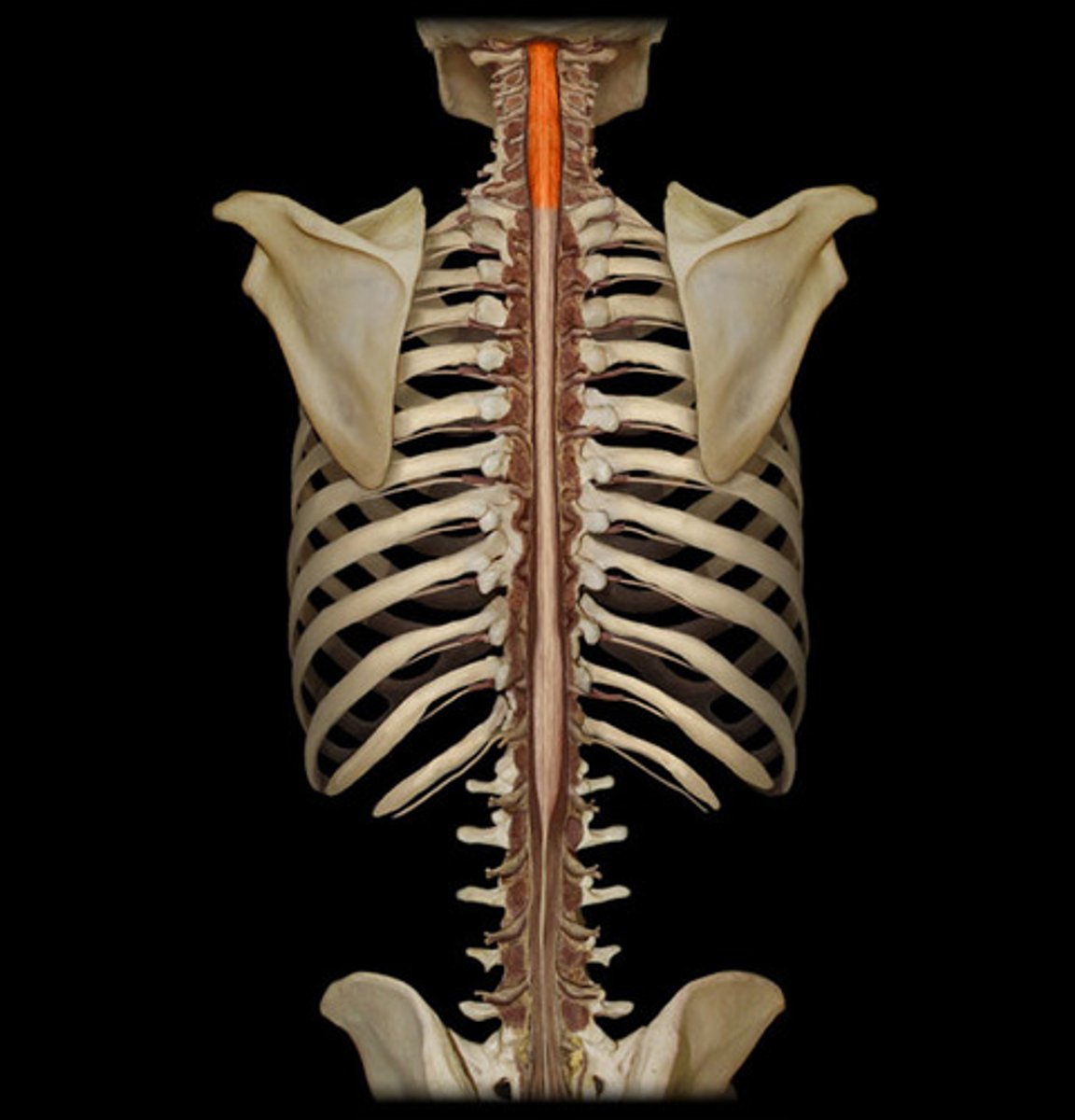
thoracic region of spinal cord
supplies thoracic cage, T1-12
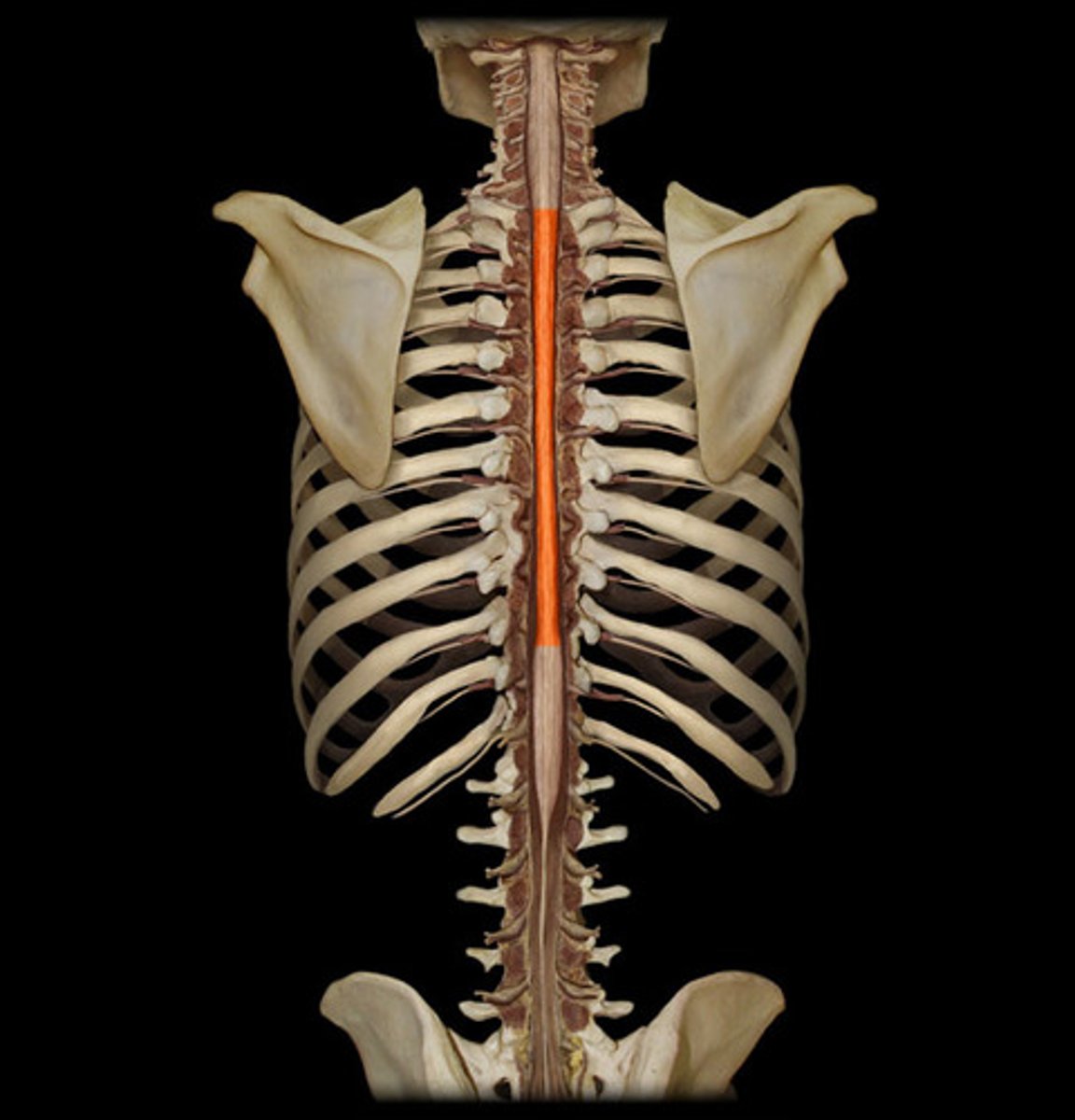
lumbar region of spinal cord
supplies hips & front of lower limbs, L1-5
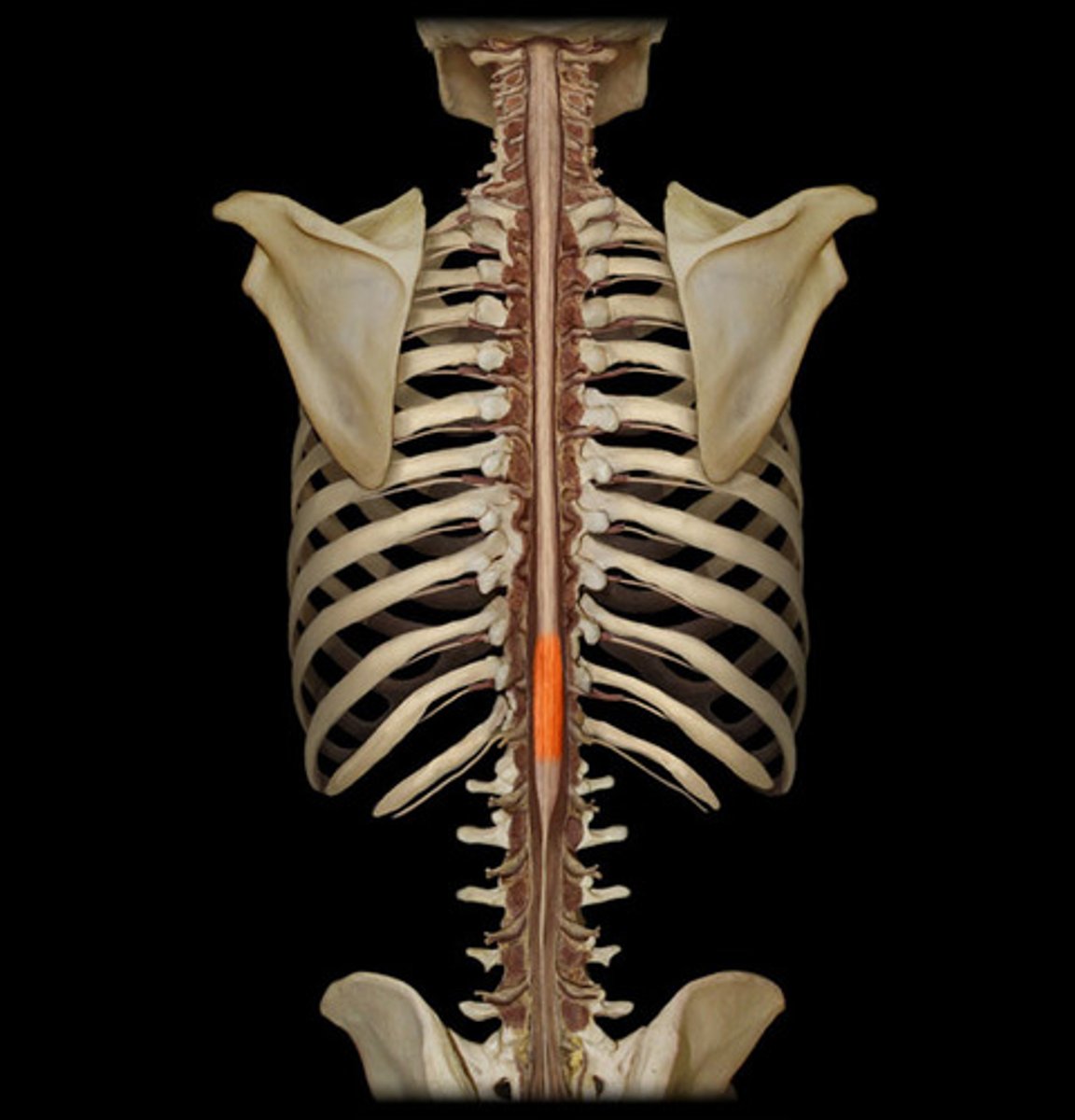
sacral region of spinal cord
supplies buttock, genitalia, and backs of lower limbs, S1-5
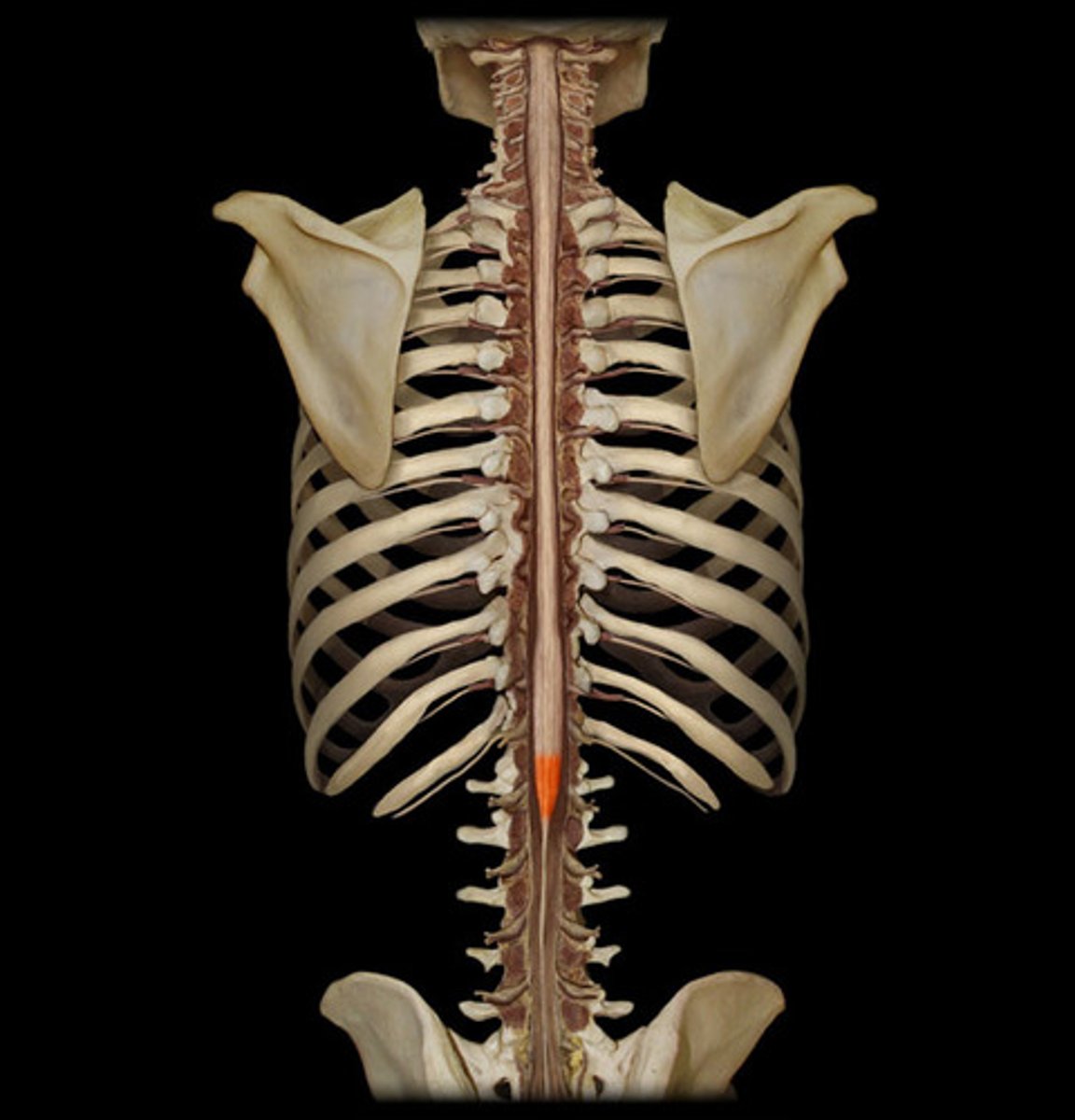
conus medullaris
inferior tapered end of spinal cord
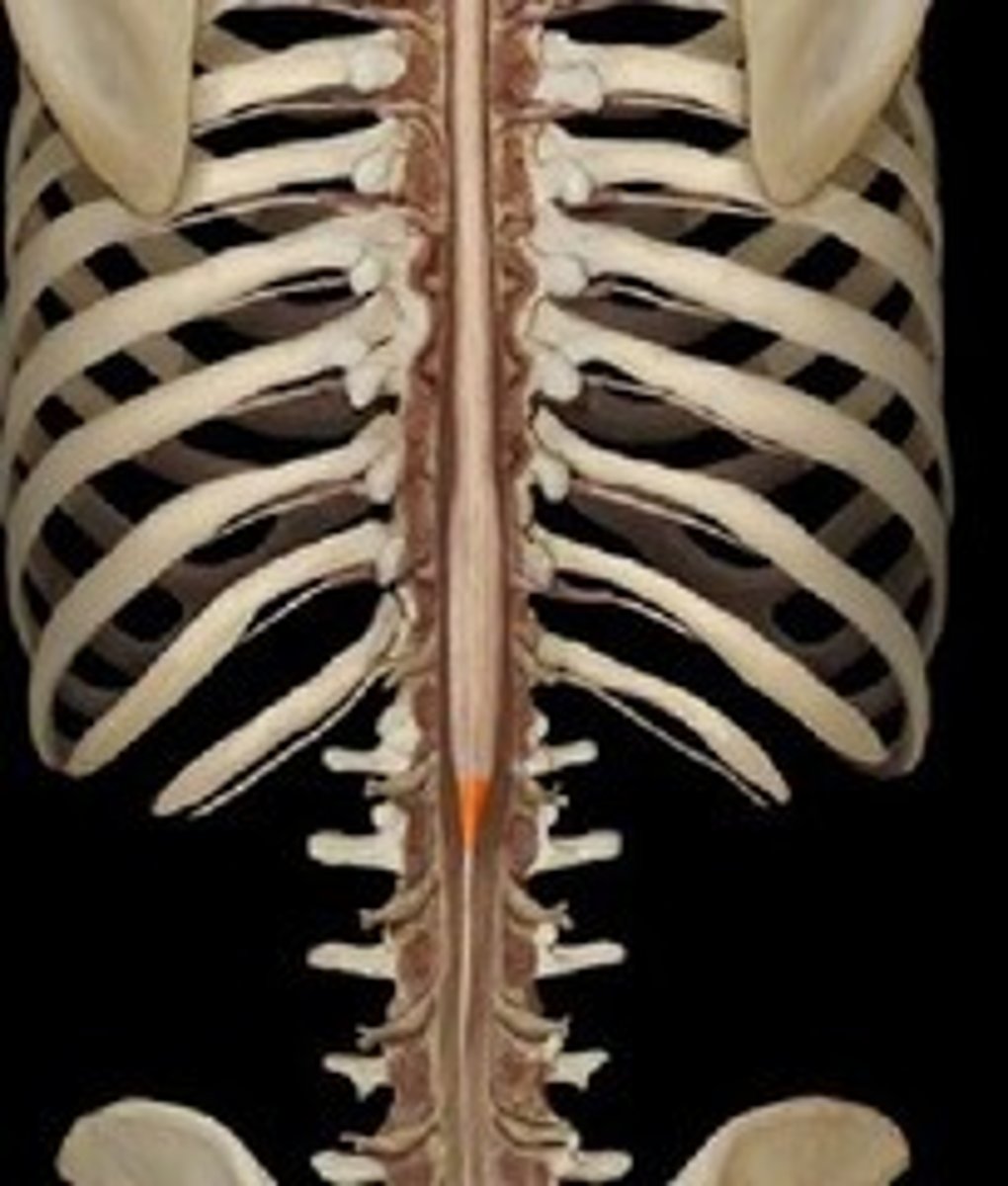
cauda equina
collection of spinal nerves below the end of the spinal cord; below L1 vertebrae
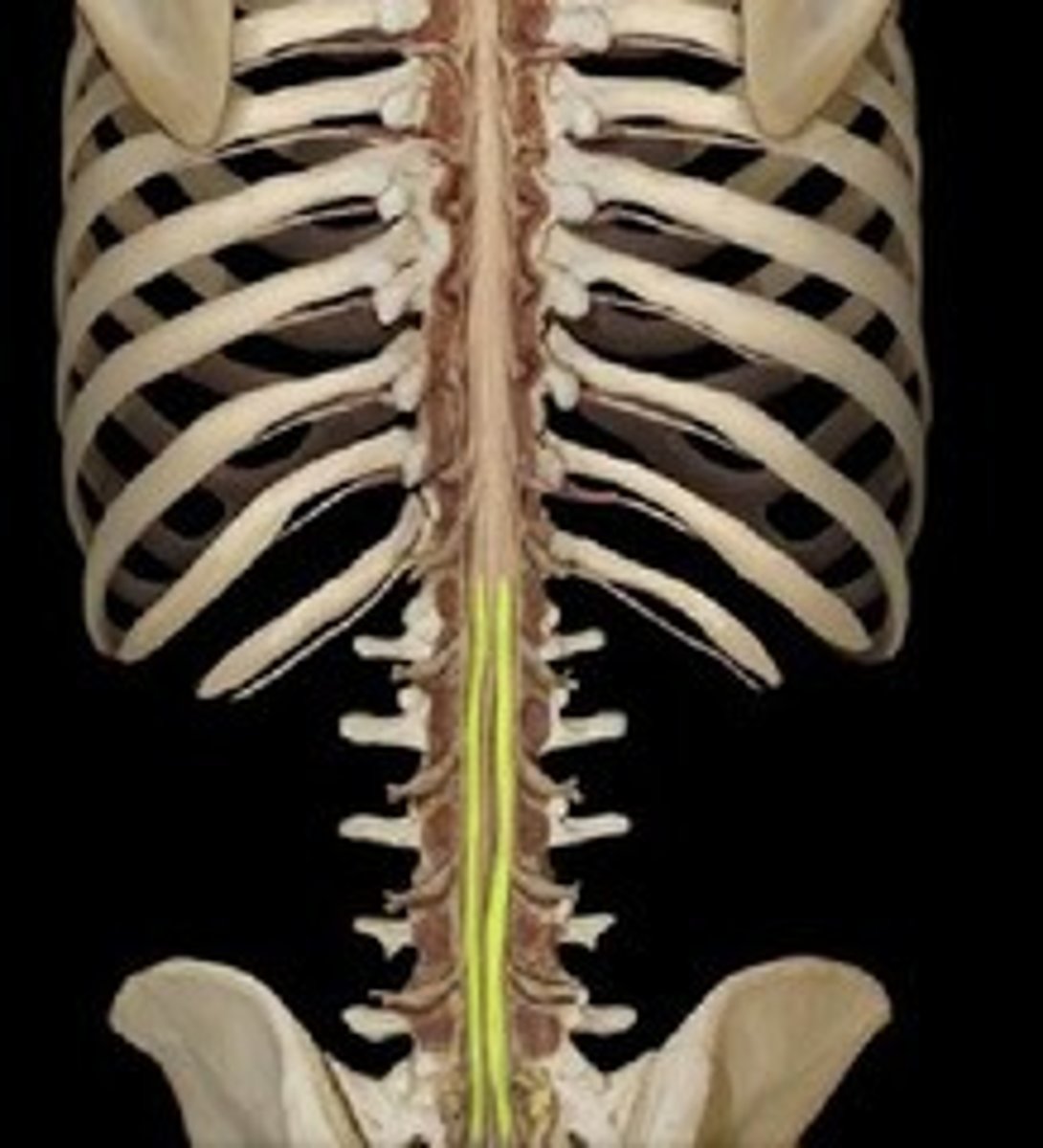
filum terminale
fibrous extension of the pia mater; anchors the spinal cord to the coccyx
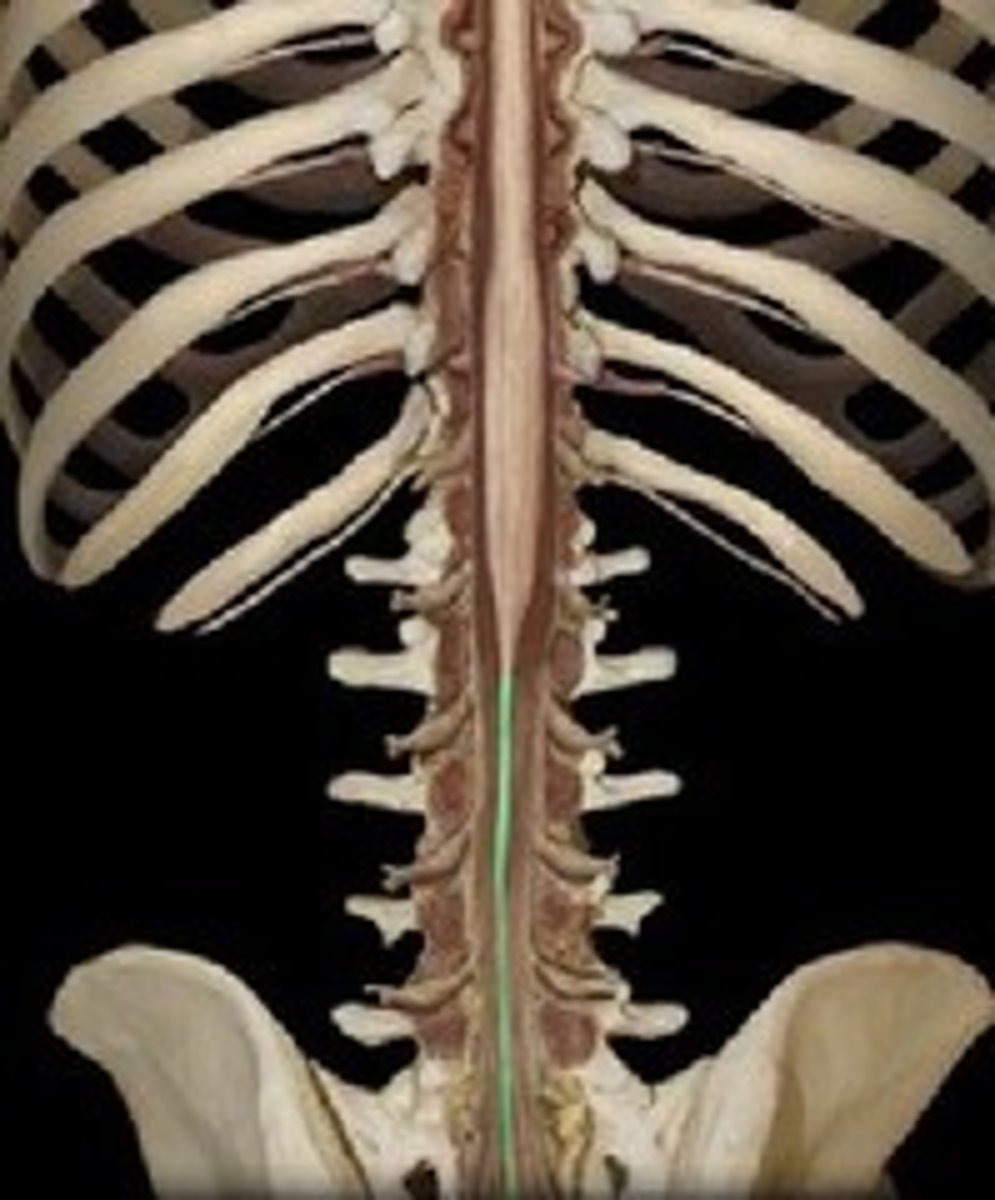
spinal meninges
dura mater, arachnoid mater, pia mater (PAD to protect the spinal cord from deep to superficial)
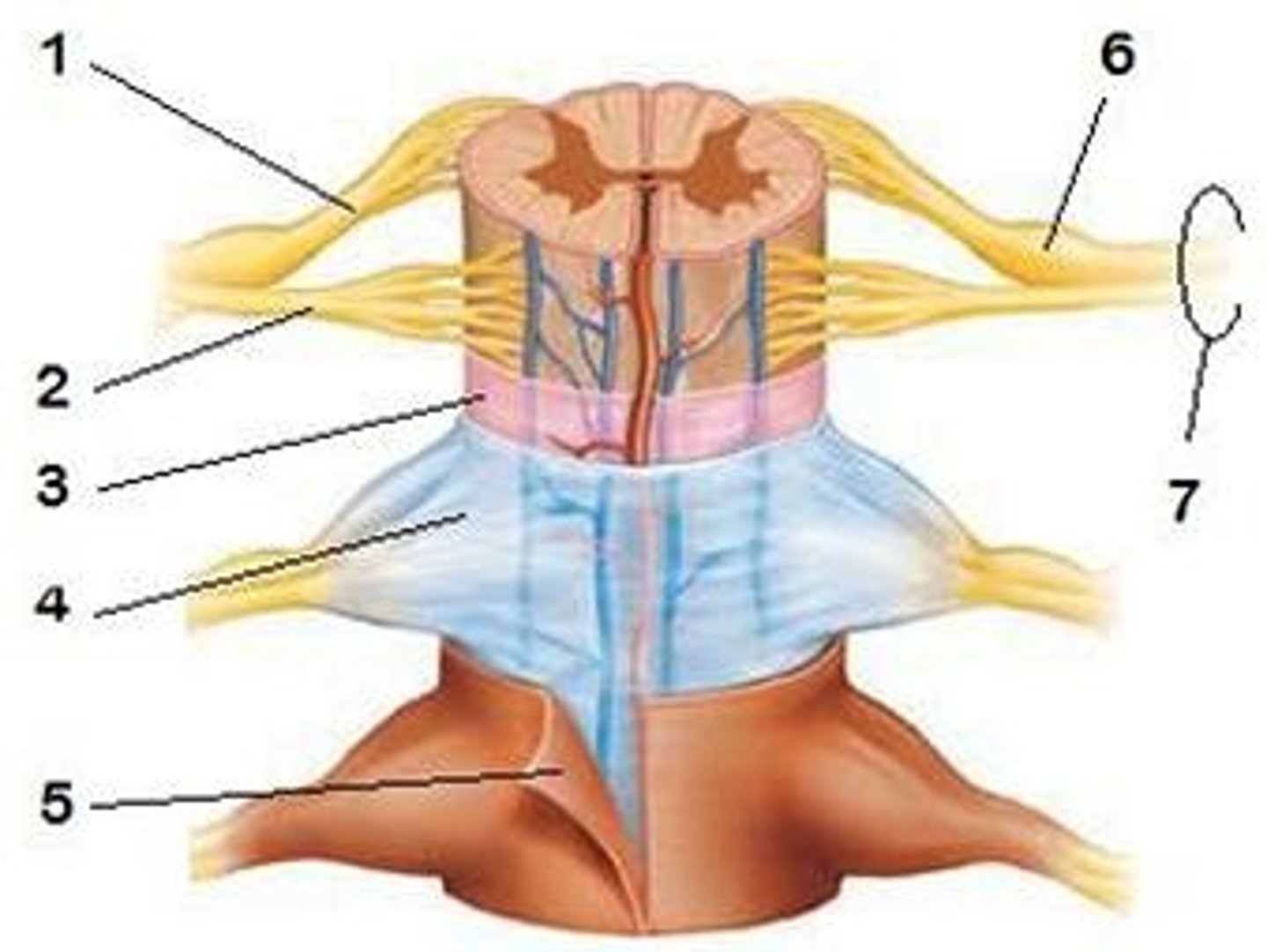
dura mater
thick, outermost layer of the meninges; 5 on image
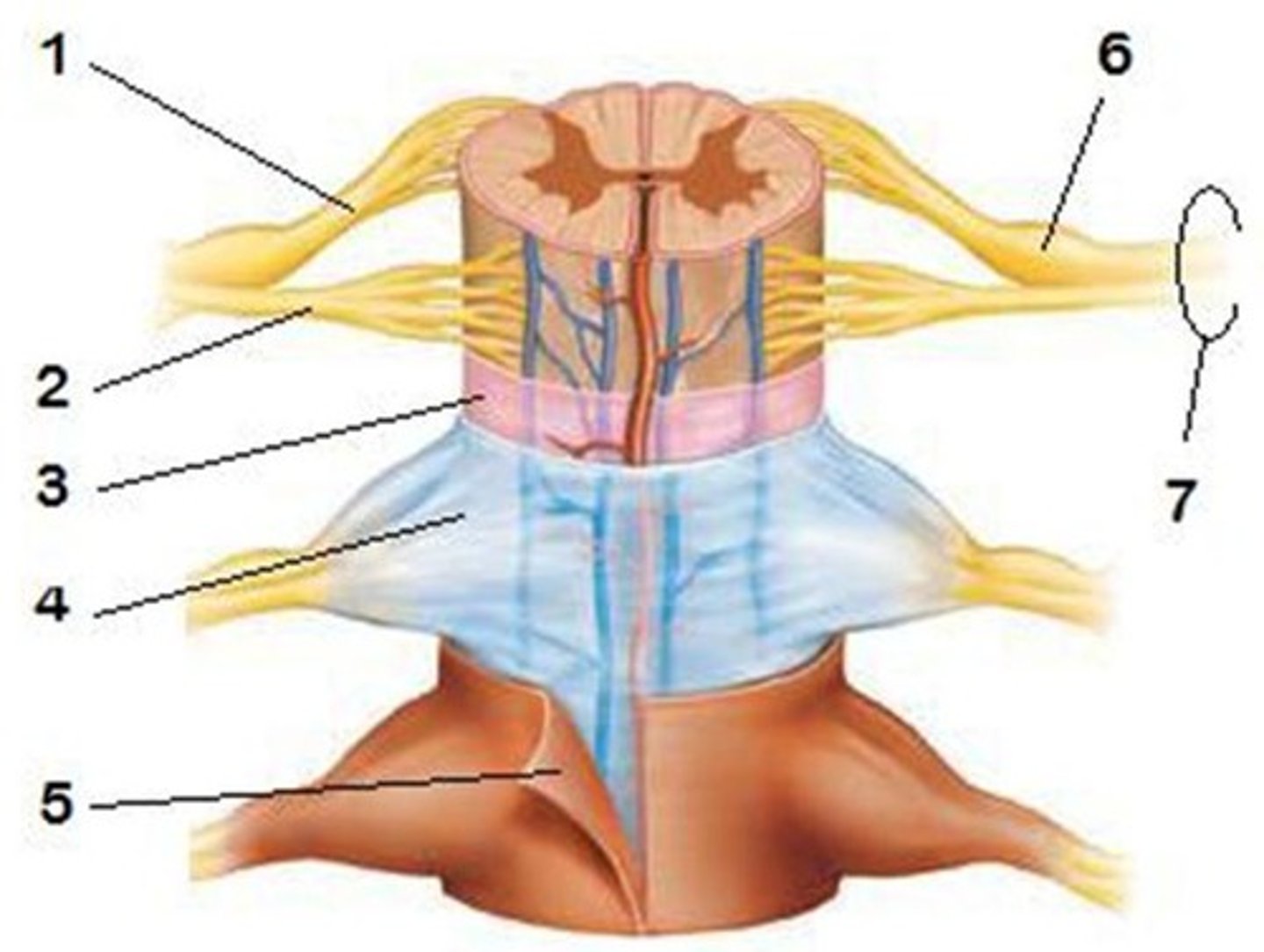
arachnoid mater
middle weblike layer of the meninges; 4 on image
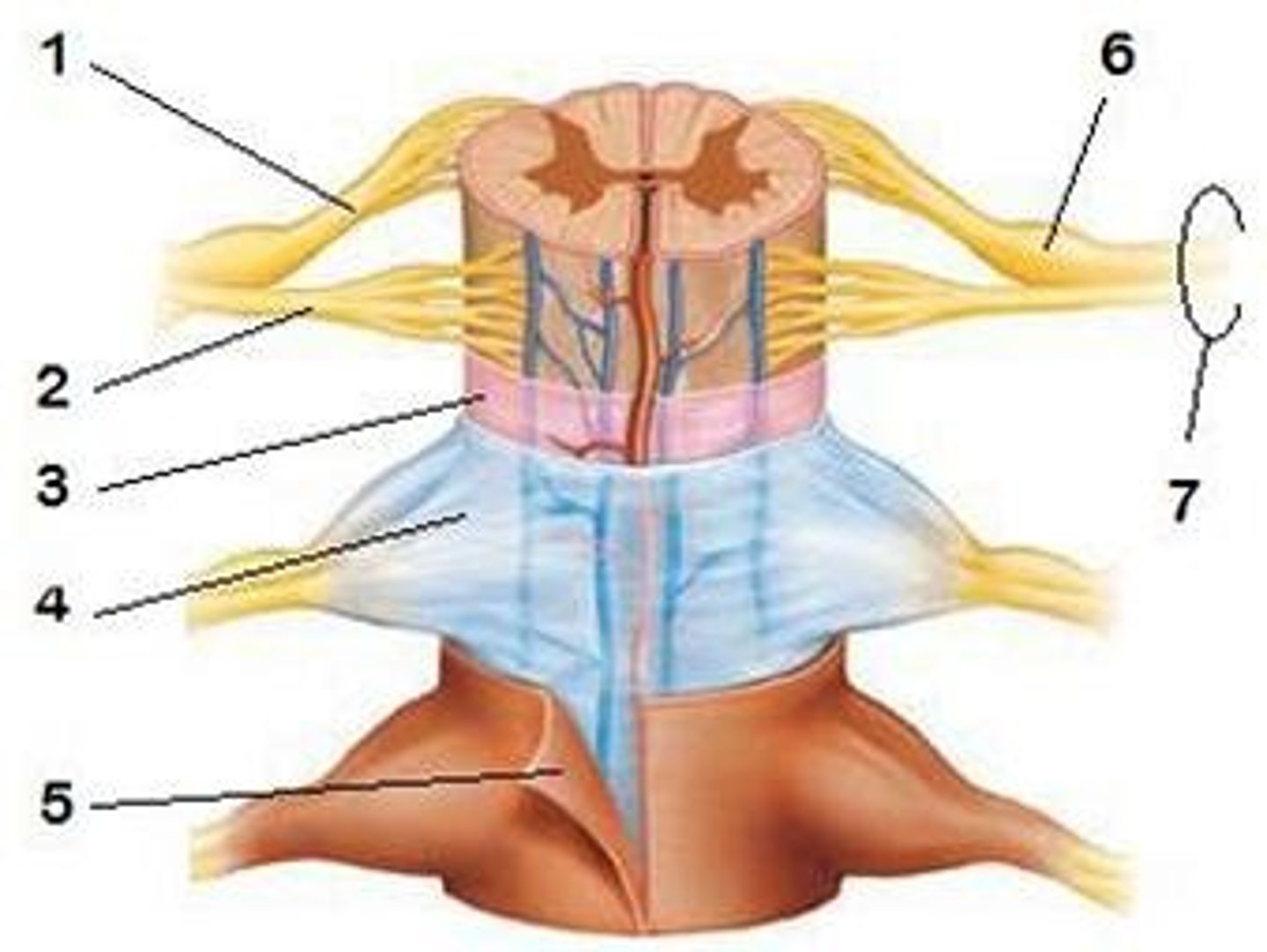
pia mater
thin, delicate inner membrane of the meninges; 3 on image
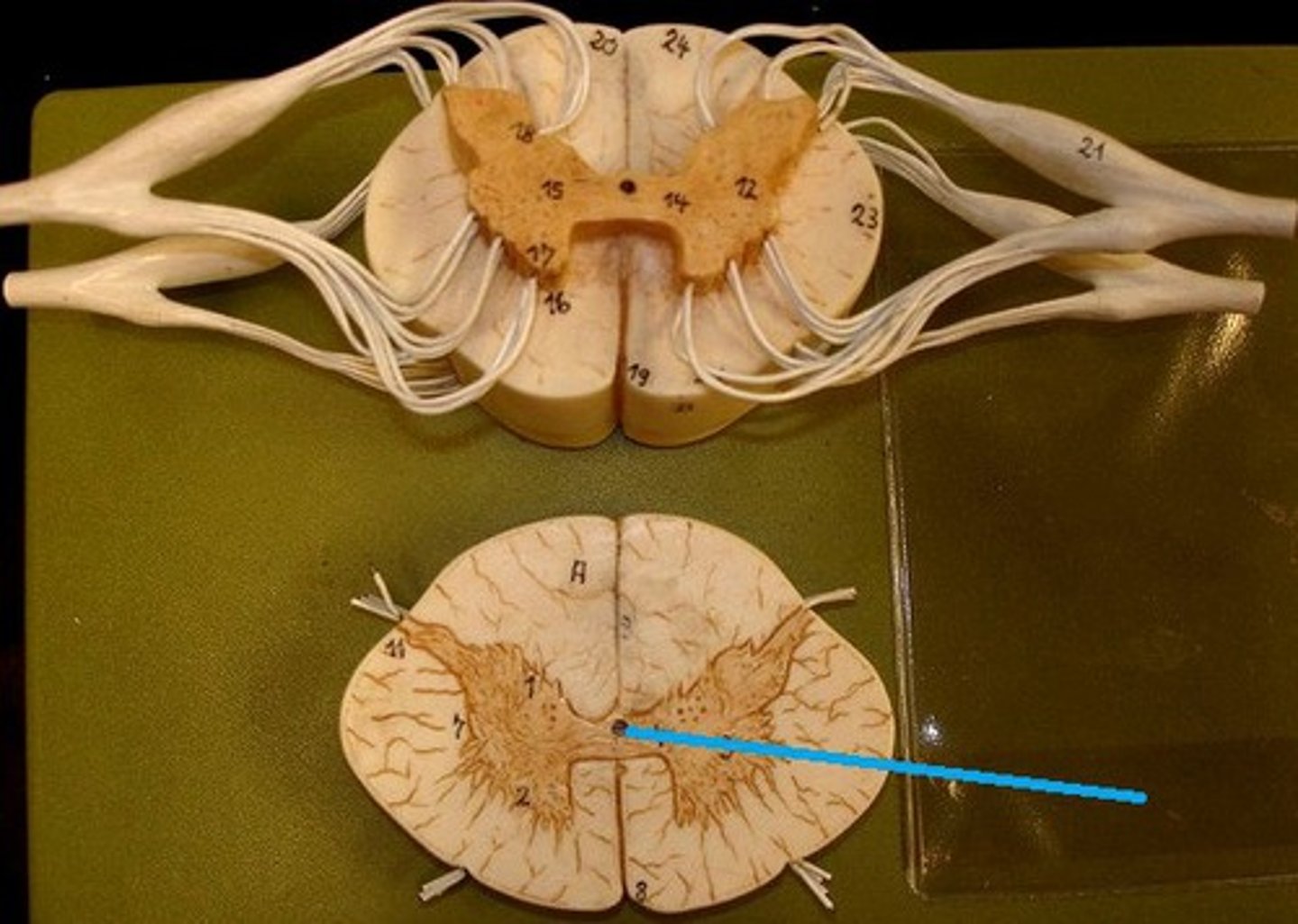
central canal of spinal cord
center of spinal cord which contains cerebrospinal fluid
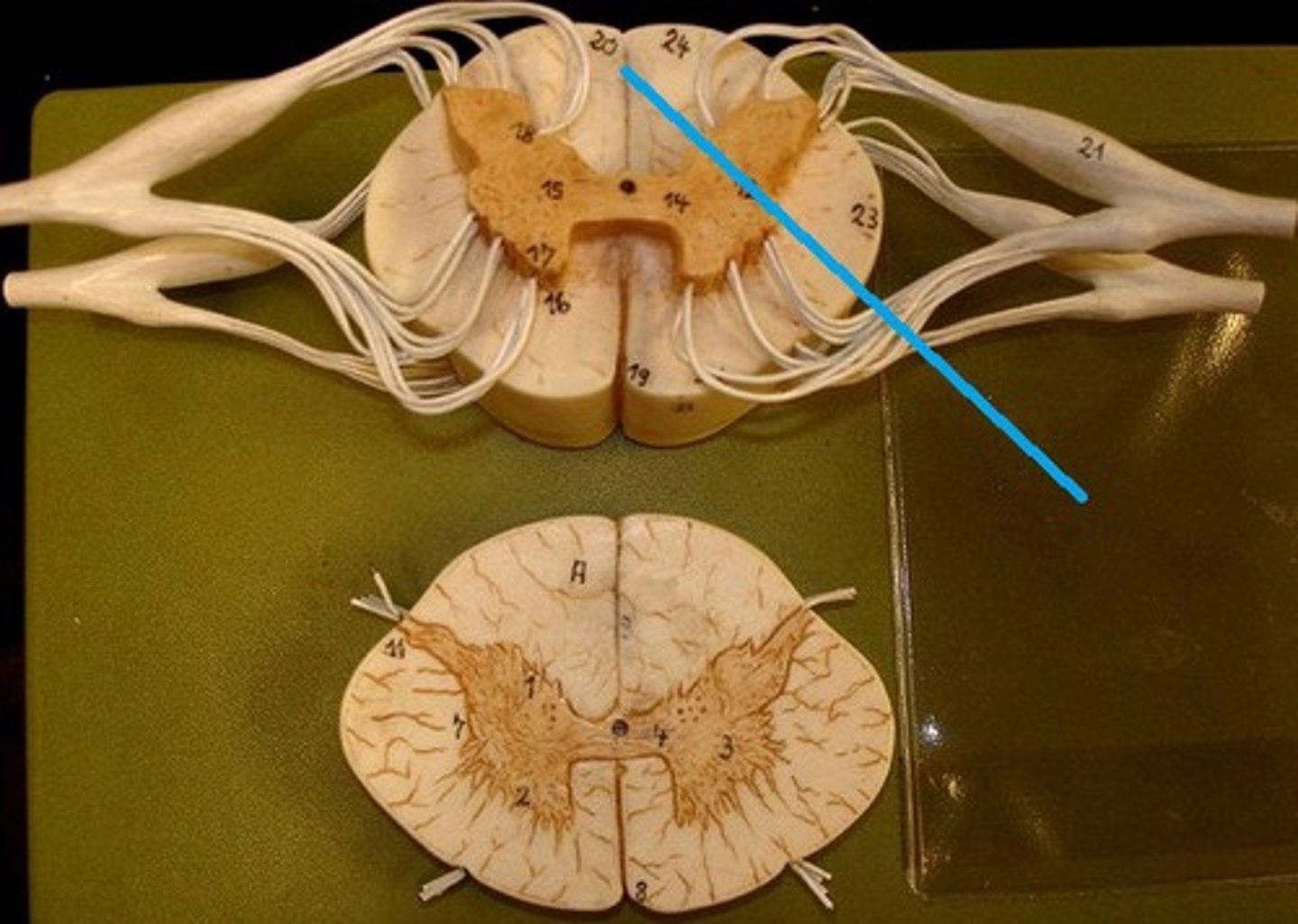
posterior median sulcus
a shallow vertical groove dividing the spinal cord throughout its whole length in the midline posteriorly.
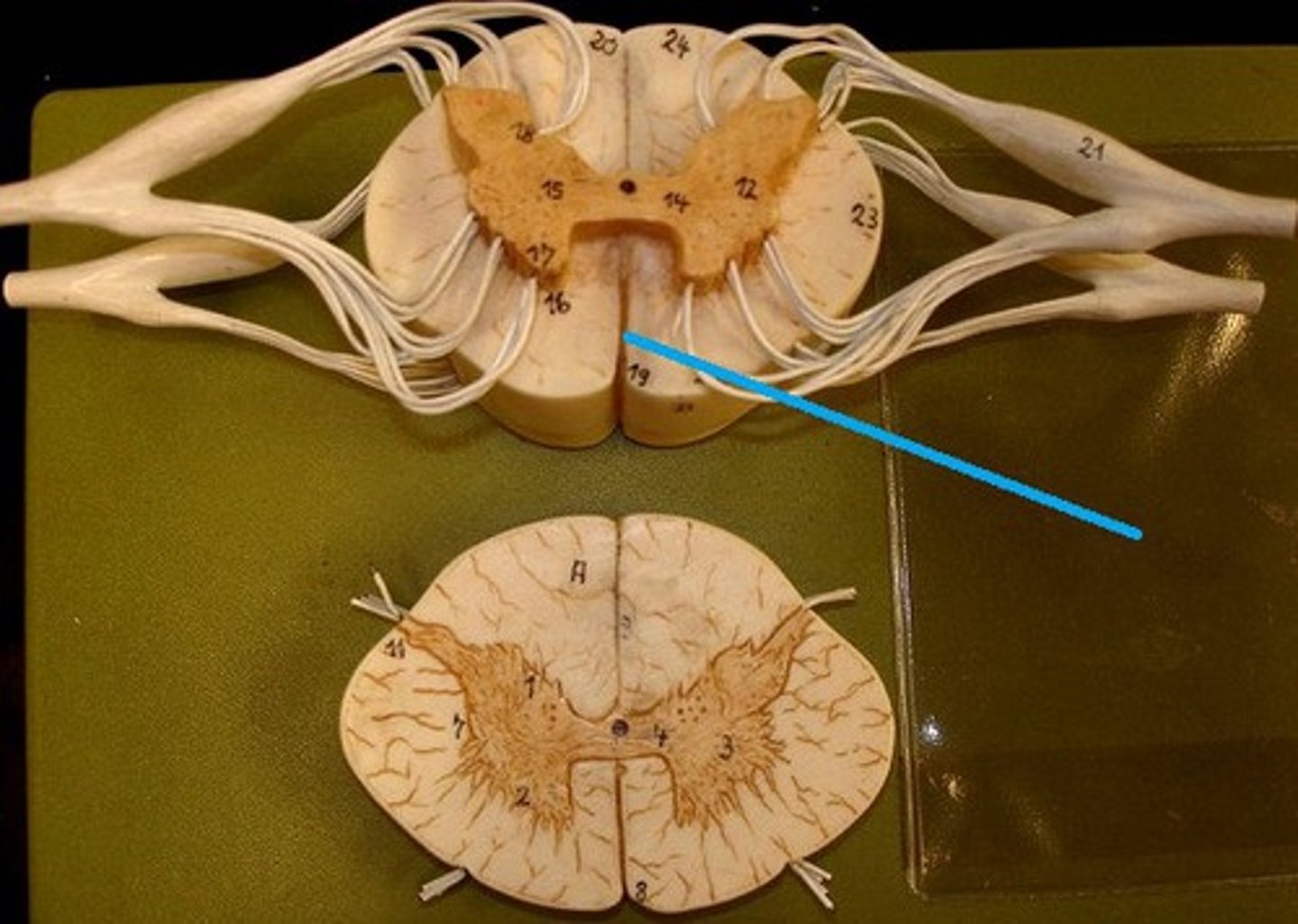
anterior median fissure
a groove along the anterior midline of the spinal cord that incompletely divides it into symmetrical halves
gray matter of the spinal cord
cell bodies, dendrites, and unmyelinated axons arranges in a butterfly shape with anterior and posterior "horns"
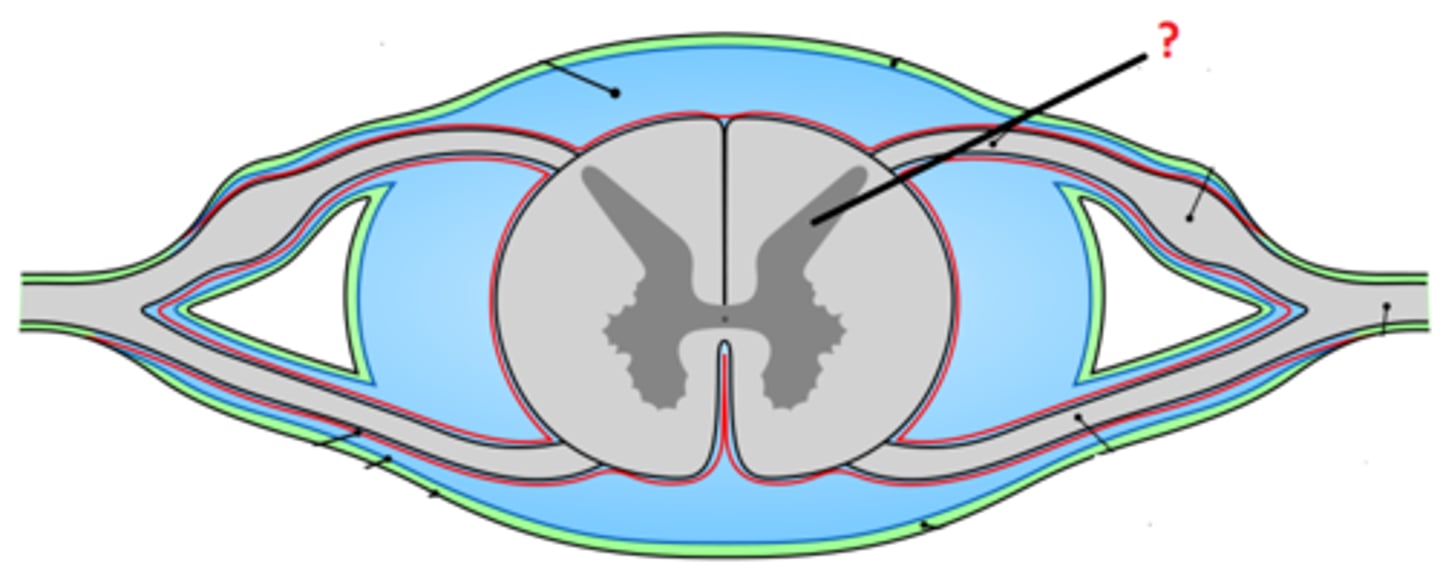
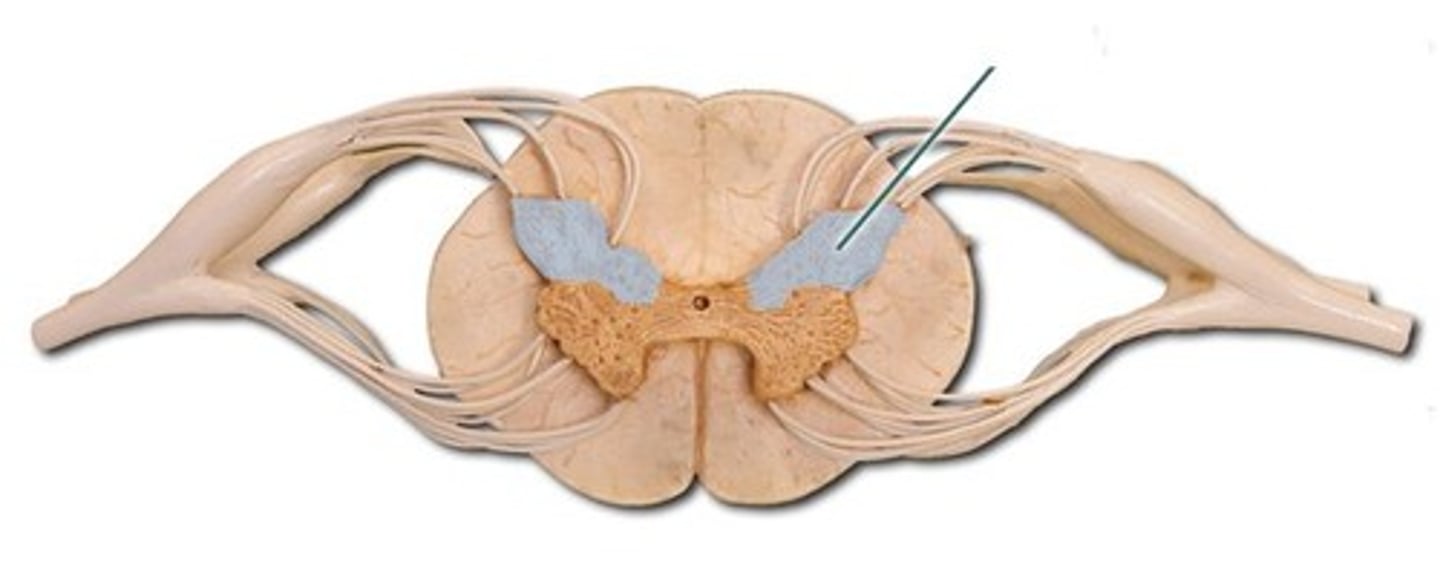
posterior (dorsal) horns
contain axons of sensory neurons and cell bodies (sensory nuclei) of interneurons
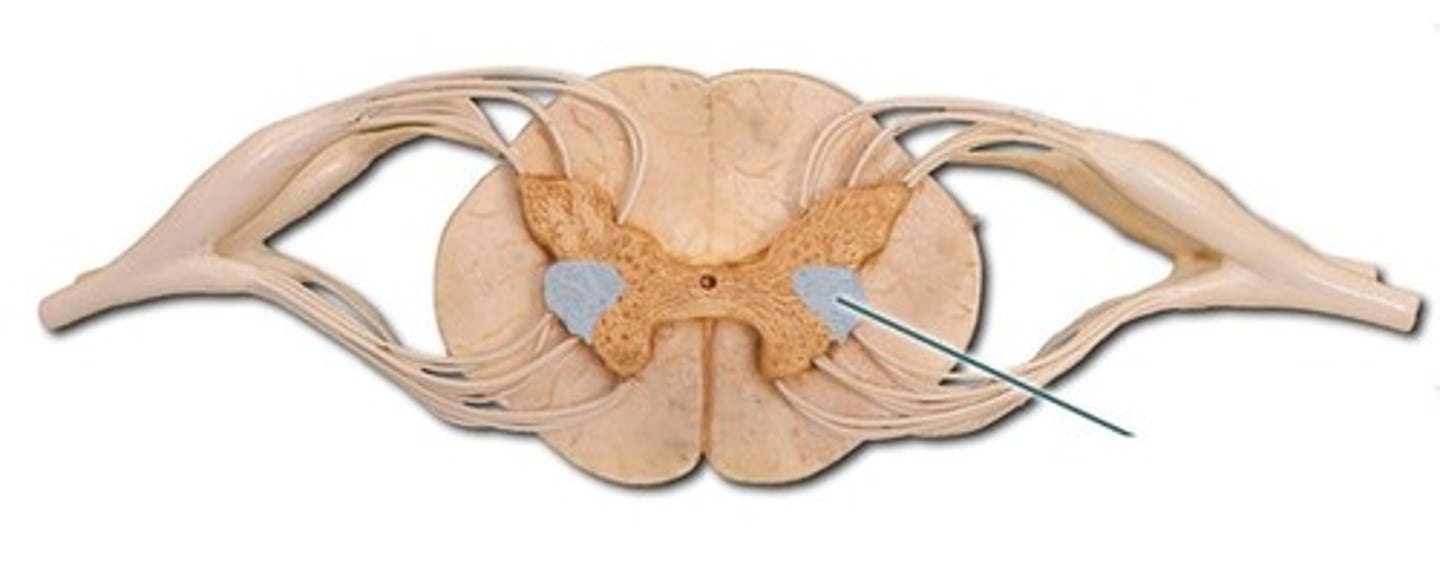
lateral horns
(only in thoracic and superior lumbar regions) - cell bodies of autonomic motor neurons
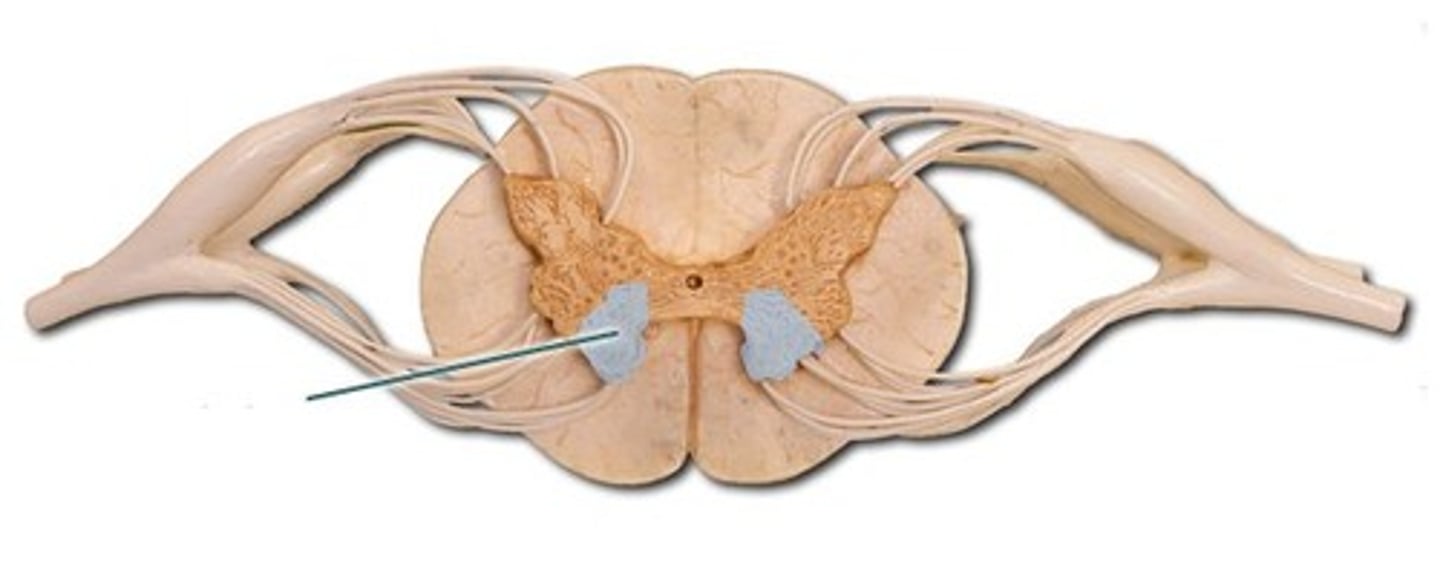
anterior (ventral) horn
cell bodies (motor nuclei) of somatic motor neurons
white matter of spinal cord
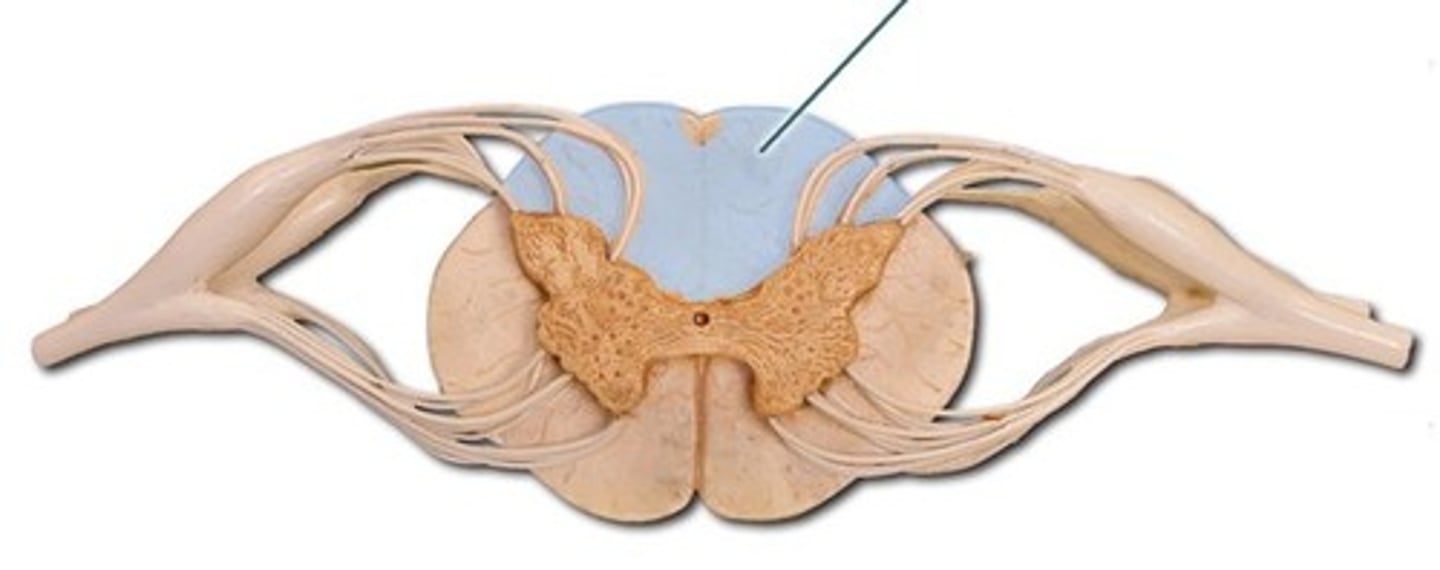
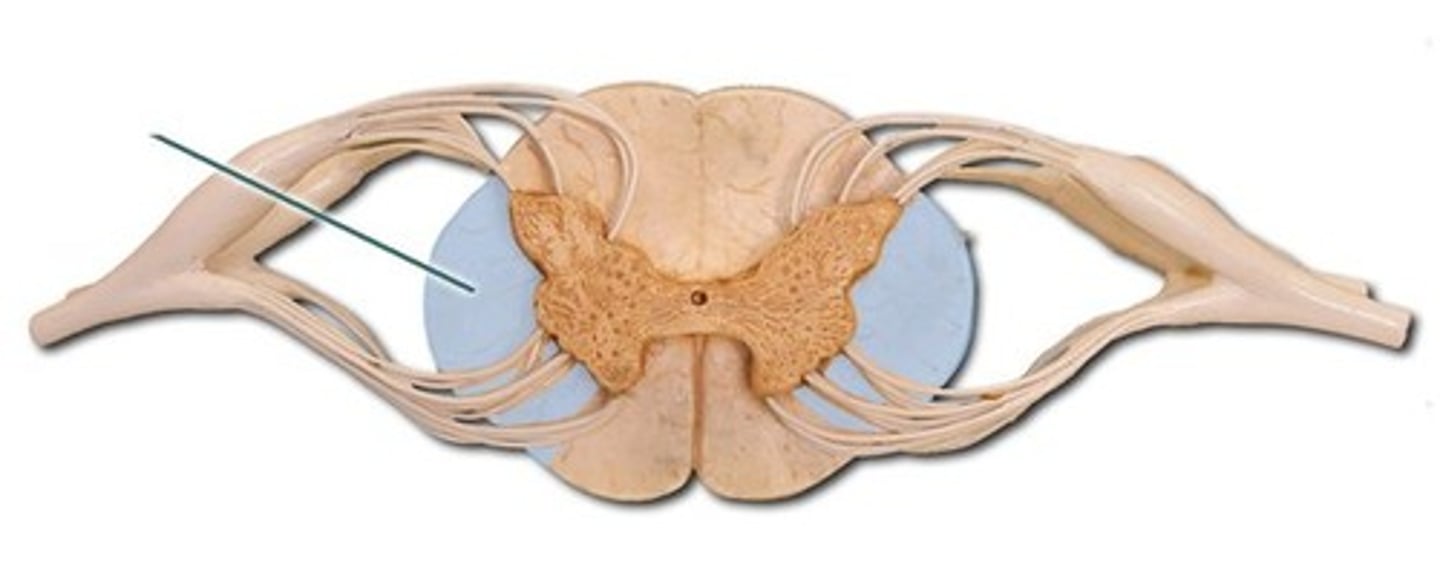
This area surrounds the gray matter. It is composed of both myelinated and unmyelinated axons. It has three regions, anterior, lateral, and posterior columns.
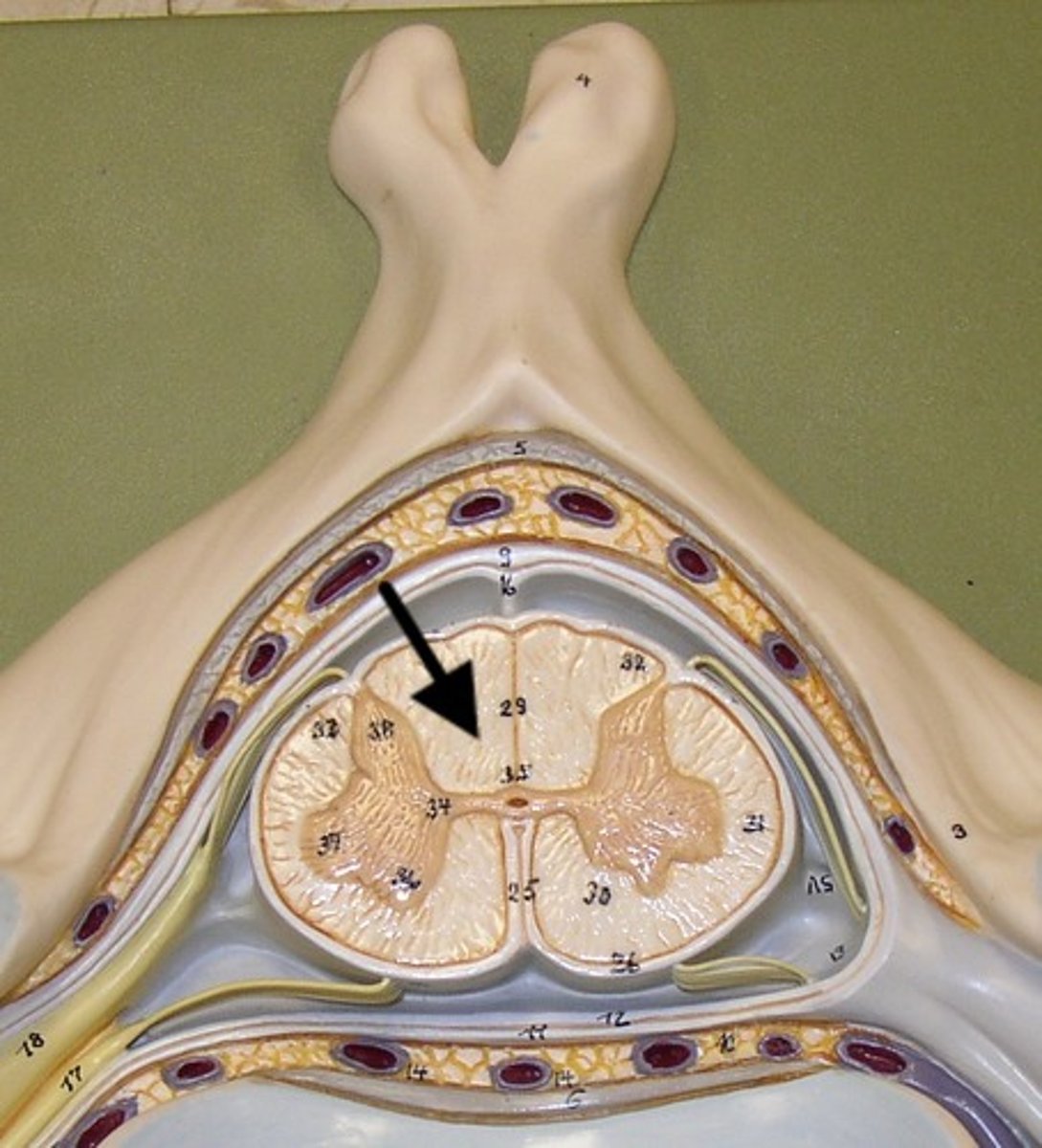
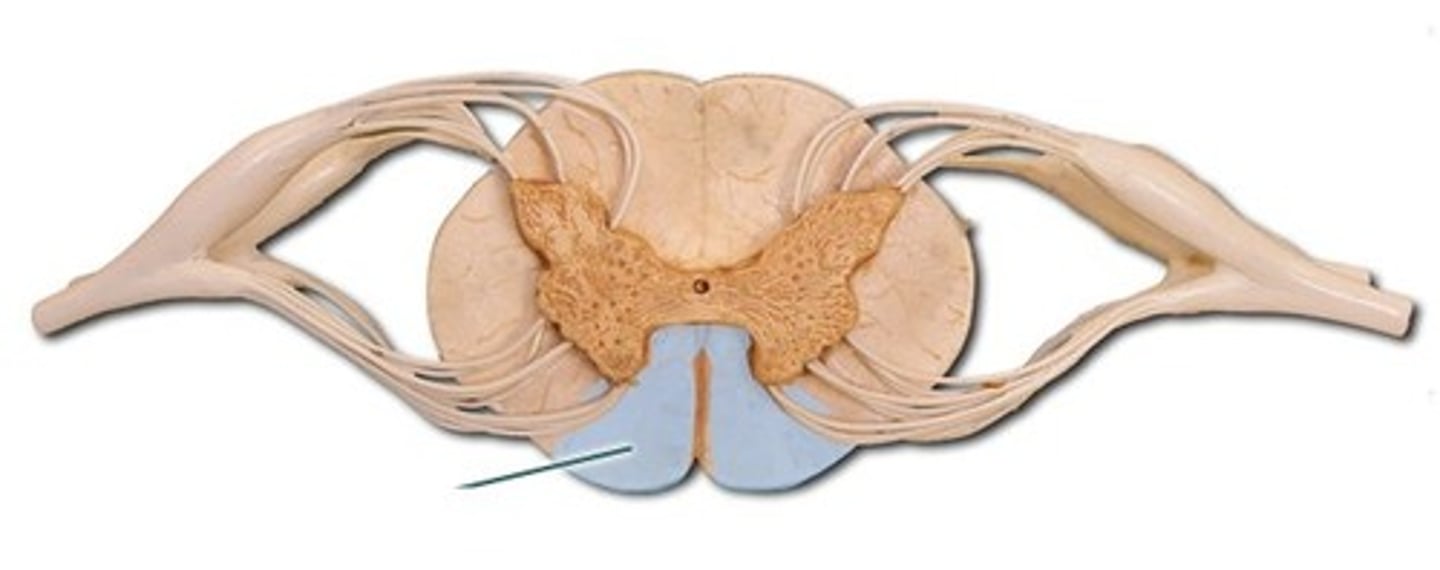
posterior (dorsal) funiculus
lies between the posterior gray horns on the posterior side of the cord and the posterior median sulcus; contains sensory tracts
lateral funiculus
white matter region on each lateral side of the spinal cord; contain sensory and motor tracts
anterior (ventral) funiculus
•Sits between anterior gray horns and anterior median fissure
•Left and right anterior funiculi are interconnected by white commissure
•Contains sensory (ascending) and motor (descending) tracts