Livestock Skill-a-thon: Beef Breed ID
0.0(0)
Studied by 0 people Call Kai
 Learn
Learn Practice Test
 Spaced Repetition
 Match
Match Flashcards
 Knowt Play
Card Sorting
1/36

Earn XP
Description and Tags
Last updated 2:36 PM on 11/13/22
Name | Mastery | Learn | Test | Matching | Spaced | Call with Kai | Chat |
|---|
No analytics yet
Send a link to your students to track their progress
37 Terms
1
New cards
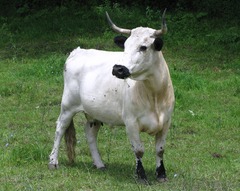
American Braford
-Developed in FLORIDA 1947 (Brahman Hereford Cross)
-Red with white on head, belly, and feet (red over eyes)
-Great fertility and maternal qualities, heat and insect resistance.
-Red with white on head, belly, and feet (red over eyes)
-Great fertility and maternal qualities, heat and insect resistance.
2
New cards
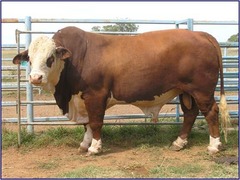
Angus
-Originated in SCOTLAND, introduced to US in 1873.
-Solid black (polled), medium sized.
-Great marbling and early maturity.
-Solid black (polled), medium sized.
-Great marbling and early maturity.
3
New cards
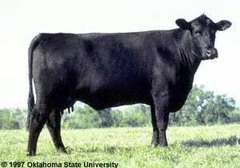
Beefalo
-Developed in CALIFORNIA during 1970s (American bison cattle mix)
-Dense fine coat varied in color, large breed, weather resistant
-Beef is low in fat and cholesterol, ABWR approval needed to claim beef product as beefalo.
-Dense fine coat varied in color, large breed, weather resistant
-Beef is low in fat and cholesterol, ABWR approval needed to claim beef product as beefalo.
4
New cards
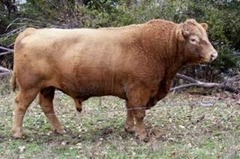
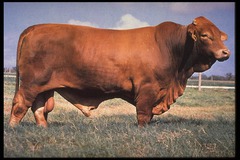
Beefmaster
-Developed in TEXAS during early 1950s (Brahman, Hereford, and Milking Shorthorn mix)
-Light to dark red, medium sized.
-Heat and insect resistant, high fertility and first American composite breed.
-Light to dark red, medium sized.
-Heat and insect resistant, high fertility and first American composite breed.
5
New cards
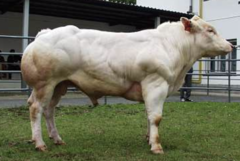
Belgian Blue cattle
-Originated in BELGIUM
-White or has markings, large sized
-Double muscled
-White or has markings, large sized
-Double muscled
6
New cards
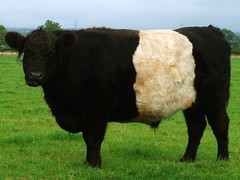
Belted Galloway
-Originated in SCOTLAND
-Black with white "belt" on barrel (polled), large sized
-Easy calving, disease resistant, adaptable
-Black with white "belt" on barrel (polled), large sized
-Easy calving, disease resistant, adaptable
7
New cards
Brahman
-Originated in INDIA
-Light grey to red with loose skin in neck area, prominent hump, medium size
-Heat, drought and insect resistant, weak calving intervals
-Light grey to red with loose skin in neck area, prominent hump, medium size
-Heat, drought and insect resistant, weak calving intervals
8
New cards
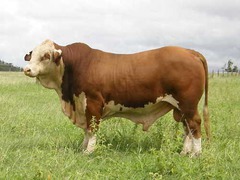
Braford
-developed both in AUSTRAILIA in 1946 and in FLORIDA in 1947. (Brahman Hereford cross)
-Red with white underbelly, head, and feet similar to the Hereford, stockier than a Hereford due to the Brahman influence
-Strong maternal ability, early puberty and calving ease, heat and insect resistance, tend to thrive in warmer climates
-Red with white underbelly, head, and feet similar to the Hereford, stockier than a Hereford due to the Brahman influence
-Strong maternal ability, early puberty and calving ease, heat and insect resistance, tend to thrive in warmer climates
9
New cards
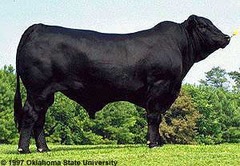
Brangus
-Developed in US in 1949 (Brahman Angus mix)
-Black with hump (polled), medium to large size
-• Weather resistant, good maternal traits, late maturity
-Registered brangus must be 3/8 brahman and 5/8 angus.
-Black with hump (polled), medium to large size
-• Weather resistant, good maternal traits, late maturity
-Registered brangus must be 3/8 brahman and 5/8 angus.
10
New cards
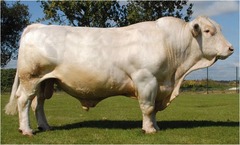
Charolais
-Developed in FRANCE, introduced to US in 1936
-White, large size
-• Fast growth, muscling, late maturity
-All color variations of the breed are considered "recorded" by the American Charolais Association except for black
-White, large size
-• Fast growth, muscling, late maturity
-All color variations of the breed are considered "recorded" by the American Charolais Association except for black
11
New cards
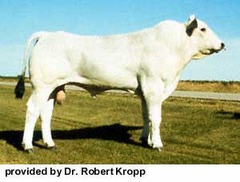
Chianina
-Originated in ITALY
-White to grey with black nose, eyes, tongue and switch, large size
-Resistant to eye problems, heat, insect and disease resistance, growth rate, small udders, late maturity the largest breed of cattle in the world
-White to grey with black nose, eyes, tongue and switch, large size
-Resistant to eye problems, heat, insect and disease resistance, growth rate, small udders, late maturity the largest breed of cattle in the world
12
New cards
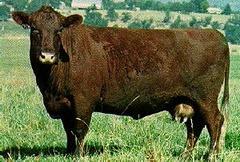
Devon
-Originated in ENGLAND
-Chestnut or light to deep red, medium size
-Heat and disease resistant, early maturity, growing calving difficulty amongst offspring with larger sires
-• Coats are short during summer and grow longer for winter
-Chestnut or light to deep red, medium size
-Heat and disease resistant, early maturity, growing calving difficulty amongst offspring with larger sires
-• Coats are short during summer and grow longer for winter
13
New cards
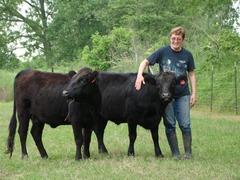
Dexter
-Originated in IRELAND
-Mainly black but can be red or dun • Small size
-Longevity, early maturity, good temperament
-Known to the Irish as the "Poor man's cattle"
-Mainly black but can be red or dun • Small size
-Longevity, early maturity, good temperament
-Known to the Irish as the "Poor man's cattle"
14
New cards
Florida Cracker cattle
-Developed in FLORIDA
-Black, red or spotted with varied coloration, horns that curve upward, small to medium size
-Heat and disease resistant, small scale meat production
-Purebreds are endangered due to excessive crossbreeding
-Black, red or spotted with varied coloration, horns that curve upward, small to medium size
-Heat and disease resistant, small scale meat production
-Purebreds are endangered due to excessive crossbreeding
15
New cards
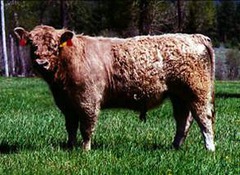
Galloway
-Originates in SCOTLAND, introduced to US in 1866
-Black, dun, red or white with long curly coat (polled) medium size
-Tolerant of harsh colder climates, excellent maternal traits
-Black, dun, red or white with long curly coat (polled) medium size
-Tolerant of harsh colder climates, excellent maternal traits
16
New cards
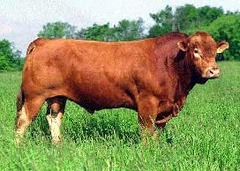
Gelbvieh
-Originates in GERMANY, introduced to US in 1971
-Reddish gold to russet or black (polled), medium to large size
-Early puberty, large scrotums
-Reddish gold to russet or black (polled), medium to large size
-Early puberty, large scrotums
17
New cards
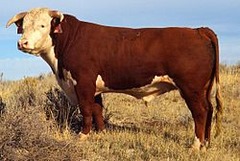
Hereford
-Originates in ENGLAND, introduced to US in 1817
-Horns pointing downward, red with white face, belly, feet and tail, large size
-High libido, fertility, adaptable
-Horns pointing downward, red with white face, belly, feet and tail, large size
-High libido, fertility, adaptable
18
New cards
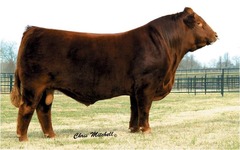
Limousin
-Originates in FRANCE, introduced to US in early 1930s
-Golden-red with lighter pigment around eyes, muzzle, belly and rear area, large size
-Carcass quality, high fertility, known as the "butcher's animal" in France
-Golden-red with lighter pigment around eyes, muzzle, belly and rear area, large size
-Carcass quality, high fertility, known as the "butcher's animal" in France
19
New cards
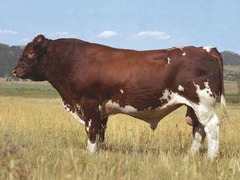
Maine-Anjou
-Originates in FRANCE, introduces to US around 1917 by AI
-Black or red with white markings on head, belly, rear legs and tail, medium to large size
-Feed efficiency, aggressive bulls, one of the largest French cattle breeds
-Black or red with white markings on head, belly, rear legs and tail, medium to large size
-Feed efficiency, aggressive bulls, one of the largest French cattle breeds
20
New cards
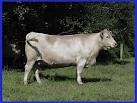
Murray Grey
-Originates in AUSTRALIA, introduced to US around 1972
-Dark grey to light silver, dun or black, medium size
-Good temperament, good marbling
-Dark grey to light silver, dun or black, medium size
-Good temperament, good marbling
21
New cards
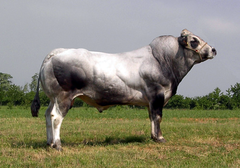
Piedmontese
-Originates in ITALY, introduced to US around 1979
-White to light grey with black horns, hooves, eyes, ears, mouth and tail, medium size
-Carcass quality, early maturing, low fat beef
-The myostatin gene is naturally mutated which allows unrestricted muscle development or double muscling
-White to light grey with black horns, hooves, eyes, ears, mouth and tail, medium size
-Carcass quality, early maturing, low fat beef
-The myostatin gene is naturally mutated which allows unrestricted muscle development or double muscling
22
New cards
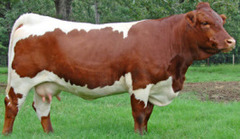
Pinzgauer
-Originates in AUSTRIA
-Dark chestnut with white marks on back, flanks and belly, medium to large size
-Fertility, easy calving, high weaning weights, adaptable
-Dark chestnut with white marks on back, flanks and belly, medium to large size
-Fertility, easy calving, high weaning weights, adaptable
23
New cards
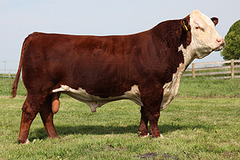
Polled Hereford
-Developed in IOWA
-Polled, red with white belly, face and feet, large size
-Docile temperament, fast maturity, adaptable
-Breed began with a mutation that left offspring without horns.
-Polled, red with white belly, face and feet, large size
-Docile temperament, fast maturity, adaptable
-Breed began with a mutation that left offspring without horns.
24
New cards
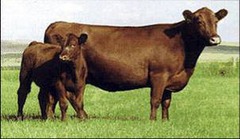
Red Angus
-Originates in ENGLAND/SCOTLAND
-Red (polled), medium size
-Maternal traits, longevity, high fertility, intramuscular marbling
-The founder believed black was the proper color for the breed instead of the red recessive gene
-Red (polled), medium size
-Maternal traits, longevity, high fertility, intramuscular marbling
-The founder believed black was the proper color for the breed instead of the red recessive gene
25
New cards
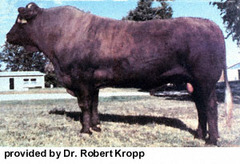
Salers
-Originates in FRANCE, introduced to US in 1975
-Polled or horned, dark mahogany to black
-Large, well shaped pelvic area, calving ease, good soundness
-Polled or horned, dark mahogany to black
-Large, well shaped pelvic area, calving ease, good soundness
26
New cards
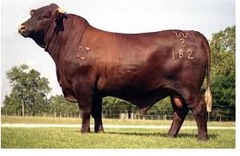
Santa Gertrudis
-Developed in TEXAS in 1920s (Brahman Shorthorn mix)
-Cherry red with short smooth coat
-Tick and bloat resistant, ease of calving
-All present day Santa Gertrudis descend from Monkey; the breed's foundation sire
-Cherry red with short smooth coat
-Tick and bloat resistant, ease of calving
-All present day Santa Gertrudis descend from Monkey; the breed's foundation sire
27
New cards
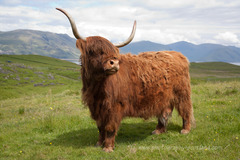
Scottish Highland
-Originates in SCOTLAND, introduced to US in late 1890s
-Red, black, yellow, dun and white with long silky hair, big horns pointing upward, small to medium size
-• Introduced to US in late 1890s, tolerant of extreme colder temperatures, great mothering ability, less tolerant of tropical settings, late maturity
-Beef breed of choice for the British Royal Family; the family keeps a large herd
-Red, black, yellow, dun and white with long silky hair, big horns pointing upward, small to medium size
-• Introduced to US in late 1890s, tolerant of extreme colder temperatures, great mothering ability, less tolerant of tropical settings, late maturity
-Beef breed of choice for the British Royal Family; the family keeps a large herd
28
New cards
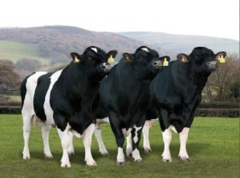
Shetland
-Originates in SCOTLAND
-White with black to brown markings (resembles a Holstein), small to medium size
-Rapid growth, fertility, ease of calving
-Classified as at risk by the Rare Breeds Survival Trust in Britain
-White with black to brown markings (resembles a Holstein), small to medium size
-Rapid growth, fertility, ease of calving
-Classified as at risk by the Rare Breeds Survival Trust in Britain
29
New cards
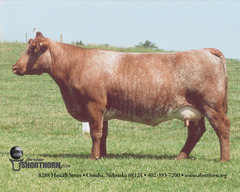
Shorthorn
-Originates in ENGLAND, introduced to US in 1783
-Red or roan and white (sometimes speckled), medium to large size
-Calving ease, fertility, rapid growth
-Red or roan and white (sometimes speckled), medium to large size
-Calving ease, fertility, rapid growth
30
New cards
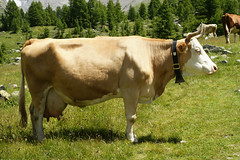
Simmental
-Originates in SWITZERLAND, introduced in US in 1967
-Gold to red with white markings, large size
-• High and long term fertility, short calving intervals, great mothering ability, considered one of the oldest cattle breeds in the world.
-Gold to red with white markings, large size
-• High and long term fertility, short calving intervals, great mothering ability, considered one of the oldest cattle breeds in the world.
31
New cards
Sussex
-Originates in ENGLAND
-Dark red with a white tail switch, small horns (like triangles), medium size
-High fertility, easy calving, great mothering ability, can travel long distances on rough terrain
-Dark red with a white tail switch, small horns (like triangles), medium size
-High fertility, easy calving, great mothering ability, can travel long distances on rough terrain
32
New cards
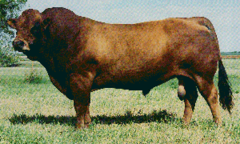
Tarentaise
-Originates in FRANCE, introduced to US in 1973
-Tan with darkening around eyes and neck, black nose, udder and hooves, medium size
-Early puberty, good pelvic size, adaptability, used solely for milk production in France
-Tan with darkening around eyes and neck, black nose, udder and hooves, medium size
-Early puberty, good pelvic size, adaptability, used solely for milk production in France
33
New cards
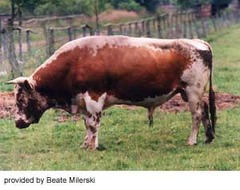
Telemark
-Originates in NORWAY
-Early puberty, good pelvic size, adaptability, used solely for milk production in France
-Good grazers, Norway's oldest breed of cattle
-Early puberty, good pelvic size, adaptability, used solely for milk production in France
-Good grazers, Norway's oldest breed of cattle
34
New cards
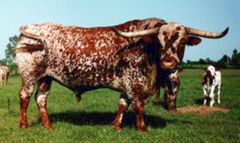
Texas Longhorn
-Developed in TEXAS
-Long horns pointing upward, color variation and spotting, medium to large size
-Disease and parasite resistant, aggressive, lean meat. breed fashioned entirely in US
-Long horns pointing upward, color variation and spotting, medium to large size
-Disease and parasite resistant, aggressive, lean meat. breed fashioned entirely in US
35
New cards
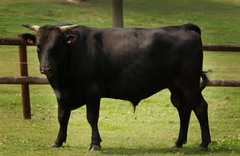
Wagyu
-Originates in JAPAN, introduced to US in 1976
-Straight horns that darken with length, black or red, medium size
-Early maturity in females, low birth weights, exceptional marbling
-Straight horns that darken with length, black or red, medium size
-Early maturity in females, low birth weights, exceptional marbling
36
New cards
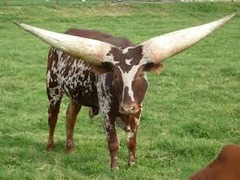
Watusi
-Originates in UGANDA, introduced to US in 1960
-Long and thick horns, brown and white pattern variations, medium size
-Tolerant of extreme weather, low birth weights, lean meat
-Breed was primarily used for milk in Africa because large herds were a symbol of wealth
-Long and thick horns, brown and white pattern variations, medium size
-Tolerant of extreme weather, low birth weights, lean meat
-Breed was primarily used for milk in Africa because large herds were a symbol of wealth
37
New cards
White Park cattle
-Originates in WALES
-White with black ears and muzzles, medium size
-Good grazers, good marbling
-White with black ears and muzzles, medium size
-Good grazers, good marbling