World Food, Population, and Development (CDAE 1020)
 Call Kai
 Learn
Learn Practice Test
 Spaced Repetition
 Match
Match Flashcards
 Knowt Play
1/173

There's no tags or description
Looks like no tags are added yet.
Name | Mastery | Learn | Test | Matching | Spaced | Call with Kai |
|---|
No analytics yet
Send a link to your students to track their progress
174 Terms
paradigm
an accepted model or pattern, a frame of references. The lens in which you view the world, based on life experiences, where you grew up ses, etc. filters information usually unconsciously. Assumptions people make about the world which informs their models of reality
worldview
the common concept of reality shared by a particular group of people.
changing paradigms
since paradigms are constructs, they can be changed by things such as crisis, developmental goals, scientific discovery, social movements, friends and family, person experience, etc.
civil discourse
based on enhancing understanding. Making an assertion, providing reasoning, supporting assertion with evidence. Some argue that civil discourse is fundamental to a functioning democracy
Epistemology
how do we know the things that we know? What is knowledge? How is knowledge acquired? What do people know? Is human knowledge trustworthy? Can our senses be trusted?
science
the process of testing knowledge claims through empirical observation (experimentation), but science is partial
underlying principles of science
objective, testable, measurable, replicable, generalizable
tacit knowledge
not formal, codified, or explicit. It's the kind of knowledge that needs practice and trial and error
local knowledge
knowledge from your own personal experience
indigenous/traditional knowledge
bodies of know-how, practices and skills that are developed and sustained by peoples/communities with shared histories and experiences. Not just knowledge of things, but knowledge on how to do things
Top Down Policy Making
the post powerful tell other people what to do
Bottom-up Policy Making
normal people try to challenge the most powerful
participatory communication strategies
communication is a two-way street, must combine empirical and local knowledge
conventional measures of development
economic indicators include GDP, GNP, and GNI
Gross Domestic Product (GDP)
A measurement of the total goods and services produced within a country.
Gross National Product (GNP)
The total value of goods and services, including income received from abroad, produced by the residents of a country within a specific time period, usually one year.
Gross National Index
the total domestic and foreign output claimed by residents of a country
Modernization Theory
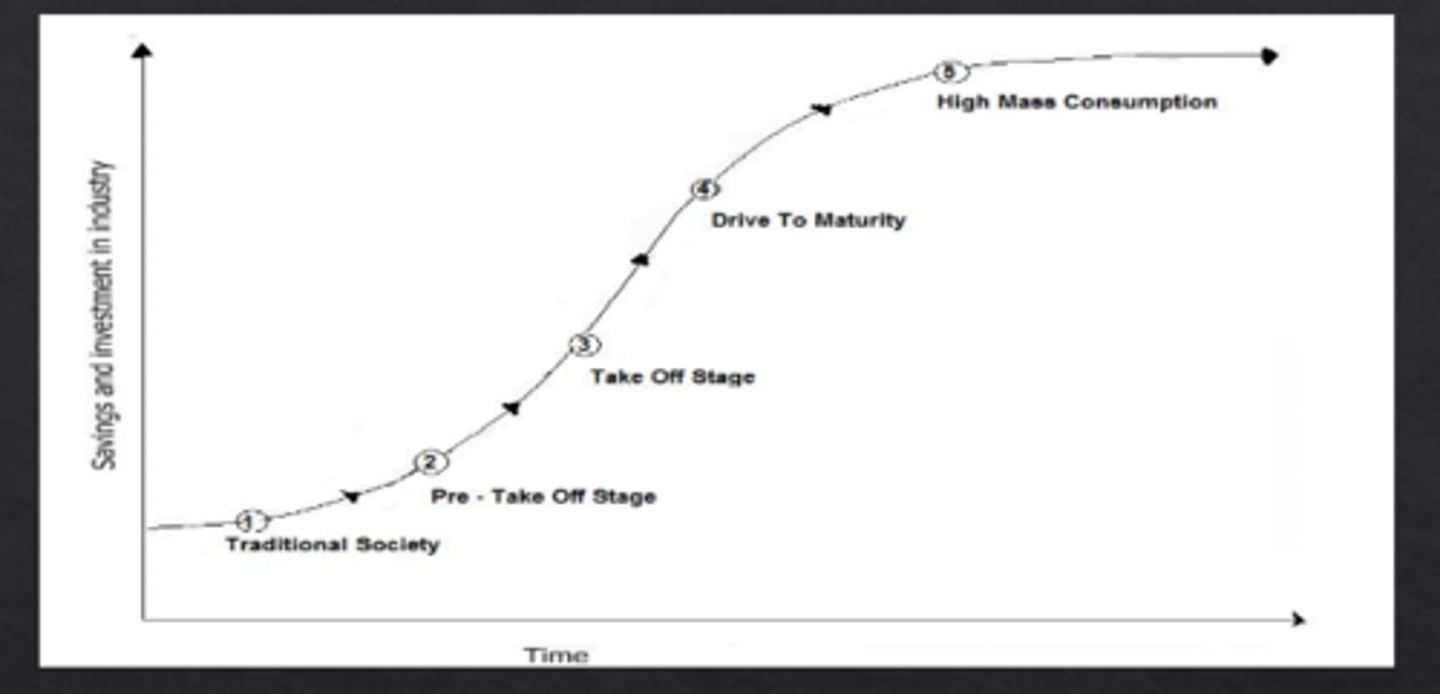
stems from Truman's point four program speech labeling US and its allies as first world, the Soviet Union and its allies as second world, and all unassociated countries as third world. States the path of development is for other countries to follow the first world countries and be like them
proximate factors
readily observable reasons why some societies dominate other (guns, germs, and steel)
ultimate factors
less readily observable reasons why some societies were able to dominate others. Food is power. Wheat societies dominated maize societies, likely because wheat was easier to adapt across Eurasia more rapidly. People with areas with a head start on food production, had a head start on guns, germs, and steel
Human Development Index (HDI)
Indicator of level of development for each country, constructed by United Nations, combining income, literacy, education, and life expectancy
Gini Index
a mathematical formula that measures the amount of economic inequality in a society. 0 is perfect equality and 1 is perfect inequality
Happy Planet Index (HPI)
a measure that combines quality of life and sustainability
sustainable development
development that meets the needs of the present without compromising the ability of future generations to meet their own needs. Three pillars are environmental stewardship, economic prosperity, and social responsibility
negative externalities
by-products of production or consumption that impose costs on third parties
ecosystem services
those benefits that humans derive from the natural functions of a healthy, intact, ecosystem
sustainable development goals
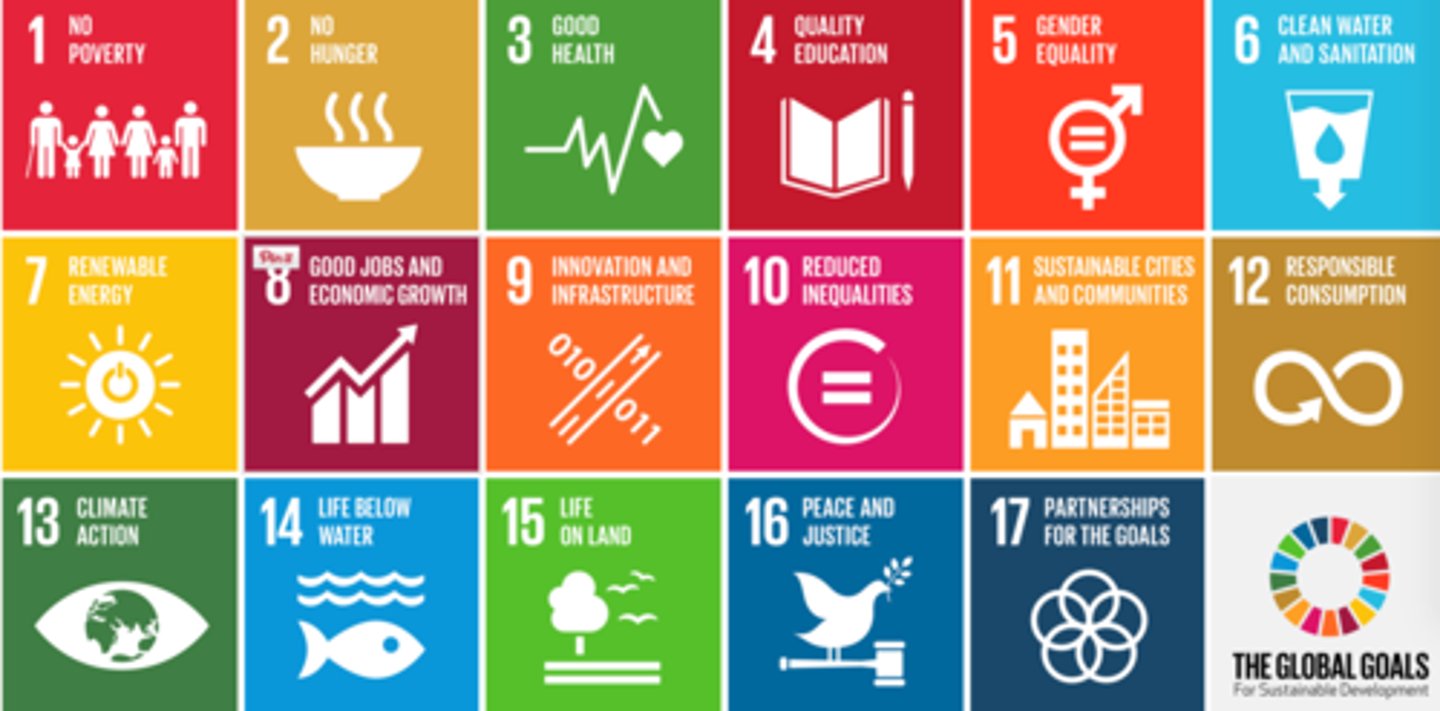
Seventeen goals adopted by the U.N. in 2015 to reduce disparities between developed and developing countries by 2030.
community capitals framework
Sustainable development is the product of a triple bottom line, involving economic, social, and environmental accountability. These three things come together when a variety of capitals are present in sufficient degree. (seven capitals: natural, cultural, human, social, political, financial, and built.)
food regime theory
The theorization of food and agriculture as a world system that is characterized by particular political, economic, and social relations at different historical junctures
theories of governance
focuses on the relationship between social spheres (nation-state, market, civil society) and how different configurations of the spheres benefit or harm they cause
Global GAP
is a group of supermarkets that came together to create their own safety standards. It is very expensive to get GAP certified, making it hard for small farmers to sell at large supermarkets
global commodity chain analysis
shows how supply chains have become more complicated with globalization
governance
how society or groups within it, organize to make decisions. How is power wielded? Who establishes the rules of the game and how are those rules implemented? Includes standards. made up of public/state sector, private sector, and civil society
International Organization for Standardization
A non-governmental global organization whose principal activity is the development of technical standards through consensus.
FDA
Food and Drug Administration
certifications
an auditor can certify food to adhere to certain standards
intergovernmental organizations (IGOs)
public sector. made up of multiple governments from different countries. They have the authority to go beyond boards (trade rules and disputes), regulate/manage international affairs, providing emergency assistance, undertaking analysis and research, providing external financing for projects and programs. Includes UN, world bank, CGIAR, etc.
governments
public sector. pass and implement laws, rules, and regulations. Manage bureaucratic institutions. Policy making is important
policy
a system of course of action, regulatory measures, laws, and governmental entity or its representative
private sector (markets)
traditionally business goals was profit, now it's changing to profit and sustainability
Coporate Social Responsibility (CSR)
broad topic for businesses that addresses human rights, corporate governance, heath, and safety environmental effects
Benefit Corporation (B Corp)
private sector. for profit companies that seek to provide public benefit and peruse ventures while performance, public transparency, and legal accountability to balance profit and purpose
non-governmental organization (NGO)
civil society. usually non-profit and sometimes international organizations independent of governments and international governmental organizations that are active in humanitarian, educational, health care, agriculture, public policy, social, and more
Keynasianism
(1945-1970s) belief that there's a role of the government to regulate the market
Neoliberalism
(1980-?) wanted more limited government, slashed public funding
foreign aid spending in the us
we spend only 0.17% of GNI on international aid
Malthusian Theory
Population increases exponentially, food increases linearly. As population surpasses food supply, things like war, famine, and disease
bubonic plague
reduced population from 475 million to 350-375 million
"discovery" of the "new world"
once the western hemisphere was colonized, Europeans could grow more maize, wheat, and potatoes
Industrial Revolution
advancements of agriculture, things, transportation led to mass production and mass consumption to increase population. The worlds average per capita income increases 10-fold, population increases 6-fold
modern medicine
increases life expectancy
Green Revolution
refers to the introduction of new wheat and rice seeds into Latin America and southeast Asia in the 1960s and 70s. Dwarfing genes for short, stiff strawed varieties of wheat, allowed for increased us of fertilizer and irrigation.
2050 population
population is projected to be 9.7 billion. need to produce between 25-70% more food and restore our ecosystem. May lead to decline?
Population Balancing Equation
Pyr2 = Pyr1 + (B-D) + (I-E)
geographic trends of population growth
movement of rural to urban
Urbanization
in 2010, more people lived in cities than rural areas
Megacities
cities with more than 10 million people (ex: tokyo, delhi, shanghi)
Infant Mortality Rate (IMR)
(# of Deaths to Infants < 1yr old/1000 live births). Note the impact of losing a child, inadequacy of health care, availability of maternal care, availability of basic needs, status of women. Most infant deaths are preventable (45% linked to malnutrition)
changing diet
more income leads to different types of food, food prices, urbanization (supermarkets), economic integration and trade (we need foods with stable shelf life to trade)
migration
movement that crosses jurisdictional boundaries
immigration
movement into an area
emigration
Movement out of an area
refugee
a person who, owing to a well-founded fear of persecution for reasons of race, religion, nationality, or membership of a particular group, is outside the country of their nationality
asylum seeker
a person who is seeking international protection. In countries with individualized procedures, an asylum seeker is someone whose claim has not yet been finally decided on by the country in which they have submitted it. Not every asylum seeker will be recognized as a refugee, but every refugee is initially an asylum seeker
Internally Displaced Person (IDP)
persons who have been forced to flee in particular result of armed conflict, situations of generalized violence, violations of human rights or natural or human made disasters, and who have not crossed an internationally recognized state boarder
Irregular migration
movement of persons that takes place outside the laws, regulations, or international agreements governing the entry or exit from the state of origin, transit, or destination
food
food is power, empires throughout history have commandeered other's food supplies. This is the story of colonization
Trans-Atlantic Slave Trade
Europeans needed labor to grow sugar, tobacco, and cotton. 5x more Africans came to the US than Europeans
abundance to scarcity of food
many agrarian societies that now suffer serious food shortages were food-abundant societies in pre-colonial times
Voluntary Migration
moving to more favorable climates, better, schools, life change, jobs, etc.
Involuntary Migration
internal displacements or international migration due to wars, famines, natural disaster
push factors
reasons why people want to migrate from a place (war, famine, persecution)
pull factors
reasons why people might want to migrate to a place (employment, services, security)
economic causes of migration
poor economic conditions, overpopulation, poor climate and/or natural disasters
political causes of migration
war, escape from persecution, punishment for crime, enslavement, political agreement
social causes of migration
spreading a political movement or philosophy, reuniting with family friends etc. who might have previously migrated, seeking personal freedom, not necessarily as the result of prosecution
environmental causes of migration
natural disasters, excessive drought, climate change
organic becomes a trend in the us
· people want organic foods around early 2000, which leads to more small farms
farms go out of business in the us
around the recession farms go out of business
farms with 2000 acres in the us
overall increase of large farms, and decrease in small farms
employment in agriculture in the us
in 1945, 16% of total labor force employed in agriculture and the average GDP as a share of total GDP is 7%. In 2012, 1.01% of total force are farm operators and the average GDP is 1%. Only 0.7% of Americans are principal operators of farms, yet our agricultural production makes more money than other agriculturally based countries
mean size of us farms
178 hectares, and 4% are less than 2 hectares. South America is the only other area in the world that also has large farms
mean sizes of farms globally
much smaller, ranges between 10.7 hectors and 1 hector. Many places have over half of farms are less than 2 hectors
importance of smallholders
85% of the world's total farmers have less than 2 hectares, they include ½ of the world's food insecure, ¾ of Africa's food insecure children, and the majority of population living in absolute poverty. 2.5 billion people are directly engaged in agricultural production. Smallholders supply 70& of Africa's food and 80% of the food consumed in both Asia and Africa.
smallholder farmer
no universal definition, but generally considered farms that rely on their own labor (not hiring permanent help) and scarce resources
smallholder vulnerability
poverty, lack of access to resources, information, and technology. Struggle with food insecurity, nutrition insecurity, climate change, and tenuous land access
Legacy of the Green Revolution
modern, highly efficient agricultural systems
yield
yield = yieldseed + yieldfertilizer + yieldpesticide + yieldherbicide + yieldwater + yieldskills...
Highly responsive varieties (HRVs)
advanced seed breeding began after WWII due to famine, rise of scientific breeding (sometimes called HYVs)
norman borlaug
helped selective breed short and rust resistant wheats and doubled previous yields for wheat and rice
open pollinated seeds (OP)
how nature produces seeds. Pollinated by nature
heirloom/heritage seeds
most OP seeds are chosen for their exceptional qualities
hybrid seeds (F1)
new plant varieties from cross-pollination of related plants
genetically modified (GMO)
seeds from genetically altered plants
Downfalls of Green Revolution
environmental cost due to fertilizer, pesticides, and clearing forests
pests in the green revolution
pests evolute to resist pesticides
CGIAR Consortium
CGIAR Consortium: promoted green technologies around the world, but fell short of promoting them in Africa
green revolution technologies
packages include plant breeding, irrigation, pesticides, fertilizers, hybrid seeds, required extension services, massive investments in infrastructure
cost price squeeze
when the costs of chemicals, machinery, and other inputs go up faster than the value of increasing yields. This leads to bigger farms buying out small farms
sub-saharan africa and the green revolution
hasn't seen as much increase due to less rainfall, rural populations make labor scarce, lack of mechanization, costs of inputs are high, war and civil unrest, poor government, lack of infrastructure, highly diverse environments, seeds not bred for African conditions, diverse cultural practices

