2.17 Light-Trapping Pigments
 View linked note
 Call Kai
 Learn
Learn Practice Test
 Spaced Repetition
 Match
Match Flashcards
 Knowt Play
1/20

Earn XP
Name | Mastery | Learn | Test | Matching | Spaced | Call with Kai | Chat |
|---|
No analytics yet
Send a link to your students to track their progress
21 Terms
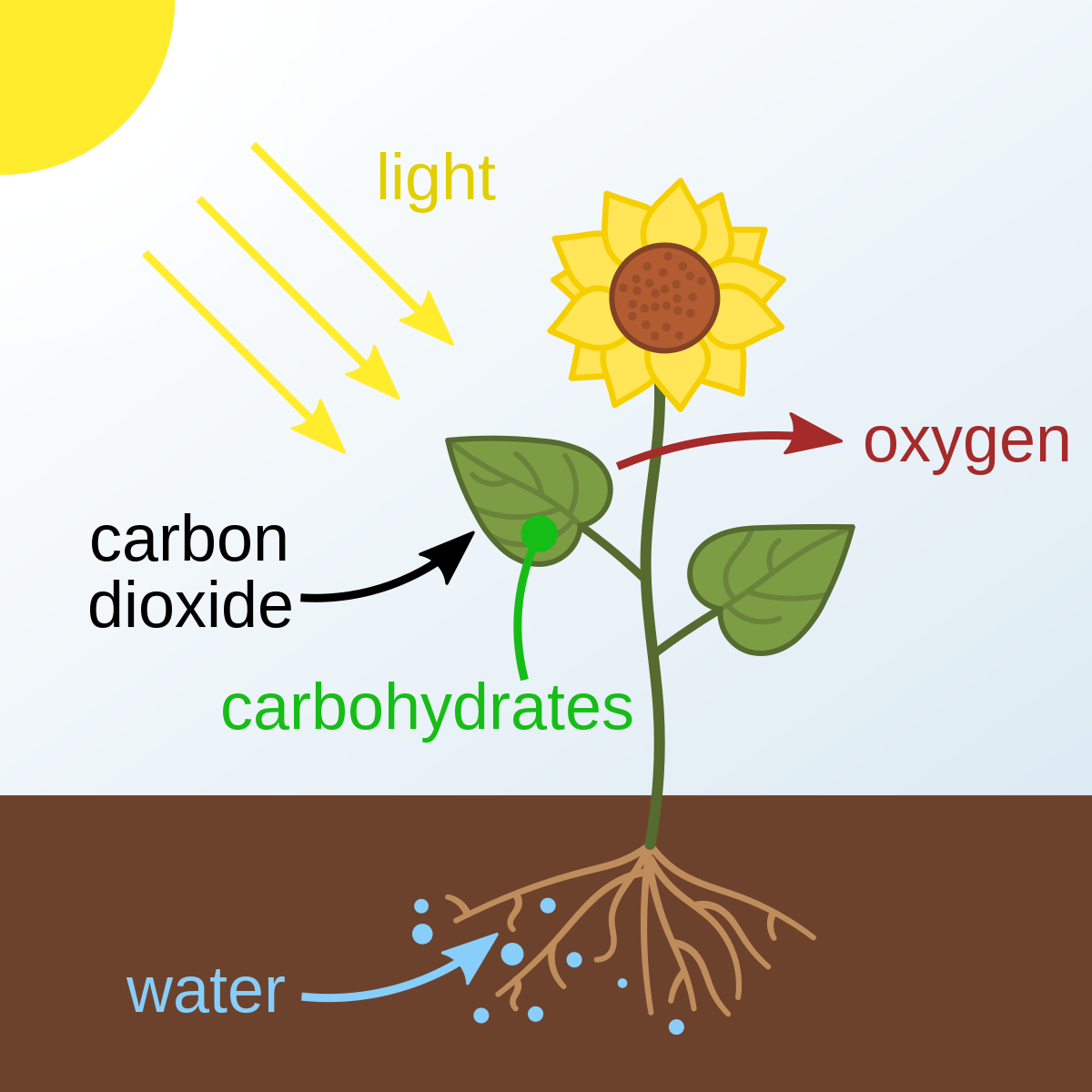
What is Photosynthesis?
The process by which plants convert sunlight into chemical energy.
Chloroplast
Organelles found in photosynthetic cells that contain chlorophyll and are responsible for photosynthesis.
What is the equation for photosynthesis?
6CO2 + 6H2O = C6H12O6 + 6O2
What are two steps of photosynthesis and where do they occur?
Light reactions in the thylakoid of the cell
Calvin cycle in stroma of cell
Thylakoid
Flattened discs within the chloroplast that contain chlorophyll and are involved in the light-dependent reactions of photosynthesis.
Stroma
The central cavity of the chloroplast that contains enzymes and maintains a suitable pH for the light-independent reactions of photosynthesis.
Grana
Stacks of thylakoids within the chloroplast that increase the surface area to volume ratio for efficient light absorption.
Light-Trapping Pigments
Photosynthetic pigments that capture energy from photons of sunlight.
Photons
Packets of energy that have properties of particles and waves, and are the units of light.
Wavelength
The distance covered in one cycle of a wave, with shorter wavelengths corresponding to more energetic photons.
Red Light
Light with a long wavelength and the least amount of energy.
Blue Light
Light with a short wavelength and a higher frequency of waves per unit time (therefore higher energy).
Electromagnetic Spectrum
The range of all possible wavelengths of electromagnetic radiation, including visible light.
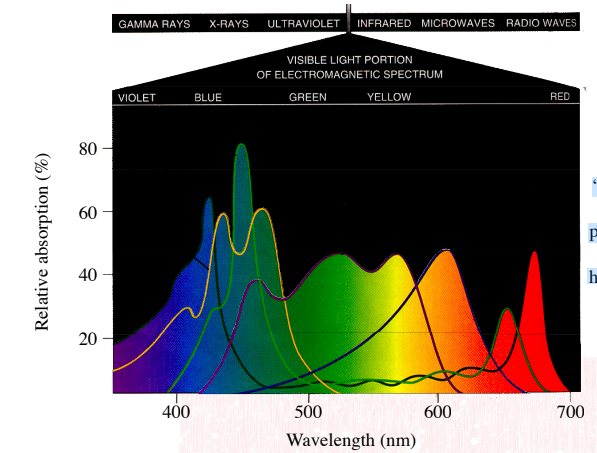
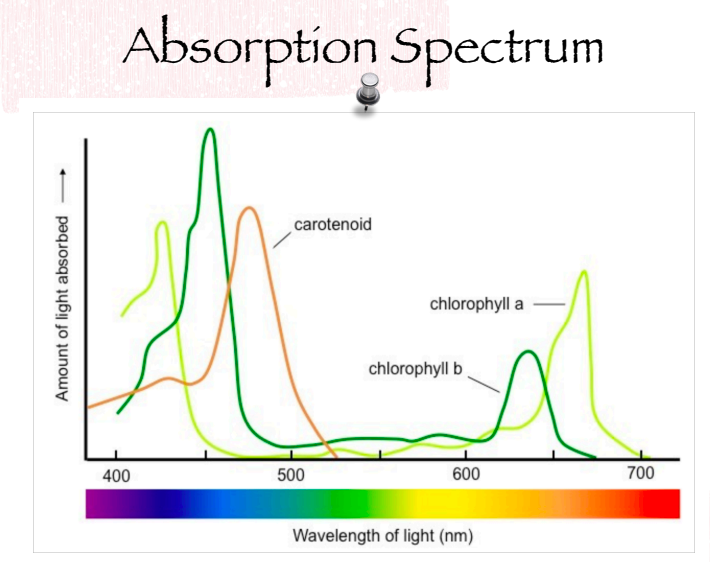
Absorption Spectrum
The range of wavelengths of light that a pigment can absorb.
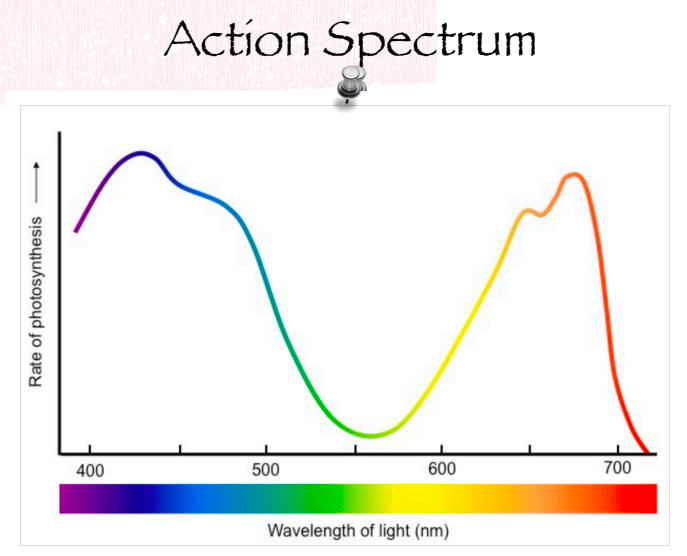
Action Spectrum
The wavelengths of light that are most effective for photosynthesis.
Chlorophyll a and Chlorophyll b
Photosynthetic pigments that absorb blue and red wavelengths of light, while reflecting and transmitting green and yellow wavelengths.
Carotenoids
Pigments that absorb some blue and green wavelengths of light.
Phycobilins
Pigments that absorb most green, yellow, and orange wavelengths of light.
Why are leaves warm colored during autumn
The season when chlorophylls break down, revealing the presence of other pigments in leaves.
Why do leaves appear green?
Leaves appear green because chlorophylls are the most abundant pigments, but other pigments are also present.
Absorption Spectrum vs Action Spectrum
The absorption spectrum shows the wavelengths of light that a pigment can absorb, while the action spectrum shows the wavelengths of light used for photosynthesis.