Cell: The Unit of Life
 Call Kai
 Learn
Learn Practice Test
 Spaced Repetition
 Match
Match Flashcards
 Knowt Play
1/47

Earn XP
Description and Tags
Exploring about Cells and its fundamentals parts in this specific unit, covering all essential data.
Name | Mastery | Learn | Test | Matching | Spaced | Call with Kai | Chat |
|---|
No analytics yet
Send a link to your students to track their progress
48 Terms
Define the term Biology
It is the study of ‘LIFE’, ‘Living organisms’, and
‘Living processes (Physiology).
What do you mean by Reductionist Approach?
It is a physio-chemical approach (using
physical/chemical reactions) to understand physiology
and behavioural aspects at the MOLECULAR LEVEL.
What unifies all living organisms on Earth?
CELL THEORY
What is the DEFINING feature of ‘all’
living organisms?
Cellular organisation
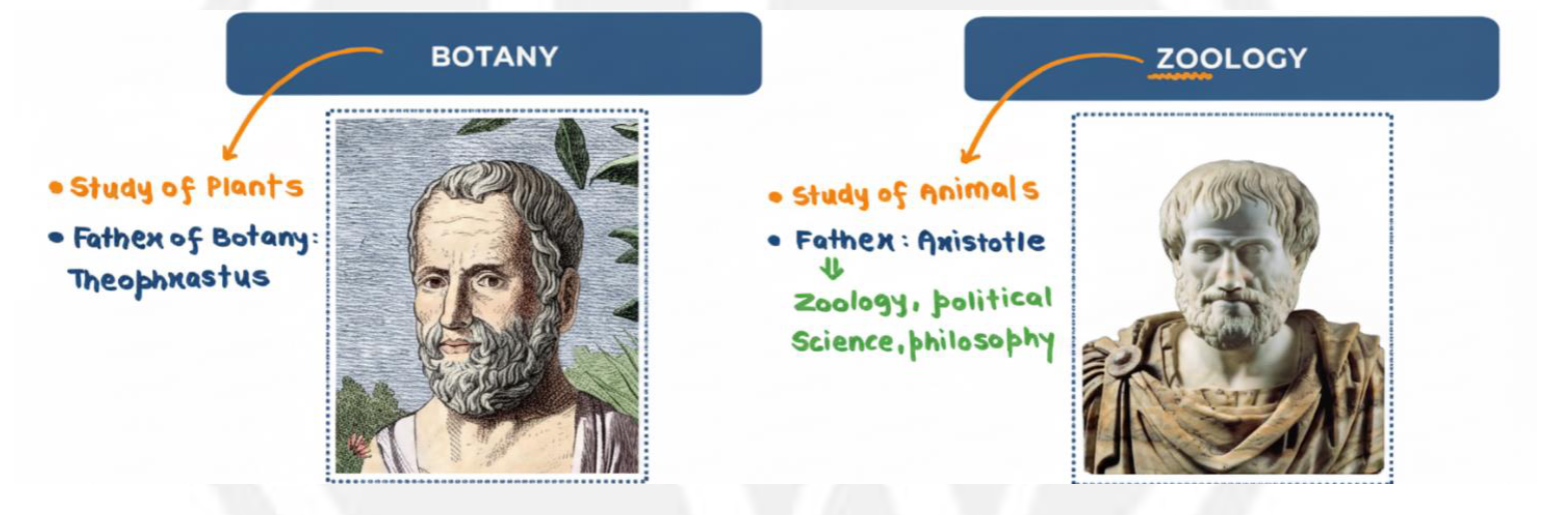
BRANCHES OF BIOLOGY ARE:
• Botany: Study of Plants.
• Zoology: Study of Animals
what is Ramachandran plot?
concept of structural biology used to determine value of phi( b/w n and c ) and psi (b/w c and c bond) bonds present in amino acids
RESEARCH AND INSPIRATION OF RAMACHANDRAN'S WORK
Triple helical structure of collagen published in Nature in 1954 and was inspired by Linus Pauling who gave alpha and beta structure.
WHO FOUNDED MADRAS SCHOOL OF CONFORMATIONAL ANALYSIS OF BIOMOLECULES
RAMACHANDRAN
Ramachandran was born near
COCHIN
What is Cell?
Cell is the basic structural & functional unit of life.
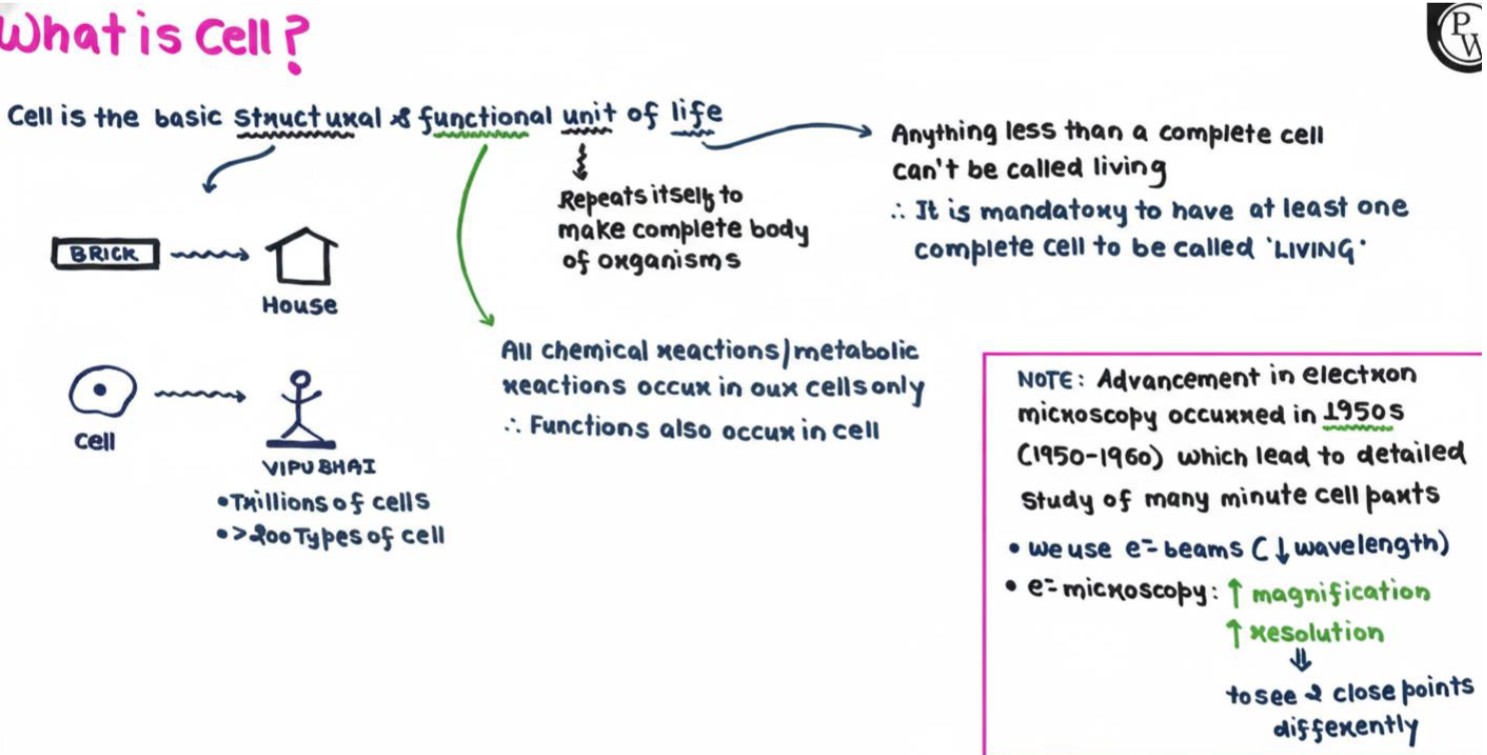
How does Electron Microscopy work?
It uses electron ( e−) beams which have a very low
wavelength and provides high magnification and high resolution image (the
ability to see 2 close points differently).
Type of organisms on the basis of number of Cells.
Unicellular organisms and Multicellular organisms
Who Discovered the α-helix and β-sheet
structures of proteins.
Linus PAULING
The range of plotted values
for ψ & ϕ angles in the Ramachandran Plot.
-180° to +180°
1950 to 1960
Time Period for the advancement
in electron microscopy
Anton Von Leeuwenhoek
First saw and described a
live motile cell.
Who discovered the nucleus?
Robert brown
Who Reported that cells had a thin
outer layer (known today as the plasma membrane)?
Theodore Schwann.
In which year Ramachandran’s collagen structure was
published in ‘Nature’?
1954Which cells can survive independently and perform ‘all’
essential functions of life?
Unicellular Cells can survive independently and perform ‘all’
essential functions of life.
WHICH CELLS exhibit division of labour (different cells do
different tasks)?
Multicellular cells
Who studied plant cells and noted
that the unique cell wall is present over the cell
membrane.
Theodore Schwann
Who gave the hypothesis that the bodies of all plants
and animals are composed of cells and products of
cells.
Theodore Schwann
Who gave the term ‘ANIMALCULES’.
Anton Von LEEUWENHOEK
Who Modified the theory to its
final shape
RUDOLF VIRCHOW
Omnis cellula-e-cellula
New cells arise from the division of pre -
existing cells.
WHICH ORGANISMS do not follow cell theory
Viruses, Viroid, and
prions are ‘ACELLULAR’ (lack their own cell
structure)
What is the size of SMALLEST CELL?
Only 0.3 μm in
length.
What is the size of BACTERIA?
Typically, 3 to 5 μm in length.
Name the largest isolated single cell.
Ostrich egg
What is the longest cell present in the human body?
Neurons
Size 7 µm; round, biconcave disc; transports oxygen.
Red Blood Cell (RBC)
10–20 µm; amoeboid shape; provides defence.
White Blood Cell or WBC
2–4 µm; plate‑like; helps in blood clotting
Platelet
Size order between WBC, RBC and Platelets?
WBC > RBC > Platelet
FULL FORM OF PPLO?
Pleuro‑pneumonia‑like organism
Size of PPLO?
0.1 μm
SIZE of Typical bacteria?
Length 3–5 µm, width 1–2 µm.
Size of Typical eukaryotic cell ?
10–20 µm.
WHICH organisms have this 0.02–0.2 µm?
Viruses
WHAT IS THE TIME PERIOD OF DIVISION OF E.Coli?
E. coli divides every 20 min.
WHAT IS THE TIME PERIOD OF DIVISION OF HUMAN CHEEK CELL?
Human cheek cell divides every 24 h.
FUNCTION OF NEURONS /NERVE CELLS?
Transferring signals
Dead cells which transport water?
TRACHEID
Function of TRACHEID?
Transporting water
Name the cell which is Round/oval; chloroplasts at boundary?
Mesophyll cells
Name the cell which is Long, slender, pillar‑like with basal nucleus?
Columnar epithelial cell