Greek final
 Studied by 0 people
 Call Kai
 Learn
Learn Practice Test
 Spaced Repetition
 Match
Match Flashcards
 Knowt Play
1/35

There's no tags or description
Looks like no tags are added yet.
Name | Mastery | Learn | Test | Matching | Spaced | Call with Kai |
|---|
No analytics yet
Send a link to your students to track their progress
36 Terms
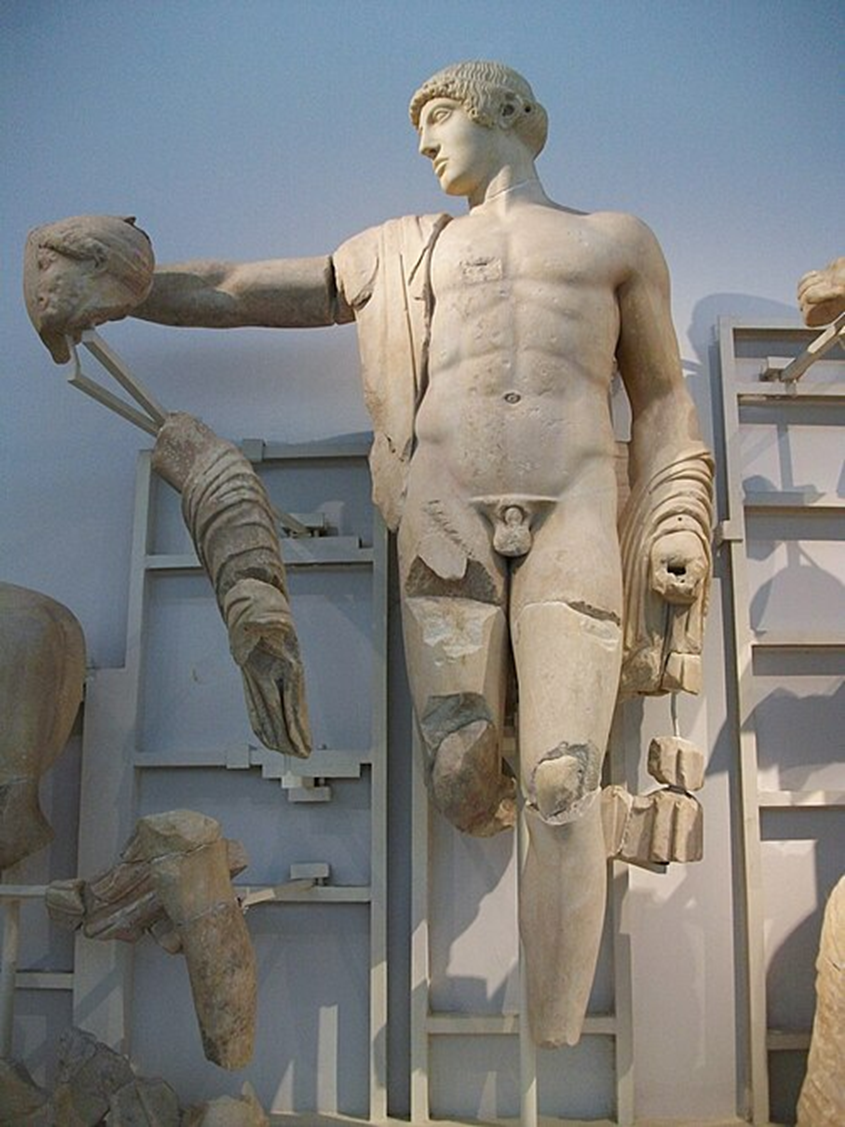
Apollo, 10 ft tall, marble, west pediment from Temple of Zeus at Olympia, mid-5th century. From centauromachy scene which shows the battle between centaurs and Lapiths at a wedding. Disrupting guest-host relationship, Lapiths/Greeks win.
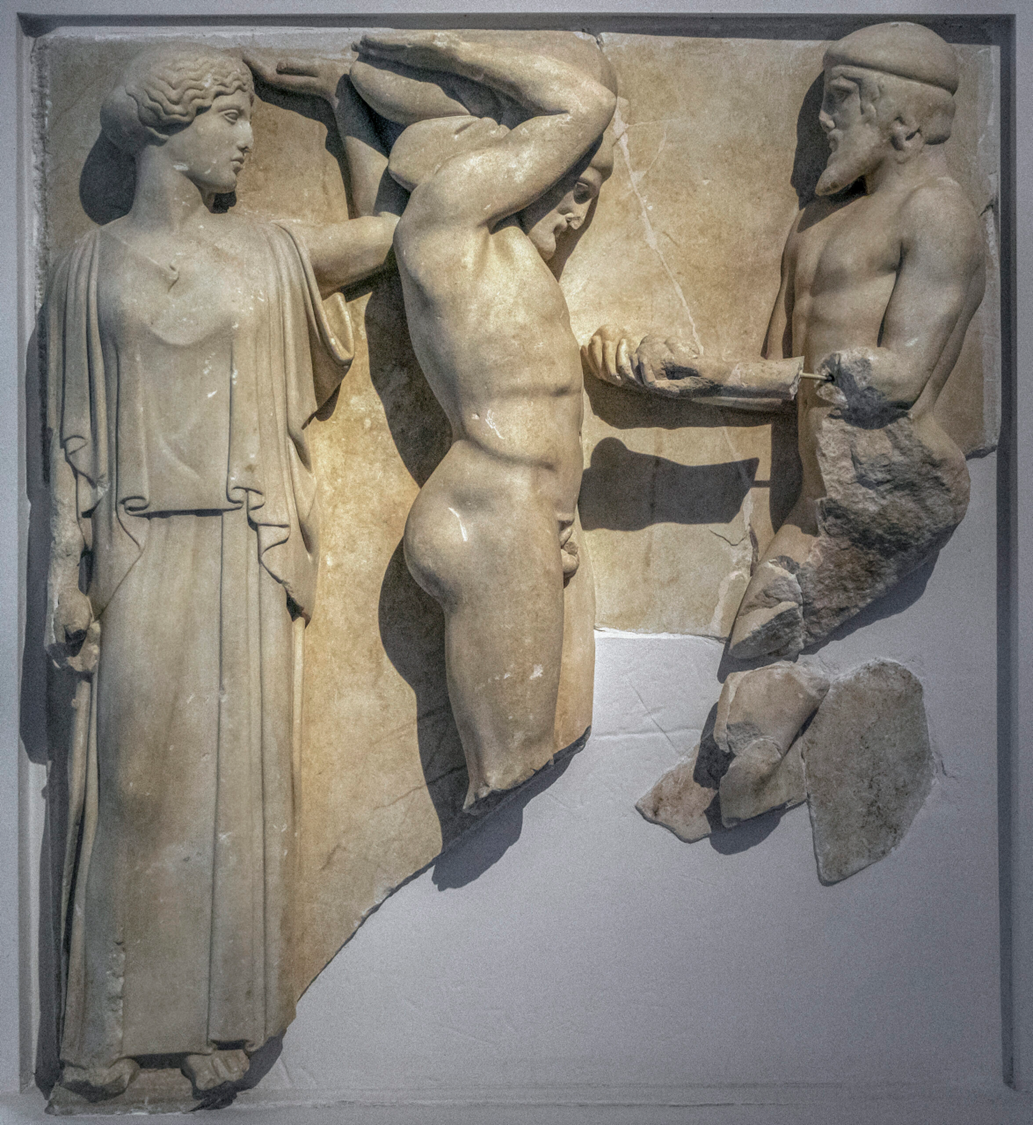
Herakles holding up the sky while receiving the apples of Hesperides from Atlas. From the interior metopes of the Temple of Zeus at Olympia showing the 12 labors of Herakles. Mid 5th cen. Athena behind.
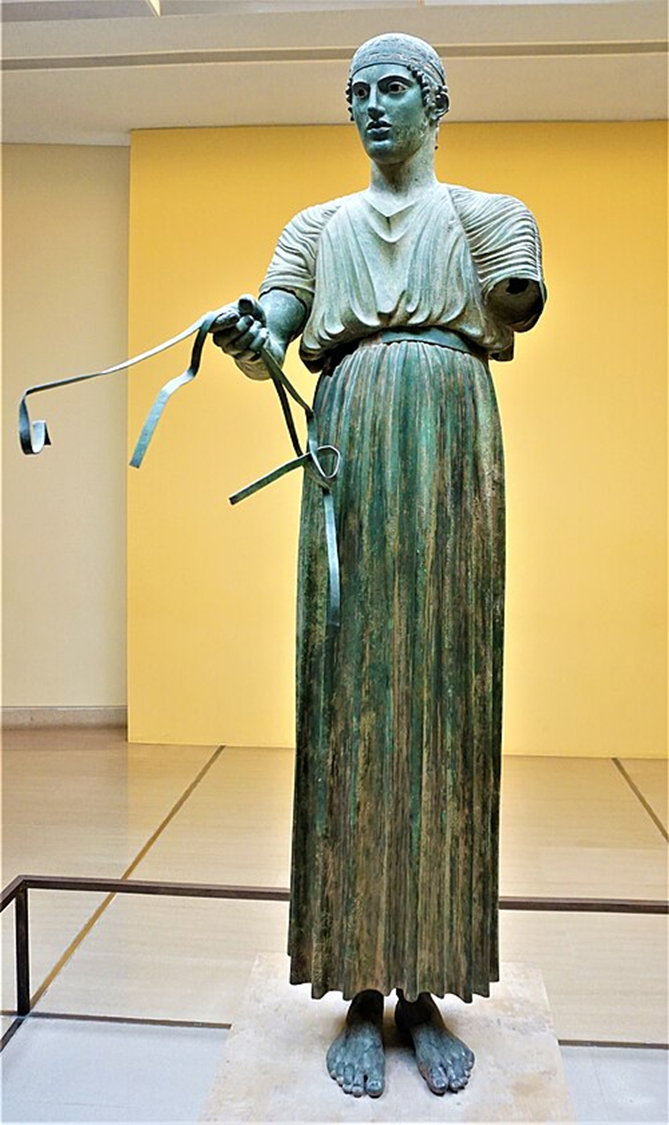
Delphi Charioteer. Hieron, tyrant of Syracuse in Sicily won chariot race at Delphi twice in 470s, made from 475-466, originally had 4-horse chariot with driver, 5ft 9 in tall. Shows transition from Archaic ideals to Classical. Resemblance with the athenian amphoras won by champions of olympic games.

Zeus of Artemision, potentially Poseidon, 470. Attic, 6 ft. Would have held trident if Poseidon, bolt if Zeus. Stoic expression, strong emphasis on muscles. Classical.
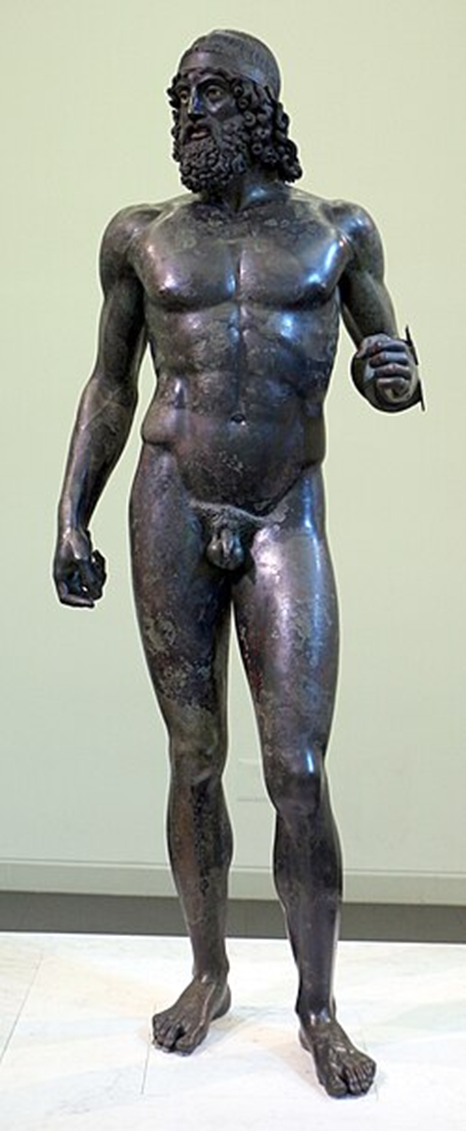
Riace Warriors. Found in Riace Marina in southern Italy in the sea. 460 with Roman repairs, from Argos, about 6 ft. This one is warrior A. Would have had shield and spear originally, shows contrapossto. Cast using lost-wax technique. Very elaborate. Severe style.
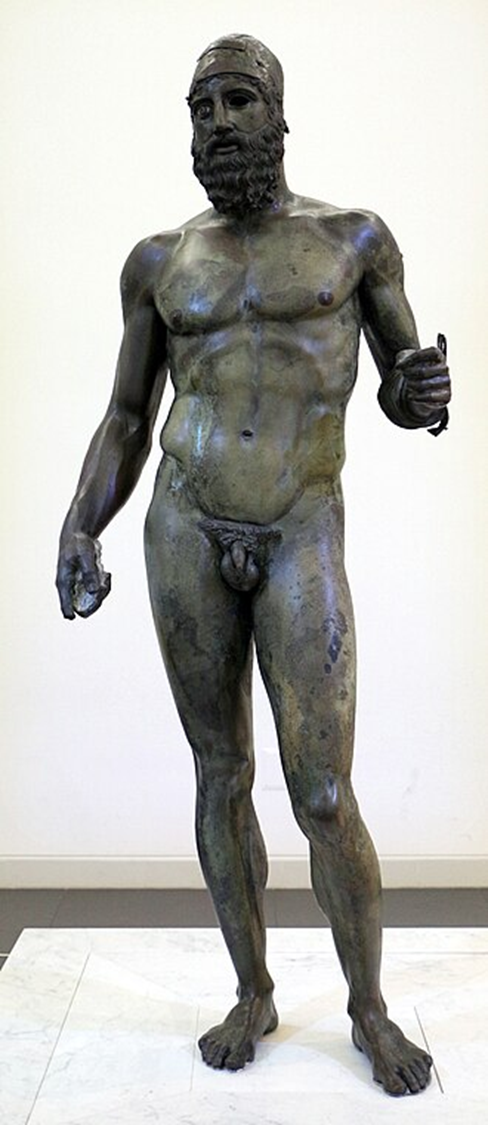
Riace Warriors. Found in Riace Marina in southern Italy in the sea. 460 with Roman repairs, from Argos, about 6 ft. This one is warrior B. Would have had shield and spear originally, shows contrapossto. Cast using lost-wax technique. Very elaborate. Severe style.
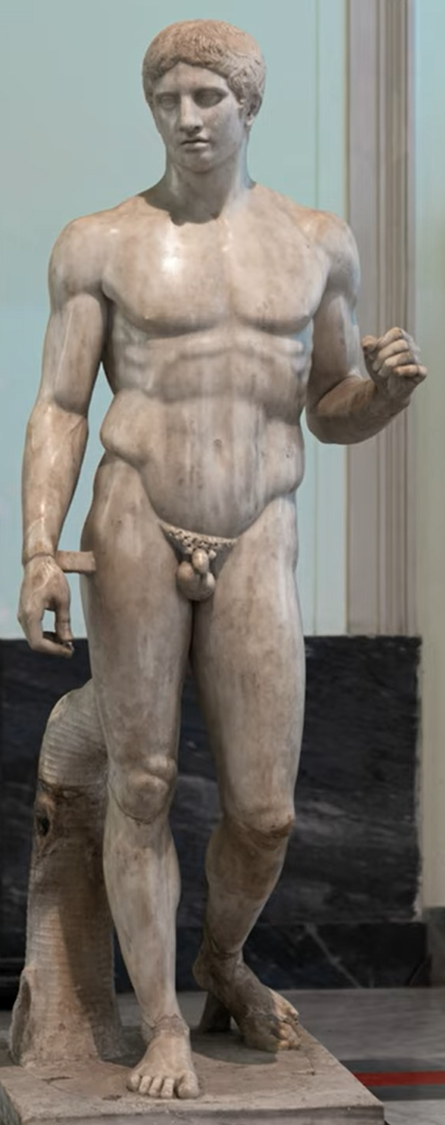
Doryphoros the Spear bearer, this is a roman marble copy of the Greek bronze by Polykleitos, very famous bronze sculptor. From Argos. 450-410. Poly wrote the “canon” about body proportions, his work had a lot of roman reproductions. Original made in 460, this found in Pompeii.

Birth of Athena scene from the east pediment from the Parthenon on the Acropolis in athens. 447-432, temple functioned as a treasury. Marble, shows the high classical style with the intense detail of drapery and form. Drapery looks both wet and heavy.
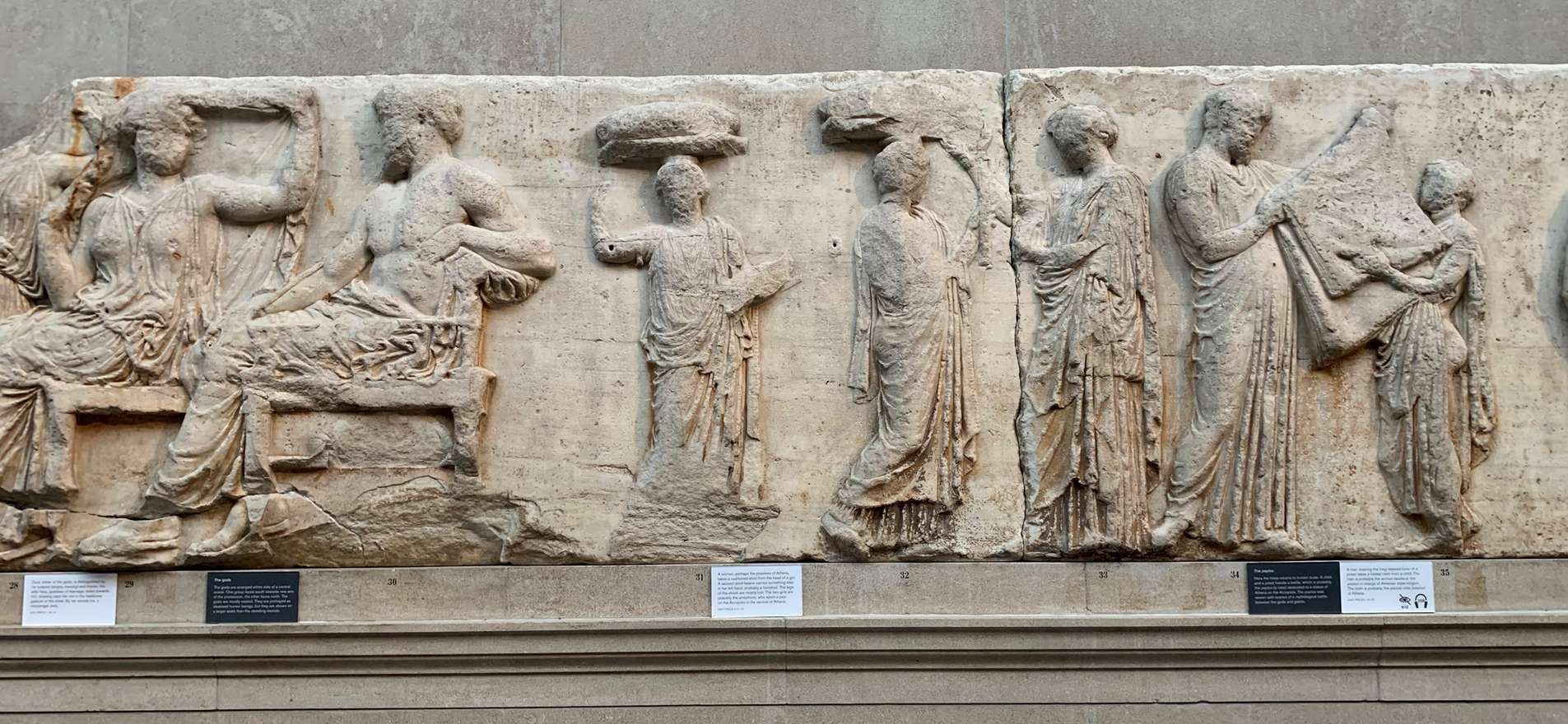
Segment of the Parthenon frieze showing them preparing peplos (garment) for cult statue of Athena at the temple. Gods looking on and discussing. Basket bearers, first fruits and decorations for bull sacrifices. Shows an association with an actual procession the local public would have done and the gods who were watching them perform it; immortalizing local tradition through this new spiritual temple.
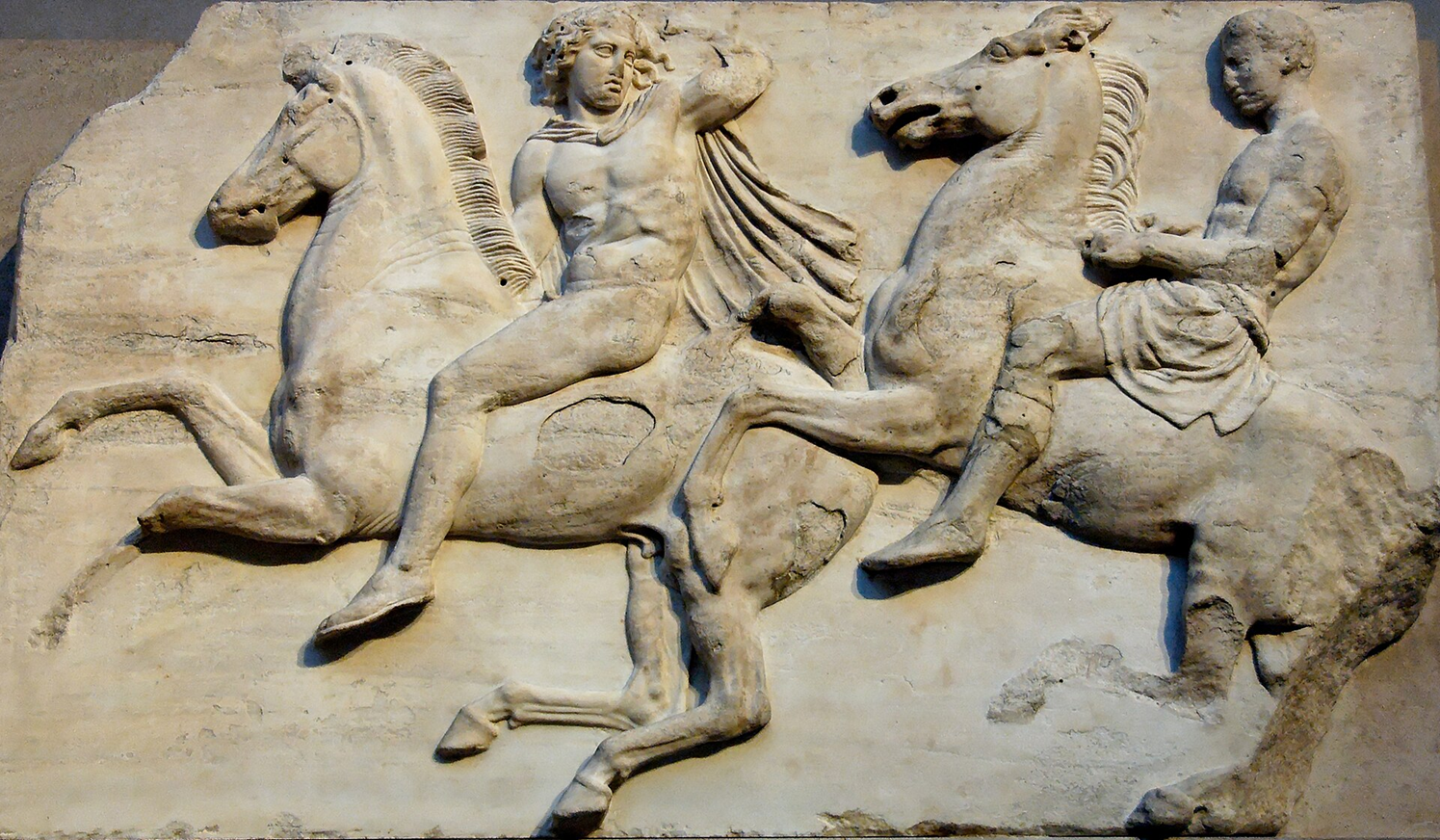
From frieze on Parthenon in Athens. Showing the procession of Athenians to acropolis to honor Athena, (Panathenaia-on Athena’s birthday), starts in southwest corner with parade of horsemen, this is segment from west frieze. Shows an association with an actual procession the local public would have done and the gods who were watching them perform it; immortalizing local tradition through this new spiritual temple. Men are not proportional to horses, they’re also not clothed.
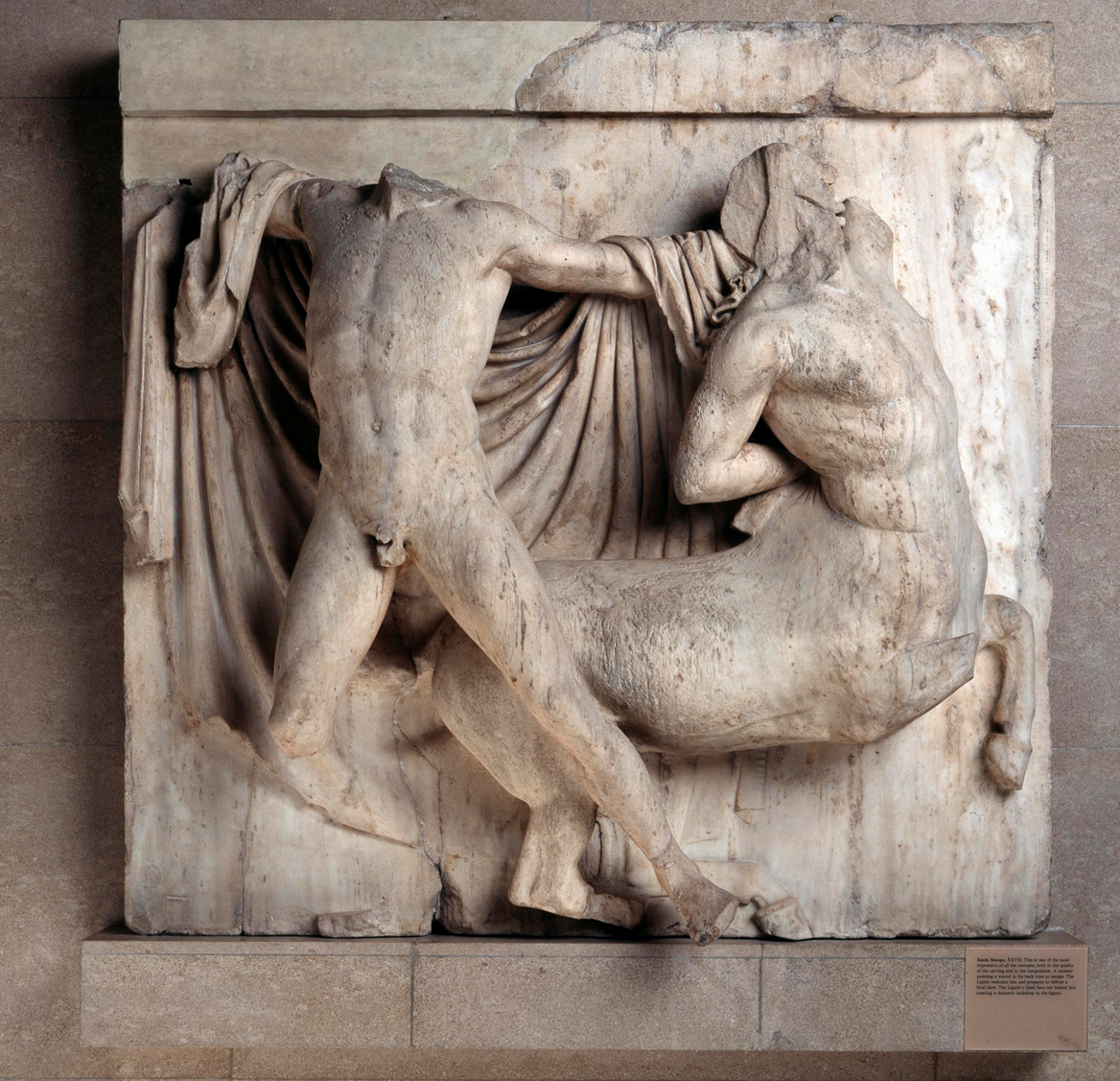
From metopes on the Parthenon in Athens, underneath pediments. Mythological battles as symbolism against enemies and for defeat of Persians. This one from south metope, showing centauromachy.
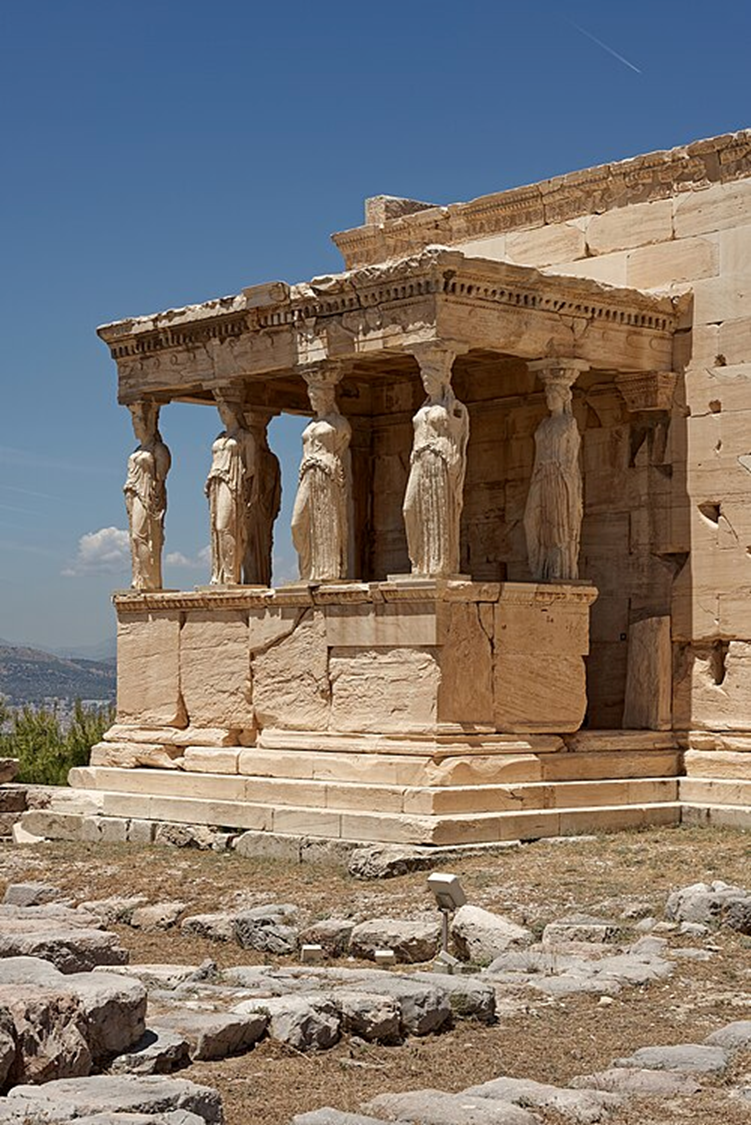
From the new temple of Athena Polias on Acropolis in Athens, also called the “Erechtheum” because of Erechtheus, the mythical king of Athens. Made 421-404. Left remnants of old temple of athena Polias visible. Ionic order, back porch on side instead. symetry with north porch. Caryatid porch on south side. old kore type but now in Classical style and under democracy, watching over tomb of Kekrops mythical king maybe?
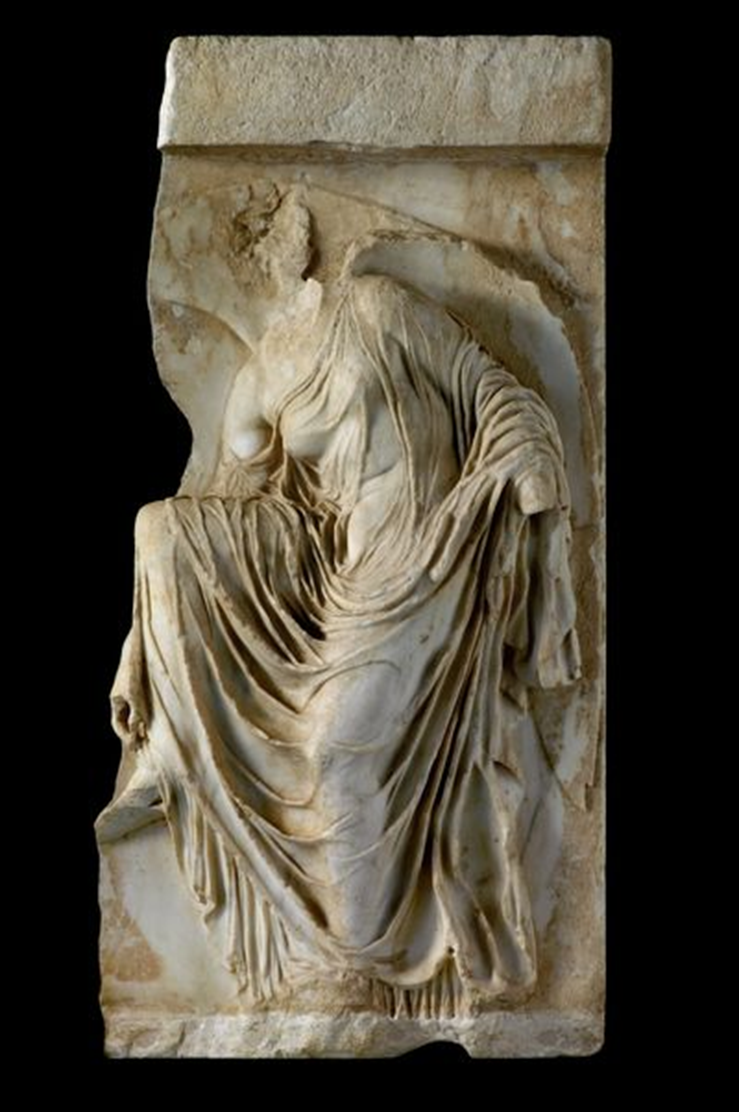
Temple of Athena Nike on Acropolis in Athens, 421-414, ionic order. This is from parapet, shows Diaphanous (delicate) clothing. High clsssical style. Shows possibly a winged Nike taking off her sandal. One shoulder is exposed by dress slipping, showing an emphasis on nudity.
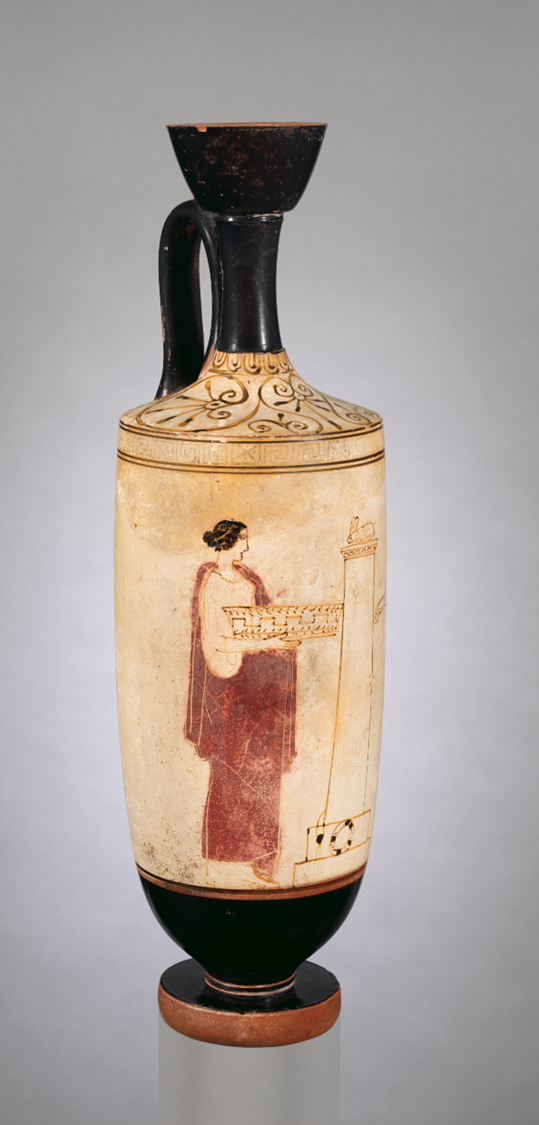
White-ground lekythos jar, was used as an oil flask? 470-400, white background. From kerameikos city, during this time there was a shift to less extravagant private tombs under democracy, common tombs for men who died in war. This was probably a funerary marker or grave good, can be showing the tomb itself on the painting.
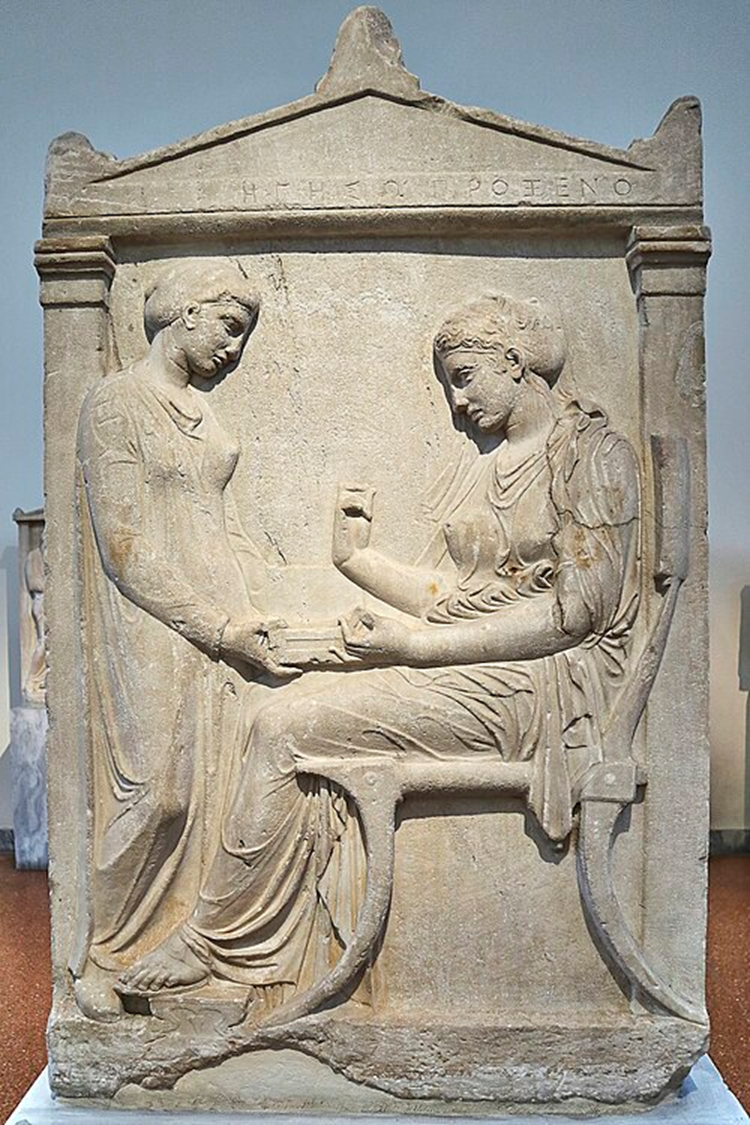
Stele of Hegeso, from Kerameikos city cemetery, end of 5th cen, 5 ft. Inscription says this is Hegeso, daughter of Proxenos. Stood with several other funerary monuments above the grave. She is being handed a necklace by a servant, once shown in paint. Quiet scene, elaborate drapery.
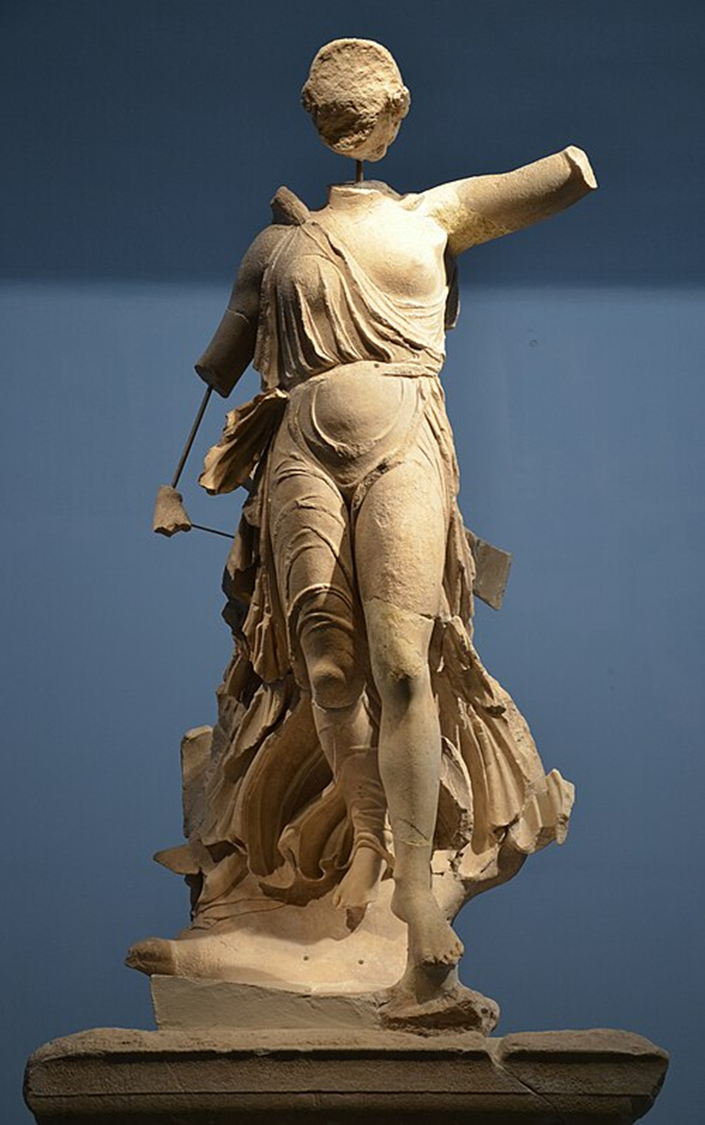
Nike of Paionios, 420, celebrate victory of Sparta near Pylos, dedicated statue to sanctuary of Zeus at Olympia. 7 ft tall, originally on 40 ft tall pillar.
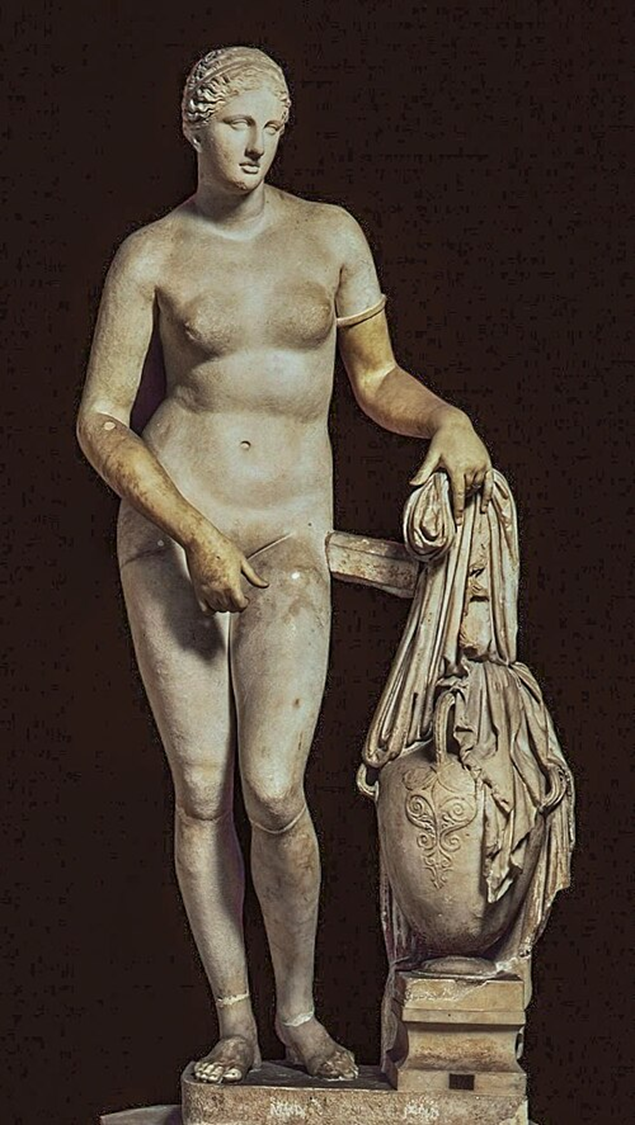
Aphrodite of Knidos, marble, 350, roman copies of Greek originals. 6 ft tall. Made by Praxiteles, an Athenian bronze and marble sculptor. More feminine features in his work, soft bodies. This shows soft features, contrapposto also, classical. This is a roman copy, but original created for temple of Aphrodite at Knidos. Reaching out for a bathing towel.
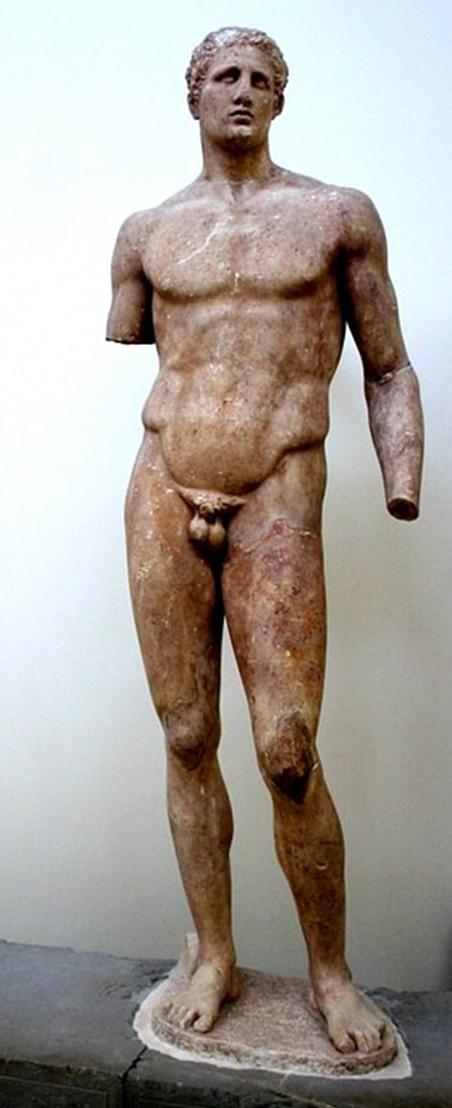
Agias of Pharsalos sculpture made by Lysippos, a bronze sculptor from the Peloponnese. Wrote canon on proportions, this is a copy of Lysippos’ bronze one. He made the heads of his figures smaller and the bodies leaner, this also shows contrapposto. Agias was a successful wrestler, his grandson dedicated the sculptural group at Delphi, eight family members and one god.
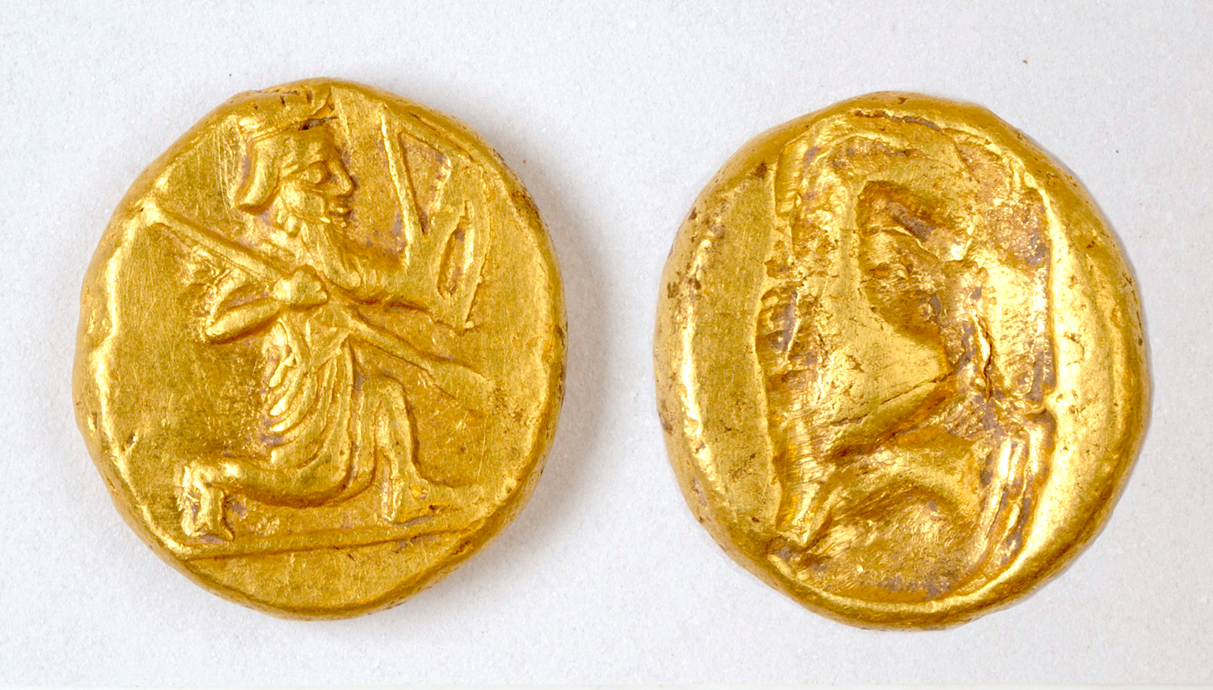
Example of a Daric coin, associated with King Darius I, shows king/archer on one side, punch mark on the other, Persian kings adapt Lydian coinage-gold and silver kinds. Maybe around 420-400 BCE. Coinage used by city-states for economic reasons and for symbols of their cities, Persian coinage adopted other types to pay mercenary soldiers and allies in war.
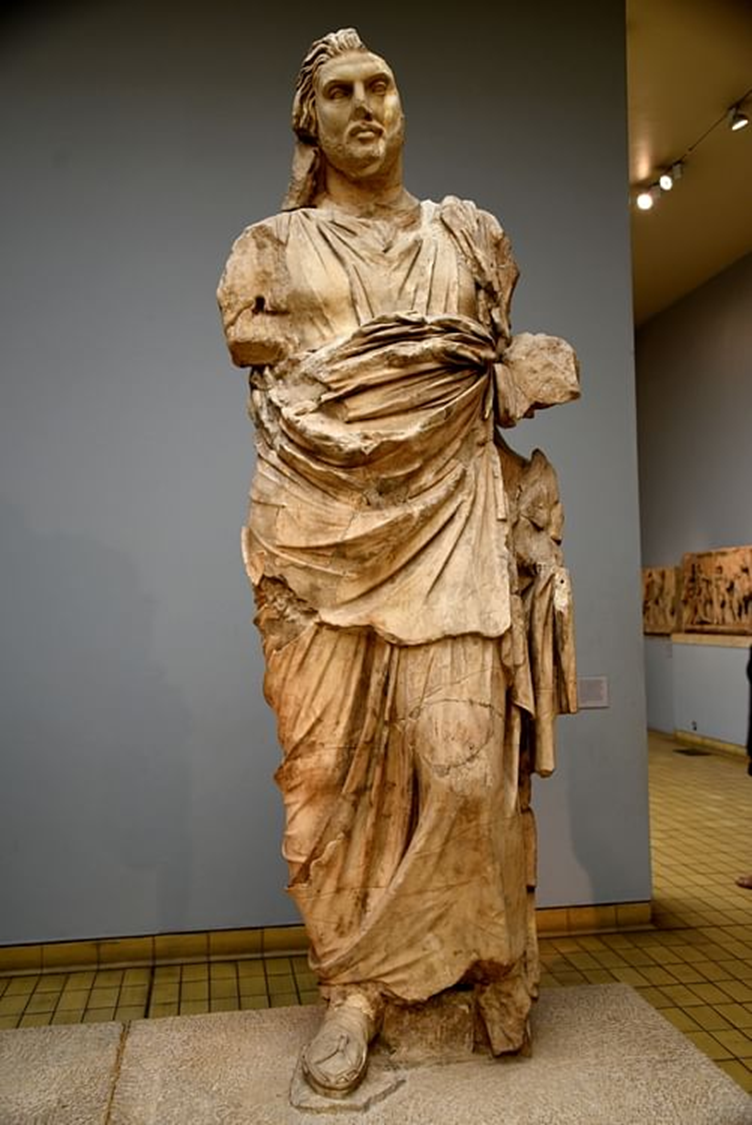
Mausolus, son of Hekatomnos, moved capital from Mylasa to Halikarnassos, satrap of Karia from 377-353. Sculpture is Karian. He built himself a large tomb called the Mausoleum of Halikarnassos, Greek sculptors, Greek and Anatolian elements. Married his sister Artemisia. Tomb is considered one of the 7 wonders of the world. Made around 360.
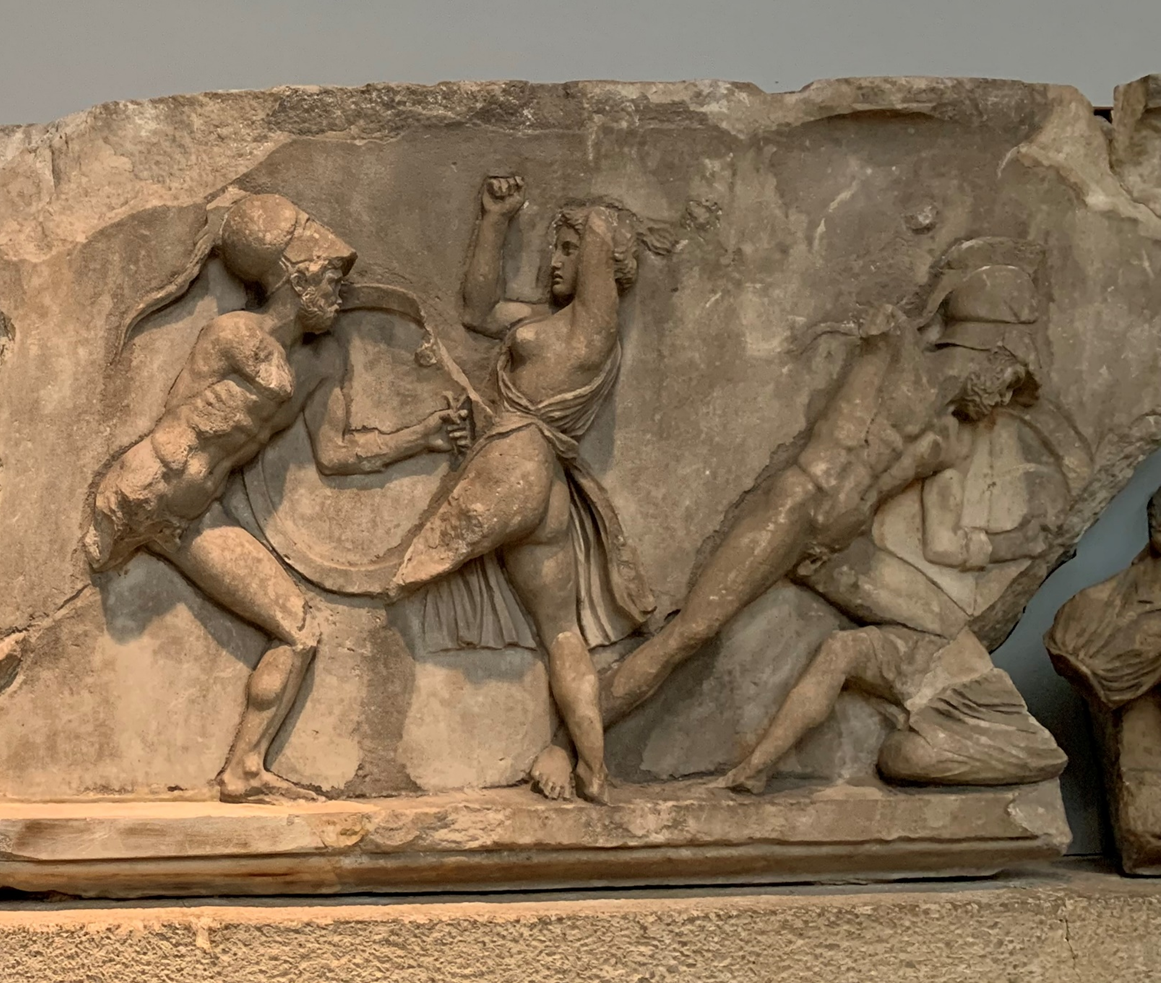
Amazonomachy frieze from the Mausoleum, around 360. Shows battle between the Amazons and the Greeks
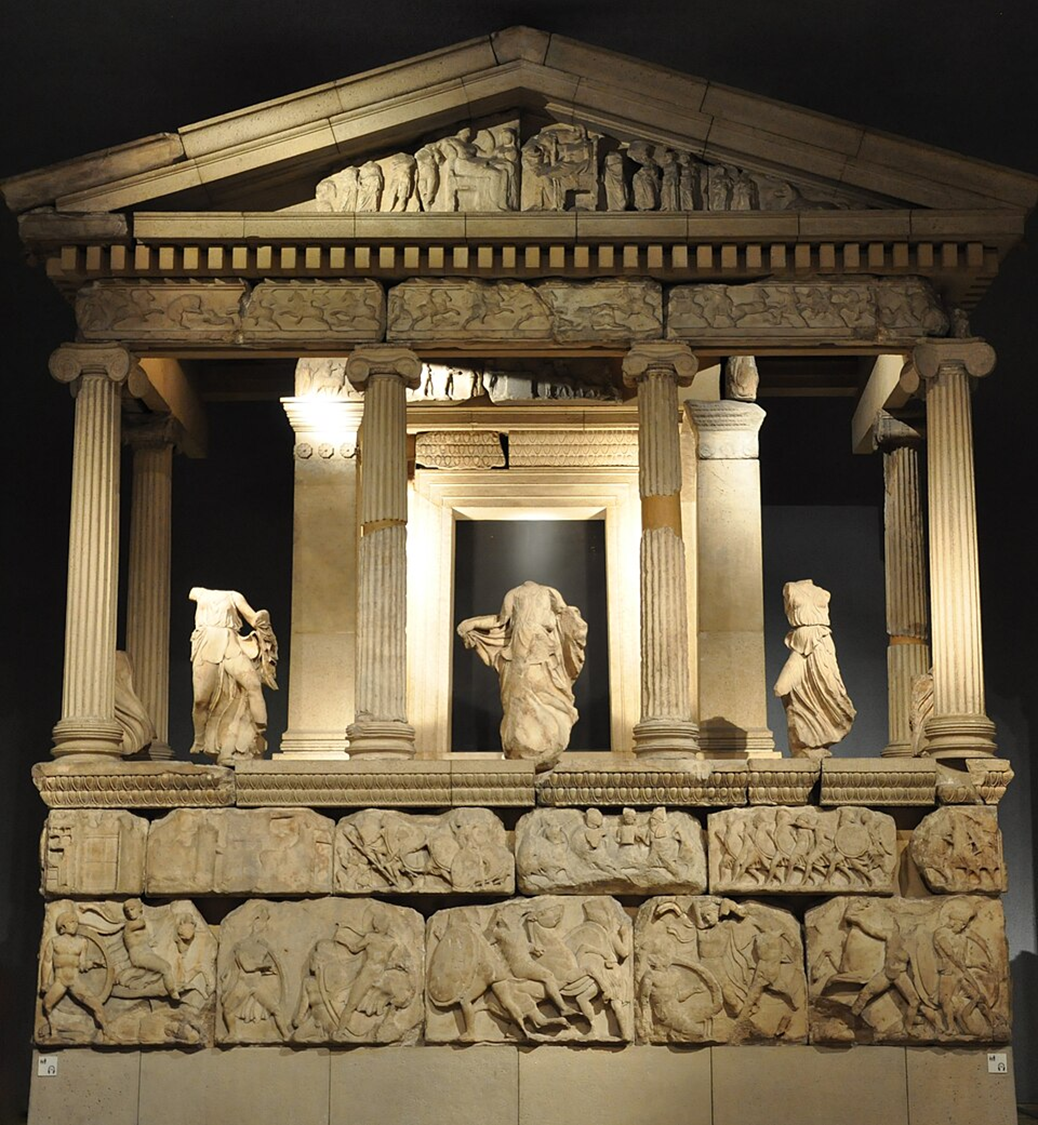
Nereid monument, made as a tomb for King Erbinna of Xanthos in Lycia. 380-370, 49ft tall. Nereid is a sea nymph. Looks like Greek temple on top of a base decorated in sculpted friezes, some of lycian myth. The Nereids are also part of Lycian myth, so this is combining Greek and local traditions.
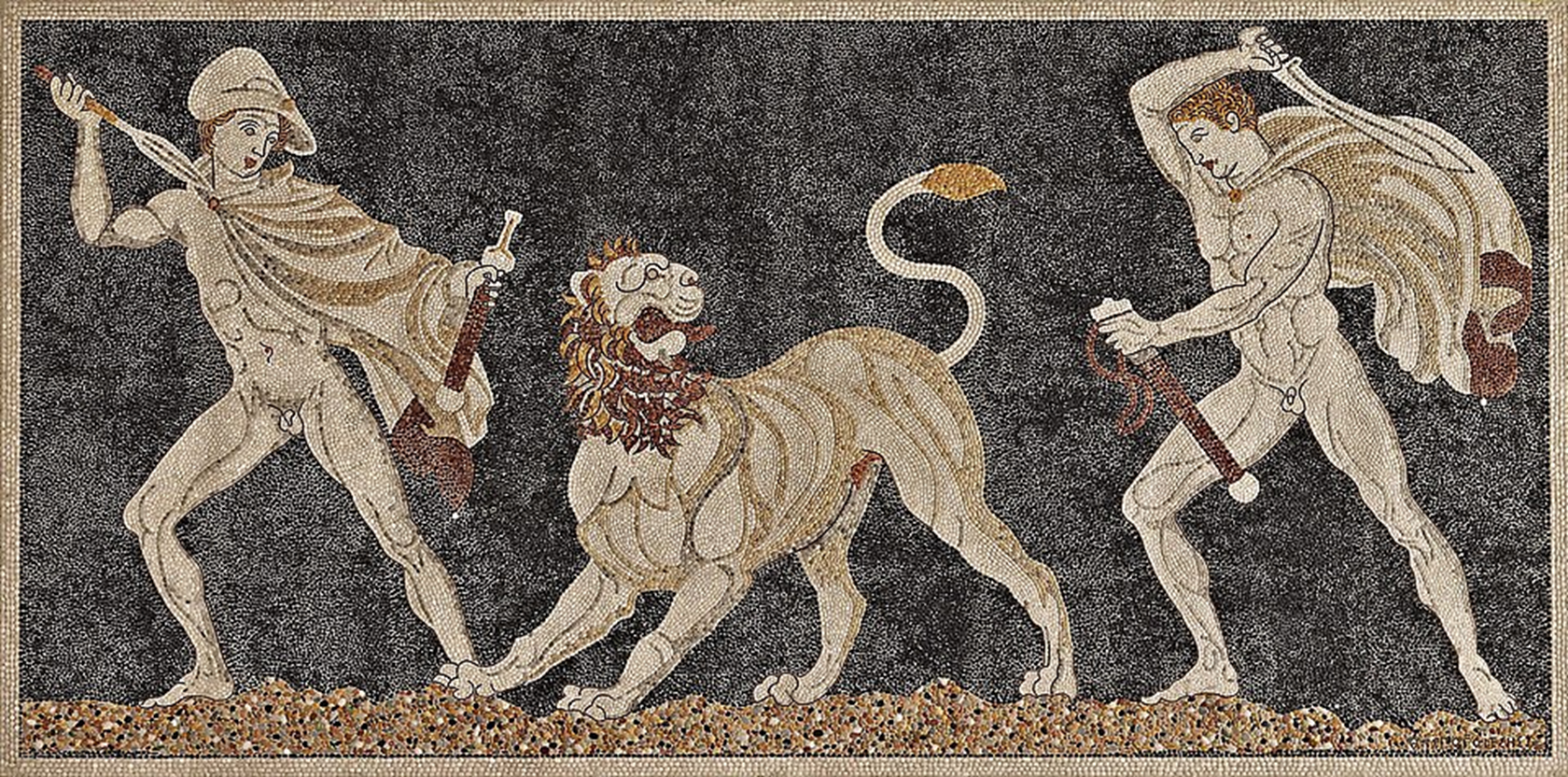
Lion Hunt mosaic in andron in the House of Dionysos, 325-300. House was a whole block wide, elite house. From city Pella, it shows how Greek styles of art were adopted in Macedonian kingdom by elite. Very intricate mosaics
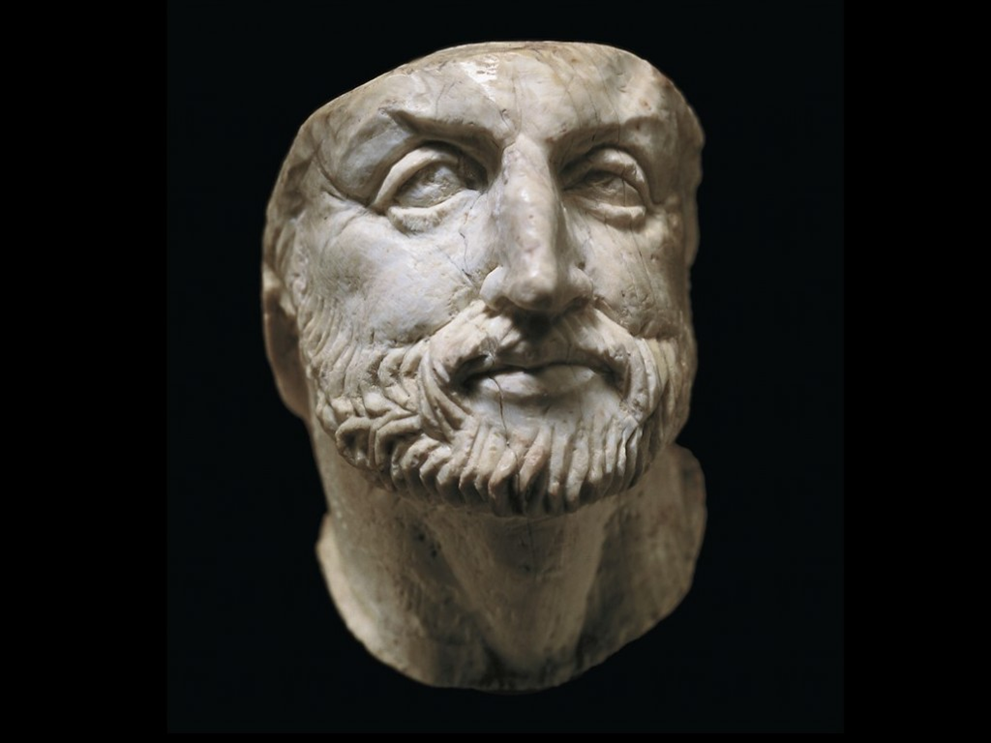
“Portrait from the large frieze with the hunt scene of the couch in the chamber of the king’s tomb,” portrait of Philip II, the dad of Alexander. He was married to Olympias and they had Alexander the Great. Philip’s bodyguard Pausanias was sexually asssaulted by an elite’s attendants, Philip didn’t avenge him so Pausanias assassinates him in 336 in Aigai. Ivory portrait from Macedonian royal tombs at Vergina.
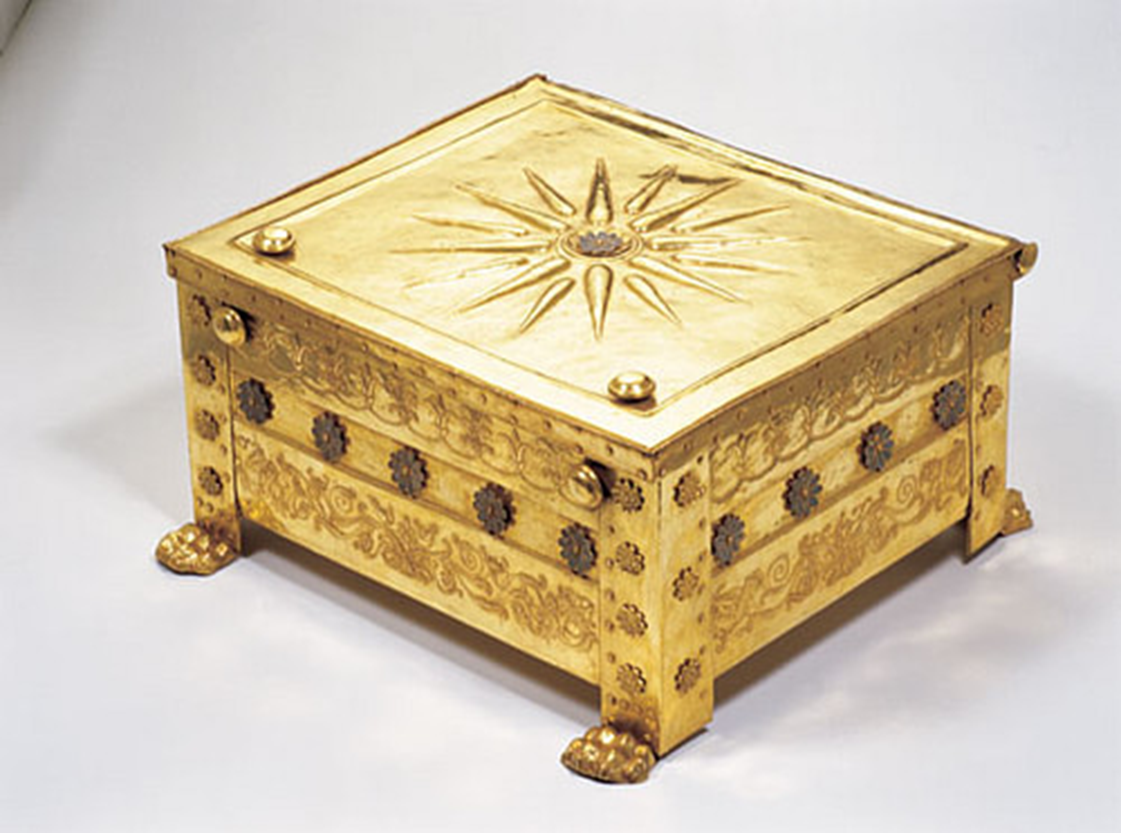
Found in tomb 2 at Vergina, around 336. Cremation burials in gold larnakes in marble chests, have Macedonian star symbol, likely for Arrhideus and wife (buried separately). Found with other gold artifactsl shows display of wealth.
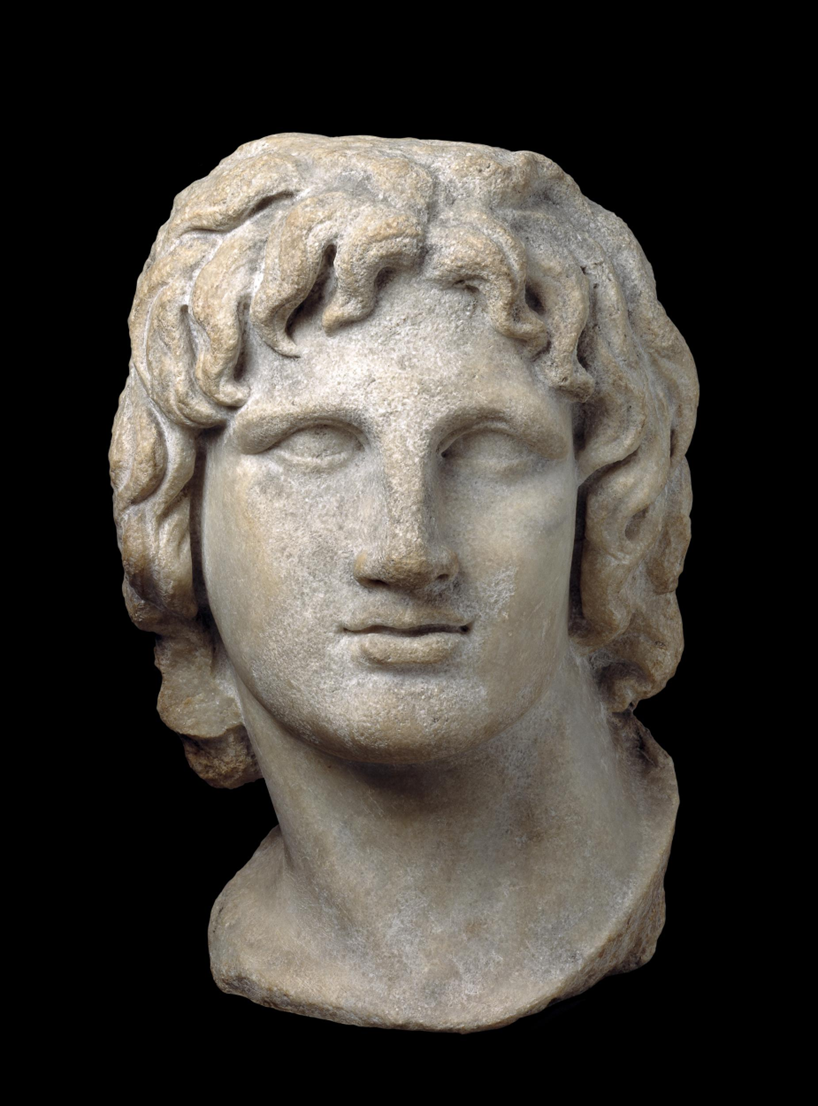
Alexander, made by Lysippus, Alex’s official sculptor, amde around 390-300. Shown as youthful, flowing hair, mouth arted slightly, cowlick and long hair. Very different from the depiction of his dad.
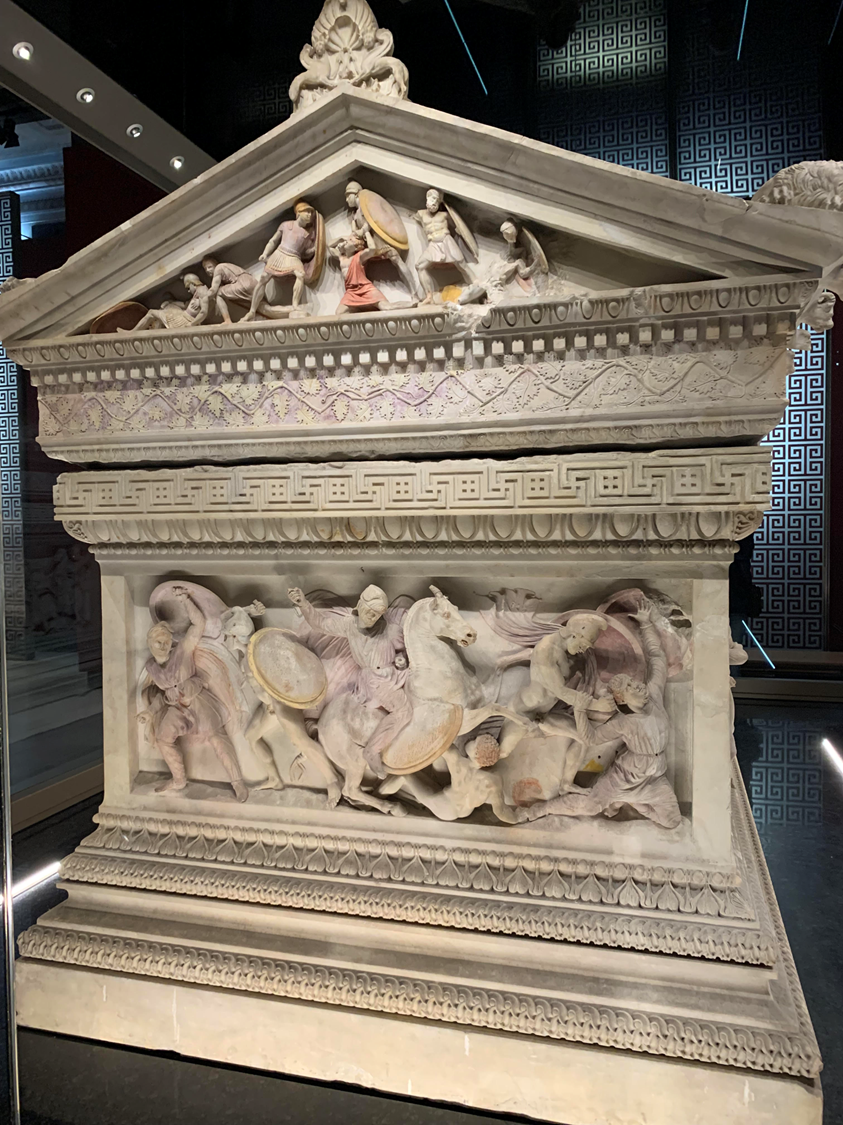
Alexander Sarcophagus, from Sidon, late 4th cen. For Abdalonymus, king of Sidon. Maybe shows battle of Issus, 333. Marble, Sidon probably wanted to associate with Alexander and the victorious battle to show his power.
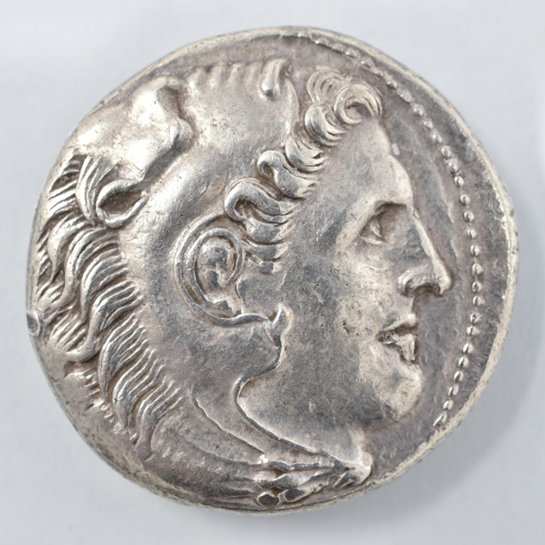
Coin from Alexander’s rule, conflates himself with Herakles, another son of Zeus. Shows bust of Herakles with lion’s skin on front and zeus on back. Silver.
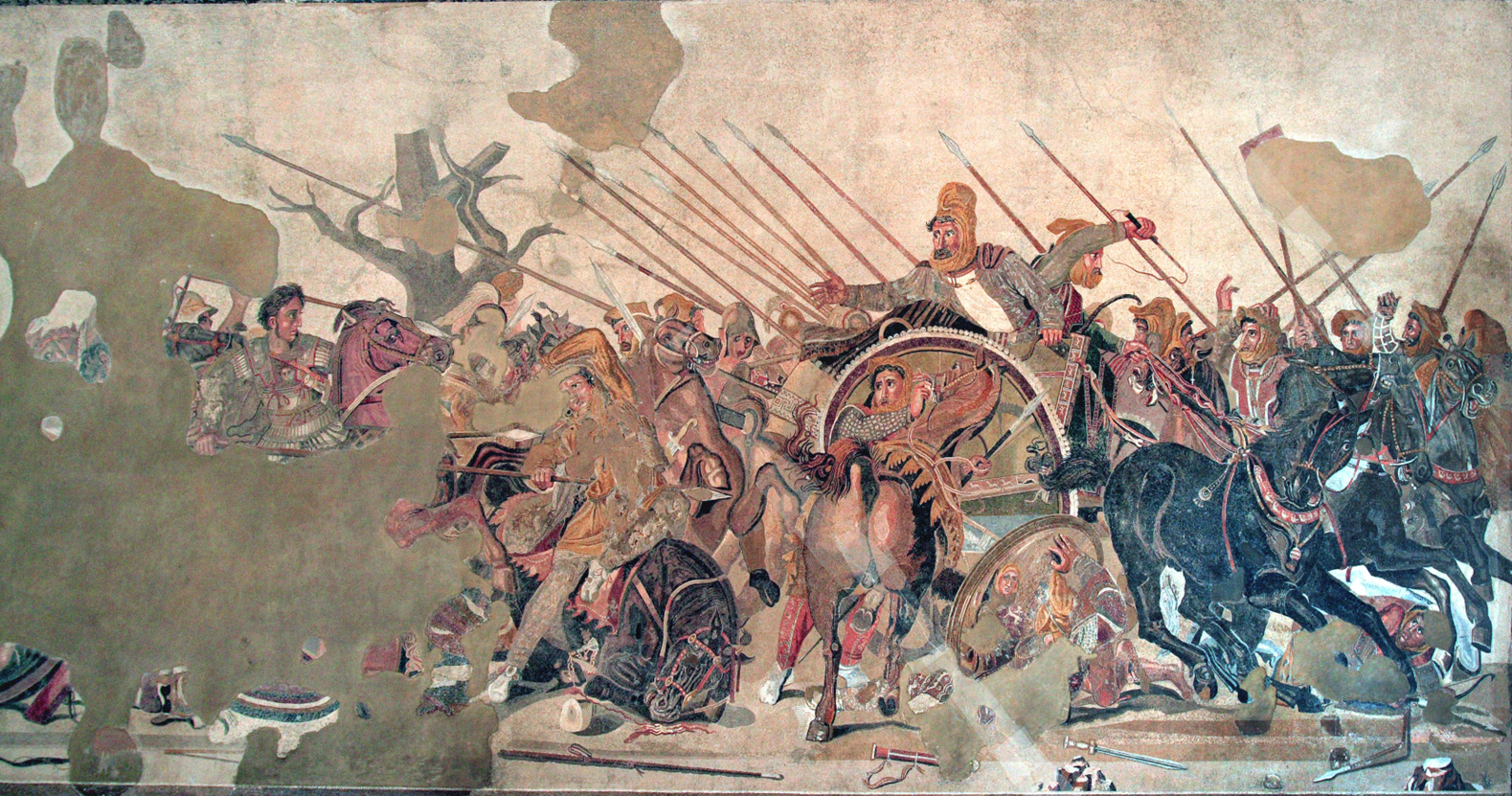
Mosaic of Battle of Issus? from Pompeii, 2nd cen. So well rpeserved because of the eruption in 79 CE. Alexander on left and Darius III the king of Achaemend Empire on right? Shows intricate composition, also association between rulers for power. From House of the Faun.
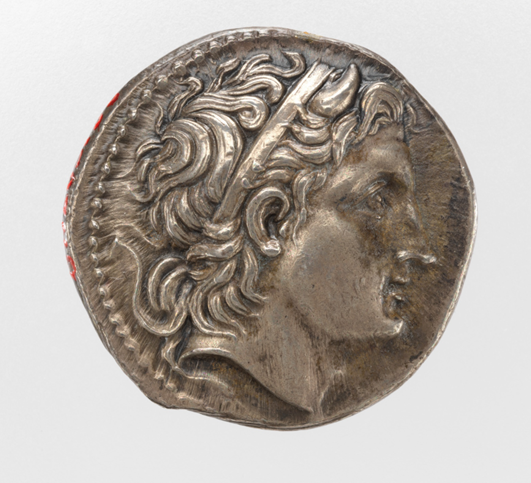
Silver tetradrachm of Demetrios Poliorcetes, 289-288. Shows head of Demetrios with diadem and horns, reverse shows Poseidon. Taking on look of Alex.
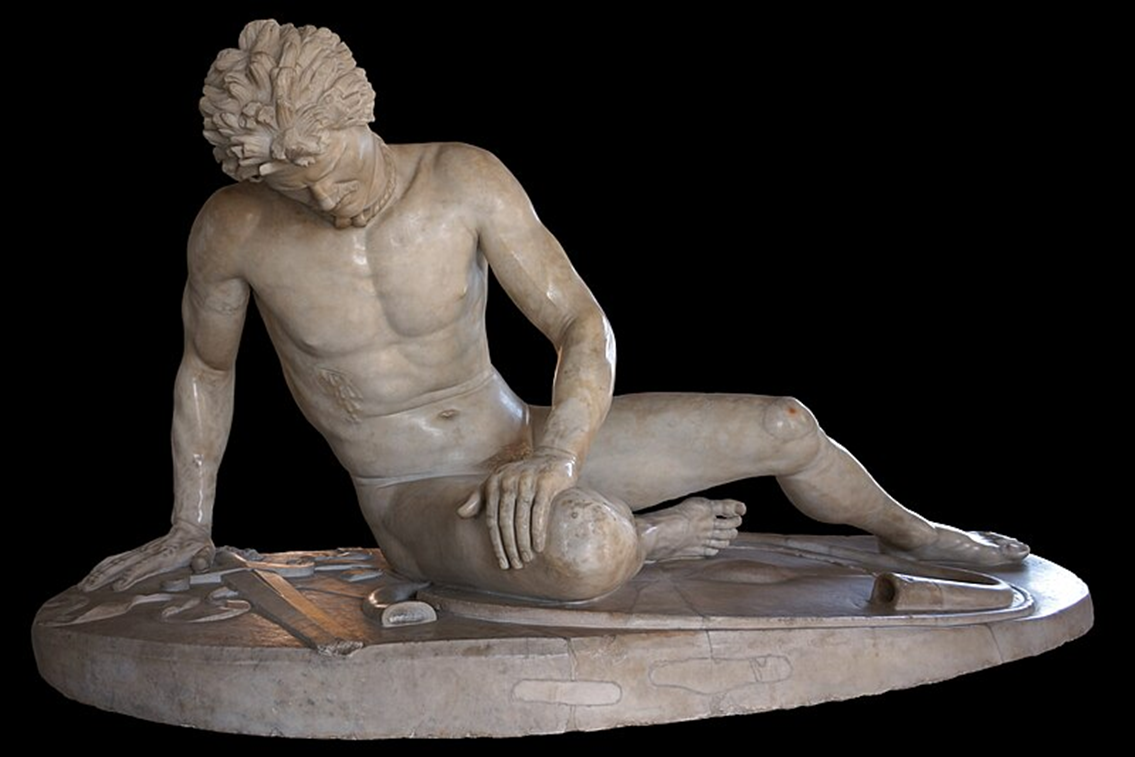
Dying Gaul, Hellenistic, bronze, 3rd cen. Shows a dying Gallic warrior, bent over his shield and has sword puncture in lower right chest. Highly expressive, and highly detailed with the sword wound and hair. Maybe made in Pergamon, modern Turkey.
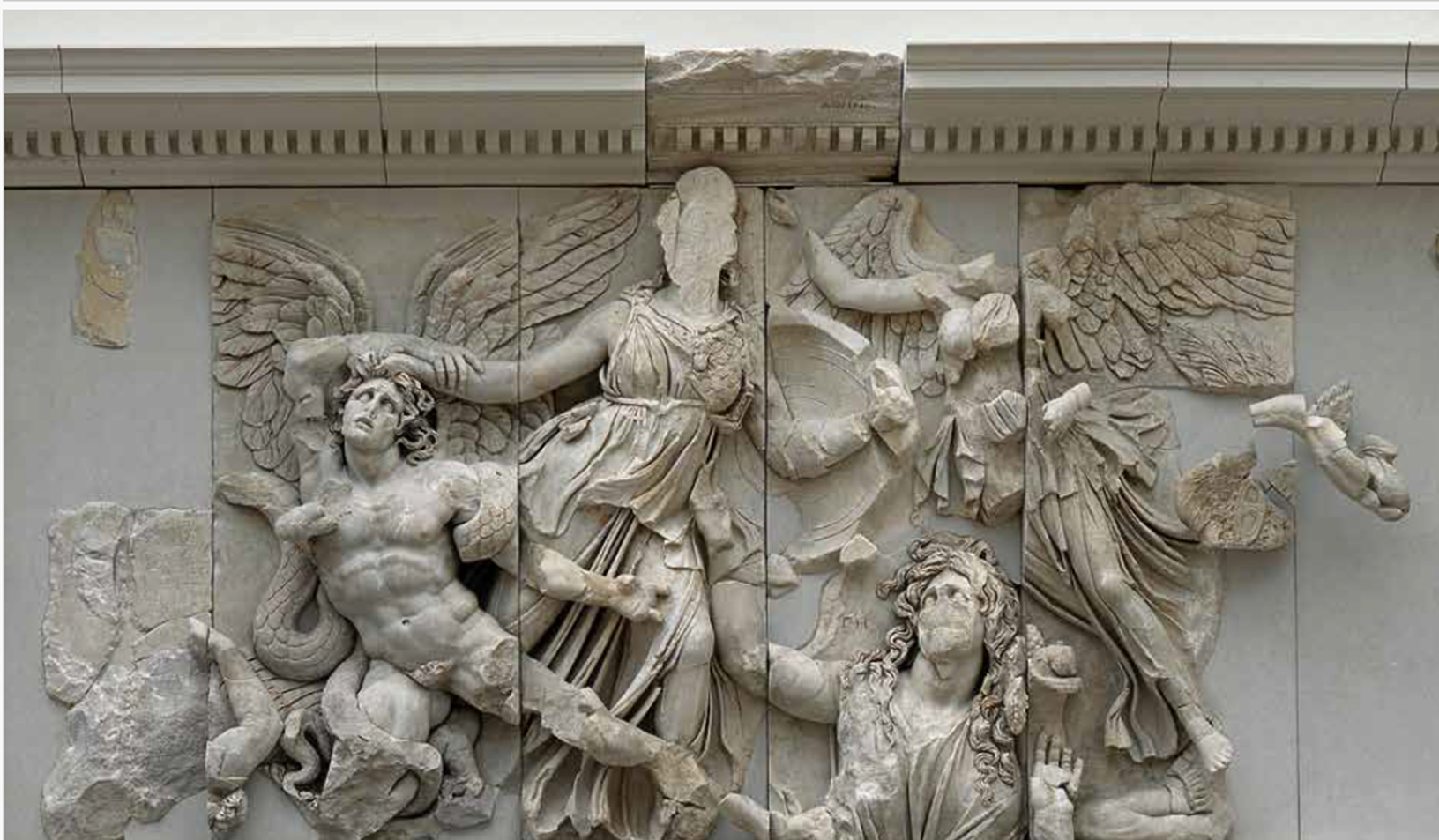
Great frieze from the Pergamon Altar, 150. Altar maybe dedicated to zeus, shows place of battle between Olympian gods and giants. This shows Athena battling the giants. Gigantomachy relief on outside.
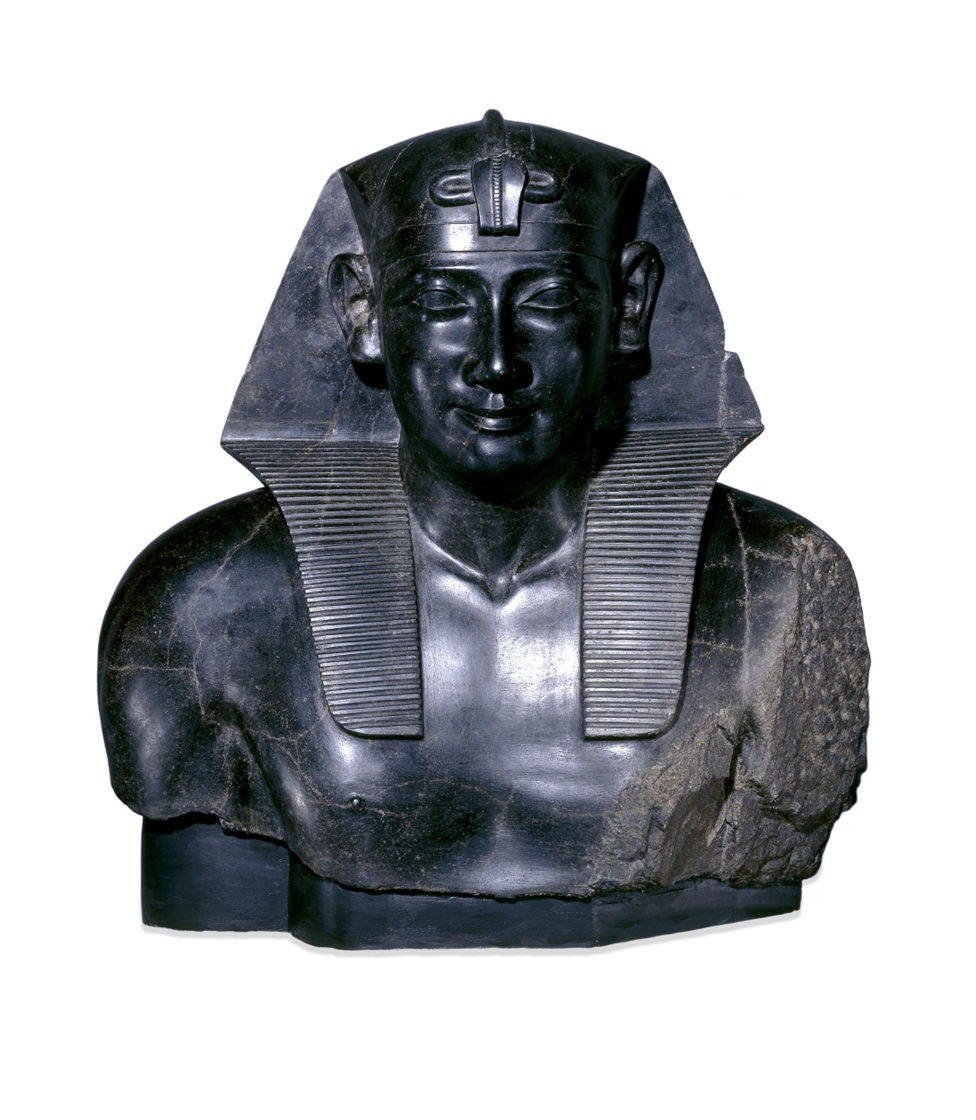
Bust of Ptolemy I, 305-283. Made during Ptolemaic dynasty in Egypt, this is showing his mix of Hellenistic traditions in art with adoption of local traditions, also a way to show his power to the public.
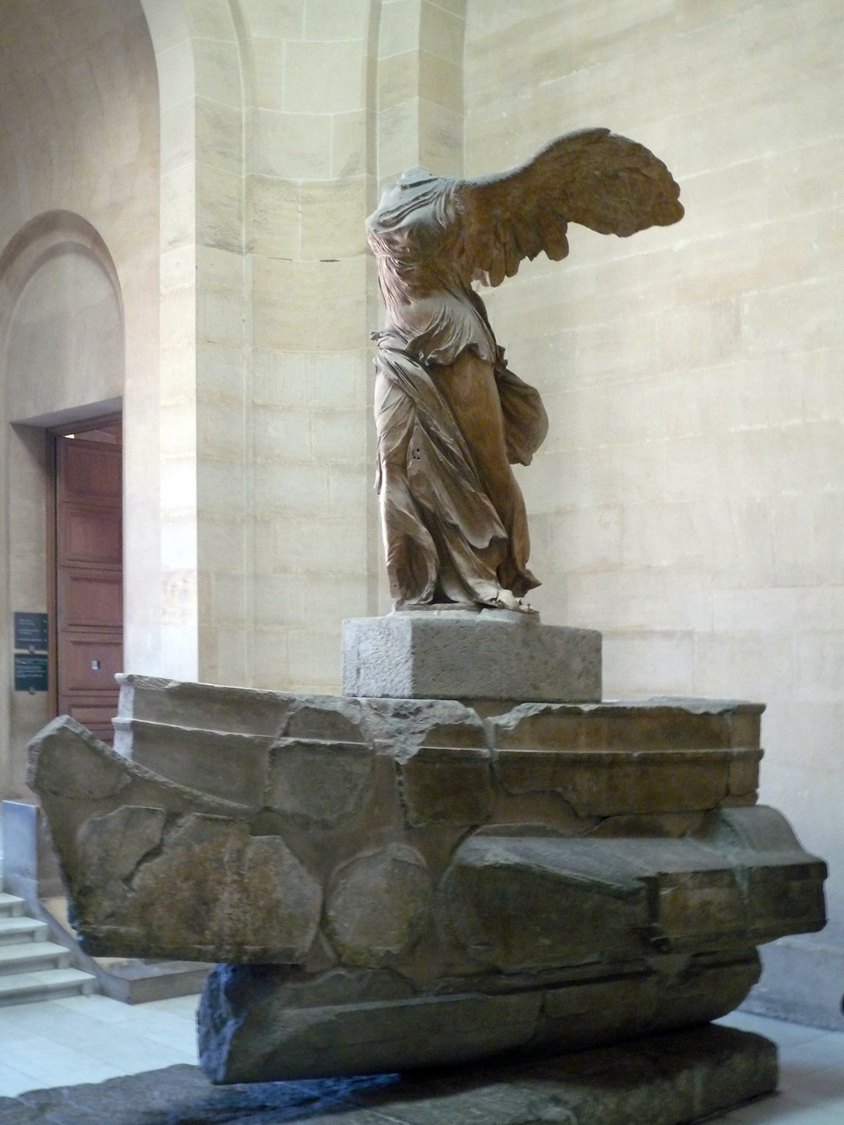
Nike of Samothrace, 190, 11 ft tall. Just landed on the ship, bestowing victory. Hellenistic focus on wet and detailed drapery. Mifght have commemorated a naval triumph for Rhodes.
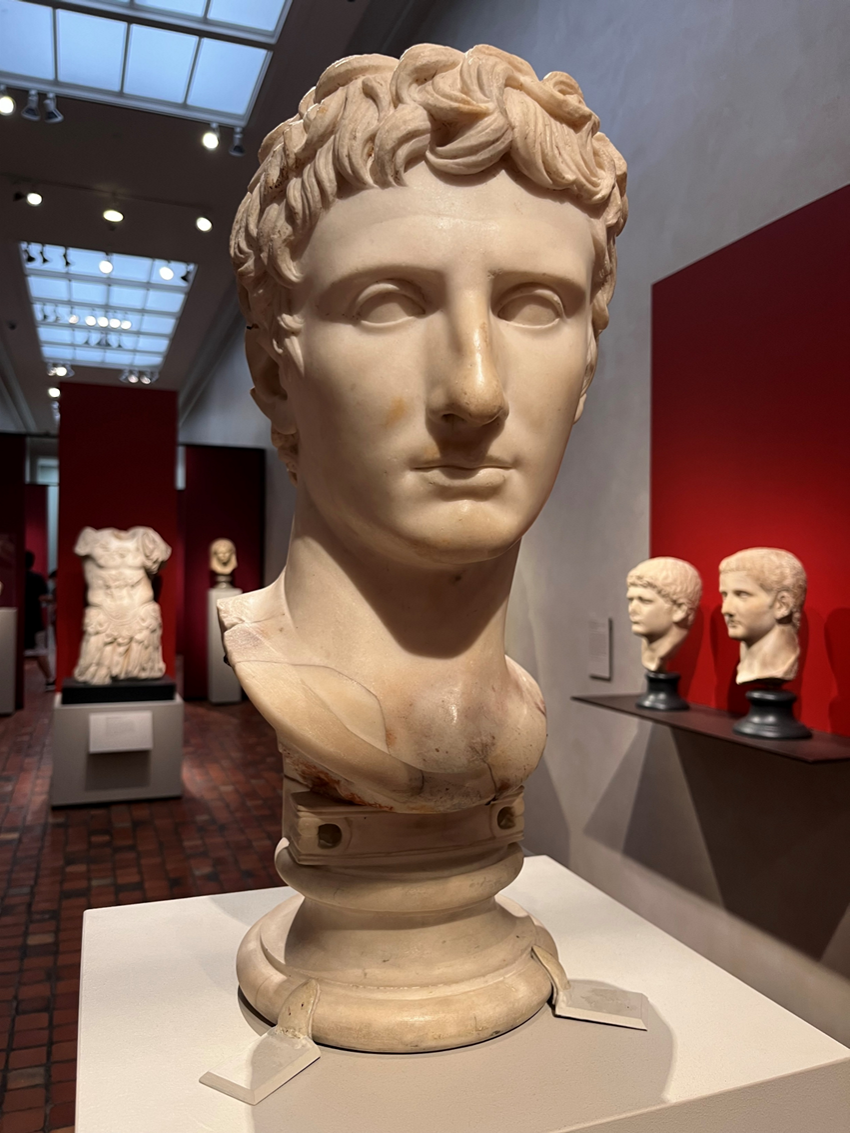
Portrait of Augustus, 1st or 2nd cen. CE. Shows elements of Alexander’s portraiture, like cowlick and wavy hair, vacant eyes. Mouth is closed though. Associating himself with Alexander, a great ruler, while he was the heir to Caeser after assassination. Shown as youthful even when he was old.
 Note
Note  Flashcards (27)